Category Archives: Malawi

world & Malawi National News and Headlines. – View the latest National  news and breaking news today for Malawi from maravipost.com, world, weather, entertainment, politics and health at maravipost.com

MCP ministers’ primary wins boost party morale

By Jones Gadama

The Malawi Congress Party (MCP) is riding high on the success of its Cabinet Ministers in the ongoing primary elections.

According to MCP Publicist, Jessie Kabwila, the triumph of five Cabinet Ministers is a sign of confidence in President Dr. Lazarus Chakwera’s choice of Cabinet Ministers.

In an interview, Kabwila attributed the victory to the people’s confidence in the President’s leadership and the Ministers’ performance.

“The victory has revitalised the Ministers’ passion to fight for the party and its leadership, aiming for a landslide victory in the forthcoming 16 September polls,” Kabwila said.

The five Ministers who have won their primary elections are Jessie Kabwila herself, Minister of Information Moses Kunkuyu, Minister of Foreign Affairs Nancy Tembo, Minister of Health Khumbize Kandodo Chiponda, and Deputy Minister of Gender Halima Daud.

Their success has boosted the morale of the party, with Kabwila saying it demonstrates the people’s trust in the President’s leadership.

The MCP primary elections have been keenly contested, with several high-profile candidates vying for positions.

However, the victory of the Cabinet Ministers has sent a strong signal about the party’s unity and confidence in its leadership.

Kabwila’s remarks suggest that the party is gearing up for a strong campaign in the forthcoming general elections.

“We are working hard to ensure that we win the elections with a landslide victory,” she said, adding that, “The people have confidence in our leadership, and we will work tirelessly to deliver on our promises.”

The MCP has been busy campaigning across the country, touting its achievements and promising further development and progress.

The party’s success in the primary elections is seen as a crucial step towards achieving its goals in the general elections.

With the general elections just around the corner, the MCP is gearing up for a strong campaign, and its success in the primary elections has given it a significant boost.

The MCP’s success in the primary elections has also raised expectations about its performance in the general elections.

GOARN marks 25 years of advancing global health emergency preparedness and response

The Global Outbreak Alert and Response Network (GOARN), an initiative coordinated by the World Health Organization (WHO), marks its 25th anniversary today. Since its inception in April 2000, the network has been at the forefront of the global fight against health emergencies. By leveraging the expertise of global partners – facilitating alerts, deploying rapid support capacities, and strengthening capacities – it has significantly enhanced country-level operations and strengthened regional development, playing a critical role in health preparedness and response.

“GOARN is a vital part of the global health architecture,” said Dr Tedros Adhanom Ghebreyesus, WHO Director-General. “Through the network, countries get the expert support they need to respond to health emergencies, and to enhance their own capacities for preparedness and response. This means faster, more effective responses and more lives saved.”

GOARN was created in response to the need for better coordination during global health emergencies. While many partner organizations were sending teams to assist during emergencies, there was a lack of coordination which hindered the overall effectiveness of these responses. It was also clear that no single institution could address all components of a response alone. GOARN was thus born following an international meeting organized by WHO in Geneva on 26–28 April 2000. Some 121 representatives from 67 partner institutions discussed the growing challenge of epidemic-prone and emerging diseases, and the urgent need to build a global network based on existing partnerships to address these threats.

In October 2000, GOARN played a key role in responding to the major Ebola outbreak in Gulu, Uganda – marking a significant milestone in what would evolve into a quarter-century of pivotal global health responses.

“As one of the first responders deployed during the Ebola outbreak in Uganda 25 years ago, I witnessed firsthand the evolution of our response efforts and GOARN’s role,” said Dr Mike Ryan, Executive Director of WHO’s Health Emergencies Programme and Deputy Director-General of WHO.  “When I returned to Uganda earlier this year for another Ebola response, I was immensely proud to see how strong the national capacities have become, led by the Ministry of Health with the support of WHO and GOARN partners. GOARN is an example of how multilateralism works to save lives. To this day, I wear the orange GOARN lanyard alongside my blue WHO one to show my respect for and pride in this network.”

GOARN leverages the expertise of its partner institutions to address global health challenges. Operating as a unified international community, the network has responded swiftly and effectively to public health threats by deploying technical experts to ensure the right expertise is in the right place at the right time. GOARN’s goal is to strengthen countries’ capacities and help build strong, resilient systems for response to emergencies.

GOARN ensures that the experts are well-trained and equipped with the right skills before they’re deployed where they are needed most, fostering seamless collaboration for swift, coordinated, and impactful responses.

GOARN has now grown into a network of over 310 institutions, including national public health agencies, nongovernmental organizations, UN agencies, academic, and other technical organizations. GOARN has responded to over 175 public health emergencies in 114 countries, deploying more than 3645 international responders who integrate within national responses, collaborating with thousands of national professionals to strengthen and enhance local efforts. The network has tackled major global public health events, including outbreaks of SARS, Ebola virus disease, Marburg virus disease, COVID-19, mpox, cholera, yellow fever, disasters such as floods and earthquakes, and war. GOARN has deployed expertise in epidemiology, disease surveillance, case management, clinical care, infection prevention and control, risk communication and community engagement, and others. These efforts have also delivered hands-on training to hundreds of national teams, bolstering their immediate response capacity and long-term resilience.

“Looking back over the past 25 years, it’s remarkable to see how GOARN has evolved from a visionary concept to an indispensable network in the global health emergency landscape,” said Ray R. Arthur, PhD, Director, Global Disease Detection Operations Center, CDC (retired) and Former Chair of the GOARN Steering Committee. “As an early participant in establishing the network and as former chair of the Steering Committee, I witnessed firsthand the commitment and collaboration that drove the network’s success. GOARN has not only facilitated rapid response to public health emergencies but has also been instrumental in strengthening global health, ensuring that countries are better prepared for the challenges of tomorrow. It’s an honour to see the network continue to grow and play such a vital role in protecting public health worldwide.”

Today, GOARN is a vital pillar in the Global Health Emergency Corps ensuring a well-coordinated health emergency workforce, centered in countries and connected regionally and globally. The 25-year milestone marks a significant evolution of GOARN’s role in preparedness and response. Rather than deploying large numbers of international professionals across every field, GOARN now brings in only the necessary expertise to address critical gaps on the ground. Paired with the focus on capacity strengthening and training initiates, GOARN has demonstrated the effectiveness of its mandate and efforts empowering countries to manage emergencies themselves.

GOARN calls on all Member States, partners and the global community to continue working together to build a global health emergency architecture that is resilient, equitable, and capable of addressing future health challenges.
 

Voices from GOARN, past and present

Dr Mohannad Al-Nsour, Executive Director, Eastern Mediterranean Public Health Network (EMPHNET), current Chair of the GOARN Steering Committee:
“As the world faces the growing threats of epidemics, conflict, and humanitarian crises, GOARN’s role has never been more vital. The network is being called to respond in increasingly complex environments – where conflict is more widespread, and public health emergencies unfold alongside deep humanitarian challenges. GOARN must continue to evolve, expanding its reach and strengthening collaboration to meet these urgent needs.”

Daniela Garone, Infectious Diseases Specialist and International Medical Coordinator, Médecins Sans Frontières, current Co-Deputy Chairs of the GOARN Steering Committee and Dr Edmund Newman, Director, UK Public Health Rapid Support Team (UK-PHRST):
“Reflecting on GOARN’s 25 years of advancing global health emergency preparedness and response, we are proud to be active partners of a network that has been instrumental in saving lives and strengthening health response systems around the world. From its humble beginnings to its current role as a vital pillar in global health response, GOARN has demonstrated the power of collaboration and expertise in tackling public health emergencies. As we look to the future, we remain committed to supporting countries in building resilient public health systems and ensuring that our collective efforts continue to evolve in response to the growing challenges of global health. Together, we will continue to foster stronger partnerships and be ready for whatever comes next.”

Myriam Henkens MD, MPH, Senior Health Adviser, Médecins Sans Frontières, former member of GOARN Steering Committee:
“For 25 years, GOARN has been a cornerstone in the global response to health emergencies. As a proud participant, MSF has been working alongside GOARN to strengthen health systems and ensure a more effective global response to the challenges of tomorrow. The collaborative spirit and shared expertise across the network have made a real difference in the field, and I’m proud to have been part of this journey.”

Gail Carson, Director of Network Development at ISARIC Pandemic Sciences Institute, University of Oxford and former Chair of the GOARN Steering Committee (2022–2024):
“Serving as Chair of the GOARN Steering Committee from 2022 to 2024 was one of the greatest honours of my career. But my connection to this network goes back much further—to GOARN’s first response to Ebola in Uganda. Over the past 25 years, I’ve seen firsthand how this global community of experts supports countries in times of crisis, delivering trusted, timely, and lifesaving technical assistance. Today, GOARN continues to evolve to meet new and complex challenges. What hasn’t changed is its core strength: GOARN remains the partner you can count on when a health emergency hits.”

John S Mackenzie, Emeritus Professor and former Chair of the GOARN Steering Committee:
“GOARN was born from a visionary belief that global outbreak response could be stronger through coordinated action. I was proud to serve on its first Steering Committee, and those 14 years remain among the most fulfilling of my career. GOARN continues to grow as a powerful force in global public health – driven by collaboration, expertise, and an enduring spirit of service.”

Pat Drury, former GOARN Manager:
“GOARN has been more than just a professional milestone—it has been a journey of saving lives and making a real difference in the face of some of the world’s most challenging outbreaks, from Ebola, and SARS to COVID-19. The network’s strength is its ability to connect people, and institutions, knowledge and expertise in real time, turning alerts into rapid responses. As the challenges have grown, so have the stakes. In an increasingly polarised world, GOARN’s role in mobilizing science, and fostering trust has never been more vital. Congratulations on 25 years of extraordinary impact, and thank you to the countless individuals who make this mission possible.”

Sourced from WHO

Usi’s ‘Odya Zake Alibe Mulandu ‘ party not registered

By Chisomo Phiri

BLANTYRE-(MaraviPost )-It has emerged that Vice President Dr. Michael Usi’s polical party ‘Odya Zake Alibe Mulandu ‘ is not registered under the Political Parties Act.

According to Nation Publications Limited(NPL ), Registrar of Political Parties Kizito Tenthani confirmed that his office has not issued any certificate to ‘Odya Zake Alibe Mlandu Party’.

Tenthani said to NPL: “As far as we are concerned, we don’t have that [Odya Zake Alibe Mlandu] party. We haven’t registered them. We still have 23 registered political parties and we will update you whenever there are some changes.

“But if they [Odya Zake Alibe Mlandu] decide to apply [for party registration], we are going to treat it like any other application. So, if we will be satisfied, we will register it, and if we will not be satisfied we will not.”

Section 12 (1) of Political Parties Act states that for a political party to be registered, it should, among others, consist of not less than 100 people who are eligible to vote in each of the country’s districts.

Further, Section 12(2) of the same law requires that the application for registration be signed by the office bearers of the political party and specify the name of the party.

The application also must be accompanied by two copies of the constitution, rules and manifesto of the party and particulars of the registered party’s office.

The amended Section 12A of the Political Parties Act also requires the National Planning Commission (NPC) to issue a certificate of compliance that a political party’s manifesto is aligned to the national development agenda.

‘Odya Zake Alibe Mlandu’ started as a movement in the run up to the 2019 Tripartite Elections, but went into oblivion in February 2019 after UTM Party president and the country’s former Vice-President Saulos Chilima picked him as his running mate in the nullified presidential election.

The revival of the movement and subsequent transition into a political party comes months after Usi chickened out of the UTM Party presidential race last November while serving as interim president, having replaced Chilima who died in a military plane crash last June.

PPM president cautions against premature electoral alliance discussions

By Jones Gadama

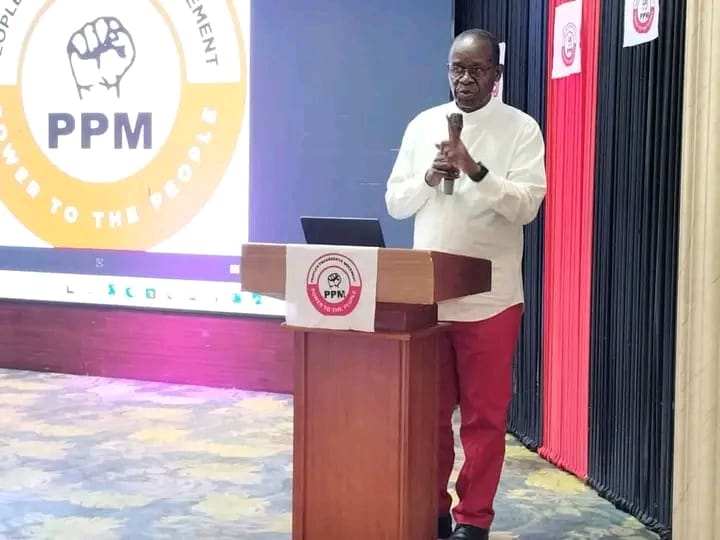
Peoples Progressive Movement (PPM) President Mark Katsonga Phiri has cautioned political parties discussing electoral alliances ahead of the September 16 presidential elections.

Katsonga argues that such discussions should wait for the outcome of the elections, particularly if a candidate is likely to win over 50% of the votes.

Speaking at a political rally in Neno South constituency, where he was gathering views from constituents on his presidential bid, Katsonga emphasized that premature alliance discussions could undermine the 50+1 law.

“The parties should wait for the outcome of the elections before discussing alliances,” he said, adding that,”If a candidate wins over 50% of the votes, there’s no need for alliances.”

However, PPM’s stance on electoral alliances comes amid concerns about the party’s own viability.

PPM has been criticized for being inactive, with some describing it as a “briefcase party” that exists only on paper.

The party is reportedly struggling to maintain its registration, and if it fails to secure the required number of votes in the upcoming elections, it risks being deregistered.

Despite these challenges, Katsonga reiterated his call for voters to prioritize leadership qualities over family, tribal, or party connections.

He emphasized the importance of choosing leaders based on their ability to deliver development and good governance.

However, political and legal experts George Phiri and Khumbo Soko disagree with Katsonga’s stance on electoral alliances.

In separate interviews, they argued that parties are not breaking any law by discussing alliances ahead of the elections. “There’s no law that prohibits parties from discussing alliances before the elections,” Phiri said, adding that, “In fact, it’s a good thing for parties to explore potential alliances to strengthen their chances in the elections.”

Soko added that discussions on alliances can help parties identify potential partners and strengthen their campaigns.

“It’s a strategic move that can help parties build stronger coalitions and increase their chances of winning,” Soko said.

The debate on electoral alliances highlights the complexities of Malawi’s electoral system.

The 50+1 law requires presidential candidates to win over 50% of the votes to avoid a runoff election. If no candidate wins over 50%, the top two candidates proceed to a runoff election.

Electoral alliances can play a crucial role in determining the outcome of the elections.

By forming alliances, parties can pool their resources and support to strengthen their chances of winning.

However, the timing and nature of these alliances can have significant implications for the electoral process.

As the elections approach, the debate on electoral alliances is likely to continue.

Parties will need to carefully consider their strategies and potential alliances to maximize their chances of winning.

Ultimately, the outcome of the elections will depend on various factors, including the performance of individual candidates, party manifestos, and the overall political landscape.

MEC reports to president on September 16 General Election preparedness

By Jones Gadama

The Malawi Electoral Commission (MEC) has presented a comprehensive report on its preparedness for the upcoming September 16 General Election to President Dr. Lazarus Chakwera.

According to the MEC statement, the meeting was held in accordance with Section 6 (1) of the Malawi Electoral Commission Act, which mandates the Commission to report directly to the President on the fulfillment of its functions and powers.

During the meeting, MEC provided an update on all activities implemented so far in preparation for the general elections. The Commission has been engaging with various stakeholders, including political parties, to ensure a smooth electoral process.

MEC Chairperson Justice Annabel Mtalimanja emphasized the Commission’s commitment to transparency, credibility, and excellence in managing the electoral process.

MEC has conducted a pilot voter registration exercise and has announced dates for supplementary voter registration to address registration challenges.

The Commission has also commenced training programs for Constituency Civic and Voter Education Assistants to educate voters on the electoral process.

Regarding the election management system, MEC has rejected requests for independent ICT auditors to monitor election management systems, citing security reasons. Instead, the Commission plans to engage ICT experts from political parties to verify the election management system. MEC clarified that the transmission of results will be done from constituency and district tally centers to the national tally center.

The Commission is yet to develop a module for results management using Election Management Devices.

MEC has planned a National Elections Consultative Forum meeting for all electoral stakeholders on Wednesday in Lilongwe.

The meeting aims to bring together stakeholders to discuss key issues related to the electoral process and ensure a credible and peaceful election.

Despite the progress made, concerns have been raised about the credibility of the electoral process. Some parties have questioned MEC’s independence, citing the appointment of key officials with alleged ties to the ruling party.

Additionally, there are concerns about unequal resource distribution, with some areas receiving better election technology than others.

MEC Director Sangwani Mwafulirwa assured the public that the Commission remains committed to transparency and will continue providing updates on the electoral process.

He encouraged stakeholders, including political parties and civil society organizations, to remain engaged and support the Commission in ensuring a free, fair, and credible election.

As the September 16 General Election approaches, all eyes are on MEC to deliver a credible and peaceful electoral process.

The Commission’s preparedness and commitment to transparency will be crucial in ensuring the integrity of the election.

MEC updates Chakwera on election preparations

cHAKWERA AND MEC CHAIR

By Chisomo Phiri

BLANTYRE-(MaraviPost )-The Malawi Electoral Commission (MEC) on Monday April 28,2025, met with President Dr.
Lazarus Chakwera to provide a comprehensive update on the preparations for the September 16 general elections.

The meeting was held in accordance with the MEC Act, which mandates the Commission to report to the President on its activities.

During the meeting, the MEC presented a detailed report on its progress, including voter registration, procurement of election materials, and upcoming activities such as inspection and verification of the voters’ register and nomination of candidates.

The commission also announced a National Elections Consultative Forum (NECOF) meeting scheduled for April 30 in Lilongwe, where political parties and stakeholders will be briefed on the election preparations.

Kamuzu Banda wasn’t a Malawian

By Jones Gadama

The legacy of Dr. Hastings Kamuzu Banda, Malawi’s first president, is a subject of intense scrutiny. While many celebrate his contributions to the nation, a closer examination of his origins and identity raises significant questions about his Malawian identity.

This analysis aims to present evidence suggesting that Kamuzu Banda was not a Malawian, and consequently, that Kamuzu Day, a public holiday commemorating his leadership, should be reconsidered and potentially scrapped.

One of the most striking pieces of evidence against Banda’s Malawian identity was his inability to speak Chichewa, the national language and a vital component of Malawian culture. Language is a fundamental aspect of identity, and for a leader to be disconnected from the primary language of the people he governed raises serious questions about his roots.

Banda’s reliance on translators during speeches and public engagements indicates a significant cultural and linguistic disconnect from the very people he claimed to represent.

This inability to communicate in Chichewa not only alienated him from the populace but also suggests that he may not have been raised in an environment where the language was spoken, further casting doubt on his Malawian identity.

Banda’s claims regarding his origins are also fraught with inconsistencies. He asserted that he hailed from Kasungu district, specifically from the group village headman Chiwengo in the Traditional Authority of Chilowamatambe. However, the veracity of these claims is questionable.

The historical and cultural context of the region, along with the testimonies of local elders, suggests that Banda’s connection to this area may have been fabricated or exaggerated. The lack of substantial evidence supporting his claims raises the possibility that he was not a native of the region, further complicating his narrative as a Malawian leader.

Moreover, Banda’s assertions about his parentage are equally dubious. He claimed that his mother was Akupingana Phiri and his father Mphonongo Banda, both of whom were said to be fluent in Chichewa. However, if Banda himself could not communicate in the language, it raises the question of how he could have been raised by parents who were proficient in it.

This contradiction suggests a disconnection from the cultural and linguistic heritage that is integral to Malawian identity. The narrative of his parentage appears to be a constructed facade, designed to bolster his claims of belonging to the Malawian community.

Banda’s actions during his presidency further illustrate his estrangement from Malawian culture and identity.

One of the most notable instances was his decision to ban Kalonga Gawa Undi, the traditional leader of the Chewa people, from entering Malawi to pay tribute to the Chewa. This act not only demonstrated Banda’s disregard for traditional leadership and cultural practices but also highlighted his desire to distance himself from the very people he claimed to represent.

By excluding a prominent figure from the Chewa community, Banda effectively severed ties with a significant aspect of Malawian identity, raising further questions about his legitimacy as a Malawian leader.

The implications of Banda’s questionable identity extend beyond personal narratives; they resonate deeply within the fabric of Malawian society.

The celebration of Kamuzu Day, which honors his leadership and contributions, becomes problematic when viewed through the lens of his potential non-Malawian identity. A national holiday should reflect the values, culture, and identity of the people it represents.

If Banda’s identity is indeed rooted in deception and disconnection from Malawian culture, then the celebration of his legacy becomes a celebration of a constructed narrative rather than an authentic representation of the nation’s history.

Furthermore, the continued observance of Kamuzu Day risks perpetuating a narrative that undermines the rich tapestry of Malawian identity.

Malawi is a nation with diverse ethnic groups, languages, and cultures, and the celebration of a leader who may not have genuinely belonged to this mosaic diminishes the significance of the collective identity. It is essential for a nation to honor leaders who embody the spirit and values of its people, and if Banda’s identity is called into question, then the rationale for commemorating him becomes tenuous at best.

In light of these considerations, it is imperative for Malawians to engage in a critical examination of their history and the figures they choose to honor.

The legacy of Kamuzu Banda should not be viewed through a lens of nostalgia or blind reverence; rather, it should be scrutinized with an understanding of the complexities of identity and belonging.

The potential non-Malawian identity of Banda raises fundamental questions about the narratives that shape the nation’s history and the leaders who are celebrated within it.

The call to scrap Kamuzu Day is not merely an act of erasing history; it is a call for a more authentic representation of Malawian identity.

It is an opportunity for the nation to reflect on its values and the leaders it chooses to honor. By reevaluating the significance of Kamuzu Day, Malawians can reclaim their narrative and ensure that it is rooted in authenticity, cultural pride, and a genuine connection to the land and its people.

The evidence suggesting that Kamuzu Banda was not a Malawian is compelling and warrants serious consideration.

His inability to speak Chichewa, questionable claims about his origins and parentage, and actions that alienated him from Malawian culture all contribute to a narrative that challenges his legitimacy as a Malawian leader.

As Malawi continues to navigate its post-colonial identity, it is crucial to critically assess the figures it chooses to honor. Scrapping Kamuzu Day would not only acknowledge the complexities of Banda’s identity but also pave the way for a more inclusive and authentic celebration of Malawian heritage.

The future of Malawi should be built on a foundation of truth, cultural pride, and a genuine connection to its diverse identity, rather than on the constructed narratives of individuals whose ties to the nation remain questionable.

MEC briefs Chakwera on September 16 elections Preparedness

LILONGWE-(MaraviPost)-The Malawi Electoral Commission (MEC) on Monday, April 28, 2025 held a crucial meeting with President Lazarus McCarthy Chakwera, to present a comprehensive report on the country’s preparedness for the upcoming 16 September General Elections.

According to MEC Public Relations Officer Sangwani Mwafulirwa, the meeting was conducted in line with Section 6(1) of the Malawi Electoral Commission Act.

He says the Act guarantees the Commission’s independence while mandating it to report directly to the President for accountability on the fulfilment of its functions and powers.

During the meeting, the Commission provided an update on key electoral activities carried out to date.

These included the voter registration and transfer processes, the procurement status of sensitive and non-sensitive polling materials, and a roadmap for upcoming activities such as the inspection and verification of the voters’ register, nomination of candidates, and polling day preparations.

Mwafulirwa announced that the Commission has organized a National Elections Consultative Forum (NECOF) scheduled for Wednesday, 30 April, in Lilongwe.

The forum will bring together political parties and other electoral stakeholders to receive detailed updates on the Commission’s progress and the next phases of the electoral calendar.

The MEC reiterated its commitment to ensuring that the 2025 General Elections are conducted in a credible, transparent, and professional manner.

Kabwila wins MCP Primaries in Salima Central West

By Fostina Mkandawire

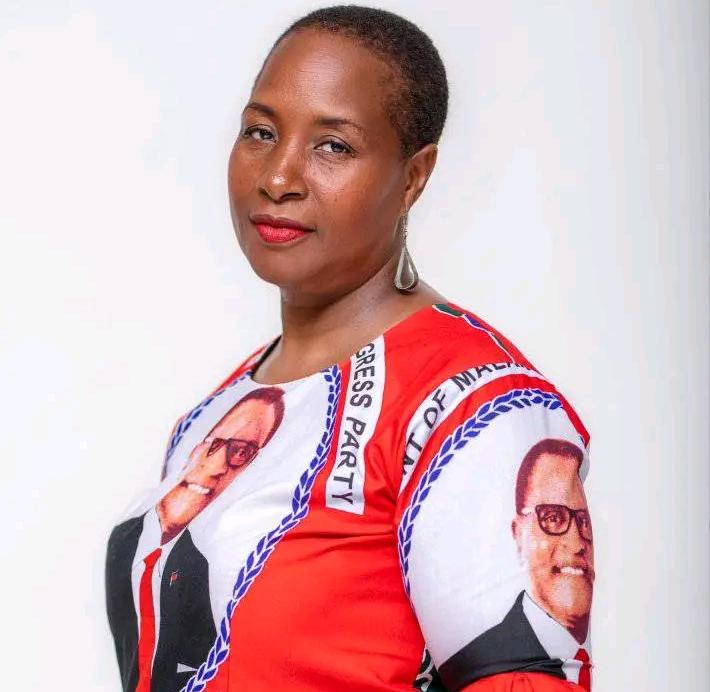
SALIMA-(MANA)-Minister of Higher Education, Jessie Kabwila, has won with a landslide in a highly contested Malawi Congress Party (MCP), primary parliamentary elections for Salima Central West Constituency.

Kabwila who has scooped 1310 votes out of 2050 votes will be the MCP torch bearer for the constituency, in the September general elections.

The Primary elections which took place at Mgoza Primary School ground, saw Kabwila going head to head with former Deputy Minister of Health, Enock Phale who is the sitting Member of Parliament for the area.

Phale got 676 votes out of the 2050 votes cast.

Meanwhile, Micah Chisale has won against Francis Mphamba for the position of Ward Councilor for the Chitala area, while in the Namanda/Lipimbi area, Noel Kamanga has won against Ester Soko.

Kabwira triumphs in MCP primaries

By Chisomo Phiri

BLANTYRE-(MaraviPost )-Minister of Higher Education and Malawi Congress Party (MCP) spokesperson, Dr. Jessie Kabwila on Monday emerged victorious in the Salima Central West Constituency primary elections.

Kabwira secured 1,310 votes, defeating Enock Phale, who garnered 676 votes.

A total of 2,004 delegates participated in the polls held at Mgoza Primary School in the lakeshore district.

This means Kabwira will represent MCP in the forthcoming general elections scheduled for September 16 2025.

My Take On It: Ode to the most consequential leader of our times: Pope Francis

The only time we are allowed to look down upon others, is when we are offering to help them up. – Pope Francis December 17 1936 – April 21 2025

The day after his balcony visit at the Vatican, Pope Francis passed away; cause of death was said to be from stroke and heart failure. Immediately accolades started pouring out from around the world. Former US President, himself a Catholic (the second Catholic US president), said of the Pope that he was “the most consequential leader,” and that he was a better person for having known him. On his part, the White House announced that current President Donald Trump will attend the Pontiff’s funeral set to be at the Basilica of Santa Maria Maggiore (also known as Basilica of St. Mary Major) in Rome, and will be the first pope in more than a century to be buried outside the Vatican, according to CNN news.

Pope Francis has a long list of firsts. His biography states that Pope Francis (born Jorge Mario Bergoglio; 17 December 1936 – 21 April 2025). He was the head of the Catholic Church and sovereign of the Vatican City State from 2013 until his death in 2025. The Pope was the first pontiff from the Society of Jesus (the Jesuit Order); he was the first Latin American; he was the first from the Americas, and the first from the Southern Hemisphere; and Pope Francis was the first born or raised outside of Europe since the 8th-century Syrian Pope Gregory III. (Wikipedia) 

Being a historian and current affairs commentator, as well as having many Catholic members of my family, it was pleasing for my sister Sylvia and me to watch Pope Francis appear at the balcony that overlooks St. Peter’s Square on Resurrection Sunday. As his custom, he delivered a special blessing called Urbi et Orbi (To the city and the world).

Earlier on Holy Sunday, Pope Francis had a brief audience with US Vice President JD Vance and his family. The vice president then held a meeting with a designated Vatican Official.

Upon his death, the accolades have been pouring on social and main media news outlets. In Malawi, pictures of Malawi leaders including President Chakwera and Malawi’s former and late Vice President Saulos Chilima. Among the international accolades are politicians, the entertainment community, and philanthropic community.

Former President Biden: Pope Francis will be remembered as one of the most consequential leaders of our time…. Above all, he was a Pope for everyone. He was the People’s Pope – a light of faith, hope, and love.

Former Secretary of State (former First Lady) Hillary Clinton: In Pope Francis’s last public address, he preached care of the marginalized, vulnerable, and migrants, saying: “I would like all of us to hope anew and to revive our trust in others, including those who are different than ourselves.” May we heed his wish.

Senator Chuck Schumer: I join the world in mourning the sad news of Pope Francis’s passing. Pope Francis’s message of hope inspired people around the world – people of all faiths. His compassion and love for the less fortunate was felt in every corner. His papacy will be remembered as a beacon of light and hope against the darkness. My prayers are with the billions of people today who are mourning his loss.

Senator Cory Booker: My condolences to everyone in the Catholic faith and beyond who are feeling the loss of Pope Francis today. May his memory be a blessing.

Melinda Gates: By naming himself the patron saint for the poor, Pope Francis placed poverty at the center of the Gospel. With grace and love, he put faith in action. His Holiness used a healing hand to lift up the most vulnerable among us. Spending time with him was one of the honors of my life.

Whoopie Goldberg: He was the closest in a long time that seemed to remember that Christ’s love enveloped believer and non-believer. He felt more like Pope John the 23rd who made belief real. Sail on Pope Francis with your love of humanity and laughter.

Eva Longoria: Rest in peace, Your Holiness Pope Francis. Thank you for being an ally to many of us and for speaking up for the marginalized. Your compassion, kindness, and humility will always be remembered.

These and many accolades of the People’s Pope resonate with the life he displayed for all to see. One of his recent acts was washing the feet of migrants whose ships had washed ashore, saying these are our brothers and sisters.

Pope Francis will be laid to rest on Saturday April 26, 2025. Among the world leaders to attend the Pope’s funeral among others are ARGENTINA – President, BELGIUM – King and Queen, Prime Minister, BRITAIN – Prince William and Prime Minister, BRAZIL – President and First Lady, CROATIA – President, SPAIN – King and Queen, SWEDEN – King, Queen Prime Minister, SWITZERLAND – President, UKRAINE – President Volodymyr Zelenskiy, UNITED NATIONS – Secretary-General Antonio Guterres, and UNITED STATES – President Trump and First Lady Melania Trump.

While almost all European countries’ leaders will be present, there to date, no leader from Africa will attend the funeral.

The late Pope Francis was born Jorge Mario Bergoglio in Buenos Aires, Argentina to parents that were immigrants from Italy.

May his soul rest in Jehovah God’s eternal loving peace,

Ministry warns higher education institutions over Mpox

By Santos Zefania

LILONGWE-(MANA)-Ministry of Higher education has expressed concerns over the immediate spread of Mpox that could affect students in schools and the general public.

According to a Press Statement dated 27 April, 2025, secretary for higher education Dr. Levis Keliyasi has urged the general public and authorities in higher education institutions to watch out over the Mpox disease by identifying signs and referring suspected infected individuals to nearby hospitals.

“The Ministry said has received confirmation from health authorities about the few recorded cases of Mpox in this country.

“Mpox is a zoonatic communicable viral disease that can be transmitted from animals to human and from human to animals respectively reads part of the statement.

According the statement, the disease spreads through contacting contaminated body fluids, that enter the body through respiratory tract, mucus membrane and open wounds.

The ministry has therefore urged all institutions and the public to be vigilant by following guidelines intended to control the disease.