world & Malawi National News and Headlines. – View the latest National news and breaking news today for Malawi from maravipost.com, world, weather, entertainment, politics and health at maravipost.com
DOWA-(MaraviPost)-Some traditional leaders in Dowa have assured President Lazarus Chakwera that he will get more than 98 percent of votes in the district compared to the previous elections, because of developments he is implementing in the district and country at large.
Speaking at Dzoole Trading centre on Thursday during President Chakwera’s stopover rally, Senior Chief Dzoole said the president, who is also a leader of the ruling Malawi Congress Party (MCP) is implementing important developments which have convinced people of Dowa to entrust their faith in him, again.
These he said include road infrastructure development, good market prices for agricultural produce, health service delivery and interventions like food distribution exercises.
“Despite being a food basket, we were also affected in terms of food shortages because of recent weather patterns. But no one will die of hunger because you are distributing maize to those affected.
“As a result, if Dowa gave you 98 percent of the votes four years ago, be assured that we are targeting 100 percent in next year’s elections,” said Senior Chief Dzoole.
He also commended the president for increasing beneficiaries both under the food distribution programme and the Affordable Input Programme saying this will ensure that many people across the country should benefit.
Speaking at Kayembe Trading Centre, Senior Chief Kayembe thanked the president for bringing electricity to the area, constructing bridges, and also for the Social Cash Transfer Programme.
“A lot of ultra-poor households who cannot afford necessities are benefiting from the programme. That is why people love you.
“As chiefs, we are taking a role of making sure that people should register so that they can be able to participate in 2025 tripartite elections. In so doing Dowa can go beyond the 98 percent record,” she said.
In his remarks, Senior Chief Chakhaza during a whistle-stop tour at Bowe said the president continues to honour chiefs by considering more chiefs with an honorarium.
Traditional Authority Mponela speaking at Mponela said the president is not segregative when providing development as evidenced by country-wide projects currently underway.
He has since asked people to register.
“A good leader leads by example, that is why I have already registered and I am urging you to do the same,” he said.
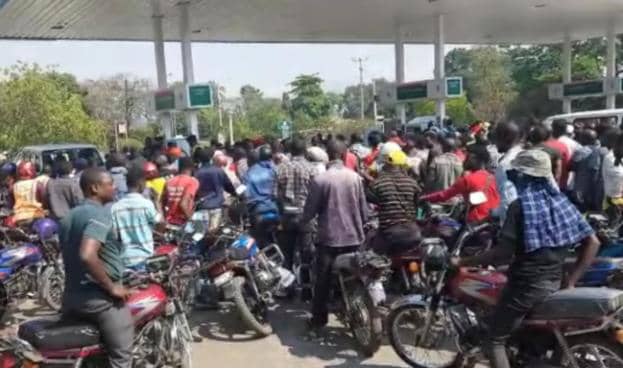
LILONGWE-(MaraviPost)-The country’s civil rights group Centre for Democracy and Economic Development Initiatives (CDEDI) plans to hold peaceful demonstrations on persistent fuel scarcity and voters registrations exercise.
CDEDI wants to hold demonstrations Thursday, November 21, 2024 in the capital Lilongwe.
Writing Lilongwe District Commissioner Dr Lawford Palani, CDEDI wants to force the Minister of Energy Holl Ibrahim Matola and Malawi Energy Regulatory Authority (MERA) Chief Executive Officer(CEO) Mr Henry Kachaje to step down, for orchestrating the longest ever fuel crisis that has now entered into a fifth week.
“Secondly, we demand that the Malawi Electoral Commission(MEC) should suspend the ongoing voter registration exercise until Election Management Devices (EMDs) leave the country”, reads CDEDI statement in part signed its Executive Director Sylvester Namiwa.
Namiwa adds, “The Centre for Democracy and Economic Development Initiatives (CDEDI), in collaboration with like-minded civil society organisations and patriotic Malawians, would like to notify your office of our intention to hold peaceful demonstrations”.
CDEDI statement adds, “Needless to emphasise that the unprecedented fuel crisis is now threatening the survival of millions Malawians in general, and has also taken a toll on the local manufacturing industry, resulting into low-revenue collection on the part of the Malawi Revenue Authority (MRA) and soon this is likely to translate into massive job losses.
“This crisis has also hugely impacted on the health sector, as the nation has lost productive citizens.
In view of the aforementioned, CDEDI feels “duty bound to lead Malawians to champion electoral transparency and credibility at the same time to say no to mediocre, impunity and arrogance and that is associated with President Dr. Lazarus Chakwera’s regime, clearly mirrored through the business as usual approach to the fuel, Forex and Fertiliser crises, that are tormenting Malawians that also double as voters and taxpayers”.
Namiwa observes further, “Furthermore, you may wish to know that prospective voters are being denied a constitutional right to register to vote in the forthcoming elections due to among many other things, the shambolic conduct of the National Registration Bureau(NRB) on top of the mistrust the citizenry have over MEC decision to engage a firm that is under investigation for bribery in Philippines.
“This strongly suggest that the firm’s credibility and ethical standing are questionable”.
According to Namiwa, the peaceful demonstrations will be held on Thursday, November 21, 2024, from 09:30hrs, starting from the Lilongwe Community Ground via Mchesi passing through Kamuzu Central Hospital, all the way to Capital Hill main entrance, marking the commencement of vigils until the demands are met.
“It is important to remind you sir, that holding peaceful demonstrations is a constitutional right, hence this letter seeks to notify your office for proper planning, and not seeking permission,” concludes Namiwa.
Malawi is in second month grappling with fuel crisis.
MZUZU-(MaraviPost)-The former Reserve Bank of Malawi (RBM) Governor Dr Dalitso Kabambe on Sunday, November 17, 2024 emerged as winner in UTM Presidential race after beating three contestants with 636 votes of 727 votes, represents 92%.
Dr. Kabambe beat three contestants including Patricia Kaliati (21 votes), Mathews Mtumbuka (22 votes) and Newton Kambala (22 votes).
His UTM presidential victory coincides with his birthday that falls on November 17.
In his acceptance speech Dr. Kabambe said, “The strife in UTM was expected because we had lost our towering pillar, Saulos Chilima”.
He also congratulated all the other candidates he competed with.
“I never thought I would win when I was coming here, it was not an easy contest,” RBM Governor.
He has asked those who have won that “it is now time to work”.
Who is Dr. Dalitso Kabambe?
Brief biography of the new UTM president Dr Dalitso Kabambe….
Kabambe is a Malawian development economist who was appointed Governor for the Reserve Bank of Malawi on 21 April 2017 by the then Malawi President Peter Mutharika.
Prior to his governorship of the country’s central bank, Kabambe worked in the Malawi Government Economic Service for a period of 19 years from 1998. He held different positions such as Principal Economist, Chief Economist, Deputy Director of Economic Planning and, Budget Director in the Ministry of Finance, Economic Planning and Development. He was the Director of Planning and Policy Development at the Ministry of Health from 2013 to 2015, where he was also in charge of the national health budget. He served as Secretary for Foreign Affairs and International Cooperation for close to 2 years. He was replaced as governor by Wilson Banda on 9 July 2020.
Kabambe is married to Brigitte Kabambe. The couple has three children. He is a member of the Seventh-day Adventist Church where he is also a Church Elder.
He holds a PhD and a master’s degree in Development Economics from Imperial College, University of London, United Kingdom which he obtained in 2008 and 2001 respectively. He got his first degree from the University of Malawi in 1998.
Kabambe publicly announced his decision to join active politics on 31 December 2020 when he was unveiled as a member of the opposition Democratic Progressive Party before defecting to the United Transformation Movement -UTM after the death Dr Saulos Chilima who was the party president.
DOWA-(MaraviPost)-President Dr Lazarus Chakwera has said the rehabilitation of the M1 road will unlock numerous economic activities for many Malawians.
The president made the remarks Saturday in Dowa West in the course of whistle-stop tours he held in the district.
Speaking at Mponela Trading Centre, President Chakwera said his government committed to rehabilitate the road because of the potential the project has to improve the economic activities of communities along, and in districts connected to the M1 grid.
“Road infrastructure development is very important because it facilitates access to social amenities like hospitals, schools and markets. Dowa is one of the agro-based districts in Malawi with heavy investments in the production of crops like maize and tobacco which require markets.
“As such, farmers in the district stand to benefit a lot because the road will open up access to markets, reducing costs of transportation of commodities, hence improving profits,” he said.
Speaking at Kayembe Trading Centre, the president said development partners like the government of the United States of America also realize the importance of road infrastructure development in the country, hence committing support.
The Malawi leader then assured that construction of the M1 road will continue to progress well until completion.
However, the president said projects must speak to each other from different angles to have meaningful development.
“As we are developing road infrastructure, we are also putting similar efforts in the sectors of education, health, technology, and trade amongst others,” he said.
Dowa Ngala Member of Parliament Arthur Mabvuto Sungitsa speaking at Kabwinja and Madisi in Senior Chief Chakhaza said it is commendable how the president has committed to rehabilitate the M1 despite various natural-related emergencies the country has been facing.
He said apart from economic opportunities, the road will also help in saving lives.
“We have been having a lot of accidents and deaths along M1 road due to the poor condition it had been for a long time. But now our road will be much safer,” he said.
Richard Chimwendo Banda, who is also a parliamentarian for Dowa East said the M1 has been under the parliamentary agenda for many years, but only realised under Chakwera’s administration.
LILONGWE-(MaraviPost)-Standard Bank Chief Executive Officer Phillip Madinga says the country’s current tough economic situation calls for pragmatic actio and wisdom to bring about calm and stability.
Madinga observes that economic stability is a prerequisite to achieving sustainable national growth that will unlock inclusive wealth as envisioned in Malawi’s 2063 Blueprint.
He was speaking during the closing ceremony of 2024 Standard Bank Be More Golf Tournament, which took place at Lilongwe Golf Club on Saturday, November 16, 2024.
Under the theme, “Sustainable Swing”, the tournament highlighted the bank’s role in striving for sustainable economic growth of Malawi.
The tournament attracted about 124 golfers.
“As a nation, we must also continue to deal with the challenge of climate-change decisively and collectively to protect the environment on which the livelihoods of many of our people depend upon through agriculture.
“Today, therefore as we come together on this course, let’s strengthen our resolve and commitment to contribute to a better future. The question is, how can we collaborate and support each other in making sustainable decisions? Together, we can create a lasting impact for future generations”, said Madinga.
Meanwhile, seasoned golfers Anas Tutlar and Ekari Mvula emerged champions of the Standard Bank Be More Golf Tournament for men and women categories respectively.
Tutlar finished the tournament with a gross score of 82 and net of 69.
Kelvin Mpanje came second, and Anthony Kasunda finished in position three in the men’s category.
In the ladies category, Mvula won with a net score of 72 and gross of 105.
Saira Chaudry came second with a net score of 74 and gross of 98 and Chaona Kumbani finished third with net of 74 and gross of 110.
The champions in each category got MK1.5 million, whereas runners-up pocketed MK1 million each.
The third placed got shopping vouchers worth K750,000
Tutlar therefore lauded the bank for the tournament saying it provided platforms for meeting new friends, business partners and among others.
DOWA-(MaraviPost)-President Dr Lazarus Chakwera has urged Malawi Congress Party followers in the country not to throw back insults which they may be encountering but concentrate on supporting governments agenda for development.
Chakwera said this during his whistle stops on Thursday in the Dowa as the district is conducting a two-week voter registration exercise for 2025 tripartite elections.
The president said his focus is on development and has no time to regard insults that may be thrown upon him.
“I have a spirit of peace, a spirit of unifying Malawi, and a spirit of development. All I want to do is maintain oneness amongst Malawians as we develop the country. That is why we are implementing developmental projects in all the regions regardless of political or tribal considerations.
“But still more there are other people who deliberately choose not to see this, but rather throw insults and hurtful words. We should not regard that but focus on development,” said Chakwera.
During his day long presence in Dowa, the president had at least eight engagements in Dowa east, with the first at Chezi, through Matekenya, Dowa Boma and Msakambewa.
Throughout his engagements, he highlighted the need for a peaceful and tolerant nation focused on development.
“Let us work in one spirit as we develop the country,” said Chakwera at Chezi.
He then committed to helping more young people access National Economic Empowerment Fund (NEEF) loans, farmers to access fertiliser and farm inputs as the growing season settles in, and construction of various infrastructures like health facilities, roads, schools and safe water systems.
Chakwera subsequently urged people to register for the 2025 elections.
MCP Regional Party Chairperson Zebron Chilondola asked people to register in good time and not wait until the last day.
“You are the one we are going to vote for, not because you are from the central region but because development is happening everywhere. You are like the Ngwazi (Dr Hastings Kamuzu Banda) in uniting the country.
“But to the electorate, this is the good time to register so that you avoid last minute grasps,” said he.
Party publicist Jessie Kabwira speaking at Nalunga in Dowa east constituency said those insulting the president are afraid that they will not win the general elections.
Parliamentarian for the area Richard Chimwendo Banda commended the president for food distribution exercises in the area, and for governments instruction to add 5000 other beneficiaries under the subsidized fertiliser program.
Various traditional leaders like Inkosi Senior Chief Chiwere, Traditional Authority Nkukula, and Inkosi Senior Chief Msakambewa also pledged to support governments plans of developing.
The recent article by Lyson Goodwin Sibande, criticizing DPP’s stance on electoral reforms, raises important questions about the party’s commitment to free and fair elections.
However, it’s crucial to examine the context and motivations behind DPP’s actions.
While it’s true that DPP defended the 2019 election results, it’s also important to acknowledge that the party has since acknowledged the need for electoral reforms.
The call for MEC chair Justice Annabel Mtalimanja’s resignation is not about undermining the electoral process but rather ensuring its integrity.
Moreover, Sibande’s assertions about DPP’s hypocrisy seem to be driven by a biased perspective, overlooking the party’s efforts to address electoral irregularities.
A closer look at the events leading up to the 2020 elections reveals a complex situation, with multiple actors involved.
It’s essential to recognize that DPP, AFORD, and UTM are working together to advocate for electoral reforms, which is a positive step towards strengthening Malawi’s democracy.
Rather than dismissing their efforts as hypocritical, we should encourage constructive dialogue and collaboration.
Exposing Biased Perspectives
A critical examination of Sibande’s article reveals a clear bias towards MCP, with the author failing to provide balanced reporting.
As an MCP supporter, Sibande’s views are tainted by party loyalty, undermining his credibility on this issue.
The article’s tone and language suggest a deliberate attempt to discredit DPP and its leaders, rather than engaging in constructive criticism.
This approach does little to advance the conversation on electoral reforms and only serves to polarize the debate.
The Way Forward
To truly address electoral irregularities and ensure free and fair elections, Malawians must engage in inclusive and respectful dialogue.
This requires setting aside party affiliations and focusing on the common goal of strengthening democracy.
DPP’s call for electoral reforms should be seen as an opportunity for collaboration, rather than an admission of guilt.
By working together, Malawian parties can create a more transparent and accountable electoral process.
In conclusion, while Sibande’s article raises important concerns, its biased perspective and failure to provide balanced reporting undermine its credibility.
A more constructive approach to addressing electoral reforms is necessary, one that prioritizes collaboration and inclusivity.
DPP’s NGC Orientation Workshop Opens with Call for Unity and Victory
By Twink Jones Gadama
Former President Arthur Peter Mutharika officially opened the orientation workshop for the Democratic Progressive Party’s (DPP) National Governing Council (NGC) members yesterday, emphasizing the need for unity and vibrant leadership to secure victory in next year’s elections.
Mutharika urged the new NGC to bring innovative ideas to the table, fostering a collaborative environment that would propel the party forward.
His remarks set the tone for the workshop, attended by key party officials, including Secretary General Peter Mukhito and National Director Mary Navicha.
Mukhito expressed gratitude to Mutharika for supporting the workshop, which aims to strengthen the party’s structures and strategize for future success.
This event follows recent appointments of presidential advisors, sparking internal discussions within the party.
Navicha reaffirmed the party’s commitment to women’s empowerment, highlighting DPP’s record of recognizing women in all positions.
“Women are ready to help the party, and we won’t lag behind,” she asserted, echoing the party’s resolve to promote gender equality.
The workshop’s focus on unity and strategy aligns with DPP’s efforts to revamp its leadership and prepare for upcoming elections.
As Malawi’s political landscape continues to evolve, the opposition party seeks to reassert its influence.
The NGC meeting, held at Lotus Hotel in Blantyre brought together key stakeholders to discuss party direction and goals.
This gathering demonstrates DPP’s proactive approach to addressing internal concerns and external challenges.
As the country looks toward next year’s elections, the DPP’s ability to present a united front will be crucial.
Mutharika’s call to action and the party’s renewed focus on women’s empowerment signal a determination to reclaim power.
In the words of Secretary General Mukhito, “Let us unite our efforts and focus on steering the party back into government, with the ultimate goal of alleviating the suffering of Malawians caused by the current MCP administration.”
The orientation workshop marks a significant step in DPP’s journey toward electoral success.
With a revitalized NGC and a clear vision for the future, the party is poised to make a strong comeback.
Former Malawian Presidents Condemn Violence Against Peaceful Protesters, Call for Immediate Action
Bakili Muluzi, Joyce Banda, Peter Mutharika
By Twink Jones Gadama
In a strong and united stance against the recent outbreak of violence in Lilongwe, former Malawian Presidents Dr. Bakili Muluzi, Dr. Joyce Banda, and Professor Arthur Peter Mutharika have issued a communique denouncing the assault on democracy and demanding urgent action.
The violence, which occurred on November 13, 2024, during peaceful demonstrations regarding the chaotic registration process for the upcoming 2025 General Elections, has been met with widespread condemnation from the former heads of state.
They emphasized that such actions not only violate the principles of justice and order but also pose a direct threat to the democratic values of the nation.
Citing the Malawian Constitution, as well as international treaties and agreements under the United Nations, the African Union, and the SADC, the former presidents highlighted the importance of free and fair elections, integrity in electoral processes, respect for the rule of law, and protection of human rights, including freedoms of expression and peaceful assembly.
The communique outlined specific demands, including the immediate investigation, arrest, and prosecution of all perpetrators of the violence by the Inspector General of Police.
It also called upon President Chakwera and the Malawi Congress Party to condemn the violence unequivocally and take steps to prevent its recurrence in the future.
Furthermore, the former presidents urged the Malawi Electoral Commission to review its decisions leading to the crisis, particularly regarding the controversial EMDs and voter suppression issues related to the National Registration Bureau’s failure to issue Mzika cards to all eligible voters.
Transparency and conflict resolution were emphasized as crucial aspects that the Commission must prioritize.
The National Registration Bureau was also called upon to comply with a court ruling mandating its presence at all registration centers and ensure timely issuance of Mzika cards to eligible citizens.
Concerns were raised about technical issues with the Election Management Devices failing to register new voters accurately, potentially compromising the integrity of the voters’ roll.
In conclusion, the former presidents emphasized the urgency of the situation, stating that action must be taken promptly to uphold democracy in Malawi.
The call for accountability, transparency, and respect for constitutional rights echoed strongly throughout the communique, signaling a united front against violence and injustice in the country.
The time for action is now, as democracy in Malawi stands at a critical juncture, demanding unwavering commitment from all stakeholders to uphold the principles of justice, equality, and freedom for all citizens.
The 4th Global High-Level Ministerial Conference on Antimicrobial Resistance (AMR) wrapped up on Saturday with the adoption of the Jeddah Commitments, which lay out practical, actionable and cross-sectoral steps stakeholders can take to address this complex health issue. UN Health News
The top UN health official gave a sobering reality check as the Fourth Global High-Level Ministerial Meeting on Antimicrobial Resistance began Friday in Jeddah: “AMR doesn’t just threaten to make the medicines on which we depend less effective; it’s happening now.”
In remarks to the Conference, Tedros Adhanom Ghebreyesus, the Director-General of the UN World Health Organization (WHO), said that what is being discussed is not merely the risk of people dying because of superbug infections, “they are dying now – 1.3 million people every year.”
Arriving in the Saudi Arabian seaside city of Jeddah after participating in the latest UN climate conference, COP29, now underway in Baku, Azerbaijan, Dr. Tedros said antimicrobial resistance (AMR) action “is equally as urgent as climate action.”
He said that the Political Declaration on AMR agreed this past September by the UN General Assembly sets clear targets and the task now is to translate it into concrete action.
The WHO chief highlighted three priorities for implementing that Declaration – particularly for low- and middle-income countries:
Increasing sustainable financing from both domestic and international sources;
Increasing research, development, and innovation to address “the dry antimicrobial pipeline”; and
increasing equitable access to quality antimicrobials, while ensuring appropriate use.
“The irony of AMR is that it’s driven by the inappropriate use of antimicrobials, and yet a large number of people also die because they can’t access these medicines at all,” he said.
Emphasizing that AMR “is right here and right now, but so are the solutions” Dr. Tedros called on stakeholders to seize the opportunity presented at the Jeddah Conference “to accelerate action on AMR, commit to stronger collaboration, and protect the medicines that protect us.”
Antimicrobial resistance occurs when bacteria, viruses, fungi, and parasites cease to react to antimicrobial drugs. Because drug resistance renders antibiotics and other antimicrobial treatments ineffective and makes treating infections more difficult or impossible this can lead to superbugs that can’t be stopped by medicines that are the first choice for treating diseases these germs cause, increasing the risk of disease transmission, severe illness, disability, and death.
‘Precious gift’ of modern medicine
Saudi Minister of Health Fahad Al-Jalajel warned participants at the conference that AMR “deeply affects all aspects of life” and poses a direct threat to public health, economic stability, and global security.
This challenge knows no borders and affects all ages and groups”, he said.
Mr. Al-Jalajel said all states participating in the ministerial meeting are “well aware of the magnitude of this challenge and the urgent need to take new measures to address AMR”.
The ‘Jeddah Declaration’ currently being negotiated as the Conference’s outcome document, contains important Saudi initiatives, such as the formation of a global scientific committee to support antimicrobial resistance, the establishment of a ‘biotechnology bridge’ to support research and development, in addition to a proposed knowledge centre that aims to raise community awareness on AMR.
Mr. Al-Jalajel stressed that at this stage, the draft declaration serves the purpose of the Conference’s theme, ‘from declaration to implementation’, and fulfills the agreements reached in the General Assembly’s political declaration.
“Without effective antibiotics, we risk losing the gains of modern medicine. We owe it to future generations to preserve this precious gift,” he said.
AMR transcends health
Dr. Hanan Al Balkhy, the WHO Regional Director for the Eastern Mediterranean, said AMR is not an issue that is covered solely by the third Sustainable Development Goal (SDG 3) related to health, rather, the AMR agenda sits in at least 11 of the 17 global goals – from food production to equity.
This is why multi-sectorial conversations like those taking place in Jeddah are so important, she said, “to bring to the attention of stakeholders working on the other SDGs that, by the way, AMR should not be forgotten in your agendas.”
Speaking to UN News, Dr. Al Balkhy said that as a Saudi citizen, she was very proud that the Jeddah Declaration and the commitments set to be adopted Saturday at the close of the conference “are coming out from my hometown, where I grew up and where I did my studies.”
The Jeddah Conference, she said, is about partnerships, sharing experiences, and understanding better ways of communication, adding that bending the curve, even a little, on AMR “would be a great achievement”.
Challenging even in times of peace
Dr. Al Balkhy said the push to tackle AMR is a “very heavy agenda in peace, and it’s even heavier in conflicts” as people lack the proper hygiene and health tools to keep themselves safe and avoid creating a breeding ground for antimicrobial resistance.
As conflicts are rampant in the area she serves, the Regional Director said WHO said she would remain “a strong voice on abiding by international law in not attacking health care facilities, which is considered a main investment for access to health, and not to target health workers who are critical in providing proper health care.”
She said WHO is trying to be “as innovative as possible”to protect people in conflict zones from the spread of AMR, including by providing safe drinking water and mitigating open defecation challenges.
Bacteria are here to stay
Ms. Al Balkhy has dedicated a large part of her studies and career to combating AMR and so understands the difficulty in tackling this global health challenge.
She said: “Bacteria have one aim in life. They’re going to survive. They survived before us and unfortunately, they might be surviving millions of years after us. So, the smart thing for us to do is at least to catch up with the evolution of these microbes and to make sure that we’re not harming ourselves by them with the machinery and the equipment to become resistant to these very critical therapeutics.”
She told UN News that she hoped the international community could reach a point where it is no longer consumed by war and could focus on “development, prosperity, advanced medical care, [so that] we’re not worried that these bacteria will set health care advances back decades.”
‘Real change’ on the ground
Another conference attendee, Thanawat Tiensin, Assistant Director-General of the UN Food and Agriculture Organization (FAO), said his organization would like to ensure that countries, producers, farmers, the private sector, academia, and other stakeholders take their own initiatives to reduce the need for antimicrobials in farming.
Through collective action, he stressed, “more can be done to ensure better health outcomes for people and animals”.
Mr. Tiensin, who also serves as the organization’s Chief Veterinarian, told UN News about several FAO initiatives that serve this purpose, including RENOFARM (Reduce the Need for Antimicrobials on Farms).
Others he mentioned included InFarm (International FAO Antimicrobial Resistance Monitoring system), and the Global Farmer Field School Platform.
All these initiatives serve as tools to build sustainable agrifood systems, and to transfer knowledge and best practices directly to the people who can make real change on the ground.
With approximately 70 per cent of antibiotics being used in livestock production, aquaculture and plant production, Mr. Tiensin said: “If we want to control the antimicrobial resistance problem, we need to control it at the root. We need to change the way that we are producing food, and by doing so, we can make sure that we can feed 8 billion people today and 10 billion people by 2050.”
BLANTYRE-(MaraviPost)-The country’s former leaders have joined signatures calling on President Lazarus Chakwera’s administration to walk the talk on the promotion of political governance.
The former Malawi Presidents Bakili Muluzi, Joyce Banda and Peter Mutharika are reacting to Wednesday’s halted opposition political parties’ demonstrations whereby suspected Malawi Congress Party (MCP)’s panga wielding thugs disrupted the gathering.
In a statement issued on Friday, November 15, 2025 and signed by trio describes chaotic scenes that foiled Wednesday’s demonstrations in Lilongwe as an outrageous assault on Democracy.
“Our Republican Constitution, international treaties and agreements under the United Nations, the African Union and the SADC all provide for regular, free and fair elections that are conducted with integrity by an independent electoral commission. They also provide for respect for the rule of law, popular participation, equality before the law, and human rights, including freedoms of expression, assembly, and association.
“Specifically, Section 40 of our Constitution provides for political freedoms, and Section 38 guarantees the right to peaceful demonstration,” the trio observes.
“Violence Against Peaceful Protestors is an Outrageous Assault on Democracy. We unequivocally condemn the violent and unlawful actions that erupted on 13 November 2024 in Lilongwe,” reads the statement in part.
The trio observes, “This brutality against peaceful demonstrators—who were rightfully protesting the chaotic registration process for the 2025 General Elections—represents a grave assault on democracy.
“Such acts are not only unacceptable but also a direct affront to the principles of justice and order that our nation stands for”.
The trio wonders why Malawi Police Service (MPS) officers were reluctant to quell the situation despite a clear indication of rights violation.
The statement therefore demands, “The Inspector General of Police must launch an immediate investigation, arrest, and prosecute all perpetrators of the violence, President Chakwera and the Malawi Congress Party must categorically condemn this violence, distance themselves from it, and reassure the citizens that such acts will not be tolerated again.
“We are aware that the Malawi Electoral Commission (MEC)’s Election Management Devices (EMDs) are failing to pick the unique numbers of the new registrants in the NRB system. This must be resolved immediately to prevent the voters’ roll from being irreparably compromised. The time for action is now! Our democracy demands it”.
However, MCP publicist Dr. Jessie Kabwila demanded evidence and proof that whose who foiled opposition demonstrations were the party’s members.
Malawi government spokesperson Moses Kunkuyu is yet to comment on the matter.
Former Presidents condemn violence and demand electoral justice ahead of 2025 Elections
Bakili Muluzi, Joyce Banda, Peter Mutharika
By Burnett Munthali
Dr. Bakili Muluzi, Dr. Joyce Banda, and Professor Arthur Peter Mutharika, three of Malawi’s former heads of state, have strongly condemned the violence and unlawful actions that erupted on November 13, 2024, in Lilongwe.
The violence occurred during peaceful protests by citizens who were rightly voicing their concerns over the chaotic registration process for the 2025 General Elections.
The former leaders expressed outrage at the brutality inflicted on demonstrators, calling it a severe assault on the nation’s democratic principles.
In a joint statement, the three former Presidents stated that the actions of the police, which were witnessed during the protests, represent a grave violation of the rights guaranteed by the Malawian Constitution and international law.
They pointed out that the events were not only unlawful but also directly contrary to the principles of justice, order, and human dignity upon which Malawi’s democracy is built.
“The violence witnessed on November 13 was an affront to our hard-won democracy. This brutality against peaceful demonstrators represents a direct attack on the freedoms enshrined in our Constitution and the international agreements we are signatories to,” the former Presidents said.
The former leaders emphasized that the Malawian Constitution, along with international treaties under the United Nations, African Union, and Southern African Development Community (SADC), guarantees citizens the right to free and fair elections conducted by an independent electoral body. They also highlighted that these documents protect the rights to freedom of expression, assembly, and association.
Section 40 of Malawi’s Constitution guarantees political freedoms, while Section 38 enshrines the right to peaceful demonstration. The former Presidents called on all authorities to respect these rights, particularly as Malawi approaches the critical 2025 elections.
“It is vital that Malawians are allowed to peacefully assert their constitutional right to participate in the electoral process. Democracy thrives when citizens can freely voice their concerns without fear of violence or intimidation,” they said.
In light of the events, the three former Presidents made the following demands:
Firstly, the Inspector General of Police must launch an immediate investigation into the violence, arrest all perpetrators, and ensure they are held accountable. Video evidence from the incident must be used to support swift action.
Secondly, President Lazarus Chakwera and the Malawi Congress Party (MCP) must publicly condemn the violence and disassociate themselves from such actions. They must reassure citizens that such brutality will not be tolerated again.
Thirdly, The Malawi Electoral Commission (MEC) must urgently review its decisions that have contributed to the crisis, including the controversial use of EMDs. Voter suppression caused by the National Registration Bureau (NRB)’s failure to issue Mzika cards to eligible voters must be addressed immediately. Transparency and accountability are non-negotiable.
Fourthly, The National Registration Bureau must fully comply with the court ruling requiring its presence at all registration centers to ensure every eligible citizen receives their Mzika card promptly. Additionally, the failure of the Election Management Devices (EMDs) to register new voters in the NRB system must be resolved to prevent further complications with the voters’ roll.
The former Presidents concluded their statement with a call to action: “The time for action is now! Our democracy demands it. The citizens of Malawi have a right to free, fair, and transparent elections. It is our collective responsibility to ensure that the integrity of our electoral process is upheld.”
As the nation heads into the 2025 elections, the demand for electoral justice is louder than ever. Dr. Muluzi, Dr. Banda, and Professor Mutharika’s call for action serves as a crucial reminder that democracy is fragile and must be safeguarded at all costs. The message is clear: Malawi must work together to ensure that its upcoming elections are free from violence, manipulation, and disenfranchisement.
State House accused of protest disruptions: Democracy in the spotlight
By Burnett Munthali
Lilongwe, Malawi – Allegations linking State House to the disruption of peaceful protests in Lilongwe on Wednesday have thrown Malawi’s democratic principles into sharp focus. What began as a calm demonstration against the governance of the Malawi Congress Party (MCP) turned chaotic after armed groups allegedly associated with State House intervened.
A pivotal moment in the unrest was the arrest of a man at Crossroads Filling Station. Carrying a panga knife hidden in a laptop bag, the suspect reportedly tried to blend into the crowd. Witness accounts suggest he later shopped casually in the area, but vigilant citizens detained him. During questioning, he presented identification linking him to State House employment.
Carrying a panga knife hidden in a laptop bag, the suspect reportedly tried to blend into the crowd
Protesters confiscated both the weapon and the documents before handing him over to police. Sources have identified the man as a resident of Kasiya, Lilongwe, deepening public suspicions about official involvement in the violence.
A public outcry
The violence has ignited outrage among civil society groups, human rights advocates, and political leaders. Many view the incident as an infringement on the right to peaceful assembly.
In a rare moment of unity, former presidents Dr. Bakili Muluzi, Dr. Joyce Banda, and Professor Arthur Peter Mutharika condemned the disruptions. Their joint statement described the violence as a grave threat to democracy. “Intimidation and violence have no place in our democracy. Citizens must be free to voice their concerns without fear,” they declared.
Examining the State House connection
The alleged involvement of State House, along with groups from Mchesi and Msundwe, has cast doubt on the MCP government’s commitment to protecting fundamental freedoms. Critics have accused the administration of orchestrating the violence to suppress dissent.
“The idea that individuals linked to State House may be part of such operations is deeply troubling,” said a prominent civil rights activist. “This undermines public trust and raises serious questions about transparency and accountability in government.”
The demand for justice
With the suspect now in police custody, pressure is mounting for a transparent investigation. Authorities have yet to comment on the suspect’s detention or potential charges. Activists warn that any attempt to sideline the investigation could further erode public confidence in the government.
Political observers emphasize that handling the situation transparently is critical. “This is a test for Malawi’s democracy,” one analyst noted. “How the authorities respond will shape public perceptions of the administration’s integrity.”
Democracy on trial
This incident has brought Malawi’s democratic values under intense scrutiny. For the MCP government, the allegations represent a critical challenge. Citizens are demanding clarity, justice, and a reaffirmation of their constitutional rights.
The nation now waits to see whether this episode will lead to accountability and reform—or deepen the divisions already straining Malawi’s political landscape. The outcome could define the future of democracy in the country.
Malawi breaking news and World News. News about Malawi, Malawi Business, Malawi Tourism, Malawi Politics, Malawi News, World and Africa Top News.