Category Archives: Malawi

world & Malawi National News and Headlines. – View the latest National  news and breaking news today for Malawi from maravipost.com, world, weather, entertainment, politics and health at maravipost.com

2024/2025 to expect good rainfall season for Malawi

By Prisca Mashushu

LILONGWE-(MANA)-The Department of Climate Change and Meteorological Services has expressed satisfaction over the presentation of the 2024-2025 rainy season which shows that the country will have good rainfall that will help to boost the agriculture sector to produce hamper yields.

Speaking during the press briefing, on Friday, in Lilongwe, Director for department of climate change and meteorological services, Lucy Mtilatila said people should expect normal rainfall especially from December this year to April next year compared to last year as it was above normal rainfall.

“The onset will be a bit erratic especially October and November it doesn’t look good but the moment the season sets in December, farmers should expect good rainfall.

“We are also expecting intense rainfall hence challenges of floods are to be expected, but farmers should have high hopes to produce good yields,” she said.

She further added that Malawi will be slightly affected by El Niño with above rainfall in Southern Africa including Malawi with positive results compared to last year.

The Principal Secretary for the Ministry of Natural Resources and Climate Change, Dr. Yusuf Nkungula highlighted that the 2024/2025 rainy season outlook will benefit farmers in planning and preparing at the right time in order to produce good yields.

“People should expect good rains this season and farmers are encouraged to plan properly so that it can help them to harvest more yields,” he said.

He further said the national climate outlook will also help in effective planning and good implementation of climate change.

Director of resources for the Ministry of Water and Sanitation, James Chitete said 2024/2025 rainy season outcome will help the department of climate change and meteorological services to work symbiotically with the Ministry of Water and Sanitation on how to manage meteorological focus and hydrological services in terms of floods and other natural disasters.

“This will benefit Malawians as it specializes on duties of various sectors to share various issues concerning climate change in the country,” he explained.

DPP MP Gladys Ganda makes public apology to President Mutharika and party

By Twink Jones Gadama

In a surprise move, DPP Member of Parliament for Nsanje Lalanje, Gladys Ganda, has made a public apology to His Excellency Professor Arthur Peter Mutharika, the DPP family, and the general public for her remarks made on September 9, 2024, at Sorjin in Nsanje Lalanje.

Ganda’s apology comes after she praised President Lazarus Chakwera and drummed up support for him in next year’s election, sparking controversy within the DPP ranks.

Following her comments, Ganda was reassigned from her position as Director of Elections to Presidential Advisor.

In her apology, Ganda expressed regret over her speech, stating that she had withdrawn her previous statements.

She attributed her careless words to the environment, claiming it was not intentional.

Ganda’s apology has been met with mixed reactions from the public, with some accepting her remorse while others have questioned the sincerity of her apology.

The DPP has acknowledged Ganda’s apology, with party officials stating that they appreciate her willingness to make amends.

Ganda’s reassignment and subsequent apology have sparked debate about political loyalty and the implications for the DPP in next year’s election.

As the political landscape continues to evolve, Ganda’s apology serves as a reminder of the complexities of political allegiance and the importance of accountability in public office.

In a statement, Ganda emphasized her commitment to the DPP and its values, reaffirming her support for President Mutharika and the party’s leadership.

The apology has brought attention to the internal dynamics within the DPP, with some speculating about potential divisions within the party.

As Malawi approaches the 2025 elections, political alliances and loyalty will be closely watched, and Ganda’s apology serves as a reminder of the high stakes involved.

Desperation for success: Malawi FA hires 13 coaches since 2010

LILONGWE-(MaraviPost)-The Football Association of Malawi (FAM) has employed a staggering 13 coaches over the past 14 years in a bid to restore the Malawi national football team’s glory.

This high turnover of coaches highlights FAM’s desperation to achieve success on the international stage.

But the constant change in leadership has raised questions about the long-term stability and direction of the Flames.

Since 2010, the Flames have struggled to maintain consistent performance, prompting FAM to frequently reshuffle its coaching staff.

This revolving door of coaches has included both local and foreign tacticians, each tasked with reviving the team’s fortunes but ultimately falling short of expectations.

The national team’s inconsistent results have led FAM to continuously seek new strategies and leadership, hoping to find the right formula for success.

Among the 13 coaches hired since 2010 are notable figures such as Kinnah Phiri, Ronny van Geneugden, and Meck Mwase, all of whom had varied tenures.

While some coaches, like Kinnah Phiri, managed to lead the team to significant victories, including qualification for the 2010 Africa Cup of Nations (AFCON), others struggled to meet expectations in major tournaments and international competitions.

The decision to employ such a large number of coaches within a relatively short period suggests a lack of long-term planning and vision.

Constantly changing leadership disrupts the team’s continuity, player development, and strategic execution.

Critics argue that the instability has contributed to the Flames’ inconsistent performance on the field, as each coach brings new systems and philosophies, making it difficult for the players to adapt and form cohesive playing styles.

FAM’s desperation is understandable, given the immense pressure from fans and stakeholders to see Malawi excel on the international stage.

However, some analysts believe that the association’s approach may be counterproductive.

They suggest that instead of frequent changes, FAM should focus on investing in long-term development programs, youth systems, and building a strong technical team that can nurture talent and provide stability over time.

As FAM continues its search for a winning formula, the challenge remains: Can the association balance the need for immediate results with the importance of building a sustainable football structure for Malawi’s future success?

The Flames’ future depends not only on the next coach but on a broader commitment to consistent development and strategic planning.

AFORD’s Chihana seeks Malawians apology for Chakwera’s Tonse Alliance Govt betrayal

LILONGWE-(MaraviPost)-The opposition Alliance for Democracy (AFORD) leader Enoch Chihana is seeking Malawians apology for siding with Malawi Congress Party (MCP) to form Tonse Alliance government arguing that the administration has betrayed citizenry expectations.

Chihana said, “As one of Tonse Alliance government signatories, expected President Lazarus Chakwera to honor Tonse Alliance promises made in 2020 but, “MCP and Chakwera went astray”.

The AFORD leader therefore assured the nation that his party and other opposition parties are ready to govern Malawi with clear agenda to revive the nation’s lost glory.

Chihana was speaking after official opening of 2024 AFORD elective convention at Golden Peacock Hotel in the capital Lilongwe.

“I’m apologising to all Malawians for siding with Malawi Congress Party to form Tonse Alliance administration which has failed miserably to deriver citizens’ expectations.

“But the past is gone. We must focus on the next course of action by removing Chakwera and MCP from power in 2025,” dares Chihana.

He also criticized the growing corruption in the country, calling it a ‘cancer’ that is hindering national progress.

Chihana accused Chakwera leadership of being more focused on self-interest rather than serving the people, warning that this trend cannot continue.

He further added that with various political parties uniting, they are preparing to take over the government.

Chihana also said that after more than 50 years of independence, Malawi must move away from its heavy reliance on foreign donors.

AFORD elective convention has attracted opposition parties including Democratic Progressive Party (DPP), United Democratic Front (UDF), UTM, People’s Party (PP) and Freedom Party.

More to come….

Over 22,500 have suffered ‘life-changing injuries’ in Gaza: WHO

More than 22,500 people – a quarter of those wounded in Gaza since Israel’s offensive began – have life-changing injuries, requiring rehabilitation services “now and for years to come”, the UN World Health Organization (WHO) reported on Thursday.

These include severe limb injuries, amputations, spinal cord trauma, traumatic brain injuries and major burns.

Israeli forces pushed into Gaza in response to the 7 October 2023 terror attacks by Hamas and other Palestinian armed groups in southern Israel.

Dr. Richard Peeperkorn, WHO Representative in the occupied Palestinian territory, highlighted that the surge in rehabilitation needs is occurring alongside the wholesale collapse of Gaza’s healthcare infrastructure.

Patients can’t get the care they need. Acute rehabilitation services are severely disrupted and specialized care for complex injuries is not available, placing patients’ lives at risk. Immediate and long-term support is urgently needed to address the enormous rehabilitation needs.”

Services non-existent

Services such as wound care, physical therapy, and psychological support are either inaccessible or entirely unavailable, leaving thousands at risk of further complications, disabilities or even death.

According to the UN health agency, only 17 of Gaza’s 36 hospitals remain partially functional, primary healthcare and community-level services are frequently suspended, due to insecurity, attacks and repeated evacuation orders.

Gaza’s only limb reconstruction and rehabilitation centre, located in the Nasser Medical Complex and supported by WHO, has been non-functional since December 2023 due to lack of supplies and staff, and was further damaged in a February 2024 raid.

Additionally, the loss of trained physiotherapists due to the fighting between Israel and Hamas has further hampered rehabilitation efforts.

Thousands more at risk

The figures, detailed in WHO’s analysis Estimating Trauma Rehabilitation Needs in Gaza using Injury Data from Emergency Medical Teams, reflect data as of 23 July.

Beyond the newly injured, tens of thousands of Palestinians already living with chronic conditions or impairments are now at heightened risk due to the collapse of critical services, WHO said.

As the hostilities continue, WHO emphasized the need for safe access to all essential health services, including rehabilitation, to prevent further suffering.

It renewed its call for an immediate ceasefire to facilitate aid, rebuild the health system and save lives.

Economic devastation

The ongoing conflict has also left Gaza’s already fragile economy in ruins.

According to a report published on Thursday by UN Trade and Development, UNCTAD, the Strip’s gross domestic product (GDP) has fallen by a staggering 81 per cent, pushing the region into an unprecedented economic crisis.

Massive job losses and soaring unemployment have worsened poverty, leaving most families in dire need of humanitarian assistance, UNCTAD said, adding that the economy of the West Bank has also been severely disrupted by violence, demolitions, confiscations and settlement expansions.

“The Palestinian government’s fiscal stability is under immense pressure, jeopardizing its ability to function effectively and provide essential services,” it noted.

The report called for urgent intervention by the international community to stabilize the economy, rebuild infrastructure and support long-term peace efforts in the region.

“This includes considering a comprehensive recovery plan for the occupied Palestinian territory, increased international aid and support, release of withheld revenues and lifting the blockade on Gaza.”

Experts denounce harassment of journalists

In a news release on Thursday, independent UN human rights experts condemned the escalating violence, harassment and obstruction of journalists in the West Bank since the start of Israel’s military offensive there on 27 August.

“We strongly denounce the attacks and harassment of journalists in the illegally occupied West Bank, which are nothing but crude attempts by the Israeli army to block independent reporting on potential war crimes,” the Human Rights Council-appointed experts said.

At least three incidents in September involved Israeli security forces firing live ammunition at journalists and their vehicles in Jenin and Tulkarm while they were reporting on military operations and civilian casualties.

Four more were injured, even though several were wearing clearly marked press jackets.

Israeli forces also impeded journalists – including an Al Jazeera team – from doing their work, forcing them to delete material and subjecting them to intimidation. At least one journalist was arbitrarily arrested and interrogated, while numerous others reported being chased down by bulldozers operated by Israeli security forces.

Disdain for the press

“It is deeply disturbing to see Israeli soldiers in the West Bank replicating the same disdain for the safety of journalists as in Gaza in blatant violation of international law. Foreign media continue to be denied access to Gaza and now their safety in the West Bank is also being seriously threatened, gravely hindering their journalistic work,” the experts said.

Since October 2023, at least 29 journalists have been detained by Israeli forces in the West Bank, and three by the Palestinian Authority. Some remain under administrative detention, with documented cases of ill-treatment, including sexual and gender-based violence.

The experts added that Israel, as an occupying power, must respect the work and safety of journalists in the occupied Palestinian Territory, as required by international law. They further noted that they are in contact with the Israeli Government on the issue.

Appointed and mandated by the Geneva-based Human Rights Council, the experts are mandated to monitor and report on specific thematic or country situations. Independent of the United Nations, they are not UN staff and do not draw a salary for their work.

UN Health News

Donald Trump Once again refuses to accept humbling defeat after being outclassed by Kamala Harris

Former President Donald Trump went into sales-pitch mode immediately after Tuesday night’s debate, walking into the spin room to extol his own performance, crowing on Fox News and going on a late-night posting spree to hype unscientific online polls that he said showed he had crushed Vice President Kamala Harris.

“That was my best Debate, EVER, especially since it was THREE ON ONE!” Trump posted on Truth Social, minutes after the debate ended, referring to the two ABC News moderators.

Trump was insisting the same things privately to advisers and allies in the hours after the debate, according to three people with direct knowledge who spoke on the condition of anonymity to describe the private conversations. Trump appeared jubilant, as if he truly believed what he was telling them, the three people said.

But Trump’s actions after the debate told another story.

In the lead-up to his debate with President Joe Biden in late June, Trump’s aides suggested that he might want to go into the spin room afterward. But he rejected the idea, and after his triumphant performance that night he felt no need to enter the spin room, understanding that his victory over the enfeebled president was so comprehensive that he could sit back and watch the press tear Biden apart.

His aggressive spinning Tuesday night and Wednesday morning appeared to be an unspoken acknowledgment that his performance was suboptimal.

The day after Trump’s debate with Harris, his aides and his allies were largely echoing his praise of his performance in public, but privately several conceded that the former president had a rough outing, in stark contrast to his more controlled appearance against Biden.

An exception was the recent Trump endorser Robert F. Kennedy Jr.

RFK Jr.
Independent presidential candidate Robert F. Kennedy Jr. makes an announcement on the future of his campaign in Phoenix, Arizona, U.S. August 23, 2024. REUTERS/Thomas Machowicz

“Vice President Harris clearly won the debate in terms of her delivery, her polish, her organization and her preparation,” he said on Fox News on Wednesday, adding that while Trump “wins” on substance, “he didn’t tell that story.”

Some of his allies chose to publicly blame his debate preppers instead of Trump himself. And yet at the same time, the supporters who are close to him were also of the hope that one bad night would ultimately not amount to much for an unpredictable, norm-busting presidential candidate who has had dozens upon dozens of bad nights over the past nine years.

His advisers began to brace for a wave of negative news coverage immediately after the debate, and for this to perhaps result in a temporary, modest polling boost for Harris. Some are expecting days of bad news cycles instead of a period of momentum in which they had planned to hammer Harris for her liberal record and connection to Biden.

The Harris campaign immediately embraced a second debate. Trump was more circumspect.

“The reason you do a second debate is if you lose — and they lost,” Trump told Fox News’ Sean Hannity on Tuesday night after the debate. By Wednesday, Trump was lashing out at ABC News. “They ought to take away their license for the way they did that,” he said in another Fox News appearance. He mused instead about which moderators from Fox he would find acceptable to host a second debate.

Few if any of Trump’s close allies and advisers share his purported view of his performance against Harris, though it is unclear how honest they have been with him so far. When Trump asks, “What do we think?” — as he did repeatedly to people he spoke to overnight and on Wednesday — the easiest response has been to tell him that he was great. And many took that path of least resistance.

Trump will most likely receive some of his toughest feedback through the television, even on what would normally be friendly shows. While some Fox News opinion hosts, such as Jesse Watters, hunted for the positives in Trump’s performance, many of the commentators on the network Wednesday morningdid not offer glowing reviews.

“The moderators didn’t fact-check her, but there’s no reason he can’t do it,” former Rep. Trey Gowdy, R-S.C., said on Fox News.

Sen. Lindsey Graham, R-S.C., praised Trump on social media after the debate for making the case that America was safer under his administration. But in the spin room afterward, according to Politico, Graham was clearly disappointed, outlining what he wished he had heard: “What I was hoping for was: ‘When I left we had the most secure border in 40 years, mortgage rates were below 3%, gas was $1.87, the Abraham Accords, energy independent, you screwed it all up.’”

Several Trump allies and advisers who spoke to The New York Times on the condition of anonymity said they saw the night as a colossal missed opportunity. He had one overriding goal for the evening: to force Harris to own her liberal policy record and to attach her in voters’ minds to the most unpopular aspects of the Biden-Harris record. Instead, he found himself defending many of his decisions and past positions, while spreading unfounded claims about immigrants’ eating pets.

Asked to comment, Karoline Leavitt, a Trump campaign spokesperson, said the former president went to the spin room “because he’s fearless and unafraid to take questions from reporters, unlike Kamala Harris,” and knocked her for not giving one-on-one interviews or holding news conferences.

She added that Trump “strongly drove home” his message that Harris was “responsible for the problems we are facing today,” a point Trump rarely made Tuesday night. And she insisted that Trump’s advisers “could not be more proud” of Trump “for delivering a masterful debate performance in a three-on-one fight,” accusing the ABC News moderators of ganging up on the former president.

Trump’s advisers and allies had hoped he would turn every question Tuesday night back to Harris’ incumbency, asking her why she hadn’t accomplished her plans in the 3 1/2 years she has served alongside Biden. His aides felt good about how he had performed in his prep sessions. One person briefed on the sessions said before the debate that he expected Trump to ask the television audience a version of the devastating question that Ronald Reagan posed in his 1980 debate with President Jimmy Carter: Were voters better off now than they were four years ago?

Yet Trump waited until the end of the debate to deliver a version of that argument, seeming to recall his key objective for the night only during his closing statement. He repeatedly took Harris’ bait, getting caught up on personal grievances like the size of his crowds, the dollar amount of his family inheritance and whether he won the 2020 election that he lost.

In his debate prep sessions, Trump’s advisers suggested “pivots” for many of the lines of attack that came up Tuesday night. These were typically responses that would turn the focus back to Harris’ partnership with Biden and their joint stewardship of the economy and immigration. But instead of using those pivots, Trump snagged himself on every trap that Harris laid out for him.

The question now for Trump and his aides is how to move ahead with eight weeks left in the race.

He went to a memorial ceremony for the 9/11 terrorist attacks in New York on Wednesday, shaking hands again with Harris and appearing to greet her cordially. He later visited a fire station, bringing along Laura Loomer, the right-wing provocateur who also traveled on his plane to the debate and who last year shared a video on social media calling 9/11 an “inside job.” Loomer, who has advanced the pet-eating story line, posted conspiratorial questions Wednesday about Harris’ earrings.

In the past, when he has faced similar moments of self-inflicted peril, Trump has tried to change the subject with an outlandish gambit or a campaign shake-up. He has publicly defended his campaign leadership but his recent empowerment of Corey Lewandowski to a senior role in the campaign has already caused friction within Trump’s team. Lewandowski, who was fired as his 2016 campaign manager, is known for having sharp elbows and encouraging a “let Trump be Trump” approach.

It’s unclear whether there will be any changes to the campaign’s approach — or to his own approach — after Tuesday.

After a disappointing performance, Trump typically casts around for others to blame. But at no point during his debate prep sessions was Trump advised to get hung up on responding to jabs about the size of his inheritance or over wild rumors about Haitian migrants’ eating pets, a person with knowledge of the sessions said.

Readied for a tough stretch, his advisers now hope he can turn his focus back to the economy, with plans to hold events to highlight the high cost of living under the Biden-Harris administration and to compare it with the much lower prices before the coronavirus pandemic when Trump was in office.

Trump is following the debate with a West Coast swing that includes one of his busier fundraising stretches. He will travel to Tucson, Arizona, on Thursday afternoon for a campaign speech billed as focused on the economy and housing, will hold a news conference at his golf course near Los Angeles on Friday morning and then a rally in Las Vegas that evening. In between the campaign events are a series of fundraisers, including in Los Angeles on Thursday night and in Silicon Valley on Friday afternoon.

One remaining question is whether Trump will debate Harris again. In 2020, the former president pushed his disastrous first debate with Biden out of the news in part because he contracted COVID and wound up hospitalized. But he also stabilized his standing with a stronger second debate in October.

c.2024 The New York Times Company

Rocking chair syndrome gripping the TB response?

Akin to a rocking chair that moves forwards and backwards without any real progress, we cannot assume busy TB programmes which may appear to have a lot of movement, to be making any real 

Despite having the best of evidence-backed tools to prevent, diagnose and treat TB, the latest World Health Organization (WHO) Global TB Report shows that 3 million people (out of an estimated 10.6 million people with TB) were missed in 2022.

More worrying is that of the 7.5 million people who got diagnosed of TB in 2022, only 47% were diagnosed on an upfront molecular test. In other words, more than half of those with TB were diagnosed on sputum microscopy, which significantly underperforms in diagnosing TB (it may miss 40-50% of cases). Should not we set accountability for missing TB cases even among those who take a TB test?

Despite WHO recommendation and promises by world leaders to replace microscopy 100% with upfront molecular test for TB diagnosis, the abysmally slow pace at which this transition is happening is unacceptable.

A lot of TB prevalence surveys in high TB burden countries have shown that a very large number of people are asymptomatic for TB – and TB disease in them could only be found when they were screened with an x-ray – and those with presumptive TB, were offered a molecular test diagnosis.

Thanks to science, recently we have x-rays that can be taken out of the labs. In March 2021, WHO, for the first-time, recommended the use of portable x-ray in combination with compatible AI (Artificial Intelligence)-powered Computer-Aided Detection (CAD) software solutions. In September 2021, The Lancet wrote: “All five AI algorithms significantly outperformed the radiologists.”

But when we look at high TB burden countries, ultraportable, handheld, and battery-operated x-ray machines have not been deployed for population-wide screening of TB (screening everyone, regardless of TB symptoms). Unless we screen everyone for TB – regardless of symptoms – and offer upfront molecular test diagnosis and linkage to treatment, care and support, how will we ever end TB?

Important pilots supported by the Stop TB Partnership have demonstrated in high TB burden settings the difference portable x-rays and battery operated, point-of-care and laboratory independent molecular test like Truenat has made in finding TB. But these pilots are yet to be scaled up to bend the TB curve.

Not only are we failing to find all TB, but many high TB burden nations are still using old treatment regimens that are longer, more toxic, and less effective. One month TB preventive therapy, four-months treatment for drug-sensitive TB, and six-months all oral treatment for drug-resistant forms of TB are yet to reach many people in need.

When state-of-the-art and highly accurate TB diagnostics and lifesaving TB medicines are available (thanks to scientists and people who took part in the clinical studies), how can one explain 1.3 million people dying of TB in 2022 worldwide (and 10.6 million getting newly infected in the same year)? Every TB death is a missed opportunity to save lives. Every new TB infection is a grim reminder that we could have done better.

The guiding light: WHO End TB Strategy of 2014

The latest WHO End TB Strategy was adopted by the World Health Assembly in 2014. It had set the course for ending TB. The collaborative process which resulted in End TB Strategy of the WHO had begun in 2012. By end of 2015, UN Sustainable Development Goals adopted by the world leaders had the promise to end TB by 2030 enshrined as one of the targets.

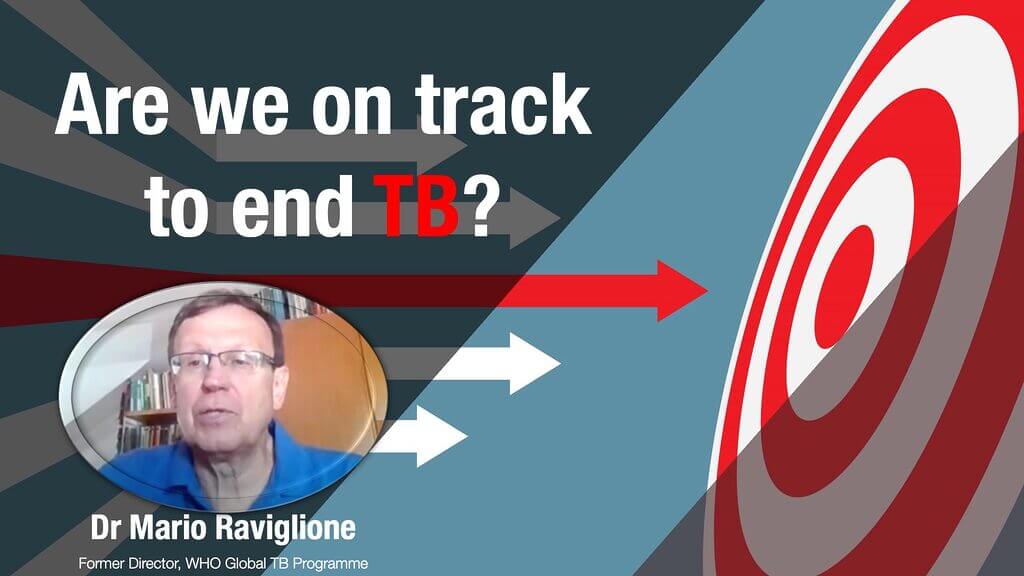
When 2014 End TB strategy got the green light, back then, WHO Global TB Programme Director was Dr Mario Raviglione, who currently is serving as Professor of Global Health at the University of Milan, Italy, where he is a founding director of the Centre for Multidisciplinary Research on Health Science, and Honorary Professor at the Queen Mary University of London, UK. While delivering a keynote address at 25thInternational AIDS Conference or AIDS 2024 Affiliated Independent Event in July 2024 organised by CNS (Citizen News Service) along with over 35 TB and HIV groups worldwide, he had said, “A significant number of International targets that we have today are still those of the WHO End TB Strategy (2014) that was approved by the World Health Assembly ten years ago”.

Dr Mario is right- rather, the truth is even grimmer: owing to the failure to deliver on some of the targets – such as achieving zero catastrophic costs by 2020, the goalpost has been shifted to 2030. But have governments also course-corrected so that zero catastrophic costs become a reality sooner than later?

In 2014 WHO End TB Strategy, governments agreed to reduce TB incidence by 80% and reduce TB deaths by 90% by 2030. More importantly, no household should suffer any catastrophic cost due to TB.

Studies done in India, which has the highest TB burden worldwide, show that more than half of catastrophic cost occurs before a person gets the correct TB diagnosis. Imagine the impact if India and other countries can make early and accurate TB diagnosis a reality – and eliminate catastrophic costs (and diagnostic delays) for all people with TB.

Dr Raviglione points out that the first-ever United Nations General Assembly High-Level Meeting on TB in 2018 also lacked ambition. Its political declaration generally called for progress on targets which were already enshrined in the SDGs or the End TB Strategy. Same happened in the second-such meeting in 2023.

Between 2018 and 2023, high TB burden countries did make some progress towards commitments made at the UN in 2018, but overall, if we are to end TB then it warrants more ambitious target-setting and stronger actions-on-the-ground.

For example, out of all the promises made by world leaders in 2018 at UNHLM on TB, they only delivered (and over-performed – thankfully) on one of the promises – the promise to provide TB preventive therapy to people living with HIV (so that those with latent TB may never get active TB disease), shares Dr Raviglione.

We are off-track on TB targets

“Where are we in terms of TB targets? We are far away – that is the point – we are really off track,” said Dr Raviglione.

TB incidence was declining in the years before the pandemic but far too slowly – miniscule to call it at best: 1.5-2% per year. Despite strong evidence from Ca Mau, Vietnam, where studies done by Dr Nguyen Bin Hoa and Dr Guy Marks et al, have shown that if we regularly screen everyone (regardless of TB symptoms), offer molecular test to those with presumptive TB, and link all those with the disease to treatment, care and support, TB rates decline by 74% over four years! In Kerala in India, TB rates declined in six years by almost 40% (as per a news report quoting Kerala’s Chief Minister).

During the lockdown due to COVID-19 pandemic, TB and other health and social services got disrupted in many places, but it is important to remember that we were not on track to end TB even before the pandemic, and the lockdown only aggravated the challenge.

Drug-resistant TB rates have not declined over the years (about half a million new infections every year). In 2022, an estimated 410,000 people got infected with drug-resistant TB disease – out of which a little over one-third, were diagnosed and put on treatment. Is this acceptable if we are to end TB?

Dr Raviglione underlines dearth of financing for TB programmes. It was expected that US$ 13 billion would be made available for a five-year period ending 2022 to fully fund the fight against TB, but less than half of this amount (US$ 5.5 billion) came through. TB research funding gap is grim too with only half of what is required being made available.

The new Global Plan to End TB 2023-2030 of the Stop TB Partnership is more ambitious, says Dr Raviglione. It envisages US$ 20 billion per year financing for TB and US$ 5 billion (up from US$ 2 billion) for TB research if we are to end TB by 2030. “This is fairly a small amount if we are to compare with financing for COVID-19, HIV or other diseases,” said Dr Raviglione.

Accountability missing in TB response

Even though TB is finally recognised as a priority for action, yet accountability for action (or inaction) is seldom there, he said.

It is an important reminder for all of us that Dr Raviglione’s team had led the organising of the first-ever high-level ministerial meeting to end TB in Moscow, Russia in November 2017. Among other outcomes, one of the most promising ones was: multistakeholder accountability framework. The call for multistakeholder collaboration was never at this decibel ever before.

It is among the fundamentals if we are to end TB to ensure 100% upfront molecular diagnostics for all those with presumptive TB worldwide – along with best of treatments, and 100% social benefit and social protection.

“Without universal coverage everywhere, and without social protection, we will never ever get rid of this disease,” said Dr Raviglione.

“TB reached an unprecedented political visibility – this is undisputable – but this is clearly not sufficient,” he said. “Citizens have to hold governments to account for a disease that is preventable and treatable/ curable.” It also implies that governments should tap into domestic resources for sustainable health financing. “Poorest countries in the world that are not likely to mobilise necessary domestic resources in the next few years, should get topmost priority for external funding,” said Dr Raviglione.

Whole of government and whole of society approach

TB response is dependent or interdependent on so many other determinants – HIV, nutrition, non-communicable diseases like diabetes, tobacco control, alcohol control, air pollution, and so many others.

“Community leadership and engagement remains fundamental to maintaining political pressure to advocate for improving the TB response,” said Dr Raviglione. “We need to build and strengthen multistakeholder response as well as multistakeholder accountability when it comes to TB.” Community-led monitoring can help enhance TB programme outcomes.

He shared an important example: 100% social protection for urban poor as part of promises enshrined in SDG11, which includes providing proper housing, is so key – if the relevant government sectors deliver on this target it will have a cascading positive impact on TB response as well.

It is the intensity of doing ‘what-we-know-works’ that has diminished, rightly said Dr Raviglione.

Is 2014 WHO End TB Strategy still adequate or we need to go back to the drawing board? “The pillars of WHO End TB Strategy are still very valid, but we do need to fortify multisectoral contributions in a very concrete way. Multi-sectoral approach should be operationalised at all levels – especially national or subnational levels where government ministries, departments and programmes, and other stakeholders synchronise their efforts towards addressing poverty, hunger and malnutrition, lack of housing, or other issues,” said Dr Raviglione.

Importance of whole of government and whole of society approach can never be overemphasised when it comes to addressing the deadliest of infectious diseases – TB. Time to unite and act is now.

Shobha Shukla, Bobby Ramakant – CNS (Citizen News Service)

(Shobha Shukla and Bobby Ramakant co-lead the editorial of CNS (Citizen News Service) and are on the board of Global Antimicrobial Resistance Media Alliance (GAMA) and Asia Pacific Media Alliance for Health and Development (APCAT Media). Follow them on Twitter: @Shobha1Shukla, @BobbyRamakant)

–              Shared under Creative Commons (CC)

Ugandan athlete Rebecca Cheptegei’s death a reminder for the continent to prioritise the fight against gender based violence

MenEngage Africa and Sonke Gender Justice are saddened by the death of Ugandan marathon runner Rebecca Cheptegei, who tragically fell victim to domestic violence. The athlete, who recently participated impressively at the 2024 Paris Olympics, succumbed to her injuries inflicted on her by her former boyfriend, Dickson Marangach, who allegedly set her on fire.

MEA & Sonke passes condolences to the family and entire sports fraternity. “It is very sad both for Kenya and the continent that we have lost such talent at the prime of her career when we still expected a lot from her. More needs to be done to ensure that as a society we provide adequate protective environment for such national asserts,” said Bafana Khumalo of Sonke Gender Justice.

Like in many countries, gender-based violence is rife in Kenya, as a survey from the Kenya National Bureau of Statistics notes that 34% of girls and women of the age 15 to 49 had experienced physical violence since they were aged 15, with some cases going unreported. In October 2021, long-distance runner Agnes Tirop was stabbed to death at her home, while in 2022, Damaris Mutua, was found dead at her boyfriend’s home, allegedly strangled.

Such incidents remind us of the urgent need to prioritise the fight against gender-based violence in the continent, and for the civil society community to strengthen their efforts in addressing this scourge, hold governments and legal systems to account. “We need to redouble our efforts in working with men and boys to undermine toxic masculinities. MEA remains committed to make its own contributions to eliminating harmful practices in our communities,” concluded Sithembile Gumede, MEA chairperson.

Issued by Sonke Gender Justice. 

Chakwera impressed with Nsanje’s Makhanga schools construction

LILONGWE-(MaraviPost)-President Lazarus Chakwera on Thursday, September 12, 2024 was impressed after inspecting construction works of Makhanga primary and Makhanga secondary schools, respectively in Nsanje North.

The school was relocated after government and communities agreed that Makhanga is inhabitable following frequent floods that hit the area almost on annual basis.

Speaking after inspecting the construction works, Chakwera commended the people of Makhanga for accepting to move out from the disaster prone area.

“I am very grateful because of your humbleness for accepting to move out of such a high risk area. Such kind of gesture can help to develop our nation as you will be exempted from devastating floods,” he said.

The Malawian leader therefore called on the citizenry to remain united for the smooth implementation of the development projects.

Commissioner for Department of Disaster Management Affairs, Charles Kalemba said the iedea of relocation came from Makhanga community who appealed to the government to shift them to higher ground.

“Government has relocated communities and three primary schools and a secondary school and we are constructing two classroom blocks at each school, said Kalemba.

Kalemba also said the relocation of the communities will help government save resources used in managing post disaster response as such resources will be channeled to other development activities.

Minister of Education, Madalitso Kambauwa Wirima said the construction of the schools will help to address psychological torture that learner’s face during floods.