LAGOS-(MaraviPost)-A yet-to-be-identified Nigerian man has been laid to rest together with the bet 9ja coupons which resulted in his untimely death.
Reports gathered that the deceased who was a bet 9ja player prior to his death, played 2 slips which did not yield the desired result, as they both failed.
He actually played the two slips to get a total income of N41.2million.
One slip for N34million and the other slip for N7.2million.
After playing, the two slips cut along the line and the man who couldn’t bear the sad outcome, slumped and died.
He has now been laid to rest together with the bet9ja coupons.
MANICALAND-(MaraviPost)-A Zimbabwean man is under custody for murdering 1-year-old son in a fight for sex with his two wives.
According to Manicaland Police Provincial Spokesperson: Chiripamawoko went to the second wife, Prisca Museka’s kitchen, where Nyamahondo was and demanded to know why he intended to put up with the second wife ahead of her that night.
A polygamist from Honde valley killed his one-year-old son while attacking his first wife after he had decided to spend the night in his second wife’s bed instead of his first wife’s bed where he allegedly was supposed to spend the night at that particular night.
The misunderstanding over conjugal rights led Nyamahondo to pick an axe-handle and swung it at Chiripamawoko who was holding their infant son.
The child was hit in the head sustaining serious injuries. The child was then rushed to Chavhanga clinic for medical attention from where he was referred to Hauna hospital where he was pronounced dead upon arrival.
The man is now facing murder charges for fatally striking his son.
Malawi soldier accidentally killed during training in Machinga
MACHINGA-(MaraviPost)-Reports reaching this publication reveal that on Malawi Defence Force (MDF) soldier was on Tuesday accidentally killed during training.
The incident happening when MDF Soldiers were disposing off their bombs at a safe place in Chikala Hills in Machinga district.
The deceased has been identified as Warrant officer 1 Chauluka who died after a explosive hit him during the exercise.
They were at a joint operation with the Europeans so one of the bombs exploded at the site before they left the place.
Burial is expected to conducted today in Chilimba as the the deceased body is bad state.
Our sources said several other MDF Soldiers have been seriously injured.
There was no immediate reaction from MDF authorities as we went to press.
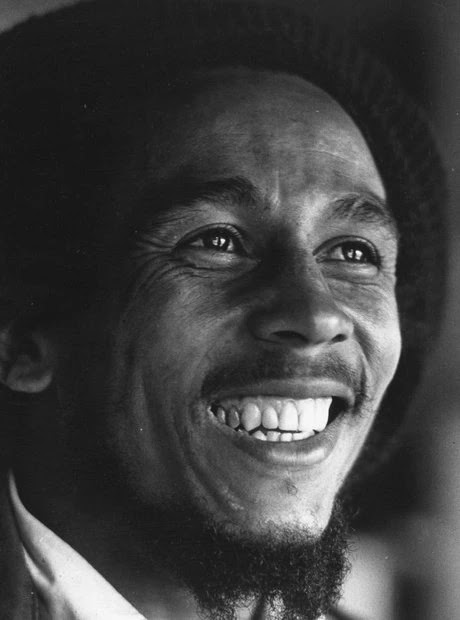
KINGSTON-(MaraviPost)-Bob Marley is undoubtedly the most iconic reggae artist of all time, and remains a hugely popular figure 37 years after his death. Here are the big facts every fan should know…
1. Who were Bob Marley’s parents?Marley was born on February 6, 1945, on the farm of his maternal grandfather in Nine Mile, Jamaica, to Norval Sinclair Marley (1885–1955) and Cedella Booker (1926–2008). Norval was a white Jamaican originally from Sussex, England. Bob Marley’s full name is Robert Nesta Marley. In 1955, when Bob was 10, his father died of a heart attack at the age of 70.
His mother went on to marry Edward Booker, an American civil servant, giving Bob two American brothers.
Bob Marley
2. How did he get his start in music?Marley and Neville Livingston (later Bunny Wailer) had been childhood friends in Nine Mile. They had started to play music together while at Stepney Primary and Junior High School. Soon after, he was in a vocal group with Wailer, Peter Tosh, Beverley Kelso and Junior Braithwaite. Singer Joe Higgs took Marley under his wing, teaching him how to play the guitar.
Bob Marley
3. How did Bob Marley die?In July 1977, Marley was diagnosed with a malignant melanoma under the nail of a toe. Marley turned down his doctors’ advice to have his toe amputated due to his religious beliefs, and the nail and nail bed were removed and a skin graft taken from his thigh as a cover. In 1980, the cancer had spread throughout his body. While he was flying from Germany to Jamaica, his condition worsened. After landing in Miami, he died on May 11, 1981, at the age of 36.
Bob Marley
4. Was Bob Marley shot?On December 3, 1976, two days before a free concert organised by the Jamaican Prime Minister Michael Manley to ease tension between two fighting political groups, Marley, his wife, and manager Don Taylor were wounded by unknown gunmen inside Marley’s home. Taylor and Marley’s wife had serious injuries, but made full recoveries. Bob Marley received minor wounds in the chest and arm. The attempt on his life was thought to have been political, as many felt the concert was supporting Manley.
5. Who was Bob Marley’s wife?Bob Marley married Alpharita Constantia ‘Rita’ Anderson in Kingston, Jamaica, on February 10, 1966.
Bob Marley
6. How many children did Bob Marley have?Marley had many children: four with wife Rita, two adopted from Rita’s previous relationships, and several others with different women. His official website acknowledges 11 children. His most famous children include singer Ziggy Marley (pictured, who recorded the theme tune to kids’ TV show ‘Arthur’), musician Stephen Marley, footballer Rohan Marley, singer Julian Marley and reggae artist Damian Marley.
7. What was Bob Marley’s religion?Bob Marley was a member of the Rastafari movement, whose culture was a key element in the growth of reggae.
He became an proponent of Rastafari, taking its music out of the socially deprived areas of Jamaica, and onto an international audience. Archbishop Abuna Yesehaq baptised Marley into the Ethiopian Orthodox Church, giving him the name Berhane Selassie, on November 4, 1980, soon before his death.
A 58 years old wealthy woman has been found dead and stuffed in her fridge after she went missing on 18 October in Thailand.
The woman who has been identified as Wannee Jiracharoenying, 58, went missing after she visited a local temple in Chiang Mai, northern Thailand.
The body has been found after the neighbour to the deceased reported a very bad smell coming from the compound.
However several withdraws have been made from her account since the day she went missing.
Her friend who is no where to be found at the moment is believed to have information that led to the death of Wannee.
Police as reported by Daily Mail have said they are now checking border points in case the friend has fled abroad.
Major General Bundit Tungkhaseranee as quoted by Daily Mail said: ‘We contacted the bank where the deceased was a customer and we received the information that the money was being withdrawn by someone after the woman was dead”.
The body has been sent to Maharat Chiang Mai Hospital for further examination.
Four kids drown in Shire River of Tedzani power station’s upper stream
BLANTYRE-(MaraviPost)-On Sunday afternoon, 4 kids aged 4-6 from the surrounding villages of Tedzani pond drowned which led to temporary shutdown of Tedzani I and II power plant.
According to Egenco public relations officer Moses Gwaza, the accident only affected a few hours during which they were searching for the bodies and they resumed their work immediately after the operation.
In an interview with Southern Region Police spokesperson Ramsey Mushani, the bodies of the kids have been recovered and investigations are still underway to establish what caused the accident.
“I have heard of the accident and we are still following up. However, the ones handling this case are from Chileka police and so far they haven’t given us enough information. We will let the public know after further investigations”.
WASHINGTON-(MaraviPost)-Following previous multiple reports of Islamic State leader’s death that turned out to be untrue, Abu Bakr Al Baghdadi kills himself using suicide vest during the operation that was conducted by US Special Forces.
US
leader, Donald Trump has described the death of the IS leader as “cowardice”.
The IS leader together with his three children has died after being chased by
US military dogs to the end of the tunnel that he was found hiding.
DNA
test results have confirmed the remainsfound were that of of Islamic leader. Mr
Trump also has confirmed that no US personnel were killed during the operation
and the number of Islamic State militants is still unclear.
UK
Foreign Secretary, Dominic Raab was quoted as having said by sky news that “the
death of Baghdadi is significant milestone but not the end of Daesh threat and
UK will continue to work with international partners to bring this to an end”.
Mr
Trump also revealed that Kurdish intelligence helped them during the operation
which used eight helicopters as well as ships and planes.
With Introduction by Hopewell Chin’ono ( iharare.com )
An Eritrean diplomat friend sent the attached letter to me last night and I was blown away by how prophetic it was to Zimbabwe’s situation, and how if Robert Mugabe had applied the advice given to him in the letter by a Comrade, Zimbabwe would have been completely different from the sorry state that it is today.
The letter essentially and prophetically cuts through what became of the once dubbed “breadbasket of Southern Africa” that Robert Mugabe and his ZANUPF political party inherited and turned into a basket case.
A former Tanzanian cabinet minister and one of Africa’s revered scholars, Abdulrahman Mohamed Babu, wrote the letter (attached below) to Robert Mugabe in 1980.
Abdulrahman Mohamed Babu who died in 1996 is regarded as one of Africa’s foremost thinkers, he wrote the letter, as an open document to Mugabe who then had just became Zimbabwe’s Prime Minister at the inception of independence.
The letter’s clarity will shock you and leave you wondering why Mugabe didn’t take the advice, if only Mugabe had listened, Zimbabwe would have been elsewhere!
Babu wrote the letter when he was now an economics professor in the United Kingdom after having been jailed by Julius Nyerere when they politically fell out.
The letter underpins what many of us have said about sanctions and also about the chaotic land reform program that Mugabe used at a time when his political grip on Zimbabwe was being loosened, as a result of his incompetence to govern and rampant corruption accelerated by his patronage system.
It exposes the laziness to think and the incompetence in Mugabe’s successive governments in dealing with the issue of sanctions and how the land reform program should have been dealt with had the ruling elites in ZANUPF been genuine and progressive.
It exposes the reality that the land reform program was more of a political accessory that Mugabe and ZANUPF chose to use to push back a resurgent opposition movement that had tapped into a people’s aspirations but more importantly, an opposition that had rode on the tragic failure of the Mugabe led Zimbabwean government resulting in a frustrated citizenry.
It confirms the tragedy of how African countries got independence but didn’t change anything to the colonial system that had been used in governing their countries.
The system protected the colonial elites and yet the postcolonial governments led by people like Robert Mugabe, simply produced a wealthy and prosperous 0.5% of the entire population from within the black political elites and their surrogates, consigning the rest to abject poverty if they couldn’t leave the country.
It shows how the sanctions argument is an excuse and political ruse to mask gross incompetence and rampant corruption, the letter gives an example of how the Rhodesians used sanctions to inwardly industrialize their economy.
Ironically Abdulrahman Mohamed Babu wishes that the whole of Africa had been sanctioned at some point during the liberation stages as he argues that this would have helped those African countries to develop their local knowledge bases as the Rhodesians did.
When the Japanese suffered at Hiroshima and had sanctions imposed on them, they saw it simply as a hurdle and not as an existential crisis that entirely confirms defeat and failure.
So the Japanese, the Rhodesians and the Afrikaners in Apartheid South Africa responded to sanctions with grit and applied their intellectual stamina as opposed to the current sanctions wailing tune.
This could be because those societies were not built on gross incompetence, our response to challenges exposes our laziness to think especially by those in power and it also exposes a breathtaking incompetence made worse by clan based nepotistic appointments that seek to advance crude accumulation of wealth.
The failure to resolve the sanctions and even the land reform mess is an answer to anyone who doubted clarion message that we are in this political and economic mess due to incompetence, clan based nepotism and above all corruption, all this is defended with emotional and incoherent political diatribes that have been sung since 2000, instead of applying the mind to dealing with the problems as other nations have done.
The letter to Robert Mugabe by former Tanzanian cabinet minitsre and renowned scholar and thinker, Abdulrahman Mohamed Babu.
“Dear Comrade Mugabe,
Warm congratulations on your victory and comradely salutations from your admirers!
In the last five years or so since you took over the reins of ZANU you have shown magnificent qualities of leadership – resolute without being dogmatic, daring without being adventurist, and flexible without being lax.
But above all, you have revealed yourself during this period as an outstanding strategist and tactician both in political organisation and in war.
With all these rare qualities it would be presumptuous even to attempt to tell you and your gallant comrades-in-arms what is to be done in independent Zimbabwe.
Moreover, you know better than any outsider the concrete situation in the country.
This letter does not claim to tell you anything you don’t know; it only seeks to reemphasise some salient points which we may lose sight of in the euphoria of freedom.
The enemies of Africa are anxious to prove that every new African country is doomed to failure and, to ensure that this does indeed take place, they will want to entangle you deeply in their world system so as to destroy you.
Proof? Look at what is happening in practically all sister countries: economic chaos, shortage of food and other basic necessities, corruption, and so on, is the order of the day.
You, as a revolutionary, will be a special target particularly because of Zimbabwe’s proximity to South Africa.
You are, however, fortunate in that Zimbabwe is the last but one arrival into the world arena, as a proud, free country, and so you can learn from the mistakes of other countries that have preceded you.
This is the purpose of this open letter. If you have thought about the problem along the lines discussed below then this letter is redundant.
If you don’t agree with it, then it is irrelevant. In either case, it will still be worth our whole to repeat to ourselves all the points raised if only to keep them fresh in our minds.
The other reason for this exercise is that we owe it to Africa and to history to share our past and present experience in order to arm ourselves against possible pitfalls which are all too common in the challenging period of national reconstruction.
We have been struggling and continue to struggle against many odds, natural and man-made, and we need not be ashamed or scared of making mistakes.
We learn through mistakes. Our task is to minimise them when we can, and this we can do by reminding ourselves again and again of the obvious ones.
This is the spirit of the letter.
Unlike many developing countries, you are taking over a country with considerable potential.
Let me give some comparative statistics. Kenya, a fairly “prosperous” country, has double the population of Zimbabwe (14m to your 7 m) and yet its Gross Domestic Product is only $2 900m compared to your $3 560m (1976 World Bank figures), or a per capita income of $220 to your $550. (
Incidentally when the bourgeoisie took over France in 1792 the country’s per capita income was just about $600.)
Zimbabwe has a fairly solid industrial base most of which was made possible thanks to the “sanctions” which forced the country to look inward.
It was what you might call a blessing in disguise. (Looking back, one wishes that sanctions had been imposed against all African countries soon after independence.
What a happy people we would have been! It was “aid” that proved to be the kiss of death.) Your agricultural base, too, is fairly healthy.
From this level Zimbabwe has an excellent chance to move rapidly to a self-sustaining development.
As a socialist you will no doubt want this development to be accompanied with social justice.
And here is the crux of the matter.
How do we restructure an economy whose social basis was to exploit the majority for the benefit of the minority?
Seemingly the easiest way is to take over the “commanding heights” of the economy and transform it into a popular based one.
But this is easier said than done, with enormous potential dangers.
We often tend to be overwhelmed by the magnitude of the task and consequently fail to raise the most essential, most basis question: Where to begin?
While it is impossible for outsiders to know the concrete situation without a thorough investigation, there are, nevertheless, generally acceptable principles that may be applicable to any country at a given level of the development of its productive forces.
If the latter are at a low level then it is imperative that their development be regarded as top priority, even over that of the relations of production.
In Maoist terms, development of the productive forces in this case becomes the principal aspect of the contradiction with production relations as a secondary one.
This strategy has variously been called the New Economic Policy, or N.E.P, or the New Democracy, in which capitalist relations are allowed to co-exist with socialist ones.
And this was done for very practical reasons: to allow maximum opportunity and facility for the productive forces to develop as rapidly as possible without in the meantime causing economic dislocations and subjecting the people to unjustified hardships.
It cannot be over-emphasised that people are our most precious capital and, therefore, they must eat well, be housed and clothed well.
This, then, is our starting point. The economy must be so structured as to provide adequate food, good housing and cheap but good clothing.
In the course of providing these the economy will also develop a good agricultural foundation, together with engineering and extensive textile industries.
All these will create vast employment opportunities for hundreds of thousands of people currently un- or under-employed, who in turn will help expand the home market- essential for further industrial and agricultural development.
For this to take place, one will of course need to generate investible resources or accumulation for investment.
One of the most unfortunate experiences of developing countries is that they all sought these resources from external sources, either in the form of loans or aid, which has led to heavy and unbearable debt burdens (bankruptcy, you might say) which now threaten our very survival as sovereign states.
To avoid this monumental pitfall, it is essential for a country to generate its investible resources internally, first and foremost.
How? There are two ways: by taxing (but not over taxing) the private sector; and by utilising for this purpose the surpluses that will come from future state enterprises.
At this level of development it may be advisable to allow maximum (but disciplined) play of individual initiative in economic activity guided by the principle of “utilise, win over and control”.
You utilise the existing private skills and resources for rapid development of the productive forces; you win over through education and persuasion all good elements to serve social rather than individual ends; and you control private sector incomes through fixing the sale prices of their products (allowing, of course, for proper incentives); tax their profits, control its repatriation and encourage ploughing back.
It could be made into a principle that at least 50 % of the accumulation from this source should go into state productive investments annually and the rest can go into paying recurrent expenditure and the building up of economic and social infrastructures.
This principle will discipline the bureaucracy and prevent them from indulging in unnecessary low priority expenditure while, at the same time it will help to build step by step the state industrial sector that is nonexistent at the moment, for example, iron and steel industries, machine tool industry, metallurgy, petrochemical industry and so on; in short, heavy industry or Department No.1.
It will not be worthwhile to pay serious attention to such pundits as Rene Dumont1 and their like who urge us to concentrate on small-scale production on the argument that small is beautiful.
No country in history has developed on that basis. But given our condition of uneven development in Africa, perhaps the best way will be to combine large-scale and intermediate production.
Where, for instance, you already have large farms you either expand them where necessary or you maintain them at their present level and thereby enjoy the benefits of large-scale farming.
Where production is still peasant based you may want to develop it to an intermediate level with producers cooperatives as their basic units.
Experience elsewhere has taught us that the taking over of ongoing viable farms has invariably led to almost total collapse of agricultural production and has forced the countries concerned to incur heavy foreign debt to import food.
As foreign borrowing without repayment cannot be sustained for a long time the countries are forced literally to beg for food on an international scale.
This is undesirable from both the economic and political standpoints, to say nothing of national dignity.
It is a painful history fact that in Zimbabwe such large-scale farms are owned by white settlers, some of whom are liberal and others incorrigibly reactionary.
To expropriate them will amount to economic disaster, at least in the short run.
To allow them to continue as before will amount to perpetuating a national injustice.
This is a serious dilemma. Probably you and your party have already made up your minds on how to tackle it.
To an outsider it will seem possible to avoid both of these undesirable consequences by:
*where possible, surrounding all these settler farms by producer agricultural cooperatives;
* making obligatory for the settler farms, as a condition for their existence to share their facilities (farm implements, expertise, marketing, dispensary service etc.) with the newly established cooperatives.
This will help; first, to develop viable cooperative farms at a minimum cost and make maximum use of the existing stock of agricultural implements in the country.
Secondly, it will help diminish the imbalance between settlers’ and people’s production and thereby correct the existing situation in which the settler farms are isolated like prosperous islands in the midst of mass poverty.
Thirdly, it will help distinguish between good elements among the settlers who are genuinely willing to work with the new government in improving the living conditions of the people, and the diehards.
It will then be possible to win over the first group and isolate and eventually ease out the latter.
Fourthly, and this is most important it will help consolidate people’s as opposed to individual production without any large-scale economic dislocation (and its attendant consequences) during the transition.
The rising rural incomes entailed in this strategy will expand the home market for industrial consumer products as well as broaden the tax base.
It will then be possible to accumulate from the latter to pay for further development of the former, which means not only the development of nationally integrated, independent industrialisation but also the rapid rise of the proletariat.
All this, of course, is based on the assumption of a planned and proportional development of the national economy.
Going by your public statements since you took over, it appears that this is broadly what you have in mind.
If so, you are definitely on the right track; and all well-meaning people will back you in your obviously very difficult task.
We will all wish you the very best.
Hopewell Chin’ono is a Zimbabwean journalist and documentary film maker.
He has won numerous awards in journalism and has worked in both print and broadcasting journalism.
Hopewell did a fellowship at Harvard as part of winning the CNN African journalist of the year.
The al-Qa’eda founder was killed in a controversial raid by by US intelligence services eight years ago this week
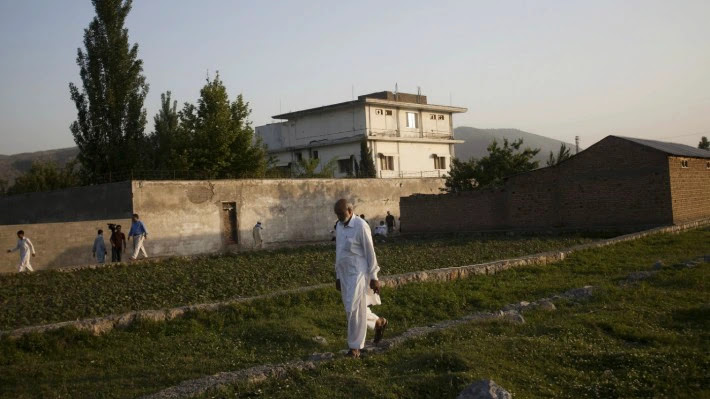
The compound in northern Pakistan where bin Laden was living
On 2 May 2011, Barack Obama made a televised statement from the White House in which he announced that Osama bin Laden had been located and killed by US navy Seals.
“Tonight, I can report to the American people and to the world that the United States has conducted an operation that killed Osama bin Laden, the leader of al-Qa’eda, and a terrorist who was responsible for the murder of thousands of innocent men, women, and children,” the then-president said.
The death of the world’s most wanted terrorist at a remote compound in the Pakistani city of Abbottabad “sent an unmistakable message that the US will wreak vengeance on those who attack it, no matter how long it takes or how far it has to go”, according to CNN.
The CIA website says that bin Laden had been a “key focus” of intelligence services since the 1990s, but became almost impossible to track after going into hiding following the 9/11 attacks, which he is believed to have orchestrated.
The breakthrough came when US intelligence linked a “kunya”, an operational pseudonym, associated with bin Laden to a compound 35 miles north of Islamabad.
The CIA reports that upon further investigation, the complex was found to have “security features unusual for the area”, including “high walls topped with barbed wire, double entry gates, opaque windows, no apparent internet or telephone connections, and all trash was burned rather than collected”.
A subsequent surveillance operation led Washington to conclude that bin Laden, who topped the US Most Wanted list, was hiding in the house – triggering preparations for a midnight raid on the compound. Here’s a rundown of how that fateful evening unfolded:
29 April
8:20 US Eastern Daylight Time (EDT)
President Obama gives the go-ahead for Operation Neptune Spear, the code name for the raid on the Abbottabad compound. The operation, which had been carefully planned in the preceding months, is scheduled to take place on the evening of the following day.
15:00 EDT
National Security Adviser Thomas Donilon, who was present when the president approved the raid, convenes a meeting of his team to finalise the plans, NPR reports.
Obama is informed later that evening that poor weather conditions in northern Pakistan mean the operation will be delayed by a day.
1 May
13:25 EDT (22:25 Pakistan Time PKT)
Obama, along with other top officials, formally approves the launch of Operation Neptune Spear.
22:51 PKT
Two stealth Black Hawk helicopters take off from Jalalabad in neighbouring Afghanistan, carrying a group of 25 Navy Seals. The helicopters, code-named Chalk 1 and Chalk 2, “flew under cover of darkness and at stealth altitude to avoid Pakistan’s radar systems”, reports story mapping site Arcgis.
2 May
00:30 PKT
The two helicopters descend on the compound in Abbottabad. One clips its tail rotor on the compound walls, causing it to crash. Although the helicopter is badly damaged, nobody on board is injured and the raid continues as planned.
Shortly after, the Seals enter the compound.
00:39 PKT
A man believed to be bin Laden is located on the third floor of the house. Reports differ as to the exact circumstances of his death, but later photographs show that he was shot multiple times, including a fatal shot above his left eye.
History.com reports that during the operation, “three other men (including one of bin Laden’s sons) and a woman in the compound are also killed”.
00:53 PKT
President Obama, watching the raid unfold in the White House Situation Room, receives tentative confirmation that a man identified as bin Laden has been killed.
Two minutes later, the soldiers move bin Laden’s body to the first floor of the house in the compound and place it in a body bag for removal.
01:10 PKT
Following a sweep of the compound for intelligence, including a search of bin Laden’s computer hard drive, the undamaged helicopter takes off with bin Laden’s body and some of the Seals on board.
The remaining operatives blow up the crashed helicopter, to destroy the confidential stealth technology on board. Five minutes later, a backup helicopter scoops up the remaining team members and leaves the area. The raid ends.
Despite being the culmination of years of calculated planning and training, the entire raid has taken just 40 minutes from start to finish.
02:53 PKT
The team touches down in Afghanistan, formally bringing Operation Neptune Spear to a close.
04:01 PKT (19:01 EDT 1 May)
Obama is informed that there is a “high probability” that the dead target is bin Laden. The president receives several more briefings over the coming hours.
23:35 EDT
Obama addresses the US in a televised address from the White House.
“A small team of Americans carried out the operation with extraordinary courage and capability,” he said. “No Americans were harmed. They took care to avoid civilian casualties. After a firefight, they killed Osama bin Laden and took custody of his body.”
00:59 EDT (09:59 PKT)
The body of bin Laden is wrapped in a white sheet and placed in a weighted plastic bag before being dumped into the northern Arabian Sea by members of the US armed forces.
This burial proved controversial. Although bin Laden’s body was disposed of within 24 hours of his death in accordance with Islamic custom, many Islamic scholars protested that burials at sea are not usually permitted for Muslims.
However, the US government later clarified that it buried bin Laden at sea because no country would accept his remains for a land burial. These countries included his home nation of Saudi Arabia, whose government approved the sea burial when contacted shortly before the disposal of the body, according to CBS News.
20:00 PKT
DNA evidence confirms that the dead body was that of bin Laden. However, this did not prevent the emergence of outlandish online accusations that the operation had not actually taken place.
For years following the operation, the killing of bin Laden would remain a topic of debate among international observers. From a diplomatic perspective, the extrajudicial killing of a foreign national on Pakistani soil prompted concerns that the US had violated international law.
It’s as if the Samora Machel Monument wasn’t meant to be found. After the turn-off from a well-marked highway between South Africa and Mozambique, the road to the site of the mysterious plane crash of Mozambique’s first president twists and turns for miles.
Revolution There are only a sparse handful of signs, so we turn to Big Brother Google for guidance and follow a map to Mbuzini, the town closest to the memorial to the president whose revolution changed Mozambique. Built at a cost of US$240,000 to the ANC government, the monument was declared a South African national heritage site in 2006, seven years after its inauguration by peace icon Nelson Mandela and former Mozambique president, Joaquim Chissano. Chissano ascended the democratic throne when, on their way back from an international meeting in 1986, Machel and 34 fellow passengers plunged to their deaths in the mountain range between South Africa’s Mpumalanga province and Mozambique, in circumstances that to this day remain a chilling whodunnit.
Machel took office as Mozambique’s founding president in 1975, after years of heading the country’s guerrilla movement FRELIMO in the struggle for independence from Portugal, and proceeded to lead the country through a tempestuous decade. He was a firm believer in armed struggle not as a means to an end, but as a means to the beginning.
“Of all the things we have done,” he said, “the most important – the one that history will record as the principal contribution of our generation – is that we understand how to turn the armed struggle into a Revolution …it was essential to create a new mentality to build a new society.”
Sabotage
Upon independence, Machel introduced sweeping reforms geared towards this new mentality. An ardent socialist, he nationalised all land and property, and spearheaded the establishment of public schools and clinics across the country. He also banned religion, provoking the wrath of international churches that had massive investments in the country.
By the end of 1975, most of the settler Portuguese population had left Mozambique in fear of violent retaliation for colonial crimes. They left a trail of malice in their wake, urbanites destroying industrial infrastructure, plantation owners burning crops and equipment as they abandoned their rural kingdoms.
Their abrupt and destructive exit threw the newly independent country into economic upheaval. The colonial system had excluded black people from most professional fields, ensuring that the technical aspects of industrial and agricultural production remained almost entirely in Portuguese hands. The colossal skills gap that followed the mass exodus – combined with acts of sabotage by the departing Portuguese – caused production to plummet, dealing a severe blow to the country’s finances.
Relations soured
The blow was worsened by changing patterns of labour and trade. Under Portuguese rule, Mozambique had provided huge amounts of labour, as well as two-way trade, to South Africa and Zimbabwe (then Rhodesia), ensuring a constant stream of revenue to the colonial government. Relations with both countries soured as soon as FRELIMO took charge, and within a year of independence, historian Tony Hodges reported, recruitment of Mozambicans to South Africa’s mining sector had decreased from nearly 2,000 a week to less than 400 a week.
The South African and Rhodesian governments, galled by Machel’s socialism and by the support he provided to liberation movements in those countries, reacted further by investing in a Mozambican rebel group RENAMO. The group launched a violent anti-FRELIMO campaign, destroying newly-built schools and clinics, and other public infrastructure. Their acts of sabotage became the seeds of a devastating civil war that would stretch out into the early 90s, claiming hundreds of thousands of lives.
Within a few years of independence, this simmering cocktail of instability had driven Mozambique into dire economic straits. These were worsened by internal political tensions, as the new mentality that Machel had preached struggled to take root. In Mozambique, like in many African countries, there were what historian David Robinson describes as “elements within the organisation and its military forces that looked forward to the rise of a black bourgeoisie after independence”.
Corruption
Soon, these elements were casting shadows and smears over the vision that had bloomed at independence, and self-serving officers began to exploit their power for financial gain. Corruption crept into the highest tiers of military and political structures. Re-education camps that had been established to house criminals were particular points of controversy. Machel had hoped that by “integrating the man in a progressive and well planned activity, re-education makes him understand the importance of socio-political activity, it makes him understand that the life of one is connected with the lives of all”.
In practice, however, stories of mismanagement, unjust detention and bad treatment soon emerged from the camps. Machel confronted government officers for their role in the country’s decay, reiterating his desire to connect the period of armed struggle to a sustained revolution, a new society. “Our liberation war was not waged to replace Portuguese injustice by Mozambican injustice, European injustice by African injustice and foreign injustice by national injustice.”
Samora quote
Amidst the political hailstorm in which his presidency unfolded, this charismatic ideology was not easy to bring to life. Still, despite the economic meltdown, the disappointment of unfulfilled post-independence expectations and his reputation for dealing harshly with dissidents, Machel retained popular support during his time in office. Percy Zvomuya writes that “Unlike revolutionaries who never got to govern and therefore tarnish their legacy and early promise, [he had] a long enough time in office to disillusion many, yet people still cry when they think about Samora”.
Revolutionary integrity
But he was not short of enemies either, not least of which was the South African government, who invaded Mozambique in 1981 to hunt down African National Congress (ANC) members. In response, Machel held a rally in Maputo’s city centre, where he embraced then-president of the ANC Oliver Tambo before defiantly throwing out a challenge to the apartheid government:
“We don’t want war. We are peacemakers because we are socialists. One side wants peace and the other wants war. What to do? We shall let South Africa choose. We are not afraid…and we don’t want cold war either. We want open war. They want to come here and commit murder. So we say, let them come! Let all the racists come…then there will be true peace in the region, not the false peace we are now experiencing.”
Mozambican politicians were not spared his fearless fury at anything he perceived to be an affront to the integrity of the revolution. At another rally that year, he took a strong swing at corruption, declaring his intent to launch a “legality offensive” targeting military, defence and security officials who wanted to ride on the backs of the people. Historians Fauvet & Mosse write that “Diplomats from the Soviet bloc states were amazed. No leader of any other socialist country had ever castigated his own security forces in this way. Were such statements not the height of recklessness? Was Machel not inviting a coup d’état? But there was no coup.”
Assassination plot
Nonetheless, he was operating in an increasingly hostile terrain, which became especially clear after a foiled coup plot in 1984 in which members of his own cabinet were implicated, two of whom would go on to become president after his death. That year, as RENAMO wreaked increasing havoc in Mozambique – bombing infrastructure and killing civilians – Machel was also squeezed into signing an agreement with the South African government, in which he agreed to curtail support to the ANC in exchange for South Africa stopping its supply of money and arms to RENAMO.
Although the deal caused great disappointment to freedom fighters in the region, the threat posed by RENAMO at the time was so severe that even Tambo, then-president of the ANC, had to admit that “The [Mozambican] leadership was forced to choose between life and death. So if it meant hugging the hyena, they had to do it.”
But the situation continued to worsen. Before leaving for a meeting of Frontline states in Lusaka in October 1986, Machel made it publicly known that he had survived a recent assassination attempt. He accused the South African government of plotting to kill him, and issued instructions for what should happen in the event of his death.
Machel never returned to Mozambique from the meeting. On his way back, the presidential plane took an inexplicable and fatal 37-degree turn into the Lebombo mountain range that lies between South Africa, Mozambique and Swaziland. Nine hours passed before South Africa notified Mozambique that the plane had crashed, even though South African security forces had been on the scene several hours before. During this time they went through the wreckage confiscating all official documents, as well as the plane’s black box. Incisions in the necks of the two pilots later raised suspicions that they had been killed at the site, not during the crash itself.
Inquiry
Soon afterwards, South Africa established a commission of inquiry which, after a delayed start due to the security forces’ initial refusal to hand over the black box, eventually issued a report blaming the crash entirely on error by the Russian crew. The Russian government convened their own inquiry, which concluded that the plane had been misdirected by a decoy beacon that was set up to pull it off course. The decoy led pilots to believe that they were above flat terrain near Maputo, when they were in fact flying straight into the mountains.
South Africa’s Truth and Reconciliation Commission (TRC) later investigated this case, and published a report containing details that strengthened the theory of assassination. Graca Machel, Samora’s widow and the current wife of Nelson Mandela, testified that he had been killed and presented the TRC panel with details of a plot involving agents from South Africa, Mozambique and Malawi.
New investigation
The TRC failed to reach a definitive conclusion one way or another, although they stated that enough evidence had accumulated to warrant an investigation. Over a decade later, in December 2012, the South African government’s elite police unit the Hawks announced the launch of a new probe into the crash. The investigation is now underway in collaboration with the Mozambican government, and might finally bring some overdue answers to the questions that hang over Machel’s untimely death.
But regardless of the outcome, it won’t resolve other unsettling issues, issues of memory that linger in spaces beyond the reach of any commission of inquiry. Today in Mozambique, reminders of Machel are everywhere. Streets and institutions are named in his honour, striking statues capture his trademark gestures, bumper stickers testify to the popular support that he left behind. But the legacy that he lived for and died to defend is harder to find.
Consumerism
Is history happening in reverse? Where large numbers of Portuguese fled around independence, large numbers are now returning, enticed by the opportunities offered by the country’s booming economy. International organisations are sweeping into the country with business, aid, and with Jesus. In the rapid transition from being one of the world’s poorest to potentially one of the continent’s richest countries, conspicuous consumerism abounds. Where Machel called for nationalisation of the country’s resources, today’s government has assured foreign investors that Mozambicans need hold no more than a 20% share in mining ventures.
In South Africa, whose liberation he supported so fiercely, an impoverished informal settlement in Cape Town bears his name. Shacks are clustered around the OR Tambo road that runs through the township, which is situated at a deliberate distance from the moneyed city centre, offering a niggling reminder that flags and anthems might have changed, but the age-old system of economic oppression is still alive and kicking.
Ideas underfoot
Thomas Sankara, former president of Burkina Faso who was assassinated one year after Machel, remarked shortly before his death that “While revolutionaries as individuals can be murdered, you cannot kill ideas.” But though ideas might be immortal, it seems it’s easy enough to forget them, to idolise personas and honour their memories with symbolic souvenirs while the visions for which they lived and died lie trampled underfoot as people scramble for riches.
We finally make it to the memorial, perched high on a hillside surrounded by rural tranquillity. Among preserved pieces of the plane’s wreckage, 35 steel tubes – one for each person who died that night – tower towards the sky, their specially designed slits releasing soft wails every time the wind blows.
It’s the kind of sound you can neither replicate nor forget, the kind that haunts you through the daily contradictions that fall into that ever-widening gap that Machel strove so hard to close, the gap between struggle as a series of actions and revolution as a way of life.