Category Archives: Obituaries

MaraviPost : most recent significant obituaries in Malawi and those affecting the Malawi Diaspora all over the world.

Malawi’s veteran journalist Francis Tayanja Phiri laid to rest

By Beatrice Bangula

BLANTYRE-(MANA)-The body of veteran journalist, Francis Tayanjah Phiri, was on Tuesday laid to rest at Stella Maris Cemetery in Blantyre where hundreds bade him farewell.

Phiri died Sunday at Queen Elizabeth Central Hospital in Blantyre where he was admitted to of high blood pressure.

Speaking on behalf of the Minister of Information and Communications Technology, Dr Shadric Namalomba, Deputy Regional Information Officer for the South, Brenda Nkosi, described Phiri’s death as a loss not only to the media fraternity but to the entire nation considering the role journalists play.

She said government acknowledges crucial role journalists play in disseminating information about policies and programs as well as raising citizens voices on government’s development aspirations.

“When journalists share news and information, they help people to understand what their government is doing thereby enabling citizens to make informed  and meaningful decisions. And when we loose dedicated professionals like Phiri, it is truly painful,” she said.

Nkosi said Phiri was a dedicated journalist who served with excellence and maintained good relations with other journalists, urging journalists in the country to emulate late Phiri’s dedication to duty and passion for journalism.

Speaking on behalf of the family, Mabvuto Bamusi, said Phiri was taken ill on Saturday and was rushed to the hospital.

“Although it was a short illness, Francis had a history of blood pressure which led to his death,” Bamusi said.

Veteran journalist, Maganizo Mazeze, said Phiri will be remembered by journalists for being a friendly person.

“Many journalists who are known today have been assisted or supported in their profession by Phiri even after his retirement. He looked at people equally despite their age or status,” he said.

Phiri was among first journalists to win Media Institute of Southern Africa (MISA) Malawi chapter awards when they were first introduced in the country.

He worked for a number of media institutions in the country and finished his career with Times Group from 2006 until his retirement in 2018.

Born in 1967, Phiri is survived with two children.

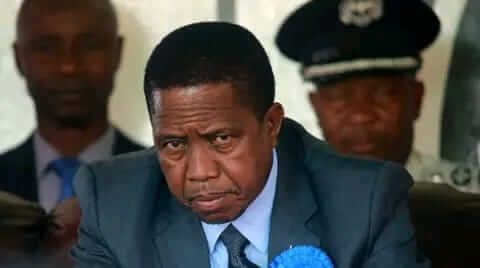
Edgar Lungu burial stalemate: Family yet to file notice of appeal

LUSAKA-(MaraviPost)-The Zambian government has disclosed that it has not yet received a notice of appeal from the family of former President Edgar Lungu, who intend to challenge a court order directing that his body be repatriated to Zambia for burial.

Zambia Attorney General Mulilo Kabesha says that Zambian government has not been served with either the notice of appeal or the grounds of appeal.

Mr. Kabesha has however, noted that the Lungu family has up to February 11, 2026, to file their submissions in line with the court order.

In December last year, the South African Court of Appeal granted the Lungu family permission to appeal the order for Lungu’s body to be repatriated.

It has now been 237 days since Lungu died on June 5, 2025, and he is yet to be buried.

Bobi Wine’s heartfelt tribute: A message of strength, solidarity to Barbie Kyagulanyi

KAMPALA-(MaraviPost)-In a poignant message shared on his Facebook page, Ugandan opposition leader Bobi Wine has expressed his deepest sympathies and solidarity with Barbie Kyagulanyi, wife of fellow opposition leader and musician Robert Kyagulanyi, following her harrowing ordeal at the hands of security forces.

“My heart is heavy as I write this message, filled with a mix of sorrow and admiration for the incredible strength you’ve shown in the face of unimaginable brutality,” Bobi Wine wrote, highlighting the traumatic experience endured by Barbie Kyagulanyi.

Bobi Wine emphasized that no individual deserves to be subjected to such cruelty and humiliation, underscoring the inherent dignity and worth of every human being.

“No woman, no mother, no citizen deserves the insults, humiliation, and cruelty you’ve endured at the hands of regime men,” he stated, condemning the actions of those responsible.

Despite the trauma she has faced, Barbie Kyagulanyi’s spirit remains unbroken, inspiring countless others with her resilience and courage.

“Yet, amidst the shadows, your spirit remains unbroken, a beacon of hope and resilience that inspires us all,” Bobi Wine noted, acknowledging her unwavering determination.

The opposition leader assured Barbie Kyagulanyi of the unwavering support of countless individuals who stand in solidarity with her, fighting for justice and equality.

“Please know that you are not alone, for you have the unwavering support of countless individuals who stand with you in solidarity,” he wrote.

Bobi Wine praised Barbie Kyagulanyi’s strength, dignity, and resilience, emphasizing that these qualities speak louder than the hatred directed at her.

“Your strength, dignity, and resilience in the face of such cruelty speak louder than the hatred directed at you, a testament to the power of courage and compassion,” he stated.

As Barbie Kyagulanyi navigates the long and arduous road to healing and justice, Bobi Wine prayed for her comfort, protection, and strength.

“May God comfort you, protect you, and give you strength during this difficult time, as you navigate the long and arduous road to healing and justice,” he wrote.

In conclusion, Bobi Wine reaffirmed the collective commitment to standing with Barbie Kyagulanyi in solidarity, hoping for a future where humanity, respect, and justice prevail.

“We stand with you in sorrow, in solidarity, and in hope for a country where humanity, respect, and justice prevail, where no one has to endure the pain and suffering you’ve been subjected to,” he said, urging her to stay strong.

The message has resonated with many, highlighting the power of solidarity and compassion in the face of adversity.

CDEDI demands fresh inquiry on Chikangawa MDF plane crash before perpetrators’ arrests

LILONGWE-(MaraviPost)-The country’s civil rights group Centre for Democracy and Economic Development Initiatives (CDEDI) has formally called on President Arthur Peter Mutharika to take decisive action on the June 10, 2024 Malawi Defence Force (MDF) plane crash at Chikangawa in Nkhata Bay, demanding a fresh inquest into the tragic incident.

Addressing the news conference on Tuesday, January 2026 CDEDI executive director Sylvester Namiwa disclosed the grouping has written Mutharika urging him to act on recommendations earlier presented by the Minister of Justice and Constitutional Affairs, Charles Mhango, shortly after assuming office.

Namiwa in the red addressing the news conference

The organisation wants a renewed and independent probe into the circumstances surrounding the crash of the Dornier 228 aircraft (MAF-TO3), which claimed the lives of nine people, including the Vice President, a former First Lady, senior government officials and members of the MDF and Malawi Police Service.

CDEDI argues that Malawians voted President Mutharika into office with the hope that his administration would help the nation find closure by uncovering the truth behind what it describes as the country’s most devastating aircraft accident.

According to the organisation, the commission of inquiry appointed by former president Lazarus Chakwera failed to provide satisfactory answers and was widely rejected by the public, with some viewing it as an attempt to conceal the truth.

The pressure group says families and friends of the victims, both locally and abroad, continue to suffer unresolved pain, which can only be healed by a comprehensive, credible and transparent report that fully accounts for events before, during and after the crash.

CDEDI maintains that only such a process can provide genuine closure and restore public trust.
The organisation further notes growing calls in some quarters for criminal investigations, alleging that the then Malawi Congress Party (MCP) led administration attempted to force acceptance of what critics termed a “sham” report.

Among the concerns raised is the claim that former president Chakwera reportedly learned of the crash from a neighbouring head of state minutes after it occurred, rather than from officials within his own government and that there was a 12-hour delay before an official announcement was made to the nation.

CDEDI says experts have suggested that any fresh probe should begin with examining the final communication between the pilot, the late Flora Selemani and a senior officer at Zomba Airbase.

It also questions several public statements made during the search and rescue phase, including updates from the former army chief and appeals by the Malawi Communications Regulatory Authority, describing them as potentially criminal in nature.

The organisation has also raised concern over the suspension of search efforts in the evening, alleged obstruction of access to the crash site and unresolved technical questions from aircraft experts in Germany, including reports that the plane made a 360 degree turn before crashing.

CDEDI says a forensic audit should have followed the expert report to clarify these issues and determine who authorised the use of an aircraft that was later described as a flight risk.

While acknowledging President Mutharika’s earlier assurance that the Justice Minister was reviewing the rejected report, CDEDI says public patience is wearing thin as days have turned into weeks without concrete action.

CSOs call for independent probe into ESCOM workers’ deaths

LILONGWE-(MaraviPost)—Civil society organisations (CSOs) have described the recent deaths of two Electricity Supply Corporation of Malawi (ESCOM) employees while on duty as tragic and deeply regrettable, calling for independent, transparent investigations to establish the cause of the incident and prevent similar occurrences in future.

The two workers died while carrying out routine maintenance and electrification works in Nsalu, Lilongwe.

Speaking in an interview with MaraviPost on Sunday, Human Rights Consultative Committee (HRCC) Executive Director Robert Mkwezalamba said the loss of life must be treated with utmost seriousness, noting that the right to life is constitutionally protected.

“Any death or loss of life is highly regrettable because the law clearly provides that every person has the right to life, and the State is mandated to safeguard the sanctity of life,” Mkwezalamba said.

“Such incidents must be thoroughly examined to ensure they never occur under avoidable circumstances.”
On whether the incident constituted a violation of workers’ rights to life and safety,

Mkwezalamba cautioned against drawing conclusions before investigations are completed.

He said ESCOM, like other major institutions such as Egenco, NOCMA, Salima Sugar and Illovo, places strong emphasis on occupational safety.

“You cannot access these facilities without a safety induction. Employees are subjected to daily alcohol testing, and anyone who tests positive is barred from entering the premises or being assigned duties,” he said.

Mkwezalamba added that preliminary observations indicate the deceased workers were properly equipped with personal protective equipment (PPE) and were secured according to safety standards.

“At this stage, it would be premature to classify these deaths as violations of workers’ rights. Investigations will help determine whether there was human error, premature power restoration, or technical failure,” he said.

He called for parallel investigations by ESCOM and the Malawi Police Service, stressing the need for transparency.

“ESCOM must conduct internal investigations, while the police carry out an independent inquiry. The workers’ union, which already participates in disciplinary processes, should also be involved,” Mkwezalamba said.

He further urged the inclusion of civil society organisations and independent observers to enhance credibility and public confidence.

“For over two decades, such inclusive investigations have been rare. Allowing external participation will help ESCOM clear its name and build public trust,” he said.

Mkwezalamba also said the outcome of the investigations should guide accountability and compensation.

“Based on ESCOM’s standard operating procedures and the Occupational Safety, Health and Welfare Act, compensation should be automatic,” he said, while urging the utility company to go beyond minimum legal requirements.

“Malawi does not have a workers’ compensation fund, and compensation for work-related deaths often falls short of sustaining families. ESCOM should consider the harsh economic realities many families face,” he added.

He said investigation findings should also inform long-term preventive measures, including the adoption of modern technologies.

“We are now in the era of artificial intelligence, which can help institutions like ESCOM detect faults remotely and reduce reliance on risky manual interventions,” he said.

Mkwezalamba emphasized the responsibility of both employers and employees in ensuring workplace safety.

“Every employee has a duty to safeguard their own life, their colleagues and the customers they serve. All employers in Malawi must prioritise safety to prevent avoidable loss of life,” he said.

He concluded by reiterating HRCC’s willingness to participate in the investigative process to ensure lessons are learned and meaningful reforms implemented.

In a statement, ESCOM confirmed that two staff members died while on duty in Nsalu, Lilongwe, as they were repairing and electrifying a fault during routine maintenance operations.

The utility company expressed deep condolences to the bereaved families and reaffirmed its commitment to workplace safety, adding that investigations were underway to determine the exact cause of the accident.

Meanwhile, Citizens for Justice Network Executive Director Agape Khombe said the deaths had shocked the nation and called for unity, dignity and a comprehensive investigation.

“The two workers were innocent, hardworking citizens. Their death is not only a loss to their families, but to the nation as a whole,” Khombe said.

He urged authorities to establish whether negligence, poor communication, lack of PPE, or the involvement of unskilled labour contributed to the fatal electrocution of the two experienced linesmen.

Khombe called for the formation of an all-inclusive investigation team comprising police, civil society organisations, District Health Office officials, representatives of the bereaved families, traditional leaders and clergy.

Observers have also questioned how the incident occurred, noting that standard procedure requires electricity supply to be switched off before maintenance work begins.

Stakeholders have stressed that civil society and labour experts must be included in the probe to ensure accountability, transparency and improved safety standards in the energy sector.

As investigations continue, many hope the findings will lead to reforms that strengthen worker protection and prevent similar tragedies in future.

Two Escom linesmen electricuted at Nsaru Lilongwe

LILONGWE-(MaraviPost)-The Electricity Supply Corporation of Malawi (Escom) on Sunday confirmed the death of two linespersons following a tragic incident at Nsaru in Lilongwe.

In a statement issued on Sunday evening, January 18, 2026 Escom says the incident occured while the two were attending to a fault.

“At this moment, our primary focus is on supporting the families of our departed colleagues and providing counselling to the team members affected by this tragedy,” reads part of the statement.

Meanwhile, the electricity supplier has launched an internal investigation to establish the circumstances surrounding the incident.

Dignified send off to former deputy Speaker Madalitso Fred Kazombo

By Chisomo Phiri

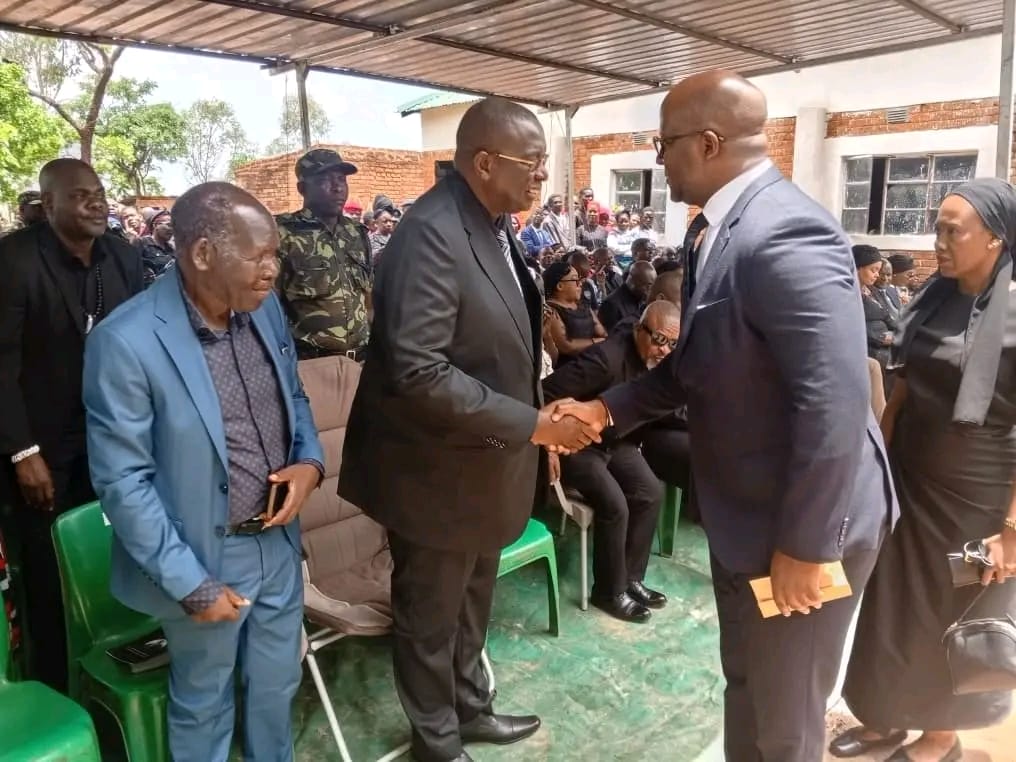
People from various areas are flocking to Dambulesi Village in the area of Senior Chief Kaomba in Kasungu, where funeral ceremony for the late Madalitso Fred Kazombo, who was Second Deputy Speaker of Parliament is being held.

At present, the body viewing ceremony is underway.

Some of the notable figures who have arrived at the funeral include the Leader of the Opposition in Parliament, Simplex Chithyola Banda, several Traditional Authorities(T/As) from Kasungu District, and Members of Parliament (MPs).

Among the dignitaries expected to attend the funeral are Second Vice President Enock Chihana, former President Lazarus Chakwera, and former Vice President Michael Usi, among others.

Former president, who is also the leader of the Malawi Congress Party (MCP), Lazarus Chakwera, and United Democratic Front (UDF) president Atupele Muluzi have arrived at Dambulesi Village in Kasungu, where the burial ceremony of the late Madalitso Kazombo is taking place today.

Kazombo who served as First Deputy Speaker of the National Assembly died of asthma on Thursday January 8,2026.

Kazombo who also served as legislator for Kasungu East Constituency died on Thursday, January 8, after suffering from asthma.

Black Mamba to be laid in February

BLANTYRE-(MaraviPost)-The family of late former Flames striker Esau Kanyenda has confirmed that the Malawian football legend will be laid to rest next month(February) in the United Kingdom.

Popularly known as Black Mamba, Kanyenda will be buried on February 4, 2026, in Manchester, bringing closure to weeks of mourning following his death late last year.

The announcement was made by Velli Nyirongo, chairperson of the funeral organising committee, who spoke on behalf of the family during a brief update on burial arrangements.

Kanyenda passed away on December 2, 2025, a loss that sent shockwaves across Malawi’s football fraternity and beyond.

Nyirongo said further details surrounding funeral logistics and related arrangements will be communicated in due course as preparations continue.

Although his final resting place will be outside Malawi, Kanyenda’s football identity remains inseparable from the country where he carved out his legendary status.

He rose to prominence through prolific goal scoring in the local league, earning a reputation as one of the most feared forwards of his generation.

His exploits at club level paved the way for a memorable international career, where he became a key figure in the Flames attack.

Kanyenda is survived by his wife, Queen and six children namely Nathan, Wayne, Ethel, Yewo, Emmanuel and Wayankha.

The burial irony: When Edgar Lungu’s fate mirrors legacy he enforced

In the intricate tapestry of political legacies and state protocols, the story of former Zambian president Edgar Lungu’s unresolved burial stands out as a striking example of poetic irony.

It is a tale that not only reflects the complexities of power and tradition but also serves as a mirror to the very actions that shaped his own political journey.

The juxtaposition is hard to ignore: Edgar Lungu, who in June 2021 as sitting president insisted on Kenneth Kaunda’s burial at a national heroes’ site against the wishes of Kaunda’s family, now faces a similar dispute over his own final resting place, years after his death in June 2025.

The narrative’s irony is palpable. When Kenneth Kaunda, Zambia’s founding president, passed away, his family wished to bury him privately on his farm next to his late wife.

Edgar Lungu, the then president, firmly denied this wish, citing national protocol and a desire to honor Kaunda’s legacy through burial at the official Heroes’ Acre—a prestigious site reserved for national leaders.

The family’s efforts to challenge this decision in the High Court proved unsuccessful, cementing the government’s authority in matters of state burials.

Fast forward four years, and Edgar Lungu’s own body remains in limbo, preserved in a mortuary in South Africa.

His family demands a private burial, a wish reminiscent of the Kaunda family’s own plea four years earlier. Yet the Zambian government insists on a national burial, invoking the very same protocols Lungu once championed.

The dispute remains unresolved, embodying a bitter twist of fate where the enforcer of a rule becomes ensnared by it.

This unfolding drama invites a profound reflection on the interplay between personal wishes, political symbolism, and the often rigid structures of statecraft.

In many nations, especially those with turbulent political histories, the burial site of a leader is not merely a resting place but a powerful symbol of national identity and legacy.

The Heroes’ Acre in Zambia is more than just a cemetery; it is a hallowed ground where leaders who shaped the nation’s trajectory are commemorated collectively. To be buried there is to be enshrined in the national memory, an honor that transcends personal or familial preferences.

Edgar Lungu’s insistence on Kaunda’s burial at the Heroes’ Acre was arguably motivated by a desire to consolidate national unity and pay homage to the founding father. Yet it also highlighted the tension between individual legacy and state narrative. By denying Kaunda’s family the right to a private burial, Lungu was emphasizing the primacy of the state’s vision over personal wishes.

This act, while legally upheld, may have sown seeds of discord and underscored the limits of familial agency in state matters.

Now, with Lungu himself caught in the same predicament, the story turns into a cautionary tale about the cyclical nature of power and the consequences of decisions made under the weight of authority.

The family’s insistence on a private burial reflects a deeply human desire to honor the individual’s personal history and intimate connections, rather than conforming to an abstract national ideal.

Their struggle challenges the government’s rigid stance and raises important questions: Who ultimately owns a leader’s legacy—the family who knew him best or the state that shaped his public image?

How do we balance respect for personal dignity with the collective memory that political leaders embody?

This irony also shines a light on the broader political culture in Zambia and perhaps many other countries grappling with similar issues. The tension between private grief and public commemoration is an enduring challenge.

Leaders are often elevated to iconic status, their lives and deaths appropriated to serve grand narratives of nationhood. Yet beneath the grandeur lies the reality of human relationships, loss, and the need for personal closure that families seek.

Moreover, this unresolved burial dispute may reflect deeper fissures in Zambia’s political landscape.

It suggests a government cautious about setting precedents that could dilute the sanctity of national burial sites or open the door to more personalized or politicized funerals.

It also points to possible disagreements within the ruling establishment about how to handle former leaders’ legacies, especially those with contentious histories or divided popular support.

What makes this situation compelling is the human dimension nestled within the political drama.

Edgar Lungu was once a powerful figure, shaping policy and national discourse, yet in death, his wishes remain contested, and his body lies in limbo far from home.

The family’s pain is palpable, as is the government’s desire to uphold tradition.

This deadlock is a poignant reminder that even the most powerful cannot fully control their posthumous narrative.

In the final analysis, the irony of Edgar Lungu’s burial dispute is a rich narrative about power, legacy, and the paradoxes of leadership.

It reveals how decisions made in the crucible of political authority can return in unexpected ways, challenging the very foundations on which they were built.

It urges us to consider a more compassionate and nuanced approach to honoring leaders—one that respects both the collective memory of the nation and the intimate wishes of those who loved them most.

As Zambia watches this drama unfold, it serves as an invitation to reflect on how societies commemorate their heroes and the delicate balance between public duty and private humanity.

Edgar Lungu’s story, intertwined with that of Kenneth Kaunda, reminds us that history is often written not just by the victors, but also by the ironies that time reveals.

And in this story of burial and legacy, the past and present converge in a profound, almost poetic, dance of fate.

Feedback: +265992082424
Email: jonesgadama@gmail.com

Sharp Focus on tragic road accident that claimed five rising stars lost in Malawi music circles

Malawi’s music industry is in mourning following the sudden death of five members of Eli Njuchi’s celebrated Hive Band, who perished in a road accident at Senzani in Ntcheu along the M1 Road on Friday morning, December 26, 2025.

The victims have been identified as Raphael Chitsonga, drummer and sound engineer; MacFarlane Banda, guitarist; Vincent Mkwinda, road manager; Wilfred Kapengule Jnr, pianist; and Elivacy Myaba, vocalist. Their untimely deaths have cast a pall over the festive season, highlighting critical issues of road safety for artists traveling across the nation.

The band members were widely regarded as some of the finest instrumentalists driving the growth of live music in Malawi. Their professionalism, energy, and creativity had earned them a special place in the hearts of music lovers.

The accident occurred while the group was traveling to Lilongwe ahead of Njuchi’s highly anticipated show scheduled for Saturday, December 27, 2025, which has since been cancelled.

Tributes have poured in from leading Malawian musicians and fans alike, underscoring the immense impact these individuals had on the country’s cultural landscape. Eliza Mponya wrote emotionally: “Abale tilile bwanji anyamata inu Ralph ndi MacFarlane… Sleep peacefully my dear brothers.” Lawi lamented: “This is tragic a sad day for music in Malawi. Praying for the families.” Onesimus said the country had lost giants of the industry.

The NICO Group, through its creative sector strategic partner, the Copyright Fund, has joined the nation in mourning, providing financial assistance of MK1 million to each bereaved family to help with funeral arrangements.

President Arthur Peter Mutharika and First Lady Gertrude Mutharika have expressed sadness over the loss, describing the musicians as instrumental figures whose passion and artistry helped shape the soul of Malawi’s music industry.

The government has announced it will cover all funeral expenses, ensuring the artists are laid to rest with dignity.

The Malawi Musicians Union (MMU) has called for a moment of silence at the upcoming Malawi Music Awards and announced a fund to support the families of the deceased.

The incident serves as a stark reminder of the fragility of life and the challenges faced by touring artists. As the nation mourns, there are calls for improved road safety measures to prevent such tragedies in the future.

Feedback: +265884433313
Email: bonnetmunthali2101@gmail.com