The crisis in the Middle East could cost Africa 0.2 percent in economic growth in 2026

To address the crisis, AfDB Chief Economist Urama urged African governments not to panic or take hasty decisions that could harm their fiscal balances

ABIDJAN, Ivory Coast, April 16, 2026/ –&nbspThe crisis in the Middle East is impacting global economies, with growth in African countries forecast to decline by up to 0.2 percent.

This is according to a joint policy document presented on Tuesday, 15 April 2026, in Washington, D.C., by the African Union Commission, the African Development Bank Group (AfDB), the United Nations Economic Commission for Africa (ECA), and the United Nations Development Programme (UNDP).

The report, entitled Impacts of the Conflict in the Middle East on African Economies,” warns that African economies, which were slowly recovering from the severe consequences of COVID-19, the Russia–Ukraine war, and rising trade tariffs, could be among the most affected by the ongoing conflicts in the Middle East.

Kevin Urama, Chief Economist and Vice President for Economic Governance and Knowledge Management at AfDB, presented the report on the sidelines of the Spring Meetings of the International Monetary Fund and the World Bank. He emphasized that the closure of the Strait of Hormuz had significant consequences for transport and trade.

“The report reminds us that the continent demonstrates remarkable resilience,” said Francisca Tatchouop Belobe, African Union Commissioner for Economic Affairs, Development, Trade, Tourism, Industry, and Mining.

The report says the main effects of Middle Eastern conflicts on African economies include surging prices of hydrocarbons, food products, and fertilizers. They also cause disruptions to global trade, logistics, and supply chains, and made capital and foreign exchange markets volatile.

“Eighty percent of the oil imported into Africa comes from this region, as well as 50% of refined petroleum,” said Claver Gatete, Executive Secretary of the ECA. As a result of these conflicts, 31 African countries were already experiencing currency depreciation, Gatete said.

To address the crisis, AfDB Chief Economist Urama urged African governments not to panic or take hasty decisions that could harm their fiscal balances.

The report recommends, in particular, strategic inflation management to ensure short-term price stability expectations. It cautions oil-exporting countries to adopt strict fiscal discipline by managing windfall revenues prudently, while strengthening debt-monitoring, and using energy reserves strategically. Where fiscal space allows, it advises that temporary and targeted social protection measures be deployed to shield the most vulnerable populations from the crisis.

However, the report urges governments to avoid broad-based subsidies that could worsen long-term fiscal deficits, and to diversify sources of energy, inputs, and food supplies.

 It also recommends that African governments strengthen regional and intra-African trade in oil and fertilizer markets to enhance resilience; and ensure smooth inter-institutional coordination to harmonize strategic monetary and fiscal policies.

At the same time, the report calls upon development partners, multilateral banks, and development finance institutions to provide emergency support to African countries through crisis response measures and technical assistance.

It also recommends that the operationalization of the African Continental Free Trade Area (AfCFTA) is operalionalised speedily, while strengthening large-scale domestic capital mobilisation. The report also encourages Africa to diversify its energy mix by accelerating investments in renewable energy and the gas sector.

It urges stakeholders in Africa’s financial ecosystem to speed up the implementation of the New African Financial Architecture for Development (NAFAD), for which AfDB has recently concluded continent-wide consultations. Those consultations led to the “Abidjan Consensus” on 9 April, 2026, in the Ivorian commercial capital. They are aimed at speeding up reforms towards mobilising African financial resources at scale to boost development financing across the continent.

United Nations Deputy Secretary-General Amina J. Mohammed called for measures “to safeguard the gains already achieved at continental level. “We must work to ensure that the Sustainable Development Goals under the 2030 Agenda and Agenda 2063 are achieved,” she stated.

For the Senior Vice President of AfDB, Marie-Laure Akin-Olugbagde, “there is a need for global coordination, as no country or institution can face these shocks alone. In addition, a rapid response is essential, as was the case during the COVID-19 pandemic and the war in Ukraine, and people must be placed at the center of interventions.”

“The shocks affect us deeply, and we have no choice but to be resilient—and African countries have the means to respond,” emphasized Ahunna Ezioknwa, Director of the UNDP Regional Bureau for Africa. “In Africa, we need to win the fight for energy independence… We must invest in domestic solutions and encourage young people to engage in innovation, digital technology, and artificial intelligence,” she added.

After the presentation of the report, a panel discussed its content and proposed further solutions.

Distributed by APO Group on behalf of African Development Bank Group (AfDB).

SOURCE: African Development Bank Group (AfDB)

HRCC seeks MHRC guidance on balancing free speech, protection from defamation

…..Alexious Kamangila’s slanderous remarks on social media underspotlight….

LILONGWE-(MaraviPost)-The Human Rights Consultative Committee (HRCC) has formally written to the Malawi Human Rights Commission (MHRC) seeking guidance on how Malawi can strike a balance between the constitutional right to freedom of expression and the need to protect individuals and institutions from defamation and reputational harm.

In a letter seen by Maravi Post and signed by HRCC Chairperson Robert James Mkwezalamba and Board Member Desmond Mhango, the Committee emphasizes that while it strongly supports freedom of expression as provided under Section 35 of the Constitution, the right must be exercised responsibly and within legal boundaries that respect the dignity and reputation of others.

HRCC notes with concern a growing trend in Malawi where serious allegations are increasingly being circulated on social media platforms without verified evidence or proper reporting through established legal channels.

According to the Committee, such practices risk undermining public trust in key institutions.

The Committee specifically highlights statements allegedly made by Alexious Kamangira, who has been publicly accusing members of the Judiciary of widespread corruption including senior figures such as the Chief Justice and judges of higher courts.

HRCC says while corruption allegations are serious and deserve investigation, raising them publicly without formal complaints to bodies like the Anti Corruption Bureau raises serious legal and ethical concerns.

HRCC further warns that publishing unverified claims may amount to defamation under Malawian law, exposing individuals to both civil liability and possible criminal sanctions under the Penal Code.

The Committee stresses that such conduct may infringe on fundamental rights including the right to dignity and fair treatment.

The Committee also expresses concern over the misuse of digital platforms, particularly when individuals making allegations may fall outside Malawi’s effective legal jurisdiction, thereby complicating accountability.

In light of these developments, HRCC is calling on the Malawi Human Rights Commission to take a leading role in addressing the issue.

Among the key requests, the Committee is urging the Commission to issue a public advisory that clearly defines the boundaries between freedom of expression and defamation.

Additionally, HRCC is proposing the development of national guidelines on responsible digital expression, which would encourage citizens to verify information before publication and to use lawful mechanisms when raising allegations.

The Committee has also called for broader engagement with stakeholders including civil society organizations, media practitioners and digital content creators, to promote responsible and rights based public discourse.

HRCC believes that such interventions will help foster a culture where freedom of expression is exercised responsibly, without infringing on the rights of others or damaging the integrity of public institutions.

The Committee has since indicated that it is awaiting a formal response from the Commission, expressing hope that clear guidance will soon be provided to address the growing concerns in the digital public space.

Meanwhile, MHRC has recognised the receipient of HRCC letter.

The commission has told the Maravi Post that is the process of reviewing letter before giving the response.

This comes Kamangila as has been making slunder statements on his Facebook wall while attacking everyone who seem to be against his attitudes in the name of fighting corruption.

Pope Leo’s powerful rebuke: “Tyrants” ravaging the world

VATICAN-(MaraviPost)-Pope Leo XIV has delivered a scanting rebuke to world leaders, warning that the globe is being ravaged by “tyrants” amid escalating tensions between the US and Iran.

The pontiff’s forceful comments came after US President Donald Trump attacked him for his stance on the war with Iran, labeling Pope Leo “weak on crime” and “terrible for foreign policy”.

Pope Leo, the first US-born pope, has emerged as a vocal critic of the conflict, preaching a message of peace and rebuking leaders who use religious language to justify war.

“The world is being ravaged by a handful of tyrants, yet it is held together by a multitude of supportive brothers and sisters,” Pope Leo said in a speech in Cameroon, highlighting the stark contrast between those fueling conflict and those working towards peace.

The pope’s remarks were widely interpreted as a thinly veiled swipe at Trump, who has been accused of exacerbating tensions with Iran through his aggressive rhetoric and military actions.

Trump responded by sharing an AI-generated image depicting himself as Jesus, prompting criticism from some quarters.

Pope Leo has consistently urged world leaders to pursue peaceful means of resolving conflicts, including the Iran war, and has condemned the use of violence and exploitation of religion for political gain.

“I have no fear of the Trump administration, nor speaking out loudly about the message of the Gospel,” Pope Leo said, emphasizing his commitment to advocating for peace.

The clash highlights deeper issues, including the dispute over moral authority in times of war, the intersection of faith and politics, and the ongoing tensions between the US and Iran.

The implications are far-reaching, with potential consequences for global diplomacy, religious leadership, and public opinion.

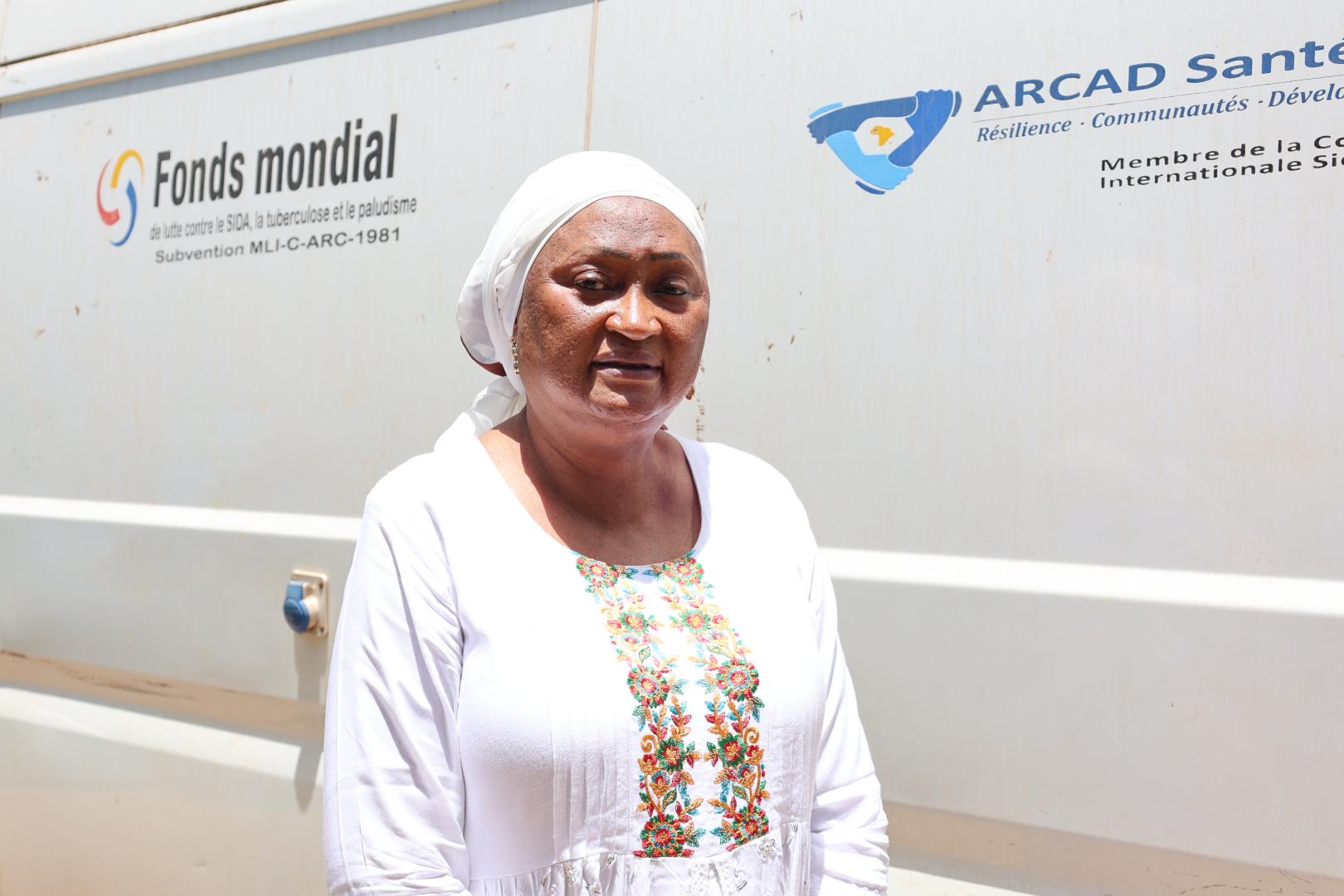
Trusting science to better protect our communities: Interview with Dr Bintou Dembélé (Mali)

Geneva, Switzerland, 16 April 2026- /African Media Agency (AMA)/- On World Health Day 2026, under the theme “Together for health. Stand with science,” the World Health Organization (WHO), the United Nations’ specialised agency for public health, highlights individuals using science to improve lives in the African Region.

A physician and public health expert, Dr Bintou Dembélé has dedicated many years to fighting infectious diseases and strengthening health systems in Mali and West Africa. Convinced that science must serve communities, she advocates for better use of scientific knowledge to prevent health crises, improve care, and build trust between researchers, decision-makers, and populations. For World Health Day, she shares her vision of science as accessible, collaborative, and useful in everyday life.

Why is it important today to support science in order to better protect people’s health?
Science is more essential than ever. It enables the development of new medicines, vaccines, and treatments to effectively combat both longstanding and emerging diseases. Science also plays a fundamental role in prevention. A better understanding of how diseases arise and spread helps reduce risks before crises occur. It also contributes to improving diagnostic tools, medical equipment, and the organization of care—thus strengthening health systems and increasing patients’ chances of survival and recovery.

How can scientific collaborations strengthen health in Mali and West Africa
Scientific collaborations allow for the sharing of knowledge, experiences, and resources. In West Africa, where many countries face similar health challenges, working together is a real advantage. These partnerships help fight endemic and non-communicable diseases, while improving maternal and child health—for example, by developing solutions to reduce maternal and neonatal mortality. Beyond health, such collaborations have a positive impact on socio-economic development, since healthier populations are more resilient and able to contribute fully to social and economic life.

The “One Health” approach is central this year. How can this concept help communities prevent health crises?
The “One Health” approach is based on a simple but essential idea: human health is closely linked to animal health and the environment. By understanding these connections, communities can better anticipate and prevent certain health risks. It encourages collective vigilance through local monitoring mechanisms and strengthens dialogue between researchers and populations. It also values local knowledge and promotes participatory research, where communities become active agents of their own health.

How can scientific data be transformed more quickly into concrete action on the ground?
Scientific data are true public goods. To be useful, they must be analyzed, shared, and applied rapidly through mechanisms capable of turning research results into concrete decisions. By quickly integrating data into public policies, health actions can be better directed, resources optimized, and population needs addressed more effectively.

How can communities be encouraged to support science and trust it?
Trust is born from understanding. To encourage public support, it is essential to make scientific information accessible, clear, and adapted to local realities. By sharing knowledge transparently and through channels close to communities, dialogue and social mobilization are fostered. In this way, science becomes a shared tool, serving everyone, and a genuine movement of support can emerge.

Distributed by African Media Agency (AMA) on behalf of World Health Organisation.

The post Trusting science to better protect our communities: Interview with Dr Bintou Dembélé (Mali) appeared first on African Media Agency.

A Second Humanist Child Naming Ceremony Held in Nigeria

By Leo Igwe

In February, the Humanist Association of Nigeria recorded the second child naming event. The event took place in Port Harcourt, Rivers State.  The ceremony provided an opportunity for humanists and non-humanists to join Westkey and his family in welcoming their new baby. The ceremony started with an introduction that explained the meaning of a child’s naming event. A ceremony that is consistent with the humanist outlook, a humanist naming event has no rules; it is unique, personal, flexible, sincere, and collaborative. There were some welcome remarks from the couple. Westkey and the wife saluted the guests present at the event especially those who came from outside Port Harcourt and Rivers state. In the poetry segment, Westkey’s wife read Joana Miller’s poem, Wishes for A Child, ” which reechoed some of her desires for the baby, including valuing education, accepting defeat with grace, and standing up for the helpless. 

In a pause for thought, the celebrant reflected on the significance of nurturing children without superstition: “Humanist child naming marks a renewal of humanity and a commitment to supporting the growth and development of children without supernational beliefs and religious dogmas. Too often, hankering after imaginary deities and spirits, and a hereafter, blinds and distracts us; they occasion an amnesia and an alienation. It undermines the appreciation of this-worldly events- the birth of a child, coming of age, and other milestones in this life. Humanist child naming is a reenactment of a natural duty and obligation. The humanist approach to child development and well-being puts the humanity of the child at the center”. 

The celebrant acknowledged that child development posed a challenge to parents and families and put pressure on their abilities and resources: “When children are slow in growing, teething, talking, or walking, when they often get sick or wet the bed, parents and guardians are worried. Families start looking for explanations, answers, and solutions. They are alarmed, and often mistakenly attribute the cause to some supernatural force, the devil, the witches, mamiwota, name them”. 

The celebrant drew attention to some child abuse cases: “Recently, there have seen cases in Rivers state where parents accused their children of witchcraft and demonic possession. In some cases they took the children to churches where they bathed them with pigeons’ blood, or flogged them with palm leaves in the name of spiritual cleansing or driving out evil spirits. Not too long ago a police inspector brutalized his children after accusing them of witchcraft, another parent poisoned his children using sniper substance following an accusation in Bayelsa state. These horrific incidents reveal the vulnerability of children but also the tendency of parents to abuse their duty and responsibility to their children”.

The celebrant urged parents to adopt evidence-based information and knowledge in managing child developmental challenges: “So when challenges of child growth and development come as they would come, it is important to seek out counsel, and assistance from competent individuals, from child development experts, not diviners and vision seers who have little or no idea about human biology. Parents should go to pediatric doctors, nurses, and health workers, not charlatans or exorcists. They should consult child psychologists, counsellors, and other professionals who do not mix their occupation with their faith. Parents and guardians should be guided by reason, science, and evidence-based information in managing issues that arise in the course of nurturing their babies”. The parents appointed a guide parent or mentor who pledged to support the parents in fulfillment of their duty and to provide advice and guidance when needed and necessary. The parents announced the baby’s name, and the event ended with some tributes and closing remarks from families and friends. In his message, the interim president of the humanist association, George Mbuagbaw, noted the importance of the event: 

“As Humanists, we want all human beings to live happy, fulfilling lives. This includes being able to mark important events in our lives, like Mr. and Mrs. Westkey Gogo are doing today with their baby’s naming ceremony. We all deserve to have important events in our lives celebrated in a manner that fits our beliefs, personality, and circumstances, whether we are religious or not. As we continue to build and strengthen our communities and local chapters, there will be more Humanist Ceremonies, and of course, more Humanist Celebrants to guide and officiate where necessary. Congratulations to the parents and family, thank you all for coming, and do have fun and enjoy the company of your fellow attendees”. 

In another message, Nigerian humanist, Dooyum Dominic Ingye, whose family hosted the first humanist child naming event in 2022 said: “In 2022, when I held a Humanist naming ceremony for my daughter, Doose Ositadimma, it was a deeply personal moment for my family. At the time, we knew it was something new in Nigeria. More importantly, it was our way of welcoming our child into the world with love, responsibility, and a commitment to raising her with compassion, reason, and humanity. Seeing another Humanist naming ceremony take place in the home of Westkey Gogo for his newborn fills me with quiet pride and hope. What once felt like a small step is clearly becoming something bigger, a sign that more families are choosing to celebrate new life in ways that reflect shared humanity rather than fear or superstition. These moments remind us that every child deserves to be welcomed with dignity, kindness, and the promise of a better future shaped by empathy and critical thinking. I warmly congratulate Westkey and his family. 

May this child grow surrounded by love, guided by reason, and inspired to make the world more humane for all of us”.

At the end, a group photograph was taken, including relatives and friends of Mr and Mrs Westkey, as well as other attendees. This event testified to the growing acceptance of humanist ceremonies. It was great to see both humanists and non-humanists convene and participate in this event.

Leo Igwe is a board member of the Humanist Association of Nigeria and Humanists International.

Home of Hope Orphanage rescues abandoned children

LILONGWE-(MaraviPost)-Home of Hope Orphanage in Mchinji, Malawi, has taken in four children who were abandoned by their mother five years ago in Ekwendeni.

The children, Patience Witness, 1, twins Miracle and Joseph Nkhata, 16, and Agnes Nkhata, 19, had been cared for by Agnes since she was just 14 years old after their father passed away and their mother remarried.

Agnes, who had been shouldering the responsibility of caring for her siblings, was forced to drop out of school after falling pregnant in 2025.

The case was brought to light by Pastor Daisy Munthali of Kairos Foundation, who reported the situation to the authorities, leading to the children’s rescue.

Patience and the twins are now safely settled at Home of Hope Orphanage, receiving the care and support they need.

Agnes, on the other hand, will have the opportunity to resume her education in Mzuzu, thanks to the intervention of the orphanage and social welfare services.

Mchinji District Social Welfare Officer Emmanuel Gervazio has commended the intervention, highlighting the importance of community support in protecting vulnerable children.

Home of Hope Orphanage, founded by Rev Thomson Chipeta, has a long history of providing care and support to orphaned and vulnerable children in Malawi.

The orphanage provides a range of services, including education, healthcare, and vocational training, to help children achieve their full potential.

Rev Chipeta’s vision for Home of Hope is to create a loving and supportive environment where children can thrive and grow.

The orphanage relies on donations and support from well-wishers to continue its vital work in the community.

NBS Bank raises Charity Shield stakes to MK100m

By Edwin Mbewe

LILONGWE-(MaraviPost)-The stage is set for a thrilling showdown as NBS Bank has dramatically increased its sponsorship for the 2026 Football Association of Malawi (FAM) Charity Shield to MK100 million, a sharp rise from last year’s MK60 million, signaling a powerful vote of confidence in both Malawian football and community transformation.

All eyes now turn to Bingu National Stadium in Lilongwe this Saturday, where fierce rivals Mighty Wanderers and FCB Nyasa Big Bullets will collide in a high-stakes encounter.

The match pits TNM Super League champions Wanderers against Castel Challenge Cup winners Bullets in what promises to be more than just a game—it is a battle for pride, legacy, and purpose.

Unveiling the sponsorship in Lilongwe, NBS Bank Head of Marketing Frank Magombo described the investment as a deliberate step toward lasting national impact.

“We are particularly excited that this project is not just impactful, but scalable, offering a model that can be replicated across the country,” said Magombo.

He stressed that the Charity Shield represents far more than football, calling it a unifying force capable of driving real change.

“This partnership reflects NBS Bank’s belief that football is a powerful platform for national unity and meaningful change,” he said.

Beyond the drama on the pitch, this year’s Charity Shield carries a deeper mission.

Proceeds from the match will fund the Green Girls Boarding initiative at Emvuyeni Community Day Secondary School in Mzimba District, in partnership with Plan International Malawi.

The project aims to transform the lives of 500 learners by introducing clean cooking solutions and renewable energy, creating a safer, healthier, and more sustainable learning environment.

Magombo emphasized that the initiative aligns with the bank’s Environmental, Social and Governance (ESG) priorities, reinforcing its vision of responsible investment that leaves a lasting footprint.

Football Association of Malawi First Vice President Madalitso Kuyera hailed the increased sponsorship as a defining moment for the sport and the communities it serves.

“This contribution is not merely a financial commitment; it is a powerful statement of belief in the unifying and transformative power of football. The Charity Shield is more than a football match. It is a tradition, a symbol, and a purpose-driven platform,” said Kuyera.

He noted that the initiative continues to stretch beyond the boundaries of sport, changing lives in meaningful ways.

“It has evolved into a vehicle of hope, turning the passion of the beautiful game into tangible impact for our communities,” he added.

The Charity Shield’s impact is already evident. Funds from the 2025 edition delivered a solar-powered water system at Namanolo Health Centre in Balaka District—proof that the excitement on the pitch translates into real-world change.

With increased investment, rising stakes, and a cause that reaches far beyond football, the 2026 Charity Shield promises not just spectacle—but significance.

FDH Bank gives MACRA MK15 million for ICT Innovation Awards

BLANTYRE-(MaraviPost)-FDH Bank has donated MK 15 million towards the upcoming ICT Innovation Awards being organised by the Malawi Communications Regulatory Authority (MACRA), in a move aimed at promoting innovation and advancing the country’s digital economy.

Speaking during the cheque presentation on Wednesday in Lilongwe, FDH Bank Head of Corporate and Institutional Banking, Kawawa Nsapato, said the Bank’s support is driven by the belief that digital innovation holds the key to solving many of Malawi’s challenges.

“We believe that the future is digital. Many of the problems we face as a country can be addressed through innovation. These awards provide a platform for innovators who may lack support and recognition to showcase their ideas and contribute solutions to national challenges,” said Nsapato.

He added that the initiative aligns with the country’s long-term development agenda, including Vision 2063, and will help foster a culture of creativity and problem-solving among Malawians.

“As a local bank, it is important for us to support and nurture innovation across the country. There are many people with great ideas that can transform different sectors, and this platform allows them to be seen and heard,” he said.

Nsapato further noted that the awards provide a national platform for innovators from across districts to gain exposure and connect with wider audiences that can support their ideas.

Receiving the donation on behalf of MACRA, Director of Finance, Mphatso Phiri, described the contribution as timely, as preparations for the awards are at an advanced stage.

“We received over 200 applications and have shortlisted 20 finalists who will showcase their innovations during the awards ceremony next week. From these, two winners will be selected and awarded various prizes,” said Phiri.

She said the support from FDH Bank will help create an enabling environment for innovators to present their ideas not only to Malawi but also to a broader audience, increasing their chances of support and growth.

Phiri emphasised that the awards are part of MACRA’s mandate to promote research, development, and innovation in the ICT sector.

“These awards are about bringing out exceptional ideas and supporting individuals who have developed solutions that can contribute to national development. It is part of our responsibility to nurture such talent,” she said.

The ICT Innovation Awards are scheduled to take place on April 21 and 22, 2026 in Lilongwe and expected to provide a platform for emerging innovators to showcase solutions in areas such as technology, climate resilience, and efficiency improvement, contributing to the growth of Malawi’s digital economy.

South African opposition figure Julius Malema jailed five years over illegal firearms possession, firing

PRETORIA-(MaraviPost)-South African opposition politician Julius Malema has been sentenced to five years in prison after being found guilty of the illegal possession of a gun and firing it in public place.

Malema’s lawyer said he would be appealing against the decision to prevent the leader of the Economic Freedom Fighters from being taken away to prison.

The length of the sentence could see him being disqualified as an MP.

Standing in court in a dark suit and red tie, Malema showed little emotion as the magistrate read out the sentence.

Last year, he was convicted of five offences, including the unlawful possession of a firearm and ammunition, discharging it in a public space and reckless endangerment.

The charges related to an incident in 2018 when a video emerged showing Malema using a semi-automatic rifle to fire several shots in the air during his party’s fifth anniversary celebrations held in the country’s Eastern Cape province.

In his defence, Malema told the court the firearm was not his and that he had fired the shots to rouse the crowd, South African news site SowetanLIVE reported at the time.

After being found guilty last October, Malema told his supporters outside the court in East London that “going to prison or death is a badge of honour”.

“We cannot be scared of prison [or] to die for the revolution. Whatever they want to do, they must know we will never retreat.”

He also vowed to take a challenge to the judgment up to South Africa’s highest court, the Constitutional Court.

Source: BBC

Trump-Xi correspondence: A diplomatic dance amidst tensions

WASHINGTON-(MaraviPost)-US President Donald Trump has revealed that he wrote to Chinese President Xi Jinping, urging him not to supply weapons to Iran, amidst escalating tensions in the Middle East.

The letter, reportedly penned by Trump, was a response to concerns that China might be arming Iran, a claim Beijing has repeatedly denied.

In an interview with Fox Business, Trump disclosed that Xi Jinping responded with a letter assuring him that China is not providing military aid to Iran.

“I wrote him a letter asking him not to do that, and he wrote me a letter saying that, essentially, he’s not doing that,” Trump said, without specifying when the letters were exchanged.

The exchange comes as tensions between the US and Iran continue to simmer, with the two nations engaged in a fragile ceasefire.

China, a major importer of Iranian oil, has maintained that it is not involved in the conflict and has urged all parties to show restraint.

Trump’s comments highlight the delicate balance of international diplomacy, as the US and China navigate their complex relationship amidst global tensions.

The US president is set to meet Xi Jinping in Beijing on May 14-15, with trade, security, and regional conflicts expected to dominate the agenda.

Exit mobile version