Netanyahu’s surprise offer of peace talks with Lebanon amidst ongoing conflict

TEHRAN-(MaraviPost)-The Middle East is bracing for a potential shift in the ongoing conflict as Israeli Prime Minister Benjamin Netanyahu has unexpectedly signaled his willingness to engage in peace talks with Lebanon.

This development comes in the wake of a devastating Israeli attack on Lebanon, which resulted in the loss of over 300 lives, and has left the region on high alert.

Netanyahu’s announcement, made on Thursday, has been met with cautious optimism, with Lebanon’s President Joseph Aoun emphasizing that a ceasefire must precede any negotiations.

However, Hezbollah, the Iran-backed militant group, has rejected direct talks with Israel, insisting that a ceasefire is a prerequisite for further discussions.

The situation is further complicated by Iran’s stance, with its Parliament Speaker Mohammad Baqer Qalibaf asserting that Lebanon is an “inseparable part” of any ceasefire agreement.

Iran’s Supreme Leader, Mojtaba Khamenei, has vowed to take “strong responses” to any Israeli aggression, warning that the country’s finger remains on the trigger.

The US, a key player in the region, has been working to broker a ceasefire between Israel and Iran, with talks set to resume in Pakistan on Saturday.

US President Donald Trump has urged Netanyahu to “low-key” the situation in Lebanon, while also emphasizing that the US-Iran ceasefire deal does not apply to Lebanon.

The conflict has already claimed hundreds of lives, with Lebanon’s Health Ministry reporting over 1,888 dead and more than 6,000 wounded since March 2.

The international community is calling for restraint, with the UN condemning the Israeli strikes and France urging Iran to make concessions as part of the peace talks.

As the situation continues to unfold, one thing is clear: the path to peace in the Middle East remains fraught with challenges.

Opposition leader Chithyola slams Mutharika’s Govt over rising cost of living

LILONGWE-(MaraviPost)-Leader of Opposition Simplex Chithyola Banda has expressed disappointment over the government’s handling of the economy, saying Malawians are suffering under the weight of excessive taxes and rising living costs.

Speaking before Parliament adjourned sine die, Chithyola Banda highlighted the struggles faced by households, with many workers forced to walk to work due to unaffordable transport costs.

The opposition leader criticized the government’s fiscal plan, saying it has failed to prioritize employment opportunities for the youth, leaving them with little hope for a better future.

Chithyola Banda’s remarks come amid a backdrop of rising fuel prices, which have increased by 33.16% according to the Malawi Energy Regulatory Authority (MERA).

The fuel price hike is expected to exacerbate the cost of living, with transport costs and commodity prices likely to surge.

Economists warn that the situation may worsen, with inflation projected to rise further.

The government has been urged to implement measures to cushion citizens from the economic shocks, including targeted social protection interventions and support for public transport users. However, the impact of these measures remains uncertain

Cisse leaves Libya role, quickly lands Angola coach job

LUANDA-(MaraviPost)-Senegalese football icon Aliou Cisse has officially stepped down from his role as head coach of the Libya national football team, marking a swift transition in his coaching career.

Cisse confirmed his departure on Wednesday, revealing that his final match in charge was Libya’s recent international friendly against the Liberia national football team.

The former Senegal national football team coach made the announcement through Instagram, where he stated that his working relationship with the Libya Football Federation (LFF) had officially come to an end.

Despite his short stay, Cisse managed to leave a mark on the Libyan side, introducing tactical discipline and improving the team’s defensive organization.

He also focused on rebuilding team unity, blending experienced players with emerging talent as part of a long term vision for the squad.

Under his guidance, Libya recorded a number of encouraging results, particularly in friendly matches, which helped boost confidence within the camp.

Although he did not win any silverware, his tenure is widely seen as laying a solid foundation for the team’s future development.

His departure leaves Libya in a transitional phase as the federation begins the search for a new head coach.

However, Cisse has wasted no time in securing his next challenge.

The highly rated tactician has officially signed a two year contract to become the new head coach of the Angola national football team.

His appointment is expected to bring renewed optimism to Angola, as they look to strengthen their competitiveness in African and international competitions.

Cisses experience, particularly his success in leading Senegal to Africa Cup of Nations glory, is seen as a major boost for the Palancas Negras.

Historic splashdown as Artemis II Astronauts return safely to Earth

…..Welcome home Reid, Victor, Christina, and Jeremy!

CALIFORNIA-(MaraviPost)-The NASA Artemis II astronauts have splashed down at 8:07 p.m. EDT (0007 UTC), bringing their historic 10-day mission around the Moon to an end.

The Orion spacecraft, carrying the four astronauts, landed safely in the Pacific Ocean off the coast of San Diego, California, marking a successful conclusion to the groundbreaking journey.

The mission, which launched from Kennedy Space Center in Florida on April 1, 2026, saw the crew travel over 685,000 miles in a massive figure-eight around the Moon and back to Earth.

During their journey, the astronauts observed the Moon’s far side, took stunning photos, and conducted scientific experiments, paving the way for future lunar missions.

The Artemis II crew, consisting of commander Reid Wiseman, pilot Victor Glover, and mission specialists Christina Koch and Jeremy Hansen, became the first humans to travel to the Moon’s vicinity since Apollo 17 in 1972.

The successful splashdown marks a major milestone in NASA’s Artemis program, aimed at returning humans to the Moon and eventually sending astronauts to Mars.

The astronauts are currently undergoing medical evaluations on the USS John P. Murtha, a Navy amphibious dock ship, after being retrieved from the Orion capsule.

The mission’s success is a testament to the hard work and dedication of the thousands of people involved in the Artemis program, and it sets the stage for future lunar exploration.

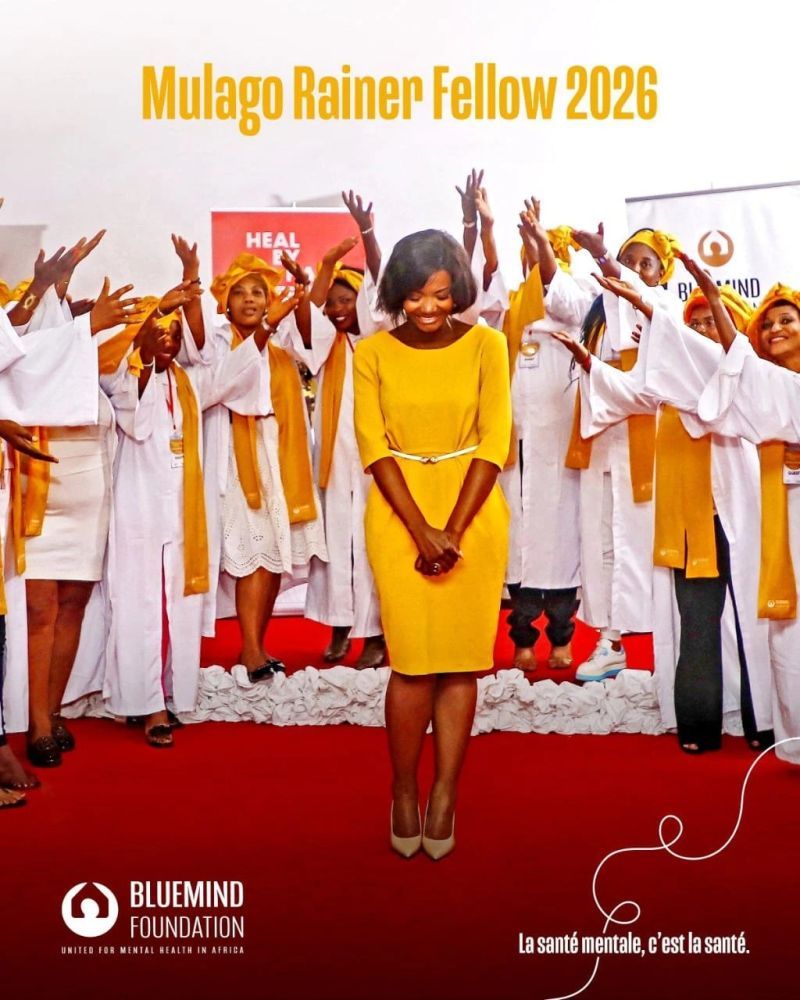
BLUEMIND FOUNDATION JOINS THE 2026 MULAGO RAINER FELLOWS PROGRAM, A GLOBAL BENCHMARK FOR LARGE-SCALE IMPACT

Bluemind Foundation announces its selection to the Mulago Rainer Fellows 2026 program, led by the Mulago Foundation, an internationally recognized organization in the funding of high social impact solutions.

Lomé, Togo, 10 April 2026 -/African Media Agency(AMA)/ – Following a highly competitive selection process involving more than 4,000 organizations, Bluemind Foundation was chosen for the strength of its model and its ability to develop solutions with massive, measurable, and replicable impact.
The Mulago Foundation is distinguished by its rigorous approach, focused on identifying initiatives capable of lastingly transforming the living conditions of millions of people. It favors models that are simple, effective, and designed from the outset for large-scale deployment.
This selection comes at a time of strategic acceleration for Bluemind Foundation, as it advances the rollout of an innovative community-based mental health model across Africa.

Marie-Alix de PUTTER and the ambassadrices © Desy Danga for Bluemind Foundation

INTERNATIONAL RECOGNITION OF AN IMPACT-DRIVEN MODEL
Joining the Mulago Rainer Fellows 2026 program represents international recognition of the model developed by Bluemind Foundation one grounded in a systemic approach to mental health, conceived as an essential social infrastructure. By embedding care within everyday living spaces, the Foundation builds programs rooted in local realities while forging pathways toward public health systems and sustainable financing mechanisms.
This recognition validates the model’s capacity to address structural challenges while remaining fully aligned with a large-scale deployment strategy.

RECOGNITION THAT REINFORCES AN ESTABLISHED TRAJECTORY
The Mulago Foundation is known for its exacting standards: it identifies and supports only models capable of sustainably transforming the lives of millions. Bluemind Foundation’s inclusion in this program does not mark a starting point, but rather:

  • validates the robustness of its model
  • confirms its capacity for expansion
  • strengthens a momentum that is already well underway

A NEW PHASE: BUILDING THE INFRASTRUCTURE FOR SCALE
This milestone will enable Bluemind Foundation to reinforce its strategic structuring mechanisms, deepen long-term financing models, and embed the organization within an international network of actors committed to achieving impact at scale.
In this momentum, the Foundation continues to pursue its ambition of deploying a model capable of reaching millions of beneficiaries, while upholding the rigor, measurability, and sustainability of its work.

A DEFINING STEP IN BLUEMIND FOUNDATION’S INTERNATIONAL POSITIONING
This selection marks a pivotal moment in Bluemind Foundation’s international positioning and affirms a clear ambition: to design and deploy high-impact African solutions capable of becoming durably embedded in public systems and global social transformation dynamics.

Distributed by African Media Agency (AMA) on behalf of Bluemind Foundation

About Bluemind Foundation

Bluemind Foundation is a pioneering nonprofit organization in the field of mental health that integrates care into everyday spaces tarting with hair salons transforming community hubs into true lifelines. It empowers local communities across Africa and beyond through innovative, scalable, cost-effective, and evidence-based solutions that change lives where care is needed most. Bluemind Foundation’s mission is to bring hope, dignity, and mental well-being to everyone, everywhere, every day.

For more information about Bluemind Foundation and its initiatives:  XFacebookLinkedIn and Instagram

CONTACTS
+228 99 22 00 87
welcome@bluemindfoundation.org 
www.bluemindfoundation.org

The post BLUEMIND FOUNDATION JOINS THE 2026 MULAGO RAINER FELLOWS PROGRAM, A GLOBAL BENCHMARK FOR LARGE-SCALE IMPACT appeared first on African Media Agency.

How mobile trading apps are changing access to markets in South Africa

Trading isn’t tucked away behind Sandton office doors anymore. All over South Africa, it’s happening during minibus rides, on lunch breaks and after hours on mobile screens.

Take a weekday morning in Johannesburg. It’s common now to see someone flipping through charts while waiting for their coffee. Not Instagram or WhatsApp; candlesticks, currency pairs and crypto prices moving in real time.

It’s a small shift, but it says a lot about South Africa right now. Trading used to feel distant and complicated, but that’s changing. Mobile trading apps are at the heart of it. They don’t just make trading easier. They make it feel like something anyone can do.

Trading isn’t what it used to be

Ten years ago, if you said you traded global markets, people probably pictured a finance expert; suits, big screens and some fancy degree. That image just doesn’t fit anymore.

Mobile trading apps have stripped away a lot of that seriousness. You don’t need a complicated setup or deep technical skills. For lots of South Africans, their first experience with trading happens on a phone, not a computer.

And that changes everything. Once trading goes mobile, it becomes part of your routine. You check it while commuting or sneak a glance before bed. It stops being “a big deal” and turns into just another app you swipe through.

A country ready for mobile finance

South Africa didn’t stumble into this trend. The country has one of the highest smartphone usage rates in Africa, and people are used to doing everything digitally; banking, shopping, etc. So when trading apps started popping up, the transition felt pretty natural.

The real difference was the access. Suddenly, global markets weren’t just headlines. They were something you could actually touch.

Gold prices spiking? You can trade. Oil reacting to news overseas? It’s right there. U.S. indices opening up? You don’t have to sit it out anymore. That direct link to the global financial world? It’s a huge draw.

Not just for the wealthy anymore

Who gets to trade is changing fast. For ages, trading came with a built-in assumption: You needed real money to get started. Not just a bit, but enough to cover fees, minimum deposits and the learning curve.

Mobile apps are breaking down that barrier. Many platforms now let people start with small amounts. That drops the psychological hurdle just as much as the financial one. Trading becomes less scary, something you can at least test out.

It’s happening a lot with young South Africans. Students, fresh graduates and hustlers balancing multiple jobs, they’re curious and they dive in. Not everyone sticks with it, but the point is, now they have a shot. That wasn’t always possible.

What’s actually driving the surge?

Ask regular users and you’ll get a mix of answers. Some want extra cash. Others are curious. Some are genuine market junkies. And there’s something deeper, uncertainty.

When the rand swings or global news starts shaping local prices, people notice. Trading stops feeling abstract and becomes practical. That’s where a solid South African trading app fits in. The most popular ones let you trade everything; gold, oil, indices and crypto, in one place.

But it’s not just about having options. Features like instant withdrawals matter more than you think. People want control. Swap-free trading is popular with those who care about fees. And 24/7 support? Sometimes that’s the difference between sticking with a platform and quitting. And trust? With so many options, users pay extra attention to whether a platform is secure, regulated and open. If it doesn’t feel safe, they don’t stay.

The social side of trading

Something else is shifting, trading is going social. Not in the old-school way, but people talk. WhatsApp groups, TikTok and YouTube explainers, there’s endless chatter, advice and strategy swapping.

That’s good. It makes learning easier, less scary. You don’t have to piece it all together yourself.

But, yeah, it’s risky too. Not all advice online is sound and not every “strategy” actually works. Some newbies jump in headfirst, fueled by hype instead of knowledge. It’s a growing pain of a more open market.

The reality check

All the excitement aside, trading is still trading. Markets are quick, and sometimes they don’t go your way. Easy access doesn’t equal easy profits. A tough lesson, but most learn it eventually.

The better platforms get that. They put energy into education; demo accounts, tutorials and market tips. Getting users is one thing, keeping them around is another.

Regulators are watching, too. As more South Africans join in, there’s pressure to make sure platforms play fair and users know the risks.

Where this is all heading

If you step back, it’s clear this isn’t a passing trend. Mobile trading apps are part of a bigger move toward digital finance. The way mobile banking changed money management, trading apps are reshaping how people see investing.

In South Africa, it feels huge. Something that used to be out of reach is now possible. It is not for everyone, not without bumps in the road, but enough to change things.

Changing the financial world of South Africa

Mobile trading apps are quietly changing South Africa’s financial world. They’re making global markets easier to reach, more visible and more woven into daily life.

It’s not perfect. There are risks, learning curves and unknowns. But there’s real opportunity. And, right now, that opportunity is sitting in people’s pockets, waiting for a tap

NBS Bank seals 10-year deal to support MDF Veterans Golf Tourney

LILONGWE-(MaraviPost)-NBS Bank Plc has reinforced its commitment to supporting Malawi’s military veterans through the signing of a Memorandum of Understanding (MoU) with the Malawi Defence Force (MDF) for a 10-year sponsorship agreement of the MDF Veterans Golf Tournament.

Proceeds from the tournament are channeled towards improving the livelihoods of veterans, including support for housing, daily needs, and general welfare.  

Speaking during the signing ceremony on Wednesday, NBS Bank Chief Executive Officer, Temwani Simwaka, emphasised that the partnership reflects the Bank’s long-standing commitment to recognising and supporting those who have contributed to the country’s peace and stability.

“As a proudly Malawian Bank, we recognise that the peace and progress we enjoy today are built on the sacrifices of our veterans. This partnership is about honouring that service and playing our part in supporting their well-being,” said Simwaka.

In his remarks, MDF Chief of Defence Force General George Jaffu highlighted that the initiative not only celebrates the legacy of service men and women but also raises awareness of the challenges faced by veterans and fosters continued support from stakeholders.

“This tournament is more than a sporting event; it is a reminder that service to the nation does not end at retirement and that, as a nation, we have a responsibility to support those who served,” said Jaffu.

Jaffu also said that through the MoU, NBS Bank and the MDF aim to strengthen their partnership further and ensure the sustainability and growth of the tournament as a meaningful platform for honouring veterans and supporting their welfare.


“The MDF Veterans Golf Tournament has grown significantly in recent years, attracting participation from corporate organisations, government leaders, and golfers from across the country. Beyond sport, it serves as a unifying platform that promotes patriotism, camaraderie, and collective responsibility towards veterans,” said Jaffu.

The MDF Veterans Golf Tournament, also known as the ‘Thanksgiving Golf Tournament,’ is an annual initiative organised by the Malawi Defence Force to honour and support military veterans who served the nation with distinction.

Over the years, the tournament has evolved into a key national platform that brings together the corporate sector, government, and the public to recognise the sacrifices of veterans while mobilising resources to support their welfare.

Witchcraft Accusation, Death, and Oracle Consultation in Delta State


By Leo Igwe

Witchcraft is a form of death sentence, and a matter of life and death. In witch persecution, every second matters, every minute counts, as illustrated in the case of August Uwagwu from Agbor in Delta state in Southern Nigeria. Augustine lives in the Aliren quarters in the Alisimie community in Agbor. His son, who was taking an examination in Asaba, about 65 kilometres from Agbor, called the Advocacy for Alleged Witches and reported the case of Mr Uwagwu. The son needed urgent help for the father. Some community members accused Augustine of being responsible for the death of someone who died in the village. The mob came and dragged him to the Obi’s palace, where they planned to firm up the plan to take him to a local shrine.

At the shrine, the native doctor would confirm if he caused the death of the community member. Uwagwu informed the son, who contacted AfAW asking for help. On hearing the news, we reached out to Mr Uwagwu. He was at the palace of the Obi. His voice was shaking. And there was some noise in the background. He confirmed the plan to take him to a traditional priest. I asked to speak with the Obi or his secretary. But he said that the secretary was busy. He asked someone at the palace to talk to me. The person explained that Uwagwu was accused of witchcraft. They were planning to take him to a place to find out if he was guilty or not. He did not provide details. Augustine said that they asked him to pay eighty thousand naira for the process, but he begged them to accept fifty thousand naira from him.

I asked him to tell them to provide me with an account number where I could pay the money. I did not plan to pay any money. I was only using it to buy time while we waited for some police or lawful intervention. Mr Uwagwu later sent me the account number of one Eluma Friday, whom I believed was among those facilitating the trip to a native doctor.

Meanwhile, I reached out to advocates in Delta state who joined in contacting the palace of His Highness. I phoned the Police Public Relations Officer(PPRO) in Delta state, but he did not pick up the call. I called the control room, and they insisted the accused must petition the police before they could intervene. I called the PPRO Zone 5, and he asked me to reach out to the state PPRO, the area commander, and the DPO of Agbor. I called and spoke with the area commander and the DPO, urging them to pressure his highness not to allow the trial by ordeal. 

The DPO told me to ask the accused to leave the palace and come to the station. But I told him they could mob the accused if he tried to flee the palace. I urged him to contact the palace and persuade his highness. The DPO said he would try to do so and then get back to me.

While this was going on, Mr Uwagwu’s son decided to defer his examination. He traveled down to the palace to rescue the father and stop the mob from subjecting Mr Uwagwu to trial by ordeal. AfAW supported him and another advocate with some funds to travel or get some people to go to the palace and rally support for the accused. Meanwhile, an advocate who contacted the DPO messaged:

“The DPO is currently on the phone with palace officers, and he has warned that trial by ordeal is criminal”. It was exciting news.

Later in the day, we received the news that the palace caved in to pressure from the mob and Mr Uwagwu was taken to a ‘native doctor’ in Owa Alero. And the ‘native’ doctor, after consulting the ‘oracle’, confirmed that Uwagwu was responsible for the death. On returning to the community, the mob invaded the compound and destroyed the property. Uwagwu’s son took him to the DPO in Agbor, where he made a statement. Uwagwu identified his accusers as Monday Ogbe, Jacob Odabi, Sunday Obiazi, Ameachi Obiazi, Ngozi Obiazi, and Ebeye Nwamaka. The divisional police office requested the sum of two hundred thousand naira before they could intervene and arrest suspects. But after much pleading, the police accepted fifty thousand naira. The complainant’s son advanced 10 thousand naira.

AfAW urges the police to ensure the safety of Mr Uwagwu and his family. The police should arrest and prosecute those involved in the accusation and persecution of Uwagwu including the ‘native doctor’ who upheld the accusation, and palace officers who facilitated the trial by ordeal. Witchcraft accusation is against the law. Nigerians should abandon the belief that people can harm or kill others through witchcraft. Such beliefs are baseless and mistaken. Nigerians who want to ascertain the cause of death or diseases should consult medical, not ‘native’ doctors. Nigerians should stop wasting their time and money going to ‘oracles’ to ascertain the cause of accidents, and other misfortunes. Traditional priests who preside over these oracles are charlatans and medical illiterates who do not know about human biology or pathology. 

Taking accused persons to shrines and oracles to determine the cause of death is a form of trial by ordeal and a criminal offence. 

Those who enabled the accusation and abuse of Mr Augustine Uwagwu should be made to answer for their crimes. Nigerians should abandon superstition and embrace science. Nigerians should reject jungle justice and uphold the rule of law.

Leo Igwe directs the Advocacy for Alleged Witches 

“Why Malawi is grappling with forex in plenty of minerals?-Queries CDEDI

LILONGWE-(MaraviPost)-The country’s civil rights group under banner Centre for Democracy and Economic Development Initiatives (CDEDI) is questioning authorities as to why Malawi is grappling with forex challenges amid plenty of minerals deposits which could address the crisis.

CDEDI Executive Director Sylvester Namiwa told the news conference on Friday, in the capital Lilongwe that its sad that Malawi is forex crisis for year while minerals deposits remain un developed.

Namiwa says, “We call on all well-meaning Malawians to engage in an open and candid national debate on the Reserve Bank of Malawi’s (RBM) decision to allow the country sit on substantial gold reserves in their coffers amid a persistent
foreign exchange crisis.

“Currently, almost all forex generated from different initiatives is spent on fuel procurement and logistical arrangements to bring it into the country”.

He observes, “Apart from gold, Malawi is also sitting on the largest, if not the second-largest rutile deposits in the world, in Kasiya, Lilongwe; 26 types of gemstones that include rubies, diamonds and sapphies, with Chimwadzulu mine in Ntcheu having the largest deposits in Africa.

“Then there is uranium at Kayelekera in Karonga, niobium at Kanyika in Mzimba, and rare earths in Phalombe and Balaka”.

Namiwa notes, “It is important to state that RBM, through its subsidiary Export Development Fund (EDF), commenced buying of gold in 2021 and two years later, gemstones. According to the Mining and Minerals Regulatory Authority (MMRA), in 2024 EDF procured 131,283.70 grammes of smelted gold while in 2025, it purchased 245,106.52 grammes, translating into a total of 376,390.22 grammes.

“This gold was procured from Machinga, Blantyre, Mchinji, Nsanje, Kasungu, Nkhotakota, Mzimba, Dedza and other districts”.

He added, “CDEDI invoked the Access to Information Act, demanding EDF to, among other things, make public disclosures on the suppliers’ list, total investment and profit made so far from both gold and gemstone, and also account for the alleged 70 kilogrammes of counterfeit gold bought in the course of the business.

“We also feels duty-bound to inform the nation that, according to a recent communication from MMRA, government is yet to issue a mining licence for the Sovereign Metals’ Kasiya Rutile Project”.

CDEDI observes further, “It is important to state that the Malawi Government, in September 2020, issued and eight-year exploration licence to Sovereign Services Limited, which will expire in 2028, two years from now”

CDEDI however challenging the Ministry of Mining and Energy to address the nation over allegations that it has unleashed terror on over one million jobless Malawians earning a living through artisan mining across the country.

The grouping adds, “CDEDI does not condone lawlessness, we have received reports of injuries, arrests, torture and seizure of minerals and destruction of property, including burning a hand-mining equipment in an operation dubbed ‘Teteza mgodi’ in which the Malawi Defence Force was involved.

“The allegations are compound by the fact that authorities and the Ministry did not care to inform the nation, let alone, alert or constructively engage the
concerned citizens, whose only crime was to get something for survival”.

Namiwa says, “We remind both the MDF and the Ministry that a suspect is presumed innocent until proven guilty by a competent court of law, therefore, they should tread carefully in the; otherwise, well-intentioned exercise.

“The above development brings to light lack of transparency and accountability, structural challenges and system failures that, unfortunately, work to the advantage of very few politically-connected individuals, with their foreign nationals and naturalised Malawians proxies, leaving out Malawians in destitute”.

The grouing appeals to authorities to intervene by engaging in a dialogue with the affected communities, through their leadership, to chart the way forward amicably.

CDEDI therefore demands immediate revocation of all quarry mining licences granted to Chinese nationals, and all exploration licences
exceeding three years.

Ceasefire between US, Iran: A complex putcome of power, pride, persistence

TEHRAN-(MaraviPost)-The recent two-week ceasefire between the United States and Iran, brokered by Pakistan, marks a significant yet complicated pause in a conflict that has gripped the Middle East since late February.

Both nations have proclaimed victory, while the broader international community watches cautiously, aware that true peace remains fragile.

The conflict, which lasted 39 days, began amid heightened tensions and escalated through a series of fierce exchanges.

The United States, led by President Donald Trump, entered the conflict with a clear posture: a show of overwhelming military strength and a threat to dismantle what Trump described as the “whole civilization” of Iran.

On the other side, Iran, bolstered by a deeply entrenched sense of nationalism and religious identity, refused to yield despite immense pressure.

The ceasefire agreement, brokered by Pakistan’s Prime Minister Shehbaz Sharif, includes commitments from both sides to halt offensive actions: the US and Israel agree to cease strikes on Iranian territory, while Iran pledges to refrain from attacking Israel and Gulf neighbors.

Crucially, Iran has agreed to reopen the Strait of Hormuz for international business and to surrender nuclear material, a significant concession given the global concerns about Tehran’s nuclear ambitions.

Despite these apparent compromises, both countries have claimed victory.

In Tehran, large crowds celebrated, bearing posters of the new Supreme Leader Mojtaba Khamenei, signaling a rallying of domestic support and the resilience of the ruling clerics.

In the US, officials and citizens alike hailed the cessation of hostilities as proof of American strength and strategic success.

So, who really won this war? The answer is nuanced and must be understood beyond the surface-level declarations and nationalistic pride.

From a purely military standpoint, the United States did not achieve its initial goals.

Trump’s early calls for regime change and the complete destruction of Iran’s nuclear program and military infrastructure did not come to pass.

Iran’s leadership remains intact, and the country’s military capabilities, while damaged, have not been decisively broken.

The fact that Iran agreed to surrender some nuclear material and reopen the Strait of Hormuz does indicate some level of diplomatic pressure and military deterrence exerted by the US, but it falls short of a comprehensive victory.

Iran, for its part, demonstrated remarkable stamina and strategic cunning.

Facing the world’s most powerful military force, Tehran managed to avoid collapse, maintain internal cohesion, and continue to project influence across the region through proxies like Hezbollah.

The celebrations in Tehran are not merely about surviving the war but about the ability to withstand what many expected to be an overwhelming assault.

This has undoubtedly strengthened the regime’s domestic position and hardened its resolve.

However, the war’s human and regional costs have been staggering. Lebanon, caught in the crossfire due to Hezbollah’s involvement, has suffered heavily.

With 1,500 deaths and 1.2 million displaced, the humanitarian toll underlines the war’s broader destabilizing effects.

Israeli Prime Minister Benjamin Netanyahu’s insistence on continuing strikes against Hezbollah despite the ceasefire further complicates the regional peace prospects and suggests that the conflict’s ripple effects will persist.

Strategically, the ceasefire brokered by Pakistan highlights a crucial reality: neither the US nor Iran could completely impose their will through military means alone.

The war has revealed the limitations of American power in the region, despite its technological superiority and vast military budget. Iran’s ability to absorb blows, leverage regional alliances, and sustain its nuclear ambitions underscores the complexity of Middle Eastern geopolitics where power is multifaceted and not solely defined by military might.

Psychologically, both nations’ claims of victory serve important domestic purposes.

For Iran, declaring victory helps solidify national unity and supports the regime’s narrative of resistance against Western aggression.

For the US, maintaining the image of strength is essential for domestic politics and international credibility.

Trump’s initial rhetoric may have been loud and aggressive, but the eventual outcome — a negotiated ceasefire rather than total capitulation — reflects the practical limits of military intervention.

Internationally, world leaders from the UK, France, and the UN have welcomed the ceasefire, emphasizing the need for adherence to the agreement and a peaceful resolution.

The United Nations’ call for respect and compliance underscores the fragile nature of peace in the region and the risk that hostilities could reignite without careful diplomacy.

The war between the US and Iran ended not with a clear-cut winner but with a complex balance of power.

The US demonstrated it could exert significant pressure and negotiate concessions, yet it failed to topple the Iranian regime or halt its nuclear program entirely. Iran showed resilience and strategic depth, managing to survive and even claim victory in the eyes of its people.

The human cost and ongoing regional instability, especially in Lebanon, serve as sobering reminders of the conflict’s toll.

This ceasefire should be seen as an opportunity — a chance to move from confrontation to dialogue, to address the underlying issues that fuel such conflicts, and to work toward sustainable peace in a troubled region.

Victory in war is often fleeting and costly, but peace, when achieved, offers the lasting benefit both nations and their neighbors desperately need.

o

Exit mobile version