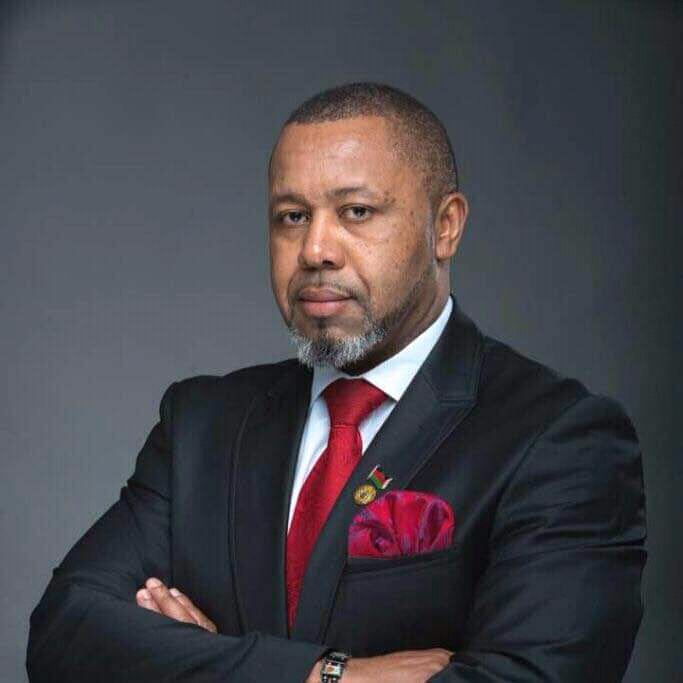
“Ukraine war, COVID-19, no excuses for Tonse government”-Chilima


By Vincent Gunde

LILONGWE-(MaraviPost)-Malawi Vice President Saulos Chilima, says COVID-19 pandemic and Russia –Ukraine war should not be used as an excuse for the Tonse Alliance government failure to fulfill campaign promises.

Chilima was speaking this to the media before his departure to the United States of America (USA) in New York to attend the 2022 United Nations Economic and Social Council Forum for Financing Development which starts from 25th to 28th April, 2022.

Chilima fond of speaking in parables

Social media users have described Chilima’s statement as a sign that these are rosy in Alliance government.

This is contradicting statement against President Lazarus Chakwera’s usual political gimmick attributing Malawi challenges to COVID-19 pandemic.

Now Tonse government cabinet ministers are attributing the challenges to Russia-Ukraine war as contributing factor to the global economy making prices of essential goods and services sky-rocketing at nobody’s care and beyond the reach of the poor.

Meanwhile, Malawi Congress Party (MCP0 diehard of Mvera in Dowa district, Rodgers Kamphangala, has advised Chakwera to address the nation on the economic challenges


South Africa stares at an acute housing crisis following recent floods

South Africa is staring at an acute housing crisis, especially in the two provinces where deadly floods were reported in last in recent weeks.

This shortage is now being experienced by low-income families that mainly live in shanty houses locally known as sharks.

The problem has been exacerbated by low incomes and lack of land.

Thulisile Ntobela once lived in an apartment, but when her rent went up 25 percent, the unemployed mother of five could no longer afford and moved out.

She found a piece of vacant land in Durban and put up a shack.

That was five years ago and much cheaper than paying rent, which had gone up to 200 rand ($12.80).

“That’s why we moved here, we don’t pay the rent. You just build your house and you stay,” she said.

Hers was among the 87 homes — shacks made of corrugated iron — that vanished in seconds when the ground, over-saturated with flood water — crumbled at the informal settlement of eNkanini, on a hilltop residential area of central Durban.

“I was so scared at that time. I was holding my baby. People were screaming,” recalled the 31-year-old, carrying her youngest, an eight-month-old boy.

No one was injured because they had already taken shelter at a neighbour’s home when the floor began to tremble.

Once covered in trees, the settlement of eNkanini formed in 2016 is now dotted with hundreds of shacks, some painted in bright colours.

“We don’t have homes. This is our home,” said Mzwandile Hlatshwayo, 25, a leader in the community.

Nearly 13 percent of South Africa’ 59 million people live in shacks, locally referred to as informal settlements, according to 2019 government statistics.

Hlatshwayo is from a rural area of KwaZulu-Natal but moved to the eastern province’s biggest city Durban in search of work.

He would live in government housing, but none is available in the city.

“I came here looking for a job. There is no jobs in rural areas,” he said.

– Apartheid legacy –

The problem of landlessness goes back to the apartheid era that segregated black Africans and people of colour, preventing them from owning land, said Sbu Zikode, head of the land and housing activism organisation Abahlali baseMjondolo (shack dwellers).

Stripped of land ownership, poor blacks moved to sub-par neighbourhoods.

But nearly three decades since the apartheid system was abolished, land distribution and economic inequity remain unresolved.

In 1995, the housing backlog was estimated by a UN report to be 1.5 million units.

Despite more than three million government houses being constructed since then, the shortfall has ballooned to 3.7 million homes, according to the Centre for Affordable Housing Finance in Africa.

“It’s not by our choice that we have no land, we have no homes,” Zikode said.

People have also flocked to urban centres in search of jobs and better healthcare and education. Infrastructure in municipalities like Durban haven’t kept up with the influx, Zikode said.

Informal settlements have mushroomed on vacant land as a result. But communities on more valuable land face eviction, Zikode said, which often turns into violent encounters.

“It is this reason people will occupy land that is not safe. They will occupy land that is along riverbanks, they will occupy land that is along floodplains.”

The less desirable locations on floodplains have now also brought deadly consequences.

Rescuers searching for the missing have said poor infrastructure with no consideration of the terrain put the houses at greater risk. Many of those still standing in eNkanini are teetering half a metre from the edge of cliffs, vulnerable to future storms.

Pipes were exposed, wires downed and unpaved footpaths up to houses near the top of the hill are treacherously slick with sand and debris.

Government housing officials said this week they were beginning to clear land in the nearby Ndwedwe town to erect temporary housing for the victims of the flood, which claimed 435 lives.

Longer term solutions are still being investigated.

Out of the tragedy, Zikode believes it’s an opportunity for government to finally address landlessness and poverty.

“The country and the world is watching as to how we are going to be dealing with the current disaster,” he said.

“Surely the government is now forced to act and provide alternative land.”

Source: Africanews

Africa must prepare for the inevitability of a global food crisis says African Development Bank President, Akinwumi Adesina

African Development Bank Group President Dr Akinwumi Adesina says “Africa must prepare for the inevitability of a global food crisis.” He was speaking about Africa’s priorities, as a guest at the Atlantic Council’s Africa Center on Friday.

Fielding questions from the Council’s Africa Center Chair, Ambassador Rama Yade; Senior Fellow Aubrey Hruby; and Washington/UN correspondent for Jeune Afrique and The Africa Report, Julian Pecquet, the Bank chief called for an increased sense of urgency amid what he described as a once-in-a-century convergence of global challenges for Africa.

According to Adesina, the continent’s most vulnerable countries had been hit hardest by conflict, climate change and the Covid-19 pandemic, which had upended economic and development progress in Africa. He said Africa, with the lowest GDP growth rates, had lost as many as 30 million jobs on account of the pandemic.

Speaking about the impact of the Russia-Ukraine war, Adesina expressed sympathy for the people of Ukraine, describing their suffering as unimaginable. He said the war’s ramifications spread far beyond Ukraine to other parts of the world, including Africa. He explained that Russia and Ukraine supply 30% of global wheat exports, the price of which has surged by almost 50% globally, reaching identical levels as during the 2008 global food crisis. He added that fertilizer prices had tripled, and energy prices had increased, all fueling inflation.

Adesina warned that the tripling costs of fertilizer, rising energy prices, and rising costs of food baskets, could worsen in Africa in the coming months. He noted that 90% of Russia’s $4 billion exports to Africa in 2020 was made up of wheat; and 48% of Ukraine’s near $3 billion exports to the continent was made of wheat and 31% of maize.

Adesina cautioned that to fend off a food crisis, Africa must rapidly expand its food production. “The African Development Bank is already active in mitigating the effects of a food crisis through the African Food Crisis Response and Emergency Facility – a dedicated facility being considered by the Bank to provide African countries with the resources needed to raise local food production and procure fertilizer.

“My basic principle,” Adesina said, “is that Africa should not be begging. We must solve our own challenges ourselves without depending on others…” The Bank chief spoke about early successes through the Bank’s innovative flagship initiative, Technologies for African Agricultural Transformation (TAAT) program, a program operating across nine food commodities in more than 30 African countries.

Adesina said TAAT has helped to rapidly boost food production at scale on the continent, including the production of wheat, rice and other cereal crops: “We are putting our money where our mouth is. We are producing more and more of our own food. Our Africa Emergency Food Production Plan will produce 38 million metric tons of food.” He said TAAT had already delivered “heat-tolerant varieties of wheat to 1.8 million farmers in seven countries, increasing wheat production by over 1.4 million metric tons and a value of $291 million.”

According to Adesina, heat-tolerant varieties were now being planted across hundreds of thousands of hectares in Ethiopia and Sudan, with extraordinary results. In Ethiopia, where the government has put the TAAT program to work in a 200,000-hectare lowland irrigated wheat program, farmers are reporting yields of 4.5 to five times per hectare. He said TAAT’s climate-smart seeds were also thriving in Sudan, which recorded its largest wheat harvest ever – 1.1 million tons of wheat – in the 2019-2020 season.

He added that TAAT came to the rescue during the drought in southern Africa in 2018 and 2019, deploying heat-tolerant maize varieties which were cultivated by 5.2 million households on 841 thousand hectares. As a result, he said, farmers survived the drought in Zimbabwe, Malawi and Zambia, allowing maize production to expand by 631,000 metric tons to a value of $107 million.

Adesina also spoke about the urgent and timely need for a strong replenishment of the African Development Fund – the Bank Group’s concessional lending arm that supports low-income African countries. He said the Fund has connected 15.5 million people to electricity and supported 74 million people with improved agriculture; it has provided 50 million people with access to transport; built 8,700 kilometers of roads; and provided 42 million people with upgraded water and sanitation facilities.

The Bank chief said there were three lessons to be learned for Africa from the challenges Africa is facing: first, that the continent could no longer leave the health security of its people to the benevolence of others; second, that it must look at health investments differently, and make the development of a health defense system a priority—investing in quality health infrastructure as a must—and third, that economies—which were already turning around—must create fiscal space to deal with debt challenges.

Asked about the outcomes for Africa of the global climate summit, COP26, in Glasgow last November, and how he foresaw prospects for success at COP27 in Sharm El Sheikh, Egypt in 2022, Adesina expressed optimism. He said it was important for developed countries to make good on their promise to provide Africa with the $100 billion a year required for climate adaptation. Adesina said: “Our challenge is adaptation because we didn’t cause the problem. In Africa, we are adapting to climate change.”

He explained that the African Development Bank, together with its partner the Global Center for Adaptation, was mobilizing 25 billion dollars to support climate adaptation in Africa.

The African Development Bank chief highlighted the importance of the technology sector as a driver for growth in Africa, and prospects for young people on the continent. Adesina described Africa’s youth as one of its greatest assets. He lauded the contributions of young entrepreneurs in the fintech, digital, creative arts and entertainment industries. He said the need by young entrepreneurs for innovative financing is why the Bank is exploring with stakeholders the establishment of specialized youth entrepreneurship investment banks to unlock potential and economic growth.

[embedded content]
Source African Development Bank Group

Mexico and Argentina celebrate Earth Day with dances and protests

8 hours ago

Environmental activists, artists and members of Indigenous groups held demonstrations in Mexico’s capital on Friday to mark Earth Day. Demonstrators gathered in Mexico City’s central Zocalo square where they called for justice for environmental campaigners and land defenders who had disappeared or been killed. Elsewhere, people danced and played percussion instruments to demand a state of climate emergency be declared in Mexico, with traditional Aztec dancers performing to honour the Earth. Argentine environmental groups took to the streets of Buenos Aires on Friday to commemorate Earth Day 2022, claiming for public policies to help reduce the impact of climate change. The thousands of demonstrators, most of them young people, advanced toward the National Congress. The protesters also called for legislation to protect wetlands, which are constantly endangered by fires and illegal cattle ranching. Argentina has one of the largest wetland systems around the Paraná River.

More about

Source: Africanews

How long will Martha Chizuma be protected for being sacred cow?

BLANTYRE-(MaraviPost)-Malawi’s fight against corruption needs total corroboration from all spheres of governance including civil society organizations (CSOs), media state prosecuting agencies and among others.

Corruption fight cannot be for one man show the way Anti-Corruption Bureau (ACB) Director General Martha Chizuma is pursuing the matter.

ACB is a public office not CSOs, social media buzz that one can have personal agenda against public office Act mandate.

Chizuma might have passion to end corruption in Malawi but does not give her a leeway to bypass other state prosecuting agencies including Office of Director of Public Prosecution (DPP), Attorney General (AG), Malawi Police Service (MPS) and courts.

Chizuma resorting social media friends at ACB

The ACB director keeps on ignoring AG, DPP, Police, court in her duties while accusing them of not supportive or being bribed according to the contested leaked audio.

Chizuma has resorted seeking sympathy from social media friends no wonder she is in trouble in court for rosy approach of ACB office.

Martha Chizuma is being overrated despite several mistakes she has made at ACB which by now she could be fired or honorably resigned.

Any public officer who breaches secrecy oath (the way Chizuma) gets fired or resigns to pave away for other able individuals to take over the task.

We have recently, witnessed the firing of former Lands Minister Kezzie Msukwa, ex-labour Minister Ken Kandodo, former Energy Minister Newton Kambala, Ex-AG Chikosa Silungwe and other President Lazarus Chakwera’s aid. These public officers messed up in one way of the other to get the boot.

Chakwera however only warned Chizuma of her silly action at ACB.
But she continues ignoring that warning while engaging militant social media friends who agitate for anarchy.

How long will Chizuma protected for being taken as a sacred cow? Why is being treated with gloves at ACB than her predecessors? Is Chizuma the only capable Malawian to handle corruption?

All these questions are nothing to do with her sex, being woman but ability to run public office entrusted by Malawian people not social media friend.

Even these so called social media friends’ credibility is questionable as others are in court battles while some are disgruntled, frustrated after being denied positions in Tonse government and one is advancing political agenda in 2025 presidential polls.

It’s now surprising that Chakwera still keeping Chizuma at ACB when the court ordered her to be probed later the High court stops the process.

Chizuma is not above the law otherwise we are turning her to be semi-god.
Sadly, USA, UK government are supporting Chizuma illegally whereby she is now reporting to them in any office operations.

Malawi government is a system which don’t work in isolation with other agencies the way Chizuma is operating at ACB.

If Chizuma wants to win back public trust not social media friends on corruption fight, she needs to work closely with courts, AG, DPP, Police otherwise her effort in corruption fight is water under the bridge.

Agitating for anarchy through social media friends will make her useless at ACB.

Malawi’s local farmers to benefit from improved bean value chain project

LILONGWE-(MaraviPost)-About 100,000 smallholder farmers in Malawi will benefit from two projects seeking to improve the common bean value chain through, among others, increased production, processing and value addition and access to readily available markets.

Alliance of Biodiversity International and the International Centre for Tropical Agriculture (CIAT) will implement the projects, namely; Multi-stakeholder Seed Platform (MSP) and Legume Food Processing.

CIAT launched the projects on Wednesday in Lilongwe at a ceremony which attracted scores of researchers, scientists, scholars and public and private sector officials, mostly working in the common bean sector.

USAID is funding the two projects to the tune of 1.5 million US Dollars, through Feed the Future and Michigan State University.

It is expected that smallholder farmers, working in cooperatives, will be introduced to improved varieties of bean seed and new farming techniques in order to harvest abundant quality beans, some of which will go through processing and value addition to produce a diversity of bean products for readily available markets, which will benefit the farmers and intermediaries in the value chain, including seed sellers.

According to Bean Programme Leader and Pan African Bean Research Alliance (PABRA) Director Africa Hub, which is a division within CIAT, Jean Claude Rubyogo, the projects have come to solve any problems affecting the common bean value chain—from production to consumption—in order to increase job and business opportunities.

He added that an investment in the improvement of the common bean value chain is important, for beans are at the center of nutrition and food security for millions of people.

Agriculture stakeholders

“Beans are probably the only source of protein for millions of people. They have protein up to 20 to 25 percent. Beans also have, among others, micronutrients such as iron and zinc. They have fiber and vitamins, including vitamin D6 and 12. Beans increase nitrogen in the soil. It is staple food, climate smart and maturity is less than three or two months.

“So, there will be increased production and better nutrition and diversification of bean products. In fact, the smallholder farmers that will benefit the most, are women, whose efforts will be rewarded. Apparently, the entire value chain will benefit, resulting into more incomes, which government will be able to tax,” Rubyogo said.

Director of Animal Health and Livestock Development in the Ministry of Agriculture, Dr Patrick Chikongwa, said the two projects have the potential to improve food security and increase income for women and youths.

“We are expecting a lot of impact, more especially the empowerment of rural farming communities through many income generating activities in the value chain.

We also expect that the projects will establish innovative and sustainable bean seed systems based on farmer seed demand through private sector engagements,” said Chikongwa.

Nankhumwa chides Chakwera’s Tonse for torturing journalists

By Dorica Mtenje

LILONGWE-(MaraviPost)-Leader of opposition in Malawi Parliament Kondwani Nankhumwa has accused President Lazarus Chakwera’s Tonse government of torturing journalists.

Nankhumwa argues that torturing journalists is tantamount to violation of media freedom which was happening in one party system.

In an interview with Maravi Post on Saturday, April 23, 2022 Nankhumwa said insulting journalists in the course of their duties reminds Malawians of the one party system where journalists were treated as adversaries to governance issues.

Nankhumwa recalled that during one party system of government scores of journalists were thrown into jail by just asking questions deemed to be antagonistic to the system of government that time.

He said some were even patrol bombed citing one journalist Mkwapatira Mhango.

“It is my belief that Malawians shall oppose any any attempts to take us back to dark ages,” said Nankhumwa.

Recently two cabinet ministers verbally assaulted abused journalist for asking questions of national importance in two different occasions.

Efforts to speak to the minister of information Gospel Kazako proved futile on several.

Chakwera Tonse administration has not yet accelerated implemented the Access to Information Act which was passed in Parliament years agon leaving the media fraternity at a corner of access to Information.

Partners in health, World Vision donate to Chikwawa flood victims

By Chisomo Phiri

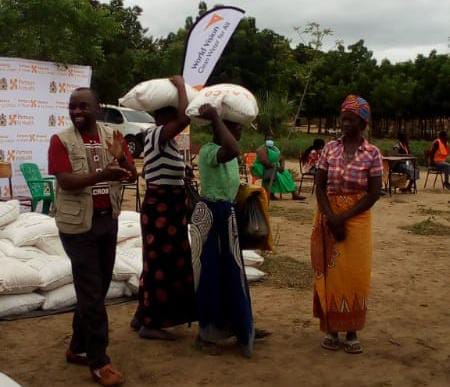
BLANTYRE-(MaraviPost)-As part of preparing and rebuilding the lives of Tropical Storm Ana victims who are going back to their homes, Partners in health (Abwezi Pa Za Umoyo ) in partnership with World Vision Malawi on Wednesday April 20,2022 donated assorted relief items and cash of money to displaced households in Chikwawa district.

The donated items including bags of maize weighing 25 kgs, soya pieces, sugar, soap, plastic paper rolls and the sum of MK18, 000 was made to each resident camping at Kakoma primary school, group village head Tiimbenawo, Traditional Authority (T.A) Chapananga in the district.

Chikwawa households smiling at food item donated

Chief Operations Officer of Partners in Health, Basimenye Nhlema, said her institution joined forces with the World Vision Malawi through Chikwawa district council to provide support to the camps in the district.

“It has been over two months now since our the camp residents were displaced by Tropical Ana in January this year. We lost some of our loved ones during the disaster and some sustained injuries while majority lost our homes, crops in fields, livestock, among other vulnerable items.

“Today as we wrap up our emergency response, we stand in solidarity with Chikwawa district council as well as our counterparts from world vision Malawi in distributing social support packages to most vulnerable households,” said Nhlema.

Nhlema disclosed that the relief items costed them K33,522,500 targeting 1,830 most vulnerable households in both upper and lower parts of Traditional Authority ( T.A) Chapananga.

She added that the organization has been providing assistance to the survivors in the area for the last ight weeks starting from February 14, 2022 with medical care, medical equipment, maintenance of DHO vehicle, and data collection support for those who are living in camps.

Nhlema also disclosed that the organisation has spent MK81,000,000 for Majete infrastructure works and she has commended government stakeholders and partners for the financial support through the time.

Chikwawa World Vision programmes coordinator Mark Alani said with a financial support from World Food Programme ( WFP) United States Agency for International Development (USAID) and other partners, the organization has established an initiative aimed at distributing money to the displaced households called Cyclone Ana once-off cash distribution.

Alani said the cash is to prepare the victims to have something as they go back in their initial homes.

“We are distributing cash to the displaced households so as they are now going back in their respective homes, they should have a start pack.

” We are not distributing food items or other basics because we know that these people lost other things of which only money can be able to replace”, said Ali.

Village head Tiimbenawo therefore lauded the two organisations for the timely donation saying will now help them rebuild their lives as are preparing to go back in their homes.

He urged other well-wishers to emulate the efforts and reach out the rest as many are still in need of help.

One of the beneficiaries Naliyeti Kambanje also commended the two donors for the donation.

She said the donation will be used to address their daily challenges.

About 35,299 Chikwawa households have benefited from the initiative.

Karonga, bullets in goalless stalemate: 2022 TNM Super League

By Lusekero Mhango

KARONGA-(MaraviPost)-Stragglers Karonga United on Saturday, April 23, 2022 held reigning champions Nyasa Big Bullets to a 0-0 draw in a TNM Super League match played at the Karonga Stadium in a cagey but entertaining stalemate.

The Game which was played in front of a huge crowd was characterized by wastefulness in front of goal by the two sides as clear goal scoring chances went begging time after time.

Wasteful Bullets in red

The point meant that Bullets stay second on the log table with 14 points to their name from six matches two points adrift from early league leaders Blue Eagles while Karonga remain 14th with their fourth draw in their opening seven games.

The visitors who were searching for their first victory and goal at the Karonga stadium since 2019 against their hosts, made a spanking start to the game and should have taken an early led in the 6th minute but marksman Babatunde Adepoju’s rasping strike from the edge of the penalty area went narrowly wide of Yona Milanzi’s goalposts.

Despite the away side making a faster start to the game the home side who were being led by Christopher Nyambose who replaced the sacked Lazarus Magaya in the dugout looked dangerous on the counter attack with the impressive Sheriff Shamama at the heart of Karonga’s attacks.

However despite enjoying a lion share of possession in the first half Bullets were forced to settle for a goalless first half by a well-organized home side led by the impressive Eric Atsiga at the back.

In the second half the Blantyre based giants started off where they had left, exerting pressure on Karonga United tiring defense, playing off some neat one touch football but Chimwemwe Idana and Ernest Petro failed to capitalize on chances that they created as the Karonga United keeper Milanzi was superb on the day making a string of fine saves to preserve a point for his team.

However Karonga United’s Shamama should have grabbed a late winner for the home side but shot wide after a loose ball in the penalty area kindly fell into his path.

Speaking in a post-match interview newly installed Karonga United coach Christopher Nyambose, expressed delight in his side showing despite their lack of confidence following a winless start to the season.

“I thought our performance was more like the Karonga of old which our fans have not seen this season and as a coach I am delighted with the work rate and application put in tactically by the boys to earn this important point against one of the title contenders for the championship this season,” he said.

Never the less Nyasa Big Bullets coach Calisto Pasuwa, said bullets were happy to come away from home with the point against a well-organized team.

“We didn’t play that well today like usual so we are happy to go home with a point in a difficult stadium and team. The season is long so we will have other opportunities to collect maximum points.” He explained.

Nigeria As A Jackals’ Paradise, By Ogacheko Opaluwa

Another season of politics and politicking in Nigeria is here and expectedly, a lot of frenzied activities and horse trading are going on currently in the political space.

Without fear of contradiction, I dare to say that Nigeria has been through, perhaps one of its worst periods in history under President Muhammad Buhari led APC government. I can recall vividly that around this very period in 2015, many Nigerians had become dissatisfied with governance in Nigeria under former President Goodluck Jonathan and his PDP political party.

Many believed that the former President was a weak and clueless leader that was bereft of political or administrative acumen. As a result, it was said that corruption thrived under his very nose while prebendalism became order of the day.

Based on what was happening at that time, I concluded that those Nigerians that believed that the leadership abilities of former President Goodluck Jonathan were inadequate were right to a certain extent. At least, the celebrated but nauseating case of putrid kleptomania of Nigeria’s former petroleum minister, a Mrs Allison or the alleged slush arm deals of former NSA Dasuki buttressed those beliefs; no matter what anyone believes or disbelieves about the government of the former President.

Capitalizing on the pervasive disaffection in the country and gauging the general mood of the nation at the time, a group of hawkish and desperate Nigerian politicians hurriedly cobbled the All Progressives Congress or the APC party together through a somewhat crude political caeserian process that is currently not only hurting the party, but also hounding the nation.

Just to remind us, the APC promised to redeem our dear nation from PDP’s maladministration and the devilish stranglehold of a gluttonous colony of politicians within the ranks of the former ruling party.

The promise resonated with Nigerians instantly and justifiably so. Nigerians believed APC’s promises and rallied behind the party’s Presidential candidate based mainly on the now dubious ‘redeemer’ personage to oust the PDP from power. Almost seven years after President Muhammad Buhari and his APC came to power in Nigeria, nothing seemed to have changed remarkably in Nigeria.

If anything, Nigeria has degenerated abysmally from the undesirable state of affairs that we found ourselves in 2015 to now verging dangerously on the precipice of failed States; thanks to pervasive poverty and insecurity in the country. Nigeria has become a jackal’s paradise, where predators wander in at will for a kill and saunter out with their spoils unchallenged.

Jackal in this context is a scant metaphor for the troublers of Nigeria comprising but not limited to insurgents, terrorists, foreign criminal gangs engaged currently in kidnapping enterprise and ethnic cleansing, corrupt public officials including the hierarchies of the nation’s security agencies and of course, cyclical politicians and false clerics. In terms of security, there is no need to dwell endless on the country’s intransigent Boko Haram insurgency.

This is because Nigerians are gradually getting accustomed to activities of the insurgent and terrorist group. What seem to matter to most Nigerians now is where could be their next destination and for whom will the next bell toll? However, what is most worrisome currently is how foreign criminal elements and gangs seem to have found a fecund playground in Nigeria for plying their evil trades mostly for economic reasons. Incursion of foreign criminals into Nigeria especially through the country’s porous northern borders is not a new phenomenon though.

It predates Nigeria’s independence when petty thieves, rustlers and armed robbers from Niger and Chad forayed occasionally into Nigeria’s border communities to steal and rob residents. This phenomenon was noticed mostly during local market days during the era of trans-Sahara trade.

However, the Chadian civil wars that were waged variously between 1965 and 2008 as well as several rebellions by bands of mutinous soldiers and Tuaregs in Nigeria Republic exacerbated incident of incursion by foreign criminals into Nigeria.

The major tributaries of foreign incursion into Nigeria are mainly through the country’s northernmost land borders; including the notorious rugu forest that stretches for over 200km through Birnin Gwari in Kaduna State, parts of Zamfara and Katsina States up to Maradi in Niger Republic.

In fact, rugu forest is known to Nigerian security agencies as a major haven for the terrorists, insurgents, kidnappers and other criminal groups that are terrorizing the country currently. Also, the mountainous Gwoza and Sambisa forest areas of Borno State offer passages into Nigeria for criminals coming into our country from Chad and Cameroon.

Similarly, bands of foreign criminals are known to be constantly exploiting the fallow wastelands that stretch from Timbuktu to Gao in Mali, to Gaya in Niger Republic and terminating in Nigeria through Dandi Local Government Area of Kebbi State. According to the Nigerian Immigration Service, there are over 1,300 illegal routes into Nigeria along the about 1,470km stretch of land border between Nigeria and Niger Republic.

These are being exploited daily by smugglers and foreign criminals. Nigeria therefore offers political and economic haven to citizens of neighbouring African countries that are currently suffering hardships imposed by political unrest, global economic meltdown and effects of climate change. Compared to her neighbours, Nigeria has a buoyant economy but has lax immigration rules due principally to ECOWAS travel protocols as well as poor border management and controls. Consequently, there is currently a deluge of economic refugees and foreign criminals that are pouring into Nigeria on daily basis. This accounts for the intensified criminality virtually across Nigeria that we are witnessing currently.

The terrorists attack on Kaduna airport on the evening of 26 March, 2022 and related attack on an Abuja – Kaduna bound train during dusk of 28 March, 2022 were indicative of the coalescence of several foreign criminal gangs operating in Nigeria with local bandits and Boko Haram stragglers into a formidable front capable of destabilizing Nigeria if we don’t act fast and act decisively.

That is why I laugh at the many political narratives that emerged from different quarters after those incidents. They remind me of what late Supreme Commander of Allied Forces in Iraq during Operation Desert Storm’ Gen Norman Schwarzkopf said in his memoirs, ‘It does not take a heroe..’ He said politicians think that warfare is like watching a ‘terminator’ film where some ‘Rambo’ deploys one magical fire spitting weapon momentarily and exterminates all his opponents with just a squeeze of the trigger.

Listening to the Honourable Minister of Transport and Aviation talking about frustration of his planned deployment of rail track surveillance system by his fellow politicians therefore resonated in my head with what the late Allied Forces Commander once said. If nothing at all, it taught me that politicians are the same all over the world.

Nigeria’s Honourable Minister of Transport and Aviation escalated the political absurdity by adding that all Abuja – Kaduna train shuttle services shall be accompanied by Nigerian Air Force combat air platforms once the service resumes. Mr Honourable Minister, are you kidding me, or are you saying that Nigerian politicians are this daft?

The most annoying impudence of Nigeria’s ruling elites was the visits to scene of the train incident by some security chiefs; specifically the Chief of Army Staff (COAS) and the Inspector General of Police (IGP).

At least the COAS was physically on ground on the rail tracks amidst a bevy of heavily armed and body armour cladded aides to inspect the extent of damage, assess the tactics and possibly type of weapons that the terrorists may have employed to perpetrate the dastardly act. Whether we admit it or not, this has become part of the political correctnesses that have assumed officialese character in Nigeria. Rather than being a forensic analysis of the horrific attack in order to design preventive measures, the visit by the swagger- stick wielding COAS from all intent and purposes may just have been for its political correctness.

I stand to be corrected whenever I witness a proactive measure by his land forces to prevent a re-occurrence. The most annoying of the visits however is that of the IGP who, from recesses of his armoured plated official limousine car while being accompanied by a large retinue of heavily armed security aides, decided to travel some stretch of the Abuja – Kaduna road before returning to Abuja to brazenly inform Nigerians that the road is safe. Haba Mr IGP!, what do you take Nigerians for, some bloke headed folks? It may interest the security Chiefs to know that some innocent Nigerians were kidnapped on the same Abuja – Kaduna road that they touted as being safe while they were still in transit to their respective cosy and well fortified abodes in Abuja after those publicity visits. Who is deceiving who then?

There is no doubt that Nigeria’s security forces have made significant progress in the fight against Boko Haram insurgency and terrorism since 2015 when President Muhammad Buhari assumed power in Nigeria. However, government’s apparent lack of interest and inadequate attention to the country’s land borders is threatening to reverse whatever gains have been achieved against Boko Haram so far.

As it were, Nigeria is currently under siege by bands of foreign economic mercenaries that are combining with local gangs of kidnappers, armed robbers, ritualists, cattle thieves, including Boko Haram’s economic raiders as well as the insurgent group’s individual stragglers searching for personal economic fortunes. Therefore, unless Nigeria pays immediate attention to the country’s land borders and control influx of foreign criminals, the entire country; including Abuja may become unsafe for all of us. This is a critical assignment for the next President as our incumbent President has limited time on his hands and has demonstrated unwillingness to control the country’s borders effectively especially in the north because of certain political, religious and cultural considerations. If you doubt me, consider the timing of current decision by the Federal Government to re-open the country’s land borders against a backdrop of the impending general elections. Nigerians are currently living the Hobbesian nightmare in their country where anarchy reigns and human life and living have become ‘short, solitary, poor, nasty and brutish.’ As it is, the social contract between Nigerians and the Government appears to be collating or have collapsed because of failure of the latter to protect citizens from marauding bands of terrorists, insurgents, kidnappers, armed robbers etc.

Therefore, Nigerians must jettison all sentiments as we prepare to elect a new set of leaders in 2023 that we hope will help us to salvage the country from its current despondent state and possibly prevent it fro slipping ultimately nto failure.

We must reject all the politicians that have ruled us thus far from 1999 till date as it is evidently clear that they lack vision, are irredeemably corrupt and don’t have the amount of decorum required of leaders that could be entrusted with the task of repositioning Nigeria at this critical time.

Ogacheko Opaluwa is a Public Affairs Analyst and Social Critic. He contributed this piece from Abuja-Nigeria.

Source saharareporters

Exit mobile version