2022 French election: the diaspora activists fighting abstention

On Sunday, voters in mainland France will head to the polls to choose the new French president. Incumbent head of state Emmanuel Macron is facing candidate Marine Lepen. With 26% of voters who did not take part in the first round of the election, abstention continues to grow. Achiata Djiman and Ya Mutualé are part of Africa 50 Lyon, a collective gathering associations that celebrate African and Afro-Caribbean cultures in the south-east of France. When the collective noticed a growing abstention in the diaspora a few years ago, they launched an initiative to promote citizen participation. Their goal? Keep democracy alive in Europe and continue to inspire democratic progress in Africa.

You launched the citizen campaign “To vote is to exist” back in 2010. What prompted you to do so?

Ya Mutualé, in charge of intercultural at Africa 50: In fact, what turned into a citizens’ campaign was supposed to be a one-time event for the members of our associations. At first, the initiative was a way to celebrate the 50th anniversary of the independence of the sub-Saharan African countries from which most of us come. We wanted to mark the occasion by reflecting on the past, and by asking ourselves where the independences had led our countries. We also wanted to discuss the future that could await African democracies.

Moreover, we had noticed a growing lack of interest -maybe due to disappointment- in the electoral process within the diaspora. People were jaded, particularly in regard to French policies towards Africa and sub-Saharan Africa. However, when the event was completed, we perceived a demand; there was no similar initiative in the cultural offer of our metropolis. At the same time, we realised that the lack of interest in ‘the political’ was general in France. We then formed a collective of associations and have been mobilising ever since at all presidential and legislative elections.

Has encouraging your fellow citizens from all backgrounds to vote become a commitment of yours?

Achiata Djiman; coordinator of the campaign “To vote is to exist”: Indeed, it is something that is particularly dear to our hearts! We thought of a way to carry out this action for our citizen participation to have an impact in the region we live in. We have become builders of citizenship in a sense. Citizenship is not limited to papers which testify that we are French, it goes through voting. Citizenship is a commitment, a citizen has duties, including that of keeping democracy alive.

With abstention becoming rampant, it was essential for us to raise awareness, to stimulate each citizen to exercise their power to choose. But also to encourage them to check whether they were still registered on the electoral roll. So without knowing who had the citizenship or who did not, we went out to meet inhabitants. We approached everyone and those who told us they had other nationalities took the time to listen to us and discuss how important voting is. We don’t always have that in mind but a ballot, plus another one and another one, makes up a sum of ballots. So that at the end of the counting, a citizen can proudly say that a candidate has been elected thanks to their participation.

Where did you campaign this year?

When we launched the campaign in December, we went to the La Guillotière neighbourhood, which has been one of the emblematic districts of Lyon’s diasporas, from the time when Italians arrived to Asian and African diasporas which are now significantly represented. We went to the metro stations and public transportation, we visited the grocery stores, the market of the 8th district of Lyon, the stores selling products from elsewhere.

During these sessions, we met other associations, including the Bonnefoi social center, and with them we organized an activity that we called the palaver tree. It was a reference to African cultures and societies for which discussing is a real institution with the objective to allow the expression of problems, the sharing of what goes well with the aim of regulating the social life. We were thus able to meet with elected officials, inhabitants, and pupils. This gave rise to some edifying exchanges.

How is your contribution to your motherland made effective through your vote and, more broadly, through your commitments here in France?

A.D: We have to be aware of what is going on in the territory where we live, where we are at home. We are committed here first because participating in the management of the city is our right, we do not have the right to exclude ourselves: everyone has a part to play. We have seen in recent months the changes of political regimes in several West African countries. We have seen a failed democracy. So I resolve to see how we can work to keep democracy alive here. It seems to me that if we want to make people think that democracy is a good way, we have to commit ourselves to strengthening democracy here. So that everyone is aware that the people, alone, can have power; that the rights of citizens can be respected and that political renewal is possible.

In addition to the concerns that you share with your fellow citizens, such as health, purchasing power, etc., are there other issues to which you are more sensitive because of your diverse cultures?

Y.M: I like to say, like the elders that “We are from where we come from as we are from where we live”. This double belonging – I am a first generation immigrant – gives us a double consciousness. We are aware that we must fully take our place and our role here and we share the vicissitudes, the joys, the happiness, the difficulties and the failures of the countries from where we came.

We are also economic actors because we show solidarity and we participate in the life and economy of our families still living there and of the population. I am thinking in particular about the contribution of diasporas on the financial level which is regularly underlined in relation to public development aid.

We are therefore sensitive to the way our fellow citizens look at Africa and Africans, and more particularly to the way candidates vying for presidency or for parliament seats look at African countries.

What is your aspiration for France for the next five years?

A.D: Interculturalism is one of the themes for which I would like to see changes in the future. When some people say that interculturalism is a danger, today, in the 21st century, I feel sorry for such ignorance. I would like everyone to notice the contribution of interculturalism in what makes the culture and France of today.

Y.M: Indeed, one of our challenges is to work so that our fellow citizens are not afraid of diversity but can see in the “other” an opportunity for alliance, friendship and partnership. African cultures give us the intuition that the foreigner can, at first glance, represent either a danger or an opportunity. It is up to us to seize the opportunity so that it prevails.

Source: Africanews

New Ebola outbreak declared in the Democratic Republic of Congo

The infected patient was a 31-year-old man who began experiencing symptoms on 5 April and after more than a week of care at home, sought treatment at a local health facility.

On 21 April, he was admitted to an Ebola treatment centre for intensive care but died later that day. Having recognized the symptoms, health workers immediately submitted samples to test for Ebola virus disease, WHO explained.

So far, just one case has been confirmed and investigations to determine the source of the outbreak are ongoing.

The fourteenth outbreak in the country

“Time is not on our side,” said Dr Matshidiso Moeti, WHO Regional Director for Africa. “The disease has had a two-week head start and we are now playing catch-up. The positive news is that health authorities in the Democratic Republic of the Congo have more experience than anyone else in the world at controlling Ebola outbreaks quickly”, he added.

There have been fourteenth Ebola outbreaks in the Democratic Republic of the Congo since 1976. The new outbreak is the sixth one since 2018 – the most frequent occurrence in the country’s Ebola history, according to the UN health agency.

Previous outbreaks in Equateur Province were in 2020 and 2018, with 130 and 54 recorded cases respectively.

<!–[if IE 9]><![endif]–> A health worker vaccinates a man against the Ebola virus in Beni, eastern Democratic Republic of the Congo. (file photo) World Bank/Vincent Tremeau

A health worker vaccinates a man against the Ebola virus in Beni, eastern Democratic Republic of the Congo. (file photo)

Community vaccination set to kick-off

WHO informed that the deceased patient received a safe and dignified burial, which involves modifying traditional funeral ceremonies to minimize the risk of contagious fluids infecting attendees.

Health authorities are also identifying contacts to monitor their health and disinfected the health facility where the patient was treated.

Moreover, plans to kick off vaccination in the coming days are underway with stockpiles of the rVSV-ZEBOV Ebola vaccine already available in the cities of Goma and Kinshasa.

“Vaccines will be sent to Mbandaka and administered through ‘ring vaccination strategy—where contacts and contacts of contacts are vaccinated to curb the spread of the virus and protect lives”, WHO highlighted.

“Many people in Mbandaka are already vaccinated against Ebola, which should help reduce the impact of the disease,” added Dr. Moeti. “All those who were vaccinated during the 2020 outbreak will be revaccinated.”

Ebola is a severe, often fatal illness affecting humans and other primates. Case fatality rates have varied from 25% to 90% in past outbreaks.
UN Health News

Chakwera for private sector engagement in Malawi-Mozambique bilateral ties

MAPUTO-(MaraviPost)-Malawi President Lazarus Chakwera has emphasized the need for Malawi and Mozambique to prioritize private sector in their bilateral engagement, stressing that the sector is the engine for social and economic growth in any country.

Chakwera has since challenged his own government and that of President Fillipe Nyusi in Mozambique to create an enabling environment for businesses to flourish.

Chakwera and Nyusi

The Malawi leader made the sentiments on Saturday, April 23, 2022 when he opened the Malawi-Mozambique Business Forum in Maputo, Mozambique.

“I strongly believe that the private sector is the engine for growth and should, therefore, form an integral part of our bilateral engagement,” he said.

He said it is against this background that his government has put in place policies, the legal framework and institutions to support private sector development.

Chakwera cited the Malawi 2063 development blueprint and Malawi’s Export Strategy II (2021-2026) where the role of the private sector is expressly highlighted as being “very prominent” in the creation of wealth for the nation.

“We have carried out a number of legal, administrative and macroeconomic management reforms aimed at creating a business-friendly climate. I believe similar efforts are taking place in Mozambique, in line with the Southern African Development Community (SADC) call to member states to harmonize policy frameworks especially, pro-private sector ones. This is also good for cross border trade and investment.

“Creation of an enabling business climate is critical to the growth and development and the attraction of the much- needed Foreign Direct Investment (FDI). We note, with appreciation, recent Mozambique’s high FDI inflow statistics,” says Chakwera.

Malawi leader adds, “According to World Bank data, net Foreign Direct Investment inflows into Mozambique increased from 11.3 percent of GDP in 2018 to 22.7 percent in 2020. The increased inflows of foreign direct investment at the time when the global economy is reeling from the impact of COVID-19 induced lockdowns cannot be taken for granted.

“Growing investment rates are critical for building capacity for economic growth. Investments herald increased outputs. It is, therefore, important that the two countries should strengthen economic ties in form of investment and trade for the mutual benefit of the people of both countries”.

He disclosed that Malawi spends on average US$300 million annually to import and export goods and much of this trade is handled through the ports of Beira and Nacala.

Chakwera said he was pleased to note the modern systems and facilities installed at the Nacala Port that will help to reduce time and cost of doing business not only for Malawian and Mozambican private sector players but also the entire private sector in the region.

According to the Malawi’s Head of State, this augurs well with the aspirations of SADC to which both Malawi and Mozambique are key members.

SADC seeks to promote sustainable and equitable economic growth and socio-economic development through efficient, productive systems, deeper co-operation and integration, good governance, and durable peace and security.

“It is pleasing to note that Malawi and Mozambique, together we are working towards this aspiration. As a way of assisting the private sector, it is important that the procedures and processes, terms and conditions, of accessing and using port facilities whether it is at Nacala or any other Port, should be facilitatory rather than hindering private sector growth. This Business Forum today exemplifies the cordial relations that exist between Malawi and Mozambique.

“There are calls that African countries should increase IntraAfrican trade as facilitated by the African Continental Free Trade Area (AfCFTA). Currently, the bilateral trade between Malawi and Mozambique is relatively low despite close proximity of major commercial and industrial hubs of the two countries.

“Between 2017 and 2020, Malawi’s exports to Mozambique accounted for 2 percent of Malawi’s total exports while Mozambique’s exports to Malawi represented 1 percent of Mozambique’s exports during the same period. In my view, there is scope for increased trade between our countries. One way to grow trade is to forge linkages of the private sectors of the two countries,” narrated Chakwera.

He expressed optimism that the business forum will be beneficial in many aspects, from creating trade deals and forging lasting business linkages.

Former Guinean leader Alpha Conde set free by the military junta

Guinea’s ousted president Alpha Conde is “finally free” and can receive visitors, the junta who overthrew him has said.

Conde became Guinea’s first democratically elected president in 2010, but the 84-year-old was deposed by army officers last year and replaced by Colonel Mamady Doumbouya.

He was allowed to go to the United Arab Emirates for medical treatment in January, coming back to Guinea on April 10.

His party, Rally of the Guinean People (RPG) has said that he was not truly free before or after his trip, and demanded his “total and unconditional freedom,”.

To back up its call, the RPG suspended its participation at a junta-organized national reconciliation conference in protest at his detention.

A statement by the junta published late Friday said that Doumbouya “informs national and international opinion that the former president of the republic is finally free”.

“While continuing to benefit from adequate protection, he can receive on-demand members of his biological and political family, friends and close ones,” it said.

The statement said Conde will stay at his wife’s house in the capital Conakry until his own private house is constructed in the suburb of Kipe.

“The dignity and integrality of professor Alpha Conde will always be preserved,” the statement said.

The coup followed fierce protests over Conde’s successful bid for a third term in office — which critics said breached the constitution.

Doumbouya, who has been sworn in as interim president, has promised to restore civilian rule, but resisted international pressure to commit to a date.

Source: Africanews

Malawi Police intimidated to suspend Chizuma’s interview session over leaked audio

By Chisomo Phiri

BLANTYRE-(MaraviPost)-In a dramatic twist of events, Malawi Police Service (MPS) was on Friday, April 22, 2022 intimidated to suspend interrogating Anti-Corruption Bureau (ACB) Director Martha Chizuma.

Deputy National Police Spokesperson Harry Namwaza however disputed claims of being intimated but rather said the situation was not suit for probing Chizima.

Martha Chizuma, protested entity

Namwaza, says the suspension of Chizuma’s interrogation follows a move by Malawians who are planning to hold demonstrations against the police.

“The Malawi Police Service (MPS) has learnt that some citizens are mobilizing to demonstrate against the MPS for complying with a court order to interview Director General of the Anti-Corruption Bureau (ACB) Ms. Martha Chizuma, as a person of interest in a matter about which the court needs to establish facts,” says Namwaza in a statement.

He adds that just as the right to demonstrate is sacred in the constitution, the police is also bound by law and committed to comply with court orders.

The summon was a follow up of the court order to have Chizuma investigated in the matter of which Chizuma’s friends Onjezani Kenani and Joshua Chisa Mbele planed mass protest against the probe.

Meanwhile, the high court has stopped Chizuma’s probe for review

ACB to probe UTM on 200 vehicles purchase

By Dorica Mtenje

LILONGWE-(MaraviPost)-Anti corruption Bureau(ACB) says will investigate UTM party on 200 vehicles purchased whose funding is not yet known.

Responding to the questionnaire which Maravi Post sent , ACB publicist Egrita Mdala acknowledge the receipt of the complaint to the bureau.

UTM new vehicle purchase on spotlight

Mdala said the bureau will review the complaint to ascertain if there is merit to warrant ACB action according to it’s mandate.

In his remarks UTM publicist, Frank Mwenefumbo said the party purchased the vehicles using well wishers contribution as well as party members contribution.

Mwenefumbo said it very sad that the MK3 billion saga which is imposed on their leader has no baseless grounds.

He said those claiming that the party used dubious way on purchasing the vehicles should bring receipts of the vehicles as evidence.

Mwenefumbo therefore called upon media practitioners in the country to verify with the party before publishing any of the party stories as they are media friendly and willing to share the information at any time.

Recently Vice president Saulos Chilima has been accused of buying 200 vehicles for his party using MK3 bilion tax payers money.

Malawi Police embrace scrap metal dealers in anti-vandalism drive

LILONGWE-(MaraviPost)-The Commissioner of Police responsible for Central West Region (CWR), Peter Chasweka has rallied the scrap metal dealers to play a whistleblower role in a bid to curb vandalism.

He was speaking on Friday, April 22, 2022 at a meeting held at Central Region Training Centre (CRTC) in Lilongwe.

Commissioner Peter Chasweka PPM, addressing the stakeholders as the chairperson for Scrap Metal Dealers Association, Mr Patrick Jonathan (seated) looks on

The meeting attracted various stakeholders including Scrap Metal Dealers Association, Lilongwe City and District councils, Electricity Supply Corporation of Malawi (ESCOM), Lilongwe Water board (LWB), Malawi Telecommunications Limited (MTL), Malangalanga Landlords and Police detectives from urban stations.

Said Commissioner Chasweka; “It is quite dangerous and destructive to register a vandalism case whereby for example, a signpost is stolen, leading to road accidents. We need to bring sanity and control in relation to vandalism in our region”.

He explained that transformers, water pipes, railway lines and copper wire infrastructure are some of the targets for vandalism.

“As scrap metal dealers you need to examine which metals to buy or not. If you suspect foul play by the seller, do not hesitate to inform Police,” said the Commissioner.

Participants

On his part, the Regional Executive Committee (REC) chairperson, Dr Alex Chapondera opined that the scrap metal dealers are a crucial component in fighting vandalism.

Said Dr Chapondera; “You must always monitor each other and strive for clean business without engaging in shady deals. That is one way to achieving a conducive working environment for scrap metal business”.

Speaking earlier, Patrick Jonathan who is chairperson for the Central Region Scrap Metal Dealers Association hailed the multi-sectoral approach taken by CWR.

“We sustain our families using this scrap metal business hence we cannot allow other culprits to spoil our livelihood on scrap metal venture due to vandalism”, declared Chairperson Jonathan.

The meeting has made resolutions which include establishing an anti-vandalism task force comprising all stakeholders.

MBC compensates late Blessings Nyondo family

By Chrissy Nkumba

LILONGWE-(MaraviPost)-The Malawi Broadcasting Corporation (MBC) has finished compensating the Family of Late Blessings Nyondo a Malawi University of Business and Applied Sciences (MUBAS) formally Malawi polytechnic student who was shot by the guard.

Late Nyondo was shot on December 31, 2020 while he was on his way to a religious crossover service.

The late Blessings was shot by MBC guards

Malawi Human rights Commission (MHRC) investigations established that MBC violated Nyondo’s right to life as he was shot by an MBC security guard on the day.

Blessings father, Geston Nyondo has Confirmed to Maravi post that MBC has finished compensating the Family however he did not disclose the amount of compensation received.

The development comes after MBC agreed to settle the compensation out of court-as a way of obeying the law and respecting human rights

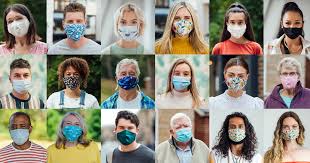
My Take On It: In the time of COVID, now is no time to lift the mask mandate


God said to Solomon, “When I shut up the heavens so that there is no rain, or command locusts to devour the land or send a plague among my people, if my people, who are called by my name, will humble themselves and pray and seek my face and turn from their wicked ways, then will I hear from heaven and will forgive their sin and will heal their land.” –  2 Chronicles 7:13–14

Former President Trump-appointed federal Judge Kathryn Kimball Mizelle who last week tossed in the bin the mask mandate in public transportation, led to major transport systems including some mid-air announcements by pilots for people to unmask. The ruling put at risk not only health-compromised persons in the US but also those around the world. This is because of the global belief in hamburgers, pizza, and Coca-Cola, the ruling that caused jubilation and sighs of relief among US passengers could have led to similar abandonment, even among the unvaccinated populations around the world, putting at risk hordes of people, especially under-five children, who do not yet have a vaccine for the age group.

It was with relief therefore that the US  Center for Disease and Preventions (CDC) ruled that the mandate that was given by the Biden Administration was “necessary” to protect the public from the spread of the coronavirus. All the hamburger-loving, pizza-loving, and Coca-Cola-loving peoples of the world utter a big sigh of relief! These are persons who hold as dear and cherished the American lifestyle as global street brand extraordinaire. The Kathryn Kimball Mizelle ruling was a death sentence to the global citizens

Since 2020, the whole world has come up close and personal with the ravages of COVID-19, and according to the Worldometer on coronavirus, as of April 21, 2022, 6,232, 766, with 507,116,631 confirmed cases in 226 countries and territories, with Malawi registered as 85,978 cases as 2,632 deaths.

Students on facemask from Mpondamwala Primary School walking to school, Lilongwe District, Malawi

Granted the Malawi figures are minuscule when compared to the US (82,488,517 cases, 1,017,093 deaths) or South Africa’s (3,746,424 cases, 100,211 deaths), however,  Malawians felt the heavy blow as COVID-19 claimed the lives of loved ones. Off the top of my head, I recall friends and relatives, and national icons that succumbed to COVID-19 between 2020 to 2021. These include my long-time professional friend Felix Mponda, my Aunt Margaret Mbumba Banda, national celebrated songbird Maria Chidzanja-Nkhoma, cousin Francis Mbilizi, cousin Thoko Mbilizi Mwapasa, Reverend Patrick Semphere, Mwana wa Kwithu Wambali Mkandawire, in-law Taona Mkandawire, former Chief Justice Lovemore Munlo, his wife, former Ambassador Munlo, and another Munlo brother, and a host of other Malawians.

COVID-19 does not play, it is not a joke, respecter of persons, it is not political, and no one can afford to err otherwise but to be cautious. The judge’s decision is a huge gamble on people’s health but put in the breaths of unsuspected COVID-19- unvaccinated and/or infected strangers, relatives, and friends.

The last three years since the outbreak of the pandemic have taught us that the coronavirus (dubbed COVID-19) is scared of the hygiene regimen of washing hands with soap and warm or hot water, hand sanitizers, and we have protected ourselves and other people by wearing masks. I can verify that since the pandemic, and my mask-wearing days (March 2020), I have not suffered from the common cold or flu. These two are passed from one sufferer to the next, especially in public places like buses, trains, shops; any place where people are breathing, or worse sneezing. Coughing into other people’s airspaces leads to the spread of the cold or flu viruses. This is the same way the COVID-19 pandemic spreads.

On top of religiously wearing my mask, I received two initial vaccines and have received two booster vaccines. Thank you, Judge Kathryn Kimball Mizelle, but I choose to keep my mask firmly planted over my nose and mouth. This is vital for global health, especially since the virus continues to mutate, and the number of cases in China (the original place where COVID-19 case was first detected) is rising; the whole world needs to continue to be on high alert.

Sure, it is a welcomed development that the travel bans between the nations are being cautiously lifted, however, it would be folly to mess up our global village through the reckless abandon of exercising one’s freedom by attending events in closed, public arenas (restaurants, theatres, shopping centers, etc., without wearing masks. This is especially because not everybody around is vaccinated, or somebody in the room, could be infected with the virus, but not showing signs of it, and inadvertently infected those that are not wearing a mask.

Now is not the time to lift the mask mandate, now is not the time to take off our mask, now is not the time to set aside laws and policies that safeguard public health. Now is the time to continue protecting your health and the health of your loved ones by doing the simple thing: wear a face mask when out in public places!

Fee Or Ransom Money? A Call On Nigerian Youths To Revolt Against Apc At The 2023 Polls By Pelumi Olajengbesi Esq.

While the forecast for the 2023 election is still clouded by uncertainties as to who and who would get the tickets of their respective parties, a few things are coming out in bold relief. One of them is that the ruling All Progressive Party are auctioning the presidency, and opposition parties must be wary. For a civil servant earning the national minimum wage to be able to purchase the APC Presidential Form pegged at a staggering N100Million naira, he or she would have to save all of his earnings for 278 years. However, for ‘privileged’ members of the APC who have had their hands in the national pie without challenge for seven years and counting, it is a simple matter of sieving serious interests from political blusters in the running.

The problem is, a Nigerian President in a four year tenure earns less than N60 Million by the books, and no level of patriotism can discountenance the absurdity of paying N100Million naira to earn less than N60 Million in a single tenure- that is even if such an aspirant clinches the party’s ticket and also wins the presidential election. There are just way too many IFS and WHAT-IFS, and so this isn’t love for one’s country, it is a public gambit for our common patrimony. A candidate who spends much more than he’d earn in a single tenure as basic salary would spend a chunk of his time in office recouping his ‘investment’. This is, of course, the mind-set behind such a brazen cost, the prebendalistic approach to government as a means to private wealth acquisition. It is this carrot, dangled before the angling APC Presidential aspirants that would see them fork out such huge payments for their party’s ticket.


When further placed in political context, at no other time since the merger of the two parties that make up the APC have they suffered from a loss of popularity owing to their evident failure in government at the national and state level. For a party for whom the funeral bells toll, one wonders as to the insight that fuels their conviction that paying such a huge sum for the party’s ticket (not just at the presidential level) is not a fruitless gamble. Again, opposition parties must be wary. In 2019, the APC demonstrated that popularity no longer wins elections, guts do.

Another facet to the price tags the APC have placed on their party tickets is its exclusionary and discriminatory nature. Clearly, the #Not Too Young To Run campaign was a train on which the APC hopped to achieve its aim in deceiving young Nigerians to vote them in but a cause in which they place zero premium and regards. In private discourse I have suggested to APC faithfuls that they start a #Just Too Poor To Run counter-campaign as the latter best represents the ideologue of the party. It should be embarrassing to the party that under their mis-governance, Nigerian youths are poorer and can simply not compete for the party’s ticket but the APC are demonstrably without shame. On social media streets we say, ‘you cannot shame the shameless’. Even the irony of the farce of the APC’s ransom-like price tags are lost on the clowns who tout the party as one with considerations for youths.

A recently released NBS statistics states that over 92% of Nigerians earn less than N62, 000 a month, and overall inflation between 2014 and 2022 in food, transport, health, education and communication have gone from single figures to alarming double figures. Nigeria’s economic infamy within the same time frame has earned it the notoriety of being Africa and the world’s poverty capital, with a population surviving on less than a dollar per day. Clearly, the fortunes of an overwhelming 92 to 95% of the citizenry (75% of which are youths) have taken a turn for the worst, and the latest ‘salt to injury’ that the APC terms its nomination fees should receive resounding condemnation from the youths demographics. A revolution in the form of non-violent civil disobedience, protest and revolt is in fact in order and past due.

No truly sensitive government would come to the kind of conclusions that drive the APC’s politics. It is a party insulated to the realities of Nigeria and Nigerians and one in whose hands the apparatus of government will continue to suffer abuse and the wealth of the nation decline. It behoves on the Nigerian youths whose immediate future is threatened by the monetisation of governance to say enough is enough by having their voices heard loud and hard at the polls.

I must confess that my first thought on finding out the cost of the APC’s Presidential Form Fee was whether the party is taking a cue from the dare-devil terrorist-bandits that kidnap people for ransom. Those bandits might be inspired to go higher in their demands! The paradigm of a failed party overseeing a failed government auctioning its party’s form at such outrageous fees is ominous. There is no integrity in these fees having the backing of General Muhammadu Buhari who claimed to have struggled through a loan to obtain the APC’s N20Million Form Fee in 2015. A leader should lessen and not aggravate difficulties, unless of course, it is an admission of the biting inflation that has plagued this government from inception to date. All things considered, it is an embarrassing affair.

Pelumi Olajengbesi Esq., is a Public Interest Lawyer and Managing Partner at Law Corridor [email protected]

Source saharareporters

Exit mobile version