Many Somali families are forced to shrink grocery bills as Ramadan approaches

Russia’s invasion of Ukraine has exacerbated food shortages in many parts of Africa and the Middle East and forced Muslim’s preparations for the holy month of Ramadan to turn to more frugal iftar sunset meals.

In Somalia, Muslims who traditionally break a dawn-to-dusk fast with lavish family meals are now struggling to secure even the most basic staples in light of skyrocketing food and fuel prices.

Russia and Ukraine, with vast grain-growing regions that are among the world’s main breadbaskets, account for a huge share of the globe’s exports in several major commodities such as wheat, vegetable oil and corn.

The disruption in exports has spurred fears of a global hunger crisis, especially across the Middle East and Africa, where the knock-on effects are already playing out.

Somalia, which is grappling with an Islamist insurgency and its worst drought in 40 years, is also gearing up for a grim Ramadan as rising prices slash the purchasing power of the 15-million strong population.

The country’s past civil war, political crisis, election delays, recurrent droughts and rising food prices can negatively impact the people during the holy month of Ramadan,” explains Mogadishu resident, Adla Nur. “This Ramadan will be very different fuel and food prices are skyrocketing.

Food donation drops

For another resident, Gallad Mohamed Hassan, the Russia and Ukraine war has badly affected the economy, in particular, imported goods whether it is fuel or foodstuffs.

In regard to transportation, drivers charge more as fuel prices are high and food prices also went up,” says Hassan. Across the country, the population is resigned to spending a more sombre Ramadan.

Food donations, a common custom during the holy month, have dropped to a trickle, with former benefactors now struggling to source basics for themselves.

The country faces high inflation, which is now close to reaching a hundred per cent increase,” says economic analyst, Dr Shafi’i Sharif Mohamed. “For example, if your monthly expenditure used to be $100 last year, now you need $200 to live or survive. Rent, food fuel and thus transportation prices have increased. That has a bad effect on people’s lives.

Ramadan is due to start in the next few days and will end with the feast of Eid al-Fitr.

Source: Africanews

The Africa Fertilizer Financing Mechanism Governing Council calls for more private sector financing in the fertilizer sector

Institutional members of the Africa Fertilizer Financing Mechanism’s Governing Council endorsed plans to attract more private sector financing to the continent’s fertilizer sector. The move came during a meeting of the 13-member council, during which participants also validated the Africa Fertilizer Financing Mechanism’s 2021 Annual Report and endorsed its proposed 2021 work program.

The Africa Fertilizer Financing Mechanism works with African governments, regional institutions, the private sector, development banks, and international donors to study the fertilizer value-added chain. The organization assesses key transnational factors that impede fertilizer use in order to develop comprehensive financing strategies for jump-starting Africa’s agricultural productivity. The African Development Bank manages the African Fertilizer Financing Mechanism.

During the meeting, the Governing Council commended the institution for its impactful projects to deliver trade credit guarantees in Nigeria and Tanzania. The two projects, which support the implementation of trade credit guarantees to bolster fertilizer value chains.

In Tanzania, $2.3 million in trade credit guarantees provided leverage of 11.2 times, enabling three suppliers to sell fertilizer worth $26.3 million to 570,000 farmers via 28 hub agro-dealers and 966 retail agro-dealers. In Nigeria, the project secured a leverage of 4.6 times the guarantee and facilitated access to financing for fertilizer blenders who traded fertilizer worth $11.2 million.

“The Africa Fertilizer Financing Mechanism has now demonstrated to the development community that trade credit guarantees are an opportunity to tackle financing challenges and facilitate access to fertilizer for agro-dealers and farmers,” said Vincent Castel, regional manager at the agriculture & agro-industry department of the African Development Bank, speaking on behalf of Martin Fregene, Director for Agriculture and Agro-industry.

Council members urged the Africa Fertilizer Financing Mechanism to work with partners to mobilize more resources to support the fertilizer sector. The private sector currently offers a possibility to prepare rapid responses to solve challenges in the sector and achieve better results. Its market-responsive solutions can help take advantage of resources in the fertilizer industry that are already available.

“AFFM is in a unique and strategic position to show value to private sector players looking for leveraging opportunities,” said Council member Abah Ofon, manager for export development at African Export-Import Bank.

During the meeting, Governing Council members also discussed the Africa Fertilizer and Soil Health Summit, which is scheduled to take place in the second quarter of 2023. The event aims to build on progress that has occurred in the fertilizer ecosystem over the past 15 years. The Africa Fertilizer and Soil Health Summit will also pave the way for a new evidence-based, policy-driven, and practical action plan to inform fertilizer development on the continent going forward.

The Governing Council meeting took place on 28 February.
Source African Development Bank Group

CAF doping Doctor Kabungo dies after Ghana denies Nigeria 2022 World Cup ticket

By Chisomo Phiri

LUSAKA-(MaraviPost)-Zambia Football Federation has confirmed the passing of Confederation of Africa Football’s doping doctor, Joseph Kabungo during the 2022 World Cup play-off fixture between Nigeria and Ghana at the MKO Abiola Stadium in Abuja.

Kabungo, a Zambian medical professional, who was on duty as a doping officer of the confederation of African Football, CAF, was said to have slumped and died shortly after Ghana stopped Nigeria from qualifying for the 2022 World Cup on Tuesday, March 29,2022.

CAF doping Doctor Kabungo gone

British-Nigerian journalist, Osasu Obayiuwana who broke the news said it could not be confirmed if the death was caused by Nigerian fans who invaded the pitch after Ghana defeated the Super Eagles of Nigeria.

He, however, noted that the families of the Zambian doctor have been notified.

“His name is Dr Joseph Kabungo from Zambia. He was on duty as a Doping officer. He collapsed suddenly and died. Cause of death not confirmed yet. His family, the Zambia FA, and the government of Zambia have been duly informed,” Obayiuwana noted on Twitter.

Zambia FA President, Andrew Kamanga has eulogised Kabungo insisting the country had lost one of the game’s leading lights on the continent and beyond.

“Today, Wednesday, we mourn the passing of our CAF/FIFA medical officer Dr Joseph Kabungo who was on duty as a Doping officer in Tuesday’s match involving Nigeria and Ghana, and we extend our sincere condolences to Dr Kabungo’s family and the football family at large,” Kamanga explained.

He added “We take note that it is too early to dwell into the nitty-gritty of the cause of his death but will wait for the full report from CAF and FIFA on what exactly transpired.

“He was a dedicated and widely loved member of our football community and his impact was vast, having also been part of the 2012 Africa Cup-winning team. His death is a huge loss as Dr Kabungo was a friend and confidant to many generations of players and their families.

“Dr Kabungo was a permanent fixture at football events including the FIFA Arab Cup in Qatar which is a precursor for the 2022 World Cup. He was also part of the medical team during Cameroon 2021 [played in 2022] Africa Cup of Nations.

“He was one of the outstanding Zambian football personalities that flew the Zambian flag at global football events. We all have to learn from his example of excellence and celebrate his legacy by breeding more hard-working football Zambian administrators.”

It is reported that the doctor was also suffering from a cardiac arrest.

Meanwhile, CAF has not released an official statement about Kabungo’s death.

ESCOM embarks on door-to-door meter account verification

By Chisomo Phiri

BLANTYRE-(MaraviPost)-The Electricity Supply Corporation of Malawi (ESCOM) says will from April, 2022 roll out a phased door-to-door countrywide meter verification and revenue protection exercise to appreciate the challenges its customers face with the accounts and enhance the service delivery.

In a statement dated March 29, 2022, the state-owned power transmission and distribution company says, during the exercise, a team of assigned employees will visit households and establishments that use electricity to verify meter account details and meter functionality.

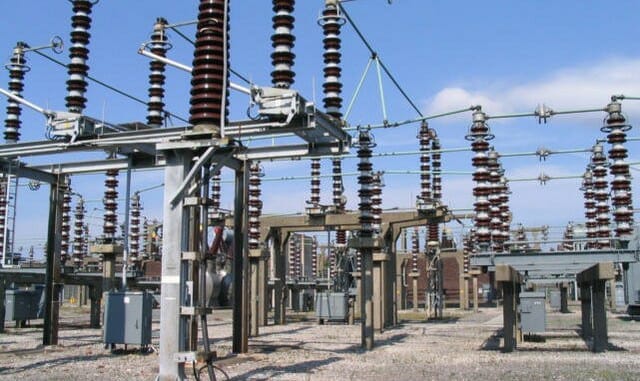
ESCOM transmission network

“We therefore, urge our customer to cooperate with the assigned employees who shall visit households and establishments during working hours across the country by granting them access to their premises and assist them with meter account information when they seek clarification.

“The assigned ESCOM employees carrying out this exercise would easily be identifiable as they shall be using branded ESCOM motor vehicles and have identification cards,” reads part of a statement.

The Corporation has however, urged customers who suspect or know that their meter was tampered with to declare such issues threatening that those who do not declare and get identified during the exercise, will be named in the media.

According to ESCOM, meter tampering or bypass is an offense punishable by law as stipulated in the Electricity Act no 22 of 2004 Section 45( 2b).

Cement-gate: Malawi High Court throws out state’ application on Mukhito, Mbilizi bail conditions

By Chrissy Nkumba

LILONGWE- (MaraviPost)-The High court in Lilongwe has thrown out an application by the state for the court to fix bail conditions for former state residences Director Peter Mukhito and Malawi Revenue Authority (MRA) deputy manager Roza Mbilizi to be similar to those of the other three co-accused persons in the cement-gate case.

Judge Redson Kapindu dismissed the application of the state saying that such an application needed to be brought using a sworn affidavit which the state did not do.

He further ruled that the state can make a fresh application on the matter after following the right court procedures.

Lawyer for Mohamed Shafee Chinura, Bright Theu has expressed worrisome over the delays in the case.

“It has been over one and half years since my client was arrested in the matter but the case is allegedly progressing at snails pace and the accused persons are yet to take plea in the matter: as there have been ” too many preliminary objections, “, Theu said.

Director of Public Prosecution Steven Kayuni said Theu needs to be aware that the case involves the accused persons and that the schedules of the lawyers are different.

Mukhito, Mbirizi and Chunala are in court for being accused of abusing former President Peter Muntharika’s Tax Payer Identification Number (TPIN) to import Cement worth MK5 bililon duty free.

Chunara was this week arrested in connection to the same cement gate scandal.

Nigeria train attack leaves at least seven people dead

At least seven people died in Nigeria after gunmen attacked a busy train linking Nigeria’s capital, Abuja, and Kaduna city hospital.

The gunmen mined the track forcing the train, carrying 970 passengers, to a stop on Monday evening.

The attackers opened fire on the train and abducted an unknown number of passengers.

This is the second time that the rail line between the cities is attacked in the last six months.

According to a senior security source military personnel rushed to the scene.

The governor of Kaduna state condemned the attack, describing it as a “terrorist” incident.

Armed gangs have been active, particularly in northern Nigeria, carrying out killings and kidnappings for ransom despite military attacks against their hideouts.

Source: Africanews

COVID-19: Education risks becoming ‘greatest divider’

NEW YORK, USA, 30Distributed by African Media Agency (AMA) on behalf of UN News. March 2022 -/African Media Agency (AMA)/-Now entering its third year, the COVID-19 pandemic has continued to hold back some 405 million school children worlwide from a full return to the classroom, according to a new report released on Wednesday by the UN Children’s Fund (UNICEF).

And as 23 countries have yet to fully re-open schools, many children are at risk of just dropping out.

“When children are not able to interact with their teachers and their peers directly, their learning suffers,” said UNICEF Executive Director Catherine Russell. “When they are not able to interact with their teachers and peers at all, their learning loss may become permanent.

“This rising inequality in access to learning, means that education risks becoming the greatest divider, not the greatest equalizer. When the world fails to educate its children, we all suffer.”

2 trillion hours, gone 

The report entitled, Are children really learning?, features country-level education data on the impact that COVID-19 school closures are having on children along with an updated analysis of the state of learning before the pandemic.

The study points out that 147 million children missed more than half of their in-class instruction over the past two years – amounting to two trillion hours of lost in-person education, globally. 

Africa case study

In addition to data on learning loss, the report highlights emerging evidence that many children did not return to school when their classrooms reopened, including in Liberia, West Africa, where 43 per cent of public-school students remained out of the classroom after schools reopened in December 2020.

And between March 2020 and July 2021, the number of children out of school in South Africa, tripled from 250,000 to 750,000. Around one in 10 Ugandan students did not report back to school in January 2022 after two years of school closures.

Meanwhile in Malawi, the dropout rate among girls in secondary education increased by 48 per cent, between 2020 and 2021, and in Kenya, a survey of 4,000 adolescents aged 10-19 years found that 16 per cent of girls and eight per cent of boys did not return when schools reopened.

 “When the world fails to educate its children, we all suffer,” said the senior UN official.

Vulnerable and marginalized

Out-of-school children are some of the most vulnerable and marginalized youth in society – least likely to read, write or do basic math.

Moreover, they are cut off from the school safety nets – putting them at even greater risk of exploitation and a lifetime of poverty and deprivation.

“Even before the pandemic, the most marginalized children were being left behind,” reminded Ms. Russell.

“As the pandemic enters its third year, we can’t afford to go back to ‘normal’. We need a new normal,” the UNICEF chief spelled out, “getting children into classrooms, assessing where they are in their learning, providing them with the intensive support they need to recover what they’ve missed, and ensuring that teachers have the training and learning resources they need.”

“The stakes are too high to do anything less”.

Learning slowdown

Although out-of-school children suffer the greatest loss, pre-pandemic data from 32 countries and territories highlighted an already desperately poor level of learning that has only been exacerbated by the COVID-triggered education crisis.

In the countries analysed, the current pace of learning is so slow that it would take seven years for most schoolchildren to learn foundational reading skills that should have been grasped in two years, and 11 years to learn foundational numeracy skills.

Furthermore, there is no guarantee that schoolchildren have learned the basics at all, in many cases.

A quarter of eighth graders, who are around 14-years old, did not have foundational reading skills and more than half lacked the numeracy skills expected of seven-year-old in second grade, according to the data.

Distributed by African Media Agency (AMA) on behalf of UN News.


Source : African Media Agency (AMA)

South Africa’s energy transition needs full financial support, says African Development Bank Group President

Dr. Akinwumi A. Adesina, President of the African Development Bank (left) and Gwede Mantashe, South Africa’s Minister of Minerals and Energy, held a bilateral meeting on 25 March 2022.

African Development Bank Group President Dr Akinwumi Adesina has assured South Africa of the Bank’s strong support as the country transitions from fossil fuel to renewable energy.

Adesina told Minister for Mineral Resources and Energy, Gwede Mantashe, that the Bank was in the process of setting up an African Energy Transition Facility to help South Africa secure adequate financing for its energy transition.

He said: “South Africa cannot and should not embark on the journey of energy transition without the necessary financial support.” He said through the African Energy Transition Facility, “South Africa can leverage on the $8.5 billion in grants from the G7 countries to generate all the money it needs for its just energy transition without getting into debt.”

The African Development Bank estimates that South Africa would need more than $30 billion for transition to renewable energy.

The Bank is financing several renewable energy projects in South Africa, including the 100 megawatt Sere wind power plant, the 100 megawatt Xina solar power concentrated power plant, and the award-winning 100 megawatt Red Stone solar project. The Bank is also preparing a $400 million package to support the country’s electricity utility company, Eskom, as it transitions to renewable energy.

Adesina and Minister Mantashe met in South Africa’s capital Pretoria, where they discussed a range of opportunities for the country, which relies on coal for 75% of its energy needs.

According to Mantashe, the government is committed to achieving a 15% reduction in coal power production and an 18% increase in renewable energy by 2030.

He said: “We want to move from high carbon to low carbon emission. The Just Energy Transition plan should be about people’s lives and livelihoods, particularly in coal mining areas. We must develop a concrete alternative economic program for communities in those areas.”

The minister said the government was planning to generate additional 1,500 megawatts of electricity from coal. “We want to be actively involved in the experiment for cleaner coal production technology, including carbon capture and storage…If the experiment works, we’ll expand it and that will reprieve coal as a commodity.”

The minister said gas and nuclear were part of South Africa’s energy mix. He described gas as a game changer for development and cited Mozambique, whose economic prospects have changed following gas discovery.

According to Adesina, solar power should be a key part of South Africa’s energy mix. “Be bold about solar power,” he said. “Africa today has no choice but to transition out of coal. But God is good to us. We have 11 terawatts of solar. That is Africa’s future. South Africa can help make that future happen. South Africa can become and should position itself to be the lead manufacturer of polysilicon.”

Polysilicon is used to manufacture solar panels and other products, which are currently imported mainly from China.

Mantashe told the African Development Bank Group president and his delegation that South Africa had discovered rare earth minerals, essential in manufacturing solar power components. “The minerals of the future that will contribute to a green economy are here,” he said.

The Bank Group chief and the minister also discussed the impact on Africa of Russia’s war in Ukraine, which has already led to an increase in the prices of food, fertilizer, oil and gas.

Adesina said the African Development Bank was developing a plan to raise $1 billion to fund emergency food production and avert a looming food crisis across Africa.

Minister Mantashe said the South African government was considering using 10 million barrels of its crude oil reserves to control the rising prices of petroleum by suspending all taxes and levies for two months.
Source African Development Bank Group

Share WORLD Open University for varsities, communities’ collaboration in climate change fight

LILONGWE-(MaraviPost)-ShareWORLD Open University of Malawi (SOUM) says collaboration between institutions of higher learning and communities in tree-planting initiatives is crucial in Malawi’s aspiration to reverse deforestation and adverse effects of climate change.

SOUM Head of the Department of Conservation and Rural Development, William Nkhunga, emphasized that a partnership between universities and communities would enable the two parties to leverage their expertise and make significant advancements in the fight against the climate crisis.

Nyasulu planting a tree

Nkhunga made the remarks in Chakwawa Village in Traditional Authority (T/A) Kalumbu in Lilongwe when the university led community members in planting 1, 000 trees.

Studies have shown that forested land in Malawi continues to face undue pressure due to high population growth, rising consumption rates for firewood, timber and non-timber products, unsustainable harvesting and economic development policies that promote expansion agriculture into marginal lands.

Consequently, deforestation has increased at an alarming rate while the continued loss of forests continues to not only threaten livelihoods, but also the environment.

Nkhunga therefore said collaborative forest rehabilitation efforts are the right way to address the problem.

Mwatibu leading by example by planting a tree

“But that cannot be done by governments and the private sector alone. School-based reforestation initiatives are an important way for students, teachers, and communities to make tangible contributions to climate change mitigation efforts,” he said.

Nkhunga announced that SOUM has since adopted Chakwawa Village as a ground for learning practical skills for students in Conservation and Rural Development.

He said this entails that students will be regularly planting trees and monitoring their growth.

“We believe this will significantly contribute towards reforestation initiative in this area,” he narrated.

The National Coordinator of the National Youth Network on Climate Change (NYNCC), Dominic Nyasulu, said institutions of higher learning have a critical role in mobilizing students and communities in addressing impacts of climate change in the country.

Nyasulu, therefore commended SOUM for partnering with the people of Chakwawa Village in the tree-planting exercise.

Senior Group Village Head (SGVH) Mwatibu thanked the university for choosing his area.

“This partnership will benefit us more than they will benefit from it. So, we are very happy and we pledge our commitment to working with them,” said Mwatibu.

Exit mobile version