Malawi road to May 20, 2014 tripartite elections: The case of Peter Mutharika

There was excitement among Millions of Malawians on 20th February, 2014 when the Electoral body in Malawi made an announcement that the twelve minus one presidential candidate were eligible to contest in the forth coming elections.

The majority of the credible voters were jubilant across the country, as their candidates had finally been declared fit to contest in the general elections. It was indeed one Presidential candidate who had not met the qualifications that the Malawi Electoral Commission (MEC) had set aside thereby nullifying his application.

“Is it the Democratic Progressive Party (DPP) Presidential candidate who has been disqualified?”That was a question I encountered from several of my followers who had missed the news bulletin and what had lingered in their mind was the fact that, Peter Mutharika had been kicked out of the race as some scores from the People’s Party, disgruntled lawyers cum ministers and others had expected.

By the way,” why among all the twelve presidential aspirants, its only Peter Mutharika who you think has been disqualified?”I wondered. Esteemed readers, that’s the case of Peter Mutharika, the DPP Presidential candidate and the road to May 20,2014 tripartite elections.

To be more pragmatic, most of us hoped that MEC was going to bury the Democratic Progressive Party 6 feet under the ground by barring its candidate Peter Mutharika. Add to this the fact that some had already bought crates of “Carlsberg chill, matumba a Mpunga from Mpondabwino in Zomba or Mkando in Mulanje, Mbatatesi from Tsangano” and whatever makes a good merrymaking anticipating to celebrate the fall of Peter Mutharika and DPP being ineligible to contest in the coming elections just as they did when our beloved “Moya,” late Ngwazi Bingu Wa Mutharika had breathed last, somewhere in April, 2012.

And in fact, finally, Peter Mutharika and his running mate, Saulos Klaus Chilima are set to appear on the ballot paper but, it has not been an easy road for Democratic progressive Party to come this far.

It has not been one but several occasions that people from the People’s Party had tried to maneuver into the judicial system with their tactics just to make sure that Mutharika is not among the presidential candidates in the fourth coming elections.

We have all witnessed the likes of Yeremiya Chihana trying their luck to twist Mutharika and DPP to an angle, that was not all, Justice Dzonzi has also been part of the game with his green card madness trying to misinform the nation to make sure that Mutharika is nowhere in the political scenes, some had fabricated stories that Mutharika is a dual citizen thereby he is ineligible to stand in the coming elections until the American government through their envoy in Malawi cleared the nonsense that Mutharika has never been a citizen of United States of America.

Thanks to heavens that Mutharika and Democratic Progressive Party are now part of the race. Let the best candidate win. That’s the case of Peter Mutharika, the DPP presidential candidate and the Road to May 20, 2014 elections. He, who laughs last, laughs loud.


Mugabe at 90 – dictator or freedom fighter?

Robert Mugabe – a dictator! Baffour Ankomah, who knows the Zimbabwean president personally, thinks this absurd. “If you read the Western media, he eats the population for breakfast, lunch and dinner. If you meet him personally, you get quite a different impression,” said the editor-in-chief of the London-based magazine New African. “His humanity is especially impressive;” he added.

Ankomah, a journalist from Ghana, and his magazine are great fans of Robert Mugabe. They believe that the Zimbabwean leader – against whom the EU and others have imposed sanctions on the grounds of severe human rights abuses – is a heroic freedom fighter.

In 2004, New African invited its readers to submit candidates for a list of the 100 most important Africans. Robert Mugabe came third, after Nelson Mandela and Kwame Nkrumah, the first president of Ghana.

Despite this accolade, birthday congratulations from the West are likely to be few and far between when Mugabe turns 90 on Friday (21.02.2014).

It was not always that way. Mugabe, who led his country into independence from Britain in 1980, was a respected figure in the West in the 1980s and 1990s. He was knighted by Queen Elizabeth and awarded honorary doctorates.

Victims not just rich and white

Nobody seemed to care at that time that Zimbabwean soldiers, acting on Miugabe’s orders, had massacred supporters of his arch rival Joshua Nkomo.

It was only after Zimbabwean militia began occupying the estates of white farmers with Mugabe’s approval that he acquired the reputation of being a dictator.

Mugabe’s victims were not just rich white people. In 2005, his government targeted the slum population in Harare and other big cities. More than 50,000 houses were destroyed, 30,000 people were arrested and a million people were made homeless.

Critics believe it was a deliberate, punitive campaign – slum dwellers were reputed to sympathize with the opposition. Zimbabwean opposition leaders and trade unionists were arrested, triggering condemnation in the Western media.

Poverty became widespread and, for a time, Zimbabwe had the highest inflation rate in the world. More than 3,000 died in 2008 in a cholera epidemic because the health service had collapsed.

Yet Mugabe’s popularity in Africa remains undiminished. At the beginning of this year, African heads of state and government elected him first deputy chair of the African Union. If Robert Mugabe was not invited to the planned EU-Africa summit in April, then the meeting would be boycotted. “If Zimbabwe doesn’t go, then neither does Africa,” thundered Zambia’s foreign minister Wylbur Simuusa within hearing distance of the European Union.

Do not desert a friend

Mugabe is popular with other African leaders because he is a consummate politician with good connections. As a guerrilla fighter against the white minority regime in what was then Rhodesia, he established links with numerous other African rebel movements. He was a close ally of South Africa’s ANC, for a time he fled to Tanzania and Mozambique. Many comrades-in-arms from those days are now presidents and politicians and they still loyally support the dictator from Harare.

Andrea Jeska is a German journalist specializing in Africa. She said that while doing research for a new book on Zimbabwe she asked the former Mozambican president Joaquim Chissano how he – as a committed democrat – could still remain friends with a man like Robert Mugabe. “He got very cross and said one doesn’t desert a friend just because he has fallen on difficult times,” she said.

Anti-Western rhetoric resonates

Mugabe’s anti-Western rhetoric goes down well with sections of the population in quite a few African countries. When he launches into tirades against Western dominance and calls on Africans to finally take control of their own countries and resources, then he strikes a chord with many people. Poverty and the unequal distribution of wealth from natural resources are still a reality decades after the end of colonial rule.

Baffour Ankomah said many people admire Mugabe because over the last twenty years he has given the land that the colonialists had appropriated back to its original owners.

Other countries have made little progress in this area. When Namibia became independent from South Africa in 1990, almost half of all the agricultural land belonged to 3,500 white famers. During the German colonial era and the period of South African occupation, black Namibians were unable to buy land. There is now a land reform program, but it is voluntary and only a few farmers have put their land up for sale.

It is a similar story in South Africa. The apartheid regime banned black South Africans from owning land. That has changed since the end of apartheid, but many black South Africans lack the capital to acquire land. South African land reform is therefore proceeding slowly.

Against this background, Mugabe’s 

Regionalism/tribalism is a big campaign issue in May Polls: Malawi politics

Malawi is indeed a very beautiful country whose people have diverse cultural, political and religious backgrounds and affiliations. We have Moslems, Christians, Buddas, Rastafarians and even atheists. We have the Tongas, Chewas, Senas, Lomwes, Yaos, Ngonis and many more. While these groups may dominate in some specific geographical positions of our beautiful country (resulting in all sorts of names: Lomwe belt, Yao land, Chewa belt, Ngoni Belt, Tumbukaland, Islamic region, Christian country), we are proudly a mixed up nation where any tribes and religious communities are literally spread across the country and we happily co-exist.

But wait a minute! While we enjoyed relative unity and peace under the one party system, the Multiparty Era brought in a real shock as the voting patterns consistently exposed the silent divisions we have along tribal, regional and religious lines. Presented with so many candidates campaigning for presidency, NDIVOTERE wa KWATHU factor (voting fo home candidate) emerged the major factor voters considered. Presidential candidates commanded the largest support in their homelands.

Realising these trends, the politicians have continued to manipulate these affiliations to their advantage. After all, politics has turned into a commercial venture for easy money. No wonder the political and campaign strategies of most political parties has largely been informed by numbers as seen along tribal, religious, and regional blocks.

Have you noted that since 1994 it is the Central Region that has produced most of the countries Vice Presidents while the South has dominated the Presidential race? And have you observed that the Northern Region has produced not even a Vice President through polls? (SOME HAVE EVEN CHALLENGED THAT A NORTHERNER CAN NOT RULE THIS COUNRTY BASED ON REGIONAL NUMBERS)

Are you surprised that no-real-chance Multiparty era political party has ever picked a runningmate from the Northern Region or even the silent regions like Lower Shire?

UDF has never picked a runningmate from the North! They silently say you can not ignore the center.
DPP, despite having received massive support from North (the Home of DPP), has never “gambled” to pick a runningmate from the North. Even when Goodal Gondwe was almost the automatic acting DPP president following the sudden death of Bingu, it was never to be. Goodal would not lead the party.
PP just nailed it all. Khumbo who was almost the automatic runningmate, could not be because of the number issue! (maybe with other associated risks). All these parties host commercial politicians who would want to win elections at all costs. Only MCP has dared to pick runningmates from the North. Chakufwa in 1999 and Msowoya in 2014. Perhaps it may be that South looks too stubborn? It is this trend that has perpetuated the nepotism and corruption.

TOO LATE, TOO LATE
Now,regionalism and tribalism will largely influence the May Polls results. The Eastern Region will largely vote for Atupele. The Southern Region will vouch for Peter, the Center will brave for Chakwera. The Northern region?? (The swing region).You cannot change much of this even with the best “ISSUE based CAMPAIGN.

My concern is life after May 20. Whosoever will benefit from regionalism and tribalism to win the elections MUST turn the tables and build ONE MALAWI and ONE PEOPLE moving towards a common future.

Therefore, there is need to vote for a Presidential candidate who appears to have the greatest capacity to unite Malawi other than divide it further and continue to fight personal battles to punish political foes after the polls.

Who can do this? Muluzi? Chakwera? Mutharika? Banda? Your guess is as good as mine!!!!!!!

Malawi 2014: Vote for achievable policies, not someone’s political survival

Candidate nomination papers for the May 2014 tripartite elections have been completed. Malawians can now realistically start making their decisions on whom to vote for. For those not affiliated with any political party the choice is agonisingly difficult. There is not much difference between candidates, policy wise. However, in Malawi the electorate vote for individuals, not political parties. This allows the citizenry to vote for candidates on individual strengths, not political affiliation. It is a good thing and must be valued.

Yet, this does not mean political party policies are redundant. It is true that manifestos are a mere promise. Politicians are very good at making promises and very bad at fulfilling them. Still, it is important to use manifestos as a channel to gauge the thinking of political parties and individual candidates. It is important to know how much are the candidates aware of crucial issues affecting Malawi; a country always undergoing one crisis or another.

Various surveys have established that among key issues that could affect the forthcoming elections are food security, fertilizer subsidies, hunger, stabilisation of economy and recently cashgate. These indicators clearly show that strengthening spending power would go a way in improving people’s livelihoods. Lack of purchasing power is one of the reasons for huge unemployment, underemployment, low wages, cheap labour and high taxes.

The problem is that it is politicians to take us forward; and let us face it: Malawi politicians never have policies of national interest. All they have is a political survival strategy. Such strategies of course do coincide with interests at one point or another. Farm input subsidy programme is on of them. In Malawi it is easy to identify policy loopholes because nothing function efficiently. This is why it is important that politicians should not only outline their policies, they must also explain, fully how they would achieve it.

Which political party has policies to address the above-highlighted areas to improve people’s living standards? So far I would struggle to pick any. Chancellor Kaferapanjira, executive director of Confederation of Chambers of Commerce and Industry recently told Weekend Nation saying: that 48% of people’s salary in Malawi goes to the taxman. Kaferapanjira is quoted: “unfortunately, our tax base is so narrow. The authorities should have found a way to widen the tax base so that everyone pays tax. Malawians are heavily taxed and this is not healthy.”

The issue of expanding tax base is widely acknowledged in Malawi. Former finance minister, Ken Lipenga discussed idea on a number of occasions. Yet, like most policy issues, the challenge is however to implement it. I think this is where Malawi could do with some economic lessons.

TruthDig, a news and current affairs website recently published what it called three most important economic lessons learned in thirty years following the Second World War. The first one is particularly important to our case:

“… the real job creators are consumers, whose rising wages generate jobs and growth. If average people don’t have decent wages there can be no real recovery and no sustained growth.”

TruthDig further notes that in those years business boomed because American workers were getting pay raises, therefore enough purchasing power to buy what expanding business had to offer. In my view, this is a simple lesson and it makes a lot of sense. Yet, no politician or political party ever see this as a policy. After all, it does not guarantee political survival.

Yet the second lesson from America shows that “the rich do better with a smaller share of a rapidly-growing economy than they do with a large share of an economy that is barely growing at all. This is why American economy grew faster between 1946 and 1974, on average, because the country created “the biggest middle class in history.”

I am not asking politicians to re-invent the wheel. These are free lessons for those who would learn. Malawi has the capacity grow if those in power are willing to do it, and everyone is a part of that power structure.

Philosopher, Michel Foucault reminds us that ‘one cannot own power’ and that ‘those who are ruled contribute to the empowerment of the rulers’.

This is a poignant and a timely reminder, as the country approach elections. We cannot afford to underestimate our own influence. We must demand and look for ideas that are for national interest and achievable, not ideas that are simply for someone’s political survival

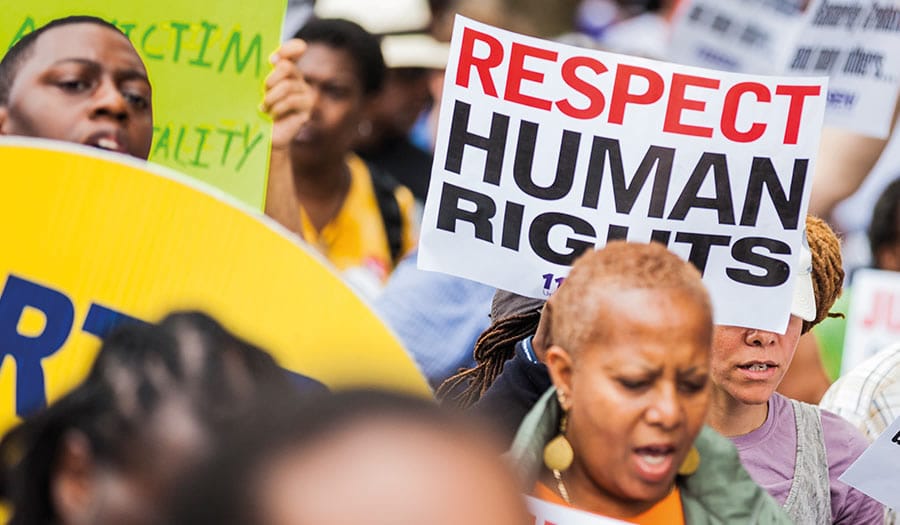
Where are Malawi human rights activists?

Human Rights
Human Rights Abuses in Afikpo, Ebonyi State

The question, “Where are human rights activists?” has been asked by many. They are silent, yes. I will attempt to provide one answer. 

The first instinct of every human being is economic survival. The history of all countries demonstrates that once they begin to move out of extreme poverty, a middle class comes into place and this is the group that claims human rights. In a way, human rights are a cost of prosperity. This has been the trend in most countries. 

Our economy was stable in the years 2006 to 2011. We had food. We had money to buy clothes. We had time to relax. And we were creating our own version of a middle class. 

So, we could talk about human rights. Not now. We are not living. We are merely surviving, bare existence. Everybody is busy thinking about how to get money for food. In such a situation, human rights become a distant dream. 

So, don’t blame the activists. The economy is very bad. Existence is more important than human rights, as at now. Everyone is busy searching for bare survival.

US: Woman jailed for not returning 2005 video rental

The South Carolina woman spent a night in jail last week for failing to return a video she rented — in 2005.

It was a VHS tape. Of a Jennifer Lopez movie.

Finley, 27, was arrested Thursday in Pickens County, South Carolina, on a misdemeanor charge of failure to return the video,


Officials even decry the Practice:

“TOO many Americans go to too many prisons for far too long, and for no truly good law-enforcement reason.” The person who said that was neither a defence lawyer, nor a prisoners’-rights advocate, nor a European looking down his nose across the Atlantic. It was instead America’s top law-enforcement official, Eric Holder, Obama’s  attorney general

America has around 5% of the world’s population, and 25% of its prisoners. Roughly one in every 107 American adults is behind bars, a rate nearly five times that of Britain, seven times that of France and 24 times that of India. Its prison population has more than tripled since 1980. The growth rate has been even faster in the federal prison system: from around 24,000—its level, more or less, from the 1940s until the early 1980s—to more than 219,000

Football player arrested for Tinted car windows

Falcons wide receiver Roddy White was arrested early this morning, on a warrant from a previous traffic citation.

According to Mike Morris of the Atlanta Journal-Constitution, White was arrested in Gwinnett County at 4:30 a.m., after a failure to appear warrant from a citation for “non-transparent material on windows.”

In america beware. uncle Sam wants you in jail


Analysis: As Malawi gears for presidential polls, Banda’s halo slips

In May, just a few weeks after South Africa, Malawi will go to the polls. Despite never having won an election before, President Joyce Banda is hoping to remain in charge – this time with a real mandate from the people. But it won’t be easy. Although her presidency began brightly, she’s falling into some of the same traps as her notoriously corrupt predecessor, and people are beginning to notice. By SIMON ALLISON.

Before Nelson Mandela died, most South Africans didn’t know who Joyce Banda was. They certainly would not have been able to pick Malawi’s president out of a line-up. But then she came to his funeral, and gave a simply magnificent speech, concluding with this unforgettable, Madiba-inspired advice: “Leadership is about falling in love with the people you serve, and them falling in love with you.” She was eloquent, moving, and deeply personal. Malawi was in safe hands, we felt, and the international community concurred. On taking over the presidency and appearing to right many of her predecessor’s wrongs, Banda was lauded widely.

Malawians might feel a little differently. Last week, on Valentine’s Day, President Banda submitted her nomination papers to the Independent Electoral Committee, confirming that she would stand as the People’s Party candidate in the presidential election scheduled for 20 May. If she wins, it would be her first election victory (in 2012, she assumed power after the death of incumbent Bingu wa Mutharika).

But a victory is by no means guaranteed. Hanging over Banda’s head are accusations of dishonesty, graft and incompetency, and Banda’s political opponents are gleefully sharpening their (metaphorical) knives. Forget Mandela. If we’re going to mention Banda in the same breath as a major South Africa leader, then Jacob Zuma might be a little more appropriate.

Zuma has the Nkandla scandal clouding the last days of his first term in office. For Banda, it’s Cashgate. Last year, a series of suspicious incidents (in particular the attempted assassination of a senior civil servant, and the discovery of huge amounts of cash in the boot of another’s car) opened the lid on a massive, multi-million dollar corruption scandal, which the BBC described as “the biggest financial scandal in Malawi’s history”. Initial investigations revealed that while the rot may have set in under the late Mutharika, it had certainly continued under Banda, and she had done little to stop it. In total, it’s estimated that around $250 million may have been lost through dodgy payments made to dodgy businessmen for services that were never in any danger of being rendered.

President Banda was appalled – in public, at least. “”We need to start fighting corruption from individual, household, community to national level…It is everybody’s war,” she said. She also commissioned a government report looking into the scandal, with assistance from forensic investigators loaned by the British government. In addition, at least 70 people have been arrested as part of a separate police investigation (although opposition groups have dismissed this as going after the “small fry”, while the “big fish” swim free).

Despite this, Banda has never been able to shake claims of involvement herself. And even if she was not involved, the sheer scale of the corruption is an indictment of her administration, and her ability to control it. Either way, it reflects a serious problem at the heart of Malawi’s government, and donors – who provide 40% of the country’s budget – were unimpressed, suspending some $120 million in funding. Privately, several representatives of international aid organisations working in Malawi have told the Daily Maverick that while Banda has talked the talk, she has failed to take any meaningful action against high-level perpetrators.

On this she has some form. In January, the Telegraph’s Aislinn Laing broke a stunning story about the sale of Malawi’s presidential jet, which was one of the first acts of Banda’s presidency in 2012. Selling the jet was a hugely symbolic indictment of the excess of Mutharika’s regime, and Banda’s determination to do things differently. Laing, however, revealed that while the jet was indeed sold, it was bought by what appears to be a front company for Paramount, a controversial South African arms company. As it happens, this company has allowed Banda to continue using the jet for free. Paramount has also benefitted from several major Malawian defence contracts. So much for that symbolism.
After several months, the preliminary report into Cashgate is now ready – but not for public consumption. Much like Jacob Zuma is trying to prevent publication of the Public Protector’s Nkandla report, Banda is keeping its conclusions under wraps.

“Instead of sharing it with Malawians as promised, the report is being treated as a confidential document – and only very few people are being allowed to study it. And guess what – apart from a few high-ranking government officials – no Malawians have been given access to it,” reported Theresa Kasawala of the Open Society Initiative for Southern Africa.
“Instead, it has been circulated to ambassadors from donor countries and submitted to the International Monetary Fund (IMF). This begs a host of questions, including why has a Malawi government report into the looting of Malawi’s treasury only been sent to foreign dignitaries and the IMF rather than being shared with those who are affected by it – the Malawian people?”

Presumably, Banda is nervous that the conclusions of the report may affect her chances of being elected in May. And she’s right to be worried. Opposition to Banda is strong, and Malawians have options. The main opposition candidates include Peter Mutharika, brother of Bingu and head of Bingu’s old party, the Democratic Progressive Party, which is probably the best-organised opposition party; or there’s Atupele Muluzi, son of former President Baliki Muluzi, who led popular protests against Bingu wa Mutharika in 2012.

Let’s be honest, though: for Malawi, neither of these opposition candidates represent anything new. Both are trying to continue their own family legacy; both are likely to return to policies which failed Malawi in the past. Then again, Malawians may prefer at least the illusion of change to another five years of President Banda, who, despite the promising start, seems to be repeating the mistakes of her predecessors after all.

 

Accepting Applications for UCLA Law: Sonke Health & Human Rights Fellowship

Supplemental Application for 2014-2015 Academic Year

To apply for this fellowship, you must complete the online application for UCLA School of Law’s Master of Laws (LL.M.) programme and this supplemental form. The online application instructions are available at http://www.law.ucla.edu/llm. 

If awarded the UCLA Law – Sonke Health & Human Rights Fellowship, as a condition of your award you will be asked to certify that you will return to Africa upon completion of your LL.M. degree, and commit to a public interest career that promotes health, human rights, and gender equality in the African region. Please indicate whether you have reservations about making this certification.


As a requirement of the UCLA Law – Sonke Health & Human Rights Fellowship, you will write a substantive analytic paper on a health, human rights, and/or gender-equality related legal issue facing South Africa. Please indicate one or two potential paper topics for this requirement.

Please write a personal statement incorporating responses to the following. This will serve as the personal statement required by UCLA Law’s LL.M. programme application. The statement should be typed double-spaced in 12-point font and should not exceed three pages in length.

a. Explain your personal and career objectives in pursuing the UCLA Law – Sonke Health & Human Rights Fellowship.

b. Describe how the fellowship might help you to advance the goals of gender equality, human rights, and/or HIV prevention in Africa.

c. Discuss any attributes, experiences, or interests that would enable you to make a distinctive contribution to UCLA Law and the public interest legal profession in South Africa.

Please mail this completed form, along with the required supporting documentation for your UCLA LL.M. programme application, to the address below before the application deadline of February 28, 2014:

UCLA School of Law
LL.M. Programme Admissions
Attn.: Vic Telesino
405 Hilgard Avenue
Los Angeles, CA 90095-1476, USA

Please direct questions about the fellowship to hhrfellowship@genderjustice.org.za and questions about UCLA School of Law’s online LL.M. application procedure to llmapplicant@law.ucla.edu

Joyce Banda’s comments on Cashgate scandal are unfortunate

I find the continuous public comments by acting president Joyce Banda on the infamous plundering and looting of public resources at the Capital Hill very unfortunate considering the magnitude of the issue and its aftermath.

As the head of the executive branch of the Malawi government, the president receives a disproportionate amount of attention, and I’m sure she is aware of this undisputable fact.

On Saturday, President Joyce Banda told a gathering in NkhataBay that she was going to fight to prove her innocence in the plundering and looting of public resources with the boost of her husband, First Gentleman, retired Chief Justice Richard Banda.

Her sentiments were obviously directed to Ralph Kasamabara and his friends who have stood to their ground to have the president in the court as a witness in the infamous cashgate scandal.

It must be noted that Kasambara never said Joyce Banda was involved in cashgate; he basically asked the court to have president as witness in his case.

So, president’s unrelenting verbal attack on the suspects during rallies raises more questions than answers as to why the highest office holder is increasingly becoming unstable following the Kasambara’s request to have her in the witness dock.

I find the president’s remarks regrettable and a threat to the truth. Her continuous self acclaimed righteousness is a sign that the truth about cashgate is troubling her mind hence trying to suppress it.

She also said her administration will not leave the cashgate suspects alone till they get convicted and also face lengthy jail terms.

On this one, Madame President, you must know that there is no way Malawians can entrust your administration with the role to excavate the truth about Cashgate because it’s crystal clear that your administration and People’s Party (PP) are beyond reasonable doubt major beneficiaries of the cashgate scandal.

Madame President, you should wait for the court to prove your innocence not your husband. Richard Banda is not the only law expert in Malawi and Malawians will not allow to be manipulated by your remarks which are aimed at buying public sympathy.

If your Husband was indeed a law expert then he would be the first person to advise you not to comment on issues which are in the court, and also remind you that it’s only tangible evidence which will see the Cashgate suspects convicted not the wish of any individual.

Where was your husband when your Justice minister Fahad Assani was cheating Malawians that a green card holder could not be allowed to contest for presidency? In short, your husband is a human being and Malawians denied the rule of any human being that is why there is a constitution.

After presenting nomination papers for presidency, I would expect you madame president to concentrate on real issues which are to the benefit of the country unlike advancing your own interests.

Disgruntled voters: Malawi 2014 Tripartite Elections

The May 2014 tripartite elections are just around the corner. Political parties are moving up and down selling their well-articulated manifestos to the prospective electorates across the country. Obviously the race involves the United Democratic Party (UDF), Democratic Progressive Party (DPP), People’s Party (PP) and Malawi Congress Party (MCP). It is amply clear that the four big parties are to blame for the continued misery and abject poverty haunting the majority of Malawians as all of them have at some point ruled the country.


But come what may, the winner in the May 2014 polls will come from the same list and this is what is making real citizen become frustrated cognizant of the fact that the above named parties failed the Malawians at some point when they were given a chance to turn around the Malawi’s economy.

Malawi Congress Party enjoyed thirty years in government but what they managed to achieve was to instill fear among Malawians and killing those who opposed their leadership style. Patronage politics characterized the MCP era. Access to resources was determined by closeness to the ‘de facto king`, Banda. Kamuazu Banda was called by many names of fear, not for good, but as typical African dictator. Instead of respecting him, his own people feared him. Nobody mentioned his name without impunity. And now when people hear the name ‘MCP’ what come in their minds are all the atrocities which happened during the party’s 30-year reign. Anyway, the party has a new president who is a born again christian but the fact remains MCP was once given a chance to rule but Malawians ended up being ruled as goats and cattle.

United Democratic Front (UDF) which succeeded MCP in 1994 was to some extent just a replica of the Banda’s regime. The only difference was just that UDF ruled in a democratic environment where on paper people had the right to oppose some of the issues if necessary. UDF era was characterized by oppression, hunger and poverty. It was really a betrayal to the Malawians who had high hopes that socioeconomic grievances were over following the ushering in of multiparty system. Even the young Muluzi has made it clear that the UDF regime was good for nothing by disassociating himself from the father. Yes! Now the party has a new presidential candidate who happens to be the youth but the fact remains UDF was given a chance to rule the country for ten solid years and it failed to rule as expected by voters.

The 2004 general elections reflected well the UDF poor leadership as opposition parties gave the then UDF presidential candidate Bingu Wa Mutharika (may his soul rest in peace) tough ride. Some people up to now believe that UDF won the elections through dubious means. As the Chairman of the party thought that he could still cling to the driving seat, Mutharika surprised the party officials by forming his party Democratic Progressive Party (DPP). Formation of DPP virtually got a blessing from all Malawians who were by then tired of UDF leadership.

We all know the story when it comes to Bingu Wa Mutharika. He performed extremely well in his first term but his last term was characterized by bitter political climate. He forced ordinary Malawians to be self reliant not in good faith but because donors closed up their doors following his dictatorial tendencies. Markets, vehicles of private radios, properties of activists were being set on fire. There were vicious verbal attacks against the opposition parties on national airwaves. Should I also need to remind you the 20 July horrible panorama?

It is a disputable fact that many Malawians were sent into wild celebration upon hearing the death of Mutharika thinking that it was the beginning of new lease of life. What Malawians wanted was just a new leader and qualities were not of much importance. This was the time that even an ordinary person from Chavala village could be allowed to rule the country because what mattered most to Malawians was the change itself.

But alas! The People’s Party has just added an insult to injury. In a space of 22 months the party has managed to buy expensive cars in the name of well wishers. Government officials have also become millionaires overnight courtesy of the “Cashgate scandal” at Capital Hill. Sadly, instead of accepting their negligence of leaving the padlock open the ‘Amayi’ administration is on record saying the massive looting of public resources is a milestone in their efforts to end corruption.

Those are the choices we have and now considering that they are already failures the campaign has been a cat fight so far. All the political parties have reverted to scare tactics and have presented no real plan to move the country forward.

Independent-minded Malawians clearly aren’t satisfied with the choice they have been presented. Neither side in this campaign has directly addressed how they would fix the economy and reduce the poverty levels. Instead of telling the electorates what they would do in the next five years, all leaders have resorted to attacking each other. Sure, it’s entertaining at times, but in the end it only polarizes the nation even further and distracts us from real issues.

So what do the disgruntled voters do given that situation? There are a number of other candidates who will be on the ballot such as Mark Katsonga, James Nyondo, but many feel they don’t want to waste their vote on someone who is implausible to win. Others will stay home, but most disgruntled voters would agree that’s a pretty weak way to protest thus they will pick the lesser evil from the four evils. Indeed, disgruntled voters will cast their votes with pain since the choices presented are not worth it.

Exit mobile version