Tag Archives: ACB

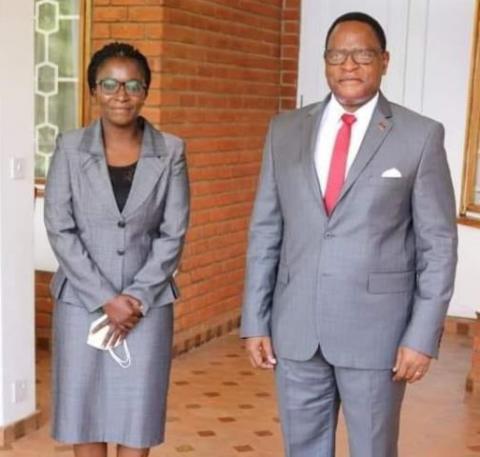
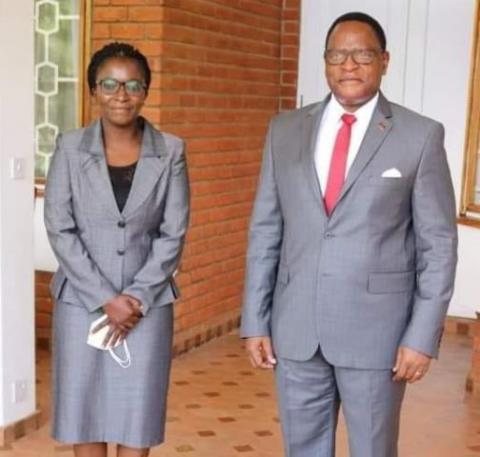
Chakwera slams Chizuma’s social media friends for dictating ACB

….. ……..As political analysts says Chizuma voluntarily resigned after controversial leaked audio

LILONGWE-(MaraviPost)-President Lazarus Chakwera on Monday night, April 25, 2022 slammed Anti-Corruption Bureau (ACB) Director General Martha Chizuma’s social media friends to stop interfering ACB office.

President Chakwera told Chizuma’s social media friends to stop posting face stories that compromises and undermine the work of ACB office.

Chakwera hinted that no one has the mandate to dictate ACB office apart from other prosecuting agencies including Office of Director of Public Prosecution (DPP), Attorney General (AG) and Malawi police.

The president was responding to governance questions on how his Tonse government was addressing issues on corruption fight.

This comes barely a few days after Chizuma’s social media friends including Onjezani Kenani, Chisa Mbele and others mobilized the public to stop Malawi police questioning ACB boss on the leaked audio against office oath.

Chizuma and Kenani very close

The police wanted to act in line with court order but Chizuma’s social media friends acted military until the questioning was put to stop.

In his address, Chakwera told Chizuma that the fight against corruption is not one show but the work of everyone that she must desist from being dictated from social media friends who are for anarchy.

He hinted that anyone is not above the law to run away from being questioned by the police, ACB on national matters.

 “Any matter that is under investigation, I don’t intervene. Listen, I can’t go to ACB to dictate on that office what to do like what these are individuals are doing; Posting fake issues on social media just to agitate for anarchy.

“If I can’t dictate what ACB and police to do then no one shouldn’t do that. Let this lady at ACB work according to the law while corroborating with other state agencies not solely alone,” says Chakwera.

This is the second time Chakwera has warned Chizuma on her continuous working closely with social media friends bypassing other state prosecuting agencies accusing them of being bribed.

Meanwhile, one of the country’s political analysts says Chizuma voluntarily resigned after controversial leaked audio.

“The law of land is clear and no one is above the law. Every human being who break the law should face the consequences but does not tell us that Judges, Lawyers, Pastors, Government officials and President should break the law.

“Martha Chizuma was supposed to be arrested and removed from offices ACB Director for contravening the oath of secrecy the same day after her controversial audio that went viral”, he said.

He added, “Malawians have lost confidence with ACB Director for her conduct of working issue on social media rather than seeking direction from DPP and Attorney General.

“ACB is not Martha Chizuma nor social media it needs corroboration of every citizen to work together for the efficiency of ACB”.
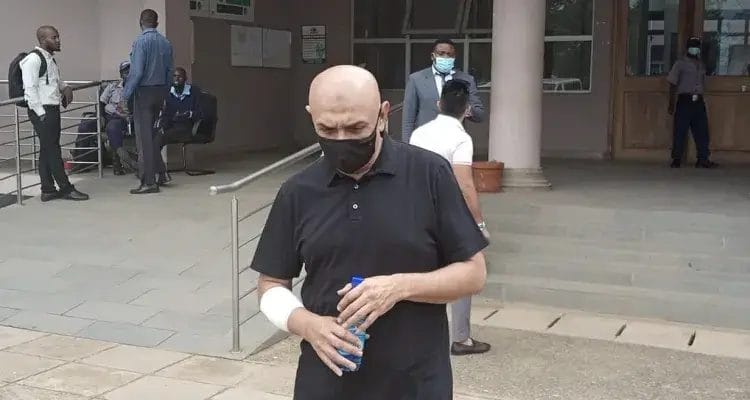
ACB pins down Abdul Karim Batatawala other two: Restricted accessing suspected corrupt properties

LILONGWE-(MaraviPost)-The country’s Anti-Corruption Bureau (ACB) has restricted Indian businessman Abdul Karim Batatawala,Limbani Chawinga and Fletcher Nyirenda from properties suspected to be obtained through corruptions means.

The restriction order comes amid ACB investigations on various corruption offenses the trio have been committing.

In a statement dated March 28, 2022 and made available to The Maravi Post, ACB has acted in pursuant to its powers under Section 23 (1) of the Corrupt Practices Act.

ACB pins down on Batatawala

“On 25th March, 2022, the Anti-Corruption Bureau (ACB) issued Restriction Notices to the above-mentioned individuals from disposing of and generally dealing with the following properties and vehicles in which it is believed that they have beneficial interest.

“The Restriction Notices have been issued as part of various investigations by the Bureau following allegations of unexplained wealth and other corrupt practices against these individuals,” reads part of ACB statement signed by its Principal Public Relations Officer, Egrita Ndala.

Ndala adds, “Following the Restriction Notices, Abdul Karim Batatawala,Limbani Chawinga and Fletcher Nyirenda are restricted from dealing with the properties and vehicles outlined above until the ACB has concluded the investigations or lifted the restriction notices”.

Below is the full ACB restriction order on Batatawala, Chawinga and Nyirenda:

ACB RESTRICTS ABDUL KARIM BATATAWALA , FLETCHER NYIRENDA AND LIMBANI CHAWINGA FROM DISPOSING OF OR DEALING WITH LISTED PROPERTIES AND VEHICLES

Pursuant to its powers under Section 23 (1) of the Corrupt Practices Act, on 25th March, 2022, the Anti-Corruption Bureau (ACB) issued Restriction Notices to the above-mentioned individuals from disposing of and generally dealing with the following properties and vehicles in which it is believed that they have beneficial interest.


1. ABDUL KARIM BATATAWALA
a. Title number Blantyre West 145 and 146 plot number BW 588 and BW 599 (Pamodzi Settlement Trust)
b. Title Number Blantyre West 2/229 Plot Number BW 1164 (Abdul Karim
Batatawala t/a African Commercial Agency)
c. Title number Blantyre Central 818 and 819 ( Pamodzi Settlement Trust)
d. Title number Ndirande 480 plot number NW278 (Pamodzi Settlement Trust)
e. Title number Likubula 2142 (Sabina Abdul Karim Batatawala)
f. Title number Blantyre East 374 plot number ( Pamodzi Settlement Trust)
g. Title number Blantyre West 2/297 plot number BW1161 ( Pamodzi Settlement Trust)
h. Title number Blantyre West 2/294 plot number BW1170 (Abdul Karim
Batatawala t/a Kasco Enterprise)
i. Title number Blantyre East – 59 (Pamodzi Settlement Trust)
j. Title number Blantyre West 2/298 plot number BW1158 (Pamodzi Settlement Trust)
k. Title number Alimaunde 11/54 ( Pamodzi Settlement Trust)
l. Plot number BW1160 in Namiwawa (Abdul Karim Batatawala)
m. Title Number Blantyre West 2/295 Plot number BW1167 (Abdul Karim Batatawala t/a African Commercial Agency)
n. Title Numbers Michiru 380, 381 and 384 (Pamodzi Settlement Trust)


2. FLETCHER NYIRENDA
VEHICLES
a. Toyota Duet registration number BR891 Chassis number M100A068395, engine number EJVE7261178 registered on 14/01/2011
b. Nissan Dualis registration number NB8352 chassis number KNJ10001518 Engine number MR2057542A registered on 20/10/2017
c. Mitsubishi Canter registration number BW2112 Chassis number FE53EB562949, Engine number 4M51A60244 registered on 30/08/2019
o. PLOTS, LANDS AND HOUSES
a. A house in Chigumula under plot number CG 193 obtained from Department of lands;
b. Two pieces of land in Nkholongo, Mzuzu
c. A house on plot number SL12/4/67 obtained from Blantyre City Assembly
d. House in Machinjiri area 12
e. Entertainment Bar in Machinjiri


3. LIMBANI CHAWINGA
VEHICLES
a. Nissan Vanette chassis number K82VN301742, engine number F8282414 registered on 29/08/12 registration number BR 9277.
b. BMW3 SERIES registration number RU 823 Chassis number WBAVA76030NL32565, Engine number N46B20BFB833H956 registered on 13/08/15
c. Nissan March registration number BV5293, Chassis number K13313709 Engine number HR12016795A registered on 22/10/2018
d. Nissan March registration number BV5298, Chassis number HR12013242A, registered on22/10/2018
e. Toyota Paso registration number BV5297 Chassis number 1KR1011922 registered on 22/10/2018
f. Toyota Ipsum registration number BR3344
g. Nissan Vanette registration number BS167
h. Nissan Vanette BS 1249


PLOTS, LANDS AND HOUSES
a. Semi-detached houses at Palm Acre in Chigumula, Blantyre
b. A house at Chigumula Market
c. Entertainment Bar at Kamba
d. House in area 36 by-pass


The Restriction Notices have been issued as part of various investigations by the Bureau following allegations of unexplained wealth and other corrupt practices against these individuals. Following the Restriction Notices, Abdul Karim Batatawala,Limbani Chawinga and Fletcher Nyirenda are restricted from dealing with the properties and vehicles outlined above until the ACB has concluded the investigations or lifted the restriction notices.


Signed by EGRITA M. NDALA, PRINCIPAL PUBLIC RELATIONS OFFICER
FOR: DIRECTOR GENERAL

Who is frustrating Martha Chizuma at ACB?

.……Why the fight against corruption a sprawling battle?

By Esteemed Oscar Fanuel Kameta

Corruption in its basic sense is any act of influencing a decision or an action based on one’s powers, belongings or capabilities to favor a particular party over the over.

This is however done on the expense of others by either marginalizing, exploiting or oppressing them hence it is considered a vice which is worthy fighting as it operates against rules of natural justice although the fight against it is meeting too copious resistance.

The presence of corruption fighting agencies in Malawi like the Anti-Corruption Bureau (ACB) which works in coordination with the Malawi Police Service, the Judiciary and the Malawi Prison Services signifies the commitment of the government towards eradicating the said vice in Malawi. A profound question one must ask is that are we achieving what we, as a nation intends to in as far as eradication of corruption is concerned?

Although some may say yes, they don’t boldly say it even if we are to interview the Anti-Corruption Bureau there will be a no or yes not in bold since as a nation we are still locked into corruption at any level of operation. But why is it that we are stuck into the vice despite knowing how evils it is?

As a nation we are good at condemning and castigating corruption of highest order, corruption of public figures while silently legalizing corruption done at community level which makes our people in our respective communities to rely upon it for survival.

Another great challenge is that when it favors religious people they call it grace, who can fight grace? When it favors ordinary people they call it connections, who does not won’t to be connected? When it favors politicians they call it rewarding loyalist and patriots, who does not won’t to be rewarded?

This line of thinking is frustrating the fight against the vice as everyone has his/her own reason or excuse for indulging into corruption although they know that its bad and our societies are somehow institutionalizing this as many of the successful people in our societies are progressing through this and we the ordinary people know this.

In this context, it is hard for some of these people who make ends meet through corrupt practices to join or support the fight against what brings bread on their table.

You may think of how rooted is corruption in Malawi, imagine, to have a good meal at the funeral, wedding ceremony, you name it, you need to be connected, you must have corrupted someone`s mind before.

Imagine, at the hospital, a patient being told to buy drugs yet some are accessing them right there just because they are connected. Dejectedly, our corruption fighting agents are targeting the top officials and its where all our eyes as a nation are placed.

We may mention cashgate or any ‘gate’ which involved high ranking officials, but do we really think on what happens in other small scale organizations, community based projects, selecting of beneficiaries in AIP, public university campus accommodation, match fixing among others where corruption though at a small scale is so rampant but has been institutionalized that it is no longer a vice but a way of living.

If we may think of how rooted corruption is and where we invest our energies in as far as corruption is concerned, we may realise that it’s hard to uproot it in Malawi. Ever wondered why many of these corruption fighting agencies deals much with opposition side of government yet corruption favors the ruling in most cases? Ever wondered why the rich win many cases in court than the poor? If corruption is being practiced by those pioneering justice, who will we fight it?

As it has been institutionalized that money is an answer to every problem, deeply we have also institutionalized that justice is for the rich, corruption is not bad if you have money to pay. Imagine looking for connection or corruption to get magnesium at a health centre, looking for connection to get your national ID, passport, water and electricity connection faster. What are we instilling in ourselves and the nation at large? Connection mpaka kuti udye nsima kumaliro, kuti ugayitse nsanga kuchigayo or kutunga madzi pa mjigo?

This at least explains how rooted corruption is in Malawi and how corrupted our minds are which needs mind-set change first then the battle against corruption later. This is the case since many spheres of life have been engulfed by corruption yet our corruption fighting agencies focus much on who their masters wants to be dealt with.

You may recall how COVID-19 funds were once corruptly dinned, reports of theft at Chingeni Toll plaza, missing medical equipment at Central Medical stores and the cases vanishes into the air. Are we not legalizing corruption here? Will Malawi one day win this battle?

Feedback; 0888 087 786 / pkametaoscar@gmail.com

Disclaimer: The views expressed in the article are those of the author not necessarily of The Maravi Post or Editor

Malawi’s corruption surpasses Chakwera ability as vice gets worse

LILONGWE-(MaraviPost)-The hope end corruption in President Lazarus Chakwera’s Tonse government far much beyond as expected.

No wonder the recent Anti-Corruption Bureau (ACB) report indicates that corruption is getting worse in Malawi with 1,217 complaints recorded in 2020/21, a 90 percent increase from the previous year, 2019/20.

According to the 2020/21 annual report submitted to Parliament, out of the 1,217 recorded cases, 399 cases were recommended for investigation.

“There were 171 complaints [14 percent] referred to other institution for their appropriate action and 183 complaints [15 percent] did not contain enough information and were either sent back for clarification or closed,” reads part of the report.

Martha Chizuma at the helm of ACB

In 2020/21, the bureau had 103 cases under prosecution, 16 were completed but only four convictions were secured.

The number of reported cases has increased by 90 percent from 201/20 when ACB received 642 complaints and recommended 187 for investigation.

The current level of cases is close to the cashgate period when ACB recorded 1,565 complaints out of which 587 cases were investigated.

During cashgate, billions of public funds were stolen by public officers and businesspersons.

ACB said the rise in number of reported complaints indicate that people in the country have confidence in the ACB. The bureau also attributed the rise in complaints to increased awareness.

The bureau however, admitted that Malawi is losing its fight against corruption as evidenced by international studies which look at many facets of governance issues when assessing a country.

“For instance, the 2020 Transparency International (TI) Corruption Perception Index ranked Malawi at position 129 out of 180 countries with a score of 30, down from position 123 out of 180 with a score of 31.

“Similarly, a gloomy picture is portrayed by the Worldwide Governance Indicators (WGI)1 for 2020. Accordingly, the performance of Malawi is poorly rated on the control of corruption with a rank of 39.42 out of 209 countries in the world,” reads part of the report.

Civil rights groups have however urged government to fully support the bureau by increasing funding and disbursing the funds timely.

Malawian businessman Ernest Phambala arrested for bribing immigration official

By Chrissy Nkumba

LILONGWE-(MaraviPost)-Thew Anti-Corruption Bureau-(ACB) has arrested Ernest Phambala on allegations of smuggling immigrants which is contrary to section 24 (2) ,25(A) and 25B (2) of corrupt practices act.

It is believed on June 16, 2021 Phambala sent MK204,000.00 to DCP Tiyase Chilumbuzo through mobile transfer so that the Commissioner of the police (DCP) should release confiscated vehicle.

According to ACB statement signed by its Principle Public Relations Officer Egrita Mdala states that on June 2021, the bureau received a complaint alleging that the suspect offered the officer in-charge for Karonga police station, Deputy DCP Tiyese Chiumbuzo, money amounting to MK204, 000.00 as an inducement for him to release a Vehicle (Nissan Dualis) that the police had confiscated .

“On March 1, 2022, the ACB arrested Enerst Phambala, for suspected corrupt practices with a public officer, inducing a public officer to perform his function corruptly and inducing a public officer to abuse his public office contrary to section 24(2), 25 (A) and 25B (2) of the corrupt practice Act, respectively forcing Phambala to appear before court upon being interviewed by the bureau,” reads the statement in part

Phambala will be taken to court after the bureau has interviewed him.

Embattled ACB boss Martha Chizuma faulted by-passing Attorney General Office on Sattar probe

LILONGWE-(MaraviPost)-The embattled Anti-Corruption Bureau (ACB) Director General Martha Chizuma is being faulted gain stands accused of not briefing leaders of critical State departments in her collaboration with the British National Crimes Agency (NCA) on the alleged corruption investigations involving businessman Zuneth Sattar.

ACB has admitted that ignored and alienated the Attorney General (AG)in pursuit of the businessman after the NCA had tipped them on their two year investigation.

This according to court documents filed on March 1, 2022 in the Lilongwe Registry of the High Court of Malawi disclose, The Maravi Post is in possession.

AG Nyirenda and Chizuma

Reads the sworn affidavits by Isaac Nkhoma Principal Investigations Officer handling the matter., “…I refer to paragraph 21 of the 1st Claimants Trial Checklist and wish to state that the Anti-Corruption Bureau directly and without involving the Office of the Attorney General received information from the National Crimes Agency that following almost two years of investigation in the United Kingdom (UK).

“The National Crimes Agency had come across evidence suggesting that Mr Zuneth Sattar, a British National, holding Permanent Residence Permit in Malawi is involved in corrupt activities with public servants and private individuals in Malawi including corruption in procurement of goods and services in the public service”.

The Judicial Review case comes before Justice Professor Justice Kapindu and ACB is pleading for an order to dismiss the application for judicial review; discharge the Order of Stay of arrest and detention of the Claimants (Former Minister Kezzie Msukwa and business man Ashok Nair) and costs for bring the application.

According to the sources, ACB acted illegally by communicating and accepting a team from NCA to operate and run affairs in Malawi without permission.

ACB invited the British investigators without permission from government. It then submitted incomplete reports resulting in the Director of Public Prosecutions (DPP), Dr Steve Kayuni, refusing and withholding consent on the arrest of Ashok Nair.

Besides the disclosure about the ACB conduct in handling the matter, Nyasa Times can further reveal that the ACB did not collaborate well, thereby according to law putting the whole case in jeopardy in Malawi and United Kingdom.

Sources at the Ministry of Homeland Security’s Immigration Department have expressed dismay on how the NCA investigators came into the country and took part in the raids at Ashok Nair’s premises, ceasing information and participating in interrogation when they had no right to work in the country.

“There is no application of a temporary work permit to the British investigating offices. I wonder why the Chizuma (ACB Director) would facilitate the investigating spies enter the country without the knowledge of the top ranking officials. She broke the law by abating alien spies, or security agents or investigators come into the country in disguise as visitors,” said our source, a senior Immigration official but pleaded for anonymity.

Our source said could not locate any applications by ACB for temporary work visa or permit hence the NCA were in Malawi working illegally.

Nyasa Times checked with officials at the National Intelligence Bureau (NIB) headed by Chief Spy Dokani Ngwira, but them too expressed ignorance about the entry of the British investigators into the country.

“We were not made aware of their presence in the country and we do not know what they collected and where and from whom? We also wonder why critical security information involving the Army, Police and Immigration as to from whom we buy and what type of equipment we use, can be shared carelessly even without the authorisation of the Commander in Chief let alone Commander of the Armed Forces and Inspector General of Police?” wondered a senior ranking official in the NIB.

Malawi Government top lawyer and legal advisor, Attorney General (AG) Thabo Chakaka-Nyirenda is reported not have seen any request from the ACB to share critical information with a foreign ally as stipulated by law.

The NCA have so far not made any request to have the information shared with them either.

However,AG Nyirenda, during a press briefing said: “My office is ready to cooperate with the United Kingdom on exchange of evidence through normal diplomatic channels on prescribed legal framework while at the same time respecting the sovereignty of the two countries.”

Nyirenda said the Immunities and Privileges Act plus the Vienna Convention on diplomatic relations as well as the Vienna Convention on Consular Relations to recover any money that might have been illicitly transferred from Malawi to United Kingdom shall be used.

“The office shall also ensure that all legal formalities including the prescriptions under the mutual assistance in criminal matters act are followed to the letter when collecting evidence from the UK or sending evidence to the UK to avoid needless and undeserving acquittals or needless and undeserving loss of lawsuits and a matter of compliance with the rule of law,” he said.

Both the AG and DPP argue that ACB contravened the Laws of Malawi: Chapter 8.04 and Chapter 16.01 which deals with mutual assistance in criminal matters and immunities and privileges respectively.

This means that any ACB involvement with British NCA without AG is invalid that the graft body needs to start all over again.

“Ashok suing Martha Chizuma is personal matter, nothing to do with ACB office”- Bon Kalindo

LILONGWE-(MaraviPost)- The country political activist Bon Kalindo popularly known as Winiko has come out cocoon defending Ashok for suing Anti-Corruption Bureau (ACB) Director General Martha Chizuma over leaked audio.

Kalindo argues that Ashok suing Chizuma is nothing to do with ACB office.

The former UTM Youth Director wonders how some civil society organizations and individuals are confusing the nation with the wrong court summon on ACB office.

Chizuma being sued for defamation

Kalindo blushed purportedly demonstration against Ashok who has been injured with Chizuma’s allegation of corruption.

In an audio to the public on Thursday, February 24, 2022, he hinted that his grouping could not be part demonstration which are contempt of court saying the matter has not yet heard by the sitting judge.

“I have been forced to retaliate on the questions people have been asking on why i was not present on the press briefing on the matter of Martha Chizuma being sued.

“I just don’t act any how; I follow the laws of the land. This issue does not concern the country. It’s about a person suing another person. If it was that it was ACB that was involved I could be on the forefront backing the matter,” says Kalindo.

He added, “This is a personal matter. If you remember after the audio was leaked I released a statement telling Martha Chizuma to tell the nation the truth but instead Malawians on social media rebuked me without mercy and understanding.

“I say over and over again that office that Chizuma is holding needs someone who is able to keep secrets, someone with integrity but because Malawians act without understanding the matter and because you said I have been eating Ashok’s money, now am quite”

Concludes Kalindo, “If you want, go to the streets but this is useless to me, leave me alone. Chizuma just showed the nation that she cannot hold that position”.

Chizuma is currently facing three legal battles over the leaked phone conversation last month.

First lawsuit comes from Ashok Nair, seeking damages over alleged defamatory statements emanating from the audio and this was filed at Lilongwe Magistrates court.

A grouping called Forum for National Development and Rafiq Nembo are also pushing for criminal case against Chizuma.

Judiciary Spokesperson Gladys Gondwe confirmed that the complaint was filed at the Chief Resident Magistrate court in Blantyre.

Malawian legislators vow to free graft agency

By Dorica Mtenje

LILONGWE-(MaraviPost)-Parliamentary committee on Legal affairs is set to bring a private members motion on the matter of on the removal of section 42 which will remove powers from the Director of Prosecutions (DPP) to free Anti corruption Bureau (ACB).

The plans comes amid political interference on ACB operations

Committee chairperson Peter Dimba told the new conference on Thursday, February 17, 2022 that will advocate the removal of section 42 which authorizes the DPP to tamper with any case that ACB is working on.

Dimba observes that in an effort to fight corruption DPP powers has to be weakened by removing section 42.

He said ACB is experiencing various challenges including erratic funding of cash flow request due to IFMIS and inadequate security to its officers.

Currently, ACB director Martha Chizuma is reportedly om forced leave following leaked audio she had with social media friend over her office operations

Chakwera vows to free graft agency’s operations

By Dorica Mtenje

LILONGWE-(MaraviPost)-President Lazarus Chakwera has vowed to stop interfering with Anti-corruption Bureau (ACB)’s independence.

Chakwera disclosed this on Tuesday, February 15, 2022 in the August house while responding to the question posed by Nkhatabay south west Member of Parliament (MP), Noah Chipeni.

Chipeni asked the president to consider the fight against corruption in the country by providing enough resources considering the setup of special courts to speed up high profile cases when the head of state appeared before Parliament to answer questions from members.

In his response, Chakwera said government will provide enough resources for the Bureau to operate its investigations without any interference.

Concurring with Chipeni, Karonga South lawmaker ,Uchizi Mkandawire said government should make an effort to ensure that the ACB is free from interfere by not persuading the ACB Director to be reporting to the president.

This is the third time President Chakwera has appeared before Parliament to answer questions of national interest.

Recently Chakwera asked ACB Director General Martha Chizuma directly report to him following recent audio leakage that contravened office secrecy oath.

Can ‘Embedded Witnesses’ Bring Probity in Public Procurement

Chizuma and Chakwera

Contribution by: Chisala, Maxwell L

Public procurement is an important vehicle for government spending functions through which it delivers on its core mandate of providing essential public services. It represents the single biggest item of public spending ahead of wages and salaries and therefore the most prone to collusive corruption. It is important that a country’s public procurement strategies, practices and systems aim for maximum efficiency and effectiveness to ensure maximum value for money in public procurement.

Of late, the ACB has exposed many instances of flouted public procurement provisions (syndicate corruption) which should easily have been exposed and appropriately sanctioned had the oversight authority (PPDAA) been dutifully discharging its mandate. Is it surprising that in-spite of two decades of codified procurement legislation and enforcement provisions, annual survey findings by Transparency International measuring perceived levels of public sector corruption for 2020 show Malawi continues to be perceived as a highly corrupt country and the 2020 Mo Ibrahim Index of African Governance, again, show Malawi continues to perform poorly on its efforts to curb graft in state, public and private sector institutions?

But what should we make of the failure of the oversight authority (and the current procurement legislation and the enforcement provisions) to deliver transparent and accountable public procurement processes and the debilitating inability to make a dent in the prevalence of collusive corruption in public procurement?—the procurement processes in place are inadequate to protect ‘public interests’, instead have provided rich picking and fuelled corruption because the processes fail to address situations where procurement personnel and bidders/contractors corrupt the procurement processes (through collusion) due to the vulnerability of the procurement processes to capture by ‘private interests’.

As observed elsewhere, there are dozens of ways procurement processes can be cleverly tailored/manipulated to favour a particular bidder―procurement officials can disqualify (on the basis of spurious technical infringements) all lower priced bidders to favour a particular bidder or use non-objective decision criteria to favour a particular bidder; procurement officials can prepare biased tender documents to favour a particular bidder or give advantageous tender information to a favored bidder during (or before) the tendering process or formulate bid evaluation criteria which could be fulfilled by only a favored bidder; procurement officials can manipulate bills of quantities such that only a bidder with prior knowledge wins or award to an initial low bid price with “hidden” possibilities to expand the contract at a later stage or use unjustified ‘emergencies’ to use  ‘sole-source contracts/single source/no bid’ to avoid the competitive bidding process altogether or errant procurement officials can add fictitious bidders or ones unlikely to submit responsive or competitive bids just to show process was competitive.

If Malawi is serious about combating corruption in public procurement, the country’s public procurement legislation and enforcement processes should incorporate a recent innovation in public procurement as part of the public procurement regime: a legally binding ‘embedded witnesses’ programme allowing registered individuals to observe the impartiality of public procurement proceedings. This arrangement has successfully been used to combat corruption or infractions in public procurements in Mexico, India and several other countries and shown to be a valuable tool in the fight against corruption. An embedded witness is a trusted individual with appropriate experience, knowledge and recognized moral qualities (un-conflicted and un-convicted) who participates in selected public procurement processes as an external observer.

The responsibilities of the ‘embedded witness’ ideally cover all phases of the procurement process (pre-tendering/tendering/post-tendering); from review of draft tender documents to participation in the opening of the bids and evaluation meetings, to contract-execution verifications. An embedded witness is allowed to propose any improvement(s) regarding the tender process that might foster efficiency, transparency, competition, integrity, and objectivity in public procurement, such as those concerning objective and predetermined minimum selection or award criteria. Embedded witnesses must issue a publically available testimonial report on the procurement process, offering their assessment as well as recommendations. They are also required to alert authorities if they detect irregularities in the procurement process.

Why does inclusion of ‘embedded witnesses’ in public procurement processes work?―the arrangement creates, in procurement officials, a dogged feeling of collaborating with the constant watchful gaze of dutiful informants, besides a heightened expectation of greater scrutiny of the process and actions of individuals and hence reduces opportunities for collusive corruption (or at least a disincentive for collusion) and encourages transparent exercise of authority by public procurement officials.  This scrutiny makes abuse of the process difficult while increasing the likelihood of being detected and the risk of being punished. It is also buoyed by the ready availability of penalties for any infraction of the procurement provisions by participants (procurement personnel and bidders/contractors), besides potential court-imposed criminal and civil penalties.

Contribution by: Chisala, Maxwell L

Contribution by: Chisala, Maxwell L.

Short Bio:  I am a native of the beautiful island of Likoma (Malawi) with unmatched passion for writing on critical issues affecting the legal, social, and economic development trajectory of the country I love (Malawi).