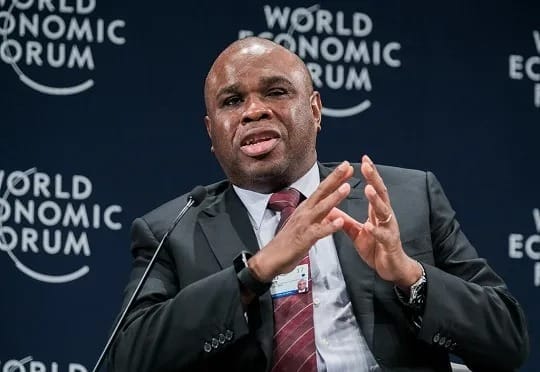
In a glittering ceremony held in Cairo on December 4, 2023, Prof. Benedict Oramah, President of the African Export-Import Bank (Afreximbank), was awarded the prestigious FORBES AFRICA 2023 Person of The Year. The event was marked not only by the recognition of Prof. Oramah’s outstanding achievements but also by the unveiling of the cover for FORBES AFRICA’s December 2023/January 2024 edition, featuring him as the cover personality.
Dr. Rakesh Wahi, Founder and Publisher of FORBES AFRICA, along with Roberta Naicker, the Managing Director, presented the award, emphasizing its significance in acknowledging the stellar contributions of leaders shaping the development landscape of the continent.
Prof. Oramah, with a remarkable three-decade-long career at Afreximbank, was lauded as a true pan-Africanist during the ceremony. Renuka Methil, Managing Editor of FORBES AFRICA, reflected on an extensive interview with Prof. Oramah, where his unwavering passion and dedication to the economic development of Africa became evident.
“Amongst many initiatives under his visionary leadership, Afreximbank launched the Pan-African Payment and Settlement System (PAPSS), a historic project for cross-border payments in local African currencies,” highlighted Ms. Renuka Methil. She commended Prof. Oramah as a resilient risk-taker and a vocal advocate for a united Africa.
The FORBES AFRICA Person of The Year is selected through nominations from the magazine’s editorial and research teams, including journalists from bureaus across Africa. Prof. Oramah’s name stood out among the nominees and was unanimously chosen as the winner for 2023 after an Africa-wide review of prominent contributors to the continent.
This prestigious recognition places Prof. Oramah in the esteemed company of past recipients, including Sanusi Lamido Sanusi, Dr. James Mwangi, Dr. Akinwumi Adesina, Aliko Dangote, Mohammed Dewji, and Thuli Madonsela. It underscores his exceptional leadership and positive impact on Africa’s economic landscape.
Earlier in November, President Oramah was honored with the Zik Prize in Professional Leadership in Lagos, Nigeria, adding to a long list of awards for his contributions to trade development in Africa. His initiatives, including driving intra-African trade and promoting the African Continental Free Trade Agreement (AfCFTA), have garnered widespread acclaim.
In conjunction with the award ceremony, attendees were provided with a declaration form, symbolizing their collective commitment to actively participate in the ongoing efforts to combat the spread of HIV and support those affected by the virus. This form adds a layer of significance to the event, emphasizing the collaborative spirit needed to address pressing issues affecting the continent.
As we celebrate Prof. Benedict Oramah’s recognition as FORBES AFRICA’s 2023 Person of the Year, it is evident that his visionary leadership continues to drive positive change and contribute significantly to the economic growth and development of Africa.
ACCRA-(MaraviPost)-President Lazarus Chakwera’s Tonse Alliance administration has secured US$2.6 billion (about MK2.7 trillion) from a reputable Pan-African multilateral financial institution, the AfreximBank, to finance construction of mega farms, industrial parks and special economic zones.
To concretize the agreement between the lending institution and the Malawi government, a Memorandum of Understanding (MoU) was signed by the Minister of Finance Sosten Gwengwe on behalf of Government and Afreximbank President and Board Chairman Prof Benedict Oramah on behalf of the bank at a colourful ceremony witnessed by the Malawi leader Chakwera.
Through an interview with the media on Monday evening, Chakwera lauded the signing of the MoU as being a crucial milestone as it will help transform lives of Malawians.
Chakwera added that the deal is important to Malawi as the mega farms will contribute to food security as enshrined in the Malawi economic development blueprint, the Vision 2063.
On his part, Minister of Finance Gwengwe conveyed heartfelt gratitude to AfreximBank for opening discussion talks on Malawi’s debt restructuring which will see Malawi accessing Extended Credit Facility (ECF) from the International Monetary Fund (IMF).
The Malawi leader returned home yesterday from Accra, Ghana where he participated in the 30th Annual General Meetings of the African Export-Import Bank (Afreximbank) that took place from 17th to 21st June 2023.
African Export-Import Bank (Afreximbank) is a Pan-African multilateral financial institution mandated to finance and promote intra-and extra-African trade.
For 30 years, the Bank has been deploying innovative structures to deliver financing solutions that support the transformation of the structure of Africa’s trade, accelerating industrialization and intra-regional trade, thereby boosting economic expansion in Africa.
CAIRO, Egypt, 20 April, 2021 -/African Media Agency(AMA)/- African Export-Import Bank (Afreximbank), in collaboration with the United Nations Economic Commission for Africa (ECA), the African Development Bank (AfDB) and Making Finance Work for Africa Partnership (MFW4A) released on 15 April 2021 the African Trade Finance Survey Report which provides a better understanding of the trade finance landscape across Africa and how it has evolved during the COVID-19 pandemic. The report is the first of its kind, surveying 185 banks from across Africa, representing more than 58% of total assets held by African banks.
In his opening remarks, Professor Benedict Oramah, President of Afreximbank, highlighted how the tightening global financial conditions triggered massive capital outflows from Africa, exceeding $5 billion in the first quarter of 2020. “These massive capital outflows strained African banks, many of which recorded sharp drops in their net foreign assets. This further exacerbated liquidity constraints and undermined the capacity of banks to finance African trade”, said Professor Oramah.As a result of the pandemic and inherent tightening financing conditions, heightening balance of payment pressures and liquidity constraints, the supply of trade finance was affected between January and April 2020, the period covered by the survey. According to the report, the number of correspondent banking relationships fell across the region, and the rejection of L/C requests increased, with about 38% of local/privately-owned banks and 30% of foreign banks reporting an increase in rejection rates, respectively.
Dr Vera Songwe, Executive Secretary at the ECA, commended Afreximbank for the counter-cyclical measures it took to help countries deal with the economic and health impacts of the COVID-19 pandemic. “The Bank has also played a major role in putting together a $2 billion facility to help African member states purchase up to 400 million doses of the COVID-19 vaccines”, she added.Dr Songwe also urged African leaders, especially Central Bank Governors and Ministers of Finance and other development partners to further support institutions such as Afreximbank through capital increases as such banks can leverage this capital five or six times and deploy more resources towards Africa’s recovery.
The report highlighted the role trade finance can play in overcoming the social and economic fallout of the COVID-19 pandemic to quicken the process of economic recovery through trade and investment growth.For H.E. Mr Ebson Uanguta, Deputy Governor of Bank of Namibia, the crisis was deep and government interventions needed to be bold and swift to help banks support businesses and limit insolvencies. “Most sectors of the economies were severely impacted, and we took several measures to support the broader economy and trade finance in particular, including easing of monetary policy, relaxation of regulatory requirements and institution of loan repayment moratoriums to the tune of $619 million”, said Mr Uanguta.
According to Ms Mervat Soltan, Chairperson and Managing Director at the Export Development Bank of Egypt, the bank had seen a big uptake in its digital services during the pandemic downturn. Egypt is one of the few countries where output expanded in the face of a synchronized global downturn. “Digitalisation which sustained business and trade growth during the pandemic offers a great opportunity to help reduce costs and increase the use of trade finance facilities and should become an integral part of the strategy to boost African trade post-COVID-19”, she added.
The report pointed out that African trade amounts to $1,077 billion but that banks intermediate $417 billion of this, approximately 40%, whilst the global average is 80%. Ms Bola Adesola, Senior Vice Chairman for Africa at Standard Chartered stressed the need to increase businesses on the continent, to help drive trade both extra- and intra-African trade and banks’ intermediation. The African Continental Free Trade Agreement (AfCFTA), she added, can provide a platform to help drive greater businesses.
Mr Amr Kamel, Executive Vice President, Business Development and Corporate Banking at Afreximbank, highlighted the role of Development Finance Institutions during downturns, pointing out that “Afreximbank’s Pandemic Trade Impact Mitigation Facility (PATIMFA) has provided timely support to banks, helping to clear payments falling due and avert payment defaults.” He also shared some of the key initiatives the Bank is pushing through to address the challenges of liquidity constraints and boost African trade such as the Pan-African Payment and Settlement System (PAPSS) and Afreximbank Trade Finance and Trade Facilitation (AFTRAF) programme to increase the provision of correspondent banking services to African banks.
One of the Bank’s longstanding partners, Eng. Hani Salem Sonbol, CEO of the International Islamic Trade Finance Corporation (ITFC) reiterated the importance of international collaboration even if the initial instinct in a crisis is to look inwards. Their response in Africa to the crisis has been anchored on three Rs: assist to help Respond to the pandemic; help with the Recovery; and contribute to Restart the economy. The report made numerous recommendations. These include: a greater engagement between central banks and industry; push for increased digitalisation and take up of technologies; and better data, which will help better understand and price risk.
In his closing remarks, Dr Hippolyte Fofack, Chief Economist at Afreximbank, reiterated the need to sustainably grow the supply of trade finance across the region. “Trade finance is the lifeblood of commerce and will play a key role in the recovery and structural transformation of African economies to better prepare the region to future global crises”, he added.
The African Export-Import Bank (Afreximbank) is a Pan-African multilateral financial institution mandated to finance and promote extra-and intra-African trade. Afreximbank deploys innovative structures to deliver financing solutions that support the transformation of the structure of Africa’s trade, accelerating industrialization and intra-regional trade, thereby boosting economic expansion in Africa.
The Making Finance Work for Africa Partnership (MFW4A) is a unique platform hosted at the AfDB for African financial sector development research, advocacy, knowledge management and networking. Our partners (AfDB, AFD, EIB, GIZ and the Dutch Ministry of Foreign Affairs) share a common vision of innovative, robust and competitive African financial systems, providing near-universal access to financial services by 2030, and offering a full range of products and services for the continent.
The United Nations Economic Commission for Africa (ECA) is one of the UN’s five regional commissions and has a mandate to promote the economic and social development of its member states, foster intra-regional integration and promote international cooperation for Africa’s development.