Tag Archives: Benedicto Kondowe

Malawi’s education rights body calls for opening of schools amidst Covid-19 pandemic

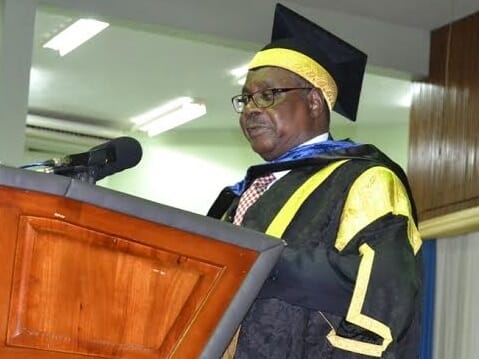
csec director Benedicto Kondowe

Civil Society Education Coalition (Csec) has urged government to open schools, colleges and universities in phases although Covid-19 pandemic is still a big threat to Malawians.

According to a press statement, Csec issued on Monday 11 May, 2020, there are double standards in the application of Covid-19 response measures by government and other stakeholders, hence the urgency to have the learning institutions opened.

The statement, signed by Executive Director Benedicto  Kondowe, has questioned why politicians; from both ruling and the opposition, continue to organise people in sports activities, mega rallies as well as other political programs in a bid to campaign for their victory, yet schools remain closed.

Csec has further said while government is doing everything possible to keep students accessing education through technology, that is not enough as most of them cannot access internet due to their geographical location but also uneven availability of the same.

The organisation has, therefore, urged government to open the learning institutions in phases so that Standard 8 pupils, Form 4 and IGSCE and Final Year students in universities can finish their studies as other mechanisms are being explored to keep other learners in education while Covid-19 measures are being observed.

Csec has also urged government to help learning institutions with hand sanitizers, soaps and thermometers as one measure to help both teachers and students observe hygiene in the fight against the pandemic.

Additionally, the organisation has asked government to create good referral systems for students, teachers, support staff and any other person during the tume schools will be running, and risk allowances for teachers; among other measures which will help fight the spread of the virus while education continues.

On 20 March this year, President Arthur Peter Mutharika, declared a national State of Disaster due to the Coronavirus threat and ordered immediate closure of schools, colleges and universities. He also ordered no more public gatherings of more than 100 people.

However, the presidential order is not very much adhered to as politicians continue to gather their followers during the campaign period in the run up to 2 July, 2020 fresh presidential election.
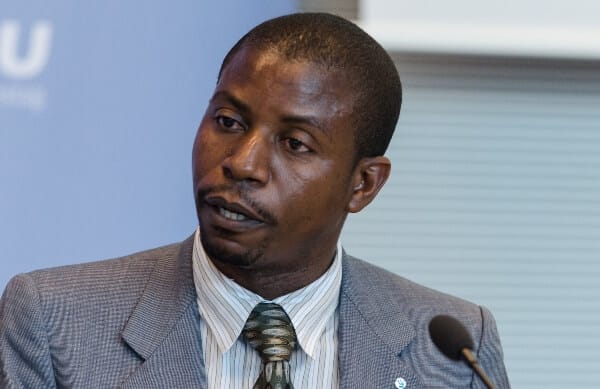
Exit Benedicto Kondowe, enter Zidana as Chanco Students Law Society President

Kondowe: Mutharika must step down

Written By Decenzo Banda

The University of Malawi Chancellor college law students on Friday elected Chikhulupiliro Zidana as new President of the law society replacing Fourth year law student who is also a renown Education activist in the country, Benedicto Kondowe.

Zidana, a third year law student, got a landslide victory signifying the undoubted trust reposed in him by his colleagues to lead the society to a greater height.

He promised to be the ‘servant’ of his constituents and that he will exercise the values of openness, transparency and accountability. The new leader also assured his fellow law students that he  will knock on the doors of the corporate world to consider sponsoring needy students pursuing law but not eligible for government’s loan scheme consideration.

In other positions, the student’s ushered in Precious Kalulu as Secretary, Gracian Lunzu as Treasurer, Jacqueline Mtanthiko as Faculty representative, Joel Elifala as Liason officer with Elijah Magoma as Editor.

Zidana takes over the law society which is enjoying full confidence of all stakeholders, thanks to the leadership of Benedicto Kondowe who worked hard to restore the image of the society following a financial mismanagement of the leadership of his predecessor.

Catholics pressured govt to withdraw ‘defaming’ MSCE literature book

Ministry of Education, Science and Technology has withdrawn a prescribed textbook for Chichewa Literature for Malawi School Certificate of Education (MSCE) in the curriculum after being pressurized by the Catholics.

The Catholic Church has been fighting with government to withdraw the book claiming it defaming Catholics.

On Tuesday, the government released a notice addressed to all education division managers and other stakeholders in the education sector notifying them that the book titled Kusintha Maganizo ndi Nkhani Zina has been withdrawn from the list of prescribed examinable texts.

“The book has been withdrawn because it contains a story titled ‘Mdalitso Wabodza’ which is immoral in nature and portrays a damaging image of the Catholic Church. The Ministry of Education views the story as being insensitive to the Catholic Church,” reads part of the communication.

However, Civil Society Education Coalition Executive Director, Benedicto Kondowe, said even though the decision to withdraw the book is appropriate, the move shows that government did not conduct a good vetting process.

“When books have been written, there is that consultative process where the scripts are shared with stakeholders to ascertain if there are issues which need to be dealt with. I am of the view that government did not play its role well because it could have changed the words before the actual printing was done,” he said.

Kondowe said the withdrawal will have an implication on the curriculum since it means Chichewa Literature would have fewer books than the ones approved.

President Mutharika dissolves UNIMA Council; mandates Justice and Education Ministers to facilitates Chanco impasse

Samuel tembenu
File Photo: Malawi Justice Minister Samuel Tembenu

LILONGWE-(MaraviPost) – President Mutharika, in his capacity as Chancellor of the University of Malawi (UNINA), on Monday dissolved the UNIMA Council and directed that Justice and Education Ministers mediate in the standoff with the academic staff at Chancellor College.

This is to allow the smoothing mediation between the Council and academic staff of the university.


The President’s decision comes barely a few days after the country’s Civil Society Education Coalition (CSEC), an alliance of 82 local and international organizations with partners in the education sector, on Tuesday requested the Malawi leader to exercise his prerogative powers to resolve the current teachers’ arrears woes and UNIMA labor sagas. Continue reading President Mutharika dissolves UNIMA Council; mandates Justice and Education Ministers to facilitates Chanco impasse

Malawi academic crisis: Education activist asks Mutharika to step down as Chancellor 

Kondowe: Mutharika must step down

BLANTYRE-(MaraviPost)—As the closure of public universities triggers blame game between the universities councils and president Peter Mutharika, education and human rights campaigner Benedicto Kondowe has accused the Malawi president of shifting the blame on councils and managements.
Continue reading Malawi academic crisis: Education activist asks Mutharika to step down as Chancellor 

Malawi’s education activist bashes NCHE over public university selection

Kondowe; not impressed

BLANTYRE-(MaraviPost)—Education activist Benedicto Kondowe, who is also executive director of Civil Society Education Coalition (CSEC), has taken a swipe at National Council for Higher Education (NCHE) for its failure to observe justice when selecting students to public universities.

Few weeks ago, NCCHE which was established by Act of Parliament No. 15 of 2011, with the primary purpose of providing accreditation and quality assurance services in higher education institutions, released the list of the selected students to pursue different programs in public universities namely University of Malawi, Mzuzu University, Lilongwe University of Agriculture and Natural Resources and Malawi University of Malawi.

Reacting to the selection, Kondowe accused the council of leaving out deserving students in the name of quota system, arguing the criterion is immoral and injustice.

Kondowe told Maravi Post in a telephone interview that he is not satisfied and is a bitter person because the quota system has victimized deserving students who are coming from districts where competition is stiff.

“I’m not satisfied. I am a bitter person because the selection process is very unfair and some students with 7 points, 8 points, 9 points have not been selected to university. This is simply because of the competition in their respective districts. In short, they have not been selected because of quota system.

“It is not morally justice. Imagine some students from Chiladzulu, Neno with 25 points, 26 points, 28 points got selected yet some from Nkhatabay, Mzimba with 9 points, 10 points failed to make it because of quota system. I am saying this is immoral and totally unacceptable,” said Kondowe.

He added that the development clearly indicates that quota system is not a sustainable solution as it is political and works against the spirit of excellence.

“Use of quota system in selecting students to public universities remains political, divisive, and works against the spirit of excellence in institutions of higher learning. Any policy that compromises on quality at the expense of scoring a political mark is not only wrong but also retrogressive: it shows loss of direction for tertiary education.”

On the increasing demand for loans in universities, Kondowe said Malawi should consider private sponsorship, a policy which has proved effective in other developed countries.

“As long as we continue over relying on these loans intelligent students will still be left out. Developed countries have adopted what they call private sponsorship. Imagine if you have 400 capable Malawians and each is able to sponsor say two students in our institutions, how many students will benefit?” queried Kondowe, adding “companies should also widen their corporate social responsibility threshold  by invading the universities and help the needy students.”

Malawi government reintroduced quota system to ensure that all districts are represented in the universities. With quotas system, each district apart from Blantyre, Zomaba, Mzimba and Lilongwe, is assured of 10 places in public universities.

This year, 15000 students qualified but due to lack of spaces in institutions of higher learning, less than 5000 made it.