Tag Archives: UNICEF

Malawi committed to fighting trafficking in persons – Minister

Minister of Home Affairs and Internal Security, Cecilia Chazama has pledged its commitment to fighting against trafficking in persons and has since called for strong partnership in curbing the vice in the country.

Chazama said this Friday in Lilongwe at the Bingu International Convention Centre when she opened National Inter-Disciplinary Symposium on Trafficking in persons.

She explained her ministry has increased issues of capacity building of investigators, prosecutors, enforcement and protection officers and sharing information and best practices in trafficking in persons management and interventions.

Chazama pointed out that government passed its first legislation, the Trafficking in Persons Act, in 2015 to combat the incidences of the scourge in the country.

“We can succeed in a achieving our unified vision and strategic objectives if we work in partnership, locally, regionally and internationally,” the Minister observed.

Chazama disclosed that globally, UNICEF has estimated that 2.5 million people are trapped in modern day slavery. She singled out that men, women and children fall into the hands of traffickers both in their own country and abroad.

“Every country in the world is affected by human trafficking, whether as a country of origin, transit or destination for victims. Malawi is not immune to the crime,” the minister noted.

Chazama added most Malawian trafficking victims are exploited within the country by generally being transported from the southern part to central and northern regions for forced labour in agriculture, goat and cattle herding and brick making.

The Minister said: “Many cases of child labour, external to the family, involve fraudulent recruitment and physical or sexual abuse, indicative of forced labour.”

She said trafficking of Malawians is not limited to within the borders as some people have been victims in Mozambique, South Africa, Zambia, Tanzania, Middle East countries and Europe.

Chazama pointed out that the trafficked persons are subjected to sexual and labour exploitation, extraction of body parts and forced to be drug mules.

She thanked Malawi Network Against Trafficking in Persons and the Conference of Western Attorney Generals (CWAG) for working in close collaboration with her Ministry to organize the National Symposium.

Assistant General for Pfizer and board member of CWAG, Markus Green said his organisation is working in partnership with eight African countries to combat trafficking in persons.

He said they started the partnership two years ago and are working with countries like Malawi, Zambia, South Africa, Rwanda, Kenya, Nigeria, Ghana and Senegal.

The National Symposium has drawn the participation of senior government officials, Non Governmental Organisations, Civil Society, Faith Based Organisations, Law students from Chancellor College and the Media.

CRECCOM launches 2017-2022 strategic plan; communities urged to be proactive

By Brian Longwe

LILONGWE-(MaraviPost)-Malawians have been asked to pay vibrant participation and self-involvement in empowering child protection and youth development in the country.

The motive has come at a time when violation of children’s human rights has reached at a climax in the country.

Recent report from International Women’s Health Coalition has revealed that 15 million girls around the world are married every year, while a population of 37,000 girls under 18 years engage into eary marriages each day.

And corresponding to the report, UNICEF has disclosed that Malawi has the 11th highest child marriage rates in the world, with nearly 1 in 2 girls married before 18.

It is for that motive that Creative Centre for Community Mobilisation (CRECCOM), one of the organisations thriving to promote girl-child education in the country has embarked on a five-year strategic plan which will run from 2017 to 2022, as said by the Board Chairperson for the organisation Dr. Foster Kholowa.

Speaking during the official launching of the strategic plan in Lilongwe, Kholowa explained that one part of the program is to build capacity and scale up its already existing activities.

This helps to yield robust positive results in the scheduled period.

“For a prolonged time, we have witnessed how Malawi is struggling with the issue of child insecurity. That’s why we came up with an idea to review and revise our operations so that we should bring new ideas to end this problem,” said Kholowa.

He further added that since its establishment in 1999, CRECCOM has been working hand in hand with Other stakeholders including chiefs, mother groups and teachers to encourage students to be proactive in their education.

Paramount Chief Kawinga(representing Yao tribe) confirmed to this reporter that the coming of CRECCOM has made a tremendous change to his people as it has mobilised change in harmful cultural practices hindering girls’ right to education.

“At first we were putting much concentration on our cultural initiations like chinamwali than education, but through civic education campaigns which CRECCOM brought, almost everyone now realise and understand the signifince of educating a girl-child.” Kawinga explained.

As one of the partner to the organisation, the ministry of civic education, culture and community development has promised to commit itself in helping CRECCOM and other organisation working on the same, fulfil their goals.

The Principle Secritary for the ministry, Ivy Luhanga who was also the guest of honour at the event made assurance that the ministry will take part in monitoring the operations to make sure that the organisations stay focused on this workload.

In its plan, CRECCOM with financial support from USAID and other global partners will see 60,000 young mothers returning back to school and 200,000 youths being trained in technical professions.

The UN turns 72, is the world a better peaceful place?

“The U.N. is like your conscience. It can’t make you do the right thing, but it can help you make the right decision.” –Margaret Huang, the interim executive director of Amnesty International U.S.A.

During a conference held in San Francisco in June 1945, hosted by US President Franklin Delano Roosevelt, the United Nations Charter was signed in a chorus of support led by four countries: Britain, China, the Soviet Union, and the United States. When the Charter went into effect on October 24 of that year, a global war had just ended. At that time, much of Africa and Asia were still ruled by colonial powers.

The brainchild of 50 countries, the organization has grown to 193 and growing. It has grown not only in numbers but physically, that is in the infrastructure: The General Assembly had 50-member states, today it has 193 plus two observers, and space for more.

After 72 years, as the commemoration music lingers, there are skeptics from many sides, about the relevance of this giant elephant in the room. Established with the promise to make the world a better and peaceful place. Is the world a more peaceful and better place? Has the UN lived up to its promise? Or is it a total and disastrously big failure full of empty go-no-where meetings?

Absolutely not, the UN is not a total and disastrously big failure full of empty go-no-where meetings. The United Nations is a very respected global forum of equals (envisaged and crafted into the principles of the organization, complete with regional representation). Additionally, the world a more peaceful and better place, making true the assertion that the UN lived up to its promise.

It was my great privilege to work with this mammoth organization for 10 years. My first assignment was at field level at UNDP Malawi where I served as communications officer; and then as a diplomat for 8 years representing Malawi in social development, human rights, elections officer, editor of social media, magazine and TV channel, and diplomatic relations coordination.

There are many wars around the world, causing the UN to orchestrate a cotely of peace-keeping missions. However, with the ideals of human rights wrapped with the 1948 Human Rights Charter, the world walks on egg shells and countries are called out through the UN’s Human Rights Commission.

As Malawi’s social development expert at the Malawi Mission, it was an honor to be among diplomats from like-minded member states that led to the establishing of the UN gender entity for equality and economic empowerment of women, also known as UN Women. The presence of UN Women in Malawi greatly fuels women equality and empowerment projects including immunization of under-five babies, ending child marriage, education for all, especially of girls, voicing outrage against women and children, human rights, and protection of refugees among others.

Getting back to the global organization: The United Nations, to quote former Malawi Ambassador Rubadri (one of the first five ambassadors in 1964 – Mangwazu, Mbekeani, Rubadri, Gondwe, and Katenga), the UN can be likened to a club. The member states pay into its pool of funds; it established development agencies such as UNICEF, UNDP, UNHCR, WHO, WFP, UNEP, UNAIDS, and many others. These enable the UN fulfil its operative mandate at country and regional levels, while headquarters performs the normative one.

What is remarkable and has worked like the plum line, every September, the world leaders meet as the General Assembly, and speak on chosen themes, mapping out their country’s stand on national, regional and global issues. This is followed by committee work leading to resolutions. It is these resolutions, negotiated by delegates from all 193-member states, that are sent to countries like Malawi for localization and implementation.

The UN is home of the Security Council with a 15-member elected group of member states. The group however, has five permanent member states (China, France, Russia, UK and USA), who have a veto power that gives them more power than the other states present on the Council. Tis veto power paralyses the Council giving power to one member, state against the other members. The working of the Council is different from the General Assembly that works either on simple majority of sometimes two thirds.

The UN is a global “government,” and like national governments, it is the biggest employer in the world employment stage, with member states enabling their nationals through direct appointment (many doing this through funding projects) or elections and other indirect.

The employment of nationals from member states, gives credibility as a global entity. It is the nationals from around the world. The UN is genuinely a world organization – from gate security officers, sweepers, cashiers, clerks, journalists, directors up to other senior officials are employed from around the world.

Going forward, the new UN Secretary General, António Guterres has major challenges as the New York Times wonders whether its influence diminishes or grows. As a global organization, it is firmly etched into the world tapestry and has enormous achievements.

Happy 72 Birthday UN!

Malawi’s public health at crossroads

Karonga Hospital
Karonga Hospital Patients

By Wongani Msowoya

Malawi’s recently launched heath sector strategy, which requires funding to the tune of $ 2.7- billion, suffers from funding gap of close to half a billion dollars, a confidential government document seen by amaBhungane reveals.

And a well-placed source in the seat of government, Capitol Hill in Lilongwe, said that a key reason for this shortfall was that a number of foreign donors were cutting back on their planned contributions to the strategy.

The source said the shortfall posed a major threat to the implementation of key activities envisaged under the plan.

This confirms recent statements by the principal secretary in the ministry of health, Dan Namalika, who was quoted this year as saying that health funding is becoming major challenge for the government. Continue reading Malawi’s public health at crossroads

Malawi’s faith and women’s organizations against discriminatory laws on drug abusers; don’t punish but support

Malawi Faith Groups
Malawi’s faith and women’s organizations against discriminatory laws on drug abusers;

LILONGWE-(MaraviPost)– Some local Lilongwe faith-based and women’s organizations this week expressed their concerns over punitive laws against substance and drug abusers. They argue that the approach is not addressing the challenge amongst the youth who form the larger grouping of of abusers in the country.

The organizations therefore, asked the country’s authorities to review the legal framework for drug and substance abuse. They suggest that these should provide psychological support for total transformation, rather than merely using punitive measures against them. Continue reading Malawi’s faith and women’s organizations against discriminatory laws on drug abusers; don’t punish but support

United Nations and Malawi Exploring use of drones for fast delivery of emergency services

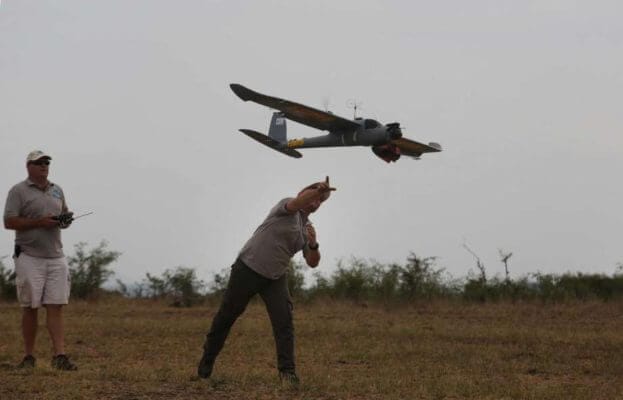
Poaching Drone
FILE — In this file photo taken Monday, Feb. 15, 2016 a drone is launched in the Hluhluwe-iMfolozi Game Reserve in the KwaZulu Natal province. Conservationists say Zimbabwe and Malawi are allowing flights by anti-poaching drones as part of an initiative supported by Google and the WWF conservation group. – Zimbabwe, Malawi welcome anti-poaching drones
Christopher Torchia, Associated Press Updated 6:25 am, Friday, September 9, 2016
FILE — In this file photo taken Monday, Feb. 15, 2016 a drone is launched in the Hluhluwe-iMfolozi Game Reserve in the KwaZulu Natal province. Conservationists say Zimbabwe and Malawi are allowing flights by anti-poaching drones as part of an initiative supported by Google and the WWF conservation group. Photo: Denis Farrell, AP / Copyright 2016 The Associated Press. All rights reserved.
Photo: Denis Farrell, AP

The U.N. children’s agency and Malawi’s government are teaming up to test whether drones could make aid delivery faster and more effective during humanitarian disasters, such as floods and droughts which affect millions of people every year.

UNICEF said on Thursday that experts would investigate how drones could be used to provide aerial imagery to help governments and aid agencies pinpoint where the most urgent needs are in crises.

They will also test the use of drones for making small deliveries such as emergency medical supplies, vaccines and samples for laboratory diagnosis.

“This is very exciting. We believe that drones have huge potential to help us respond more quickly in humanitarian emergencies,” said UNICEF’s head of innovation Cynthia McCaffrey.

The trials, likely to begin next April, will be carried out in a “humanitarian drone testing corridor” that will allow the unmanned aircraft systems to be tested over a distance of up to 40 km (25 miles) outside Malawi’s capital Lilongwe.

Engineers will also investigate how drones could be used to extend Wifi or cellphone signals across difficult terrain.

Drones are already being tested for commercial deliveries in countries like the United States and New Zealand.

But the testing corridor in Malawi is thought to be the first to focus on the use of drones in humanitarian operations and development work.

The initiative could have a significant impact in Malawi, which is prone to floods and droughts. Forty percent of families in the southern African country currently rely on food aid.

In the future aerial imaging drones could help farmers boost harvests by identifying irrigation problems and monitoring soil variation, water content and plant health, UNICEF’s Malawi director Johannes Wedenig told the Thomson Reuters Foundation.

Drones could also identify hidden water sources and help communities decide where to sink boreholes.

“This initiative holds great promise for Malawi, the Africa region, and indeed the world,” Wedenig said.
Drones used for imaging can fly for hours, covering hundreds of miles, while transport drones can currently carry around 3 kg for up to 80 km, UNICEF said.

The initiative follows a pilot project by UNICEF in March to test the use of drones to transport blood samples from babies born to HIV-positive mothers in a rural area to a hospital laboratory.

Samples transported by road often take over a week to reach the lab, creating delays in getting babies born with HIV onto life-saving drugs.

(Editing by Katie Nguyen.; Please credit the Thomson Reuters Foundation, the charitable arm of Thomson Reuters, which covers humanitarian news, women’s rights, trafficking, corruption and climate change. Visit news.trust.org to see more stories.)

Standard Bank women to act as role models in UNICEF partnership

Thoko Unyolo
Thokozani Unyolo
Head of Marketing and Communication for Standard Bank

Standard Bank is on Wednesday launching a girl mentorship program with the United Nation Children Education Fund (UNICEF) aiming to encourage girls continue with education.

The launch at N’thulu Primary School in Dedza will see the Chief Financial Officer (CFO) Temwani Simwaka leading other bank women leaders in the mentorship program targeting girls aged 8-15 in three districts of Dedza, Salima, Machinga and selected youth drop-in centres. Continue reading Standard Bank women to act as role models in UNICEF partnership

Children out of school and at work as hunger deepens in Southern Africa, finds report

Child walking
A child captured walking in their garden damaged by army worms

Johannesburg, 20 July 2016 – El Nino is having a devastating impact on children in the Southern Africa region forcing them into early marriage, child labour and out of school, reveals a World Vision report released today.

The report based on expert insight from nine countries in the region found that El Nino was severely impacting the lives of children and their futures.  Although El Nino as a climatic phenomenon is now over food insecurity has yet to peak putting 49 million people at risk. Continue reading Children out of school and at work as hunger deepens in Southern Africa, finds report

SADC to Declare a Regional Disaster and Launch a Regional Humanitarian Appeal for Millions hit by El Niño-induced Drought

The Chairperson of the Southern African Development Community(SADC) Lt. General Dr Seretse Khama Ian Khama, President of Botswana will
declare a Regional Disaster and launch a Regional Appeal for Humanitarian and Recovery Support amounting to US$2.7 billion. Continue reading SADC to Declare a Regional Disaster and Launch a Regional Humanitarian Appeal for Millions hit by El Niño-induced Drought