Tag Archives: Welani Chilenga

Malawi Parliamentary Conservation Caucus pledges to revive Viphya plantation concession agreement

MPCC Chairperson Welani Chilenga

By Donata Mpochela

LILONGWE-(MaraviPost)-Malawi Parliamentary Conservation Caucus (MPCC) has asked the Ministry of Natural Resources, Mining, and Energy to revive the conditions of Viphya Plantation concession agreement on forest management agreement between the government of the republic of Malawi through Reformed Timber Millers Union (RTMU) that both the forest and community should benefit from it.

During the meeting which was held in Lilongwe at the Parliament made MPCC to express its concerns over the review of the conditions that are stipulated in the new concession agreements Raiply Malawi saying the agreement is not good for the management of Viphya Plantation.

MPCC Chairperson Welani Chilenga said the Timber Millers Union (RTMU) is acceptable but the agreement with Raiply needs to be revived.

“The RTMU agreement is acceptable but the agreement with Raiply says third parties that has allowed the third party to plunder the resources of the forest (trees) is not good because will affect the Raiply Plantations which may among things lead to joblessness and also destroy the forest as a result, this will be the end of Chikangawa because this a short period protection,” Chilenga said.

Chilenga said due to all these problems, they ask the Ministry to re-draft the third party clause.

“The Ministry was supposed to engage the committee in the concessions agreements so that they can be aware of it but we hear the Ministry signed the agreement without our approach, which is very bad,” Chilenga said.

According to the RTMU concession, Government says it should be a 50-50 protection to allow industrial plantations to ensure sustainability supply of forest products the benefit of the nation because without doing so, it is going to scare away investors.

Ministry of Natural Resources, Energy, and Mining’ Secretary, Patrick Matanda said they included the third party because they wanted the community to have access or benefit from the wood or plantations.

“As per advised during the agreement, will be a regulated way of people getting into the forest to collect wood so that the third party (community) should not just get into the forest without proper procedures which the ministry thinks the ministry will preserve the forest.

“As of now, looking at what we have been told will go and look for the proper right way that will help the nation benefit from the resources,” Matanda said.

Parliament committee against oil exploration in Lake Malawi: says Malawi has outdated laws to safeguard petroleum production

Lake Malawi

LILONGWE-(MaraviPost)-The Parliamentary Committee on Natural Resources and Climate Change, this week strongly denounced Malawi government’s decision on oil exploration in Lake Malawi, and argue that the country has outdated laws to safeguard all stakeholders during the exercise.

The committee observed that the absence of a national petroleum policy and its outdated Act, will not be safe for Malawi to go ahead with the process.

Welani Chilenga, the committee’s chairperson told the Ministry of Natural Resources, Energy and Mining, department of Mines and Parks and Wildlife officials, when they appeared before it, at Parliament building. The committee said that government was taking a dangerous path on the matter.

Chilenga then accused government of breaking the law by pursuing the matter further; they said President Peter Mutharika has been misled on the issue.

“We don’t have a policy in place and we are using an outdated law, the 1983 Petroleum Act, which vests all petroleum products in the hands of the life president. The committee is not comfortable with this matter the way government is handling it,” Chilenga said.

But Chief Mining Engineer, Cassius Chiwambo, was adamant and defended oil exploration by arguing that the said outdated law would guide the exercise.

Chiwambo said that government decided to go ahead with the oil exploration giving due  consideration that licences were already issued to prospective oil mining companies.

“It would be unfair to tell the investors to stop the exploration at this stage. We acknowledge the absence of the petroleum policy, but we have the 1983 Petroleum Act at hand, which the same Parliament approved.

“The ministry will ensure that the policy is developed, before the end of the year and that investors are warned that they may have to make changes in their operations to reflect the new policy,  should it be adopted,” Chiwambo assured.

The committee’s stand comes barely a month after President Mutharika assured the general public of the Lake’s safety upon the start of the exploration exercise to completion, and that on-shore clean technology equipment will be used.

Mutharika told the nation, saying “Let’s all take care of the Lake. This is our Lake, and when I say our Lake, I mean the whole of it. Let nobody make a mistake to try to change this ownership, which has been there for the past 124 years.

“We must keep the Lake clean for its use as a heritage site. Let me also assure you that if we decide to drill oil from it, we will use some on-shore modern technologies that prevent the oil from polluting the Lake. Therefore, don’t be afraid that the Lake will be polluted,” the President said.

For several years, Malawi and Tanzania, have been entangled in an ownership for some parts of the Lake, particularly the northern area with Tanzania stating claim to it. This resulted into cross-border war of words, especially once Malawi announced its intention to explore oil in the Lake.


Prioritise on wildlife conservation, Malawi campaigners

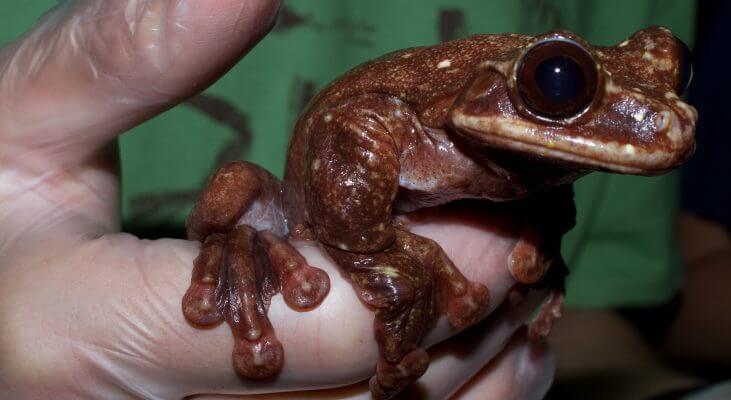
Frog Endagered
scientists predict a mass extinction and the destruction of the natural world that humanity relies upon

As scientists predict a mass extinction and the destruction of the natural world that humanity relies upon for survival, local campaigners are calling for conservation to be pushed to the top of Malawi’s agenda.

According to a report published by WWF and Zoological Society of London last week, there has been a 58% decline in global wildlife populations since 1970, a figure which is predicted to rise to 67% by 2020, representing a rate of natural ecosystem degradation unprecedented in human history.

Jonathan Vaughan, Director of Lilongwe Wildlife Trust, said, “Whilst there is currently no specific data available for Malawi’s own wildlife populations, there is every indication that the trend is the same. Given that these catastrophic declines are due to human activities like wildlife crime and habitat loss, there is still some hope to reverse the trend if urgent action is taken.”

Habitat loss poses the greatest threat to wildlife survival and Malawi suffers from the highest rate of deforestation in the SADC region. The second biggest threat, and the biggest threat to endangered species, is illegal wildlife trade.

The black market trade in bushmeat has substantially impacted Malawi’s mammal populations such as duiker and bushbuck, and half of the country’s elephants have been lost since the 1980’s due to poaching for ivory.

Malawi was also named as a ‘country of primary concern’ for its role as a major transit hub in the illegal ivory trade in a recent report published by TRAFFIC and ETIS (Elephant Trade Information System), alongside Togo, Malaysia and Singapore.

Malawi Government has responded with several initiatives including the country’s first specialised multi-agency Wildlife Crime Investigations Unit. 60 arrests for wildlife trafficking have been made since June, 16 of whom have been sent to prison for up to 14 years.

The Amendment Bill for the National Parks and Wildlife Act is expected to come to Parliament in November which will further strengthen penalties and act as a deterrent for would-be wildlife criminals.

Vaughan added, “The government’s progressive work in combatting illegal wildlife trade is very encouraging and we hope to see other conservation challenges similarly prioritised. However we all have a role to play in protecting Malawi’s wildlife and natural heritage and we are also urging individuals to make considered decisions, whether it is reporting wildlife crime or choosing not to buy charcoal.”

Welani Chilenga, Chair of the Natural Resource Committee and co-chair of the Malawi Parliamentary Conservation Caucus agreed, saying, “I look forward to next month’s Parliament sitting where a number of environmental issues will be discussed, and I urge my fellow parliamentarians to take heed of these alarming figures. Agriculture and human health, and in fact Malawi‘s very prosperity, relies on healthy ecosystems and biodiversity and we must do all we can to ensure sustainable use of our natural resources, or allow the devastation to continue unabated and suffer the consequences.”