world & Malawi National News and Headlines. – View the latest National news and breaking news today for Malawi from maravipost.com, world, weather, entertainment, politics and health at maravipost.com
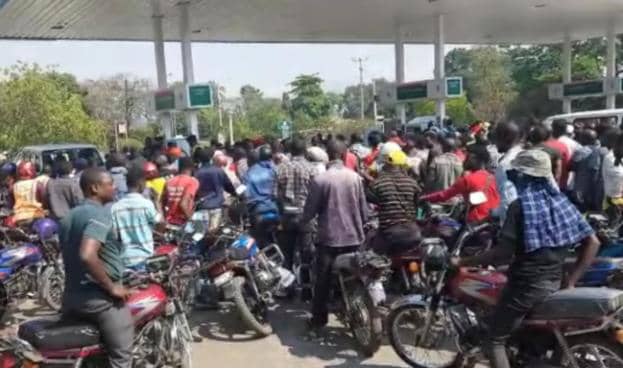
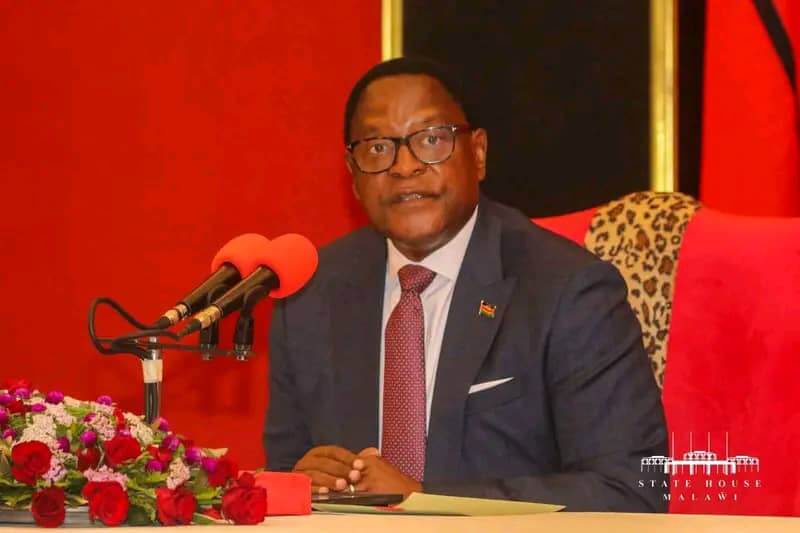
LILONGWE-(MaraviPost)-The newly elected UTM Party leader Dr Dalitso Kabambe has opened called upon President Lazarus Chakwera to come out to address fuel crisis that has crippled all sectors.
The call comes barely two months Malawians are grappling to access the commodity due to lack of forex.
Consequently, Chakwera government is failing to pay suppliers.
Malawi don’t have forex to buy fuel
Despite the crisis rocking the nation, Chakwera has remained mute on the matter while resorting campaign trails to retain power in 2025.
Writing on his Facebook Page, the former Reserve Bank of Malawi (RBM) Governor, Dr Kabambe wants Chakwera immediate action on matter.
“Today, I reach out not only as a concerned citizen but as a passionate advocate for our beloved nation. We are witnessing an unprecedented fuel crisis that poses serious threats to our economy and livelihoods.
“The ripple effects of this crisis are being felt across every sector—affecting businesses, industry productivity, and ultimately, our tax revenue,” reads the statement in part.
Dr. Kabambe appeals, “I urge our esteemed President, His Excellency Lazarus Chakwera, to take immediate action by forming a dedicated crisis management team.
“This team would focus on addressing the fuel shortage, implementing strategic measures, and restoring confidence in our economy during these challenging times”.
The former RBM governor observes, “Leadership is crucial now more than ever. Our nation looks to you, Mr. President, to guide us through this storm.
“A clear and decisive address to the nation, outlining the steps being taken to mitigate this crisis, will inspire hope and reassure our citizens”.
Dr. Kabambe appeals, “Let us come together, rally behind strong leadership, and work towards a solution that not only solves the current fuel issue but also bolsters our economy.
“Together, we can navigate these challenges and emerge stronger as a united Malawi”.
LILONGWE-(MaraviPost)-Malawi leader President Lazarus Chakwera says Lilongwe University of Agriculture and Natural Resources (LUANAR) remains vital stakeholder towards achieving Malawi’s Agenda 2063.
Speaking when he presided over the 8th Congregation of LUANAR, at Bunda College Campus Multipurpose Hall in Lilongwe on Thursday, Chakwera advised the graduating students to change from subsistence farming to innovative approaches to help drive the country’s agricultural transformation.
“But all 689 of you graduating today have been exposed to a different mindset, a systems mindset, a mindset that understands that even though you may benefit personally and even become rich from doing something, you have to consider whether your method of getting rich destroys or strengthens a particular system on which so many other Malawians are dependent.
“That is what being a LUANAR graduate means, to refuse to participate in any activity that destroys or harms a system that is meant to keep our economy strong, healthy, and beneficial for everyone,” he said.
Chakwera added that the country will only achieve economic self reliance when works on all the broken systems is completed.
“This is why no matter how much we try to put bandages on the open wounds in the body of our economy, we will only achieve self-reliance when the work we are doing to rebuild this country’s broken systems is complete,” he said.
Speaking earlier, Professor Emmanuel Kaunda, LUANAR Vice Chancellor hailed President Chakwera for placing more effort on promoting quality education.
Professor Zachary Kasomekera, Chairman for LUANAR Council advised the graduating students to add value to what they have learned at the University.
LILONGWE-(MaraviPost)-Malawi has received significant praise for its efforts to involve women in key decision-making roles related to climate change.
Sascha Gabizon, the Executive Director of Women Engage for a Common Future (WECF), emphasized that Malawi’s representation of women at COP’29 symbolizes a strong acknowledgment of their vital roles as agents of resilience and innovation in the fight against climate change.
She noted that sustainable development and climate action cannot succeed without incorporating gender equity.
Gabizon also discussed WECF’s initiatives to empower women through practical training and sustainable entrepreneurship.
For instance, in Mozambique, WECF trained the first five female swim teachers and lifeguards, as well as certified the region’s first female scuba divers.
This initiative led to the formation of a women-led mussel aquaculture cooperative, which created economic opportunities and supported local communities.
WECF, a key partner of the United Nations Environment Programme (UNEP), commended Malawi for its exemplary efforts to empower women in climate action.
This recognition was awarded during a prize presentation ceremony on the sidelines of COP-29 in Baku, where Malawi was celebrated for promoting women’s leadership in addressing climate challenges.
Janet Banda SC, Deputy Secretary to the President and Cabinet, stated that international organizations have highlighted the country’s progressive approach to gender and climate justice at COP-29 and expressed the government’s gratitude for this recognition and emphasized the crucial role women play in climate action.
Janet Banda at COP-29 (second from left)
“To empower women, His Excellency Dr. Lazarus McCarthy Chakwera, President of the Republic of Malawi, launched the Women in Climate Action Network in 2021. This initiative ensures that women take charge of the issues that affect them most,” Banda noted.
During the conference, Malawi’s Vice President, Dr. Michael Biziwick Usi, highlighted the importance of the country’s delegation in representing the interests of Malawians at COP-29.
His remarks underscored Malawi’s commitment to ensuring that its people, especially women, play an active role in shaping global climate policies.
The 29th Conference of the Parties (COP-29) is an annual gathering of United Nations member states focused on addressing the global climate crisis held in Baku, Azerbaijan, this year’s summit provided a platform for nations to negotiate solutions for climate change mitigation, adaptation, and financing.
Malawi’s increasing recognition at international climate forums highlights the nation’s growing leadership in promoting gender equality and climate resilience, setting a strong example for other countries in the pursuit of a more sustainable and equitable future.
As Malawi prepares for the 2025 general elections, the voter registration process has come under scrutiny, with the People’s Development Party (PDP) raising alarms over systemic challenges that could disenfranchise thousands of eligible voters. In an exclusive interview, PDP President Honorable Kondwani Nankhumwa detailed these concerns and called for urgent reforms to ensure a fair and transparent electoral process.
Nankhumwa identified the absence of National Registration Bureau (NRB) personnel at voter registration centers as a critical issue. According to Malawi’s electoral laws, only individuals with a National ID are eligible to register as voters. However, many citizens face challenges obtaining these IDs due to delays or losses.
The High Court recently ruled that all eligible citizens must be allowed to register, regardless of their National ID status. Justice Mandala Mambulasa emphasized the state’s constitutional obligation to facilitate voter registration. Despite this ruling, Nankhumwa reported that many NRB officials are absent from registration centers, and individuals without IDs are still being turned away. He criticized this as contempt of court and demanded repercussions for NRB’s noncompliance.
MEC’s role in the electoral process
While Nankhumwa refrained from directly criticizing the Malawi Electoral Commission (MEC), he urged the electoral body to demonstrate decisive leadership. “The electoral process is about protecting the sanctity of our democracy and ensuring every Malawian can exercise their constitutional right to vote,” he said, calling for transparency and efficiency in addressing these challenges.
Impact of bureaucratic inefficiencies
Nankhumwa highlighted systemic inefficiencies, including defective registration machines and inadequate public outreach, which have created barriers for potential voters. In districts such as Lilongwe and Blantyre, long queues and machine malfunctions have left many frustrated and unable to register. In Machinga and Mulanje, machines failed repeatedly over several days, further disenfranchising citizens.
Call for electoral integrity platform (EIP)
To address these challenges, Nankhumwa proposed establishing an Electoral Integrity Platform (EIP). This initiative would involve key stakeholders, including MEC, NRB, political parties, and civil society organizations, to foster dialogue, build trust, and implement solutions to enhance electoral transparency and inclusivity.
Irregularities in the registration process
The PDP has also raised concerns about voter suppression, duplicate registrations, and the alleged registration of underage individuals. Nankhumwa called for an independent audit of the voter registration process to address these issues and restore public confidence. “MEC must adopt stronger verification processes to ensure only eligible voters are registered,” he stated, emphasizing the need for transparent procedures and public education campaigns.
Perceptions of bias at MEC leadership
The PDP leader also addressed public calls for the resignation of MEC Chairperson Justice Anabel Mtalimanja, citing concerns over perceptions of bias. While Nankhumwa stopped short of endorsing these claims, he stressed the importance of public trust in electoral institutions. “If the Chairperson’s leadership is questioned, it risks delegitimizing MEC’s authority,” he said, suggesting that Justice Mtalimanja consider stepping down to protect her integrity and pave the way for new leadership.
Impact on Malawi’s political landscape
Nankhumwa warned that voter registration challenges could disproportionately affect political parties with strongholds in regions facing systemic barriers. “The current state of voter registration could have profound implications for the 2025 elections, potentially disenfranchising thousands and undermining the credibility of the results,” he said.
A call for collective action
In his concluding remarks, Nankhumwa called on all stakeholders to work collaboratively to resolve these challenges. “Let us ensure every eligible voter has a fair chance to register and participate in this vital democratic exercise,” he urged.
As Malawi approaches the 2025 elections, addressing these voter registration concerns is critical to safeguarding the country’s democratic foundations. The PDP’s call for transparency, accountability, and inclusivity underscores the urgent need for reforms to uphold the integrity of the electoral process.
BLANTYRE-(MaraviPost)-The High Court on Wednesday, November 21, 2024 dismissed an application in which former president Peter Mutharika’s personal bodyguard Norman Chisale was challenging an application by the State to forfeit his assets.
The Court began hearing an application by the State on Tuesday, November 5, 2024, seeking to permanently forfeit Chisale’s assets valued at K1.7 billion. These assets are believed to have been acquired through illicit means.
The assets in question were initially seized in 2021 when the court ordered that Chisale’s properties be placed under the control of the State as per the Financial Crimes Act until the conclusion of the forfeiture proceedings, or until further court orders were issued.
However, Chisale made an interim application seeking to stop the Court from hearing the State’s application.
Delivering the ruling to Chisale’s application in Blantyre, the High Court Judge Anneline Kanthambi noted that there was nothing that stopped the Court from proceeding to hear the State’s application for Chisale’s assets forfeiture.
But soon after Kanthambi’s ruling, Chisale through his lawyer Chancy Gondwe asked the court to allow him to appeal the judge’s determination in the Supreme Court of Appeal.
He further asked the court to stay the proceedings pending the Supreme Court of Appeal determination on the matter.
But in her ruling, Kanthambi also dismissed Chisale’s reactive application.
Chisale’s lawyer, Chancy Gondwe, was unable to demonstrate a defense of why the State should not forfeit the property believed to be tainted with crime, instead arguing that the case is politically motivated and designed to distract from the “significant challenges” facing the nation.
“We assert that there is no valid case here; rather, this is an intimidation tactic against our client. We remain committed to defending his rights and reputation,” Gondwe stated despite seeking to dodge the hearing through an application that has since been dismissed.
In 2021, the High Court granted an order allowing the State to seize Chisale’s assets, which the government alleges were acquired illegally.
The list of seized property includes a staggering 86 motor vehicles and 21 real estate properties, comprising residential houses and commercial buildings located in various suburbs of Blantyre and Lilongwe, as well as Chisale’s home district of Ntcheu and other areas, including Dedza and Mangochi.
The seized vehicles comprise a range of luxury models, including 48 Toyota vehicles such as Prado, Noah, and Land Cruiser, alongside three Mercedes-Benz and various other brands including BMW, Audi, and Nissan. Some vehicles were registered only with chassis numbers.
Apart from Norman Paulos Chisale, other respondents include Chimwemwe Paulosi (trading as Namauya Investments), Deborah Zimatha Chisale, Esnart Guga, Flony Guga, Jannet Fatch Kamanga, and Christina Mvula, listed as the first to sixth respondents, respectively. Of the seized vehicles, 63 are documented under Norman P. Chisale as the importer, while 23 vehicles lack specified importer details
BLANTYRE-(MaraviPost)-Its over two months Malawians are grappling with shortages of fuel, forex that have paralysed businesses for smooth mobility of goods and services.
Due to fuel crisis, transport fairs have gone up thrice making life unbearable for Malawians.
Goods and services gone up beyond Malawians expectations due to scarcity of fuel as motorists are digging deeper to access the commodity through blackmarkets.
For instance, 1 litre of petrol is now sold at MK6,000 from MK2,555 on the blackmarket.
fuel crisis amidst economic challenges
How do you expect businesses, movements of good and services to be fair?
Isn’t this a state of emergency which President Lazarus Chakwera could have declared for support?
But Chakwera has chosen to be quite while busy with campaign trails to retain leadership in 2025.
Chakwera claims that he is on these campaign exercises to encourage Malawians to register in large numbers to vote in 2025, serious?
Does it requires the whole president to go ward by ward telling people to register while are empty stomach, are unable to buy basic needs due to skyrocketed prices of goods and services?
Where are your senses, Reverend Lazarus Chakwera to abondon Malawians in time of need?
Malawi doesn’t have fuel, forex, maize and in all these challenges you opt for campaign to be voted again.
Mr President, you have made over 50 foreign trips depleting forex without remorse.
Mr President, your cabinet ministers, aids, government officials are all over the world attending any meetings depleting already minute forex.
If these foreign trips were beneficial, Malawi could not be grappling with forex that has paralysed essential goods importation including drugs in public hospitals, fuel, agriculture inputs.
Reverend Chakwera, you have been told and advised on numerous occasions to reduce both local and international trips including aids and Cabinet Ministers to serve forex but nothing has been taken on board.
Mr. President, you have also be advised to fire incompetent ministers, aids, government officials that have let you down but you chose to entertain them.
Reverend Chakwera, Malawians will not again sympathy with you in 2025 if these challenges remain unresolved.
Reverend Chakwera, Malawians will not give you a vote because of road networks improvement in the capital Lilongwe but provision of quality leadership across the country.
Reverend Chakwera, halt all campaign trail now and address fuel and forex crisis if indeed you are an insightful leader.
The former Malawi leader Joyce Banda addressed fuel crisis in weeks in 2012.
So, ten months is enough to bring back sound economic policies for growth.
Reverend Chakwera, time is now to show Malawians that you are a leader not a puppet of Malawi Congress Party (MCP) cadres.
Enough of this madness of having pettyvlocal and international p trips that don’t bring meaningful development but depleting minute resources that could serve locals better.
Enough of speeches that don’t bring any hope but pain in Malawians hearts.
Enough of maintaining of incompetent aids, Cabinet Ministers because you tend to share corrupt dealings, are your relatives.
Lastly, Reverend Chakwera, time is coming when no-one will listen to your lies!!
The People’s Development Party (PDP) has called on President Lazarus Chakwera to address the ongoing fuel crisis and speak directly to Malawians about the issue.
The People’s Development Party (PDP)President Kondwani Nankhumwa appealed during a media briefing in Lilongwe on Tuesday.
He accused the President of being indifferent to the crisis, citing his frequent trips abroad while Malawians struggle to access fuel.
“A good leader is seen in times of trouble, but our President seems not to be moved. We want him to rise to the occasion and address this situation,” said Nankhumwa.
Comrade Ntanyiwa of Limpopo FM Challenges MCP Over 2025 Election Integrity
He noted that the crisis has disrupted many sectors of life in Malawi, with black-market fuel now being sold at K10,000 per liter.
Nankhumwa also demanded the resignation of Energy Minister Ibrahim Matola and an apology from the Information Minister for allegedly misleading Malawians about fuel updates weeks ago.
Nankhumwa also took advantage of the briefing to call for the establishment of an inclusive task force comprising the Malawi Electoral Commission (MEC), the National Registration Bureau, all political parties, and other stakeholders to resolve voter registration grievances.
Judge Annabel Mtalimanja new MEC chair
He further urged MEC Chairperson Justice Annabel Mtalimanja to step down for the sake of her integrity, arguing that many Malawians have lost confidence in her leadership.
“What I am saying is that, as we sometimes see in the judiciary, when judges anticipate a conflict of interest, they excuse themselves from the case. We believe the MEC Chairperson should consider doing the same,” Nankhumwa stated.
Previously, MEC clarified that the Judicial Service Commission (JSC) is responsible for selecting judges for the MEC Chairperson position and suggested that concerns regarding the Chairperson’s role should be directed to the JSC.
Meanwhile, Energy Minister Ibrahim Matola has announced that essential foreign exchange has been secured for immediate fuel procurement and that multiple fuel vessels are being processed for offloading at the country’s ports of entry.
MZUZU-(MaraviPost)-The newly elected National Campaign Director for UTM, Maquenda Chunga has strongly trashed rumors circulating in the social media that some of its senior and veteran members who failed miserably at the convention will dumb party.
Soon after the UTM convention which was held in Mzuzu last Sunday, some Malawians in the social media have been saying that the party’s former secretary general, Patricia Kaliati, Newton Kambala, Dr. Mathews Mtumbuka, Noel Masangwi and Dr. Chidanti Malunga among others who poorly performed will dump the party.
“All the presidential candidates who were defeated left the convention prematurely. This was a silent protest to the outcome. Apart from that, the three have never issue a congratulatory message to the elected President, Dr. Dalitso Kabambe apart from thanking their campaign team.
“It shows they’re unsatisfied or frustrated and the results will be nothing apart from dumping the party,” said some Malawians in the social media.
UTM Organising Secretary Chunga
But reacting to the development, Chunga said everyone especially UTM members congratulated Kabambe and other elected National Executive Committee (NEC) members before leaving the area.
Apart from that, Chunga said earlier all candidates agreed to accept the results and support the winning team during the party’s fundraising dinner.
Chunga who is also Mzimba South constituency former Member of Parliament further revealed that the party is also negotiating with all convention casualties on the same.
“UTM is a team of members who have full royalty. That’s why nobody dumped the party after the death of our beloved leader, Dr. Chilima.
“We have been witnessing some senior party members dumping their respective parties soon after the death of their leaders but that was not the same with UTM. This is a revolutionary party. I bet, no one will leave the party just because he or she failed at the convention,” responded Chunga to our questions.
The newly UTM National Campaign Director however said the party will be strong than ever.
According to him, almost ninety percent of the current NEC consist of youths who have all it takes to carry SKC legacy and transform the country.
“If you observed, many including myself and the president won with landslides. This is because the delegates who were from all districts knows our capability. The delegates were after people who can make UTM win the coming elections. And trust me, UTM will win the election without any alliance,” lamented Chunga who praised Kabambe as the right choice for Malawi.
He further saluted Kaliati for protecting the party from some members who wanted to sell it during her tenure as UTM secretary general.
“Let me take this opportunity to thank honorable Kaliati, Njawala and the current secretary general, Kalonga for doing a wonderful job of protecting the party from some members who wanted to sell it,” he added without mentioning names of the suspects.
However, while expressing their unsatisfactory with the convention results, Mtumbuka and Kambala have vowed not to continue support the party.
BLANTYRE-(MaraviPost)-Blantyre Synod of the Church of Central Africa Presbyterian (CCAP) has rebuked hardly on President Lazarus Chakwera’s government over Malawians suffering from social-economic challenges.
In Pastoral letter issued on Tuesday, November 19, 2024 says this follows the synod’s officials, under administration conference, met in Blantyre last week in one of their quarterly meetings and, thereafter, produced a statement on the country’s state of governance.
In the statement, the synod has raised seven issues which it wants the authorities to work on.
The synod expresses displeasure at, among other things, continued forex shortage and economic and persistent fuel scarcity.
“We have observed that life for the majority of Malawians is being threatened by the looming hunger due to non-availability of maize stocks in Admarc [Agricultural Development and Marketing Corporation] depots. While the government continues to paint a rosy picture of the situation, we have observed, through our research, that on the ground the hunger situation has reached alarming levels,” reads the letter in part signed by synod general secretary Anderson Juma and synod moderator Humphreys Zgambo.
The synod also says it is not amused with forex supply and other economic challenges.
“We have observed, with concern, the continued and unresolved economic challenges manifested in the rising prices of basic commodities due to, among other factors, scarcity of forex,” the synod says.
On fuel scarcity, the synod observes that it is hindering socio-economic development activities in the country.
“Despite promises from the Executive to improve the situation, there seems to be no end [of problems] in sight. We would like, therefore, to ask the government to provide sustainable solutions to the situation,” the letter says.
The synod also says it has noted with regret some acts of political violence as the country draws closer to the September 16 2025 Local Government, Parliamentary and Presidential Elections.
“It is also quite disturbing to note that perpetrators of the violence have been left scot-free. We, as church leaders, are appealing to political leaders on both sides of the divide to desist from hate speeches which fuel violence and from using young men, mostly unemployed, for their own selfish ends.”
The church has also tackled the issue of unavailability of medicines in public hospitals and also weighed in on the issue of how the country is doing in the fight against corruption.
Blantyre Synod rebukes Chakwera
The synod has also acknowledged positives registered by the current administration.
Synod therefore commends the government for road construction works it is undertaking in Lilongwe saying, if completed, the infrastructure would transform the capital city’s landscape.
It further applauds the government for instituting a commission of inquiry into the death of former vice president Saulos Chilima and eight others, saying findings would help in healing wounds in family members’ and Malawians’ hearts.
Government spokesperson Moses Kunkuyu has not commented on the pastoral letter.
…….Amid rising concerns that it’s ‘a double-edged sword’
By George Mhango
BLANTYRE-(MaraviPost)-Malawi and Zambia, likewise other Southern African Development Community (Sadc) countries have spoken out about the relationship with Russia amid rising concerns that it is ‘a double-edged sword’.
This comes against the background of the global landscape shift, where Russia is rekindling its relationship with Africa by forging a partnership, which analysts feel promises mutual benefits.
Diplomatic and international relations experts interviewed have come out clean, saying from energy and infrastructure to security and trade, Moscow is making strategic inroads, reasserting its influence on the continent. However, this partnership is considered transactional.
Russia’s renewed Focus on Africa, Malawi in particular
Russia’s interest in Africa is not new. During the Cold War, the Soviet Union supported African independence movements and maintained strong ties. However, after the Soviet collapse, Russia’s presence waned. Now, under President Vladimir Putin, Russia is rediscovering Africa’s potential.
However, critics say Russia’s aim is to expand its global influence, access valuable natural resources, and challenge Western dominance, and Africa’s vast resources, including gold, diamonds, uranium, and oil, are particularly attractive, hence their existence in Africa.
Undule Mwakasungula, a renowned human rights campaigner is of the view that Malawi likewise other African countries should continue to have government to government meetings.
“I don’t believe that Russia is rubber stamping support to us. That is a Western propaganda against Russia. Remember both have interests in Africa. The West has failed and exploited Africa, so why not Russia or China as an alternative for Africa development,” he says.
He adds that Russia’s involvement in Africa is beneficial to the best interest of Malawians or Africa. “Russia’s primary goal is to expand its influence and challenge Western dominance and neo colonialism by supporting African development,” Mwakasungula adds.
In agreement, Zambia’s opposition member of Parliament for Mufulira Central, Golden Mwila, says Russia’s relationship with African countries can only be necessary if it is mutually beneficial, further warning African countries to be cautious as they engage with European country.
Moscow pursues a combination of military, diplomatic, and economic interests in Africa
Over the years, Russia’s involvement in African affairs includes the supply of arms and equipment to African countries and seeks military bases. Some of this has been done through mercenary group Wagner, now called the Africa Corps.
Militarily, Russia mostly focuses on weapons trade, but it is also seeking to expand its operational footprint, including by signing agreements for new military bases. Diplomatically, Russia’s overarching goal is to gain more support for its vision of a multipolar world order MPWO, based on weakened Western influence. At the United Nations, it lobbies African allies for favourable votes on issues such as the Ukraine conflict.
Attempts to seek African support
Experts say that Moscow looks to Africa to show that Russia is not an international pariah, despite ongoing Western sanctions against it. Speaking at what was dubbed the “BRICS Plus” session, which included countries that are considering joining the bloc, Putin accused the West of trying to stem the growing power of the Global South with “illegal unilateral sanctions, blatant protectionism, manipulation of currency and stock markets, and relentless foreign influence ostensibly promoting democracy, human rights, and the climate change agenda.”
“Such perverse methods and approaches, to put it bluntly, lead to the emergence of new conflicts and the aggravation of old disagreements,” Putin said. “One example of this is Ukraine, which is being used to create critical threats to Russia’s security, while ignoring our vital interests, our just concerns, and the infringement of the rights of Russian-speaking people.”
Conflict came up repeatedly at the meeting, which saw the first visit to Russia from United Nations Secretary-General Antonio Guterres in more than two years and drew an angry reaction from Kyiv. Guterres called for “a just peace” in Ukraine, in line with the U.N. Charter, international law and General Assembly resolutions.
The Russia-Africa Partnership Forum
From November 9-10, Russia gathered African leaders in Sochi for the Russia-Africa Partnership Forum, raising concerns of neocolonialism and deceit. A draft statement for the summit leaked before the event revealed points that were contradictory to Russia’s actions.
Russia used this first Russia-Africa Ministerial Summit to continue pushing narratives and securing deals that advance its strategic objective of undermining the Western-led international system and highlighting its stature as a global power in Africa.
According to Mwakasungula, a renowned human rights campaigner, Malawians and Africans have to be reminded that Russia, then Soviet Union helped liberate African countries who were still under colonial rule and you cannot rule that out Russia is true and genuine ally of Africa.
The Kremlin advanced its vision of Russia as the leader of an anti-Western bloc seeking a multipolar world order and highlighting the narrative that Russia is not internationally isolated.
It also discussed increasing cooperation in several sectors including finance, nuclear energy, satellite technology, and security. These partnerships aim to boost Russian influence and its image as a great power at the expense of Western economic, political, and security interests.
Critics have argued that the draft joint statement, which claimed cooperation with Africa, was misleading and hypocritical. It pledged to fight against neocolonialism, yet Russia’s actions in Africa and other parts of the world suggest otherwise.
The anti-democratic rhetoric misleading African countries
Congolese human rights activist Andrea Ngombet noted that Russia’s anti-democratic rhetoric misleads African countries, and that nations aligned with Russia are neither safer nor richer.
“In fact, they are mostly in the brink of collapse, and human rights violations such as the massacre in Moura, northern Mali, remind us of the predatory and colonial nature of Russian cooperation. African problems are intertwined with the world and while fostering an African perspective to solve them, they must remain connected to the betterment of humankind,” Ngobet said.
Key areas of contention include Russia’s “counterterrorist” activities, which some argue are more about expanding influence than combating extremism.
However, Anton Kobyakov, the Adviser to the Russian President, said the ministerial conference of the Russia Africa partnership forum is an important initiative that aims to intensify comprehensive cooperation between Russia and African countries in all its dimensions.
Russia’s involvement in global conflicts, including its aggression against Ukraine, undermines its praise for “universal norms” in conflict resolution.
Additionally, Russia’s role in the global grain supply crisis contradicts its boasts about food aid
In 2022, Russia supplied 11.5 million tons of grain to Malawi and other African countries, but this was insufficient considering the impact of their actions on global food security.
Economically, less than one percent of the country’s foreign direct investment goes to the African continent, and its $18 billion in trade with African countries lags far behind the United States’ $64 billion and China’s $254 billion, according to the Congressional Research Service.
However, accessing valuable natural resources, such as gold, diamonds, uranium, and oil in Africa remains Russia’s priority.
Chifipa Mhango, National Director of Economic Affairs for the position political party, Alliance for Democracy- AFORD, says Malawi belongs to regional bodies that take both a political and economic posture in international matters and therefore, African countries have taken a position of non-alignment on international political matters.
Mhango…
“Therefore, engagements and its cooperation on economic matters is guided by its economic development needs.
“It is for this reason that Malawi and other African countries’ relationship with advanced economies are based on mutual economic benefits approach, he states.
According to Mhango, just like African countries pursue economic ties with advanced economies in Europe, China, India, USA, the approach towards Russia is also similar.
“The parameters that guide economic ties and cooperation should be based on economic development needs, to which Russia’s relationships with African countries is guided by the same principles,” he says.
And amid increasing global demand for the inputs necessary for alternative energies and advanced technologies, Africa’s vast reserves of critical minerals motivate Moscow’s efforts as well. To accomplish these goals, analysts say Russia uses its favoured strategy of working through low-cost intermediaries, including PMCs or local political allies.
Its rhetoric relies on so-called memory diplomacy to tap into lingering anti-colonial sentiment, often using disinformation campaigns to discredit pro-Western forces and frame itself as a better partner than the West
Russia’s military support is a significant aspect of its influence, often provided through private military contractors like the Wagner (Africa corps) Group. This mercenary force has been linked to human rights abuses and destabilization in countries such as Mali, Libya and the Central African Republic.
Nuclear Energy support to African countries
While Russia is planning to set up nuclear energy plants in most African countries, such efforts are to bear fruits. Setting up such technologies In Africa would only benefit Russia itself and not the poor Africans because it is too expensive to set up, some energy experts explained.
However in Zambia, concern was raised by the UPND government when opposition leader Fred M’membe revealed that he was in talks with the Russian government over setting up the nuclear energy plants.
Despite the worries and concerns raised by many African countries, M’membe still pursued Russians over the same.
UPND Deputy Secretary-General Gertrude Imenda questioned M’membe’s motives for discussing nuclear energy with Russia, suggesting self-interest rather than concern for Zambia’s power crisis.
Mufulira Central Member of parliament Golden Mwila says that there is no problem with Russia having transactional relationships with Zambia and any African country, but urged caution and discouraged deep involvement with Russia.
Mwila said Zambia must push an agenda that not only benefits Russia but also benefits Zambia.
However, Mhango, a Malawian economist based in South Africa adds that in the case of Malawi, being a member of the African Union Commission (AU) and also SADC, its principles of engagement should be aligned to the regional groupings, and its relationship with Russia is not isolated on African economic ties and cooperation with Russia.
Like Zambia, Malawi also belongs to SADC, COMESA and the African Union Commission (AUC)
Malawi breaking news and World News. News about Malawi, Malawi Business, Malawi Tourism, Malawi Politics, Malawi News, World and Africa Top News.