Category Archives: Politics

Malawi has a multi-party system with over 40 registered political parties.The political process in Malawi is such that parties are voted into power. Parties participate in an electoral process. The parties with the most representation in the National Assembly are the People’s Party (PP), Malawi Congress Party (MCP), United Democratic Front (UDF), and Democratic Progressive Party (DPP).

President of Malawi 

Under the country’s 1966, 1994 and 1995 constitutions, the President is executive head of state. The first President was elected by the National Assembly, but later presidents were elected in direct popular elections for a five-year term. In the event of a vacancy, the Vice-President becomes President.

  Denotes Vice-President acting as President
? President
(Birth–Death)
Portrait Tenure Elected Political affiliation
(at time of appointment)
Took office Left office Time in Office
1 Hastings Banda
(1899–1997) [1]
Dr HK Banda, first president of Malawi.jpg 6 July 1966 24 May 1994 27 years,319 days Malawi Congress Party
2 Bakili Muluzi
(1942–)
Muluzi.png 24 May 1994 24 May 2004 10 years,3 days 1994
1999
United Democratic Front
3 Bingu wa Mutharika
(1934–2012)
Mutharika at Met.jpg 24 May 2004 5 April 2012
(died in office.)
7 years,316 days 2004 United Democratic Front
2009 Democratic Progressive Party [2]
4 Joyce Banda
(1949–)
Joyce Banda August 2012.jpg 7 April 2012 31 May 2014 2 years,54 days People’s Party
5 Peter Mutharika
(1939–)
Peter Mutharika 2011 (cropped).jpg 31 May 2014 Incumbent 4 years,103 days 2014 Democratic Progressive Party

Standards

A new dawn for global trade: US, Iran reach breakthrough agreement

WASHINGTON-(MaraviPost)-US President Donald Trump hailed the reopening of the Strait of Hormuz as a “great and brilliant day for the world” during a speech at a Turning Point USA event.

The development marks a significant shift in tensions between the US and Iran, with the two nations agreeing to a temporary ceasefire and the reopening of the vital waterway.

The Strait of Hormuz, a critical chokepoint for global oil supplies, had been closed since February, triggering a surge in energy prices and threatening the global economy.

Trump’s announcement comes after weeks of intense diplomacy, with Iran agreeing to allow commercial vessels to pass through the strait for the remainder of the ceasefire period.

Iran’s Foreign Minister Abbas Araghchi announced the reopening, stating that the decision was made in conjunction with a 10-day pause in fighting in Lebanon.

However, the US naval blockade on Iran remains in place until a permanent peace deal is struck.

Trump praised Gulf states for their support, thanking Saudi Arabia, the UAE, and Qatar for their “great bravery and help”.

He also acknowledged Pakistan’s role in mediating talks, expressing gratitude to Prime Minister Shehbaz Sharif and Field Marshal Asim Munir.

The reopening of the Strait of Hormuz has sent oil prices plunging, with the Dow surging over 1,000 points.

However, shipping companies remain cautious, with many hesitant to send tankers through the waterway until safety concerns are addressed.

Iran has insisted that vessels must coordinate with Tehran and follow specific regulations to ensure safe passage.

The US and UK have announced plans to lead multinational missions to protect shipping in the strait, with France and other European allies joining the effort.

The situation remains fluid, with both sides engaged in ongoing talks.

Trump has expressed optimism that a permanent deal is within reach, but significant hurdles remain, including Iran’s nuclear program and regional security guarantees.

Time to govern, not to beg: Why Mutharika must crush sabotage, ignore courts that shield it

BLANTYRE-(MaraviPost)-President Peter Mutharika is being strangled by process while saboteurs burn the house. The latest evidence sits in plain sight.

On Friday, 17th April 2026, at exactly 10:03am, the Electricity Supply Corporation of Malawi announced a nationwide system shutdown. ESCOM’s technical team is “on the ground,” the notice says. The nation is in the dark, again.

This is not coincidence. This is sabotage, designed to paint the Mutharika administration as incompetent, to humiliate the presidency, and to collapse public confidence in the Democratic Progressive Party (DPP) government before it can deliver its manifesto.

If the President continues to treat hostile court rulings as sacred text, he will govern by permission of the very people engineering his failure.

The vehicle of state is not moving because the courts keep pulling the keys from the ignition.

The pattern is clear and repeated. Whenever Mutharika moves to clean out parastatals, the affected executives sprint to court. Judges issue injunctions.

Redeployments at ESCOM and the Malawi Defence Force were blocked the moment they were announced.

Executive orders meant to restore discipline and loyalty are frozen before the ink dries. The courts have become the first line of defence for the old regime.

They are not neutral arbiters. They are political actors wearing robes, and their rulings are being used as weapons to keep MCP-era networks embedded in every strategic institution.

A President who obeys courts that are actively sabotaging him is not upholding the rule of law. He is presiding over the rule of his enemies.

Look at ESCOM. A system shutdown at 10:03am on a weekday is not a random technical glitch. It is a message.

It tells investors the grid is unreliable. It tells households the government cannot keep the lights on. It tells donors that Malawi is unstable.

And it tells voters that the DPP promise of “proven leadership” was a lie. Yet the men and women who ran these systems under the ousted MCP government are still in place, protected by court orders that bar their removal.

They are parasites with payslips, drawing salaries while they short-circuit the national agenda. When a court stops a President from redeploying a compromised manager, that court is not defending justice. It is defending sabotage.

This is not limited to ESCOM. The same script will play out at Water Boards, at ADMARC, at MACRA, at MERA, at road authorities, and in procurement units across government.

Wherever there is a switch that can be flipped, a file that can be hidden, a tender that can be delayed, or a narrative that can be leaked, there is an operative waiting for the signal.

The plan is simple: create failure, then blame Mutharika. Create blackouts, then say DPP cannot govern.

Create fuel queues, then say the President is out of touch. Create court dramas, then say he is a dictator when he reacts.

It is lawfare combined with economic sabotage, and it works as long as the President keeps pausing for judicial permission.

So what must Peter Mutharika do now?

First, he must accept a hard truth. He cannot reform a state that is being run by the people he defeated.

Courts have positioned themselves as the HR department of the old regime. If he respects every injunction, he will be a ceremonial president watching his government collapse in real time.

The DPP did not win a mandate to co-manage failure with MCP holdovers. It won a mandate to govern. Governing means removing saboteurs. Removing saboteurs means acting faster than they can file.

Second, Mutharika must rule with an iron fist. That does not mean violence. It means unapologetic use of executive power to protect the national interest.

It means immediate suspensions, forensic audits, and direct presidential oversight of all critical parastatals. It means creating a Presidential Delivery Taskforce with authority to enter any state company, seize records, and override any manager whose actions threaten service delivery.

If that taskforce is injuncted, it continues under a different name the next morning. Saboteurs use the law as a shield. The President must use speed as a sword.

Third, he must pay a deaf ear to court rulings that are clearly designed to perpetuate dysfunction. The Constitution makes the President responsible for the welfare of Malawians.

When a judge bars the removal of an ESCOM executive while the country sits in darkness, that judge is not protecting rights. He is protecting blackouts. Mutharika swore to serve Malawians, not to obey every piece of paper that keeps their lights off.

If the choice is between keeping a compromised manager in office because a court says so, or keeping hospitals powered because the President says so, the answer is obvious. He must choose the people.

Critics will scream “rule of law.” But what law rules when the law is used to keep saboteurs in charge of power stations? What justice exists when injunctions are the only thing that runs on time while water, electricity, and fuel do not? The judiciary has become a co-conspirator in the politics of failure.

It grants ex parte orders at midnight to stop dismissals, but it cannot grant a megawatt to stop a blackout. It defends procedure while the country bleeds production. A President who submits to that is not a democrat. He is a hostage.

Fourth, the DPP must prune without mercy. Every ministry and parastatal must undergo a loyalty and competence audit within 30 days. Anyone who served in a sensitive role under the ousted MCP regime and cannot demonstrate tangible delivery since Mutharika’s return must be removed.

Anyone who has been to court to block redeployment must be presumed hostile to reform and reassigned to a non-strategic role. Anyone who leaks, delays, or misinforms must be dismissed, and their benefits computed later.

The manifesto will not implement itself. It will be implemented by people. If the people in the chairs are working for the other side, the chairs must be emptied.

Fifth, Mutharika must insulate the economy from judicial sabotage. Create a Presidential Infrastructure Authority that reports only to him, with power to contract, procure, and pay outside the normal channels that courts keep freezing.

Ring-fence ESCOM, Water Boards, and fuel procurement under emergency regulations until stability returns. Pre-empt injunctions by acting under existing security and disaster laws that courts cannot easily suspend. If the courts insist on reviewing every decision, make ten decisions for every one they block. Flood the zone with action.

Sixth, he must rally the public. Malawians are not fools. They can see that the same faces who cheered the old government are now breaking the new one. The President should speak directly to the nation, weekly, with evidence. Show the memo that delayed fuel.

Show the email that tripped the grid. Show the court order that reinstated the saboteur. Let the people see who is turning off their lights. Legitimacy flows from the people, not from the bench. If the people are with him, no judge can unseat him.

The risk of doing nothing is existential. If Mutharika keeps waiting for permission, the DPP will collapse under the weight of manufactured failures. Voters will not remember the injunction. They will remember the darkness.

They will not quote the ruling. They will quote the blackout. A party that cannot fire cannot govern, and a President who cannot clear his own house will not be allowed to keep it.

This is the moment for decision, not debate. The ESCOM shutdown is the writing on the wall.

It is unusual, it is coordinated, and it is pure sabotage meant to discredit this government as a failure. More will come because the parasites from the ousted MCP regime are still in the system, and they will do all they can to make Mutharika fail.

Therefore, the President must act. Act now, act decisively, and act without apology. Ignore the courts when they shield sabotage.

Remove the saboteurs before they remove the government. Rule with an iron fist so that Malawians can live with lights on. The manifesto demands it. The people deserve it. History will forgive the broken injunctions. It will never forgive the broken country.

Feedback:+265992082424
Email: jonesgadama@gmail.coml

Ceasefire in Lebanon sparks hope for US-Iran deal

A 10-day ceasefire agreement between Israel and Lebanon has brought a glimmer of hope that a broader deal between the US and Iran may be within reach.

The truce, announced by US President Donald Trump, is seen as a significant development in the ongoing conflict between Israel and Iran-backed Hezbollah in Lebanon.

The ceasefire, which came into effect on April 16, 2026, is intended to halt active fighting and create conditions for further negotiations towards a longer-term settlement.

It marks the first direct diplomatic engagement between Israel and Lebanon in decades.

Tehran has welcomed the truce, with Iran’s Foreign Ministry framing it as part of a broader agreement with the US to pause the regional conflict.

However, major challenges remain, including Iran’s demand for a full Israeli withdrawal from Lebanon and the US’s concerns over Iran’s nuclear program.

The ceasefire agreement has been met with cautious optimism, with Lebanese Prime Minister Nawaf Salam welcoming the development as a “central Lebanese demand”.

However, Hezbollah has warned that it will respond to any violations of the truce, raising concerns about the stability of the agreement.

The US and Iran have been engaged in indirect talks, with Pakistan playing a key role in mediating the negotiations.

A second round of talks is expected to take place in Islamabad, although no date has been set.

The ceasefire has also sparked hopes of an easing of tensions in the region, with global oil prices and stock markets reacting positively to the news.

However, analysts warn that significant challenges lie ahead, including the need for a comprehensive agreement on Iran’s nuclear program and the withdrawal of Israeli forces from Lebanon.

Atupele Muluzi calls for national reflection as Malawi faces critical crossroads

BLANTYRE-(MaraviPost)-President of the United Democratic Front (UDF), Atupele Muluzi, has urged Malawians to reflect on the country’s direction, warning that the nation stands at a critical turning point.

In an interview with Maravi Post,Muluzi questioned the country’s collective resolve, asking whether citizens are prepared to confront ongoing challenges or continue tolerating a system that fuels suffering.

“Malawi stands at a crossroads. The real question is: What do we truly want as a nation?” he said.

He cautioned against ignoring the hardships faced by citizens, which he attributed to carelessness and what he described as a predatory system.

Instead, he called for a decisive shift toward meaningful solutions, institutional reform, and support for leaders committed to driving change.

Muluzi emphasized that progress will require bold leadership and collaboration across multiple sectors.

He noted that reform must be championed not only within government but also by opposition parties, civil society, the media, and the business community.

The UDF leader said those within government must demonstrate honesty by acknowledging failures, while external stakeholders must remain committed to shaping a new national direction.

Muluzi competed in the September 16 ,2025 presidential election race and failed to make a significant impact as he finished outside the leading contenders in a crowded field, underscoring the UDF’s continued struggle to regain its past electoral strength.

Pope Leo XIV condemns exploitation of Africa’s resources-“Foreigners fuel conflicts”

Pope Leo XIV, leader of the Catholic Church worldwide, has condemned the practice of people coming to Africa to steal resources that God blessed the continent with.

Speaking in Cameroon, the Pope said many of the problems Africa faces are caused by individuals from other countries who arrive with the intention of exploiting Africans for their own gain.

He noted that those who plunder resources such as gold often use the profits to purchase weapons of war, a practice he described as unacceptable.

“Africa is richly blessed by God, but these blessings are being taken by others who do not have the interests of Africans at heart,” Pope Leo XIV said. “The wealth from our soil is used to buy arms that bring more suffering to our people.”

The Pontiff stressed that the cycle of exploitation and conflict must end, calling on both foreign actors and local collaborators to respect the dignity and rights of African nations.

He urged leaders and citizens to protect the continent’s resources for the benefit of present and future generations.

Pope Leo XIV’s remarks come during his pastoral visit to Africa, which began earlier this week.

The Holy Father is still on the continent and is expected to visit several countries, including Ghana, the Democratic Republic of Congo, and Nigeria, in the coming days.

In Cameroon, he met with clergy, government officials, and civil society groups, emphasizing peace, justice, and responsible stewardship of natural wealth.

He appealed to the international community to support fair trade and to stop fueling conflict through the illicit purchase of minerals and other resources.

The Pope’s message was received with applause from congregants and leaders who have long raised concerns about illegal mining and the link between resource exploitation and armed violence in parts of the continent.

Church officials said the Pope’s tour aims to strengthen faith, promote reconciliation, and advocate for the poor and marginalized.

His call against resource plunder is expected to feature prominently in his addresses during the next stops on his African visit.

President Donald Trump’s NATO ultimatum: A transatlantic tipping point?

By Burnett Munthali

WASHINGTON DC – (MaraviPost): US President Donald Trump is once again threatening to leave NATO, this time over allies refusing to back the US-Israel war on Iran.

The move has sent shockwaves through the transatlantic alliance, with European leaders scrambling to assess the implications.

Trump’s latest salvo against NATO comes as no surprise, given his long-standing criticism of the alliance.

However, the timing is significant, coming as the US and Israel are engaged in a military campaign against Iran.

The US president has framed the Iran conflict as a test of NATO support, but European allies have largely rejected this approach, arguing the war falls outside the alliance’s mandate.

NATO Secretary-General Mark Rutte has emphasized that the alliance is a defensive organization, not a vehicle for supporting US military operations.

Trump’s threat to leave NATO has raised concerns about the future of the alliance and the security of Europe.

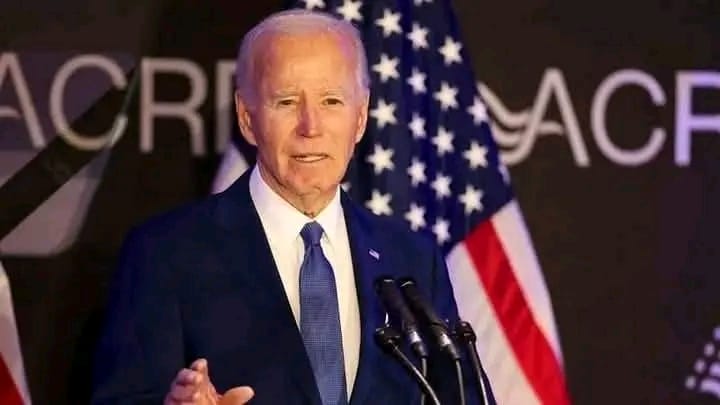
Former US President Joe Biden
Former US President Joe Biden diagnosed with aggressive prostate cancer

President Biden signed the 2024 National Defense Authorization Act (NDAA) in December 2023, which includes a bipartisan provision (Section 1250A) to strengthen U.S. commitment to NATO. The law prohibits any U.S. President from unilaterally withdrawing from NATO, requiring two-thirds Senate approval or an Act of Congress to exit, aiming to safeguard the alliance’s stability. 

Key Reasons for the Legislation:

  • Preventing Unilateral Withdrawal: The law specifically blocks a president from removing the U.S. from NATO without congressional approval, addressing concerns over threats to withdraw from the alliance.
  • Ensuring Stability and Security: It acts as a check to preserve NATO’s stability against potential changes in U.S. administration policy, maintaining a united front against international security threats.
  • Reinforcing Constitutional Balance: The measure reinforces the role of Congress in foreign policy and treaty obligations, ensuring that withdrawing from a major alliance is debated by lawmakers.
  • Bipartisan Support: The amendment was introduced by Senators Tim Kaine (D-VA) and Marco Rubio (R-FL) to ensure that American foreign policy remains consistent and protected from arbitrary executive action. 

While the 2020 Justice Department opinion suggested the President has exclusive authority to withdraw from treaties, this law creates a direct statutory requirement meant to hold any administration accountable in court if they try to bypass Congress.

While the US president can initiate the withdrawal process, he would need congressional approval to formally exit the alliance.

European leaders are keenly aware of the risks of a US withdrawal, with some already exploring alternative security arrangements.

The EU’s ReArm Europe initiative, aimed at mobilizing €800 billion for continental defense, is seen as a potential hedge against a US exit.

As the situation continues to unfold, one thing is clear: the transatlantic relationship is at a crossroads.

Will NATO survive the latest Trump ultimatum, or will it mark the beginning of the end for the alliance?

Pakistan’s role in Lebanon ceasefire: A diplomatic breakthrough?

WASHINGTON-(MaraviPost)-Pakistan’s Prime Minister Shehbaz Sharif has welcomed the ceasefire reached in Lebanon, saying it was achieved thanks to efforts led by US President Donald Trump.

The announcement has sparked debate, with some questioning the scope of the ceasefire, particularly regarding Lebanon’s inclusion.

Sharif’s statement claimed the ceasefire applies “everywhere, including Lebanon,” but Israel’s Prime Minister Benjamin Netanyahu has contradicted this, saying the truce doesn’t cover Lebanon.

The US and Iran have agreed to a two-week ceasefire, with talks set to resume in Islamabad, Pakistan, aimed at reaching a comprehensive agreement.

The ceasefire’s success hinges on Israel halting attacks on Hezbollah in Lebanon, with the US and Iran offering conflicting accounts of the agreement’s terms.

Pakistan’s role in brokering the ceasefire has been hailed as a diplomatic triumph, with Sharif and Iran’s leadership acknowledging Islamabad’s efforts.

However, some analysts view Pakistan’s involvement as a messenger rather than a mediator, highlighting the complexities of regional diplomacy.

The situation remains volatile, with reports of ceasefire violations and ongoing tensions between Israel and Hezbollah.

73 Palestinians found hiding in garbage truck at Israeli checkpoint

TEL AVIVI-(MaraviPost)-Israeli police on Monday arrested 73 Palestinian men who were attempting to enter Israel by hiding in the back of a garbage truck, in what authorities described as a dangerous and distressing smuggling attempt.

The incident occurred at a checkpoint along Route 5 after police acted on prior intelligence that the vehicle was being used to transport people illegally.

Video footage released by the Israel Police showed dozens of men crammed into the rear compartment of the truck as the back was lifted during the inspection.

The driver, a 30-year-old man from Kfar Qassem, did not hold a valid license to operate the vehicle and allegedly charged each passenger NIS 1,000, roughly $330, for the journey.

Police inspector Itai Almog told KAN News that officers had covertly followed the truck toward the checkpoint but were not prepared for the scale of what they found.

“Dozens of illegal entrants are hiding, trying to infiltrate into Israel,” Almog said.

The term “illegal entrants” is commonly used by Israeli authorities to describe Palestinians entering the country without permits, often in search of work.

According to Almog, the driver initially did not cooperate and claimed he did not know how to open the rear compartment.

After a private conversation lasting about two hours, the driver finally opened the tailgate, revealing the full scope of the event.

“When he opens the rear tailgate, we actually understand the scale of the event: 73 illegal entrants found inside a garbage truck,” Almog said. Police emphasized the severe risks the men faced.

The garbage truck still contained waste, and officers warned of toxic gases and the potential for suffocation.

“The garbage truck was full of trash, which posed a clear danger to their lives. They are endangering themselves by the very fact that they are inside,” Almog said.

The case has drawn attention to the economic pressures facing many Palestinians in the West Bank, where work permits for Israel have been sharply curtailed following the October 7, 2023, massacre.

The loss of jobs in Israel has left thousands without income, and police say that is driving increasingly desperate attempts to cross into Israel.

“The lack of work in the Palestinian Authority leads the unemployed to find original, creative ways to enter Israel,” Almog said.

He added that police are targeting transporters, those who provide shelter, and employers as part of efforts to curb the phenomenon.

Since the beginning of the war with Iran, authorities have made 1,800 arrests related to illegal entry, according to Almog.

“The security establishment is trying to fight a phenomenon that is only getting worse,” he said.

The incident underscores the broader dilemma facing Israeli policymakers.

Security concerns remain high, particularly in the current climate.

Recent polling from the Palestinian Center for Policy and Survey Research found that 59 percent of Palestinians living in the West Bank believe the October 7 attack was “the right decision,” while 32 percent expressed support for Hamas and the idea of armed struggle against Israel.

At the same time, the same data indicates that two-thirds of West Bank Palestinians do not support Hamas.

The economic fallout from the permit restrictions has been severe.

Many Palestinians who lost jobs in Israel have been unable to pay rent or cover basic necessities, police and analysts noted. The Tel Aviv-based Institute for National Security Studies has recommended that Israel consider a selective and controlled policy for granting work permits to mitigate both humanitarian and security risks.

The institute suggested focusing on workers who present a minimal security risk, such as older, married workers with children who are the primary breadwinners for their families.

It warned of imminent economic collapse in parts of the West Bank and the security implications of a deepening crisis, arguing that alleviating Palestinian economic suffering could also serve Israeli security interests.

The extremities of Monday’s attempt, with 73 men risking their lives in a garbage truck, have been cited by police as evidence of the worsening situation. “This is a foul story of the devaluation of human life,” police said in a statement. The driver of the truck is expected to face charges related to transporting illegal entrants and operating a vehicle without a license. The 73 men were taken into custody for processing.

It was not immediately clear what penalties they would face, though such cases typically result in deportation back to the West Bank and possible bans on future entry. The event has reignited debate in Israel over how to balance security with economic policy.

Some commentators argue that any relaxation of work permits risks a repeat of October 7, while others maintain that economic despair fuels instability. The police have not indicated whether any of the men found in the truck were suspected of security offenses beyond illegal entry.

For now, the case stands as one of the largest single smuggling attempts intercepted at a checkpoint in recent months. It also highlights the human dimension of a policy landscape shaped by war, security, and economic collapse.

As inspector Almog put it, the men endangered themselves by being inside a vehicle filled with trash and toxic gases, yet the sums they paid and the risks they took point to the depth of the economic crisis.

The Israeli government has not announced any change to its permit policy following the incident. Discussions on selective access for Palestinian laborers continue among security and political officials, with no consensus yet on how to proceed.

The garbage truck case will likely be cited in those discussions as an example of the pressures building on both sides of the checkpoint.

Prophet Njiragoma-“God has chosen Dr. George Partridge to succeed Mutharika in DPP”

BLANTYRE-(MaraviPost)-Prophet Harrison Njiragoma has declared that God has rejected current aspirants seeking to replace former President Peter Mutharika as leader of the Democratic Progressive Party and has instead chosen Dr. George Partridge to take over from 2030.

In a statement released to the public, Njiragoma said the Lord revealed to him the future of the DPP, stating that those “busily preparing themselves to take over from APM” will not succeed because “God has rejected them.”

According to the prophet, Dr. George Partridge is the divinely appointed successor who will assume leadership “without difficulty and for the good of the nation of Malawi.” Njiragoma urged party members with influence to “not harden ourselves from now into the future” and to align with what he described as God’s revealed plan.

Drawing a biblical parallel, Njiragoma cited the anointing of David to replace King Saul. “When God chose David to be King in place of Saul, all the sons of Jesse, especially the eldest, considered themselves and believed that each one of them was the king. But when all of them came before Elisha, God rejected them,” he said.

The statement claims that “the leadership of the DPP and the future of our country Malawi has been given to Dr. George Partridge from 2030 going forward.” Njiragoma added that “everyone knows very well where DPP has come from, but God is revealing to us the future before it happens.”

Njiragoma concluded his message by stating, “The joy of a Prophet is not in his words, but when his words are fulfilled.” He signed off with “The Mighty DPP 2035 wooyee!”

The prophecy comes at a time when speculation continues over succession within the DPP following Peter Mutharika’s leadership.

Several senior party figures have been publicly associated with ambitions to lead the party, although the DPP has not formally opened a succession process.

Dr. George Partridge is known within political and academic circles, but has not publicly declared interest in the DPP presidency.

By press time, there was no comment from Dr. Partridge regarding Njiragoma’s pronouncement.

The DPP secretariat had also not issued an official response to the prophecy.

Party insiders, speaking on condition of anonymity, said leadership questions are expected to be handled through the party’s constitutional structures and elective convention.

Religious pronouncements on political succession are not new in Malawi, where prophets and clergy have previously issued predictions on elections and party leadership. Such statements often draw mixed reactions from party supporters and the wider public.

Njiragoma’s message specifically frames 2030 as the transition year, suggesting continuity under Mutharika until then.

The reference to “The Mighty DPP 2035” indicates the prophet envisions the party remaining in national leadership into the next decade.

While the statement is framed as divine revelation, it enters a politically sensitive environment where jostling for position within major parties is closely watched.

Prophet Harrison Njiragoma said he stands by the revelation and invited the public to engage him directly for further clarification or prayer.

EFF leader Julius Malema escapes prison, appeal keeps him out for now

PRETORIA-(MaraviPost)-Economic Freedom Fighters President Julius Malema has escaped prison after he was sentenced to a cumulative prison term after Judge Twanet Olivier handed down punishment on three counts in court on Thursday.

In her ruling, Judge Olivier sentenced Malema to five years imprisonment on count one, two years imprisonment on count two, and on count three a fine of R20,000 or six months imprisonment in default of payment.

The sentences follow a trial whose details were not immediately made public in the court’s sentencing remarks.

The charges and factual background of each count were not elaborated during the brief delivery of the sentence.

Malema’s legal team moved swiftly after the sentence was pronounced.

His lawyers launched an appeal before he could be taken into custody.

Under South African criminal procedure, the noting of an appeal against a conviction and sentence generally suspends the execution of the sentence pending the outcome of the appeal, unless the court directs otherwise.

As a result, the EFF leader will remain out of prison for now until the appeal is heard and determined by a higher court.

The court did not set bail conditions in the sentencing sitting because the appeal was noted immediately, effectively staying the custodial sentences.

There was a heavy security presence outside court as EFF supporters gathered to hear the outcome.

Party officials urged calm after the sentence and said the legal team was confident in the grounds of appeal.

“The appeal process is part of the law and we will pursue it to the fullest. The President of the EFF will continue with his duties while the legal process runs its course,” an EFF spokesperson said outside court.

The National Prosecuting Authority welcomed the sentence but noted that the appeal was expected.

“The court has spoken on the evidence before it. We will respond to the appeal in due course,” a prosecution representative said.

Legal analysts say the appeal could take several months depending on the court roll and the preparation of the record.

The appellate court will review whether the trial court misdirected itself on conviction, on sentence, or both.

Until that process concludes, the sentences of five years and two years imprisonment will not be executed, and the R20,000 fine or six months alternative on count three is likewise stayed.

Malema did not address the media after the proceedings. He left court with his legal team and senior EFF leaders.

The ruling marks the most serious legal setback for the EFF leader since the party was formed in 2013.

The EFF has built its brand on militant opposition to corruption and what it terms economic exclusion, with Malema as its most visible figure.

Political reaction began filtering in minutes after the sentence.

Opposition parties called for respect for the courts while the ANC said the law must be allowed to take its course.

Civil society groups stressed that the appeal process is a constitutional right and should be respected by all sides.

The High Court will now transmit the record to the appellate division.

A date for the hearing of the appeal has not yet been set.

Until then, Julius Malema remains free, the EFF’s parliamentary and political programme continues, and the legal battle over the three counts moves to the next stage.