Arsenal edge into 2025/26 Champions League Semifinals in tense Emirates standoff against Sporting

….Arsenal (1) 0-0 (0) Sporting CP…

By Edwin Mbewe

LONDON-(MaraviPost)-Under the bright lights of the Emirates Stadium, with tension hanging thick in the air, Arsenal held their nerve to secure a place in the 2026 UEFA Champions League semifinals after a gripping 0-0 draw on Wednesday night against Sporting CP.

It was a night defined not by goals, but by resilience, discipline, and unwavering focus.

Protecting a slender 1-0 advantage from the first leg in Portugal, the Gunners knew there was no margin for error—and they played like it.

That decisive moment had come a week earlier, when Kai Havertz struck the all-important goal on foreign soil.

On this night, however, it was about endurance. Wave after wave of pressure tested Mikel Arteta’s men, but Arsenal stood firm, repelling every threat with determination as the clock ticked down.

The Emirates crowd, caught between anxiety and belief, roared their team through every tackle, every clearance, every second.

And when the final whistle finally pierced the tension, it confirmed what had felt like a battle of will as much as skill—Arsenal were through.

This is more than just progression; it is a statement. Arsenal, once questioned on the European stage, are now two games away from immortality.

Awaiting them in the semifinals is Atletico Madrid—a side renowned for their grit and ruthlessness.

Another fierce test lies ahead, but if this night proved anything, it is that Arsenal are ready for the fight.

The dream is alive in North London—and it’s gathering momentum.

Meanwhile, Bayern Munich has also progressed with a convincing 6-4 aggregate against Real Madrid and they have booked a date with Barcelona.

Malawi Scorchers suffer second consecutive defeat in FIFA Series

….India 3-2 Malawi

By Edwin Mbewe


NAIROBI-(MaraviPost)-The Malawi Women’s National Football Team, popularly known as the Scorchers, endured another setback in the ongoing FIFA Series in Kenya after falling 3-2 to India, marking their second straight defeat following a 5-0 loss to Australia.

India opened the scoring in the 18th minute, taking an early lead that put Malawi on the back foot.

The Scorchers responded positively, with Ireen Khumalo finding the equaliser to restore hope.

However, their celebrations were short-lived as India regained the lead in first-half stoppage time (45+1), sending Malawi into the break trailing 2-1.

The Scorchers returned from halftime with renewed determination and were rewarded in the 54th minute when substitute Deborah Henry leveled the score at 2-2.

Malawi appeared to have gained momentum and looked the more threatening side as they pushed for a winner.

Despite their improved second-half performance, the Lovemore Fazili-coached side conceded again in the 79th minute, allowing India to secure a 3-2 victory and leaving Malawi frustrated after what had seemed a promising comeback.

The back-to-back defeats in the FIFA Series serve as a wake-up call for the Scorchers’ technical panel, exposing areas that require urgent improvement ahead of the upcoming Women’s Africa Cup of Nations (WAFCON) finals scheduled for July in Morocco.

Coach Lovemore Fazili made notable changes to the starting lineup, benching first-choice goalkeeper Mercy Sikelo in favour of Esther Maulidi.

The team also featured Chimwemwe Madise, Vitumbiko Mkandawire, Rose Kabzere, Sabina Thom, Madyina Nguluwe, Vanessa Chikupira, Faith Chimzimu, Ireen Khumalo, Rose Alufandika, and Bernadeta Mkandawire.

With the WAFCON tournament fast approaching, the Scorchers will need to regroup quickly as they return home and address their defensive vulnerabilities if they are to compete effectively on the continental stage.

No one above the law: Why MCP arrests reflect due process, not politics

BLANTYRE-(MaraviPost)-The recent arrests of several former Malawi Congress Party ministers and senior officials have triggered debate in public forums, on social media, and in political circles about whether the moves are politically motivated.

Those arrested include former SPC Colleen Zamba, former Minister of Trade Vitumbiko Mumba, former Minister of Education and MCP spokesperson Jessie Kabwila, former Minister of Agriculture Sam Kawale, former Minister of Finance Sosten Gwengwe, former Minister of Natural Resources Ezekiel Ching’oma, former Minister of Local Government Richard Chimwendo Banda, and most recently former Minister of finance Simplex Chithyola Banda.

The question being asked is straightforward: are these arrests driven by politics because the suspects are senior figures in the former governing party? The evidence from the courts, the procedure being followed, and the broader legal framework suggests the opposite.

These arrests reflect the normal functioning of a constitutional democracy where law enforcement acts on evidence, courts test that evidence, and every suspect is presumed innocent until proven guilty. Holding public office, or having held it, does not confer immunity from investigation.

In fact, democracies are measured not by who is exempt from scrutiny, but by whether institutions apply the law equally to the powerful and the powerless. Malawi’s current process shows those standards at work.

First, the arrests have been processed through established judicial channels, not through executive decree.

In the case of Vitumbiko Mumba and Jessie Kabwila, the Lilongwe Senior Resident Magistrate’s Court heard the matter, considered bail, and granted it with conditions that are standard in criminal procedure: K1 million cash bail and periodic reporting to police.

The case was then scheduled for a future date, giving both the State and the defence time to prepare. That is the textbook definition of due process.

If the objective were political harassment, there would be no need for open court hearings, reasoned rulings, or enforceable bail terms.

The fact that the two are out on bail and preparing their defence indicates the system is functioning as it should. Second, the charges are specific and tied to statutory offences, not vague political accusations.

Mumba and Kabwila face charges of publishing false information likely to cause public alarm and disorder.

Richard Chimwendo Banda has been linked by prosecutors to an alleged attempted murder case dating to 2021.

These are criminal matters defined in the Penal Code, with elements that the State must prove beyond reasonable doubt.

The courts, not political parties, will determine whether the evidence meets that threshold.

The requirement that allegations be particularized, tested, and proven is the strongest safeguard against political motivation, because it shifts the arena from rallies and press statements to evidence, witnesses, and cross-examination.

Third, the arrests are not blanket or indiscriminate.

They are targeted and staggered, and in several instances police have publicly stated that investigations are ongoing and that formal charges would follow only after evidence is consolidated.

Sam Kawale and Sosten Gwengwe were arrested and detained while lawyers engaged police to understand the basis of arrest. That sequencing—arrest, access to counsel, engagement on the charge, appearance before court—is what the law prescribes.

If the intention were to weaponize the criminal justice system, we would expect mass arrests without access to lawyers, denial of bail across the board, and trials in absentia.

The record shows the opposite: legal representation is active, courts are accessible, and bail has been granted where the law permits.

Fourth, the principle of equality before the law must mean something if it is to have any credibility internationally.

The Constitution of Malawi guarantees that every person is equal before the law and has the right to equal protection. That guarantee is meaningless if it is applied only to ordinary citizens and suspended for former ministers.

A politician’s status cannot be a shield against investigation.

If anything, public officials should be held to a higher standard of accountability because they exercise public trust and control public resources.

To argue that arresting former ministers is automatically political is to argue that politics confers immunity.

That position would erode the rule of law and damage Malawi’s standing with development partners, investors, and governance monitors who expect predictable, rules-based systems.

Fifth, the judiciary’s handling of these matters shows institutional independence.

The Chief Resident Magistrate’s Court ordered medical treatment for Richard Chimwendo Banda before remand, demonstrating that the court is willing to enforce suspects’ rights even in serious cases such as alleged attempted murder.

In the same proceedings, defence lawyers cited an existing High Court order barring police from further arresting a co-accused, and the court was required to consider that order.

That is not the behavior of a captured bench. It is the behavior of a court that weighs submissions, applies precedent, and checks police power.

International observers typically look for exactly these markers: judicial review, access to medical care, and enforcement of superior court orders.

Sixth, the DPP-led government has not interfered with the bail process or public commentary rights beyond what the courts themselves have imposed.

In the cases where bail was granted, the conditions were set by the court, not by the executive.

Where reporting obligations were imposed, they mirror standard practice in Malawi and in many Commonwealth jurisdictions.

If the executive were directing outcomes, one would expect to see denial of bail in all cases, prolonged detention without trial, or executive statements prejudging guilt. None of that is evident.

Instead, suspects are attending court, their lawyers are filing applications, and the matters are proceeding on the calendar. That is procedural justice, not retribution.

Seventh, accountability for former office holders is a global norm, not a Malawian exception.

Across democracies, former presidents, prime ministers, and cabinet ministers have faced investigation and trial for conduct while in office or afterward.

The legitimacy of those processes rests on two questions: was the process lawful, and were the rights of the accused respected?

In Malawi’s current cases, the answer so far is yes. Arrests were executed by police, suspects were brought to court promptly, charges were read, bail was considered, and medical needs were addressed where raised.

The fact that some suspects are former MCP ministers does not convert a legal process into a political one. It confirms that the law applies regardless of party affiliation.

Eighth, the argument that “only MCP figures are being arrested” ignores how criminal investigations work. Investigations are evidence-led.

They begin with a complaint, audit query, or intelligence report, and they proceed if the evidence meets the threshold for arrest.

The timing of arrests may cluster because investigations mature at different times, or because related cases are connected. That clustering is not proof of political motive; it is often proof of investigative efficiency.

If new evidence implicates individuals from any party, the same standard should and must apply.

The public should demand that law enforcement follow evidence wherever it leads, without fear or favor.

That is the only way to build durable institutions. Ninth, the suspects themselves are using the legal protections available to all citizens, which undermines the claim of persecution.

They have counsel, they are applying for bail, they are challenging detention, and they are invoking prior court orders.

These are the tools of due process. A politically motivated system would not leave those tools intact. It would close courts, silence lawyers, and suspend habeas corpus.

Malawi’s courts remain open, and the lawyers for the accused are vigorously defending them in public hearings.

The presumption of innocence remains in force, and the burden remains on the State to prove every element of every charge.

Tenth, the DPP-led administration has a constitutional obligation to uphold the law, and that includes investigating credible allegations against former officials.

Failure to investigate would itself be a political decision, one that privileges elites and signals impunity.

Governments are judged internationally not by whether they avoid difficult cases, but by whether they handle them lawfully.

The current trajectory—arrest on the basis of allegations, judicial review, bail where appropriate, and trial in due course—is consistent with the rule of law.

It also gives the suspects the very thing they need most if they are innocent: a credible forum to clear their names.

Eleventh, political status cannot be a defence, and it cannot be a prosecution.

The law does not ask whether the accused is popular, or whether their party is in government or opposition.

It asks whether the conduct alleged is criminal and whether it can be proven. That neutrality is the foundation of equal citizenship.

If Malawi is to attract investment, strengthen public finance management, and protect taxpayers, then allegations involving former ministers must be investigated like any other.

To do otherwise would create a two-tier justice system that the international community has repeatedly criticized in other contexts.

Twelfth, the public interest in these cases is high, and transparency is therefore critical.

Open courts, published charge sheets, and reasoned rulings allow citizens and international partners to see that procedure is being followed.

Vitumbiko Mumba and Jessie Kabwila’s bail ruling, with its clear conditions and next date, is a matter of public record. Richard Chimwendo Banda’s hospital order is on the record.

These are verifiable facts, not rumors. Sunlight is the best defense against the perception of political manipulation.

As long as the process remains transparent, the burden shifts to anyone alleging political motivation to show specific evidence of interference, not just the coincidence of party affiliation.

Finally, the ultimate test is outcome. If the cases are weak, the courts will dismiss them. If the evidence is strong, convictions will follow.

Acquittal or conviction based on evidence is not politics; it is justice. The DPP-led government will be judged by whether it respects those outcomes, whichever way they go. Retribution is marked by predetermined results.

Due process is marked by uncertainty until the evidence is heard. Malawi’s current path reflects the latter. In a constitutional democracy, no one is above the law and no one is below its protection.

Former ministers are citizens first, and they are entitled to the full spectrum of rights: to counsel, to bail where appropriate, to medical care, to a fair trial, and to the presumption of innocence.

They are also subject to the full weight of responsibility if the State proves its case. That is not vengeance. That is the social contract.

The arrests of former MCP seniors should therefore be seen for what the record currently shows them to be: legal processes involving political figures, not political processes disguised as legal ones.

The difference matters, and it is the difference on which Malawi’s international credibility rests.

MCP’s Ken Msonda calls for support Mutharika’s DPP regime

LILONGWE-(MaraviPost)-A senior member of the Malawi Congress Party (MCP), Ken Msonda, has urged his fellow party members to support the current Democratic Progressive Party (DPP) administration led by President Peter Mutharika.

In a post on his Facebook page, Msonda emphasized the need for stability and continuity in government, suggesting that it’s time for the DPP to lead the country.

Msonda’s call for support comes as a surprise, given that the MCP is a major opposition party in Malawi.

However, he made it clear that this is not the time for politics as usual, and that the country needs a united front to move forward.

“Let’s resume politics in 2029,” he wrote, indicating that this is a temporary trallying behind the current administration.

The MCP member’s statement is seen as a significant boost for the DPP administration, which has been facing criticism on various fronts.

Msonda’s support could be an indication of a shift in alliances within the opposition, with some members putting national interest above party politics.

Msonda was categorical in his message, stating “ONE PRESIDENT AT A TIME”, implying that Malawi cannot afford to have multiple leaders at the moment.

He emphasized that this is the time for the DPP, not for the United Transformation Movement (UTM) or the MCP.

The MCP has not officially commented on Msonda’s statement, and it remains to be seen how the party will respond to his call for support for the DPP administration.

However, Msonda’s post has sparked a lively debate on social media, with some people praising him for his pragmatism and others accusing him of betraying the party.

The development is being closely watched, as it could have implications for the country’s politics and the 2025 elections.

For now, Msonda’s message is clear: support the current administration and let’s focus on development.

Silenced signals- Inside Malawi’s media power struggle

LILONGWE-(MaraviPost)-In Malawi, what is happening to radio and television stations shows how the country’s politics are changing. It raises concerns about media freedom, fair rules, and the jobs that depend on these stations.

During the rule of the Malawi Congress Party (MCP), a number of broadcasting outlets including Rainbow TV,J Joy Radio and several others were forced off air.

Authorities cited licensing irregularities and alleged non-compliance as the primary reasons for the closures.

However, for many observers and stakeholders, the situation appeared far more complex than a matter of administrative enforcement.

Behind the official explanations, suspicions of political influence began to surface.

Rainbow TV, known for its popular program Katsukuluza often tackled politically sensitive topics and attracted a wide audience.

Critics of the closures argued that such content may have placed the station in an uncomfortable position with those in power.

In an interview with Maravi Post, The Former Rainbow Station Manager Aubrey Kusakala offered a different perspective from the official narrative.

He maintained that the station had fulfilled its financial obligations, including paying the required licensing fees, yet was still shut down.

“We paid the money,” Kusakala emphasized, suggesting that the closure could not be fully explained by regulatory issues alone.

The shutdowns had immediate consequences beyond the studios.

Employees lost jobs, local content disappeared from the airwaves, and communities were left with fewer platforms for information and discussion.

The closures contributed to a growing sense of uncertainty within Malawi’s media industry, where many began to question whether compliance alone was enough to guarantee operational stability.
Now, the conversation is shifting once again.

The Democratic Progressive Party (DPP) has recently indicated interest in restoring licenses to some of the affected stations, signaling a potential policy reversal.

For former broadcasters and media workers, this development brings cautious optimism but also lingering concern over whether the media landscape will remain vulnerable to political transitions.

As Malawi continues to navigate its democratic journey, the story of these radio stations underscores a critical issue: the need for transparent, consistent, and independent regulation of the media sector.

Because in the end, the battle over frequencies is not just about licenses it is about whose voices are allowed to be heard.

National Library gets MK50m book deposit from Standard Bank

LILONGWE-(MaraviPost)-For many young Malawians, access to books can be the difference between curiosity and closed doors.

That gap narrowed significantly on Saturday following a MK50 million donation of books to the National Library Service by Standard Bank Plc.

Head of Global Markets Mlangadzuwa Chigaru said the donation is a continuation of initiatives under Joy of the Arts, the bank’s platform for supporting the arts, culture and literature.

“The donation includes K10 million towards books by Malawian authors on academics, history, fiction and children’s books. This is our vote of confidence in home-grown literature,” said Chigaru.

Receiving the donation, Board Chairperson of the National Library Service, Brian Ndawa described books as one of the most enduring assets any nation can hold.

But he bemoaned the lack of funding towards replenishing book stocks, saying it undermines efforts towards building an informed, literate, and curious citizenry.

“Reduced funding to our budget coupled with declining book donations over the years has negatively affected the National Library Service’s mandate to provide reading materials to Malawian students and the general public.

This situation has forced us to downside the purchase of books. This I why we are delighted with the donation from Standard Bank which has come handy and in time, ” said Ndawa.

The NLS Headquarters serves as the hub for 17 other branches across the country.

This donation is expected to filter through the entire network, reaching remote communities to foster a national love for reading.

During the donation, officials from Standard Bank took turns in reading different books to the children, evoking the folklore moments of the past when elders would pass wisdom to children around the open wood fire in the evening.

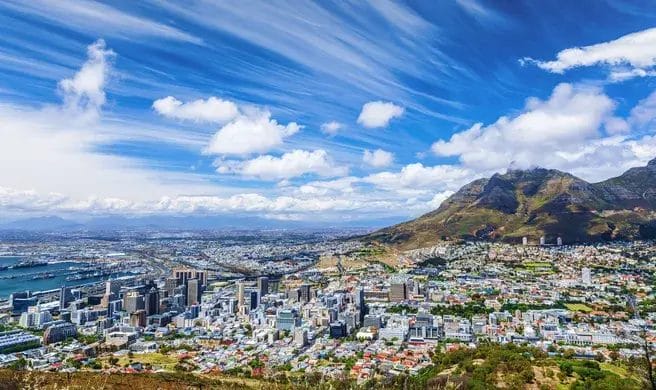
The Ultimate 48 Hours in Cape Town

Planning a trip to Cape Town but pressed for time? Explore the city in 48 hours and enjoy its renowned beaches, culinary and wine experiences, and outdoor activities.

Here’s your guide to experiencing the city like a local:

DAY 1

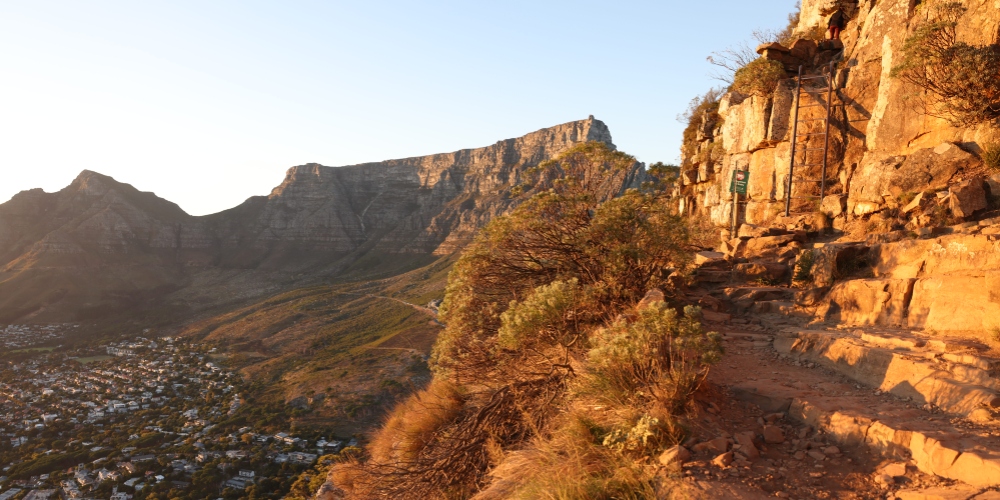
Lion's Head is a popular hike in Cape Town- known for its stunning views of the city.

5 am: Hike Up Lion’s Head

Set your alarm early and head out for a morning climb up Lion’s Head; it’s one of those adventures that’s absolutely worth the effort. The trail winds upwards with spectacular views at nearly every turn, so you’ll want to take your time and savour it all. Aim to reach the top by sunrise and bring breakfast, snacks, and water. At the summit, you’ll see the Atlantic, the City Bowl, and Table Mountain spread out below.

9 am: Breakfast at Truth Coffee

Need a caffeine fix after your hike? Truth Coffee is recognised as one of the most beautiful coffee shops in the world. Imagine a steampunk-inspired interior with high ceilings, intricate copper detailing, and vintage machinery. As you sip your artisanal, in-house-roasted coffee, take in the artistic atmosphere. Truth boasts an extensive menu, offering everything from sweet treats and breakfast dishes to salads and sophisticated cocktails. We recommend picking up a few of their signature coffee blends to take home.

Location: 36 Buitenkant St, Cape Town City Centre

Website: www.truth.capetown/

12pm: Bo-Kaap

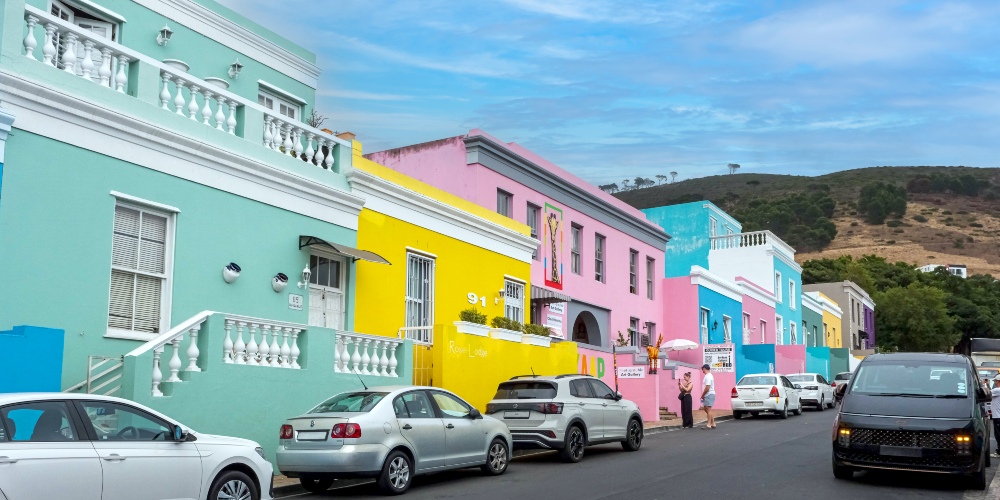
Explore Bo-Kaap's rich history and heritage.

After breakfast, explore the vibrant streets of Bo-Kaap. Located at the foot of Signal Hill on the edge of the city centre, this historic neighbourhood, once known as the Malay Quarter, dates to the 1760s, when rows of “huurhuisjes” (rental houses) were built and leased to enslaved people. Many of these residents, later recognised as Cape Malays, were brought from Malaysia, Indonesia, and other parts of Africa, and their cultural influence continues to shape the neighbourhood today.

Now one of Cape Town’s most culturally vibrant districts, Bo-Kaap is celebrated for its colourful houses, heritage, and cuisine. Visit Bo-Kaap Deli to sample a traditional koesister, explore the Bo-Kaap Museum to discover the stories of the pioneers who shaped the area, or join a cooking class with residents to learn how to prepare authentic Cape Malay dishes.

1.30 pm: Lunch at Bree Street

One of the trendiest streets in the city, Bree Street, is lined with an eclectic mix of restaurants — ranging from artisanal pizzas and gourmet burgers to international cuisines and modern fine dining. Beyond the eateries, you’ll also discover a variety of boutique shops and local designers, perfect for browsing fashion and exploring the city’s creative side.

5 pm: Atlantic Seaboard

Cape Town’s beaches and sunsets never fail to impress. Visit Camps Bay, where palm trees line the promenade and the Twelve Apostles mountain range creates a stunning backdrop. Clifton’s beaches, just a short drive away, boast soft white sands and turquoise waters. They are truly some of the best city beaches you’ll find.

Along this stretch, you’ll also come across a few tidal pools perfect for a quick dip. As the afternoon draws to a close, visit one of the stylish cocktail bars or restaurants along the Camps Bay strip, such as Café Caprice, Chinchilla by Kove Collection, and The Lawns at the Roundhouse. Trust us, the sunset here is definitely worth staying for!

DAY 2

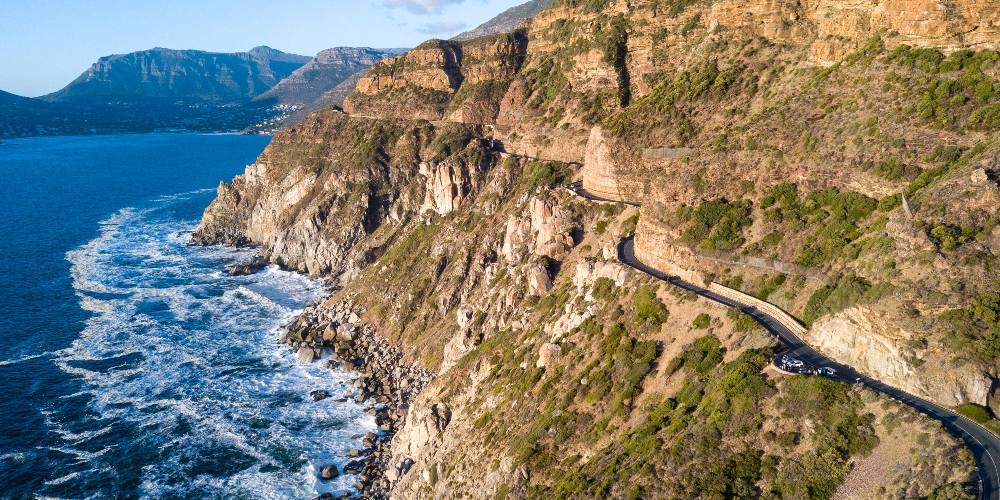
One of the world's most scenic drives - Chapman's Peak.

8 am: Chapman’s Peak

Start your day early with a drive along Chapman’s Peak Drive, one of the world’s most celebrated scenic routes, offering stunning coastal views at every bend. Throughout the journey, there are plenty of spots to stop for photographs or to enjoy a pre-packed picnic breakfast while admiring the dramatic cliffs and sparkling Atlantic below.

10 am: Boulders Beach

You cannot miss a trip to Boulders Beach, the only place in the world where you can get close to African penguins in their natural habitat. Recently named the World’s Best One-of-a-Kind Beach and ranked among the Top 10 Best Beaches in the World at the Tripadvisor Travelers’ Choice Awards 2026, it’s easy to see why. Take a dip, take a few photos, and watch the penguins waddle and swim… always from a respectful distance to protect these charming little residents.

11.30 am: Cape Point

Continue south into the wild beauty of Cape Point and the Cape of Good Hope. At Cape Point, one of Cape Town’s Big 6 attractions, you can hike along scenic trails, ride the Flying Dutchman Funicular to the lookout point, climb up to the historic lighthouse, and follow the shipwreck trail to see some of the 26 recorded shipwrecks scattered around the coastline. For lunch, stop at Two Oceans Restaurant to enjoy seafood and the stunning views.

Location: Cape Peninsula

Website: capepoint.co.za/

3 pm: Wine Tasting at Groot Constantia

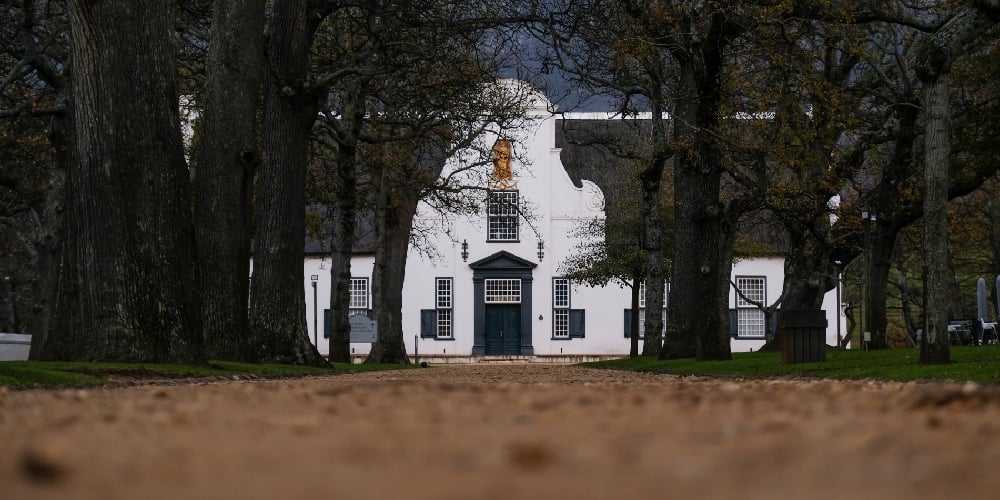
No trip to Cape Town is complete without visiting South Africa’s oldest wine-producing farm, Groot Constantia. There are various tasting options tailored to your preferences, including wine and chocolate pairings.

Location: Groot Constantia Rd, Constantia

Website: grootconstantia.co.za/

6 pm: SPYCED Restaurant

Wrap up your trip with a feast at SPYCED Restaurant, where Cape Malay flavours meet live Cape Town jazz. Expect an evening of local cuisine, drumming, and music, and end the night with some dancing.

Location: Ground floor, Silo 4, Silo District, S Arm Rd, Victoria & Alfred Waterfront

Website: spyced.co.za/

The post The Ultimate 48 Hours in Cape Town appeared first on Cape Town Tourism.

Knowledge Katti: The Architect Behind Namibia’s Energy Breakthrough

From policy influence to offshore dealmaking, the African Energy Chamber recognizes Namibian energy pioneer Knowledge Katti for his role in positioning Namibia as one of the world’s most compelling new energy frontiers
CAPE TOWN, South Africa, April 15, 2026/ –&nbspThe rise of Namibia as one of the world’s most closely watched oil and gas frontiers did not happen by accident. Long before the wave of supermajors and billion-dollar discoveries, a small group of local pioneers were working to position the country as a serious player in global energy markets. Among them, Knowledge Katti stands out for both the scale of his ambition and the lasting imprint of his work.
Today, Katti serves as Chairman and CEO of Custos Energy and as a Director at Sintana Energy – roles that place him at the center of Namibia’s ongoing exploration and investment story, including some of the country’s most significant recent offshore developments.

Ownership Before Access

Katti’s journey into energy was not conventional. He began his career at PwC (formerly Coopers & Lybrand), where he audited some of Namibia’s largest companies including Rössing Uranium. It was here that he developed a critical understanding of ownership structures – and a growing concern. Namibia’s resources were generating significant value, but that value was largely accruing to foreign shareholders rather than Namibians themselves.

That realization became a defining driver. From early on, Katti focused not simply on participation in the sector, but on ownership – arguing that Namibians needed equity stakes in their natural resources if the country was to fully benefit from its wealth.

Katti’s early efforts to enter the resources sector were met with resistance. At the time, local players were often told they needed foreign partners before they could secure licenses. Meanwhile, junior companies from markets like Canada and Australia were acquiring licenses first and raising capital afterward. Katti challenged this model, advocating for a system that would allow Namibians to lead projects from inception.

A turning point came in the mid-2000s, when he shifted focus offshore. Drawing on extensive research into the Kudu Gas Field and the broader Orange Basin, Katti presented a development vision to Namibia’s Ministry of Industries, Mines and Energy and NAMCOR. His efforts resulted in the award of an offshore license adjacent to the Kudu field – an important breakthrough for indigenous participation in the upstream sector.

To finance this vision, Katti took a step few had attempted before: accessing international capital markets. By listing his company on the Toronto Stock Exchange through a reverse listing that became UNX Energy, he helped establish one of the first Namibian-led, internationally listed oil and gas companies. While early drilling campaigns did not deliver commercial success, the experience laid critical groundwork for future development.

Ownership Before Access

Equally significant was Katti’s role in shaping Namibia’s approach to resource governance. He was an early and vocal advocate for ensuring that the state – through NAMCOR – held meaningful equity stakes in oil and gas projects. This approach helped secure a substantial national position in the Kudu Gas Field and set a precedent for embedding national participation into the structure of future deals.

As the scale of offshore opportunity became clearer, Katti adapted his strategy. Rather than pursuing development alone, he focused on bringing in global partners with the technical and financial capacity to unlock Namibia’s deepwater resources. Through sustained engagement and dealmaking, he played a catalytic role in attracting companies such as Shell, TotalEnergies, ExxonMobil, Chevron and Galp into Namibia’s offshore basin.

“Knowledge Katti’s strategy of prioritizing local ownership while deliberately attracting top-tier global partners has been truly transformative. It has unlocked significant inflows of international capital and technical expertise, fuelling a surge in exploration activity and leading to major discoveries that have firmly repositioned Namibia within the global energy landscape,” says NJ Ayuk, Executive Chairman of the African Energy Chamber.

Beyond transactions and policy, Katti has also invested in Namibia’s human capital. Over the years, he has supported the education of more than 120 Namibian students, reflecting a long-standing belief that the country’s energy future must be built on local expertise as much as natural resources.

Today, as Namibia enters a new phase of development – marked by large-scale discoveries and growing investor interest – the foundations laid over the past two decades are becoming increasingly visible. The country’s emphasis on local participation, its ability to attract global partners and its expanding talent base all reflect a broader vision that has been years in the making.

Katti’s contribution lies not only in individual deals or discoveries, but in helping to shape the framework through which Namibia’s energy sector operates. In doing so, he has played a central role in ensuring that the country is not just a destination for investment, but an active participant in its own energy future.

Distributed by APO Group on behalf of African Energy Chamber.

Exit mobile version