LILONGWE-(MaraviPost)-The Chairperson of Malawi’s Public Accounts Committee (PAC), Steve Malondera, has accused lawyer Alex Kamangira of attempting to influence the outcome of the committee’s inquiry into the Amaryllis Hotel purchase.
Malondera was responding to a complaint Kamangira made to the Anti-Corruption Bureau (ACB), requesting an investigation into an alleged K65 million payout to the committee aimed at swaying the inquiry’s outcome.
The complaint has sparked a heated exchange between the two, with Malondera alleging that Kamangira’s actions are an attempt to undermine the committee’s work.
Malondera said he had clearly told Kamangira that the nation was watching the inquiry and expected accountability, and that it was unacceptable for him to personally clear anyone involved in the Amaryllis Hotel deal.
Malondera’s comments suggest that Kamangira’s involvement has raised concerns about potential interference in the inquiry.
Malondera alleged that Kamangira had demanded access to the report, but he had refused, citing the need to maintain the committee’s independence.
He claimed to have evidence of a message Kamangira sent, which he would use to confront the lawyer publicly at an appropriate time.
The PAC chairperson emphasized that it was unacceptable for anyone to try to influence a committee inquiry to protect friends or cronies.
He said many of the questions Kamangira raised in a WhatsApp call had already been asked by other committee members during the Attorney General’s appearance, suggesting that the lawyer’s involvement was unnecessary.
The ACB has acknowledged receipt of Kamangira’s claims, indicating that an investigation may be launched into the alleged K65 million payout.
The development has added to the controversy surrounding the Amaryllis Hotel inquiry, which has been marred by allegations of impropriety and corruption.
The inquiry is ongoing, and Malondera has vowed to ensure that those responsible for any wrongdoing are held accountable.
The outcome of the inquiry is eagerly awaited, with many Malawians calling for transparency and accountability in government dealings.
Geneva, Switzerland, 09 April 2026- /African Media Agency (AMA)/- On World Health Day 2026, under the theme “Together for health. Stand with science,” the World Health Organization (WHO) is highlighting individuals who use science to improve lives across the African Region.
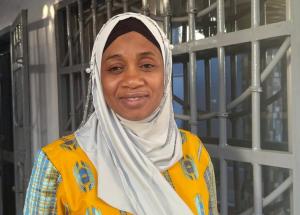
A specialist in hepatology and gastroenterology at Donka National Hospital in Conakry, and a lecturer and researcher at the Gamal Abdel Nasser University of Conakry, Dr Kadiatou Diallo dedicates her work to improving hospital care using scientific evidence. Working at the intersection of clinical practice, teaching and research, she promotes an evidence-based approach to care that is adapted to local realities and accessible to all.
Why is science essential today to improving the quality of hospital care? Science is a central pillar of modern healthcare. It has driven progress across many medical fields and enabled the development of new tools and treatments to manage complex conditions. In a hospital setting, every decision matters and can have a direct impact on patients’ lives.
Relying on scientific evidence makes it possible to use care protocols that have been proven safer and more effective. It also helps reduce medical errors and limits practices based solely on experience or intuition. Thanks to modern tools such as medical imaging, advanced laboratory tests and clinical decision-support systems, health professionals are better equipped to make informed decisions. Ultimately, science supports more standardized and equitable care, which is especially important in settings with limited resources.
Which recent scientific advances inspire you most in your field? The pace of scientific progress and its tangible impact on patients’ health are a strong source of motivation and hope. In digestive and liver diseases, advances have been particularly significant.
For example, advances in digestive endoscopy now make it possible to better diagnose and treat certain conditions affecting the stomach, intestines or liver—sometimes without the need for major surgery. Interventional treatments, whether endoscopic or radiological, offer more targeted solutions for inflammatory, vascular or tumour-related diseases.
In addition, research into the gut microbiome—the community of micro-organisms living in our intestines—is opening new perspectives, particularly for conditions such as irritable bowel syndrome. We are also gaining a better understanding of the role of nutrition in preventing liver diseases, including fatty liver disease. Finally, the gradual integration of artificial intelligence is helping physicians interpret certain tests more accurately and quickly.
What is needed to ensure that scientific data are used more consistently in hospital decision-making? Several elements are essential. First, it is crucial to train health workers to understand and apply scientific evidence in their daily practice. Second, access to information must be improved—through digital platforms, subscriptions to scientific journals and partnerships with research institutions.
It is also important to strengthen hospital information systems so that locally generated data can be better collected and analysed. These data can then be used to engage with health authorities and advocate for decisions that are better aligned with population needs. In short, three pillars are key: skills, tools and institutional commitment.
As a lecturer and researcher, how do you encourage students to rely on science? Above all, I try to instil a scientific mindset. I encourage them to ask simple but essential questions: why conduct this research, and what evidence supports a given practice? I also emphasize the importance of combining scientific data with clinical experience and the values of patients and communities.
I encourage students to take part in seminars, workshops and research projects to develop their critical thinking and curiosity. Lastly, I help them understand that science is a tool that empowers them and strengthens their role within the health system—particularly in adapting interventions to local realities.
What message would you like to share with young women who want to pursue careers in medical sciences and research? I would like to tell them this: your place is here, and it matters. Believe in your potential. Research is not reserved for an elite; it is open to those who are committed and persistent. Science needs women to better understand the health challenges affecting families and communities.
Surround yourselves with mentors, aim high and do not set limits for yourselves. Leading projects, publishing research, innovating or teaching is possible while balancing professional, family and social life. Research is much more than a career—it is a space for impact, discovery and leadership.
The Two Oceans Marathon is returning to Cape Town on 11 and 12 April 2026. Whether you’re running or cheering from the sidelines, here’s everything you need to know about road closures, traffic, and parking so you can plan a stress-free weekend.
The annual race features a 56-kilometre ultramarathon and a 21-kilometre half-marathon, attracting thousands of participants from across South Africa and around the world. It is one of the most eagerly anticipated events on Cape Town’s sports calendar.
Road Closures
Certain roads will be closed or have restricted access from Friday, 10 April to Sunday, 12 April 2026.
Do not stand in roadways or interfere with runners.
Plan ahead if you need to travel through the race route.
Traffic from False Bay to the City
Travel before 5:30 am or after 8:45 am. Alternatively, use Ou Kaapse Weg, which will operate a Stop/Go system for both vehicles and runners between 6:15 am and 9:00 am.
Residents along the route
Please refrain from parking along the race course and use alternative side streets. The affected areas include:
Main Road from Newlands to Muizenberg.
Main Road from Atlantic Road, Muizenberg, through St James and Kalk Bay, to just beyond Clovelly Road in Fish Hoek.
Kommetjie Road from 17th Avenue to the Fish Hoek Circle at Main Road (one lane will be coned off for runners).
Detours
Traffic to or from Hout Bay via Constantia Nek will be rerouted through Valley Road and Disa River Road.
A Stop/Go system will be in place on Hout Bay Main Road between Disa River Road and Constantia Nek.
The M3 Northbound right lane (between Rhodes Drive and UCT) will stay open.
Travel
Parking
Designated areas are within walking distance of the start venue. Key locations include Groote Schuur High School and Groote Schuur Primary fields (pre-paid tickets available at the expo).
On foot
Follow clearly marked pedestrian routes from parking areas, UCT campus, Cavendish, and other drop-off points.
E-hailing / Ride-share drop-offs:
From CBD: Main Rd & Rouwkoop Rd From Claremont: Main Rd & Draper
Exploring Cape Town?
Want to turn your stay here into a trip? Cape Town offers plenty to explore before and after the race. Visit our website for travel ideas and local attractions. Car rentals: Check out Around About Cars for convenient options.
LILONGWE-(MaraviPost)-Members of Parliament (MPs) have paid tribute to former President Bingu wa Mutharika, describing him as a unifying leader whose legacy continues to shape Malawi 14 years after his death on April 5, 2012.
Minister of Information Shadreck Namalomba said the country still benefits from Mutharika’s vision, calling it “a foundation for Malawi’s development and self-reliance.”
In Parliament, Dowa West legislator Richard Chimwendo Banda led the tributes, praising Mutharika for governing without segregation and promoting unity among all Malawians.
Mulanje Central MP Patricia Kaliati echoed the sentiments, highlighting his inclusive leadership, while Karonga Central’s Frank Mwenifumbo commended his emphasis on love and national cohesion.
Born in 1934 in Thyolo District, Mutharika rose to power in 2004 under the Democratic Progressive Party.
His administration is credited with the Farm Input Subsidy Programme, which boosted food security, alongside notable progress in economic growth, infrastructure, and HIV/AIDS treatment.
Lawmakers said his legacy goes beyond development, urging current leaders to emulate his commitment to unity, inclusivity, and national progress.
NEW YORK-(MaraviPost)-NASA’s Artemis II astronauts have shared stunning images of the Moon’s far side, captured during their historic flyby on April 6, 2026.
The crew, consisting of Reid Wiseman, Christina Koch, Victor Glover, and Jeremy Hansen, flew closer to the Moon than any humans have in over 50 years, marking a significant milestone in space exploration.
The astronauts took to social media to share their breathtaking photos, offering a glimpse into the Moon’s rugged terrain and uncharted landscapes.
The images showcase the Moon’s far side, including the Orientale basin and the Vavilov Crater, providing scientists with valuable insights into the Moon’s geological history.
One of the most striking images is the “Earthset” photo, which captures the Earth rising over the Moon’s horizon.
The image is a poignant reminder of the beauty and fragility of our home planet.
Another remarkable photo shows the Moon eclipsing the Sun, revealing the Sun’s corona in stunning detail.
The Artemis II mission is a crucial step towards returning humans to the Moon’s surface, with the ultimate goal of establishing a sustainable presence on the lunar surface.
The mission is also a testament to international cooperation, with the Canadian Space Agency contributing to the mission through astronaut Jeremy Hansen.
The astronauts’ journey has not only pushed the boundaries of human spaceflight but also inspired a new generation of scientists, engineers, and explorers.
As NASA Administrator Jared Isaacman noted, the images captured by the Artemis II crew are “absolutely stunning” and will inspire generations to come.
The Artemis II crew is currently on their way back to Earth, with splashdown expected on April 11, 2026.
Their journey marks a significant milestone in humanity’s quest to explore the cosmos and paves the way for future lunar missions.
Geneva, Switzerland, 08 April 2026- /African Media Agency (AMA)/- On World Health Day 2026, under the theme “Together for health. Stand with science,” World Health Organization (WHO) is highlighting individuals who use science to improve lives across the African Region.
A paediatrician and public health expert based in Cameroon, Professor Anne Esther Njom Nlend explains how science helps protect health—especially for mothers, newborns and children. Drawing on concrete examples from the African context, she illustrates how scientific evidence guides medical decisions, saves lives and supports sustainable progress.
Why is it important for everyone to understand the role of science in health? Science is the foundation of quality healthcare. While caring for patients requires experience and compassion, medical decisions must be based on reliable, up-to-date evidence—an approach known as evidence-based medicine. This helps ensure that every intervention delivers more benefits than risks, while also taking into account safety, patient acceptance and cost.
Through research, treatments, vaccines and prevention methods are tested, assessed and continuously improved. Interventions are recommended only after demonstrating their effectiveness and safety through rigorous evaluation. These findings are then translated into guidelines used by health professionals to improve both life expectancy and quality of life.
How do data and research improve day-to-day decisions for mothers and newborns? Medical recommendations are based on different levels of scientific evidence. Today, the most reliable data come from large studies and analyses that combine findings from multiple trials, making it possible to compare interventions and select those that are most effective.
In maternal and newborn health, research has helped adapt practices to local realities. For example, studies show that kangaroo mother care—which involves skin-to-skin contact between a newborn and the mother—significantly improves survival among low-birth-weight babies.
For HIV, evidence shows that when a mother adheres to treatment and the virus is undetectable in her blood, the risk of transmitting HIV to her child—even during breastfeeding—is very low.
What are the main remaining barriers to children’s access to quality healthcare in the region? There are several barriers. The most common is financial: even when services are available, some families struggle to access them. Geographic constraints also play a role, alongside social and cultural factors that influence care-seeking behaviour.
Experience shows that reducing costs increases the use of health services; however, this alone is not sufficient. Misinformation, false beliefs or mistrust of certain interventions—such as vaccination—can also limit access. This is why clear communication, community engagement and active listening are essential, alongside a well-functioning health system that avoids shortages of medicines and supplies.
What major advances has research enabled in Africa, particularly in paediatric HIV and newborn health? Progress has been significant. In Africa, research has contributed to a substantial reduction in new paediatric HIV infections. Thanks to improved treatments and the “test and treat” approach, the number of new infections among children has declined markedly. Today, children born with HIV can grow up, reach adulthood, start families and have HIV-negative children. This represents a major public health achievement made possible by science.
In newborn health, maternal vaccination has nearly eliminated neonatal tetanus. Other simple, evidence-based practices—such as hand hygiene, delayed clamping of the umbilical cord and training in neonatal resuscitation—have also contributed to improved newborn survival.
What can each person do to support better health for all? Health begins in the community. Everyone can play a role by adopting healthy behaviours, including good hygiene practices, seeking care early and protecting themselves from disease.
It is also important to rely on trustworthy sources of information, counter misinformation and support local health initiatives. Communities also have a role in engaging with and monitoring research projects conducted with them, as they are the first to benefit from the results.
As WHO emphasizes, achieving health for all requires standing together—and standing with science.
LILONGWE-(MaraviPost)-The Public Accounts Committee (PAC) of Parliament has resolved to extend its work by one month to allow engagement with stakeholders who were not initially consulted in the Amaryllis Hotel inquiry.
The committee is investigating the Public Service Pension Trust Fund’s MK128.7 billion acquisition of the Amaryllis Hotel.
On Tuesday, the government side said it would not allow the committee to present its report without first summoning former Secretary to the President and Cabinet Colleen Zamba, along with officials from Yusuf Investment.
PAC Chairperson Steven Malondera said there has been a lot of background noise surrounding the matter and indicated he had been advised not to comment further.
He maintained that the committee acted within its mandate and did not misbehave.
He said the committee expects to complete its work after the additional month, describing proposals to form an ad hoc committee to continue the inquiry as unfair.
For more than four decades, Faldielah “Aunty Diela” Gamildien has stood among the bright blossoms at the Adderley Street Flower Market, greeting customers with an infectious smile and a bouquet always close at hand.
She first arrived at the market aged just 15, helping her mother pack flowers and clean the stalls while learning the rhythms of the century-old market. Today, the Grassy Park local can craft just about any bouquet you can imagine. But for Aunty Diela, flowers are more than just items to sell.
“Flowers are not just flowers. They’re for birthdays, weddings, funerals… for love.”
“When people are happy, they buy flowers. When they are sad, they also buy flowers,” she says. “So, I see everything.”
Here’s how she spends her ideal day in Cape Town:
Adderley Street Flower Market
As South Africa’s oldest flower market, with a history of over 150 years, the Adderley Street Flower Market is full of colour, scent, and local charm. Located at Trafalgar Place, visitors can wander through an alleyway lined with fresh blooms, from roses to proteas and everything in between.
You can find almost any kind of flower at the market, including aunty Diela’s favourite: the stargazer lily. Bouquets can be mixed and matched to your preference. And if you ask politely, the aunties might “make a plan” to get you the best deal at the market.
“The flower market is like a family. We look after each other here,” adds Aunty Diela.
Location: 13 Adderley Street, Cape Town City Centre, Price: From R30
The Company’s Garden
When Aunty Diela needs a break from the hustle and bustle of the flower market, she takes a short walk to Company’s Garden, the oldest park in South Africa. There, she finds a quiet bench and takes a moment to enjoy the beauty of the space.
“Just five minutes here, and I feel calm again,” she says.
No visit is complete without spotting the resident squirrels that roam around the garden.
“The squirrels are the real bosses here!” she chuckles.
Cape Town City Hall is one of the city’s most renowned landmarks, celebrated for its striking architecture and historic significance. It is also the place where Nelson Mandela delivered his first public speech after being released from prison in 1990.
“I was one of the people who lined up in the crowd to see Mandela. It was a very special moment for us,” Aunty Diela recalls.
Today, visitors can explore City Hall and enjoy numerous photo opportunities along the way. On the second floor, the Nelson Mandela in Cape Town – Legacy Exhibition features interactive displays, audio-visual clips, and panels that reveal more about Mandela’s connection to the city. At the Attic Exhibition on the third floor, you’ll find a collection of art and artefacts that tell the story of Cape Town over the years, from water and electricity to railways. It also explores //Hu!gaeb, the original home of the Khoi, and the different places of faith.
Location: Darling St, Cape Town City Centre Price: Free entry Website:www.capetown.gov.za
Eastern Food Bazaar
When it’s time for a bite to eat, Aunty Diela goes to her favourite food spot in the city centre: Eastern Food Bazaar. This lively place is known for its mix of flavours, including Indian, Chinese, and Turkish street food all under one roof.
“My favourite order is the butter chicken,” she says. “You get big food for a good price.”
Location: 96 Longmarket St, Cape Town City Centre Price: Various Website:easternfoodbazaar.co.za/
BLANTYRE-(MaraviPost)-The Human Rights Consultative Committee (HRCC) has come out strongly in defence of National Bank of Malawi (NBM), arguing that the Bank acted within the law in the controversial K5 billion cash withdrawal saga linked to the sale of Amaryllis Hotel.
HRCC chairperson Robert Mkwezalamba said it is misleading to place blame on the Bank when regulatory institutions that were duly informed failed to act.
“National Bank followed procedure. They verified the transactions, confirmed with the account holder, and notified the relevant authorities. At that point, their legal obligation was fulfilled,” said Mkwezalamba.
The K5 billion cash withdrawals, now under parliamentary scrutiny, have raised serious questions about the role of oversight bodies, particularly the Financial Intelligence Authority (FIA), which reportedly received prior alerts on the transactions but did not intervene.
According to information emerging from the probe, NBM officials reportedly contacted FIA ahead of the large cash withdrawals, including the K1.5 billion transactions conducted on two separate occasions in January 2026.
Mkwezalamba stressed that banks are not law enforcement agencies and cannot arbitrarily block legitimate transactions.
“A bank cannot refuse to honour a customer’s cheque without lawful justification. If anything, the law compels them to pay on demand once due diligence is satisfied. The responsibility to investigate suspicious transactions lies with enforcement agencies like FIA,” he said.
The HRCC chairperson further warned against what he described as a growing tendency to scapegoat institutions that operate within the confines of the law while ignoring failures by those mandated to act.
“We must be careful not to criminalise compliance. If the bank alerted authorities and no action was taken, then accountability must start with those who had the power to investigate and intervene,” said Mkwezalamba.
The controversy has been further inflamed by revelations that former FIA Director General Jean Piriminta was dismissed after allegedly leaking CCTV footage of the transactions, which reportedly show high-profile individuals, including State House-linked operatives, involved in the cash withdrawals.
Mkwezalamba said the focus must now shift to institutional accountability and systemic reform.
“This issue is bigger than one bank. It exposes gaps in our financial oversight systems. The question Malawians should be asking is: why were red flags ignored?”
The HRCC has since called for a transparent and impartial investigation into the matter, urging Parliament and relevant agencies to establish the full facts without political interference.
As pressure mounts, the unfolding scandal continues to test the credibility of Malawi’s financial governance systems, with NBM now finding unlikely support from civil society voices insisting the bank may have simply done its job.
LILONGWE-(MaraviPost)-The Human Rights Consultative Committee (HRCC) has come out strongly in defence of Malawi’s judiciary, warning that growing claims portraying presidential pardons as proof of innocence are not only misleading but pose a serious threat to public confidence in the rule of law.
According to HRCC Board Chairperson Robert Mkwezalamba, a presidential pardon granted under Section 89 (2) of the Constitution of the Republic of Malawi is an executive act of clemency exercised on humanitarian or public interest grounds.
The statement comes in response to recent remarks by convicted businessperson Thompson Mpinganjira, who suggested that his presidential pardon signified innocence and invalidated his conviction.
HRCC has firmly rejected this interpretation, stressing that such assertions undermine public confidence in the rule of law.
It does not, he emphasized, constitute a judicial determination of innocence nor nullify a conviction.
“Any claim that a pardon proves innocence is legally incorrect and represents a misinterpretation of constitutional powers,” the statement reads.
“The authority to determine guilt or innocence lies solely with the courts, as provided under the doctrine of separation of powers.”
HRCC further noted that Mpinganjira was duly tried and convicted by a competent court in accordance with Section 42 of the Constitution, which guarantees the right to a fair trial.
The organization underscored that the conviction remains valid unless overturned through established legal processes such as an appeal or judicial review.
The committee expressed concern that public statements challenging the legitimacy of court rulings particularly by influential individuals risk eroding trust in both the judiciary and constitutional institutions.
It described such remarks as an attack on the administration of justice and a threat to the principles of accountability and legal order.
“Malawi is founded on the rule of law and constitutionalism,” HRCC stated.
“The same legal framework that ensures fair trial rights also provides avenues such as appeals and bail pending appeal. These mechanisms must be respected.”
While acknowledging the President’s constitutional prerogative to grant pardons, HRCC cautioned against politicizing or misrepresenting such powers.
It warned that continued mischaracterization of pardons could bring both the Office of the President and the judiciary into disrepute.
The organization also suggested that persistent statements undermining judicial outcomes could prompt calls for reconsideration of the pardon itself, though it did not indicate any formal action in that regard.
HRCC concluded by urging restraint and responsibility in public discourse, emphasizing that a pardon relieves punishment but does not erase a finding of guilt.
“We must not allow status or wealth to overshadow the fundamental laws that govern our nation,” the statement said.
“Respect for judicial processes and constitutional order is essential to maintaining public trust and national integrity.”
Malawi breaking news and World News. News about Malawi, Malawi Business, Malawi Tourism, Malawi Politics, Malawi News, World and Africa Top News.