How community shelters protect children and help women restore degraded lands in Niger

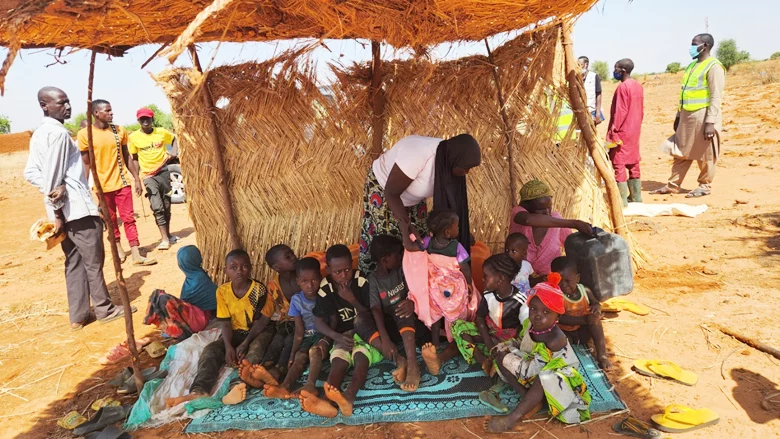
Community-built shelter in Tillaberi. Credit: Attou Moutari.

Washington, USA, 03 April 2026 -/African Media Agency (AMA)/- Community-built shelters in Niger are enabling mothers to participate in land restoration work by providing shaded spaces for their children, protecting them from extreme heat and environmental hazards.
The initiative has led to the construction of 662 shelters across six regions, safeguarding 6,465 children and allowing women to focus on earning income and supporting their families.
This practical solution not only improves household livelihoods but also advances women’s economic empowerment, transforming a structural barrier into a pathway for resilience and community development.

The Issue: An impossible choice

In the sun-scorched landscapes of Niger, where temperatures can reach 45°C (113°F), a quiet but powerful shift is underway. It’s not just about restoring the land—it’s about enabling the women who sustain their families and communities to work safely and earn an income. A simple, community-built shelter has helped remove a barrier that kept many mothers from participating in land restoration: childcare in extreme heat.

In 2023, the Integrated Landscape Management Project (PGIP), an environment and natural resources management project financed by the World Bank through IDA credit, launched a large Cash for Work program to help rural communities restore degraded lands and build resilience to climate change. As implementation moved forward, the team saw a human hurdle: women with young children faced an impossible daily choice. Formal childcare options were scarce. Many mothers brought infants and toddlers—some as young as one year old—to the worksites, exposing them to intense sun, dust, and high winds. The risks ranged from dehydration to insect and snake bites. Mothers worried about safety and health, and their participation—and earnings—suffered.

The Solution: Community-built shelters (“hangars”)

The team listened to women and worked with local leaders to test a practical, culturally rooted solution: build shaded shelters near worksites and ask trusted “village grandmothers” to supervise the children. These hangars use local materials—wooden poles, straw, and planks—and create cool, protected spaces where children can rest and play while their mothers work nearby. Community selection of elder caregivers created trust and accountability, while keeping the model simple, affordable, and easy to maintain.

The Impact

Immediate and transformative results came quickly. To date, 662 shelters have been built across six regions, providing safe spaces for 6,465 children. By removing a basic barrier—safe childcare in extreme heat—the project unlocked women’s participation in cash-for-work activities and helped stabilize household incomes. Communities report greater peace of mind for mothers and better focus on work when children are safe and close by.

Community-built shelters are playing a pivotal role in advancing Niger’s job agenda by removing a critical barrier to women’s participation in land restoration work. By providing safe spaces for childcare, these shelters allow mothers to take part in Cash for Work programs, increasing the workforce and directly supporting household incomes. This access not only expands employment opportunities for women but also enhances their ability to contribute economically to their families and communities.

The initiative fosters skills development and community cohesion. As women are freed from the constraints of childcare during working hours, they can engage more fully in restoration activities, gaining practical experience and confidence. This strengthens their position in the labor market and promotes broader inclusion, making access to jobs more equitable and sustainable for rural communities.

Governance and sustainability

To sustain the model, existing village structures—Site Management Committees (COGES) and Grievance Redress Committees (CGP)—handle logistics, upkeep, and any concerns. This light-touch governance reinforces community ownership and keeps the shelters practical and responsive.

What’s next: Adapting and improving

The project is developing mobile shelters—lightweight, detachable units that can move with worksites as activities shift seasonally. These will remain cost-effective and compliant with environmental and social standards, with attention to child health and safety. Existing shelters will be upgraded with mats, simple toys, picture books, and water trays, making the spaces more comfortable and stimulating. “Village grandmothers” will receive basic training in child protection, hygiene, and caregiving to strengthen care quality without complicating the model.

This is a straightforward lesson in inclusive development: when we remove everyday social barriers, climate and livelihoods projects go further. In Niger’s heat, childcare became the decisive factor in women’s participation. A low-cost, community-led solution turned a risk into a result—protecting children, increasing women’s earnings, and improving the effectiveness of land restoration.

Beyond one project, the hangar model offers a practical blueprint for public works and climate resilience operations. It shows how integrating simple social measures—from trusted caregivers to grievance channels—can elevate outcomes and expand who benefits, especially in contexts of extreme heat and limited services.

This approach is affordable, replicable, and rights-respecting. Most importantly, it helps women work safely and earn, while children stay protected—an inclusive path to climate resilience that can be scaled.

Distributed by African Media Agency (AMA) on behalf of Word Bank Group.

This initiative is part of the Integrated Landscape Management Project (PGIP), which is part of the Sahel RESILAND Program and is implemented by the Government of Niger with the technical and financial support of the World Bank, PROGREEN, and PROBLUE.

The post How community shelters protect children and help women restore degraded lands in Niger appeared first on African Media Agency.

Senegal and Nigeria Deepen Energy Ties as Ministerial Visit Signals New Era of African Collaboration

A high-level working visit between Senegal and Nigeria is laying the groundwork for deeper cooperation in refining, gas monetization, policy development and intra-African energy trade
JOHANNESBURG, South Africa, April 2, 2026/ –&nbspSenegal and Nigeria are strengthening bilateral energy cooperation following a high-level working visit by Senegal’s Minister of Energy Birame Soulèye Diop and representatives from national oil company (NOC) Petrosen to Abuja this week. The Senegalese delegation met with Nigeria’s Minister of State for Petroleum Resources (Oil) Senator Heineken Lokpobiri and the Nigerian National Petroleum Company (NNPC), with the parties committing to strengthening cooperation across various fields. The visit reflects a growing commitment by African producers to work together on refining, policy development, gas monetization and NOC collaboration – a strategy that is expected to strengthen African energy growth and industrialization.
Representing the voice of the African energy sector, the African Energy Chamber (AEC) has welcomed the collaboration, noting that stronger ties between African producers are critical at a time when the continent is seeking to attract investment, build infrastructure and expand intra-African energy trade. Greater cooperation between ministries and NOCs such as Petrosen and NNPC has the potential to support knowledge sharing, strengthen institutional capacity and accelerate the development of strategic projects across the oil and gas value chain, from upstream production to refining and gas commercialization. The collaboration also comes as African countries work to operationalize the Africa Energy Bank, with Senegal having already paid its capital contribution and positioning itself as an active participant in financing African energy projects.

“This is exactly the kind of collaboration Africa needs. When countries like Senegal and Nigeria work together – sharing knowledge, building infrastructure, strengthening NOCs and improving policies – we create an environment where investment can thrive and where Africa can take control of its energy future. Strong partnerships between African nations will be the foundation of energy security, industrialization and economic growth across the continent,” states NJ Ayuk, Executive Chairman, AEC.

The collaboration comes as a pivotal time for West Africa, with both Senegal and Nigeria looking at expanding their respective upstream and downstream markets. For Senegal, collaboration with Nigeria could serve as a catalyst for stronger governance structures and streamlined licensing procedures, enhancing the country’s attractiveness for foreign capital as it looks to scale production and bolster regional trade. Recent milestones have not only positioned Senegal as a producing market but demonstrated its potential for scalable investments.

Following the start of operations at the Sangomar oilfield and Greater Tortue Ahmeyim (GTA) LNG development in 2024 and 2025 respectively, Senegal has been working to scale output. Sangomar production has stabilized at around 100,000 bpd, with 36.1 million barrels generated in 2025 alone. From February 2025 to February 2026, GTA exported 24 LNG cargoes, alongside 1.6 million barrels of condensate marketed internationally.

Looking ahead, the country is looking at expanding both facilities, while advancing the development of the Yakaar-Teranga offshore project. The country is also looking at monetizing onshore resources. Petrosen has launched a $100 million exploration campaign targeting underexplored onshore basins, with goals to identify new crude discoveries by late-2026 through seismic acquisition, basin modeling and exploratory drilling programs.

Nigeria, meanwhile, remains Africa’s largest oil producer and is pursuing ambitious production targets of around 2 million bpd while simultaneously expanding its gas and refining sectors. To achieve this goal, the country rolled out a 2025 licensing round featuring 50 frontier and one deepwater block. The round targets $10 billion in investment over the next decade. In tandem, the country is re-engaging IOCs in deepwater exploration, with Chevron, ExxonMobil and Shell all advancing offshore projects. The NNPC is also pursuing an ambitious upstream drive, targeting $30 billion in investments by 2030.

Downstream, the country is looking at expanding the 650,000 bpd Dangote Refinery’s capacity to 1.4 million bpd, while the issuance of Permits to Access Flare Gas to 28 awardees in December 2025 is set to unlock $2 billion in gas investments. Cooperation with Senegal therefore aligns with Nigeria’s broader strategy of strengthening African energy markets while expanding regional trade in both crude and refined products.

The strengthening of ties between Senegal and Nigeria signals a broader shift taking place across Africa’s energy sector, where collaboration – rather than competition – is increasingly being seen as the key to unlocking investment, developing infrastructure and ensuring long-term energy security. By working together on refining, gas monetization, policy development and energy financing, Senegal and Nigeria are helping to set a precedent for how African energy markets can grow stronger through partnership, integration and shared strategic objectives.

Distributed by APO Group on behalf of African Energy Chamber.

Lusaka content creator Natasha Msoni jailed for taking videos in court

LUSAKA-(MaraviPost)-A 31-YEAR-OLD ignorant aspiring content creator and ‘journalist wanna-be’ who missed Civic Education lessons and the chance to go to Journalism School to learn about ethics and court proceedings has been sentenced to seven days imprisonment for turning a court session into her own mini ‘Simon Mwewa Lane.’

Natasha Msoni, who probably wanted to shine to her followers on TikTok saying, “hey guys, come with me as I go to court for the first time, ” was caught red handed trying to showcase her videography skills on her phone but unfortunately, her Tik Tok career for the day ended before it could even start.

As proceedings were underway in the honourable court, Msoni was spotted by the Magistrate while making her own session on her phone and was quicky called to answer for her actions like a child caught eating meat from a pot.

Magistrate Paul Namakando then ruled that to put a stop to the disrespect the courts are being subjected to, especially with the coming of unknowledgeable content creators who want to capture everything even when they are in the toilet, she should spend seven days in prison to serve as a detterant to would be offenders.

The court ruled that citizens should respect the rules of the court or revisit their Civic Education books or better still, research before attending a court session.

Msoni was forced to walk the infamous walk of shame while marinated in a bowl of embarrassment all the way from the court room to the holding cell.

UTM leader Kabambe joins faithful in way of the cross devotion

BLANTYRE-(MaraviPost)-UTM president Dalitso Kabambe joined Christians at St. Matthew’s Parish in Nchalo, Chikwawa, to observe the Way of the Cross, a solemn Lenten devotion.

The 14-station event, held at St. Theresa Catholic Church Illovo, brought together members of the Catholic Diocese of Chikwawa in prayer and reflection.

The Way of the Cross, a traditional practice during Lent, commemorates Jesus Christ’s journey to crucifixion, symbolizing his suffering and sacrifice.

Kabambe’s participation underscores the importance of faith and spiritual introspection during this period.

The event, part of the global Christian community’s Lenten observance, aimed to deepen spiritual growth and connection with the faithful.

St. Theresa Catholic Church Illovo, located within Illovo Sugar Malawi premises, hosted the devotion, highlighting the church’s role in fostering community and spiritual guidance.

The Lenten season, a period of prayer, fasting, and charity, prepares Christians for Easter celebrations.

The Way of the Cross is a significant aspect of Malawi’s Christian heritage, with many believers participating in the devotion to reflect on their faith.

Mutharika Govt refuses to remove levies, taxes on fuel to ease prices hike

LILONGWE-(MaraviPost)-President Peter Mutharika’s Democratic Progressive Party (DPP) led-Government has refused to remove levies, taxes on fuel to ease prices hike.

Minister of Energy and Mining Jean Mathanga told the news conference on Thursday that government was not ready to remove levies arguing that the move would crippple development agenda including roads rehabilitation.

Mathanga further noted that levies remain a key component in determining fuel prices.

“While removing some levies could offer temporary relief to consumers, others are critical for supporting national development programs.

“As global uncertainties persist, the government maintains that the current adjustments are necessary to safeguard fuel availability and economic stability, ” defendes Mathanga.

Mathanga response comes after Human Rights Defenders Coalition (HRDC) and Center for Democracy and Economic Development Initiatives (CDEDI) told Mutharika government to remove levies, taxes on fuel to ease prices hike.

While Mutharika government refuses, Malawi’s neighbouring countries have taken the same path to cushion its citizens.

My Cape Town: Rory Avenstrüp

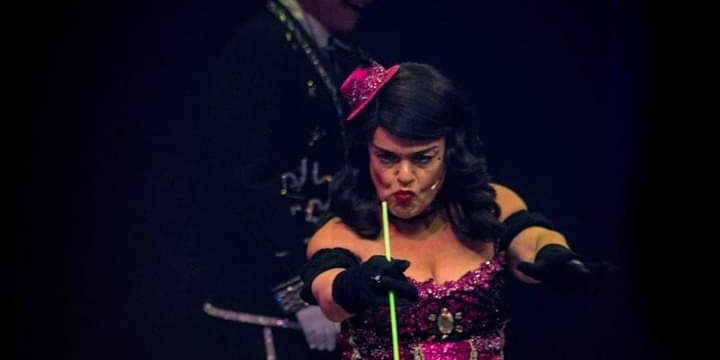
They say dynamite comes in small packages, and it certainly holds true for Cape Town actress and performer Rory Avenstrüp. Known for her infectious energy and signature laugh, Rory is currently captivating audiences at The Royal Countess Zingara, with shows running until May and returning in September 2026. With an impressive run of productions behind her, the actress loves sharing her love for the city with everyone she meets.

“The beauty of Cape Town speaks for itself. We have beaches, mountains, and plenty of activities to enjoy. It really feels like living in paradise. Cape Town is my happy place. It’s home,” she shares.

Here are some of her must-visit attractions in the city:

Artscape Theatre

Artscape is one of Cape Town’s most iconic theatre venues and a place close to Rory’s heart. She has performed there many times and still lights up when she talks about it.

“Theatre is such a beautiful form of self-expression. At Artscape, everything comes alive for me. You can catch so many award-winning productions, from opera and ballet to musicals, drama, hip hop theatre, and comedy,” she explains.

Location: D.F. Malan Street, Foreshore
Price: Various
Website: www.artscape.co.za/

Iziko Planetarium

When Rory needs a break, you’ll find her at the Iziko Planetarium. Known as one of the most advanced digital planetariums on the African continent, visitors can explore the universe with innovative animation and 360° cinema.

“It’s one of those places that helps you reset and makes you realise just how small we are in this vast universe. You get to look at the stars and galaxies and learn about the universe. It’s a special experience.”

Location: Iziko South African Museum, Queen Victoria Street, Gardens, Cape Town
Price: Adults: R90 and children aged 5 to 17: R50.
Website: www.iziko.org.za/museums/planetarium/

Rory Avenstrüp is an actress in Cape Town that is making waves in the theatre scene.

The House of Machines

One of her favourite spots to visit is House of Machines, especially when she’s in the mood for great music and creative cocktails prepared by a team of bartender pirates who know a thing or two about mixing spirits and flavours. This well-established Cape Town venue offers a tasty menu and cocktails. “It’s everything I love in one place. The energy, the people, and the cocktails. Their Old Fashioned is a must try.”

Location: 84 Shortmarket Street, Cape Town Central

Price: Cocktails from R100

Website: thehouseofmachines.com

Roxy Late Night

Rory has been visiting Roxy’s since her days as a drama student. A space for artists, bohemians, musicians, creatives, and free spirits, the restaurant has been a lively spot since opening in 1990. It has been redecorated over the years to feature multiple party areas and an outdoor terrace, yet it remains a fixture on the charming Dunkley Square.

“They serve out-of-this-world food at affordable prices. I love the mac and cheese balls,” she added.

Location: 14 Wandel Street, Gardens
Price: R100-R200
Website: roxylatenight.com/

The post My Cape Town: Rory Avenstrüp appeared first on Cape Town Tourism.

Donald Trump fires Attorney General Bondi amidst controversy over Epstein files

WASHINGTON-(MaraviPost)-US Attorney General Pam Bondi has been ousted from her position, marking a significant shake-up in the Trump administration.

Multiple reports confirm that Bondi’s firing is linked to her handling of the Jeffrey Epstein files, which has been a contentious issue for the administration.

The move comes after weeks of speculation about Bondi’s future, with critics accusing her of mishandling the release of documents related to Epstein, a convicted sex offender.

Bondi had faced criticism from both Democrats and Republicans for not doing enough to hold those involved in Epstein’s crimes accountable.

Bondi’s departure is the second high-profile firing in the Trump administration in recent weeks, following the ouster of Homeland Security Secretary Kristi Noem.

The move has sparked speculation about further changes in the administration, with some sources suggesting that Environmental Protection Agency Administrator Lee Zeldin could be in line to replace Bondi.

The Jeffrey Epstein case has been a thorn in the side of the Trump administration, with many calling for greater transparency and accountability.

Epstein, a financier and philanthropist, was accused of sex trafficking and abuse, and his death in prison in 2019 sparked widespread outrage.

Bondi’s handling of the case has been criticized by lawmakers, including Democratic Representative Jamie Raskin, who accused her of “siding with perpetrators” and ignoring victims.

Bondi had defended her record, saying she was committed to fighting for victims and had done everything possible to address the issue.

The White House has not officially commented on Bondi’s firing, but President Donald Trump has previously expressed frustration with her handling of the Epstein files.

Deputy Attorney General Todd Blanche will serve as acting Attorney General until a replacement is confirmed.

DR Congo breaks 52-year curse to qualify for 2026 World Cup over Jamaica

MEXICO CITY-(MaraviPost)-The Democratic Republic of Congo has secured a place at the 2026 FIFA World Cup after a hard fought 1-0 victory over Jamaica in the early hours of today at Akron Stadium in Zapopan, Mexico.

This historic achievement marks the first time in 52 years that DR Congo has qualified for the global showpiece, having last reached the tournament when the nation was still known as Zaire.

The tightly contested match remained goalless at the end of the regulation 90 minutes, with both sides struggling to break the deadlock despite creating several chances.

As tension grew, the game proceeded into extra time, where fatigue began to take its toll on both teams.

It was in the 100th minute that DR Congo finally found the breakthrough, sending their fans into wild celebrations.

Defender Axel Tuanzebe emerged as the hero, rising high to head home a well delivered corner kick and secure the decisive goal.

The solitary strike proved enough to separate the two sides, as Jamaica failed to respond before the final whistle.

DR Congo’s qualification ends a decades long drought and signals a new chapter for the nation’s football ambitions on the global stage.

Therefore, DR Congo has been drawn into Group K of the FIFA World Cup, where they will face Portugal, Colombia and Uzbekistan.

The 2026 FIFA World Cup will be jointly hosted by the United States, Canada, and Mexico, promising a unique and expanded tournament format.

The competition is scheduled to run from June 11 to July 19, bringing together the world’s best teams for a month long football spectacle.

Tempers fizzle as Zimbabwe leader Mnangagwa’s term extension plan sparks outrage

HARARE-(MaraviPost)-The sun beats down on the streets of Chitungwiza, Zimbabwe’s third-largest urban centre, but it’s the heated debate inside the town’s main aquatic complex that’s really sizzling.

A crowd has gathered, with emotions running high as they discuss a proposed amendment to the country’s constitution.

At the entrance, a woman in a cream floral dress is leading the charge, heckling speakers who support the plan to extend President Emmerson Mnangagwa’s term to 2030.

The amendment, if approved, would change presidential and legislative terms from five to seven years and give parliament the power to elect the president.

The proposal has sparked widespread criticism, with opposition figures accusing the government of trying to cling to power.

Currently, the president is chosen through a popular vote in direct elections and can only serve two terms.

But with Mnangagwa in his second term and his ZANU-PF party dominating parliament, critics fear the amendments could make it harder for anyone outside the party to become president.

The bill is part of the government’s “Vision 2030” development agenda, aiming to transform Zimbabwe into an upper-middle-income economy.

However, critics argue that the changes will only serve to consolidate power and undermine democracy.

Zimbabwe’s cabinet approved the draft legislation in February, and it’s now headed to parliament for debate.

But with the opposition boycotting the public hearings, citing violence and intimidation, the future of the bill remains uncertain.

Exit mobile version