
Libya’s political leaders continue to lag in implementing a roadmap that leads to national elections and unified institutions, the UN Special Representative for the country told the Security Council on Wednesday.
Long hours, stress and harassment are causing hundreds of thousands of early deaths, says UN labour agency
More than 840,000 people die each year from health conditions linked to risks such as long working hours, job insecurity, workplace harassment and bullying, according to a new report by the International Labour Organization (ILO).
Inside the science: How malaria innovation is researched, assessed and tested
KAMPALA, Uganda, 22 April 2026 -/African Media Agency(AMA)/ – As the world marks World Malaria Day, scientists across Africa are exploring new ways to reduce the spread of one of the continent’s deadliest diseases: malaria.
While significant progress has been made over the past two decades, the 2025 Africa Malaria Progress Report warns that momentum in the fight against malaria has stalled. Despite continued efforts, Africa remains off track to meet the African Union’s target of eliminating malaria by 2030, with progress slowing since 2015 and only a handful of countries reaching key reduction milestones.
At the same time, a widening global funding gap, combined with growing challenges such as insecticide resistance, climate pressures and fragile health systems, has raised concerns that malaria could resurge if sustained investment and innovation are not prioritised.
This means researchers need to study complementary approaches that could strengthen malaria prevention to save lives. Among these is gene drive technology, a genetic approach that scientists are investigating as a possible innovation that could complement existing interventions, such as bed nets, insecticides, drugs and vaccines.
Targeting the mosquitoes that spread malaria
Out of more than 3,500 mosquito species worldwide, only a small number transmit malaria. In sub-Saharan Africa, just a few closely related mosquito species are responsible for most of the transmission1.
Scientists from Target Malaria are exploring whether gene drive technology could help reduce populations of these malaria-carrying mosquitoes or to stop the parasite from being passed on from mosquito to human.
- Anopheles gambiae, An. coluzzii, An. arabiensis and An. funestus.
 ︎
︎
How scientists develop gene drive mosquitoes
Developing gene drive mosquitoes is a long and meticulous process that begins in highly controlled laboratory environments.
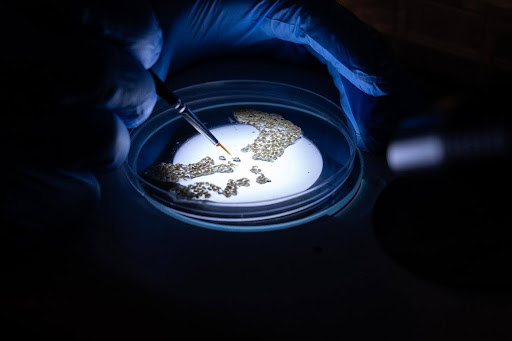
Researchers design genetic modifications and carefully introduce them into mosquito embryos using extremely fine needles under microscopes. The process must be done shortly after mosquito eggs are laid, when the embryos are at the right stage of development. Only few researchers in the world have this know-how.
Because the procedure is delicate, not all modified embryos will produce modified mosquitoes; sometimes the genetic modification does not succeed. Scientists then identify which mosquitoes successfully carry the genetic modification and establish laboratory colonies to continue studying the trait over multiple generations.
These colonies allow researchers to observe how the modification is passed on and whether it is inherited at expected rates.
Testing safety and efficacy
Once a colony has been established, scientists carry out extensive laboratory testing to study how the mosquitoes behave and how the modification spreads.
Initial studies take place in small laboratory cages, where researchers observe how gene drive mosquitoes interact and reproduce with wild mosquitoes of the same species.
Further testing is then conducted in larger indoor environments designed to mimic natural conditions, allowing scientists to better understand how the modification might behave outside the laboratory.
Researchers also study important factors such as mosquito lifespan, biting behaviour, disease transmission potential, and resistance to insecticides, comparing gene drive mosquitoes to their wild counterparts.
Mathematical modelling is used alongside laboratory studies to predict how the modification might spread through mosquito populations and what impact it could have on malaria transmission.
“Innovation and investment are essential in the fight against malaria, but so is transparency. People must understand how new technologies are researched, assessed and tested before they are ever considered for use,” says Dr Martin Lukindu, Post-Doctoral Research Associate, Target Malaria Uganda, Uganda Virus Research Institute (UVRI).
A long road before any real-world use
Gene drive mosquitoes are still in the research phase, and all studies are currently conducted in contained laboratories in Europe and the United States. There are no gene drive mosquitoes in Africa.
Before any future use could be considered, extensive safety studies must be completed, followed by regulatory review in the countries where research would take place. Engagement with communities and agreement from relevant authorities would also be required.
“As scientists, our goal remains the same: reduce malaria transmission and save African lives,” says Dr. Lukindu.
Distributed by African Media Agency (AMA) on behalf of Target Malaria
Notes to editors:
For a visual representation, view a video series on gene drive here .

About Target Malaria
Target Malaria is a not-for-profit research consortium that aims to develop and share new, cost-effective and sustainable genetic technologies to modify mosquitoes and reduce malaria transmission. Our vision is to contribute to a world free of malaria. We aim to achieve excellence in all areas of our work, creating a path for responsible research and development of genetic technologies, such as gene drive. www.targetmalaria.org.
Target Malaria receives core funding by the Gates Foundation and Coefficient Giving (formerly Open Philanthropy). The lead grantee organisation is Imperial College London with partners in Africa, Europe and North America.
Follow Target Malaria on Facebook, X, LinkedIn and YouTube.
Follow Target Malaria Uganda on Facebook.
The post Inside the science: How malaria innovation is researched, assessed and tested appeared first on African Media Agency.
Groot Constantia’s Short Film Celebrates the People Behind the Wine
Ever wondered what keeps a historic wine estate alive beyond the vines? Groot Constantia’s new short film, “Rooted. Preserved. Shared,” offers an intimate look at the people shaping South Africa’s oldest wine-producing farm. Directed and produced by Rory Appleton and Rubert Fitchet of Sledgehammer Studio, the short film captures Groot Constantia as a working estate, shaped by the hands that tend it.
For Groot Constantia’s CEO, Jean Naudé, the project became a moment of reflection. “We believe wine is shaped by human hands as much as by the land,” he says.

“Groot Constantia is a beautiful estate that forms part of South Africa’s story,” says Rubert Fitchet, director at Sledgehammer Studio. “This film was our way of honouring its human terroir and the care that continues to carry it forward.”
Having filmed the estate over the years, the Sledgehammer team set out to focus on the people behind the scenes.
National Treasure
One of the film’s key takeaways is that Groot Constantia does not belong to a single owner or era but is continually shaped by those who encounter it. Every visitor becomes part of its unfolding narrative, contributing to its evolving legacy. More than a place of production, Groot Constantia is a space of exchange, where stories, memory, and meaning flow alongside its wine.
“It lives in the care, craft and pride of those who value and preserve it,” adds Naudé.
Wine Experiences
At Groot Constantia, guests can enjoy tastings in three distinctive cellar spaces: the Bottom Cellar (9am-5pm), Production Cellar (10am-4pm), and Top Cellar (10am-4pm).
Visitors can select a curated set of five wines, served with a complimentary branded glass to keep. For a more luxurious experience, the chocolate-and-wine pairing includes five specially chosen wines paired with handcrafted chocolates.
For those wanting to immerse themselves more fully in the estate’s history, the Visitors Route Experience takes you through the stories and faces of the Manor House Museum and Cloete Cellar. It includes a guided or self-guided cellar tour. This experience also includes a five-wine tasting, a souvenir glass, and the option to add a chocolate pairing.
For more information, visit the website here.
Related Content
- Groot Constantia: Wine Lover‘s Paradise
- Cosy Restaurants with Fireplaces
- Explore Groot Constantia Like a Tourist
The post Groot Constantia’s Short Film Celebrates the People Behind the Wine appeared first on Cape Town Tourism.
My Cape Town: Tollie Parton
Tollie Parton’s larger-than-life personality and razor-sharp wit have made her one of the country’s most beloved drag queens — and she knows how to own a stage. But between sold-out shows and when the spotlight fades, she’s out chasing the magic of the Mother City.
Brought to life by Wynand Kotze, Tollie Parton continues to captivate audiences across the country. Her latest stand-up show, Hoofseun, is filled with hilarious and heartfelt stories, touching on everything from her school days as a ‘hoofseun’ to family dynamics and life within the Afrikaner community. “Tollie Parton is a manifestation of every strong woman in my life: my grandmother, my mother, and that one drunk aunty at every wedding,” she explains.
Here is how Tollie Parton spends an ideal day in the city:
Cat Heaven
When Tollie needs a break from the stage, she heads straight for something a little softer, like Cat Heaven. This non-profit sanctuary is dedicated to rescuing cats and promoting animal welfare, providing a safe and loving space for its furry residents and offering a surprisingly therapeutic experience for visitors.“These are rescue cats, so you feel good about yourself,” Tollie says with a wink.
For Tollie, it’s the simple things: a slice of cake, a cup of coffee, and a room full of cats who don’t care how famous you are. With every visit supporting animal care, it’s an easy, feel-good stop.
Location: 35 Bright St, Audas Estate, Cape Town
Price: Entry is R30pp per hour
Website: catheaven.co.za/
The Meeting Place, Stellenbosch
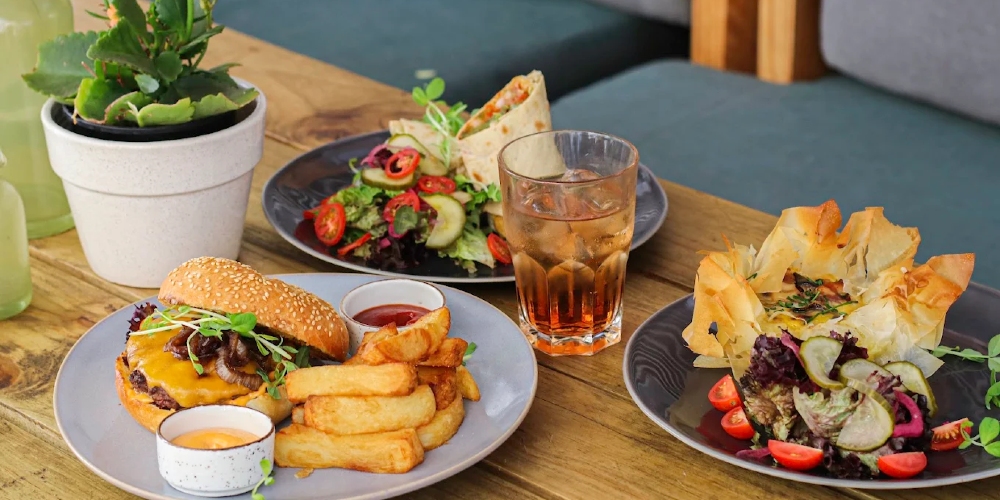
Tucked beneath the oak-lined streets of Dorp Street, The Meeting Place is exactly what the name suggests: a spot to meet, eat, and enjoy the calm. The menu offers everything from burgers and poke bowls to pasta and salads.
“It’s a place where you can meet. It’s in the name,” Tollie chuckles. “And listen, they’re famous for their caramel cheesecake, so don’t mess around… get a slice.”
Location: 87 Dorp St, Stellenbosch Central, Stellenbosch
Price: From R25
Website: www.instagram.com/themeetingplacestb
Café Manhattan
A true Cape Town icon, Café Manhattan has been serving good vibes since 1994, and Tollie is a big fan. As one of the city’s longest-standing LGBTQ+ hotspots, it offers the perfect blend of great food, strong cocktails, and a welcoming atmosphere.
Location: 74 Waterkant St, De Waterkant, Cape Town
Price: From R35
Website: cafemanhattan.co.za/
Die Boer
When it comes to performing, Tollie lights up at Die Boer, one of the city’s best-kept secrets. This intimate dinner-and-show venue in Durbanville combines food and live entertainment, with audiences who are always eager for a laugh.
“It’s one of my favourite venues because you can watch a show while you eat. That’s two of the best things in life,” she says. “And they were one of the first places to open their doors to me.”
Location: 6 Chenoweth St, Durbanville
Price: Various
Website: dieboer.com/
Related articles
The post My Cape Town: Tollie Parton appeared first on Cape Town Tourism.

Airtel Africa Foundation aids MK80m towards 2026 MACRA ICT Innovation Awards
LILONGWE-(MaraviPost)-Airtel Africa Foundation through Airtel Malawi has reaffirmed its commitment to advancing and nurturing Malawi’s digital innovation ecosystem and the country’s Vision 2063 by announcing a MK80 million contribution to the 2026 MACRA ICT Innovation Awards.
The support will go beyond recognition to invest in capacity building, equipping Malawian innovators with the skills, tools, and platforms they need to thrive.
Through its CSR pillars of education, Airtel Africa Foundation continues to drive digital inclusion across all levels of learning.
This support builds on the Foundation’s ongoing work to equip Malawian youth with digital skills and quality education.
Through its Adopt-A-School and Airtel Nzeru Connect initiatives, Airtel Africa Foundation is equipping primary and secondary schools with digital and ICT labs.
At the tertiary level, the Airtel Africa Fellowship, known locally as the Airtel Nzeru Fund provides full STEM scholarships at the Malawi University of Science and Technology.
These efforts are complemented by the zero-rating of 12 e-learning websites and platforms, expanding access to digital education for learners nationwide, directly contributing to the Foundation’s goal of positively impacting 10 million lives across Africa by 2030.
In addition to supporting education, Airtel Malawi announced a major milestone: MACRA has approved Direct-to-Cell (D2C) trials, powered by SpaceX/Starlink.
This breakthrough will ensure seamless connectivity even in areas with little or no coverage, guaranteeing resilience during outages and disasters.
Airtel Malawi is also continuously reimagining how it serves customers, making their lives simpler, smarter, and more secure.
From protecting them through innovative AI spam Fraud Alerts via SMS, to seamless voice and data experiences with VoLTE, and an all-in-one digital ecosystem through the Airtel App, the company is building solutions that work for real people, in real time.
With the introduction of Chat Bot, Airtel is stepping into the future, bringing intelligent, personalized experiences directly into the hands of its customers.
The innovations reflect Airtel’s commitment to intentional, inclusive solutions that create a pipeline from ideas to impact, fully aligned with Malawi Vision 2063.
Speaking at the event, Airtel Malawi Managing Director, Aashish Dutt, said: “At Airtel, we believe innovation is not just about technology, it is about people. It is about unlocking human potential, nurturing talent, and creating opportunities that transform lives.
“Through our scholarships, connectivity programmes, and platforms like these awards, Airtel Africa Foundation is here to walk alongside Malawi’s innovators, helping them take their ideas from the classroom to the marketplace, from concept to impact.”
MACRA Director General, Mayamiko Nkoloma, welcomed the support, noting: “This support from Airtel Africa Foundation through Airtel Malawi is a significant step in strengthening Malawi’s innovation ecosystem.
“By investing in education, capacity building, and connectivity, Airtel is helping us empower young innovators and equip them with the skills and opportunities needed to drive Malawi Vision 2063 forward.”
Airtel Malawi commended MACRA for its leadership in creating inclusive platforms that strengthen innovation and regulatory capacity.
The company reaffirmed its commitment to driving digital and financial inclusion, empowering communities, and unlocking opportunities through technology.
“The future is not something we wait for—the future is already here. And together, with you, the innovators, we are building it,” concluded Dutt.

Skeptical Africa: Understanding the Past, Engaging the Present, and Exploring the Future
By Leo Igwe
Africa is widely acknowledged as the cradle of humanity and the sphere where modern homo sapiens emerged hundreds of thousands of years ago. However, a key element and characteristic of modern humanity, skepticism, is often not associated with Africa or Africans.
Modern or contemporary Africa is often conceptualized in relation to magic, the occult, and other canons of primordial mind, life, and existence. A representation of Africa and the African as a ‘noble savage’, engaged in traditionalizing modernity or modernizing tradition, is a covert and overt staple in anthropological discourses. “Modernity of witchcraft….in Africa”! Does that expression sound familiar?
Western anthropologists and their African acolytes have adamantly been prolific in conceiving skeptical rationality as we know it as alien to the thought and culture of Africans. They have deemed and designated a central mechanism of sapiens, the propeller of human emergence, a Euro-American import and a legacy of colonial incursions. Scholars have largely ignored the fact that the colonial package and baggage included religious absurdities, Christian and Islamic irrationalisms, and Western and Eastern nonsense that have continued to wreak havoc across the region and the globe. African post-coloniality has been codified as essentially a resurgence of the occult, and an unyielding ubiquity of magical efflorescence.
Unreason and barbarism from east and west, from Europe, America, and Asia, reinforced by local formations, have been presented as the mainstay of African ‘civilization’. This racist scholarship must be disrupted. The continent is portrayed as bound and trapped, as caught up in an inexorable and inescapable web of misinterpretation and misrepresentation that finds its latest version in indigenous/alternative knowledge systems. Search and research on indigenous/alternative knowledge is the latest academic fashion. African scholars and students are falling head over heels valorizing the past and glorifying ancient thoughts using exotic epithets that drip more with identity politics like ‘African science’, ‘African logic’, ‘African philosophy’, ‘African medicine’, etc.
Upon closer examination, one realizes a romanticization of primitive ideas, a framing of Western and human antiquity as African modernity, western superstition is African science, western illogic as African logic, western barbarism as African ‘civilization’ and ‘enlightenment’, permanently sealing the African state of underdevelopment.
These misrepresentations abound and darken the region; they encumber progressive, liberative, renaissant, and emancipatory thoughts and scholarship, which Africa urgently needs. This trend of misinformation must constantly be called out, pummeled, and fiercely challenged in furtherance of a skeptical awakening of Africa, Africans, and Africanists.
Skeptics in Africa propose that science is science. Technology is technology. Philosophy is philosophy. Logic is logic. Medicine is medicine. These areas of knowledge, their methods, and principles are universally applicable. There is nothing like African, Nigerian, or Ethiopian science. There is nothing like African, Akan, Igbo, or Igbira logic. There is nothing like African medicine as an alternative to Western medicine. Either it is medicine, or it is not. The alternative to medicine is not-medicine.
In both ancient and modern, colonial and post-colonial dispensations, anthropologists have exoticized and traditionalized Africans. Irrational and superstitious phenomena such as witchcraft have been explained as having enormous social value, utility, inner logic, and rational coherence for Africans. Meanwhile, nothing can be farther from the truth, logic, reason, and fact.
Although not as established or organised as in the West, skepticism, rational and scientific sentiments, demand for evidence, and critical reasoning feature in African cultures and societies. In my village in southeastern Nigeria, as in other communities across the region, there are skeptics, doubters, and disbelievers. Critical examination of religious and paranormal claims is a part of public discussions. People ask for evidence for claims. They seek and demand proof for propositions. Skeptical rationality is embedded in local debates and deliberations, including religious, irreligious, social, cultural, and traditional exchanges.
Skeptical moments have also manifested in the formation and operation of humanist, atheist, and freethought groups in the region, especially in attempts to combat religion/superstition-based abuses and promote critical thinking in schools.
In charting the future in Africa, skeptics are actively combating abuses linked to witchcraft beliefs, dogmatic traditions, and ritual attacks. Witch hunting, which western anthropologists have described as fulfilling socially stabilizing purposes and functions, is wreaking so much havoc in the lives of Africans. Many Africans are fighting back. Many Africans are resisting witch hunters and other superstition based abusers.
For instance, in March, a local mob attacked and beat to death a 46-year-old lady accused of penis theft in Zambia in southern Africa. Some of the perpetrators have been arrested and are being prosecuted. People accused of penis theft have been beaten and killed in Nigeria. Across Africa, many people believe that some humans have the power to magically steal or disappear their private parts, especially the male organ. This belief has no basis in reason, science or reality. In Nigeria, a 70-year-old lady accused of witchcraft has not been seen since November last year. It is believed that her accuser abducted her, tied a stone around her neck, and threw her into the river.
In a related development, a young man murdered his 24-year-old girlfriend allegedly for ritual purposes. Witch hunts and ritual attacks take place with impunity. Every year, thousands of women, children, and elderly persons are accused and abused. The Advocacy for Alleged Witches works and campaigns to ensure justice for alleged witches, victims and survivors of ritual attacks and their families. AfAW organises public education programs, provides legal representation and humanitarian support for victims.
Skeptics promote critical thinking and scientific temper in schools. Critical thinking skills are important in checkmating the ravages of dogmatic and superstitious beliefs. Critical thinking skills are among the top and most sought-after skills in the world. Skeptics campaign to introduce the teaching of critical thinking or philosophy for children as a subject in primary and secondary schools. Skeptics facilitate inquiry-based learning using questionstorm or the technique of thinking in terms of questions. The school system emphasizes memorization, answer driven learning and reproduction of what is taught.
Questionstorm makes interrogation of experiences or challenging claims the test of knowledge and a measure of intelligence. It is predicated on questioning together as a form of thinking/learning together. Through the Critical Thinking Social Empowerment Foundation, skeptics facilitate teacher training, develop learning materials, organize workshops, and implement pilot programs in schools. Skeptics work to realize a more critical-thinking and philosophically oriented society.
Leo Igwe is a skeptic and speaker at the 50th CSICON Anniversary Conference in Buffalo New York in June.

NBM plc donates K100 million items to Nkhotakota flood victims
BLANTYRE-(MaraviPost)-National Bank of Malawi (NBM) plc has donated relief items worth K100 million to 450 people affected by floods in Traditional Authority Nkhanga in Nkhotakota District, as part of its Corporate Social Responsibility (CSR) efforts aimed at supporting affected communities.
The donated items include maize flour, sugar, salt, cooking oil and blankets among others.
Speaking during the donation event on Friday, NBM plc Chief Risk Officer, Charles Ulaya said the Bank made the donation to ease the burden on affected communities and help them recover.
“We saw pictures of this area where a lot of people were affected and houses were demolished. As NBM plc, we thought it wise to assist the communities here,” said Ulaya.
He added that the Bank remains committed to working with the government through district councils office and the Department of Disaster Risk Management.
“We believe as a Bank we need to partner with government,” said Ulaya.
Nkhotakota District Chief Education Officer, Alfred Consciuos Chidiwa commended the initiative, saying the council alone cannot manage the situation.
“We are very happy to receive these assorted items. The council alone cannot manage this problem,” said Chidiwa.
He further urged survivors to refrain from settling in disaster-prone areas.
One of the beneficiaries, Benjamin Goliath, described the situation as critical after losing both his home and food supplies, and thanked NBM plc for the support.
Months on, “Proven leadership” yet to end fuel, forex shortages
By IOMMIE CHIWALO
BLANTYRE-(MaraviPost)-Minus the unimpressive leadership demonstrated during Malawi Congress Party (MCP) regime, Malawians were convinced by the then opposition Democratic Progressive Party (DPP) whose campaign was flagged as “the return of proven leadership” highlighting the end of fuel and Forex shortages.
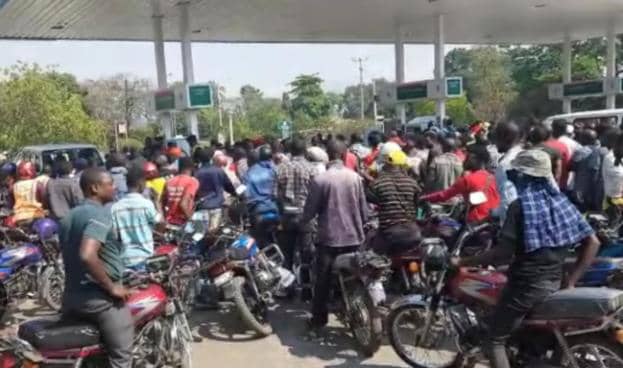
But now Malawians are only requested to be resilient as government has confirmed that fuel reserves are dry amid recent 34 percent price adjustment.
Government Spokesman, Shadreck Namalomba confirmed that currently is not only about the dry fuel reserves but dry coffers to the extent that treasury is planning to borrow US$120 million from Afrexim Bank so as to purchase 120 million litres of fuel.
Namalomba has also put to light that apart from unavailability of foreign currency, Israel -Iran war is another pressing factor.
But recently, a pick from a rare moment that witnessed a joint statement from Centre for Democracy and Economic Development Initiatives (CDEDI) and Human Rights Defenders Coalition (HRDC) was that the current crisis has exposed deep institutional failures to the extent that government failed to secure adequate reserves when global fuel prices were low, procurement remains inefficient and opaque, and there has been no accountability for years of poor planning.
The two organisations observed that it is more troubling to have previous regime’s Government-to-Government (G2G) fuel procurement arrangements abandoned arguing that the model was designed to stabilize prices, reduce procurement costs, and eliminate inflated margins by enabling direct access to oil-producing countries.
“By abandoning that arrangement, government has placed Malawians at the mercy of middlemen and volatile markets, and cost-inflating actors.
“Instead, government has reverted to an Open Tender System which, while presented as competitive, is notorious for creating opportunities for corruption and inflated pricing since the system allows private middlemen and politically-connected intermediaries to insert themselves into the supply chain, extracting profit without adding value,” reads part of a recent joint statement from CDEDI and HRDC which was duly signed by Sylvester Namiwa and Michael Kaiyatsa.
The two did not only condemn the intermediaries for driving costs up, reduced transparency, and undermining predictability in the sector but also demanded for an urgent and concrete steps to
protect Malawians from further economic distress through temporary reduction as well as suspension of some fuel levies and taxes if not to mention of resumption of G2G fuel procurement arrangement as a means of removing lustful intermediaries and restore price stability.
Meanwhile when Malawians were expecting answers on the use of Price Stabilisation Fund (PSF) Government Spokesman Namalomba asked for patience.
He has also gone a mile in condemning fuel service station owners whom he alleged that are hoarding the precious commodity raising a question on how to “conceal unavailable commodity”?
As it stands, according to reputable economic commentators in Malawi, people should expect skyrocketing of prices of goods and services saying is even hard to consolidate the gains such as lowering inflation rate which has been witnessed in the previous month.

From empty tanks to dry granaries of fuel: Malawi’s wakeup call
By Eddison Arnold Mombera MBA (Oil Gas and Energy Management)
Yesterday, as I was driving back from Area 2 after consulting on a solarpowered backup system, I stopped to refuel. School runs were starting today, and like any parent, I wanted to be ready.
But the tanker hadn’t arrived. Fuel had run out. I left my car at the station and walked to my brother’s office to catch a lift home.
That short walk gave me time to think. As both a farmer and an energy specialist, I realised how deeply these disruptions are beginning to cut.
What happened to me yesterday is happening to thousands of Malawians every day and it is a sign of a much bigger storm gathering over our economy.
A Global Shock Meets a Local Crisis
The world is facing a turbulent energy period. Conflicts affecting the Strait of Hormuz through which nearly 20% of global oil flows have pushed prices up and shaken supply chains.
Analysts warn that the oil market may remain unstable for the next two to three years.
For Malawi, which imports 100% of its fuel, this means higher pump prices, pressure on foreign exchange, and rising costs across transport, agriculture, and industry.
But this year, the oil shock is colliding with something even more damaging at home.
A 60% Maize Price Collapse in a Year of Poor Harvests
Despite drought in the south and excessive rains in the centre and north, maize prices have fallen by about 60%.
This was driven partly by speculative imports and a failure to buy adequately from local farmers. The result is devastating.
•Farmers harvested less,
•Sold for less,
•And now face higher input and transport costs due to rising fuel prices.
•This is not just a bad season. It is a national income shock.
The Vicious Circle We Are Entering
When farmers cannot recover their costs, they reduce hectarage, cut fertilizer use, and delay land preparation.
That means lower production next year, regardless of weather.
Lower production leads to higher import needs.
Higher imports strain forex. A weaker kwacha makes fuel and fertilizer even more expensive. And the cycle repeats.
This is how food insecurity becomes structural, not seasonal.
A Perfect Storm for 2026/27
Malawi is now facing three simultaneous pressures:
•A global oil crisis raising costs across the economy
•A domestic maize market collapse undermining farmer incomes
•Weatherrelated production losses threatening national food supply.
Together, they form a dangerous loop that affects every Malawian from the farmer in the field to the parent stranded at a filling station.
What Malawi Must Do
We cannot control global oil prices or the weather.
But we can control our exposure by:
•Prioritising local maize procurement to stabilise farmer incomes.
•Expanding solarpowered irrigation and storage to reduce diesel dependence.
•Improving logistics efficiency to cut fuel use
Strengthen strategic grain reserves to smooth price swings.
•Establishing predictable grain market policies to restore confidence.
These are not longterm dreams, they are immediate resilience measures.
A Moment That Demands Action
My experience at the filling station was a small inconvenience.
But it reminded me that the shocks we discuss in reports and boardrooms are no longer distant. They are here.
They are personal. And they are shaping the future of our country.
Malawi stands at a crossroads. If we act decisively, this difficult moment could become the turning point that finally breaks the cycle of vulnerability.