
Disenchanting Wigs: Do Lawyers Suffer Spiritual Attacks in Courtrooms?

By Leo Igwe

My attention has been drawn to an article, Haunted wigs: Lawyers share mysterious courtroom experiences, by Chijioke Iremeka. The article was published in The Punch Newspaper on April 5 2026. The author rightly acknowledged the non-recognition of witchcraft and the use of charms in the Nigerian constitution, while addressing ‘rumours about alleged spiritual attacks on lawyers and the judicial system’. Although the piece claimed to focus on gossip, I am persuaded that the article would misinform the public and reinforce witchcraft and juju beliefs. Most readers would not be observant enough to know that the author was explaining ‘rumours’, not ‘real courtroom experiences’. The purpose of this piece is to dispel those misguided rumours.

In his piece, the author noted that “some lawyers and judges told …(him)…that they faced unusual spiritual attacks while handling certain sensitive cases”. He further alluded to an unidentified lawyer, who made a video clip that went viral on X and Instagram, asking “litigants to stop directing spiritual attacks at opposing lawyers during court proceedings”. He also noted the case of a retired judge in Imo state who stated that events that ‘defied explanation’ unfolded inside and outside courtrooms. The judge said that she had suffered ‘ spiritual attacks and intimidation during court proceedings, but she had always prevailed through her Christian faith”.

The judge recalled an incident that happened while she was presiding over a murder case. At this hearing she “became unusually still and quiet, staring ahead without speaking for a long time” According the judge, for several minutes in the courtroom, she was blank and confused, “I did not know where such a feeling came from, but I was unable to proceed with the case, and I had to adjourn it to a later date”. She attributed this experience to litigants trying to attack practitioners, derail the judges, and distract or weaken their resolve to deliver a fair judgment. 

The author noted that while some legal analysts were of the view that the real challenges were threats to life, physical attacks, and other forms of intimidation, as well as bribery and coercion, claims of spiritual interference, ritual practices, unseen forces, and metaphysical influence were pervasive. While noting the view of Deji Adeyanju, who stated that claims of juju or witchcraft were legally untenable, the author shared testimonies of other lawyers recounting their experiences of purported spiritual attacks.  

For instance, one Emeke Omogiafo recalled his experiences of ‘spiritual attacks’, especially how he collapsed and later woke up in a hospital while making a submission in court over a land matter. He claimed that the spiritual warfare started at a point when he woke up feeling that someone was pressing his chest. In the course of the trial, the car tyres burst. An interesting thing about Omogiafo’s case was that while a doctor attributed his collapse to low blood pressure, a pastor said it was some spiritual attack. The author highlighted claims by lawyers that spiritual attacks make legal counsel unable to defend their clients or to forget to appear in court during proceedings. One lawyer said he took ill after shaking hands with a person who filed a case against his client. 

Meanwhile, law is a respected field and profession. Lawyers are widely respected for their knowledge. They are often described as learned. And let’s be clear, it is learned in matters of law. It is disappointing that many lawyers are not well enough educated. They allow their ‘faith’ to overshadow their legal reasoning, their common sense. As these testimonies have clearly shown, many lawyers make a fundamental mistake. They mix their legal profession with their religious beliefs. In their submissions, many lawyers often commit the argumentum ad verecundiam fallacy; they assume that being learned in matters of law implies that they could authoritatively speak or comment on matters of faith and religion. Incidentally, that is not the case.

From all the testimonies, it is evident that incidents attributed to spiritual attacks are experiences based on fear and ignorance. Spirits are figments of the mind, and do attend or participate in court sessions. The encounters outlined in the article have nothing to do with witchcraft or juju but everything to do with lousy legal infrastructure in the country. Some lawyers are lazy and incompetent. So they come to court unprepared. They are nervous and cannot put up a robust defence of their cases. Now they turn around to attribute their experiences to spiritual attacks. Why won’t spirits attack legal counsels when they do not adequately prepare or study their briefs?

Some lawyers or judges have untreated or poorly managed health problems, including mental health conditions. They should go for a medical check. But they don’t. So what happens? They come to court sick and psychologically indisposed. Some come to court suffering malaria and other ailments. Many lawyers are indigent; they cannot afford treatment. So why won’t they have ‘spiritual attacks’ in court?

Some lawyers, including judges and magistrates, come to court hungry and famished. They attend hearings on an empty stomach, without breakfast. How do they expect not to see ‘spirits’ during court sessions? How do they expect to concentrate and participate during court hearings? Legal counsels drive fairly used cars with worn-out tyres. Why should they be surprised when they have accidents or their tyres burst? Now they claim it is a witchcraft or a juju attack. No, it is not a spiritual attack. It is a poverty attack. 

Legal counsels practice evidence-based law and should not be associated with frivolous claims. Law is a ‘noble’ profession and as they say ‘noblesse oblige’ meaning nobility obliges. Lawyers owe the society some obligations. Judges, magistrates and other court officials should not make or enable claims without evidence. All lawyers should join efforts in disenchanting the wigs and in dispelling rumours of juju or witchcraft attacks. They should strive to make claims based on evidence and beyond a reasonable doubt. Claims of spiritual warfare are dubious, doubtful, and superstitious. They are excuses for poverty, ignorance, indolence, ineptitude, lack of diligence, and professionalism in courtrooms.

Leo Igwe, who holds a doctoral degree in religious studies from the University of Bayreuth in Germany, is a board member of Humanists International.
Atupele Muluzi appeals for Malawi’ swift economic reforms

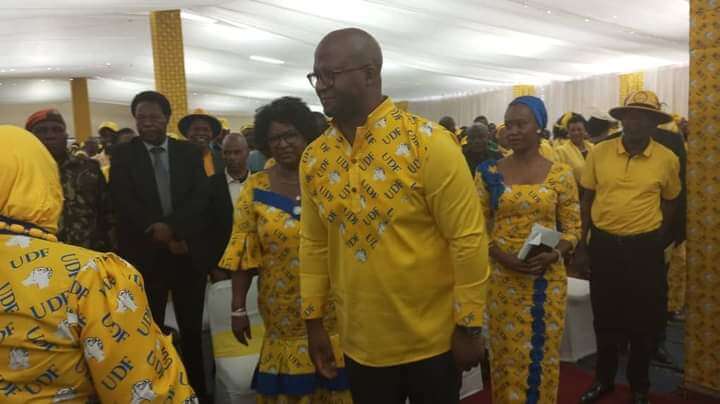
BLANTYRE-(MaraviPost)-United Democratic Front (UDF) President Atupele Muluzi has called for urgent and coordinated action to address Malawi’s worsening economic challenges.

He described the current situation as one of the most severe and prolonged crises since the country’s transition to multiparty democracy in 1994.

In an interview with Maravi Post,Muluzi said households, businesses, and public institutions are under significant pressure, warning that delays in implementing reforms would deepen the crisis and further burden ordinary citizens.

He welcomed the joint efforts of African Development Bank (ADB), United Nations(UN), and World Bank Group (WBG), working in collaboration with the Government of Malawi, which recently produced a set of 22 priority policy recommendations titled ‘No Time to Waste: Policy Priorities for Malawi’s Recovery.’

Muluzi described the report as a timely and practical contribution to national dialogue, noting that it provides evidence-based solutions aimed at stabilising the economy and laying the groundwork for inclusive and sustainable growth.

He further observed that the strong mandate given to the ruling Democratic Progressive Party (DPP ) in last year’s general election presents a unique opportunity for a national reset, which could help rebuild trust in public institutions and advance meaningful structural reforms.

“As President of the United Democratic Front (UDF), I wish to state that we support the direction and substance of these policy recommendations.

“They are consistent with our own Business First Strategy and reflect many of the reforms we have long advocated,” said Muluzi.

The son to the second Malawi president Bakili Muluzi,emphasised that restoring macroeconomic stability must be the immediate priority, calling for fiscal consolidation, reforms in tax administration and public financial management, debt restructuring, and a credible framework for exchange rate unification.

He also stressed the importance of prudent monetary policy and targeted measures to boost foreign exchange inflows.

Muluzi cautioned against politicising the economic challenges, saying the situation requires collective responsibility and cooperation across political parties, government institutions, the private sector, and development partners.

“This is not a time for assigning blame. It is a time for responsible, collaborative leadership.

“The challenges we face are national in nature and require a unified response,” he said.

He concluded by urging swift implementation officer the recommended reforms, warning that continued delays would worsen economic hardship.

“UDF stands ready to work constructively with all stakeholders in the national interest. There is no time to waste,” said Muluzi.

New Insights from BFA Global Reveal What It Really Takes to Increase Women’s Incomes

NAIROBI, Kenya, 21 April 2026 -/African Media Agency(AMA)/ – BFA Global today released new findings from its Women’s Economic Empowerment (WEE) Opportunity Leads Umbrella Program, identifying five critical, interconnected domains that drive income growth for low-income women micro-entrepreneurs. The insights emerge from a two-year collaboration with 11 enterprises in Kenya through the WEE Program.

The insights challenge the notion that income growth follows a simple, linear path. Instead, it shows that sustained income gains depend on a set of reinforcing conditions working together.

“We started with a simple question: what does it really take to increase incomes for low-income women in practice, not just in theory,” said co-authors Phoebe Kiboi and Maha Khan. “What we found is that no single intervention works in isolation. Income growth happens when multiple factors align.”

Through the program’s interventions, 1,800 women micro-entrepreneurs saw their incomes rise by an average of 49 percent, equivalent to an additional $85 per month.

The insights identify five interconnected domains that determine whether women can translate opportunity into sustained income:

  • Support Structures: Factors such as childcare, time, mobility, and social norms shape whether women can participate in economic opportunities at all. Enterprises that design around these realities can unlock participation at scale.
  • Skills and Confidence: Skills training is most effective when it builds both technical capability and self-belief, and when women have real opportunities to apply what they learn.
  • Networks: Peer networks provide critical support systems, enabling access to capital, customers, and information. These informal structures often act as the backbone of women’s economic activity.
  • Productive Capital and Assets: Access to capital drives growth only when it is appropriately timed and tailored. Misaligned financial products can hinder rather than help progress.
  • Market Linkages: Connecting women to markets creates opportunity, but sustained income depends on the strength of the other four domains.

When one domain is missing, progress stalls. Skills without market access do not translate into income. Capital without capability creates risk, and market access without support structures excludes those who need it most.

The insights emphasize the need for more integrated approaches that align multiple domains rather than optimizing individual interventions in isolation. For more information, see the key findings.

Distributed by African Media Agency (AMA) on behalf of BFA Global

About BFA Global
BFA Global is an impact innovation firm that combines research, advisory, venture building, and investment expertise to build a more inclusive, equitable, and resilient future for underserved people and the planet. We partner with leading public, private and philanthropic organisations, global and local, to catalyse innovation ecosystems for impact across emerging markets. Since 2006, we have completed 646 projects completed in over 107 countries, supported 250+ ventures in Africa, Latin America, and Asia, who have collectively raised $1B+ in follow-on funding, and have a survival rate above 80% (global average is ~20%), and built a network of 100+ global and African investors, innovators, and funders. Learn more at https://bfaglobal.com/.

The post New Insights from BFA Global Reveal What It Really Takes to Increase Women’s Incomes appeared first on African Media Agency.

Chazima celebrates 45th Birthday with community service at Kawale Health Centre

LILONGWE-(MaraviPost)-UK-based Malawian Madalitso Chazima commemorated her 45th birthday on Monday by giving back to her community through a clean-up exercise and donation drive at Kawale Health Centre in Lilongwe, under her non-profit organisation, Resilience Rising Foundation.

The initiative saw the donation of essential items, including soya pieces, salt, soap, and sugar, alongside cleaning materials such as fresheners, brushes, and mops.

The effort was aimed at improving sanitation at the facility while also supporting patients, particularly those with limited resources.

Speaking in an interview, Chazima said her decision to mark her birthday in this way was deeply rooted in her upbringing in Kawale.

“I grew up here, and this is the health facility we relied on for medical care. Celebrating my birthday by giving back to this community is something very meaningful to me,” she said.

During her visit, Chazima also spent time in the maternity ward, where she interacted with new mothers and offered encouragement.

Kawale Health Centre In-Charge, Andrew Mphongolo, commended the gesture, describing it as both timely and impactful.

He noted that the donated items would ease the burden on patients, especially mothers who often struggle to access basic necessities, as the facility does not provide food.

“This support has come at the right time. A clean environment is essential for effective healthcare delivery, and the donated items will go a long way in assisting patients in need,” he said.

Mphongolo added that the clean-up exercise highlights the importance of maintaining hygiene in health facilities and urged members of the public to take an active role in supporting community institutions.

He emphasized that collective responsibility is key to improving healthcare services and ensuring that patients receive quality care in a safe and clean environment.

UN Malawi Office rejection leaves Alexious Kamangira’s “Whistleblower” narrative in tatters

By Falles Kamanga

BLANTYRE-(MaraviPost)-There are moments when a story does not just fall apart it unravels in full public view.

That is the uncomfortable position lawyer Alexious Kamangira now finds himself in, following a firm denial by a United Nations Office in Malawi over his claims of receiving international security protection.

For a man who has consistently branded himself a whistleblower in exile, Kamangira’s narrative has long relied on the weight of credibility on the idea that powerful institutions were both aware of and responding to his alleged persecution.

Central to that image was his assertion that the UN was providing him security support while he resides between Ireland and the United Kingdom. But that pillar has now cracked.

In unusually blunt terms, officials linked to the UN have dismissed the claims as unfounded, making it clear that no such protection arrangement exists.

The denial has not only raised eyebrows it has triggered quiet embarrassment across circles that once gave his story the benefit of the doubt.

Because in the world of whistleblowing, perception is everything.

And once doubt creeps in, it spreads quickly. Observers in Lilongwe’s legal and governance community say the fallout is difficult to ignore.

What was once presented as a story of courage and persecution is now, for many, beginning to resemble a cautionary tale about overreach.

“It’s one thing to seek asylum. It’s another to attach your claims to institutions that can easily verify or deny them,” said one analyst.

“When that denial comes, it’s not just a correction. It’s reputational damage.”

Kamangira’s rise to prominence was built on bold allegations and a narrative of risk of a man standing against powerful forces back home.

That image earned him attention, sympathy, and, in some quarters, support.

But the latest development threatens to recast that image in a far less flattering light.

The embarrassment lies not only in the denial itself, but in its implications.

If such a fundamental claim UN-backed security cannot be substantiated, what does it mean for the broader story? For critics, it reinforces long-held suspicions.

For supporters, it presents an uneasy moment of reckoning.

Meanwhile, experts on asylum processes stress that international protection systems are structured, documented, and rarely ambiguous.

Associations with global bodies like the United Nations are not informal gestures they are formal, traceable, and accountable and that’s why this particular rejection cuts deep.

As the dust settles, Kamangira faces a difficult road one that demands clarification, evidence, or silence.

In the absence of either, the narrative risks continuing its slide from whistleblower saga to public relations misstep.

And in the court of public opinion, that shift can be as decisive as any legal ruling.

Outrage over Israeli soldier’s act of desecration in Lebanon

DEBEL-(MaraviPost)-Widespread condemnation has followed the emergence of a disturbing image showing an Israeli soldier apparently hitting a statue of Jesus with a sledgehammer in southern Lebanon.

The incident has sparked outrage among Christians and human rights groups, with many calling for accountability.

The image, which was taken in the Christian village of Debel, shows the soldier using a sledgehammer to strike the head of a statue of a crucified Jesus that had fallen off a cross.

The Israeli military has confirmed the authenticity of the image and has launched an investigation into the incident.

Israeli Prime Minister Benjamin Netanyahu has condemned the act, saying it was “stunned and saddened” by the destruction of the Catholic religious icon.

“I condemn the act in the strongest terms,” Netanyahu said in a statement on X. “Military authorities are conducting a criminal probe of the matter and will take appropriately harsh disciplinary action against the offender”.

The Israeli military has also apologized for the incident, saying it was “wholly inconsistent with the values expected of its troops”. “The IDF views the incident with great severity and emphasizes that the soldier’s conduct is wholly inconsistent with the values expected of its troops,” the military said in a statement.

The incident has sparked concerns about the treatment of Christians in the region, with some pointing out that Israel is one of the few safe havens for Christians in the Middle East.

However, others have criticized the Israeli military’s actions, saying they are inconsistent with the country’s claims of respecting religious freedom.

The incident comes amid ongoing tensions between Israel and Lebanon, with a ceasefire agreement brokered by the US having been implemented last week.

The Israeli military has said it is working with the local community to restore the statue to its place.

The incident of an Israeli soldier smashing a Jesus statue in Lebanon has sparked widespread condemnation. Israeli Prime Minister Benjamin Netanyahu has vowed “harsh action” against the soldier, saying the act was “wholly inconsistent with the values expected of its troops”.

Foreign Minister Gideon Sa’ar also condemned the incident, labeling it “grave and disgraceful” and apologizing to Christians who felt hurt.

The international community has also reacted strongly, with the US Ambassador to Israel, Mike Huckabee, calling for “swift, severe, & public consequences”.

The Assembly of Catholic Ordinaries of the Holy Land has expressed “profound indignation and unreserved condemnation” of the act, calling for immediate disciplinary action and accountability.

The incident has also sparked concerns about the treatment of Christians in the region, with some pointing out that Israel is one of the few safe havens for Christians in the Middle East.

However, others have criticized the Israeli military’s actions, saying they are inconsistent with the country’s claims of respecting religious freedom.

The current situation in Lebanon remains tense, with a ceasefire agreement brokered by the US having been implemented.

The Israeli military has said it is working with the local community to restore the statue to its place.

Zambia Catholic Priest Simon Tembo arrested for Church vehicle theft

By Edwin Mbewe

CHIPATA-(MaraviPost)-A cloud of shock and disbelief has engulfed Zambia’s Eastern Province after a Catholic priest was dramatically arrested in the early hours of Sunday for allegedly being in possession of a stolen church vehicle.

Father Simon Tembo, 31, was intercepted around 03:00 hours at the Mwami Road checkpoint in Chipata City, bringing to light a case that has left both church members and the wider community stunned.

Eastern Province Police Commanding Officer Robertson Mweemba confirmed the arrest, revealing that the priest was found driving a white Toyota Hilux bearing registration number BAK 4227. Officers became suspicious after noticing visible damage to the vehicle, including a broken left headlamp and a dented fender.

What initially appeared to be a routine traffic stop quickly escalated into a major investigation.

When questioned, Father Tembo allegedly claimed he had hit a cow in Katete District and avoided reporting the accident out of fear that Bishop George Lungu would discover his movements. But that explanation only deepened the mystery.

In a startling twist, Bishop Lungu reportedly told police that the vehicle in question had already been involved in a fatal accident just a week earlier—an accident that claimed the life of Father Aston Tembo—and was believed to be beyond repair.

As officers dug deeper, the truth began to unravel.

A detailed inspection revealed that the vehicle’s chassis and engine numbers matched those of a Toyota Hilux, registration number CAA 7255—one that had been stolen from Ukwimi Catholic Parish nearly a year ago, on April 30, 2025.

The vehicle, valued at K700,000, about MK130 million had vanished without a trace after being parked outside church premises, with the theft reported at the time by Father Daniel Phiri.

The arrest of Father Tembo has now raised troubling questions and sent shockwaves through the religious community, with many struggling to reconcile the allegations with his clerical role.

He remains in police custody and is expected to appear in court soon, as investigations intensify into a case that continues to unfold with dramatic and unexpected turns.

Nigerian ecologist leads fight against wildfires in Africa

LAGOS-(MaraviPost)-In Nigeria and across the world, fire is a double-edged sword – a tool for farming and a threat to communities and ecosystems.

Bush burning has been a part of farming practices for generations, but with unpredictable weather and rising temperatures due to climate change, a controlled fire can easily turn into a full-blown wildfire.

Across Africa, fires account for about 70% of global burned land, making it the most fire-affected region globally.

The continent’s vast savannas and forests are increasingly vulnerable to wildfires, which can have devastating consequences for local communities, wildlife, and the environment.

Nigerian ecologist, Iroro Tanshi, has made it her mission to combat this threat through her ‘Zero Fire’ initiative.

Partnering with communities across southern Nigeria, Tanshi’s project aims to protect forests, wildlife, and communities from wildfires.

Through her work, Tanshi has earned recognition as a leading voice in the fight against wildfires in Africa.

Her dedication and innovative approach have not gone unnoticed, with Tanshi being awarded the prestigious Goldman Environmental Prize Award of 2026.

The Goldman Environmental Prize is one of the world’s most respected environmental awards, recognizing individuals who have made significant contributions to protecting the natural world.

Tanshi’s award is a testament to her tireless efforts to promote sustainable land use practices and reduce the impact of wildfires on communities and ecosystems.

Tanshi’s work is not only important for Nigeria but also for the global community.

As climate change continues to exacerbate the risk of wildfires, her ‘Zero Fire’ initiative serves as a model for other countries and communities to follow.

The ‘Zero Fire’ initiative is a community-led approach that engages local people in fire prevention and management.

By working together with communities, Tanshi’s project has been able to reduce the incidence of wildfires and promote more sustainable land use practices.

Tanshi’s achievement is a beacon of hope for environmental activists and communities across Africa.

Her work demonstrates that with determination and innovative approaches, it is possible to make a real difference in the fight against wildfires and climate change.

As Africa continues to grapple with the impacts of climate change, the work of individuals like Iroro Tanshi will be crucial in promoting sustainable development and protecting the continent’s natural resources.

Iroro Tanshi’s ‘Zero Fire’ initiative is a community-led wildfire prevention program that has been making waves in Nigeria and beyond.

The initiative aims to protect forests, wildlife, and communities from wildfires, which are a major threat to African ecosystems.

Tanshi, a Nigerian ecologist, launched the ‘Zero Fire’ campaign to address the devastating impact of wildfires on bat habitats and other wildlife in the Afi Mountain Wildlife Sanctuary.

Through this initiative, Tanshi and her team have successfully prevented serious wildfires in the sanctuary since 2022, engaging local communities in fire prevention and highlighting the importance of bats in ecosystems.

Wildfires have a profound impact on African ecosystems, accounting for about 70% of global burned land.

They threaten biodiversity, destroy habitats, and disrupt local livelihoods.

In Nigeria, wildfires are often caused by uncontrolled farm fires, which can quickly spread and devastate entire forests.

Tanshi’s work has not only protected critical habitats but also educated communities about the ecological importance of bats and other species.

Her efforts have earned her prestigious awards, including the Goldman Environmental Prize and the Future for Nature Award.

Alexious Kamangila’s falsehood exposed as UN Agency in Malawi dismisses security provision claims

…Liable to face slanderous charges in Malawi

LILONGWE-(MaraviPost)-United Nation Agency (UN) in Malawi has dismissed attention seeker –cum lawyer Alexious Kamangira’s claims that the agency is providing security services to him in Ireland, United Kingdom (UK).

Kamangila is currently at the University of Galway in the UK for the four-year structured PhD program in the College of Business, Public Policy, and Law.

Since his settlement at the college, Kamangila has sent shockwaves on social media with corruption allegations and slanderous remarks against media, judiciary, politicians, business captains, musicians, commercial banks without tangible evidence to prove the claims.

Kamangila’s misconduct of being “Whistleblower” landed him into public anger that he eventually requested Malawi authorities to provide security to his family.

Early this year, in February, Kamangila even claimed that he sought protection from the UN Agency which was given.

But in a questionnaire response which The Maravi Post sent to the UN Agency Malawi office vehemently dismissed Kamangila claims.

This publication wanted to establish if indeed the UN Agency in Malawi was providing support towards a slanderous agenda to Kamangila while hiding under the banner “fighting against corruption particularly judiciary in Malawi”.

The Advisor to UN Resident Coordinator Simone Heri-Terrence in Malawi Office dismisses Kamangila claims, “Can you please share where these claims were made?

Terrence snubs Kamangila’s falsehood, “I’m neither aware of the claims you mention, nor of any such support being provided by the UN in Malawi”.

Reacting to the development, one of civil rights leaders on Kamangila’s slanderous radar lauds the UN Agency in Malawi for quick responses.

He wondered, “How could the UN Agency support such an unacceptable and call for campaign from someone whose corruption allegations have no tangible evidence that can be proven in the competent court?

“Kamangila has lost the status of being a “Whistleblower” which Malawi wrongly gave him. You can’t be a Whistleblower when you are always fed with lies to tarnish others image in the name of fighting against corruption”.

The rights activist adds, “You can’t claim to fight against corruption while you are making unfounded slanderous remarks on any critics of your social media attacks. Kamangila has completely lost focus and Malawians must now review his motive, agenda.

“He is dividing the nation with serious allegations of corruption on everyone. Is he holier than anyone in Malawi? We also want to know if the University of Galway in the UK supports this uncalled for behavior. Does such a reputable college condone such slanderous remarks on social media from students?”

Kamangila is currently liable to face defamation, slanderous, falsehoods court charges in Malawi.

The nation is yet to witness how Kamangila will defend himself against all charges being leveled against him.

However, on September 16, 2024, The Malawi Supreme Court of Appeal Judge Justice Dorothy Nyakaunda Kamanga convicted Kamangila of perjury for fabricating facts and lying under oath in a criminal case where the lawyer was defending a murder convict.

Judge Kamanga bashed Kamangila for being dishonest and lying under oath in his affidavit to release his client from custody.

Read more on Kamangila perjury guilty at https://www.maravipost.com/malawian-lawyer-alexious-kamangila-found-guilty-of-perjury/?amp=1

Kamangila was defending Wyson Big Bannet who together with Myson Viera Chiziziri were convicted of murder way back in 2013 in a homicide case which was tried by the late High Court Judge Justice Joseph Manyungwa.

Exit mobile version