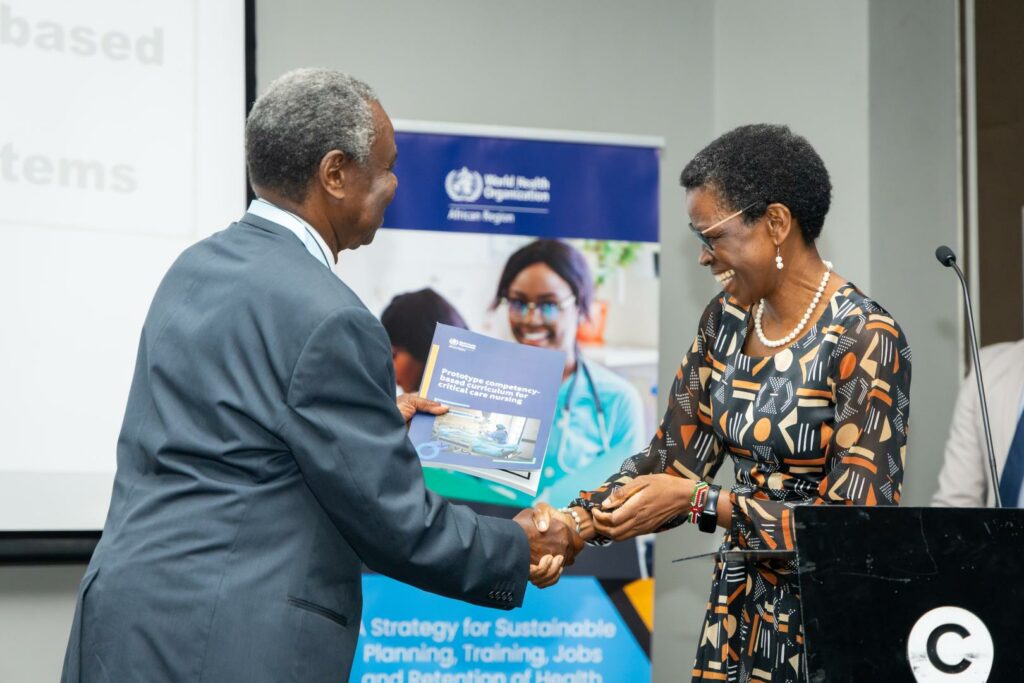
Geneva, Switzerland, 25 November 2025-/African Media Agency(AMA)/-The World Health Organization (WHO) Regional Office for Africa today launched the first-ever Africa Prototype Competency-Based Curricula for ten selected health professions, marking a major turning point in how the region trains, equips and prepares its health workforce for the future.
The launch, held in Pretoria with satellite events across multiple countries, will signal a decisive shift from outdated, theory-heavy training towards competency-based education that ensures every graduate is ready to deliver safe, high-quality, people-centred care from day one.
Drawing on the Global Competency and Outcomes Framework for UHC (2022), the new curricula were co-developed through an unprecedented regional collaboration involving more than 300 experts, universities, professional councils, ministries, students and development partners. The process was guided by the Curriculum Development Advisory Group, comprising leading education and practice experts from the continent.
These prototype curricula provide a continental benchmark for quality and relevance, offering countries a common starting point to modernize national programmes for nurses, midwives, pharmacists, dentists, laboratory scientists and other priority professions.
Why it matters now
Africa’s health workforce has grown from 1.6 million in 2013 to more than 5 million in 2022, yet the continent still faces a projected shortage of 6.1 million health workers by 2030. At the same time, 27% of trained health workers remain unemployed, signalling a disconnect between outdated training models and evolving labour market needs.
“For too long we have trained for qualifications not for competence. But competence is what saves lives. These curricula position Africa to produce health workers who are competent, ethical, confident and ready to serve their communities with excellence,” said Dr Adelheid Onyango, Director of Health Systems and Services at the WHO Regional Office for Africa.
The curricula aim to strengthen practical skills and clinical readiness; ethical and professional judgement; emergency and primary care capabilities; adaptability to new technologies, including AI and digital health; and the confidence to deliver quality care in all settings.
A key ambition is to ensure that a health worker trained in any African country graduates with comparable competencies, enabling smoother mobility, reduced re-examination burden, and stronger integration of Africa’s health labour market.
The launch coincides with the Member States Consultation on the Africa Health Workforce Agenda 2026–2035: Plan, Train, and Retain, where government officials, regulators, and experts will define strategies to create more jobs, reform education, and improve retention across the continent. The new curricula are expected to serve as a foundational tool to accelerate this transformation.
WHO is urging countries, universities, regulators and professional associations to adapt the prototype curricula to their national contexts. Next steps include supporting Member States in implementation, developing continental accreditation standards, strengthening regulation to ensure consistent training quality, promoting mutual recognition of qualifications, and moving toward a more integrated African health labour market.
“We want this to become a continental movement. These curricula are only the beginning. They will anchor a new era of quality, trust, and excellence in Africa’s health workforce,” said Dr Onyango.
Geneva, Switzerland, 19 November 2025 -/African Media Agency(AMA)/-Zimbabwe is intensifying efforts to improve the prevention, early detection and treatment of breast and cervical cancers by integrating cancer and chronic disease services into primary health care. This approach aims to bring essential health services closer to communities and ensure women have equitable access to quality care.
Cervical cancer accounts for almost 41% of all cancers among women in the country, followed by breast cancer at 13%, according to Zimbabwe’s National Cancer Registry. To address the burden, the Ministry of Health and Child Care (MoHCC), with support from World Health Organization (WHO) and partners, is implementing measures to strengthen integrated cancer services across the health system.
In July 2025, WHO handed over medical equipment worth US$ 20 000 to the MoHCC to support service delivery at the primary health level. The specialized equipment can be used to screen for noncommunicable diseases, including diabetes and hypertension.
Building on this support, MoHCC and WHO held training of trainers sessions in August 2025 for health professionals from Mashonaland West and Matabeleland South provinces.
“Many cancers are preventable. Let us spread the word and let all women know about it,” says Esther Ngaru, one of the trainees and reproductive health officers at MOHCC.
Twenty-five health professionals were trained on integrating the management of breast and cervical cancers, mental health and chronic diseases, as well as coordinated provision of prevention, screening, diagnosis, treatment and care services.
The trainers are spreading this knowledge to frontline health workers to strengthen prevention, screening and treatment at community level.
“Thanks to this training, our screening will be more effective than ever,” says Audrey Musorowembudzi, a nurse at Hurungwe Rural Health Centre. “At my facility, I will share this knowledge with my colleagues so that no woman is left behind.”
In Karoi, a town in Mashonaland West Province, seven primary health care nurses and village health workers have already benefited from these trainings.
Village health worker Angeline Mukusa from Chigumbura Village says she will use the lessons learned to raise awareness in her community. “Cancer is a major concern where I live,” she says. “I will encourage early detection and HPV vaccination for girls. Cancer is treatable if detected early and this will save many lives.”
According to the district’s medical officer Dr Munyaradzi Chidaushe this approach is already improving service delivery. “This work is transformative. Village health workers can identify and refer women suspected of breast or cervical cancer more easily. Prevention is key to protecting communities,” he says.
These activities are part of the Women’s Integrated Care for Cancer Services (WICS) project, led by the WHO Regional Office for Africa with support from Roche. Implemented in Côte d’Ivoire, Kenya and Zimbabwe, the project aims to strengthen integrated breast and cervical cancer services within primary health care. Zimbabwe was selected because its established cervical cancer programme provides a foundation for integrating additional services for cancer and chronic diseases.
“Through the commitment of health workers, the leadership of MOHCC, and the support of WHO and partners, Zimbabwe is taking a decisive step towards reducing the burden of breast and cervical cancer,” says Dr Desta Tiruneh WHO Representative in Zimbabwe. “These efforts bring the country closer to a future where no woman dies from a preventable or treatable cancer and where health systems truly serve communities with equity and compassion.”
At 2025 Goalkeepers event, Gates lays out roadmap for saving millions more children’s lives by 2045 if governments stretch every dollar and scale a pipeline of affordable, lifesaving innovations
Announces new pledge to the Global Fund 2026-2028 replenishment to prevent deaths from AIDS, TB, and malaria
Honors President of the Government of Spain with 2025 Global Goalkeeper Award and 10 champions for their ingenuity and resilience, and for offering hope, solutions in the face of steep funding cuts
NEW YORK, United States of America, September 23rd, 2025 -/African Media Agency (AMA)/- At its 2025 Goalkeepers event, Gates Foundation Chair Bill Gates stood before an audience of more than 1,000 global government, community, philanthropy, and private-sector leaders and issued a stark but hopeful call to world leaders: save millions of children’s lives and make some of the deadliest diseases history by 2045.
“Humanity is at a crossroads. With millions of children’s lives on the line, global leaders have a once-in-a-generation chance to do something extraordinary,” said Gates. “The choices they make now—whether to go forward with proposed steep cuts to health aid or to give the world’s children the chance they deserve to live a healthy life—will determine what kind of future we leave the next generation.”
This year, donor countries dealing with domestic challenges, high debt levels, and aging populations made dramatic funding cuts to global development assistance for health (DAH). According to a recent study by the Institute for Health Metrics and Evaluation (IHME), global DAH fell by 21% between 2024 and 2025, and is now at a 15-year low. With key global health funding decisions expected before the end of the year, total funding levels could rise. However, if the current cuts hold, they threaten decades of progress that saw child mortality cut in half since 2000—from 10 million children to less than 5 million children a year—one of humanity’s greatest achievements.
During the annual event, which this year focused on reigniting a shared commitment to saving children’s lives, Gates announced his foundation’s pledge of $912 million over three years to the Global Fund to Fight AIDS, Tuberculosis and Malaria’s 2026-2028 replenishment. The Global Fund is one of the most effective lifesaving initiatives of the 21st century. Its fundraising replenishment cycle ends this November, underscoring the urgency for governments to make pivotal decisions in the coming weeks and months for the lives of millions of people.
“What’s happening to the health of the world’s children is worse than most people realize, but our long-term prospects are better than most people can imagine,” said Gates. “I don’t expect most governments to suddenly restore foreign aid to historic levels, but I am an optimist, and I believe governments can and will do what’s needed to save as many children as possible,” said Gates.
With shrinking global health budgets as the backdrop, the Goalkeepers event highlighted the people, science and innovations, and policies that are accelerating solutions for how leaders can do more with less.
A Roadmap to a Healthier Future
“We have a roadmap for saving millions of children and making some of the deadliest childhood diseases history by 2045,” Gates asserted. “I’m urging world leaders to invest in the health of all people, especially children, to deliver this future.”
Results from work by the Gates Foundation and the IHME indicate that sustaining global investments in child health and scaling lifesaving innovations could cut child deaths in half again over the next 20 years.
The roadmap includes:
Renewing investments in proven initiatives, such as the Global Fund and Gavi, the Vaccine Alliance, to help countries make smarter, more cost-effective health decisions; gain access to proven vaccines, medicines, and treatments; and focus on sustainability and transitioning to self-reliance
Prioritizing primary health care systems—even in the face of challenging budget decisions—to prevent, detect, and treat childhood illnesses early
Investing in further R&D and effectively rolling out breakthrough innovations that include:
A suite of new approaches to combating malaria, including innovations that prevent mosquitoes from carrying parasites and single-dose treatments to accelerate eradication of the disease
Long-acting HIV drugs and prevention options that replace daily pills to drive AIDS deaths down to single digits
New maternal vaccines against respiratory syncytial virus (RSV) and group B streptococcus (GBS) that have the potential to protect babies from deadly respiratory illnesses
Artificial intelligence to leverage smarter, faster, and cheaper delivery of safe, cost-effective medicines to dramatically improve lives
A New Three-Year Commitment to the Global Fund
Since 2002, the Global Fund has saved more than 70 million lives; reduced deaths from AIDS, TB, and malaria by more than 60%; and strengthened global health security. Each dollar invested in the Global Fund delivers an estimated $19 in health and economic returns.
The foundation’s new pledge brings its total commitments to the Global Fund to $4.9 billion since 2002, making it one of the foundation’s largest investments. The pledge aims to galvanize governments, philanthropists, and the private sector to come to the table with significant investments for the fund’s Eighth Replenishment, which is co-hosted by South Africa and the United Kingdom. With millions of lives on the line, the level of investment in the Global Fund over the next three years will determine whether the world saves millions of lives; curbs HIV, TB, and malaria; and bolsters economies and global health security.
“An entire generation is alive today thanks to the world’s generosity, smart investments, and the hard work of governments and Global Fund partners,” Gates said. “Now, we must go further so the next generation grows up in a world where no child dies from preventable causes.”
Celebrating Goalkeeper Award and Champions
In recognition of his continued commitment to advance the Global Goals, the foundation announced President of the Government of Spain Pedro Sánchez as the winner of its 2025 Global Goalkeeper Award. Under Prime Minister Sanchez’s leadership, Spain increased contributions to the Global Fund this year by nearly 12% and to Gavi by 30%, expanded official development assistance (ODA), and hosted the landmark International Conference on Financing for Development in June 2025.
The event also honored Goalkeepers Champions—experts, innovators, and advocates driving progress in child survival worldwide. They include:
Dr. Abhay Bang and Dr. Rani Bang (India) – Pioneering community-based health care in India
David Beckham (UK) – Advocating for child health and education
Krystal Mwesiga Birungi (Uganda) – Championing youth-centered policies and equitable health access across Africa
Toni Garrn (Germany) – Mobilizing resources to expand education and health care for girls
John Green (USA) – Using storytelling and advocacy to spark vital conversations on tuberculosis and mental health among young people
Osas Ighodaro (Nigeria) – Driving awareness and action in the fight against malaria
Dr. Donald Kaberuka (Rwanda) – Advancing global health financing for effective health system strengthening and expanding access to health care worldwide
Jerop Limo (Kenya) – Advancing HIV awareness and care for children and families across Africa
Reem Al-Hashimy (United Arab Emirates) – Championing investments in health and education through initiatives like Dubai Cares
Dr. Naveen Thacker (India) – Advancing child health through community-based innovations
“We Can’t Stop at Almost”
The Goalkeepers event was co-hosted by singer, songwriter, and composer Jon Batiste, who returned as musical curator for the second year with the PS22 elementary school choir, and actress and director Olivia Wilde. Together, they urged the audience to remember that while the world has made progress, “we can’t stop at almost,” which was the event’s theme.
Community champions, scientists, health workers, faith leaders, and activists from Bangladesh, Indonesia, Kenya, Madagascar, Nigeria, Senegal, South Africa, Uganda, and the United States shared powerful stories of resilience and innovation. Several showcased breakthrough technologies already saving lives and moving the world closer to eradicating deadly diseases.
“Every year, Goalkeepers unites changemakers to inspire and push one another forward,” said Dawda Jobarteh, deputy director of the foundation’s Goalkeepers campaign. “Together, we can reimagine a future without preventable child deaths and unlock the next wave of breakthroughs for the world’s children.”
Event session presenters included Rick Warren, pastor and author; El Hadji Mansour Sy, co- president of World Council of Religions for Peace; Ingrid Silva, ballet dancer and activist; Krista Tippett, journalist and author; Latif Nasser, co-host of “Radiolab”; and Budi Gunadi Sadikin, Indonesia’s minister of health.
Looking Ahead
Later this year, Goalkeepers will expand to the Middle East for the first time, convening leaders, innovators, and changemakers from across the region and beyond in Abu Dhabi on December 8.
Ahead of that, the foundation will release its 2025 Goalkeepers Report, focusing on the impact that leaders’ choices between now and the end of the year will have on saving children’s lives.
Earlier this year, Gates made a historic announcement that he would give away virtually all of his wealth to the foundation to advance progress on saving and improving lives. He also announced the foundation would spend $200 billion over the next 20 years, working with its partners to make as much progress as possible towards three primary goals: end preventable deaths of moms and babies; ensure the next generation grows up without having to suffer from deadly infectious diseases; and lift millions of people out of poverty, putting them on a path to prosperity. At the end of the 20-year period, the foundation will sunset its operations.
Photos and b-roll from the event, full bios of the Goalkeepers champions, and more can be found here.
Guided by the belief that every life has equal value, the Gates Foundation works to help all people lead healthy, productive lives. In developing countries, we work with partners to create impactful solutions so that people can take charge of their futures and achieve their full potential. In the United States, we aim to ensure that everyone—especially those with the fewest resources—has access to the opportunities needed to succeed in school and life. Based in Seattle, Washington, the foundation is led by CEO Mark Suzman, under the direction of Bill Gates and our governing board.
About Goalkeepers
Goalkeepers is the foundation’s campaign to accelerate progress toward the Sustainable Development Goals (Global Goals). By sharing stories and data behind the Global Goals through an annual report, the Gates Foundation hopes to inspire a new generation of leaders— Goalkeepers who raise awareness of progress, hold their leaders accountable, and drive action to achieve the Global Goals.
At 2025 Goalkeepers event, Gates lays out roadmap for saving millions more children’s lives by 2045 if governments stretch every dollar and scale a pipeline of affordable, lifesaving innovations
Announces new pledge to the Global Fund 2026-2028 replenishment to prevent deaths from AIDS, TB, and malaria
Honors President of the Government of Spain with 2025 Global Goalkeeper Award and 10 champions for their ingenuity and resilience, and for offering hope, solutions in the face of steep funding cuts
NEW YORK, United States of America, September 23rd, 2025 -/African Media Agency (AMA)/- At its 2025 Goalkeepers event, Gates Foundation Chair Bill Gates stood before an audience of more than 1,000 global government, community, philanthropy, and private-sector leaders and issued a stark but hopeful call to world leaders: save millions of children’s lives and make some of the deadliest diseases history by 2045.
“Humanity is at a crossroads. With millions of children’s lives on the line, global leaders have a once-in-a-generation chance to do something extraordinary,” said Gates. “The choices they make now—whether to go forward with proposed steep cuts to health aid or to give the world’s children the chance they deserve to live a healthy life—will determine what kind of future we leave the next generation.”
This year, donor countries dealing with domestic challenges, high debt levels, and aging populations made dramatic funding cuts to global development assistance for health (DAH). According to a recent study by the Institute for Health Metrics and Evaluation (IHME), global DAH fell by 21% between 2024 and 2025, and is now at a 15-year low. With key global health funding decisions expected before the end of the year, total funding levels could rise. However, if the current cuts hold, they threaten decades of progress that saw child mortality cut in half since 2000—from 10 million children to less than 5 million children a year—one of humanity’s greatest achievements.
During the annual event, which this year focused on reigniting a shared commitment to saving children’s lives, Gates announced his foundation’s pledge of $912 million over three years to the Global Fund to Fight AIDS, Tuberculosis and Malaria’s 2026-2028 replenishment. The Global Fund is one of the most effective lifesaving initiatives of the 21st century. Its fundraising replenishment cycle ends this November, underscoring the urgency for governments to make pivotal decisions in the coming weeks and months for the lives of millions of people.
“What’s happening to the health of the world’s children is worse than most people realize, but our long-term prospects are better than most people can imagine,” said Gates. “I don’t expect most governments to suddenly restore foreign aid to historic levels, but I am an optimist, and I believe governments can and will do what’s needed to save as many children as possible,” said Gates.
With shrinking global health budgets as the backdrop, the Goalkeepers event highlighted the people, science and innovations, and policies that are accelerating solutions for how leaders can do more with less.
A Roadmap to a Healthier Future
“We have a roadmap for saving millions of children and making some of the deadliest childhood diseases history by 2045,” Gates asserted. “I’m urging world leaders to invest in the health of all people, especially children, to deliver this future.”
Results from work by the Gates Foundation and the IHME indicate that sustaining global investments in child health and scaling lifesaving innovations could cut child deaths in half again over the next 20 years.
The roadmap includes:
Renewing investments in proven initiatives, such as the Global Fund and Gavi, the Vaccine Alliance, to help countries make smarter, more cost-effective health decisions; gain access to proven vaccines, medicines, and treatments; and focus on sustainability and transitioning to self-reliance
Prioritizing primary health care systems—even in the face of challenging budget decisions—to prevent, detect, and treat childhood illnesses early
Investing in further R&D and effectively rolling out breakthrough innovations that include:
A suite of new approaches to combating malaria, including innovations that prevent mosquitoes from carrying parasites and single-dose treatments to accelerate eradication of the disease
Long-acting HIV drugs and prevention options that replace daily pills to drive AIDS deaths down to single digits
New maternal vaccines against respiratory syncytial virus (RSV) and group B streptococcus (GBS) that have the potential to protect babies from deadly respiratory illnesses
Artificial intelligence to leverage smarter, faster, and cheaper delivery of safe, cost-effective medicines to dramatically improve lives
A New Three-Year Commitment to the Global Fund
Since 2002, the Global Fund has saved more than 70 million lives; reduced deaths from AIDS, TB, and malaria by more than 60%; and strengthened global health security. Each dollar invested in the Global Fund delivers an estimated $19 in health and economic returns.
The foundation’s new pledge brings its total commitments to the Global Fund to $4.9 billion since 2002, making it one of the foundation’s largest investments. The pledge aims to galvanize governments, philanthropists, and the private sector to come to the table with significant investments for the fund’s Eighth Replenishment, which is co-hosted by South Africa and the United Kingdom. With millions of lives on the line, the level of investment in the Global Fund over the next three years will determine whether the world saves millions of lives; curbs HIV, TB, and malaria; and bolsters economies and global health security.
“An entire generation is alive today thanks to the world’s generosity, smart investments, and the hard work of governments and Global Fund partners,” Gates said. “Now, we must go further so the next generation grows up in a world where no child dies from preventable causes.”
Celebrating Goalkeeper Award and Champions
In recognition of his continued commitment to advance the Global Goals, the foundation announced President of the Government of Spain Pedro Sánchez as the winner of its 2025 Global Goalkeeper Award. Under Prime Minister Sanchez’s leadership, Spain increased contributions to the Global Fund this year by nearly 12% and to Gavi by 30%, expanded official development assistance (ODA), and hosted the landmark International Conference on Financing for Development in June 2025.
The event also honored Goalkeepers Champions—experts, innovators, and advocates driving progress in child survival worldwide. They include:
Dr. Abhay Bang and Dr. Rani Bang (India) – Pioneering community-based health care in India
David Beckham (UK) – Advocating for child health and education
Krystal Mwesiga Birungi (Uganda) – Championing youth-centered policies and equitable health access across Africa
Toni Garrn (Germany) – Mobilizing resources to expand education and health care for girls
John Green (USA) – Using storytelling and advocacy to spark vital conversations on tuberculosis and mental health among young people
Osas Ighodaro (Nigeria) – Driving awareness and action in the fight against malaria
Dr. Donald Kaberuka (Rwanda) – Advancing global health financing for effective health system strengthening and expanding access to health care worldwide
Jerop Limo (Kenya) – Advancing HIV awareness and care for children and families across Africa
Reem Al-Hashimy (United Arab Emirates) – Championing investments in health and education through initiatives like Dubai Cares
Dr. Naveen Thacker (India) – Advancing child health through community-based innovations
“We Can’t Stop at Almost”
The Goalkeepers event was co-hosted by singer, songwriter, and composer Jon Batiste, who returned as musical curator for the second year with the PS22 elementary school choir, and actress and director Olivia Wilde. Together, they urged the audience to remember that while the world has made progress, “we can’t stop at almost,” which was the event’s theme.
Community champions, scientists, health workers, faith leaders, and activists from Bangladesh, Indonesia, Kenya, Madagascar, Nigeria, Senegal, South Africa, Uganda, and the United States shared powerful stories of resilience and innovation. Several showcased breakthrough technologies already saving lives and moving the world closer to eradicating deadly diseases.
“Every year, Goalkeepers unites changemakers to inspire and push one another forward,” said Dawda Jobarteh, deputy director of the foundation’s Goalkeepers campaign. “Together, we can reimagine a future without preventable child deaths and unlock the next wave of breakthroughs for the world’s children.”
Event session presenters included Rick Warren, pastor and author; El Hadji Mansour Sy, co- president of World Council of Religions for Peace; Ingrid Silva, ballet dancer and activist; Krista Tippett, journalist and author; Latif Nasser, co-host of “Radiolab”; and Budi Gunadi Sadikin, Indonesia’s minister of health.
Looking Ahead
Later this year, Goalkeepers will expand to the Middle East for the first time, convening leaders, innovators, and changemakers from across the region and beyond in Abu Dhabi on December 8.
Ahead of that, the foundation will release its 2025 Goalkeepers Report, focusing on the impact that leaders’ choices between now and the end of the year will have on saving children’s lives.
Earlier this year, Gates made a historic announcement that he would give away virtually all of his wealth to the foundation to advance progress on saving and improving lives. He also announced the foundation would spend $200 billion over the next 20 years, working with its partners to make as much progress as possible towards three primary goals: end preventable deaths of moms and babies; ensure the next generation grows up without having to suffer from deadly infectious diseases; and lift millions of people out of poverty, putting them on a path to prosperity. At the end of the 20-year period, the foundation will sunset its operations.
Photos and b-roll from the event, full bios of the Goalkeepers champions, and more can be found here.
Guided by the belief that every life has equal value, the Gates Foundation works to help all people lead healthy, productive lives. In developing countries, we work with partners to create impactful solutions so that people can take charge of their futures and achieve their full potential. In the United States, we aim to ensure that everyone—especially those with the fewest resources—has access to the opportunities needed to succeed in school and life. Based in Seattle, Washington, the foundation is led by CEO Mark Suzman, under the direction of Bill Gates and our governing board.
About Goalkeepers
Goalkeepers is the foundation’s campaign to accelerate progress toward the Sustainable Development Goals (Global Goals). By sharing stories and data behind the Global Goals through an annual report, the Gates Foundation hopes to inspire a new generation of leaders— Goalkeepers who raise awareness of progress, hold their leaders accountable, and drive action to achieve the Global Goals.
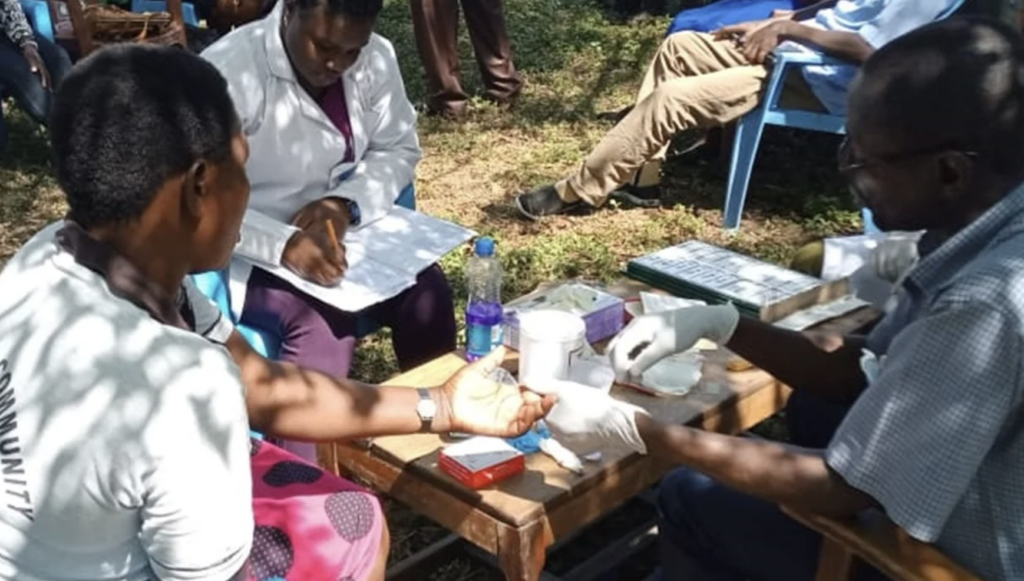
Kenya Tsetse and Trypanosomiasis Eradication Council (KENTTEC) Community screening for human African trypanosomiasis (HAT) and monitoring of local populations in Lambwe Valley, Homa Bay County, Kenya.
GENEVA, Switzerland, August 12th 2025-/African Media Agency (AMA)/- The World Health Organization (WHO) has validated Kenya as having eliminated human African trypanosomiasis (HAT) or sleeping sickness as a public health problem, making it the tenth country to reach this important milestone. HAT is the second neglected tropical disease (NTD) to be eliminated in Kenya: the country was certified free of Guinea worm disease in 2018.
“I congratulate the government and people of Kenya on this landmark achievement,” said Dr Tedros Adhanom Ghebreyesus, WHO Director-General. “Kenya joins the growing ranks of countries freeing their populations of human African trypanosomiasis. This is another step towards making Africa free of neglected tropical diseases”.
HAT is a vector-borne disease caused by the blood parasite Trypanosoma brucei. It is transmitted to humans through the bites of tsetse flies that have acquired the parasites from infected humans or animals. Rural populations dependent on agriculture, fishing, animal husbandry or hunting are most at risk of exposure.
As the name indicates, HAT is transmitted only on the African continent. The disease exists in two forms, gambiense and rhodesiense. The rhodesiense form (r-HAT), which is found in eastern and southern Africa, is the only one present in Kenya. It is caused by Trypanosoma brucei rhodesiense and progresses rapidly, invading multiple organs including the brain. Without treatment, it is fatal within weeks.
Kenya’s progress
“This validation marks a major public health milestone for Kenya, as we celebrate the elimination of a deadly disease in our country. The achievement will not only protect our people but also pave the way for renewed economic growth and prosperity,” said Dr Aden Duale, Kenya’s Cabinet Secretary for Health. “This follows many years of dedication, hard work and collaboration”.
The first cases of HAT in Kenya were detected in the early 20th century. Since then, Kenya has engaged in consistent control activities, without indigenous new cases reported for over 10 years. The last autochthonous case was detected in 2009, and the last two exported cases, infected in the Masai Mara National Reserve, were detected in 2012.
Recently, Kenya strengthened HAT surveillance in 12 health facilities in six historically endemic counties to act as sentinel sites. They were equipped with diagnostic tools and had their clinical personnel trained on diagnostic procedures, including the most sensitive and practical tests for r-HAT. The country also actively monitors the control and surveillance of tsetse flies and animal trypanosomiasis, both within and beyond the historical HAT endemic areas, supported by the national veterinary health authorities and the Kenya Tsetse and Trypanosomiasis Eradication Council (KENTTEC). These activities and the related data provide supplementary backing to the claim of HAT elimination as a public health problem.
“This key milestone reflects Kenya’s efforts and commitment over many years, as a collaboration between national and county governments, national research institutions, development partners and affected communities,” said Dr Patrick Amoth, EBS, Director General Health, Ministry of Health, Kenya. “The country remains fully committed to sustain the quality of care and surveillance in line with WHO’s recommendations”.
Supported by WHO and partners, including FIND, Kenya’s HAT elimination programme will now implement a post-validation surveillance plan to detect any potential resurgence or reintroduction of transmission. WHO continues to support ongoing monitoring in previously affected areas and maintains a stock of medicines to ensure rapid treatment of possible future cases, thanks to donations from Bayer AG and Sanofi.
“This success was made possible by the Ministry of Health’s leadership, the dedication of health workers in areas at risk and the support from key partners,” said Dr Abdourahmane Diallo, WHO Representative to Kenya. “WHO is proud to have contributed to this achievement and encourages all stakeholders to remain involved in post-validation monitoring”.
Progress in global HAT elimination
A total of 57 countries have eliminated at least one NTD. Of these, 10 (including Kenya) have successfully eliminated HAT as a public health problem. The other countries that have reached this milestone are Benin, Chad, Côte d’Ivoire, Equatorial Guinea, Ghana, Guinea, Rwanda, Togo and Uganda.
The World Health Organization (WHO) has sounded the alarm on the long-term health repercussions of the COVID-19 pandemic in its newly released World Health Statistics Report 2025. The report reveals a staggering decline in global life expectancy, which dropped by 1.8 years between 2019 and 2021 – the sharpest fall in recent history, effectively reversing a decade of health gains.
The pandemic’s toll extended beyond direct mortality. Increased levels of anxiety and depression during the crisis shaved six weeks off the global healthy life expectancy, offsetting progress previously made in combating noncommunicable diseases (NCDs).
“The 2025 World Health Statistics report shows that the world is failing in its annual health checkup,” said Samira Asma, WHO Director of Data Analytics and Delivery for Impact. “But countries have shown that rapid progress is possible. What we really need to do is to recommit to the world with timely, reliable data where programmes are continuously improving and premature deaths become rare.”
Mixed Progress Towards WHO’s Global Health Goals
The report highlights mixed results in achieving WHO’s Triple Billion targets. While an estimated 1.4 billion more people were living healthier lives by the end of 2024 – surpassing the goal of one billion – progress in other key areas lagged behind.
Only 431 million additional people gained access to essential health services without financial hardship, far from the target. Additionally, just 637 million more people were better protected from health emergencies, underscoring significant shortfalls in resilience and preparedness.
Maternal and child health gains have also stalled. While maternal deaths dropped by over 40% and under-5 child mortality was halved between 2000 and 2023, recent years have seen this progress plateau. The WHO warns that without urgent action, the world could miss the chance to prevent an additional 700,000 maternal deaths and 8 million child deaths between 2024 and 2030.
NCDs on the Rise, Premature Deaths Escalate
Noncommunicable diseases, including heart disease, cancer, diabetes, and stroke, now account for more than half of deaths in people under 70.
“Mortality rates have improved in that age group, but the number of deaths due to NCDs has increased,” noted Haidong Wang, Acting Director of WHO’s Department of Data and Analytics. “Tobacco use remains a major factor, and although alcohol consumption has decreased in some regions, progress has stalled in others. Poor management of hypertension and diabetes, along with persistent air pollution, continues to endanger global health.”
The world is currently off track to meet the Sustainable Development Goal of reducing premature NCD mortality by one third by 2030.
Key Challenges Undermining Health Progress
The WHO points to several compounding factors undermining global health efforts:
A projected shortfall of 11.1 million health workers by 2030, with the African and Eastern Mediterranean regions bearing nearly 70% of the gap.
Resurgence of malaria since 2015 and ongoing challenges with antimicrobial resistance.
Incomplete recovery in childhood vaccination rates, with coverage yet to return to pre-pandemic levels.
A persistent burden from air pollution, malnutrition, and unsafe living conditions.
Furthermore, recent disruptions in international aid threaten to destabilize progress, particularly in low- and middle-income countries. The WHO is calling for sustained and predictable financing from both domestic and global sources to safeguard hard-won health gains and address emerging threats.
Despite the grim findings, the report also offers signs of hope: tobacco use continues to decline globally, and alcohol consumption fell from 5.7 to 5.0 litres per capita between 2010 and 2022. Improvements in air quality, access to clean water, sanitation, and hygiene have contributed to healthier living conditions for millions.
The WHO urges urgent and coordinated global action to correct course and reignite progress toward 2030 health targets.
A recent decision by the government to transfer seven health workers from their current duty stations has sparked suspicion among the affected employees, who claim that the move is a deliberate attempt to silence them.
The health workers, some of whom were planning to hold protests in the capital Lilongwe on April 11, allege that the government is trying to intimidate them into abandoning their demands for better governance at the National Organization of Nurses and Midwives of Malawi (NONM).
According to Frank Kamwendo, Chairperson for the concerned nurses, the health workers are fighting against poor governance at NONM, which they believe is negatively impacting their work and the overall healthcare system in Malawi.
The planned protests were meant to bring attention to these issues and to demand action from the government.
However, in a surprise move, the government has transferred some of the affected health workers from Nsanje to Lilongwe, while others have been moved from Thyolo to Mchinji. The postings are with immediate effect, leaving the health workers with little time to prepare for the sudden change.
Kamwendo expressed shock at the transfers, stating that none of the affected health workers had requested to be moved from their current duty stations, as per requirement.
This has raised questions about the government’s motives behind the sudden transfers.
“It’s clear that the government is trying to silence us and intimidate us into abandoning our demands for better governance at NONM,” Kamwendo said. “But we will not be silenced. We will continue to fight for our rights and for the rights of our patients,” he declared
The government’s decision to transfer the health workers has been met with widespread criticism from healthcare professionals and civil society organizations.
Many have expressed concern that the move will disrupt healthcare services in the affected areas and compromise the quality of care provided to patients.
“This is a clear case of victimization and intimidation,” said a healthcare professional who wished to remain anonymous.
He added, “The government should be supporting healthcare workers who are fighting for better governance and improved healthcare services, not trying to silence them.”
The incident has also raised questions about the government’s commitment to transparency and accountability in the healthcare sector. Many have called for an investigation into the matter and for the government to provide clear explanations for the sudden transfers.
In a statement, the Ministry of Health acknowledged the transfers but denied any wrongdoing.
“The transfers were made in the best interests of the healthcare system and were not intended to intimidate or silence anyone,” the statement read.
However, the affected health workers remain skeptical, and their suspicions have been fueled by the government’s history of cracking down on dissenting voices in the healthcare sector.
As the controversy continues to unfold, one thing is clear: the government’s decision to transfer the health workers has only served to galvanize their resolve to fight for better governance and improved healthcare services in Malawi.
“We will not be intimidated,” Kamwendo stated, adding, “We will continue to fight for our rights and for the rights of our patients. We demand transparency and accountability from the government, and we will not rest until we get it.”
The Ebola outbreak in Uganda is fast spreading with the country’s health ministry confirming six new cases.
Officials confirmed one case triggering the latest outbreak earlier in the week. The first case was that of a 24-year-old man who died earlier this week.
The man who died had developed a high fever, diarrhoea and abdominal pains, and was vomiting blood.
According to officials after initially being treated for malaria, he was diagnosed as having contracted the Sudan strain of the Ebola virus.
The new cases were reported in the central district of Mubende where the 24-year-old man died on Tuesday.
– –
“As of today, we have seven confirmed cases, of whom we have one confirmed death,” Dr Kyobe Henry Bbosa, Ebola Incident Commander at the Ugandan Ministry of Health, told a briefing.
“But also we have seven probable cases that died before the confirmation of the outbreak.”
The additional seven deaths are being investigated as suspected Ebola cases, Bbosa said.
This is the third outbreak of the Ebola Sudan strain in Uganda.
– –
According to health officials, over 40 people who contacted a family that reported some of the cases have been traced. Eleven of them are under isolation.
Neighbouring countries to Uganda have said they were on high alert in case the disease spread across the borders.
Health experts say the Ebola Sudan strain historically has lower levels of transmission, infections and deaths compared to the Ebola Zaire strain.
Six health care workers and five others have been arrested for baby harvesting and child trafficking in Ghana.
They were arrested in a joint operation by the country’s Economic and Organized Crime Office (EOCO) and the Medical and Dental Council.
A team of experts from the two institutions commenced investigations into allegations of baby harvesting after a case of a missing baby was reported at the Konfo Anokye Teaching hospital in 2014.
Executive Director of EOCO COP Frank Adu-Poku (RTD) told a news conference in Accra that the first suspect Dr. Hope Mensah Quarshie who works with the 37 Military Hospital was arrested at a private clinic.
He was arrested with three other nurses for selling a baby for 30,000 Cedis which is an equivalent of 5,100 Dollars.
– –
COP Adu-Poku (RTD) said two social welfare officers, and traditional birth attendant and another medical practitioner have also been arrested in connection with investigations into the cases of baby harvesting.
Some families have blamed hospital officials for cases of missing babies at various health facilities.
In 2014, Ghana’s health minister gave hospital in the city of Kumasi 14 days to produce the bodies of five babies that were allegedly stillborn.
Seven people were charged with stealing and conspiracy to steal a baby from the Komfo Anokye Teaching Hospital earlier in February.