LILONGWE-(MaraviPost)-Long queues have resurfaced at immigration offices across Malawi, sparking frustration among passport applicants and raising questions about what is behind the delays.
At key regional offices, particularly in Blantyre, Lilongwe and Mzuzu, people are spending long hours in some cases arriving before dawn just to secure a spot in line. Some have reported returning for several days without being served.
“It’s very frustrating,” said Mphatso Banda, a university student from Blantyre who has been trying to renew her passport for over a week.
“You come as early as 4 a.m. and still find a line stretching beyond the gate. The officers say there is a system issue or no booklets. We deserve better.”
Meanwhile, Centre for Democracy and Economic Development Initiatives (CDEDI) on Tuesday, June 17, 2025 penned Homeland Security Minister Ezekiel Ching’oma demanding answers on the matter.
“In exercise of our governance watchdog role, and as a mouthpiece of the voiceless, CDEDI, write you Sir, with reference to the above stated subject matter. Hon. Minister, recently, you were quoted in the local media touting the procurement of a new passport supplier, thereby raising hopes that the unwarranted passport crisis would come to an end.
“However, CDEDI would like to put it you Hon. Minister, that for the past two weeks, the Immigration Department has not been issuing passports to the citizenry, contrary to their legal mandate”, reads CDEDI letter in part signed by its Executive Director Sylvester Namiwa.
Namiwa adds, “CDEDI would like to benefit from the Access to Information (ATI) Act, which will in turn help passport seekers, in particular, and Malawians in general, to exercise their right to know the developments that are happening at the department.
CDEDI therefore, requests Ching’oma explanation to justify the current crisis in passport issuance, tell the nation when exactly issuance of passports will resume, explain to the nation how the current supplier was identified.
“Needless to remind you sir, that you are serving in a public office that isordinarily expected to be held accountable to the general public”, Namiwa reminds Ching’oma.
In the past two years, the Department had launched an online application portal to ease congestion, but many users complain the platform is unreliable, often crashing mid-process or failing to issue confirmations.
Meanwhile, immigration authorities say they are working round the clock to clear the backlog and restore normalcy.
As the queues persist, citizens are left with no option but to endure the long wait a test of patience for those chasing travel deadlines and economic opportunities beyond the country’s borders.
In the wake of growing discontent with President Lazarus Chakwera’s administration, the political atmosphere in Malawi is charged with anticipation as citizens prepare for the upcoming elections.
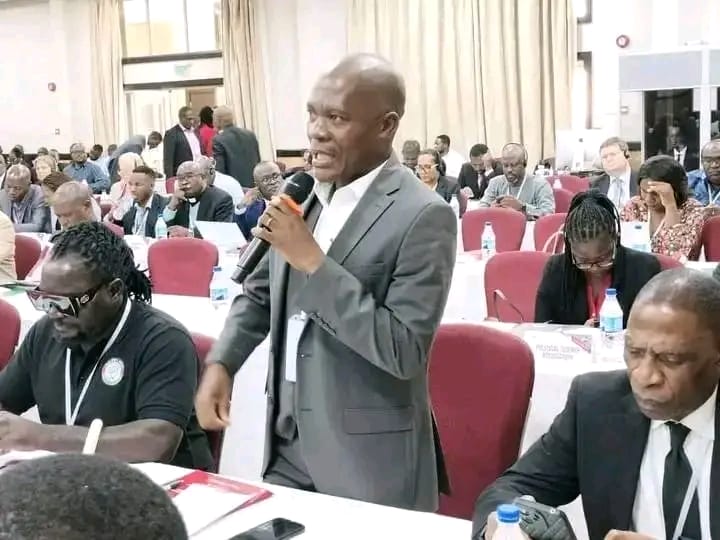
The recent remarks made by Silvester Namiwa of the Centre for Democracy and Economic Development Initiatives (CDED) during the Public Affairs Committee’s all-inclusive conference in Blantyre have sparked discussions about the potential establishment of a governing council to oversee the country until elections are held.
While the call for such a council may seem like a proactive measure to address the current political crisis, a closer examination reveals that this proposal may not be as crucial or timely as it appears.
Firstly, it is essential to understand the context in which Namiwa’s call was made.
The political landscape in Malawi has been tumultuous, with widespread dissatisfaction regarding governance, economic management, and the overall direction of the country under Chakwera’s leadership.
The Malawian populace is increasingly vocal about their frustrations, and the prospect of elections looms large on the horizon. In this environment, the idea of a governing council may seem appealing as a means to stabilize the situation and ensure a smooth transition of power.
However, the practicality and necessity of such a council warrant careful consideration.
One of the primary arguments against the establishment of a governing council is the potential for further political fragmentation. Malawi’s political history is marked by deep-seated divisions, and the introduction of a governing council could exacerbate these rifts.
The notion of a council implies a level of consensus among various political factions, which may be unrealistic given the current climate of distrust and animosity. Instead of fostering unity, the formation of a governing council could lead to a power struggle among competing interests, further complicating an already volatile situation.
Moreover, the call for a governing council raises questions about legitimacy and representation. Who would be appointed to this council, and what criteria would be used to select its members?
In a country where political affiliations often dictate public perception, the risk of perceived bias or favoritism is significant. Any governing council formed in this manner could be viewed as lacking legitimacy, undermining its ability to effectively govern or facilitate a transition to new elections.
The focus should instead be on ensuring that the upcoming elections are free, fair, and transparent, allowing the electorate to express their will through the ballot box.
Additionally, the urgency of establishing a governing council may detract from the critical work that needs to be done in preparation for the elections.
The electoral process requires careful planning, resource allocation, and public engagement to ensure that citizens are informed and able to participate meaningfully. Diverting attention and resources to the formation of a governing council could hinder these efforts, ultimately jeopardizing the integrity of the electoral process.
It is imperative that political leaders and civil society organizations prioritize the upcoming elections, ensuring that they are conducted in a manner that reflects the will of the people.
Furthermore, the call for a governing council may inadvertently undermine the democratic principles that underpin Malawi’s political system.
The country has made significant strides in its democratic journey since the end of one-party rule, and any move towards an unelected governing body could be seen as a regression. The strength of democracy lies in the ability of citizens to choose their leaders through elections, and any alternative arrangement risks eroding public trust in the democratic process.
Instead of seeking to bypass the electoral system, stakeholders should focus on strengthening it, addressing the underlying issues that have led to discontent, and ensuring that the upcoming elections are a true reflection of the people’s desires.
It is also worth considering the potential implications of a governing council on the rule of law and governance in Malawi. The establishment of such a body could create a precedent for circumventing established democratic processes in times of crisis.
This could set a dangerous precedent, leading to a cycle of instability where future governments may be tempted to dissolve or bypass elected bodies in favor of temporary councils during periods of unrest.
Upholding the rule of law and the principles of democracy is essential for the long-term stability and development of Malawi, and any move towards a governing council could undermine these foundational tenets.
In addition, the call for a governing council may reflect a broader trend of disillusionment with political leadership in Malawi.
While it is essential to hold leaders accountable for their actions, it is equally important to recognize the complexities of governance and the challenges that come with it.
The issues facing Malawi are multifaceted, and attributing blame solely to the current administration oversimplifies the situation.
A more constructive approach would involve engaging in dialogue and collaboration among various stakeholders to address the root causes of discontent and work towards sustainable solutions.
Moreover, the timing of Namiwa’s call raises questions about its strategic value. With elections on the horizon, the focus should be on mobilizing citizens, encouraging voter participation, and fostering a sense of civic responsibility.
The energy and resources that would be expended on establishing a governing council could be better utilized in efforts to educate the electorate, promote political engagement, and ensure that the upcoming elections are conducted in a manner that reflects the will of the people.
The emphasis should be on empowering citizens to make informed choices rather than creating alternative governing structures that may not have the support or legitimacy of the populace.
While the call for a governing council may stem from genuine concerns about the current political climate in Malawi, its relevance and necessity are questionable.
The potential for political fragmentation, questions of legitimacy, and the risk of undermining democratic principles all suggest that this proposal may not be the most effective solution to the challenges facing the country. Instead, the focus should be on preparing for the upcoming elections, ensuring that they are free, fair, and reflective of the people’s will.
By prioritizing the electoral process and fostering civic engagement, Malawi can navigate its current political challenges and work towards a more stable and democratic future.
The path forward lies not in circumventing the democratic process but in strengthening it, empowering citizens, and holding leaders accountable through the ballot box.
Malawi breaking news and World News. News about Malawi, Malawi Business, Malawi Tourism, Malawi Politics, Malawi News, World and Africa Top News.