Category Archives: Politics

Malawi has a multi-party system with over 40 registered political parties.The political process in Malawi is such that parties are voted into power. Parties participate in an electoral process. The parties with the most representation in the National Assembly are the People’s Party (PP), Malawi Congress Party (MCP), United Democratic Front (UDF), and Democratic Progressive Party (DPP).

President of Malawi 

Under the country’s 1966, 1994 and 1995 constitutions, the President is executive head of state. The first President was elected by the National Assembly, but later presidents were elected in direct popular elections for a five-year term. In the event of a vacancy, the Vice-President becomes President.

  Denotes Vice-President acting as President
? President
(Birth–Death)
Portrait Tenure Elected Political affiliation
(at time of appointment)
Took office Left office Time in Office
1 Hastings Banda
(1899–1997) [1]
Dr HK Banda, first president of Malawi.jpg 6 July 1966 24 May 1994 27 years,319 days Malawi Congress Party
2 Bakili Muluzi
(1942–)
Muluzi.png 24 May 1994 24 May 2004 10 years,3 days 1994
1999
United Democratic Front
3 Bingu wa Mutharika
(1934–2012)
Mutharika at Met.jpg 24 May 2004 5 April 2012
(died in office.)
7 years,316 days 2004 United Democratic Front
2009 Democratic Progressive Party [2]
4 Joyce Banda
(1949–)
Joyce Banda August 2012.jpg 7 April 2012 31 May 2014 2 years,54 days People’s Party
5 Peter Mutharika
(1939–)
Peter Mutharika 2011 (cropped).jpg 31 May 2014 Incumbent 4 years,103 days 2014 Democratic Progressive Party

Standards

MCP chides government on Admarc’s MK45bn illegal bailout

LILONGWE-(MaraviPost)-The main opposition Malawi Congress Party (MCP) on Monday took to task government for putting MK45.2 billion to bailout the State produce trader Agricultural Development and Marketing Corporation (Admarc) describing as illegal.

The party argued that such spending is illegal as government did not seek approval from Parliament per requirement.

MCP spokesperson on finance, Alexander Kusamba-Dzonzi in his official response to the Mid-year Budget statement delivered by Gondwe on Friday, said the bailout was not approved by National Assembly as required by law.

The Congress finance spokesperson cited Section 63 (1) of the Public Finance Management Act (PFMA) that empowers the minister to guarantee loans of statutory bodies.

But he pointed out that the law was specific that this should be in the interest of the public and necessary.

Dzonzi added that the fiscal chief received a prior approval from Cabinet to guarantee Admarc bailout “but it was not approved by Parliament.”

He therefore wondered as to why Minister of Finance Goodwell Gondwe did not inform the House the “exceptional circumstances” that prompted him to “depart from the principles of responsible fiscal management.”

“One wonders, are these actions legally binding? Malawi Congress Party does not believe this guarantee was done in good faith.”

“MCP has failed to see any exceptional circumstances that would have forced our experienced Minister of Finance to depart from the principles if responsible fiscal management except that he has been forced to settle this loan to reward the ruling elite in DPP (Democratic Progressive Party) who are the true beneficiaries of the taxpayers’ money,” raps Dzonzi

People’s Party (PP) spokesperson of finance, John Chikalimba also added his voice to criticise the bailout.

“This is very sad. As People’s Party, we are saddened that the bailout was only approved by Cabinet and not Parliament,” he said.

Budget and Finance Committee of Parliament chairperson Rhino Chiphiko also condemned the bailout, saying the whole arrangement was “calculated corruption.”

Malawi Economic Justice Network (Mejn) executive director Dalitso Kubalasa also called the Admarc bailout as outrageous.

Last year, Treasury released money to repay debts Admarc owed three local banks after the State produce trader failed to recover the money from the sale of maize in the 2016/17 financial year.

This has led to Minister of Finance Gondwe to revise allocations in the Mid-year Budget Review to cover the Admarc bailout.

Of the MK45.2 billion Admarc bailout, a sum of mK29.5 billion was repaid to CDH International Bank, MK9.7 billion to Ecobank, MK4.5 billion to FDH Bank and K4.7 billion to Capital Alliance.

In borrowing the funds, the parastatal was acting on government orders following the Malawi Vulnerability Assessment Committee (Mvac) report that about 6.3 million people faced hunger due to reduced maize harvest after the combined effects of drought and floods.

Admarc repaid the commercial banks MK3.4 billion of its own resources. The grain trader is expected to pay back Treasury once the 90 000 metric tonnes in its stock is sold.

The Parliamentary Committee on Agriculture and Water Development chairperson Joseph Chidanti Malunga is on record to have said it would be a double blow on the taxpayers who, in the first place failed to buy the commodity, because its price was “so exorbitant”, to be expected to bailout Admarc.
Malawi’s 2019 tripartite elections budget pegged at MK44 billion

By Brian Longwe

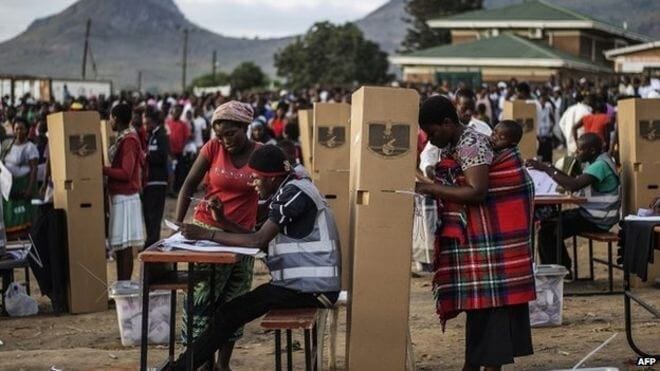
LILONGWE-(MaraviPost)- Malawi Electoral Commission (MEC) on Tuesday disclosed that MK44 billion (US$55 million) will be needed for the country to conduct the much awaited 2019 tripartite elections.

This comes just fourteen months remaining before the country is expected to host the competitive elections.

MEC chairperson Justice Dr. Jane Ansah SC told the nation during its election calendar of events that Malawi government has already contributed US$9 million through the current national budget and there is yet another commitment of US$4.5 million from development partners.

Ansah added that the commission is hoping to square the balance through financial aid from both government and development partners within the remaining 15 months before the elections commence.

The commission therefore disclosed that eligible voters will be those registered through the ongoing National Identification exercise to bar illegal dwellers from voting.

“Everything is set, we are ready, the commission has placed some reforms to make sure that the polls be conducted in free and fair manner. We have put administrative reform that will make all our protocols transparent,” assures Anshah

Minister of Justice and Constitutional Affairs Samuel Tembenu assured the nation of government commitment by providing required resources for the commission to carry out its course.

Centre for Multiparty Democracy (CMD) Chairperson Kandi Padambo therefore emphasized the need for female politicians to contest in the forthcoming polls as to achieve 50-50 campaign.

With the election calendar launch theme; “consolidating Malawi’s democracy through the ballot”, attracted representatives from different development partners, political parties, civil servants, Civil Society Organizations, the clergy and traditional leaders .

Zimbabwe: Tensions between Mnangagwa and Army Commanders grow

Tensions are gradually intensifying between President Emmerson Mnangagwa and the military clique surrounding him, amid revelations that the army is exerting overbearing influence on the executive.

Accprding to allafrica.com news, official sources say the military is even exercising veto power in some instances, while also influencing the operations of government and other security organs.

Senior government officials told the Zimbabwe Independent this week that the military element in Zanu PF has serious political ambitions, to the extent that they want Mnangagwa to serve one term, if he wins elections, before handing the baton over to Vice-President Constantino Chiwenga, who is also in charge of the ministries of defence and war veterans.

Chiwenga was the commander of the Zimbabwe Defence Forces when the military embarked on Operation Restore Legacy in November last year. The operation — widely seen as a coup — catapulted Mnangagwa to high office, ending former president Robert Mugabe’s 37-year grip on power.

Chiwenga was then appointed vice-president, while retired Lieutenant-General Sibusiso Moyo, who announced the military intervention on state television, was appointed Foreign Affairs minister.

Former Air Force of Zimbabwe Air Marshal Perence Shiri was appointed Agriculture minister, while retired Lieutenant-General Engelbert Rugeje was appointed head of the Zanu PF commissariat.

Government officials say the military is now exerting pressure on the executive, making the civilian component of government uncomfortable in some instances.

“Tensions and mistrust are certainly building up in government, although things may appear rosy on the surface. The feeling is that the military clique is making too many demands both in government and the party (Zanu PF).

“The military has been so strong that they have veto power in some cases. For instance, Mnangagwa had initially appointed Oppah Muchinguri as one of his deputies, but the military demanded that the position be given to Chiwenga, who also insisted on being in charge of defence,” an official said

“It was the same case with Victor Matemadanda. He was earmarked to be Zanu PF’s national commissar, but the military demanded that one of the senior commanders secures the post, resulting in Rugeje’s appointment. The military feels that the civilian wing of the party is not competent enough to run the commissariat, hence Rugeje is running it with the assistance of Ministry of Defence officials and the army.”

Chiwenga was in 2015 awarded a doctorate by the University of KwaZulu-Natal’s College of Humanities, fuelling speculation that he was preparing for a career in politics and possibly a future role in leadership.

The Independent has on several occasions in the past reported that he was angling for political office, including in 2011, when he attained a master’s degree in international relations from the University of Zimbabwe.

Government officials say Mnangagwa has not been able to contain the military as he does not have an electoral mandate, and actually owes his ascendancy to military commanders.

“In addition, Mnangagwa in reality does not have control of the army as things stand. The army is still loyal to Chiwenga, who is also effectively Minister of Defence.

Chiwenga has been pushing for the army to receive preferential treatment and dominance compared to other security forces and civil servants, and it appears he is winning on that front,” an official said.

The Independent last week reported that the expulsion of high-ranking Central Intelligence Organisation (CIO) officers had escalated tensions in the security forces at a time some operatives tortured during the military coup were demanding compensation for injury and trauma.

The army was vicious on people netted during Operation Restore Legacy, particularly the police and CIO agents, further straining relations which had deteriorated due to differences over the protracted Zanu PF succession.

Mangochi Malindi Ward By-election on April 10

The by-election for Mangochi-Malindi Ward has been slated for April 10, 2018, District Commissioner (DC) for Mangochi, Reverend Moses Chimphepo announced on Sunday.

The DC made the announcement at the end of a two-day full council meeting where the council’s committees presented reports on achievements made over the past half financial year.

Malindi Ward fell vacant following the death of Councilor Saidi Macollera on November 30, 2017 after he collapsed.

Chimphepo said the launch of the by-election would be on February 23 and that collection of nomination papers would be from February 27 to March 7, 2018.

“From February 24 to 27 there will be training of staff that will conduct the election. The deadline for receiving nomination papers from candidates is March 23,” said Chimphepo.

“Campaign period is from 13th March to 8th April and April 10 is the actual polling day,” added the district commissioner.

Macollera was once Vice Chairperson for Mangochi District Council but in the September 2017 council elections he lost to Namabvi Ward Councilor, Twaha Salanje, who is now vice chairperson while Katuli North Ward, Omar Jabil Magombo, is the Chairperson.

MCP ropes in former deputy speaker ‘Loveness Gondwe’

Former deputy Speaker and New Rainbow Coalition (NARC) president Loveness Gondwe, who competed against former president the late Bingu wa Mutharika and others in the 2009 polls has joined Malawi Congress Party (MCP).

Gondwe was welcomed in the rank and file of MCP at political rally with took place at Euthini in Mzimba over the weekend.

MCP Deputy Party Publicity Secretary , Reverend Maurice Munthali has confirmed that Gondwe indeed joined MCP over the weekend.

“Yes its true that we have welcomed a new member Loveness Gondwe. As you are aware Gondwe is not an ordinary person she was a president for her own party for long time and we are happy to receive such kind of people,” said Munthali.

Munthali said MCP is making in roads in the Northern Region with many joining the party.

The North has largely been known as the headquarters of unpredictable voters, the electorate does not easily get swayed. It has been the only region to defy the commonly held belief that voters prefer a candidate from their region.

But the North, with its unpredictable nature, should never be taken for granted. A Democratic Progressive Party (DPP) promise of a Mombera University and several groundbreaking ceremonies for roads which come to nothing might work to its disadvantage.

Road to 2019 elections; Malawi do not need to be told who is bad politician or political party, failed propaganda

By Saunders Jumah the Utopian

Be careful politicians and political parties of Malawi! Citizens of Malawi are not who they were in 1994. The past four governments have taught this nation all the subjects of life enough not to be cheated and deceived again.

In each and every political event instead of politicians discussing and debating with citizens or informing or showing them how good they are in offering service delivery; they are busy decampaigning and castigating rival political opponents.

If it is the political rally or event of the ruling Democratic Progressive Party (DPP) party their development policy is castigating and despising Malawi Congress Party (MCP) and Lazarus Chakwera.

If it is the event or rally of MCP what is discussed and castigated are DPP and Peter Mutharika.

All these does not articulate what Malawians anticipate or expect from their leaders.

On the part of the government and president Peter Mutharika they have instituted a special television and radio programs “Sapita Kawiri” for the sole purpose of diverting the peoples good intentions of voting for the opposition.

All political parties are embroiled in the cobwebs of discrediting one another without stipulating whats in stock for the people in their elections manifestos.

The ruling party which entered into government under a promise of good governance and a list of changes has turned against its own list and put the blame on opposition parties and leaders.

Countless projects and actions have not taken place; four years later the ruling party has created deceptive new projects that are all identified with ‘stones’.

The ruling party believe that the countless stones laid out across the country will be chameleons turning into airports, dual carriageways, universities, bitumen roads, hospitals, strong economy and improved lives.

The opposition parties instead of galvanizing on the failures of the ruling party are also embroiled with blindness of believing and trusting that in 2019 votes will just fall like rain in their ballot boxes in their favour.

Citizens on our part are also failures to seize the opportunity and realize we are the bargain that must streamline the direction of our nation by uniting to choose the best political party that will listen to our needs and aspirations.

Instead we are just disgruntled and clueless not knowing who to vote for in 2019.

Without reading the signs of hope and best direction citizens are split into voting patterns based on tribe, region and wealth.

The tragedy of Malawi is that “citizens” accept to be used, misused, confused and disused for a “penny”(Kwacha) when politicians and leaders plunder and enrich themselves.

In this dictum the ruling party is advised to stick to their manifesto promises and confess where it has failed. It must stamp out and root out corruption, it must arrest and bring to book all culprits starting with the prime suspect George Chaponda. It must stop nepotism and Lhomwenization.

The opposition parties must do postmortem as to why they have kept losing elections all along and rejuvenate or revamp their strategy to win the hearts of citizens.

As for us citizens, we are the only group that can change everything by choosing the best from the worst.

In 2019 we need to choose leaders and a political party that will allow (us, citizens) to use them by providing us with basic needs and deliver the uniform service we need and desire.

We must not vote for those that are entrenching divisions on tribe and region, we must not vote for corrupt and state looters. In doing so we will become conspirators of thieves and crooks against the nation we call home and mother as well as fatherland.

The future of Malawi is not in the hands of leaders, political parties and politicians. Leaders and politicians can flee into exile with our stolen taxes, will be given asylums, safe haven and diplomatic immunity yet the country, you and me cannot be allowed such privileges.

Fellow citizens of Malawi! Time has come for a new beginning in Malawi. Let us think upright and zoom into the future.

A better and prosperous Malawi is possible [with us on board] not the other way round.

The Utopian will continue to release similar dictums in the run up to the upcoming elections preparing the nation for a decisive and progressive future.

Saunders Jumah the Utopian
MALAWI ENGAGEMENT GROUP [MAENGA]
DEFENDERS OF THE FUTURE OF MALAWI [MADEFU]
The Utopian Principle Philosophy.

Ramaphosa’s 10-point plan to revive South Africa’s economy

Cape Town – President Cyril Ramaphosa unveiled the recovery plan to set South Africa on a new growth path, which involves forming a social pact with different social partners.

Delivering his maiden State of the Nation Address on Friday evening, Ramaphosa announced the appointment of a Presidential Economic Advisory Council.

According to Africa news24 report, the council will draw on the expertise of those in labour, business, civil society and academia, to ensure the implementation of economic policy and to respond better to economic circumstances.

The decision to establish the task force follows the successful engagement of different players in setting a national minimum wage, which will come into force on May 1 this year, Ramaphosa said.

During his address Ramaphosa highlighted that the economy has not grown or created jobs at the pace it should. But he listed some of the progress which has been made, among these being addressing political stability. Ramaphosa said government is committed to policy certainty and consistency.

“There is a greater sense of optimism among our people. Our people are hopeful about the future. Business confidence among South African companies has improved and foreign investors are looking anew at opportunities in our country,” he said.

“Our task, as South Africans, is to seize this moment of hope and renewal, and to work together to ensure that it makes a meaningful difference in the lives of our people,” he said.

Ramaphosa said this requires tough decisions to be made to close the fiscal gap, stabilise debt and restore the health of state-owned enterprises.

Projects to drive the recovery of SA’s economy in 2018 include:

1. Jobs Summit
A Jobs Summit will be convened in the next few months, to help address youth unemployment. The summit should provide practical solutions. This includes ensuring economic growth, better equipped workers and the expansion of economic infrastructure.

2. Investment conference
The investment conference, to be organised within the next three months, should target both domestic and international investors.

3. Revive the manufacturing sector
Ramaphosa said the decline in the sector will be addressed and that the re-industrialisation of the economy will create jobs. “We are going to promote greater investment in key manufacturing sectors through the strategic use of incentives and other measures,” he said.

Government will also introduce a localisation programme for products like textiles, furniture and water meters to be locally procured.

Part of this includes leveraging off special economic zones, to attract foreign and domestic investment to establish industrial hubs and build industrial capabilities, he explained.

4. Supporting black industrialists
There will also be efforts to support black industrialists, investment to develop small businesses in townships and rural areas and open up markets for black entrants through competition policy.

5. Youth Employment Service Initiative
“Young South Africans will be moved to the centre of our economic agenda,” said Ramaphosa.

In March the Youth Employment Service Initiative will be launched to place unemployed youth in paid internships in companies across the economy. “Together with our partners in business, we have agreed to create a million such internships in the next three years.”

6. Youth Working Group
Ramaphosa also stressed the importance of having youth raise their views and engage with government. For this reason a Youth Working Group will be established to advanced the interests of young South Africans, he said.

7. Infrastructure investment
Ramaphosa said a team will be set up to speed up the implementation of new projects for water infrastructure, road maintenance and health facilities.

8. Small business development
“We will work with our social partners to build a small business support ecosystem that assists, nourishes and promotes entrepreneurs,” said Ramaphosa.

Government will also maintain its commitment to set aside 30% of public procurement to small and medium enterprises, as well as township and rural enterprises.

Currently government is finalizsng a small business and innovation fund for start-ups. Efforts will be made to reduce regulatory barriers for small businesses.

Additionally, the Small Enterprise Finance Agency, has launched a scheme to fund entrepreneurs with disabilities.

9. Grow tourism sector
The tourism sector can provide the country with “incredible opportunities”.
The sector sustains 700 000 jobs and has capacity to double in size.

10. Digital Industrial Revolution Commission
Government will establish a Digital Industrial Revolution Commission to seize the opportunities in the digital industrial revolution.

Lessons Jacob Zuma taught South Africans

By Mpumelelo Mkhabela

Now that President Jacob Zuma, once a seemingly invincible figure, is out of the public office that he had used as an instrument of plunder, it would be a mistake to attempt to forget him.

Some people are already annoyed at the mention of his name. Such is the extent of the hatred he induced.

But his political rise and demise and the aftermath of his dramatic fall hold lessons for different actors in the realm of politics, government, family, business and society.

Here are some of the lessons:

– President Cyril Ramaphosa:
Don’t try to determine your successor. It is tempting when you are the incumbent president to try to pave a way for your preferred successor. It doesn’t work. Our short history as a democracy demonstrates this.

Zuma campaigned for Nkosazana Dlamini-Zuma. It didn’t end well for him. President Thabo Mbeki before him, tried to intervene in the succession. However understandable his intention, it failed dismally. Tragically, Zuma failed to learn from it.

Mbeki himself didn’t learn from President Nelson Mandela who had failed to get his preferred successor, which happened to be you, Ramaphosa. Do your best while you still have the privilege of governing. History will judge you for what you did and did not do during your tenure. You won’t be judged for your after-tenure.

– ANC Members of Parliament:
Learn to influence your political bosses and nudge them in the right direction to avoid looking like clowns. For far too long, you cheered Zuma on as he habitually delivered lies in the National Assembly.

Now after your political bosses had instructed you to remove Zuma, you were more than prepared to do so, making you look like you suffer from political schizophrenia. Zuma has dragged the integrity of many of you into the mud. Try to fix that and make serving as a parliamentarian a respectable public service. Let there be honour in being an MP. Most of you are dishonourable honourable Members of Parliament.

– Congress of South African Trade Unions (Cosatu) and other trade unions:
Focus on representing the interests of your members, safeguard your independence and don’t over-invest in one political leader. Cosatu leaders were so emotionally invested in the Zuma project that they were prepared to shed 300 000 members whose biggest affiliate union, Numsa, had begun to question his leadership capabilities.

Numsa leaders were the first within Cosatu to wake up to the reality that the Zuma revolution was nothing but counter-revolution to the interests of workers. Some Cosatu leaders were compromised by their links to Zuma. Cosatu members should consider passing a resolution preventing their leaders from sitting on the National Executive Committee of the ANC.

– Opposition parties – DA, EFF UDM, IFP, ACDP and others:
No amount of labelling should dissuade you from doing what you believe is right in the service if your country. Democratic South Africa doesn’t have differentiated citizenship. All citizens have a role to play and no citizen is more important than the other regardless of political affiliation. You have been vindicated and you need to keep on doing what the Constitution demands of you and be faithful to your voters.

Never mind the people who say now that Zuma is gone it means you have lost your relevance. Such thinking ignores the fact that the opposition doesn’t exist only to win votes; it’s also about making an impact in-between elections. You did it with distinction under Zuma.

The country is heavily indebted for the excellent work you have done.

– To honest civil servants:
You may not get a bonus for doing the right thing. Your job and your life could be on the line for doing your job according to legal and ethical prescripts. But insisting on playing by the rules shows long-term strategic thinking rather than taking short-cuts for immediate gain.

Think about all the civil servants who are due to appear in various tribunals on charges of corruption and other misdemeanours because the chief patron of graft and state capture is no longer in office. Who has the last laugh?

– Cabinet ministers:
Cut out the bling and try to live an ordinary life. To be fired from Cabinet must not constitute the biggest downfall. But it certainly looks like and feels like it if the fall is from the highest altitude of bling and materialism.

Better look like a servant and leave bling to those to whom it is currency. The replacement of rationality by bling is one of the greatest tragedies of our politics. It has killed the idealism that is required in government, especially a young democracy.

– To all politicians:
Never allow your partners and children to get involved in matters of public office.

Even your spouses who enjoy certain entitlements, including travel and spousal allowances, should understand that they are not public representatives. Nor are they your spokespersons in matters of public affairs. Zuma’s children have been involved in scandalous arguments with members of the public, journalists and in some instances with ANC officials. They regarded the elevation of Zuma as a family entitlement. It was not. Let it sink in: South Africa is a constitutional democracy and not a dynastic republic.

– To all public leaders:
Be grateful and don’t cry injustice arising from public attacks associated with the public position. To agree to be elevated to the top is to renounce any claim to labour rights and some other entitlements earmarked for the poor and weak in society.

There is no such thing as a victimised president as Zuma wanted us to believe. He was privileged, not entitled, to occupy the office and he should have been grateful. His failure to express unqualified gratitude is scandalous because he disregards the eight and a half years that he has served as president.

– To all civic-minded citizens, including those who marched to the Union Buildings and other places demanding Zuma’s resignation after he became reckless with Cabinet changes:

No amount of civic action is insignificant. The fall of Zuma is a culmination of many factors including protest by citizen. It might have come a little late, but you must be proud that it came nonetheless. Learn from your own action and repeat this in future – when necessary.

– To all educated people, including lawyers and accountants:
Let’s not use our skills to commit crimes. We are bringing education into disrepute. All the professionals who helped Zuma to lie and his friends to loot public resources have disgraced themselves and their qualifications.

– Multinational companies seeking market share and investment opportunities in South Africa:
Always investigate and seek independent advice about the political rules of the game. Don’t be fooled by politicians who promise to give you special protection. Their days in office are not always guaranteed. Proximity to the political leadership and access to political decision makers is not the reason to disregard domestic laws.

Many companies – SAP, China South Rail, McKinsey, KPMG, Bell Pottinger, Bank of Baroda – were convinced they were close to some stereotypical African dictator who could use the government fiscus as his personal purse. South Africa is different. Zuma might have belonged to that league of kleptocrats, but the South African political system is not conducive for such. We are a complex democracy with complex institutions – an outcome of a complex history. Take time to study us carefully and seek help. Or else, you will be embarrassed.

– To journalists and whistle blowers:
Do what you know best. Never stop digging, regardless of who is in power and the risk inherent in the work.

– Mkhabela is with the Department of Political Science at the University of South Africa.

Disclaimer: Maravi Post encourages freedom of speech and the expression of diverse views. The views of columnists published on Maravi Post are therefore their own and do not necessarily represent the views of Maravi Post.

Tanzanian opposition leader Daniel John ‘murdered’ after kidnap ordeal

Tanzanian opposition party leader Daniel John was on Wednesday found beaten to death after men bundled him into a car.

Opposition AFP party chairman Freeman Mbowe said the official opposition leader in Tanzanian parliament had been kidnapped.

According to Kenya online newspaper, the party official, John’s body was later delivered to a hospital, with machete wounds to the head.

“Daniel John was kidnapped on Monday in the street by men in a car,” Mbowe said.

Mbowe said a friend of John, who was kidnapped at the same time but survived the attack, described what happened.

“He said they were beaten and tortured, and the attackers asked them why they were campaigning for Chadema’s candidate.”

John was in charge of the Chadema party in Hananasif district, Dar es Salaam. An election campaign is ongoing in the region.

Mbowe, however, accused supporters of the ruling Chama Cha Mapinduzi (CCM) party of being behind the attack.

He accused the ruling party of “wanting to get everything by force.”
In September 2017, senior opposition lawmaker Tundu Lissu was shot several times at his home in Dodoma.

He was rushed to a Nairobi hospital for specialised treatment and stayed in the ICU for several months.

recuperation, Lisu accused president John Pombe Magufuli of attempted political assassination.
l’rf, 49, was shot by unknown gunmen in in Dar es Salaam in September and was admitted at Nairobi Hospital.

My Take On It -While celebrating Norway, let’s not forget Gaddafi’s Libya – February 16, 2018

Every person is to be in subjection to the governing authorities for there is no authority except from God, and those which exist are established by God. Romans 13:1-2

One of the many accounts on the end of the life of illustrious Libyan leader, Muammar Gaddafi, was captured, deposed and killed on 20 October 2011 was during the Battle of Sirte. Gaddafi had been found hiding in a culvert west of Sirte and captured by the National Transitional Council forces and brutally killed shortly afterwards.

The reports recount that the NTC initially claimed Gaddafi died from injuries sustained in a firefight when loyalist forces attempted to free him; however graphic video of his last moments show rebel fighters beating him and one of them sodomizing him with a bayonet before he was shot several times as he shouted for his life.

October 2017 marked the sixth-year anniversary of assassination of Africa’s most vocal and hugely unpopular head of state and government.

While he lived, Muamar Gaddafi, popularly known as the Brother Leader, was viewed through largely western lens and viewed by his African peers with suspicion, as a megalomaniac who had visions of grandeur, and probable whims of being supreme ruler of the African continent.

The fire of such fears in African leaders were fanned by Western hegemony. Gaddafi’s death marked the fall of the longest reigning dictator in the Arab world but also the end of the ambitious ideological system that he dreamed would supersede all rivals. While much of the world sees him as an eccentric and brutal demagogue, Qaddafi has tried for decades to portray himself as a statesman-philosopher.

While he lived, the little green book, written by Gaddafi, declared Prophecies that transcend his strong and often loud philosophies he blasted every time he was in front of a microphone.

“I will not go into exile to any foreign country. I was born here in Libya, and I will die here. This country was a dessert, and I turned it into a forest, where everything can grow.

No one Love this land more more than its citizens. If Europe and America tells you that they love you, be careful. They love the wealth of your land. The oil and not the people. They are helping you to fight against me but, it will be more wise for you to fight against them because they are fighting against your future and progress.

My message to you the people of Libya is, they are helping you to kill me but you will pay the price because you will suffer. And my message to you America and Europe is, you will kill me, but be ready to fight a never ending TERRORISM.

Before you realise your ignorance, terrorists will be hitting you at your doorstep.”

Such were the rumblings of Africa’s widely known and disliked, despised and sometimes shunned son of the African soil.

It is widely reported that life in Gaddafi’s Libya was similar to the lives of many Middle Eastern citizens in oil-rich region, however a bird’s eye view of Norway reveals that citizens there enjoy a myriad of social development benefits such as free college education, free health care, 30-hour work week,6 weeks paid vacation, free child care and $16 per hour minimum age.

Norway is indisputably a most paradisiacal place on earth, but for the extended snowy climate. Imagine for a minute then, a place in Africa and with more than these being the norm and in Libya under Colonel Muamar Gaddafi. As Gaddafi went around the world ranting about a strong African Union that was formed as a federal system.

As Gaddafi made these overtures on a stronger African Union, inside Libya there are reports of a utopia-like lifestyle that would make many people from the west desire to migrate to the north African predominantly Muslim country.

The reports among other benefits of living in Libya are:

1. There was no electricity bills in Libya, electricity was free for all its citizens.

2. Banks in Libya being state-owned therefore loans were given to all its citizens at a 0% interest by law. No interest on loans.

3. A home was considered a human right in Libya. Gaddafi vowed that his parents would not get a house until everyone in Libya had a home.

4. All newlyweds in Libya received $60,000 Dinars (US$50,000) from the government to buy their first apartment.

5. Education and medical treatments were free. Before Gaddafi, only 25% of Libyans were literates. At the time of his death, the figure stood at 83%.

6. Libyans that took up farming as a career, received farm land, a farming house, equipment, seeds and livestock to kick-start their farms – all for free.

7. If Libyans could not find the education or medical facilities they needed in Libya, the government funded them entirely to go abroad for it.

8. In Gaddafi’s Libya, if a Libyan bought a car, the government subsidized 50% of the price.

9. The price of petrol in Libya is $0.14 per liter.

10. Libya had no external debt and its reserves amount at $150 billion – was frozen globally upon Gaddafi’s death.

11. If a Libyan was unable to get employment after graduation from college, the state paid the average salary of the profession as if he or she was employed until employment was found.

12. A portion of Libyan oil sale was credited directly to the bank accounts of all Libyan citizens.

13. A mother who gave birth to a child under Gaddafi, received US $5,000 as child benefit upfront.

14. Forty loaves of bread in Libya cost $ 0.15

15. Twenty-five percent of Libyans have a university degree.

16. Gaddafi carried out the world’s largest irrigation project, known as the Great Man-Made River Project, to make water readily available throughout the desert country.

Analysts have asked “if this is called “dictatorship,” what type of leadership democracies have?

In numerous African countries, oil and mineral wealth when not shared or allotted through state-controlled redistribution of government earnings through them to the citizens. It is a sure way to end poverty and definitely a powerful sign of democratic culture.