Category Archives: Politics

Malawi has a multi-party system with over 40 registered political parties.The political process in Malawi is such that parties are voted into power. Parties participate in an electoral process. The parties with the most representation in the National Assembly are the People’s Party (PP), Malawi Congress Party (MCP), United Democratic Front (UDF), and Democratic Progressive Party (DPP).

President of Malawi 

Under the country’s 1966, 1994 and 1995 constitutions, the President is executive head of state. The first President was elected by the National Assembly, but later presidents were elected in direct popular elections for a five-year term. In the event of a vacancy, the Vice-President becomes President.

  Denotes Vice-President acting as President
? President
(Birth–Death)
Portrait Tenure Elected Political affiliation
(at time of appointment)
Took office Left office Time in Office
1 Hastings Banda
(1899–1997) [1]
Dr HK Banda, first president of Malawi.jpg 6 July 1966 24 May 1994 27 years,319 days Malawi Congress Party
2 Bakili Muluzi
(1942–)
Muluzi.png 24 May 1994 24 May 2004 10 years,3 days 1994
1999
United Democratic Front
3 Bingu wa Mutharika
(1934–2012)
Mutharika at Met.jpg 24 May 2004 5 April 2012
(died in office.)
7 years,316 days 2004 United Democratic Front
2009 Democratic Progressive Party [2]
4 Joyce Banda
(1949–)
Joyce Banda August 2012.jpg 7 April 2012 31 May 2014 2 years,54 days People’s Party
5 Peter Mutharika
(1939–)
Peter Mutharika 2011 (cropped).jpg 31 May 2014 Incumbent 4 years,103 days 2014 Democratic Progressive Party

Standards

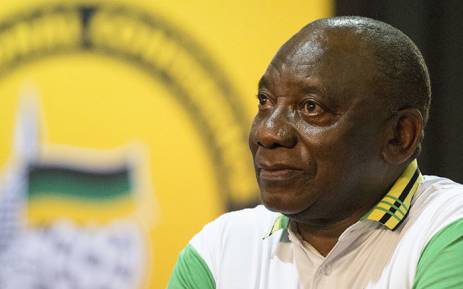
Kenya’ Raila’ pledges to support newly appointed South Africa President ‘Ramaphosa’

Kenya’ Raila Odinga has pledged to support the newly South Africa President ‘comrade’ Ramaphosa, Maravi Post has established.

Odinga said this through a letter to Ramaphosa according to Kenya online newspaper ‘the Star.’

Below is the letter;

Your Excellency, Comrade and Dear Brother,

I write on behalf of all overjoyed Kenyans and indeed Africans who were absolutely thrilled today to finally see you take the helm of the great nation of South Africa.

The excitement is particularly strong as there is a conviction that you will restore the bright flame of leadership that has diminished in the land of our dearest Nelson Mandela.

All of Africa, now in so much need of inspirational figures, is confident that with your dynamic past and leadership history, the recent national and continental vacuum will shortly begin to be a thing of the past.

All African democrats are praying for your success, since no other country’s leader anywhere in the world has the expectations of an entire continent riding on him.

So your election yesterday is a victory not only for the African National Congress and South Africa but for all those forces across the continent still fighting for the full democratic and economic emancipation of all our people.

I recall our discussion a year ago when we were preparing to run for the leadership of our respective political parties in Kenya and South Africa.

We both emphasised the imperative of renewed African democratisation as the indispensable base for building a vibrant continental economy with an equitable distribution of wealth as that alone would help contribute to the global movement for moral and ethical leadership.

You now have the opportunity and honour to fulfill that vision, with my full support of course.

You were one of the pivotal architects who supported our beloved Mandela in creating a South Africa that captured the imagination of the entire world.

It will not be easy to restore that respect in our turbulent times, where a few take too much from their countries and leave misery and instability in their trail.

Knowing you as I do, I know you will forcefully pursue the challenge for both South Africa as well as the continent, immense though it is.

With South Africa’s still vibrant global standing, I am confident you will restore to it the high respect that it, and the continent, enjoyed under the fabled leadership of Nelson Mandela in particular.

As you can no doubt imagine, Kenyans were electrified when they heard you twice use our language Swahili and the phrase ‘Not Yet Uhuru’ to encapsulate the challenges that still lie ahead if we are to fulfill the hope of human dignity that our legendary freedom fighters nourished for every African.

They thought that only those in East Africa knew call to action, coined and immortalized as it was by your friend and my late father Jaramogi Oginga Odinga.

With my sincere best wishes.

Ethiopia’s Prime Minister ‘Hailemariam Desalegn’ resigns over deadly mass unrest

The Prime Minister of Ethiopia, Hailemariam Desalegn has submitted a letter of resignation to the country’s parliament, saying he was standing down as both the country’s leader and chairman of the ruling coalition over a long period of deadly protests.

According to BBC report, Hailemariam Desalegn said he felt it was “vital” to step aside to allow reforms. “Unrest and a political crisis have led to the loss of lives and displacement of many,” he said.

Mr Hailemariam’s surprise resignation comes amid the worst anti-government protests in 25 years.

It was first reported by the state-affiliated Fana Broadcasting Corporate (FBC), which said the prime minister “tried his utmost effort to solve the crisis in his country and he is resigning now to be part of a solution to it”.

Ethiopia has been rocked by months of protests demanding wider freedoms that have left hundreds dead and tens of thousands detained. The government in recent weeks released more than 6,500 detained opposition figures, journalists and others after the prime minister in a surprise announcement in January said he wanted to “widen the democratic space for all.”

The protests have disrupted life and business in one of Africa’s fastest-growing economies.

Ethiopia frees all political prisoners and closes notorious prison
Mr Hailemariam, 53, will continue in his role until the “power transition is completed,” the FBC report said. He also seeks to unseat himself from the ruling Ethiopian People’s Revolutionary Democratic Front, the report said.

Ethiopia’s demonstrations demanding wider freedoms began in late 2015 and engulfed much of the restive Oromia and Amhara regions before spreading into other parts of the country, leading to a months-long state of emergency that has since been lifted.

Ethiopia’s government has long been accused of arresting critical journalists and opposition leaders. Rights organisations and opposition groups have called for their release, saying they were arrested on trumped-up charges and punished for their points of view.

The academician-turned-politician has led Ethiopia since 2012 after the death of former strongman Meles Zenawi. He also served as deputy prime minister and foreign minister under the former leader before assuming power. He also was elected chairman of the African Union in 2013.

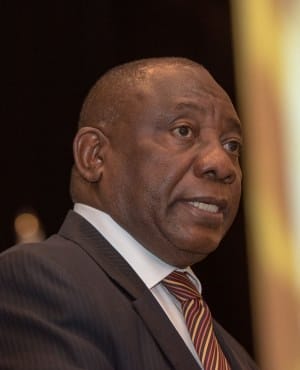
Ramaphosa is now South African Acting President

Cape Town – After Jacob Zuma’s resignation as president on Wednesday night, Cyril Ramaphosa automatically became acting president of the republic.

According to News24, the Section 90 of South Africa’s Constitution, when there is a vacancy in the office of president, which there is after President Jacob Zuma’s resignation, the first person in line to act as president is the deputy president.

“An acting president has the responsibilities, powers and functions of the president,” reads the Constitution.

“Before assuming the responsibilities, powers and functions of the president, the acting president must swear or affirm faithfulness to the republic and obedience to the Constitution.”

This basically means he cannot perform presidential duties, such as signing legislation into law, making appointments or deploying the military (such as when IFP leader Mangosuthu Buthelezi acted as president) before taking the oath, or being sworn in.

When there is an acting president, a new president must be elected by the National Assembly.

The African National Congress (ANC) on Wednesday indicated that they would like the State of the Nation Address (SONA) to be delivered by a president and not an acting president, so it is expected that the National Assembly will have an election before Friday evening.

For this to happen, the chief justice must determine a date, within 30 days of the vacancy occurring, for the National Assembly to elect a new president from its members. If there is more than one candidate, this will be done by secret ballot.

If the National Assembly fails to elect a new president within 30 days, the Speaker must dissolve Parliament and new national elections must be held.

On Wednesday, Parliament scheduled the election of the president for Friday morning, which would have been after the now irrelevant motion of no confidence in Zuma that had been set down for Thursday had he not resigned.

There is a possibility that the election of the president might happen even sooner, depending on the availability of Chief Justice Mogoeng Mogoeng and a decision by Parliament’s programming committee, which meets on Thursday morning.

The person elected president, most likely Ramaphosa, will then cease to be a member of Parliament.

Former Malawi Speaker Sam Mpasu dies

BLANTYRE-(MaraviPost)-Renowned Malawi politician and author, Sam Mpasu has died.

According to our reliable source, Mpasu was found dead in his home in Blantyre today (Thursday) morning.
Maravi Post reporter is on the ground to gather more information.

Below is a historical background of Mpasu;

Sam Mpasu Biyeni!

Sam Mpasu (born 1945) was a Malawian politician, author, and former diplomat. He served as Minister of Commerce, Secretary General of the United Democratic Front (UDF) in 1999, and speaker of the Malawi National Assembly.

He served as a diplomat in the foreign service for the Malawi mission to Germany. While in diplomatic service in Germany, he wrote a book in 1975 entitled Nobody’s Friend, which got him arrested because the Kamuzu Banda regime thought that it was written about Kamuzu Banda. He was detained without trial for “two years, one month, one week, and one day” in Mikuyu Prison from 1975 to 1977.

From 1978 Mpasu worked at Lever Brothers (now Unilever) in various capacities until 1988 when he was seconded to run the Malawi Confederation of Chambers of Commerce and Industry (MCCCI).

In 1991, while working for Xerographics, he joined a secret group headed by ex Secretary General of the, Malawi Congress Party turned businessman Bakili Muluzi whose aim was to build up opposition to Banda.

The United Democratic Front was voted into government in 1994.
Mpasu was elected Member of Parliament for Ntcheu Central, appointed Minister of Education and Government Chief Whip in Parliament.

He later served as Minister of Commerce and Speaker of the Malawi House of Assembly. His appointment as Minister of Commerce met with a lot of resistance since he was the Speaker of the House at that time.

The court attempted to block President Bakili Muluzi from posting him to this position. Mpasu later accepted it.

In 2008 a Malawian court sentenced him to a six-year prison sentence over charges of corruption and abuse of office which was famously know as the Field Yark Scandle dating back 14 years. He was released from jail in 2010 instead of 2014 due to good behaviour.

After the 2014.election he became present of the New Labour party where he became a, lone voice replacing Friday Jumbe, a former cabinet colleague who resigned from active politics.

Malawi’s Parliamentary legal Committee rejects President appointing MEC commissioners

LILONGWE-(Maravi Post)-The Legal Affairs Committee has rejected proposed amendments to the Electoral Commission Bill that provided for the President to appoint commissioners to the Malawi Electoral Commission (MEC).

Instead, the committee has proposed a new clause 3 of Bill number 23, Electoral Commission (Amendment) where political parties would submit names to the President for consideration as commissioners.

This in essence maintains the status quo in the Electoral Commission Act being amended which provides that the President appoints commissioners in consultation with political parties.

Presenting the report of the parliamentary Legal Affairs Committee on the Bill yesterday, chairperson Maxwell Thyolera said the committee had observed that by providing that the president alone would appoint commissioners it would mean there would be no checks and balances in the process.

It was the Law Commission’s view that the arrangement could leave out parties that acquire representation in the National Assembly after commissioners have already been appointed.

But the committee wants that only those political parties with a minimum of 10 percent representation in Parliament should be the ones to submit nominations to the President because these would already have a wide following.

Unlike the current situation where the President can refuse to confirm submissions of political parties, the committee wants that the President be compelled to appoint from the submitted list and amendments would be proposed to that effect.

Jacob Zuma has resigned

Jacob Zuma
jacob zuma Resigns

President Jacob Zuma resigned as leader of South Africa on Wednesday evening during a televised address to the nation.

“I resign as president of the republic with immediate effect,” he said, “even though I disagree with the decision of the leadership of my organisation … I have always been a disciplined member of the organisation.”

He added: “As I leave, I will continue to serve the people of South Africa as well as the ANC.”

In his speech, Zuma emphasised that “no leader should seek an easy way out simply because they could not face life at the end of their term without the perks that come with their political office”.

“I fear no motion of no confidence or impeachment. They are the lawful mechanisms for the people of this beautiful country to remove their president.

“I’ve served the people of South Africa to the best of my ability. I am forever grateful that they trusted me with their highest office in the land, but when I accepted the deployment I understood and undertook to subject myself to the supreme law of the land, the Constitution,” he said.[embedyt] https://www.youtube.com/watch?v=EoWTs0Oabmg[/embedyt]

President Mutharika appoints Clara Makungwa upon joining DPP

LILONGWE-(MaraviPost)-President Peter Mutharika has rewarded former People’s Party (PP) Director of Women Clara Makungwa for dumping the party and joining the ruling Democratic Progressive Party (DPP).

According to a statement from the Office of the President and Cabinet released on Tuesday, Mutharika has appointed Mrs. Clara Makungwa as Presidential Advisor on Women Affairs in the Office of the President and Cabinet (OPC).

The appointment according to the statement is with effect from 12 February 2018.

Makungwa dumped PP in November 2017 to join DPP. She once served a ministerial position during former Malawi leader Joyce Banda.

Of the absenteeism of Parliamentarians in Malawi’s nation assembly

By Saunders Jumah the Utopian

Malawi must now know that the attitude of business as usual on the way our nation is run are over. Whether it is the Executive branch of government, the Legislature or the Judiciary.

For 54 years citizens have left the affairs of our state craft in the hands who in appearance have been “Ladies and Gentlemen of high calibre and integrity” yet inside they have been “Jackals, Hyenas and Foxes.”

The Malawi of today is not that of the past. Citizens are transformed and enlightened, we know our rights, our freedoms and we also know which freedoms have been sacrificed in exchange for elected leaders to provide service delivery and many other liberties.

We are also aware and know among the citizens that leaders in government are servants and not employers.

This must ring and awake all those holding public offices to know that we are not going to sit back and watch them ‘bossing us’ with our tax money.

The Engagement Group called MAENGA is not going to watch and fold arms when those that misunderstand the description of their duties are absconding or undermining their responsibilities.

This is the reason we are making a statement deploring in strongest terms the frequent absenteeism of our parliamentarians in the August House. As expressed the Malawi of the past is gone.

The Malawi we have now is more accountable by citizens not the president, the cabinet, the courts or the house of parliament or the police.

This is happening after being betrayed by these very public officers that were supposed to lead and act by example.

Citizens of Malawi through MAENGA are vigilant and awake to hold anyone accountable and where possible arrest negligence and extravagance of duty.

The trust we had on office bearers in public sector has vanished after scandalous incidents that have deprived our nation tangible, anticipated development and service delivery.

Our taxes have been stolen, looted, misused and mismanaged to the point where many see political office as a gravy money train to extravagant riches. The growth and numbers of political parties is case in point.

We have observed enough, sit idle enough. We are not going to sit no longer, it is now over to us to stand up and save our nation’s future.

While two individuals have been mandated to look into and find a solution as to what can be done to ease the persistent absenteeism of members of parliament; MAENGA has a chance to intervene.

The culture of politics in Malawi is dangerous to be left in few numbered individuals.

The way tax payers money has been exchanging hands in corrupt malpractices, we cannot let or allow the nonsense to continue.

MAENGA and all citizens of Malawi must stand up and speak in one voice that all members of parliament that are absconding their duty to present our various constituency needs must not collect allowances or be paid.

The citizens of Malawi who are employed in private or public service are penalized or dismissed when we are persistently absconding from our various work places.

Members of Parliament, the Executive branch and the courts are not our gods to do as they please. They are our servants [employees] that we must supervise and penalize too.

Having saying all these; MAENGA call on the national assembly to stop paying salaries and sitting allowances to the deputies that fail to appear in the house.

In addition MAENGA is displeased with most of the members of parliament who have abused Constituency Development Fund, we are appealing to the parliamentary committee to make the names public so that MAENGA must appeal to the particular constituents to recall or choose another member come in 2019.

House of assembly of this past August House has disappointed and angered citizens for rejecting the fundamental internationally recommended 50+1 bill.

The action of members of parliament is going to see another president or party winning with less than 20% of the votes. This is betrayal of our hard won democracy. We were not supposed to be ruled by a minority party and leaders come 2019 but their (deputies) action is bringing this nation backward instead of moving forward.

For the house to be undermining its objectives of attending to duty renders them inappropriate, irrelevant and incapacitated.

MAENGA is aware that a large percentage of members are ignorant of the constitution of the Republic, most do not even know and understand the “standing orders and rules of the house” hence their failure to hold their duty.

Parliament of Malawi has failed to hold the Executive branch of government accountable, the rule say the president will have to appear in the house and answer questions of constituents representatives, what happens is the opposite, they are addressed and dictated. The president defy the court order the house keeps quite.

We are not impressed with the house.

MAENGA is a game-changer of Malawi politics. We are not going to tolerate and accept the past practices of “business as usual” when our laws are being broken, when our constitution is being raped and abused.

In a spirit of transformation we urge and appeal to the house to deduct the salaries of members of parliament, stop sitting allowances to the deputies that abscond from the house henceforth.

MAENGA is in the process of instititionalizing itself, soon we will be taking all state offenders to task. We have left Malawi to suffer for long by disguising people who pretend to be leaders when they are foxes and hyenas.

MAENGA comprise of intelligent, patriots, abled and energetic young men and women who can replace all that are failing this nation in disregard to political affiliations.

We are watching from the sidelines and our patience is wearing out.

Saunders Jumah the Utopian
MALAWI ENGAGEMENT GROUP [MAENGA]
of the Think Tank.

Ibrahim Mo prize: Liberia’s Sirleaf wins African leadership prize

Former Liberian president Ellen Johnson Sirleaf on Monday became the first woman to win the coveted $5 million Mo Ibrahim Prize for Achievement in African Leadership, in recognition of her efforts to rebuild her country following two devastating civil wars.

The continent’s first ever elected female head of state becomes only the fifth winner of the annual Ibrahim Prize for achievement in African leadership since its launch in 2006, as it is only given out when there is deemed to be a worthy candidate.

Named for its creator, the Sudanese-British businessman Mo Ibrahim, the prize carries an award of $5m paid out over 10 years and then $200,000 each year for the rest of the winner’s life.

To qualify, African heads of state have to have left office during the last three calendar years, having been democratically elected and served their constitutionally mandated term.

Sirleaf left office last month, handing over to George Weah, the former Chelsea and Milan footballer turned politician after a drawn-out election period marred by delays and allegations of fraud.

Salim Ahmed Salim, the head of the prize committee, said: “Sirleaf took the helm of Liberia when it was completely destroyed by civil war and led a process of reconciliation that focussed on building a nation and its democratic institutions.

Throughout her two terms in office, she worked tirelessly on behalf of the people of Liberia. Such a journey cannot be without some shortcomings and, today, Liberia continues to face many challenges.

Nevertheless, during her twelve years in office, Ellen Johnson Sirleaf laid the foundations on which Liberia can now build.”

Mo Ibrahim said he was “delighted” Sirleaf had become the foundation’s first female laureate.

“In very difficult circumstances, she helped guide her nation towards a peaceful and democratic future, paving the way for her successor to follow,” he said.

Nelson Mandela became an honorary recipient of the award in 2007. In some years the award, which was launched in 2006, has not been awarded as no candidate was considered good enough.

The previous laureates are president Hifikepunye Pohamba of Namibia (2014), president Pedro Pires of Cabo Verde.

Mo Ibrahim prize timeline:

2007: Mozambique’s former President Joaquim Chissano
2008: Botswana’s former President Festus Mogae
2009: No award given
2010: No award given
2011: Cape Verde’s former President Pedro Verona Pires
2012: No award given
2013: No award given
2014: Namibia’s former President Hifikipunye Pohamba
2015: No award given
2016: No award given.

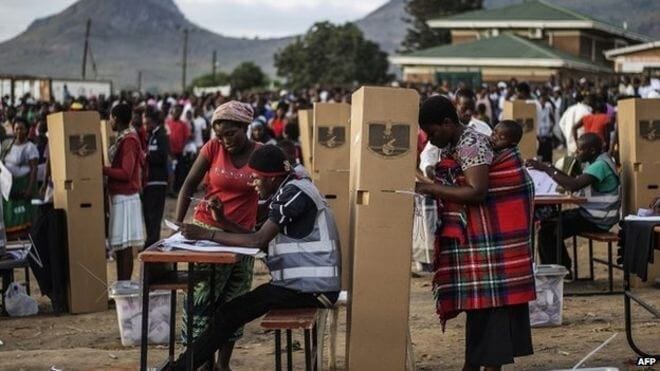
MEC to use biometric voters registration system in 2019 polls

BLANTYRE-(MaraviPost)-Malawi Electoral Commission (MEC) Chairman Justice Dr. Jane Ansah SC has revealed that her body has adopted and will use the Biometric Voters Registration System in order to ease some of the challenges faced during the voting process in previous general elections.

Ansah disclosed this at the opening of a day long validation workshop for the electoral body’s strategic Plan that will be used between the period of 2018 to 2022.

While admitting that there have been lots of challenges in previous elections, Ansah said MEC as an electoral body mandated to conduct and manage elections in the country, MEC always strives to deliver the best product to the nation in the form of credible, free, fair, transparent and cost effective elections.

“There were always cases of misspelled names, missing or transposed picture or wrong birth dates. The Commission has adopted a biometric voter registration system to eliminate all these challenges. This is
just one area of reforms that MEC is implementing but there could be many,” said the MEC Chairperson.

She, therefore, called upon stakeholders present at the validation workshop to openly give out their thoughts on how best to achieve successful reforms at MEC.

“This is the time to condense those ideas into this document [Strategic Plan] that will become our reference book for the next five years. We need to break the circus of recurring challenges to demonstrate that we are making strides in improving elections quality,” said Justice Ansah.

The 2018-2022 Strategic Plan is the fourth one after other strategic plans formulated between 2001-2004, 2005-2009 and 2013-2017.

The process of coming up with the latest strategic plan is being funded by the European Union (EU) through a basket fund managed by UNDP.

“While this strategic plan spans five years, let us also not lose focus that in May we will hold tripartite elections,” she concluded.