



By Lusekero Mhango
KARONGA-(MaraviPost)-Earning a living through growing fruits and vegetables farming has been an order of the day for most Mzuzu city dwellers. However, one of the biggest challenges small scale, poor family farmers face is a lack of technical knowledge and resources for processing and storing their harvested crops.
According to the World Food Program (2021) in Malawi, on average, around 30 percent of their hard earned harvests is regularly lost to rodent, bugs and mold within a few months after picking from their gardens and farms.
Mzuzu growing at 5.4 per cent per year, is the fastest growing city in Malawi and is projected to become a major urban center in southern Africa. The youthful population of Mzuzu, with over half aged below 20 years gives a high population momentum.
This scenario implies that there will inevitably be a huge demand for food not just in Mzuzu but also other cities. The demand will be driven by a rise in urban population and diversified consumption patterns which will put pressure on the already overstretched urban food supply chains.
Further the current food and nutrition insecurity in Malawi cities has yielded major health effects including stunting and permanently reduced cognitive function for children, promoted child labor and contributed to increased prevalence of nutrition related diseases.
According to a State of Food and Agriculture of 2019 report around 14% of the world’s food is lost after harvesting and before reaching the retell level including on farm activity, storage and transportation.
The report further showed that losses and waste are generally higher for fruits and vegetables in all stages of the food supply chain and in lower income countries like Malawi more fresh fruit and vegetable losses is attributed to poor infrastructure than in developed nations.
Napoleon Hill once mirrored through different lens of life that strength and growth come only through continuous effort and struggle.
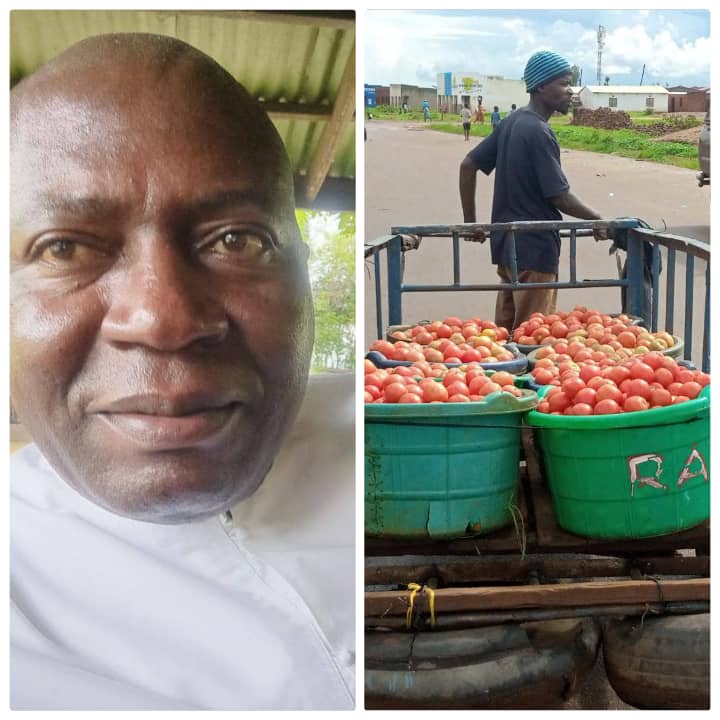
Phillimon Mpande a Mzuzu based farmer and a businessman, says a lack of knowledge and technical skills on how to process and stall food during harvest is a huge challenge for farmers citing an example of tomatoes where most farmers harvest using sac bags which is not ideal for harvesting things like tomatoes.
Adding, a lot of food in Malawi is lost as a result of farmers not harvesting during the right time hence some of the yield gets damaged during harvest because some of the crops may have not got matured.
“I think there is a lot of work that should be done in terms of sensitizing farmers on how we can harvest our crops without incurring food waste unlike what is happening currently where a lot of our harvest is an knowingly wasted,” he said.
Concurring with Mpande, Gerard Maolana Chairperson of Mathabwa Market in Mzuzu, observes that a lot of farmers bring their produce to the market to sell without following proper procedures hence as a result a lot of food that is brought to the market is damaged thereby becoming unsellable to consumers.
“As a market chair a long with my market committee we been trying to put in place days that respective foods should be brought in to the market to avoid issues of food waste
“However the big issue is that the market is not adequate enough to accommodate all venders as a result most foods end up not being boat due to the damages of staying long hence this issue of food waste,” he articulated.
On his part Director of Planning and Development for Mzuzu City Council Yona Simwaka, concedes that indeed a lot of food is being wasted at the market due to a lack of a coldroom and storage facility.
“As a City Council we are equally worried with this continuing development of food waste but we are also trying our best to look for funds that can assist us to install cold-rooms facility for our foods in the market,” Simwaka explained.
Meanwhile a study underway in Mzuzu has found that food loss is prevalent throughout the food value chain from harvest, post-harvest storage, transportation to the market.
According to Mtafu Manda who is lead researcher of the project “Managing Food Value chains for Improved Nutrition for Urban Vulnerable population in Mzuzu,”, the aim of this project is to identify and characterize the nature and scale of food and nutrition loss in agro-food chains in Mzuzu city and also to define its drivers and implications.
He further says, the project will also trial some innovations and interventions that can reduce food loss thereby improving food accessibility and nutrition security for the urban poor in Mzuzu city.
According to Manda, the results show that a lot of food meant for consumption is lost in the value chain leading to both nutrition and income loss.
“There are many impediments ranging from poor methods of harvesting, lack of food handling skills, non-responsive traffic regulations and conflictive market governance among others that affect the quantity and quality of food that customers can buy. We want to work with fresh food farmers, food handlers, transporters, traders, Mzuzu City Council and all stakeholders to find a solution to these challenges,” he explained.
The two-year project is being implemented by Mzuzu University and Urban Research & Advocacy Centre (URAC) with financial assistance from the Australian Centre for International Agriculture Re
search (ACIAR) and International Development Research Centre (IDRC) of Canada.
