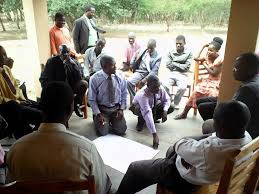
“Petty Corruption” costing Malawi a big deal


By Louis Nkhata

When fused together the words “petty” and “corruption” literally mean “insignificant fraud; and, this literal meaning has continually defeated the manner in which we ought to have been fighting this cancer of corruption in Malawi. It seems, as a country, we have forgotten that “petty”  has the surname “corruption”, and when done over a period of time petty corruption costs us a big deal.

Since petty corruption means trivial, invisible, insignificant and negligible, efforts to curb the vice have been abysmal. The dishonesty and illegal behaviours by people in positions of authority is becoming quite frightening and is not only crippling the public sector but also non-governmental organisations as well as the civil society.  Such words as alteration, falsification, doctoring, manipulation, deceit, graft, extortion, fraud and abuse, just to mention but a few, are synonymous in these sectors as far as corruption is concerned.
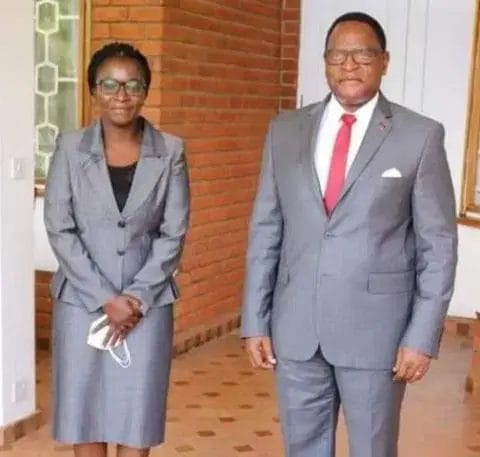
ACB boss Martha Chizuma and Chakwera

Petty corruption, technically defined as every abuse of entrusted power by public officials in their interactions with ordinary citizens, who often are trying to access basic goods or services. In 2009, Transparency International indicated that Malawi registered high levels of petty corruption in places like public health facilities, institutions of learning, immigration offices, Directorate of Road Traffic and Safety Services (DRTSS), Malawi Revenue Authority (MRA), Malawi Police Services (MPS), the Judiciary, in Malawi’s Statutory Corporations, thatis,  ESCOM, ADMARC, NOCMA, Water Boards and other agencies. According to the international watchdog, certain individuals have taken it as a habit to insinuate corrupt practices even when the odds are against the evil.

Sadly, petty corruption leads to grand corruption which is the abuse of high-level power that benefits the few at the expense of the many, and causes serious and widespread harm to individuals and society, so posited Transparency International in 2011. The danger with grand corruption is that it often goes unpunished as most of those that perpetrate it are considered big fishes and untouchables.

And, Malawi seems to have grown roots as far as grand corruption is concerned. Deep and strong ones for that matter. Since the ushering in of multipartyism in Malawi, the country has lived to witness cases of grand corruption in the names of Field York exercise book-gate, Cashgate, Maize-gate, Jet-gate, Tractor-gate, Cement-gate, Liquor-gate, and most recently the Chingeni Tollgate K10 million fraud.

But, before we examine the impact of petty corruption which we seem to be casting a blind eye upon, let us look at the Malawian legal and policy frameworks on the same.

Is Malawi’s legal, policy framework silent on petty corruption?

Malawi is a signatory to the United Nations’ Convention Against Corruption (UNCAC). Furthermore, Malawi has an operational Corrupt Practices Act (CPA) (Cap 7:04 of laws of Malawi). The policy framework recognizes that   petty corruption  manifests itself through bribery, extortion, abuse of discretion, abuse of office, conflict of interest and embezzlement, theft and fraud as per the Corrupt Practices Act (Cap 7:04). Therefore the legal framework laid a basis for the recognition of petty corruption.

Other laws include Penal Code (Cap 7:01 of the Malawi Laws), The Public Financial Management Act (Cap 37:02 of the Laws of Malawi) Public Audit Act (Cap 37:01), Declaration of Assets, Liabilities, and Business Interest Act (Cap 1:04 of the Laws of Malawi), the Public Procurement and Disposal of Public Assets Act (Cap 37:03 of the Laws of Malawi) and the Financial Crimes Act (Cap 7:07 of the Laws of Malawi). If all these had well-articulated plans and enough resources, Malawi could probably have moved tangible steps towards a corrupt free society.

Furthermore, Malawi Growth and Development Strategy III (MGDS III) and Agenda 2063 calls for participation of all and effective coordination of anti-corruption efforts; and calls for radical changes in mind-sets, attitudes and perception on corruption through capacity building and application of a systems thinking approach. And, in this case, systems thinking entails a holistic approach to analysis that focuses on the way that systems work over time and within the context of large systems.  Most likely, it is questionable if the system works, the bone of contention being that we like maneuvering in borrowed clothes.

The National Anti-Corruption Strategy 2008 (NACS 2008, 2019-2024, and the National Integrity System (NIS) developed from the former brings in another strategic approach where almost all stakeholders are called to contribute as far as curbing corruption is concerned. However, one wonders how grassroots structures are adequately supported to nip petty corruption in the bud. There is a need for meaningful attention and direction here.

Petty and Grand Corruption deserve equal attention

Max Weber, a scholar, thought in 1978 that “Bureaucracy” was a means to overcome traditional patrimonial administration characterized by arbitrariness and corruption. But, as it has been proved recently, all indicators show that this school of thought has not yielded positive results in many developing countries including Malawi. The public service is still operating arbitrarily and remains very corrupt.

Day in, day out, the media is awash with petty corruption related news which is, unfortunately, treated as trivial and the “new normal” to many–including the doers and the perpetrators. That is why some have argued that there is a difference between  “Katangale” and “Corruption” in that the former is “petty” and justified while the latter is grand and, therefore, unjustified.

The general perception is that petty corruption involves little amounts of money therefore it has to be treated with kids’ gloves. This is because the general feeling is petty corruption has very insignificant negative effects on the society in comparison to grand corruption. However, the opposite is true; this is because the accumulated financial and societal cost of petty corruption has a huge negative impact.

From here, we can magnify our lens on the negative effects of petty corruption. It is evident that the Government of Malawi and other agencies have lost a lot of revenue meant for social and economic development through petty corruption. As it were, petty corruption has been a recipe for the loss of trust in the public and private institutions. Malawi has continued to lose out in Foreign Direct Investments (FDI) over the same and we have seen donors pulling out their financial support in favour of NGOs which, to some extent, demonstrate fiscal prudence. In other words, petty corruption has brought about the tolerance of mediocrity against meritocracy.

Despite the fact that petty corruption has a record of negatively impacting on sustainable economic growth and good governance especially on the rule of law, the efforts towards curbing the vice remains blurred. Going through National Anti-Corruption Strategy II, one might choose to agree or disagree that types of corruption have not been elaborated and given their probable strategy. It is like one size of strategy fits all types of corruption. This is concretized by the approach taken by the Anti-Corruption Bureau (ACB), where it has been noted that resources are channelled towards curbing grand corruption for, most of the time, obvious political reasons. The electronic and print media outlets of information have shown that the focus is indeed on grand corruption. The point, however, is that ACB should focus on all types of corruption if Malawi wants to bring the vice to a complete halt.

The National Anti-Corruption Strategy which mentions “promoting a culture of integrity” in public institutions should not mislead the citizenry that the ACB is not doing something on petty corruption. Therefore, ACB should always endeavour to update the country with periodic reports as far as efforts of curbing petty corruption is concerned.

The danger with petty corruption is that it can be initiated by a person who seeks or solicits the bribe or by a person who offers and then pays the bribe. Therefore, blame can not only go to those who receive the spoils of corruption but also those who create the opportunity for an act of corruption to occur. Most Malawians attest that people working in some institution when knocked off from their daily schedule of work they come back with enough cash to buy a moderate Japanese vehicle. Therefore, it is very wrong to underestimate the negative effects of petty corruption as its accumulated negative effects cannot be underestimated.  

Petty corruption mainly thrives in an environment where service delivery institutions have complex and cumbersome procedures. For instance it has never been easy for people in Malawi to acquire a driving license, passports and other equally relevant documents through straight-forward means; on the other hand, one always has to palm-oil the responsible officer “to make it quick.”

When it comes to equal employment opportunity, both private and public institutions have been red-flagged. Abuse of discretion, abuse of office, conflict of interest and extortion are written in black and white leading to poorly performing institutions as favoritism, clientelism and nepotism are  mirrored everywhere in both private and public institutions. Almost every grown-up Malawian has seen public resources, like vehicles and other equipment, being used for personal purposes.

“Opportunity Theory”  is  of the view that opportunities rather than motives or systematic factors precipitate corruption. Most of those desperate for services or goods become vulnerable. Carpet interviews, for women and the youth whose opportunity of equality is limited, has been a normal practice amidst us. In an effort to curb corruption, one might conclude that petty corruption has been sidelined because it hurts the poor, not the rich because they are able to access private services elsewhere. The opposite is a fact for  in most instances the poor and the vulnerable  totally rely on public services. The irony is that research entails that  most poor people spend most of their income to entice public servants.

As such, if we are serious on protecting women, the youth and vulnerable people, let us deal with petty corruption. Tongue-wagging is not an option anymore. We should stay far from the attitude where we create an environment that masquerades a situation seen to be doing something when there is nothing at all. Petty corruption is the root of all corruption activities taking place in Malawi and it has eaten up our own nature of differentiating between what is good and bad.  

Shockingly, instead of taking the proactive role in curbing petty corruption, the institutions given the responsibility are in most cases reactive. In short, this practice destroys the same productive citizens desirable for posterity. For instance, Malawians remain skeptical if their Government and other institutions have the institutional and structural mechanisms for protecting interns, women and others vulnerable in the public and private sector. Top managers top  the list of extortion and members of NGOs who eat chickens provided by the locals as a token of appreciation.

The question that arises is that how can we curb petty corruption country wide when institutions to curb corruption are only located in Lilongwe, Blantyre, Mzuzu and Zomba of the 28 districts? The fact is that petty corruption cannot be curbed by a remote control kind of approach. There is need for more resources and concerted efforts towards mind-set change and attitude targeting the entire Malawian community at large.

What makes it worse is that even in the corridors of institutions charged to curb corruption there exists a high prevalence of petty corruption. In the same institutions, it is said that “if one tries to be out of the corruption circles then there is likelihood that he/she falls-out of the organization culture. Simply you become an out-lier and as a result you are given all sorts of bad names by their colleagues whose mission for working is to amass the spoils of petty corruption.

X-Raying the future of petty corruption in Malawi
On March 21, 2022 the media reported that the number of cases related to corruption have doubled from 642 in 2019/2020 to 1217 in 2021 which, according to the ACB, shows about 50 percent increase.Many corruption or governance indices and measures continue to show that corruption remains a serious impediment to Malawi’s social and economic development. The Corruption Perception Index (CPI) by Transparency International (TI) measures perceptions of corruption on a scale of 0 to 100, where 0 means very corrupt and 100 very clean. Unfortunately, Malawi scores below 40. For instance, Malawi’s CPI scored 31 between 2015-2017 and scored 32 in 2018.

Governance and Corruption Survey conducted by the ACB shows that most Malawians perceive corruption in the country to be worsening. Between 2010 and 2013, the report showed that the proportion of Malawians that said corruption increased rose from 83% to 96%.  A Corruption Perception Survey of April 2019 showed that 97% of Malawians feel that corruption in the country is a problem, 92% of whom said it is a very serious problem and that it spans across all sectors of society.

The research conducted shows that Malawi is on the verge of falling because of high levels of most unrecognized petty corruption mainly overridden by grand corruption. Corruption, whether grand or petty, is an evil in itself, thus there is no justification whatsoever for practicing it.

In summary, it is imperative for us as citizens to hold duty bearers accountable, fill institutional gaps, build the capacity of law enforcement agencies, allocate and disburse adequate resources for anti-corruption efforts, instill  integrity in citizenry, generate political will towards fighting corruption and motivate public servants by improving remuneration.

*Louis Nkhata is a Master of Political Science student at the University of Malawi (Unima) and Karonga Diocese Catholic Commission for Justice and Peace (CCJP) coordinator writing in personal capacity.


Opportunist Blantyre Synod’s Billy Gama adamant on Chakwera’s two terms

BLANTYRE-(MaraviPost)-The Blantyre Synod General Secretary Reverend Billy Gama has backed his statement made on Saturday, March 26, 2022 that attracted reactions from Malawians regarding Chakwera ruling Malawi for two terms.

In an interview with Times Radio on Monday, March 28, 2022, Gama said his statement during the graduation ceremony at the University of Blantyre Synod was of the view that the constitution of Malawi permits presidential candidates to run for two terms.

Opportunist Billy Gama

“I said that statement with a clear conscious considering our constitution permits a presidential candidate to run for two terms. It is up to Malawians and Malawi Congress Party (MCP) to allow the president Chakwera to run for a second term.

“Anybody can interpret the statement anyhow but I don’t regret saying what I said,” said Gama.

Gama added that Blantyre Synod has always been working in partnership with government in development and his statement does not indicate that he personally desires to see President Chakwera ruling beyond the first term.

He also said his remarks were not an indication that the Synod is endorsing Chakwera’s desire to run for second term but only from his understanding of the constitution of the country. He has distanced himself from any political connection with the president.

Gama’s remarks comes amid ongoing mass criticism on Chakwera presidency over failed promises and crippled economy which has resulted in rising cost of living in the two years in power.

Prior to this, Second Vice President of the ruling Malawi Congress Party (MCP) Harry Mkandawire disclosed that MCP has endorsed Chakwera as its candidate in the 2025 presidential elections.

President Lazarus Chakwera’s Tonse government is failing to meet Malawians expectations coupled with high cost of living just two years in power.

Irritated Rumphi-Chitipa residents storm Malawi Parliament over stalled Nyika road project

By Dorica Mtenje

LILONGWE (MaraviPost)-Angry people from Chitipa stormed Parliament in demand of the construction of 129 kilometer Rumphi-Chitipa via Nyika road.

Leader of the grouping,Precious Gondwe said the road has been a campaign strategy for all the past regimes.

Gondwe said government by all means should start constructing the road failure which they will come up with a serious action.

Angry Chitipa resident and Nyika road

He said due to the condition of the road young man lost his life as he was hit by a car whilst they fail to divert properly due to the condition of the road.

Receiving the petition Member of Parliament (MP) for Chitipa South, Welani Chilenga said it is very sad that government only promised to construct 20 kilometers from the 129.

Chilenga promised the grouping to take the petition the August house to pursue the issue the road.

At first the grouping refused to give the petition to Chilenga claiming that he has been refusing to help them how to write a petition as well as he abandoned his constituency.

It took the intervention of the Speaker Gotani Hara and other lawmakers to reason with the angry people to consider Chilenga as the best receiver for the petition.

Malawi Govt recruits, promotes 2,599 secondary school teachers

By Chisomo Phiri

BLANTYRE-(MaraviPost)-In an effort to improve the quality of education and service delivery in the country, the government says, it has recruited and promoted 2,599 secondary teachers in the country.

The recruited and promoted teachers are those who are majors of the Science Subjects, Humanities, Languages, Technical Education and Special needs education.

According to the education statement signed by Principal Secretary Chikondano Musa says, Out of 2,599, over one thousand teachers are those who have been fully recruited, a number which is said to be the largest one in the recruitment of secondary school teachers by the government in the country’s history.

The statement further indicates that the names of the successful teachers have been already sent to all the six Division Offices of the country where the candidates can access the results.

The government has therefore, requested the successful teachers to report to the divisions under which they are appearing for deployment details and start their work within this week beginning on Monday March 28, 2022.

Meanwhile, the government has further assured the nation that it will continue reducing the high Student-Teacher ratio so as to improve the quality of education across all education sub-sectors in the country.

Mchinji-Lilongwe fatal road accident claims Malawi police officer Allan Simukonde’s life

By Chisomo Phiri

BLANTYRE-(MaraviPost)-Mchinji-Lilongwe fatal road accident on Monday, March 28, 2022 claimed a life of Malawi Police Service officer Allan Simukonde aged 40.

It is reported that Horace Mzicha was driving a Toyota Corolla registration number NE3031 from the direction of Mchinji heading Lilongwe side.

Upon arrival at Mikayeli Village, he encroached to the off-side lane where he collided head on with oncoming motor vehicle registration number MJ3295 which was being driven by a Police Officer Sub-Inspector Simukonde who was heading opposite direction.

The late Allan Simukonde

Following the impact, Simukonde sustained severe head injuries and he was confirmed dead upon arrival at Mchinji District Hospital while the other driver Mzicha only sustained a fracture on the right leg.

This is a third death of a Police Officer in the space of month after the two deaths that occurred in Mangochi district.

Simukonde hailed from Village head Namituwi, Traditional Authority Mwaulambya (T.A) in Chitipa district.

Yahoo-Yahoo Governors! By Ozodinukwe Okenwa

The Economic And Financial Crimes Commission (EFCC) under the able Chairmanship of the youthful Abdulrasheed Bawa is apparently doing a great job of tracking down, arresting and prosecuting the so-called Yahoo-Yahoo boys and girls (Internet scammers) in Nigeria. In many cities across the federation, up North and down South, the EFCC agents are dutifully executing their mandate, determined to nip digital fraud in the bud. No nation makes any headway when crooks are allowed to prevail.

Sometimes though they abuse their brief and powers by invading homes of upright Nigerians at wee hours of the night but in the course of ridding Nigeria of fraud of all complexion their overzealousness and ‘lawlessness’ could be pardoned.


Pardoned as it were not because the abuses are in order but the fact that our dear country is faced with a serious existential problem linked with fraud, digital, executive, judicial or legislative. Almost all of us are corrupt or corruption-friendly! Given this societal moral degeneration efforts must be intensified to save Nigeria from itself.
Now, talking about graft in general the new buzz word in town is ‘yahoo-yahoo Governors’! When the Ondo State Governor, Rotimi Akeredolu, recently made allusion to yahoo-yahoo Governors in the ruling All Progressives Congress (APC) as the leadership crisis in the party deepened prior to their recent National Convention that saw the emergence of Abdullahi Adamu as the consensus National Chairman, tongues were set wagging as to what Gov. Akeredolu meant.
Questions were asked if he was just cracking jokes or simply immitating ‘I-Go-Die’ or AY or saying something seriously obvious. Since Akeredolu is not a comedian but a senior advocate and Chief Executive of a State he must be taken seriously whenever he speaks.

Critics had called the Governor out but the joke was on the misruling party. Suffice to say that since that insinuation was pronounced likening Governors to executive yahoo-yahoo lot a lot of water must have passed through the graft bridge.

Source saharareporters

Ugandan produces alternative energy from bamboo

Sweaty youth dig into dry soil under the scorching sun, preparing a bamboo plantation just outside Kampala. It was just before the World Meteorological Day which highlighted the weather extremes being experienced globally.

The group is led by Divine Nabaweesi, the founder and CEO of Divine Bamboo. It is with the woody plants that work starts for Divine, the Ugandan entrepreneur behind the innovative way of making briquettes from bamboo. She has a degree in Social Work and Social Administration from Makerere University, and “wanted to do something that would encompass both my passion for nature but also that would help in fight against climate change and deforestation”.

Her company plants thousands of bamboo to get the raw material, ultimately, it is an effort to fight climate change, in a country where 90% of the population is fully dependent on fuel wood in the form of charcoal and firewood for daily cooking needs.

“It is not enough to just tell people don`t cut down trees. People still need a livelihood, they still need to eat, they need to earn an income, so if we can give them an alternative in the form of bamboo which grows fast, in three years they would be harvesting”, says Divine Nabaweesi, CEO Divine Bamboo.

The same bamboo forest can regenerate for up to 50 years. Statistics show that lack of access to affordable clean cooking fuels is one of Uganda’s greatest environmental challenges.

Divine and her team hope to produce 100 per cent bamboo briquettes when more farmers join the supply chain. The process begins with harvesting dry bamboo of different species like Bambusa Vulgaris. It is dried and then cut into little pieces before being put into a ‘carbonizer’.

“The carbonizer is where bamboo is burned in a condition without oxygen because if you allow oxygen, you will just have ash in the end. So it is carbonized and then after that you have bamboo charcoal basically. But because we are making bamboo briquettes we then have to crush the bamboo charcoal and mix it with a binder and then it comes out from a machine called an extruder”.

Two kilograms of bamboo briquettes costs halt a dollar, and they burn longer. They are quite different from the normal charcoal. They seem a little heavier, powdery and they have a hole in them to help with the lighting process – it shouldn`t take more than five minutes to light bamboo briquettes.

Divine operates one of the largest bamboo nurseries in Uganda, producing at least 200,000 seedlings every year. Bamboo is the fastest growing woody plant in the world and according to research a bamboo forest actually absorbs over 30 per cent more carbon dioxide that an equivalent stand of hard wood trees.

“There is a growing number of people who are conscious about the environment and so they don`t feel comfortable using charcoal anymore and they are happy if they can find an alternative, Nabaweesi says.

Started in 2016, Divine Bamboo was recently the recipient of a 25,000-euro grant from Dutch Fund for Climate and Development as stage one funding to establish potential for restoration and marketing of bamboo.

There is talk, briquettes from a more sustainable bamboo value chain could solve the large energy crisis resulting from cutting down of trees

Source: Africanews

African Development Bank head celebrates food ‘milestone for Africa’ at the launch of first special agriculture industrial zone in Mozambique

African Development Bank head Akinwumi A. Adesina joined President of the Republic of Mozambique Filipe Jacinto Nyusi, to launch the “milestone” Pemba-Lichinga Integrated Development Corridor on Saturday, in Mozambique’s northern Niassa province.

The Board of Directors of the African Development Fund, the concessional window of the African Development Bank Group approved a $47.09 million grant for the first phase of the Development Corridor Group in December 2021.

This forms part of the African Development Bank’s Special Agro-Industrial Processing Zones initiative. These industrial zones are designed to create cost-efficient agro-processing hubs in areas of high agricultural potential. The initiative is in line with Mozambique’s National Development Strategy, which seeks to improve living conditions through structural reforms and economic diversification.

Mozambique’s President Filipe Nyusi said the project was part of a commitment outlined in the country’s five-year program to boost economic growth, productivity and job creation. Agriculture and industry are the “catalyzing base” that will transform the economy and elevate it to middle-income status, Nyusi said. These sectors had “reaffirmed their primacy in the mosaic of the country’s economic priorities” despite security challenges, the Covid-19 pandemic and the global economic recession, he said.

The project will directly contribute for the implementation of the National Program to Industrialize Mozambique (PRONAI). It will build on a long list of African Development Bank interventions in northern Mozambique for the provision of infrastructure and will unlock, beginning with Niassa province, the agricultural potential of the Nacala corridor.

The project also aligns with the African Development Bank’s Country Strategy Paper 2018-2022 for Mozambique, with a focus on the northern provinces, and the Bank’s Feed Africa Strategy for agriculture transformation. Bank chief Adesina said the project was “an important milestone for Africa.”

“It is the first of many Special Agro-Industrial Processing Zones to be set up across our continent to transform what we have in abundance into massive wealth-generating opportunities. Here in Mozambique and in other parts of Africa, Special Agro-Industrial Processing Zones lie at the core of our ambition and strategy to turn Africa from a net importer into a net exporter of food. If there was ever a time that we needed to raise food production drastically, that time is now,” Adesina said.

He said the war in Ukraine, a major food basket, threatened global food and energy supplies. The price of wheat has risen by 62% since the beginning of the war. The price of maize has gone up by 36%. The price of soya beans is up by 29 %. And the price of fertilizer, which is critical to food production, has gone up by 300%.

“The potential ripple effects are many…When you factor in the increased costs of energy in many African countries, rising inflation, and a food crisis in Africa, could lead to social unrest,” Adesina said.

Adesina, who last week attended the South Africa Investment Conference in Johannesburg, was accompanied by African Development Bank Acting Vice President, Private Sector, Infrastructure & Industrialization, Yacine Fal, and Director General for the Southern Africa region, Leila Mokaddem.

The Pemba-Lichinga Integrated Development Corridor is expected to increase production and productivity in the southern African nation. It will improve the quality of agricultural commodities, strengthen value chains for soybeans, sesame, macadamia, potatoes, wheat, beans, maize, cotton, and poultry. It will also support the promotion of new technologies and storage facilities. Phase one is expected to employ about 30,000 people at the farm level. Women will hold at least 50% of these jobs.

The African Development Bank Group has invested more than $1 billion in the north of Mozambique. This includes the Liquefied Natural Gas Rovuma Area 1 project; a climate resilience project; the Mueda Negomano Road project; and the Mozambique Energy-for-All program.

Photos

African Development Bank President Akinwumi A. Adesina at the SAPZ Pemba-Lichinga Exhibition in Mozambique

Video

[embedded content]
Source African Development Bank Group

African Development Bank Group delegation in Egypt affirms support for a successful COP27

An African Development Bank Group delegation led by Dr. Kevin Kariuki, the Bank’s Vice President for Power, Energy, Climate Change, and Green Growth, has concluded a one-week mission in Egypt on preparations for the United Nations climate change conference (COP27) which will be held in Sharm-el-Sheikh in November 2022.

The dialogue focused on how the Bank and Egypt can collaborate to ensure that COP27 delivers successful outcomes for the world and Africa. The visit took place from 13 to 17 March 2022.

After meeting with Dr. Rania Al-Mashat, Minister of International Cooperation on 13 March, the Bank delegation held fruitful discussions with various stakeholders, including the Ministry of Foreign Affairs, the Ministry of Environment, the Ministry of Electricity and Renewable Energy, and other international financial institutions.

During the mission, the Bank gained a better understanding of Egypt’s priorities and expectations for COP27 as well as expected needs and potential areas of support. In a wrap-up meeting with Dr. Al-Mashat, Kariuki stated, “I am pleased that Egypt’s COP27 Presidency is placing great emphasis on moving from commitments to actions, building on the key outcomes of the Glasgow Climate Pact.”

In the discussions with the various stakeholders, it was noted that the success of this “African COP” would be measured by progress made on global climate action as well as Africa’s climate change positions and priorities, including adaptation, climate finance, loss and damage, and particularly the need to recognize Africa’s specific circumstances and needs.

The Egyptian authorities and the African Development Bank Group agreed on the need for consultations on key issues such as addressing the nexus between gender and climate change in Africa and supporting the international framework on climate finance to flesh out the arguments around the $100 billion commitment under the Glasgow Climate Pact. Other issues include shaping the narrative on the global decarbonization agenda; and making the case for adaptation and loss and damage support to Africa, by showcasing successful practices, benefits and the profitability of adaptation actions.

Kariuki reiterated the Bank’s commitment to supporting the government of Egypt in preparation for such consultations and other efforts to deliver a successful COP27. Dr. Kariuki also indicated that the Bank is working with other international finance institutions to launch the Alliance for Green Infrastructure in Africa at COP27.

COP27 will also be an important opportunity for Egypt to showcase its green initiatives. Additionally, the Bank is planning to co-organize with the Government of Egypt and other regional partners an Africa Pavilion, as a key platform to showcase Africa’s climate solutions and advocate for Africa’s priorities. Ahead of COP27, the Bank will also support the preparation of the International Cooperation Forum, which will be organized by Egypt in September 2022.

Dr. Al-Mashat expressed the Government of Egypt’s appreciation for the Bank’s interest and commitment to support the country’s efforts for COP27. She said the agreed points on which the African Development Bank can cooperate with Egypt regarding COP27 and post-COP will be discussed in later meetings.
Source African Development Bank Group

Growing risk of Somalia famine, as drought impact worsens

Standing in front of his makeshift home in a camp for internally displaced people (IDP) in southern Somalia’s Luuq district, Ahmad Hassan Yarrow looks out towards what remains of the Juba River and shakes his head forlornly.

“Of all the droughts I have experienced in my 70 years, I have not seen anything as severe as this,” he says as he contemplates the scenery before him.

 Mr. Yarow is one of hundreds of thousands of Somalis displaced by the country’s most recent and worsening drought, leaving their homes in the search for food, water and shelter.

 The Luuq district, located in Jubaland’s Gedo region, is intersected by the Juba River. For more than three months now, the river’s waters have steadily dwindled, leaving only brown puddles.

 As the waters evaporated, so did the hopes of local communities – made up mainly of farmers and pastoralists – which rely on the river for their livelihoods. Under a searing sun, their crops wilted, and their livestock died. Like many others around the country, they came a step closer to starvation.

 “We lost everything in the drought,” says Salado Madeer Mursaal, a 28-year-old mother of one, who has also sought help at the IDP camp. “We need food, shelter, water and other basic human needs.”

<!–[if IE 9]><![endif]–> Ahmad Hassan Yarow, 70, speaks at Kulmiye Internally Displaced Persons camp in Luuq, Somalia on 21 March 2022. UNSOM

Ahmad Hassan Yarow, 70, speaks at Kulmiye Internally Displaced Persons camp in Luuq, Somalia on 21 March 2022.

 Three failed rainy seasons

 With decades of conflict, recurrent climate shocks and disease outbreaks, including the impacts of the COVID-19 pandemic, the humanitarian situation in Somalia was already grave. Even before the current drought, an estimated 7.7 million Somalis were in need of humanitarian assistance and protection this year – up 30 per cent in one year.

 The situation has deteriorated, with the current drought wiping out crop harvests and livestock dying due to a lack of water and pasture, depriving many pastoral communities of their only source of income.

 “The country has seen three consecutive failed rainy seasons. The fourth, which is supposed to start in April and continue through June, is also projected to be below average. If that happens, then we are looking at a risk of famine,” says the Humanitarian Coordinator for Somalia, Adam Abdelmoula.

 An under-funded relief operation

The United Nations and its partners have been heavily engaged in providing humanitarian support. In February, they collectively reached 1.6 million people with assistance, but, with Somalia’s federal authorities, they are calling for more funds to provide urgent humanitarian assistance.

 According to the UN Office for the Coordination of Humanitarian Affairs (OCHA), Somalia is currently one of the most severely drought-impacted country in the Horn of Africa. Some 4.5 million Somalis are directly affected by the drought, and about 700,000 people have been displaced. 

<!–[if IE 9]><![endif]–> A mother and her five children inside their makeshift shelter at a camp for Internally Displaced Persons (IDPs) in Luuq, Somalia on 21 March 2022. UNSOM

A mother and her five children inside their makeshift shelter at a camp for Internally Displaced Persons (IDPs) in Luuq, Somalia on 21 March 2022.

 Children especially vulnerable

 “As we speak now, 1.4 million children under five years of age are severely malnourished, and if we don’t step up our intervention, it is projected that 350,000 of them will perish by the summer of this year. The situation cannot be more dire than that,” says Mr. Abdelmoula.

 “So, I call on all those who are able to contribute, including the Somali diaspora, the business community, the traditional and non-traditional donors, everyone, to act and to act now,” he adds.

 In the 2022 Somalia Humanitarian Response Plan, the UN seeks nearly $1.5 billion to provide humanitarian assistance to 5.5 million of the country’s most vulnerable people, including 1.6 million IDPs, 3.9 million non-IDPs, and people with disabilities.

 However, just about four per cent – $56.1 million – has been received so far.

 Seeking safety and shelter

 In Luuq’s camps, there is a palpable mix of relief and resignation among the displaced.

 After walking for several days, Fatuma Madeer Mursaal and her family arrived at the Boyle IDP camp. There, they joined more than 4,000 others seeking aid. 

 “We are farmers, and we also had our livestock but all animals died in the drought. We have nothing left and we have come here for water, food, shelter and help,” says Ms. Mursaal, a 39-year-old mother of six.

 The Boyle IDP camp is one of several camps which have sprung up around the country as desperate people move to locations where they hope they can access help.      

 “It’s serious, and one of the biggest tragedies Somalia is facing today. The displaced communities have no shelter, water, medicine, or even food, and they depend on handouts. The drought has wiped out everything, and if the survivors don’t get urgent humanitarian assistance, they are likely to also die,” says the Luuq district’s local administrator, Commissioner Ali Kadiye Mohamed.

 UN humanitarian agencies are working closely with partners on the ground to alleviate the situation. The International Organization for Migration (IOM) has been trucking water into camps such as the Boyle IDP camp, as well as constructing water tanks and pit latrines to help improve sanitation conditions.

 At the Luuq District Hospital, funded in part by the UN Children’s Fund (UNICEF), the UN agency is working with an Irish charity agency, Trocaire, to treat, feed and stabilize children admitted with severe malnutrition.

Local staff say they have seen a worsening of the situation. “In January, 62 malnourished children were admitted here. In February, the number rose to 100, and as of 21 March, the number stands at 114,” said the hospital’s chief nurse, Abdirahman Mohamed Kasim.

 “As soon as these children get to the hospital,” he continues, “we give them milk for primary and secondary stages of malnutrition, and, after their recovery, we transfer them to other feeding centres where they receive high energy biscuits and treatments for any further illnesses.” 

<!–[if IE 9]><![endif]–> A group of women fetch water at a water trucking point in Kureyson village, Galkayo, Somalia on 23 March 2022. UNSOM

A group of women fetch water at a water trucking point in Kureyson village, Galkayo, Somalia on 23 March 2022.

 “This drought has wiped out everything we had”

 Elsewhere in Luuq, the UN World Food Programme (WFP), which is implementing cash and food voucher programmes for vulnerable groups in Somalia, is providing preventative and curative nutrition support to women and children. The humanitarian food agency is scaling up its interventions, aiming to support 2.5 million people with food relief in the first half of this year, but – like so many other UN agencies – it can only do so if it receives more funding; in this instance, some $203 million to close a funding gap.

 For Mr. Yarrow, looking out from his home in the IDP camp in Luuq, the issues of funding of the country’s humanitarian response are remote, academic issues, far from his concerns. His needs, and those of the many other displaced Somalis facing starvation, are more immediate.

 “This drought has wiped out everything we had,” he says. “We are relieved to be here at this IDP camp where we are getting assistance but there are too many of us, and we are struggling. The food, water and shelter are not enough. There are many women, the old and children who are malnourished and sick, but have no medicine. We are doing our best to survive, but we need help.”
Sourced from United Nations Africa Pages

Exit mobile version