Tag Archives: Addis Ababa

UN Climate Week Kicks Off in Addis Ababa to Boost Solutions and Speed Up Real-World Climate Actions

Outcomes to feed into Africa Climate Summit and COP30 UN Climate Conference in the Amazon this November

ADDIS ABABA, Ethiopia, 1 September 2025 -/African Media Agency (AMA)/UN News-Today marks the start of Climate Week – a milestone United Nations event to boost real-world climate solutions, and advance crucial climate issues, ahead the COP30 global climate conference in Brazil, this November.

Climate Week will bring together governments, financiers including development banks, businesses, civil society, and Indigenous Peoples, to help speed up delivery of pledges and climate actions on the ground, in African countries and around the world.

Organized by UN Climate Change and hosted by the Federal Democratic Republic of Ethiopia, Climate Week will feed into the second Africa Climate Summit next week – a major rallying point for African nations ahead of COP30 in Belém, Brazil.

“We are at a vital moment in the world’s climate journey. Climate Week in Addis Ababa is a chance to share and scale up real-world solutions, and help spread the real-life benefits of climate action to more people across Africa and around the world: more resilient economies, more jobs, better health and quality of life, more secure and affordable clean energy for all,” said UN Climate Change Executive Secretary, Simon Stiell.

“Climate Weeks aim to connect the international climate process to people’s daily lives and to real economies. At the heart of our programme is the Implementation Forum (3-4 Sept) — bringing together negotiators with implementers in governments, financiers, businesses, civil society, and Indigenous Peoples,” said UN Climate Change Deputy Executive Secretary Noura Hamladji.

With a strong focus on investment and collaboration, new Implementation Labs will focus on key challenges and opportunities, including in adaptation finance, strengthening public-private sector partnerships, scaling up agricultural, forest and food-related climate actions, and empowering communities, among many others.

A Stepping Stone for the Africa Climate Summit and COP30

The Climate Week is global in scope, but its solutions are deeply relevant to Agenda 2063 – Africa’s vision for inclusive growth, sustainability, and resilience. Climate Week in Addis Ababa has been deliberately timed to take place just ahead of the Africa Climate Summit 2 (ACS2), hosted in Addis Ababa, Ethiopia, from 8-10 September 2025.

The Summit marks a crucial moment for the continent’s climate leadership, where African leaders will advance work on climate finance, adaptation, cutting greenhouse gas emissions, green growth and community empowerment, ahead of COP30.  

Ethiopia’s Minister of Planning and Development, Fitsum Assefa, said: “This strategic alignment ensures that Africa’s climate priorities do not remain regional aspirations but are elevated into the global agenda. What we build in Addis Ababa through both the Africa Climate Summit 2 and Climate Week will strengthen implementation, unlock finance, and set the stage for COP30 and beyond. Together, these moments demonstrate that climate solutions must be locally rooted yet globally resonant if we are to build a sustainable future for all.”

“By strategically connecting Climate Week, the Climate Change and Development Conference in Africa, and the Second Africa Climate Summit, we establish a unified platform that turns dialogue into practical, scalable climate solutions and funding, fostering a resilient and green continent,” said Mosses Vilakati, Commissioner for Agriculture, Rural Development, Blue Economy and Sustainable Environment, African Union Commission.

The key outcomes of the Climate Week, including official statements linking to the Africa Climate Summit from UN Climate Change and the Government of Ethiopia, will be shared by news release in the afternoon of Thursday 4 Sept (Addis time) in English, Arabic and French, and posted on the UNFCCC website: www.unfccc.int

The Opening Ceremony & Start of the Implementation Forum (3 Sept, 09:30h EAT) will be livestreamed in EnglishFrench et Arabic with speakers to include:

1. H.E. Dr. Fitsum Assefa, Minister of Planning and Development of the Federal Democratic Republic of Ethiopia

2. H.E. Taye Atske Selassie, President of Federal Democratic Republic of Ethiopia  

3. Ms. Noura Hamladji, Deputy Executive Secretary UNFCCC

The Closing Ceremony (4 Sept, 16:00h EAT) will be livestreamed in EnglishFrenchArabic, with speakers to include:

1. H.E. Dr. Fitsum Assefa, Minister of Planning and Development of the Federal Democratic Republic of Ethiopia

2. Mr. Simon Stiell, UN Climate Change Executive Secretary

Distributed by African Media Agency (AMA) on behalf of UN Climate Change

More information and visuals

Learn more about Climate Week

Consult the full CW2 Agenda & event calendar (with webcast links when available)

Download visuals from the UN Climate Change Flickr Album

Download assets from the CW2 Trello board 

Follow the conversation online with #ClimateWeek2025

Follow UN Climate Change’s social media accounts:

Media enquiries: press@unfccc.int

The post UN Climate Week Kicks Off in Addis Ababa to Boost Solutions and Speed Up Real-World Climate Actions appeared first on African Media Agency.
UN Climate Adaptation Expo in Zambia concludes with urgent call for more finance to save lives and economies; helps countries harness AI to build climate resilience

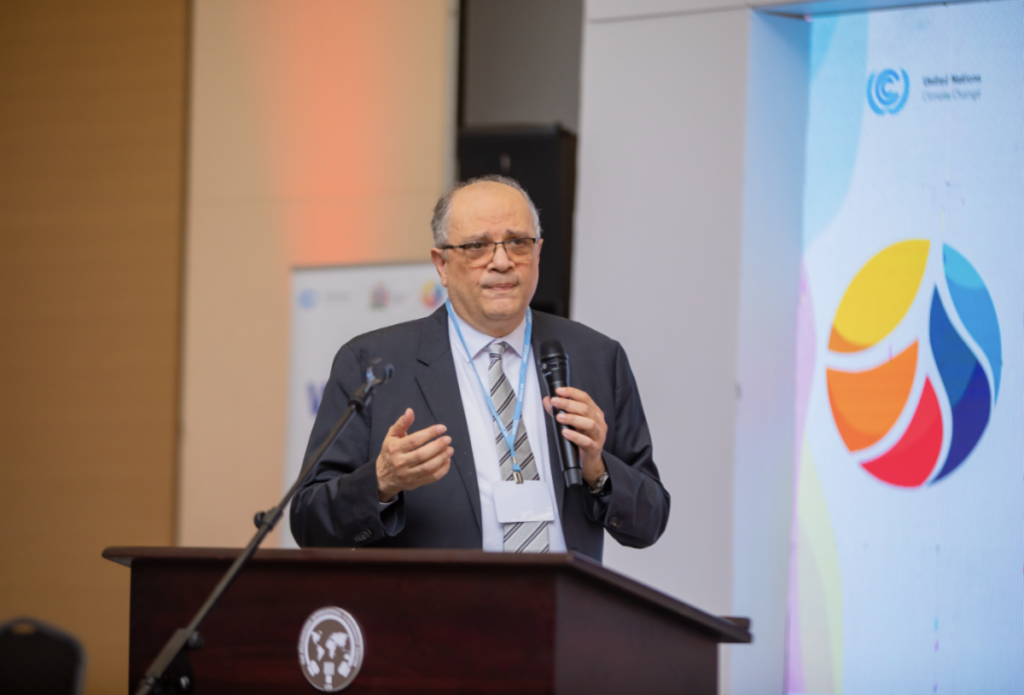
© Photo Credit: UNFCCC/Zambia | Dr Youssef Nasser, Director of Adaptation at UNFCCC, delivering remarks 
at the NAP Expo 2025 opening

LUSAKA, Zambia, 18 August 2025 -/African Media Agency (AMA)/-The largest annual climate adaptation event has concluded in Lusaka, Zambia, with an urgent call for scaled up investment to save lives, lift living standards and boost economic growth.

NAP Expo 2025 focused on strengthening countries’ capacity to advance National Adaptation Plans (NAPs) ahead of COP30 in Brazil, and closing the financing gaps that threaten effective climate adaptation.

The Expo also launched updated adaptation guidelines, and helped countries to make use of new AI tools to build climate resilience, in many countries for the first time, among other key developments.

“Adaptation isn’t a bill we can skip. If we don’t fund it, the poorest pay in lost harvests, poorer health, and – at worst – with their lives,” said Youssef Nassef, Director of Adaptation at UN Climate Change.

“Around USD 300 billion is needed annually for climate adaptation by 2030. Governments will spend this amount and much more, whether they like it or not, in rebuilding infrastructure destroyed by climate disasters, and importing food due to ruined crops,” said Nassef.

“Much smarter and cheaper is investing in resilience up-front, because this not only saves lives and money, it delivers massive dividends across every sector and every community, transforming lives and economies for the better.”

Zambia’s Minister of Green Economy and Environment, Mike Elton Mposha, said: “We must transform NAPs into investable and bankable plans attractive for investment, including by the private sector. It is also imperative to enhance horizontal and vertical coordination to ensure effective participation of various stakeholders – including women, children and youth, persons with disabilities, local communities and the private sector – in the design and execution of NAPs.”

“Climate change is a matter of life and death for our people. The 2023-2024 drought reduced crop yields by about half, and similarly reduced electricity generation by more than half. This requires a multi-pronged approach across multiple sectors and scales, centred around the critical role of water,” added Douty Chibamba, Permanent Secretary, Ministry of Green Economy and Environment of Zambia.

The Expo, attended by around 400 participants from 80 countries, launched updated technical guidelines, welcomed by least developed countries and others as a strong basis to help nations in designing and implementing their NAPs by 2025, in line with the latest science and the Global Goal on Adaptation (GGA).

Adaptation plans are vital to ensuring that vulnerable communities have access to the funding and support they need to build resilience to worsening droughts, floods and other climate disasters.

Key outputs from the Expo include:

  • Over six technical sessions focused on promoting mobilization and access to financing for NAPs: (i) maximizing access to existing sources and modalities under the UNFCCC Financial Mechanism; (ii) exploring new sources and modalities of adaptation finance and how countries can mobilize or engage.
  • Five sessions aiming to accelerate the uptake and use of frontier and digital technologies in the NAP process, including big data, Artificial Intelligence (AI) and Machine Learning.
  • For many participants, it was the first time using AI in supporting the formulation and implementation of NAPs, and the guided sessions provided an introduction to several powerful resources.
  • The AI session was so successful that participants requested an additional one, which was offered on the next day and focused on co-producing a sample open NAP to showcase concepts relevant to adaptation assessment, planning and implementation.
  • Various sessions strengthened inclusive stakeholder engagement in the NAP process by promoting the incorporation of diverse values and worldviews of Indigenous Peoples and the experiences of local communities, as well as private sector involvement, with a strong focus on vulnerable communities, gender-responsiveness and youth participation.
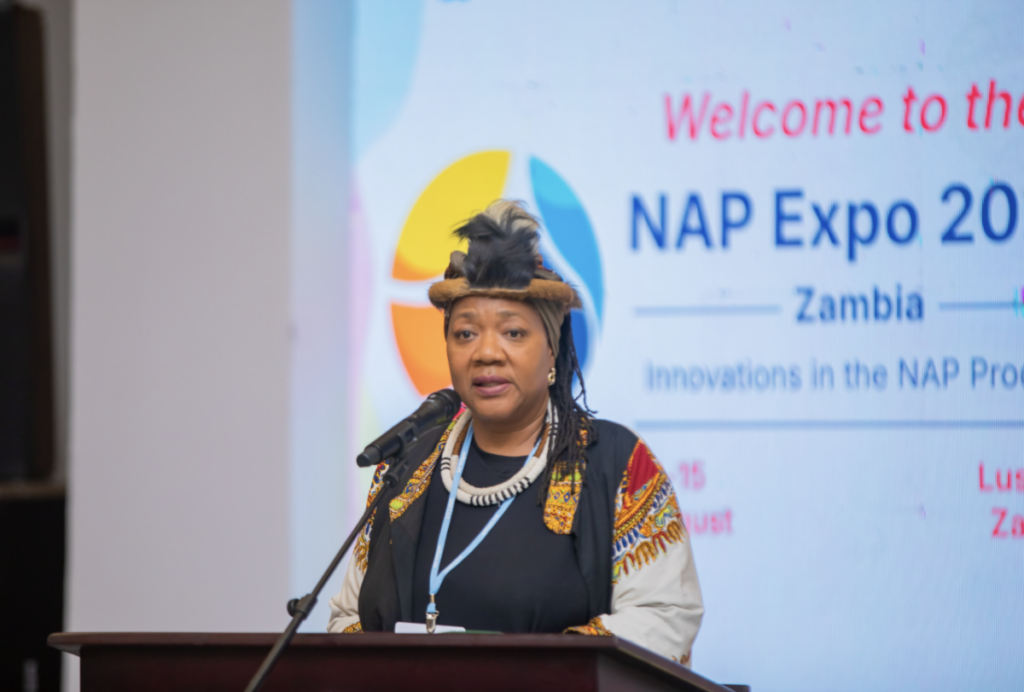
© Photo Credit: UNFCCC/Zambia | Fumukazi Zilanie Gondwe, Indigenous leader from Malawi’s Nyika Plateau, delivering remarks
at the opening.

Fumukazi Zilanie Kamgundanga Gondwe, traditional leader of the Phoka people, Rumphi, Malawi, said: “What we refer to as innovation is often rooted in long-standing Indigenous practices such as seed sovereignty, sacred forest protection, and cultural rituals for ecological balance.”

Ana Toni, CEO of the upcoming COP30 climate conference in Brazil, called on the global community to “transcend outdated mindsets whilst preserving shared values and innovating towards a new planetary renaissance, where humankind regenerates its relationship with itself and with the nature it belongs to.”

“COP30 will serve as a turning point for adaptation, and NAPs must lead the way, building capacity and securing funding to strengthen our efforts. In Belém, adaptation must be elevated to the same level of importance as mitigation on the global agenda, especially as the impacts of climate change have already infiltrated our homes. Together, we have the power to implement meaningful change and safeguard our communities for a more resilient and sustainable future,” Toni added.

Attended by government officials, technical experts, Indigenous leaders, private sector representatives, and development partners, the Expo from 11-15 August was marked by a focus on implementation – how to help countries meet the 2025 NAP submission target.

Countries also showcased practical solutions to the Global Goal on Adaptation targets:

  • Water security: nature-based solutions for urban rainwater harvesting, climate-smart agricultural practices, and restoration of rivers and streams.
  • Food security: climate-smart agriculture techniques improving soil health and yields without expanding land use.
  • Secure Livelihoods: diversified income and strengthened resilience through sustainable resource management.
  • Resilient infrastructure: coastal protection projects rooted in nature-based solutions.

Youssef Nassef expressed deep gratitude to the Government and people of Zambia for their gracious hospitality in hosting this important global event, noting how the Zambian spirit of solidarity, of hope, of collectivism and harmony helped underpin a successful Expo.

As the Expo closed, participants pointed to next month’s Climate Week in Addis Ababa, Ethiopia (1-6 September) convened by UN Climate Change, as another key moment to advance adaptation and resilience, including financing needs, along with other key issues.

By bringing together negotiators with implementers in government and the real economy, along with key financiers including development banks, Climate Week will help lay a foundation for progress on finance, adaptation, mitigation and a Just Transition, in Belém and beyond.

Distributed by African Media Agency (AMA) on behalf of UNFCCC 

About the NAP Expo 

The NAP Expo is an annual outreach event organized by the Least Developed Countries Expert Group (LEG) under the UNFCCC. It serves as a platform for exchanging experiences, fostering partnerships and mobilizing support to advance the formulation and implementation of NAPs in developing countries. 

About the UNFCCC 

With 198 Parties, the United Nations Framework Convention on Climate Change (UNFCCC) has near universal membership and is the parent treaty of the 2015 Paris Climate Change Agreement. The Paris Agreement aims to stabilize greenhouse gas concentrations in the atmosphere at a level which will prevent dangerous human interference with the climate system, and to protect all people from worsening climate impacts now and in the future. Through multilateral cooperation under the UNFCCC and the Paris Agreement, and national efforts, projected temperature increase has been reduced from up to 5 degrees Celsius, to around 3 degrees Celsius now, if pledges are implemented. Efforts continue to lower projected temperature rise to 1.5 degrees Celsius above pre-industrial levels, as all countries in the UNFCCC have agreed, as well as to build more climate-resilient economies and societies, and to spread the vast benefits of climate action across all nations and peoples. 

The ultimate objective of all agreements under the UNFCCC is to stabilize greenhouse gas concentrations in the atmosphere at a level that will prevent dangerous human interference with the climate system, in a time frame which allows ecosystems to adapt naturally and enables sustainable development.

Follow our social channels:

Media Contact:

UNFCCC

press@unfccc.int

African Media Agency (AMA)

Amy Minnie

Amy@africanmediaagency.com

The post UN Climate Adaptation Expo in Zambia concludes with urgent call for more finance to save lives and economies; helps countries harness AI to build climate resilience appeared first on African Media Agency.
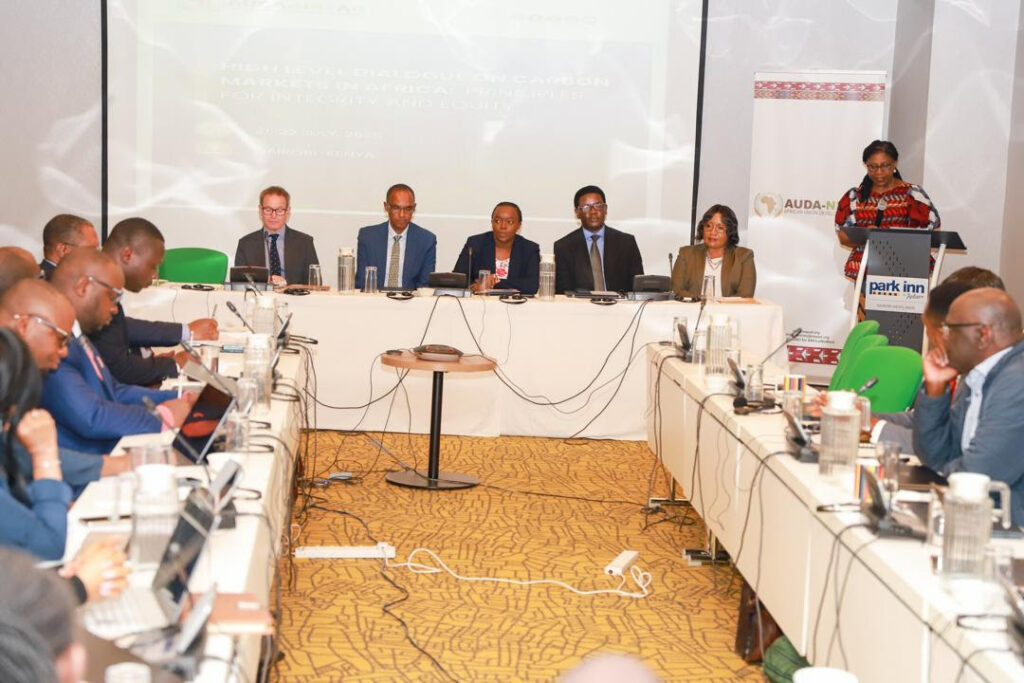
Africa Unveils Landmark Integrity & Equity Principles and Coordination Platform to Strengthen Carbon Markets

NAIROBI, Kenya, 31 July 2025-/African Media Agency (AMA)/-The African Union Development Agency (AUDA-NEPAD) today announced a series of bold initiatives to elevate Africa’s role in global carbon markets and ensure they deliver both climate and development benefits for the continent.

The announcements were made at a high-level continental dialogue convened in collaboration with the Government of Kenya and Afreximbank. The consultation opened with statements from H.E. Dr. Deborah Mlongo Barasa, Cabinet Secretary for Environment, Republic of Kenya; Ambassador Ali Mohamed, Kenya’s Special Climate Envoy; Neil Wigan OBE, British High Commissioner to Kenya; and Estherine Fotabong, Director of Programme Innovation and Planning at AUDA-NEPAD — reflecting strong political and institutional commitment to Africa’s emerging leadership in carbon markets. The United Kingdom is supporting these efforts as a key technical partner to AUDA-NEPAD, including through the secondment of UK climate expert Ravi Raichoora to the agency.

Throughout the consultation, AUDA-NEPAD engaged directly with senior representatives from African Union member states, including Madagascar, Kenya, Nigeria, Ethiopia, Ghana, Liberia, and the DRC, who shared their experiences, challenges, and aspirations in navigating carbon markets. Member States emphasised the vital role AUDA-NEPAD can play — leveraging its continental mandate to promote greater cohesion, alignment, and technical support across the region. In parallel, perspectives from global standard-setters such as the VCMI and ICVCM, rating agencies like BeZero, and leading project developers offered valuable insights into how African priorities can be better reflected in global frameworks.

At the event, AUDA-NEPAD unveiled three major outcomes designed to advance Africa’s carbon market ambitions:

1. The African Integrity & Equity Principles for Carbon Markets — a pioneering framework articulating Africa’s vision for high-integrity, socially inclusive carbon markets. These principles, which will be shaped through broad stakeholder engagement, place social value at the core of market participation. A draft will be presented for formal consultation at the Africa Climate Summit 2 in Addis Ababa (9–12 September).

2. A Continental Coordinating Mechanism — comprising technical experts and focal points from across the 55 AU Member States and regional carbon market alliances. This mechanism will reduce fragmentation, promote shared priorities, and strengthen Africa’s collective voice in global carbon market negotiations, thereby fostering a more coherent, transparent, and investable environment.

3. A Digital Tracking Platform for Article 6 Readiness — currently under development, this tool will offer real-time insights into country-level progress. It will enable governments, the private sector, and development partners to identify opportunities, monitor implementation, and direct capacity-building support where most needed. In addition, the platform will support the development of a continent-wide glossary of carbon market terminology, enhancing consistency and alignment with international best practices.

The event also featured strong engagement from the private sector, including project developers, advisory firms, and rating agencies. Private actors and Member State representatives alike welcomed these three key outcomes as critical enablers to unlock Africa’s carbon potential.

Tijani Nwadei, Partner and Co-founder of Visuias Limited, a carbon markets advisory firm, underlined the importance of AUDA-NEPAD’s coordinating role in catalysing participation, enabling benefit-sharing, and supporting the actualisation of a market that places Africa at the forefront of global supply. Andrew Ocama, Coordinator for the Eastern Africa Alliance on Carbon Markets and Climate Finance, welcomed AUDA-NEPAD taking on a leading coordination role for carbon markets across the continent, emphasising that such leadership is essential to prevent fragmentation and ensure coherent regional implementation. El-hadj Mbaye, Africa’s lead negotiator for Article 6, called on Member States to take an active role in understanding and engaging in carbon markets, stressing that Africa must shape the future of carbon finance — not simply participate in it.

Distributed by African Media Agency (AMA) on behalf of AUDA-NEPAD

The post Africa Unveils Landmark Integrity & Equity Principles and Coordination Platform to Strengthen Carbon Markets appeared first on African Media Agency.

Ethiopia’s opposition party denounces ban as threat to peace deal

After it lost its status as a political party, TPLF says the ban on its activities constitutes a “serious threat” to the peace process in Ethiopia.

The Tigray People’s Liberation Front (TPLF) has denounced the withdrawal of its political party status by the Electoral Commission, in a letter to the Chairperson of the African Union Commission.

The party which ruled Ethiopia from 1991 to 2018, has been plagued by internal conflicts and has strained relations with Abiy Ahmed’s government.

The party says the ban puts the 2022 peace deal that ended two years of conflict in the northern Tigray region at risk.

In November 2022, members of the TPLF signed a peace agreement in Pretoria, South Africa, with representatives of the federal government. The conflict saw federal Ethiopian forces, supported by local militias and the Eritrean army pitted against TPLF rebels.

Authorities in Addis Ababa placed Tigray under lock and key, and humanitarian aid was blocked.

Tens of thousands of people were killed while millions were forced from their homes.

Source: Africanews

2025 BRAND AFRICA 100: AFRICA’S BEST BRANDS

BRAND AFRICA TO ANNOUNCE THE 2025 MOST ADMIRED BRANDS IN AFRICA, THE MOST INFLUENTIAL COUNTRIES AND THE MOST ADMIRED GEN Z BRANDS

INVITATION FOR MEDIA REPRESENTATIVES

What : The 15TH Brand Africa 100: Africa’s Best Brands Rankings

When : Africa Month, 23 May 2025

Where : Global Results – Africa Hall – Addis Ababa, Ethiopia

Regional and Country Results – See Below

OVERVIEW

JOHANNESBURG, South Africa, 6 May 2025 -/African Media Agency(AMA)/- Now in its 15th year, Brand Africa 100: Africa’s Best Brands is the pre-eminent barometer of brands across the African continent. Launched in 2011 at the 2nd Brand Africa Forum, every year, on/around Africa Day, May 25th, Brand Africa reveals the rankings of the most admired brands in Africa globally and in select countries between 25 May and 30 October. Every year.

HIGHLIGHTS | 15TH BRAND AFRICA 100 | AFRICA’S BEST BRANDS RANKINGS 

  • The 2025 Brand Africa 100 | Africa’s Best Brands rankings will be the most comprehensive in the 15 year history of Brand Africa, and will cover:
  • The ‘Top 100 most admired brands’ in Africa overall and the most admired brands y economic region, country and key categories;
  • Recognizing the dynamic and complex geopolitics and the impact of nations brands, this year, Brand Africa will unveil the ‘most influential nations’ building brands in Africa, the ‘most admired nations,’ and the most admired brands from G20 and BRICS countries of origin.
  • Recognizing the shifting demographics, this year Brand Africa will unveil the rankings of the ‘most admired brands by the generations’ (Gen-Z, Millennials, Gen X and Baby Boomers).
  • Special Recognition Awards for Sustainability Excellence over the past 5 years.
  • Brand Africa will announce the leaders who have had a sustainable impact and have contributed to the growth and development of African brands, with Lifetime Achievement awards and Africa Brand Leadership Excellence awards for private sector, public sector, non-profit, and industry leaders.
  • Finally, Brand Africa will induct into the inaugural Brand Africa Hall of Fame, African brands that have consistently led Brand Africa rankings as the most admired brands overall and the most admired African brands in the past 5 – 15 years.

AFRICA’S MOST COMPREHENSIVE AND REFERENCED BRAND SURVEY

The Brand Africa 100 | Africa’s Best Brands is based on an independent, comprehensive survey of African consumers aged 18+, spanning 30+ countries that collectively represent over 85% of the continent’s population and GDP. Conducted in 8 languages—from Arabic to Swahili—using mobile, face-to-face, and online methods, the research is led by GeoPoll and Kantar across the continent, supported by regional partners in North Africa Integrate (Morocco) and Gopinion (Algeria), and Southern Africa Analysis (Mauritius) and Oxygen (Namibia).

The study generates over 150,000 brand mentions and nearly 6,000 unique brands, producing a weighted Top 100 ranking for Africa and each surveyed country. 

Over the past 15 years, the Brand Africa 100 | Africa’s Best Brands has established that on average, African brands account for only 20% of the most admired brands in Africa. 

WHAT DIFFERENTIATES BRAND AFRICA 100: AFRICA’S BEST BRANDS?

The Brand Africa 100: Africa’s Best Brands rankings are authentically African, data-driven and consumer-led: (1) Africa focused (rooted in the continent’s voice and vision); (2) the most comprehensive barometer of consumer brand preferences (spanning 30+ countries representing 85% of Africa’s population and GDP); (3) research-based; (4) conducted by independent and globally respected research partners, including Geopoll and Kantar, the biggest research and information firms in the world; and (5) non-sponsored (no brand pays to participate in the study).

WHY BRANDS MATTER? 

A country’s brand is far more than a logo or slogan—it is the world’s perception of that nation, and that perception has real economic and social consequences. Strong brands are powerful drivers of industrialization, investment, and job creation. They shape a country’s identity and competitiveness, influence trade and tourism, and enhance its soft power and global standing. In the African context, brands also play a vital role in fostering continental pride, trust, and unity. Simply put, strong brands build strong nations.

PARTICIPANTS

The annual Brand Africa announcement attracts CEOs and CMOs, academics, economic and branding thought leaders, researchers, the creative community, practitioners, and media.

PRINCIPAL/S AVAILABLE FOR INTERVIEWS

Thebe Ikalafeng, Founder and Chairman – Brand Africa | www.linkedin.com/in/ikalafeng/

Distributed by African Media Agency (AMA) on behalf of Brand Africa.

About de Brand Africa

Recognizing that brands play a pivotal role in shaping the growth, competitiveness, and global reputation of nations, Brand Africa was founded in 2010 as a non-profit initiative to inspire a brand-led African renaissance. Its flagship initiative, Brand Africa 100 | Africa’s Best Brands, launched in 2011, is the most comprehensive, research-based ranking of the most admired brands in Africa. Released annually around Africa Day (25 May), the survey spans more than 30 African countries, covering over 85% of the continent’s population and GDP. The research is conducted independently by GeoPoll and Kantar, globally respected research and information firms, with support from regional experts across the continent. Kantar and Brand Leadership, Africa’s leading brand and strategy advisory firm, leads the strategic insights and rankings. 

Learn more at www.brand.africa and www.brand.africa/Home/FAQs.

Media contact:
For media accreditation, inquiries, and to facilitate interviews, please contact:

Global

Eloine Barry
Africa Media Agency
Email: eloine.barry@amediaagency.com
WhatsApp/Tel: +225 074 901 2888 or +1 (917) 244 9894

General
Lebogang Serapelwane, Brand Leadership PR
Email: lebogang@brandleadership.com
WhatsApp/Tel: +27 (0) 73 063 4607

Source : African Media Agency (AMA)

Interesting! Ethiopia is still in 2014 while the whole World enters 2022

ADDIS ABABA-(MaraviPost)-As the rest of us gear up to welcome 2022, you might be interested to learn that the people of Ethiopia – well, many of them anyway – won’t be celebrating tonight, and are still living in 2014.

Of course, the concept of time is fairly difficult to change, so they’ll be existing in the same time as us regardless, but their calendar is different to that which most of the rest of the world has adopted, and it means that they’re a few years behind everyone else on paper.

So, what’s the difference?

Well, there are a couple of things, starting with the fact that they have 13 months on their calendar.

Ethiopians celebrate the beginning of a new year on September 11, or September 12 if it is a leap year, the BBC has explained.

That puts them somewhere between seven and eight years behind the Western world and our calendar.

So, the people of Ethiopia – officially at least – only celebrated the turn of the millennium on September 11 2007. Ethiopia’s Ambassador to Kenya Meles Alem (left), KAA chief executive Alex Gitari (centre) and Kenya’s Director of Health Patrick Amoth receive a donation from Chinese billionaire and Alibaba co-founder Jack Ma at JKIA. FILE

It also means that whilst the country has many public holidays that would be recognisable to others around the world, they are often celebrated on different days because of this different calendar.

They have no need to rhymes and memory tricks to work out how many days are in each month, either.

That’s because all of them have 30 days, with the exception of the last month called Pagume which has either five or six days, again dependent on whether it is a leap year.

It began around 1500 or so years back when the Catholic Church decided to amend the calculation of the birth of Jesus Christ.

Africa Union! You have talked long enough, why is Africa still poor and her citizens live in agony 54 years after your birth?

Africans still struggling after 50 plus years of freedom

Land Rights
Most Africans cannot afford to own land

As you read this remember half a century is too long to keep talking and planning, there is a need to start walking the talk that you have been talking since 1963.

As you keep speaking in Ethiopia you must stop the rhetoric that if Gold or Diamond deposits are found in my area it is government property but if you find a cannabis plant behind my house it’s mine and I must be arrested.

From 1957 to date African population of over 1 billion are living in Africa without land of their own. In urban and semi urban areas land is sold to Africans at a price that no average African can manage.

Yet all of you gathering in Addis Ababa call yourself presidents and head of State because your respective nations are free. What type of freedom is it when you and those that oppressed and detained are the ones controlling and owning the land meant for citizens? Young Africans are leaving the continent through dangerous means crossing Mediterranean Sea that usually ends mid sea and all lives lost. At times European state hosts them as slaves if not detained. How do you feel your citizens being treated like this?

Africa has vast resources that can feed the whole universe but why are foreigners only benefiting while owners of the continent are starving and suffering? Democratic Republic of Congo (DRC) has over 24 trillion dollars in untapped resources but you left it to be torn apart, where is the spirit of Pan Africanism? You know the resources of DRC is larger than the economy of Europe combined, why do you let a potentially rich nation perish like this?

On unity you are completely failing to unite us, Africans rescued in Mediterranean Sea are permitted and allowed to live in Europe when released or saved from death, given opportunity to work and live in Europe. Why is an African detained and deported when found overstaying on other side of Africa? Why should an African be restricted to 90days visit within Africa? Where did you get these rules yet Europe that imposed such rules has changed.

Is it not high time these draconian laws are amended? You are reminding me of traffic regulations of 120km driving speed per hour in this point and time when roads and cars are rampant, don’t you think its high time speed limit must be adjusted to 160 or 180km per hour. In this century no car is running faster less than 140km per hour.

Citizens must be allowed one year holiday visit if not be allowed permanent residence everywhere in the continent and stop nations from spending hard earned resources to deport citizens that came alone from their part of Africa.

In this harder times of economic crush one cannot limit or restrict the movement of citizens who are fending off for their survival. You cannot talk of African Development if you are denying citizens to stretch their potential and capabilities.?Continental passports were designed but up to now not yet made public! What was the point of releasing them, if they cannot be put to use? Are these books for decorations or meant for you leaders only?

We are not amused seeing one of you receiving best hospitality in other nations when you have messed in your own nations but that very privilege cannot be accorded to me a fellow citizen of Africa.

Some of the laws practiced in Africa are outdated and in great need of rephrasing or debasing.?Boko Haram and Al Shabaab as well as Mali Tuareges together with citizens of Saharawi must be relooked and perhaps start some kind of arrangements, negotiations to meet them half way can be the best way.

You have always deplored African ways of always importing from Europe, Asia and America but if you cannot open avenues of more freedom how will Africa start exporting? Give people land and let them utilize it to its full potential. Introduce 51 to 50 percentage of shares between Africans and foreign companies so that in 20 years Africa must stand alone in economy and social standing.

The tempers of Africans is running high with impatience because it looks like Africa is still under colonialism.

Jack up and give Africans their freedom, now!

President Mutharika cancels African Union summit trip: ‘Cost-cutting measures’

President Peter Mutharika
File Photo: Malawi President Peter Mutharika

Malawi President Peter Mutharika has cancelled his official trip to attend the July 2017 African Union (AU) summit in Addis Ababa, Ethiopia for the African Union 29th Ordinary Session of the Assembly of the Heads of State and Government.

The cancellation is the result of the austerity measures Government seeks to reduce frequent internal and external travels of the Head of State and Cabinet Ministers.

“I confirm that the President is not going to the Summit,” said Presidential Press Secretary and spokesman Mgeme Kalilani. Continue reading President Mutharika cancels African Union summit trip: ‘Cost-cutting measures’

Gertrude Mutharika attending AU in her capacity as President of the Organization of African First Ladies Against HIV/AIDS

Gertude Mutharika
Malawi First Lady Gertrude. Mutharika

First Lady of the Republic of Malawi Madame Dr. Getrude Mutharika has arrived in Addis Ababa the capital city of Ethiopia.

Madame Mutharika who has just assumed the Presidency of the Organization of African First Ladies Against HIV/AIDS (OAFLA) is scheduled to attend the Steering Committee meeting of OAFLA this Sunday at the African Union Plenary Hall in Addis Ababa.

The OAFLA meetings will be taking place on the sidelines of the 28th AU Summit which will also take place in the Ethiopian capital.

New African Union head must stand up for human rights

US and Africa
Through the Department of State’s International Visitor Leadership Program (IVLP), approximately 30 African women entrepreneurs attended the 2016 AGOA Forum as part of the African Women’s Entrepreneurship Program (AWEP).

The next head of the African Union (AU) Commission must place human rights at the centre of the organization’s operations, said Amnesty International as leaders of the 54-member body prepare to elect a new chairperson at a summit in the Ethiopian capital, Addis Ababa.

“The incoming chairperson must make the promotion and protection of human rights not just a convenient afterthought, but an essential and sustainable element of the African Union’s conflict prevention strategy.” said Netsanet Belay, Amnesty International’s Africa Director for Research and Advocacy. Continue reading New African Union head must stand up for human rights