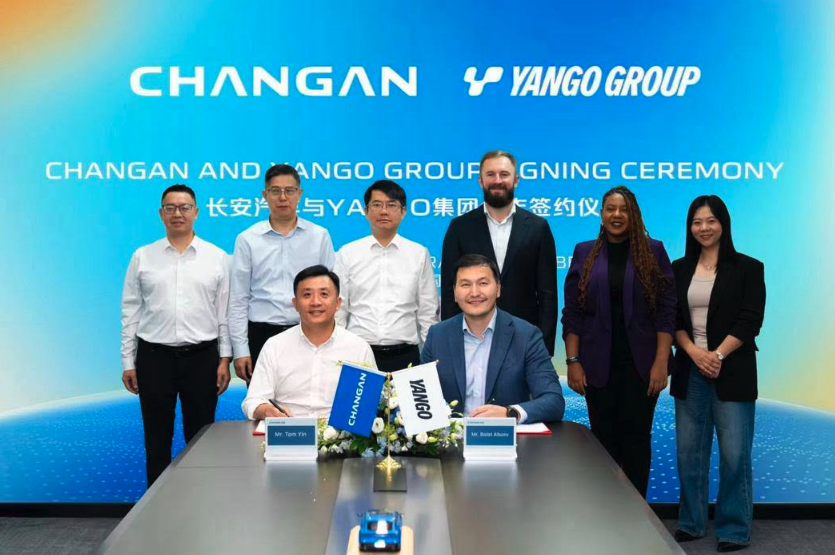
Dubai, UAE, 10 November 2025 -/African Media Agency(AMA)/ Changan Automobile has announced the signing of a strategic cooperation agreement with Yango Group, a UAE-based technology company, marking a new milestone in Changan’s ongoing expansion across the Middle East and Africa (MEA). The signing ceremony took place at Changan’s Middle East and Africa headquarters, bringing together senior executives from both organisations.
The event was attended by Li Mingcai, Executive Vice President of Changan Automobile, Fu Yuanhong, Chief Representative of the Middle East and Africa Business Division, Xiao Feng, General Manager of the Business Division, and Yin Tong, Deputy General Manager of the Business Division, as well as Mr Bolat, Senior Vice President of Mobility Business at Yango Group, accompanied by a company delegation.
Through this agreement Yango Motors, the automotive business part of Yango Group dedicated to making vehicles more accessible, will serve as an official distributor of Changan vehicles, starting in Côte d’Ivoire with plans to expand to other markets across Africa. The partnership will supply reliable and durable cars tailored to the needs of African ride-hailing markets, aiming to elevate the travel experience for local consumers while driving the growth of sustainable mobility across the region.
“Our partnership with Yango Group is part of our long-term commitment to empowering global partners and accelerating intelligent mobility development across emerging markets”, said Xiao Feng, General Manager of Changan’s Middle East and Africa Business Division. “Combining Changan’s advanced technologies with Yango’s extensive mobility network allows us to fulfill our aim to deliver greater value and an enhanced travel experience to users across the region”.
The partnership reflects Yango Group’s continued investment in developing advanced mobility ecosystems across Africa and the Middle East. As part of its global expansion strategy, Yango aims to collaborate with leading automotive brands to enhance the quality, efficiency, and sustainability of ride-hailing and car-sharing experiences in Africa and the Middle East.
“We are proud to join forces with Changan Automobile to accelerate the evolution of smart, sustainable mobility across the MEA region,” said Mr Bolat, Senior Vice President of Mobility Business at Yango Group. “Through our technology, data insights, and vast user network, we aim to help shape the next generation of ride-hailing experiences; improving accessibility, safety, and environmental impact for millions of users. At the same time, we are committed to elevating fleet quality, empowering local businesses, and supporting our partner’s drivers to deliver a consistently better experience for everyone.”
As one of the world’s largest ride-hailing platforms, Yango Ride, part of the global tech company Yango Group, operates across Africa, the Middle East, South Asia and Latin America, making over 1.2 billion trips globally and supporting 2.1 million active registered drivers.
This partnership marks a transition from single-model procurement to multi-model business integration and joint brand promotion, injecting new momentum into the development of regional smart mobility ecosystems. Building on this foundation, both companies aim to expand their collaboration to new markets across the MEA region, offering consumers smarter, safer, and more sustainable mobility solutions.
Through close collaboration with Yango Group, Changan Automobile will provide ride-hailing customers across the Middle East and Africa with efficient, safe, and environmentally friendly travel options, contributing to greener, smarter urban mobility and a more connected future.
This partnership exemplifies a win-win model of resource sharing and complementary strengths, reinforcing how Chinese automotive brands are deepening their integration into the Middle East and Africa’s mobility ecosystem—driving innovation, sustainability, and growth across the region—while continuing to create long-term value in international markets.
With its CHANGAN, DEEPAL and AVATR, Changan Automobile is one of the “Big Four” Chinese automakers. It has 39 production facilities in 14 production bases around the world. It’s global R&D network connects 10 cities in six countries (Chongqing, Beijing, Shanghai, Dingzhou and Hefei in China, Turin in Italy, Yokohama in Japan, Birmingham in the UK, Detroit in the US, and Munich in Germany), and brings together the talents of more than 18,000 engineers from 31 countries and regions. It has had a presence in the Middle East and Africa market since 1994, with cumulative sales of 400,000 units. To further expand its global footprint, in 2023 the company launched its Vast Ocean Plan. With a mission to “lead auto culture and benefit human life”, Changan is transforming itself into an intelligent, low-carbon mobility tech company that contributes to society and meets people’s needs for a better life.
Yango Group is a tech company that transforms global technologies into everyday services tailored for local communities. With an unwavering commitment to innovation, the company reshapes and enhances leading cutting-edge technologies from around the world into seamlessly integrated daily services for diverse regions. The mission is to bridge the gap between world-leading innovations and local communities, fostering connections and enhancing everyday living experiences.
UN Climate Chief highlights potential for millions of new jobs, secure energy, rising living standards
ADDIS ABABA, Ethiopia, 15 September 2025 -/African Media Agency (AMA)/UN News- African governments are being encouraged to present their new national climate plans as opportunities to supercharge economies and boost living standards across the continent, as deadlines approach for all countries in the Paris Agreement to submit these plans.
“Strong new national climate plans are blueprints for stronger economies, more jobs and rising living standards, across all African nations. Strong plans open the door to new industries, large-scale investment, more affordable clean energy accessible to all, and more resilient infrastructure, as climate disasters hit African nations harder each year,” said UN Climate Change Executive Secretary Simon Stiell.
“Africa is not just on the frontlines of climate impacts; it is also at the forefront of solutions. Right across the continent, we are already seeing massive potential and innovations which cut planet-heating pollution and build more climate-resilient economies. Strong new national climate plans are the key to converting that potential into real-economy outcomes at scale, including the millions of new jobs they create,” Stiell added.
The United Nations is calling on all countries to submit their new plans, formally called Nationally Determined Contributions, or NDCs, as soon as possible ahead of key milestones, including the UN Secretary General’s September Climate Summit and November COP30 in Brazil. September will be an important milestone, but submissions will continue in the run-up to COP30, with each plan helping to limit global heating to 1.5 degrees Celsius and protect all peoples, while also unlocking jobs, growth, and economic benefits at home.
While particular responsibility rests with the largest economies, whose choices determine the global trajectory of emissions, it is essential that every nation puts forward its most ambitious plan, both to strengthen humanity’s collective response and to drive each nation’s own prosperity and security.
Examples from Across Africa
In South Africa, the NDC process is framed around a just transition that protects workers and communities while scaling renewables to strengthen energy security. International partnerships are signalling momentum, bringing together governments, public financiers, and private investors to support South Africa’s shift from coal to clean energy – growing from USD 8.5 to 11.6 billion.
Nigeria is advancing a whole-of-government and society approach, linking climate action to job creation, poverty reduction, and improved energy access. Over 85 million people still lack electricity, making decentralised renewables critical. Large-scale solar is expected to generate 33,905 direct green jobs by 2030, the micro-solar sector is already employing youth as “energy officers,” the Great Green Wall has restored more than 5 million hectares, and the country’s extensive mangroves provide carbon storage and flood protection. With a population projected to surpass 400 million by 2050 and GDP already over USD 470 billion, Nigeria has unparalleled potential to be a powerful leader in Africa’s green transition. Its upcoming climate plan is being designed as a national investment strategy to generate millions of green jobs by 2035 and secure a strong share of the USD 2.2 trillion global clean energy market. The transformation is already underway: over 170 solar mini-grids are already operational, bringing reliable electricity to nearly 6 million people, while young entrepreneurs are driving innovation in recycling, clean transport, and sustainable agriculture.
Morocco has emerged as a regional leader in renewable energy, with the Ouarzazate solar complex among the largest in the world. It stands as a positive example of how national ambition can deliver clean power at scale.
Recent milestone UN climate events, including Climate Week in Ethiopia and the Adaptation Expo in Zambia, have showcased innovative and practical new climate solutions emerging right across African nations, helping them to be scaled up and replicated across the continent and globally.
Africa Leading the Way
Momentum for strong climate action by and for African nations is building following the Africa Climate Summit in Addis Ababa last week, where leaders called for climate action to be treated as a driver of development and investment; and the Nairobi Declaration agreed by African leaders at the Africa Climate Summit in Nairobi in September 2023, which highlighted the continent’s role as a driver of global solutions. Countries are being urged to turn political signals into concrete plans that deliver for people and economies, echoing Simon Stiell’s message that delivery is the essential driver of climate justice and economic opportunity.
Through initiatives like the African Continental Free Trade Area, African nations can build resilient regional supply chains, export green goods and services, and foster shared prosperity across borders.
Climate finance remains central and a vital enabler of stronger climate actions by vulnerable and developing countries. Climate finance is not charity but an investment in shared prosperity, essential to convert climate ambitions into real-economy outcomes, strengthen global supply chains which all economies rely on, and ensure the vast benefits are spread much more widely across all nations in Africa and the developing world.
The COP29 UN Climate Conference in Azerbaijan last year reached a new global agreement to triple climate finance to USD 300 billion per year. This must be delivered in full, and a new Finance Roadmap expected at COP30 in Brazil this November will be key to scaling climate finance to USD 1.3 trillion annually by 2035.
NDCs are the central mechanism under the Paris Agreement through which countries outline plans to reduce emissions and build resilience. Done well, NDCs serve as investment roadmaps that attract capital, create jobs, lower health costs, and deliver affordable, secure clean energy. Under the Paris Agreement, countries are required to submit new NDCs every five years. The third round of NDCs are due in 2025 and will detail countries’ intended climate actions through 2035.
Israel’s government is considering expanding the war in Gaza despite a growing chorus of voices in Israel calling for an immediate end to the war, Texas Republicans are threatening to arrest Democratic lawmakers unless they return to the statehouse for a redistricting vote, and the Trump administration has plans to end two satellite missions that measure carbon dioxide in the atmosphere.
Want more comprehensive analysis of the most important news of the day, plus a little fun? Subscribe to the Up First newsletter.
Today’s episode of Up First was edited by Hannah Bloch, Larry Kaplow, Neela Bannerjee, Janaya Williams and Alice Woelfle. It was produced by Ziad Buchh, Nia Dumas and Christopher Thomas. We get engineering support from Damian Herring. And our technical director is Carleigh Strange.
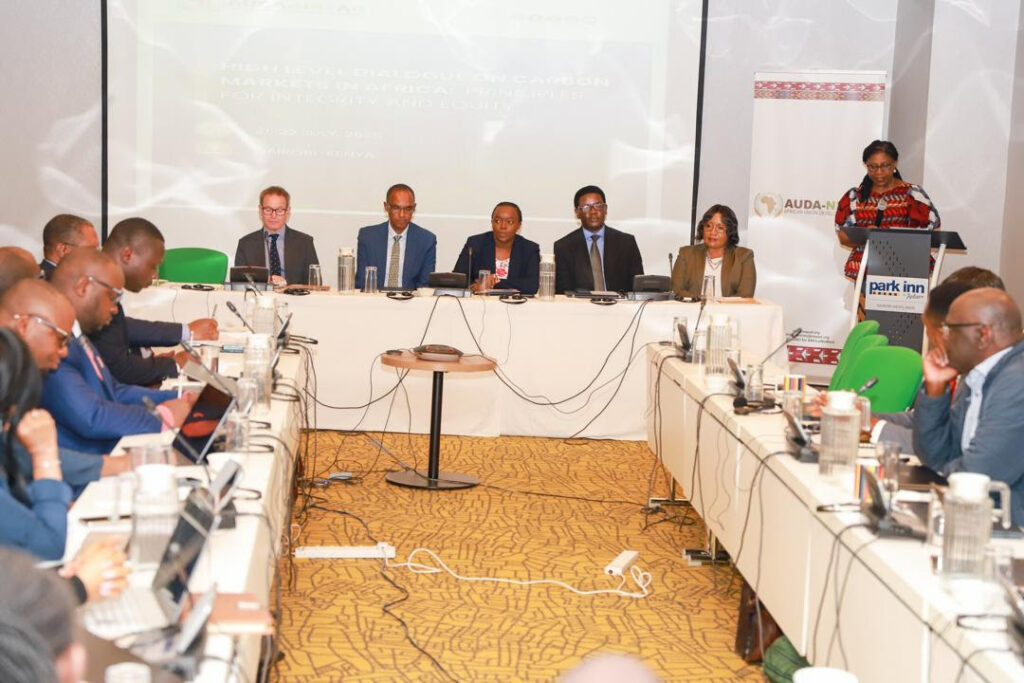
NAIROBI, Kenya, 31 July 2025-/African Media Agency (AMA)/-The African Union Development Agency (AUDA-NEPAD) today announced a series of bold initiatives to elevate Africa’s role in global carbon markets and ensure they deliver both climate and development benefits for the continent.
The announcements were made at a high-level continental dialogue convened in collaboration with the Government of Kenya and Afreximbank. The consultation opened with statements from H.E. Dr. Deborah Mlongo Barasa, Cabinet Secretary for Environment, Republic of Kenya; Ambassador Ali Mohamed, Kenya’s Special Climate Envoy; Neil Wigan OBE, British High Commissioner to Kenya; and Estherine Fotabong, Director of Programme Innovation and Planning at AUDA-NEPAD — reflecting strong political and institutional commitment to Africa’s emerging leadership in carbon markets. The United Kingdom is supporting these efforts as a key technical partner to AUDA-NEPAD, including through the secondment of UK climate expert Ravi Raichoora to the agency.
Throughout the consultation, AUDA-NEPAD engaged directly with senior representatives from African Union member states, including Madagascar, Kenya, Nigeria, Ethiopia, Ghana, Liberia, and the DRC, who shared their experiences, challenges, and aspirations in navigating carbon markets. Member States emphasised the vital role AUDA-NEPAD can play — leveraging its continental mandate to promote greater cohesion, alignment, and technical support across the region. In parallel, perspectives from global standard-setters such as the VCMI and ICVCM, rating agencies like BeZero, and leading project developers offered valuable insights into how African priorities can be better reflected in global frameworks.
At the event, AUDA-NEPAD unveiled three major outcomes designed to advance Africa’s carbon market ambitions:
1. The African Integrity & Equity Principles for Carbon Markets — a pioneering framework articulating Africa’s vision for high-integrity, socially inclusive carbon markets. These principles, which will be shaped through broad stakeholder engagement, place social value at the core of market participation. A draft will be presented for formal consultation at the Africa Climate Summit 2 in Addis Ababa (9–12 September).
2. A Continental Coordinating Mechanism — comprising technical experts and focal points from across the 55 AU Member States and regional carbon market alliances. This mechanism will reduce fragmentation, promote shared priorities, and strengthen Africa’s collective voice in global carbon market negotiations, thereby fostering a more coherent, transparent, and investable environment.
3. A Digital Tracking Platform for Article 6 Readiness — currently under development, this tool will offer real-time insights into country-level progress. It will enable governments, the private sector, and development partners to identify opportunities, monitor implementation, and direct capacity-building support where most needed. In addition, the platform will support the development of a continent-wide glossary of carbon market terminology, enhancing consistency and alignment with international best practices.
The event also featured strong engagement from the private sector, including project developers, advisory firms, and rating agencies. Private actors and Member State representatives alike welcomed these three key outcomes as critical enablers to unlock Africa’s carbon potential.
Tijani Nwadei, Partner and Co-founder of Visuias Limited, a carbon markets advisory firm, underlined the importance of AUDA-NEPAD’s coordinating role in catalysing participation, enabling benefit-sharing, and supporting the actualisation of a market that places Africa at the forefront of global supply. Andrew Ocama, Coordinator for the Eastern Africa Alliance on Carbon Markets and Climate Finance, welcomed AUDA-NEPAD taking on a leading coordination role for carbon markets across the continent, emphasising that such leadership is essential to prevent fragmentation and ensure coherent regional implementation. El-hadj Mbaye, Africa’s lead negotiator for Article 6, called on Member States to take an active role in understanding and engaging in carbon markets, stressing that Africa must shape the future of carbon finance — not simply participate in it.
LAGOS, Nigeria, 20 May 2025 -/African Media Agency(AMA)/ – ReStore, a pioneer in lead-acid battery rejuvenation and refurbishment, is set to expand into Africa. By offering an innovative and cost-effective franchisee business model, ReStore aims to empower local entrepreneurs while promoting circular economic growth and sustainability.
With over 500 successful franchise outlets in India and a proven track record 1million batteries in lead-acid battery rejuvenation, ReStore has transformed the battery industry by providing an affordable & sustainable alternative to purchasing new batteries. The company specializes in rejuvenating lead-acid batteries used in various stationary applications through its proprietary technology EBEP (Electro-Chemical Battery Enhancement Process), extending battery lifespan by 1-2 years and reducing environmental waste. By extending the lifespan of batteries that would otherwise be discarded, ReStore reduces energy costs, minimizes e-waste and enhances access to reliable power solutions.
Addressing Africa’s Energy and Environmental Challenges
Energy reliability remains a critical issue in many African countries, with businesses and households depending on batteries for backup power and renewable energy storage. However, the high cost of new batteries presents a financial burden. ReStore’s entry into the African market provides a sustainable solution by extending battery life, offering cost savings and making energy storage more accessible.
According to Straits Research, the global lead-acid battery market was valued at USD 53.3 billion this year and is projected to grow from USD 55.95 billion in 2025 to USD 82.78 billion by 2033, with a CAGR of 5.02% during the forecast period. However, the manufacturing and disposal of lead-acid batteries pose significant environmental challenges. Containing toxic materials like lead and sulfuric acid, improper disposal can result in severe environmental degradation, affecting ecosystems and human health.
In response, Battery Rejuvenation using EBEP technology has emerged as a sustainable and innovative solution to these concerns. By significantly extending battery life, this process reduces the carbon footprint associated with both the manufacturing and disposal of batteries. ReStore’s approach aligns with UN Sustainable Development Goal 12: Responsible Consumption and Production, ensuring that resources are conserved while reducing environmental impact.
Empowering Entrepreneurs with a Low-Cost Business Model
ReStore’s franchise model is designed to empower aspiring business owners by offering an affordable, scalable, and profitable venture.
The key benefits of becoming a ReStore franchisee include:
Low Investment, High Returns – Entrepreneurs can start their own battery rejuvenation and refurbishment business with minimal upfront capital while tapping into a high-demand market
Sustainable and Eco-Friendly – Using EBEP technology, ReStore rejuvenates batteries instead of discarding them, significantly reducing e-waste and the need for new raw materials
Comprehensive Training & Support – Franchisees receive in-depth training on battery rejuvenation techniques, business operations and marketing strategies to ensure long-term success
Trusted Brand Recognition – With over a decade of experience and 500+ franchise outlets in India, ReStore provides a trusted and reliable brand name that inspires customer confidence
“Our mission is to make battery rejuvenation technology accessible to entrepreneurs in Africa” said Irfan Ahmed, CEO EMEA at ReStore. “By introducing a sustainable and profitable business model, we not only aim to redefine the market but also to train the micro and small entrepreneurs on our EBEP technology that will help in creating job opportunities, reduce battery waste and provide affordable energy solutions to millions of people. Our entry into the African market is a significant step toward empowering local businesses and supporting economic development.”
Driving a Greener and More Sustainable Future
As Africa continues to embrace renewable energy, the demand for sustainable battery solutions is at an all-time high. ReStore enables individuals and businesses to maintain reliable power storage without the financial burden of frequent battery replacements.
Through its “Refurbish, Reuse, Recycle” approach, ReStore actively minimizes e-waste while promoting a circular economy. By integrating EBEP technology, the brand helps conserve resources, lower carbon emissions, and prevent hazardous waste from polluting the environment.
With a vision to establish a strong presence across Africa, ReStore is actively seeking franchise partners in West and South African territories. The company invites entrepreneurs, investors, and businesses to explore partnership opportunities and join the movement toward affordable, sustainable energy solutions.
By bringing eco-friendly battery rejuvenation technology to Africa, ReStore is helping shape a more sustainable, affordable and energy-secure future.
How to Become a ReStore Franchisee
Entrepreneurs interested in partnering with ReStore can visit the company’s website at www.restorelife.io to learn more about the franchise model, investment requirements, and training programs. ReStore is committed to providing long-term support to its franchisees, ensuring they have the necessary tools and knowledge to build a successful business.
As ReStore expands its footprint in Africa, it remains dedicated to making a positive impact on local economies, environmental sustainability and energy accessibility.
ReStore is a pioneering and well-known brand specializing in lead-acid battery rejuvenation and refurbishment services. With over 500 franchise outlets in India, the company has successfully extended the lifespan of millions of lead-acid batteries used in UPS, inverters, solar energy systems and other stationery applications. The brand is committed to sustainability, affordability, and empowering entrepreneurs through its innovative franchisee business model.
Through the integration of EBEP technology, ReStore ensures a reduction in environmental waste, conservation of valuable resources, and a lower carbon footprint, aligning with global sustainability goals and the principles of the circular economy.
Africa CEO Forum 2025: Navigating Energy, AI, and Infrastructure for Africa’s Future
Held on May 12–13, 2025, in Abidjan, the 12th edition of the Africa CEO Forum brought together over 2,800 leaders, including six African heads of state, to deliberate on the continent’s development trajectory. Key discussions centered on energy strategies, technological advancements, and infrastructure development.
Nuclear Energy: A Strategic Pillar for Africa’s Development
At the Africa CEO Forum 2025, nuclear energy emerged as a focal point in discussions about Africa’s energy future. Loyiso Tyabashe, CEO of South Africa’s Nuclear Energy Corporation (Necsa), emphasized the necessity of integrating nuclear power with renewable sources to ensure a stable and affordable energy supply.
“Nuclear provides baseload power essential for industrialization,” Tyabashe stated. He highlighted the cost-effectiveness of nuclear energy, citing South Africa’s experience with its two nuclear units in Cape Town as among the cheapest electricity sources. Moreover, he underscored the environmental responsibility of nuclear power in reducing carbon emissions.
Addressing concerns about radioactive waste, Tyabashe assured that Necsa has maintained comprehensive records of all waste since the operation of its research reactor in 1965 and power reactor in 1984. “We can account for all the waste we’ve produced,” he affirmed.
The potential of Small Modular Reactors (SMRs) was also discussed. Tyabashe noted that SMRs promise quicker deployment and lower capital costs, making them suitable for countries with smaller power grids. “It’s not a one-size-fits-all; we need to match generation technology to each country’s grid stability,” he explained.
Looking ahead, Necsa plans to develop nuclear fuel from raw uranium, leveraging South Africa’s and the continent’s uranium resources. Additionally, the corporation aims to build SMRs and explore multiple applications of research reactors, including power generation and isotope production for medical use.
The forum’s discussions reflected a growing consensus on the role of nuclear energy in Africa’s sustainable development. A poll conducted during the event indicated that 73% of attendees viewed nuclear as a viable energy solution for the continent.
As artificial intelligence (AI) reshapes global economies, Africa seeks to establish its own regulatory pathways. At the forum, experts debated models suitable for the continent, balancing innovation with sovereignty and local realities.
Franck Kié, founder of the Cyber Africa Forum, highlighted the progress made: “Several countries, including Benin and Rwanda, have adopted national AI strategies. The African Union also initiated a continental approach in 2024.”
Catherine Muraga from Microsoft Africa Development Center emphasized inclusivity: “We’re developing tools in Kiswahili, Amharic, Yoruba… to ensure no one is excluded. Africa has nearly 2,000 languages.” She stressed that responsible AI involves integrating security and privacy from the design phase.
The consensus underscored the urgency for Africa to accelerate its governance and investments in AI to avoid dependency on foreign technological decisions.
Infrastructure: The Backbone of Africa’s Industrialization
Infrastructure development remains pivotal for Africa’s industrial growth. At the forum, discussions centered on enhancing logistics, energy access, and connectivity to transform value chains.
Mohammed Diop, Deputy CEO Africa for AGL, pointed out the challenges: “In Africa, up to 30-40% of products are lost at the farm gate. We’re working on projects in Senegal and other countries to establish specialized warehouses near farms to reduce agricultural losses.”
Private sector initiatives, like AGL’s annual investment of €600 million in Africa, showcase the commitment to infrastructure improvement. However, energy remains a significant hurdle. In response, Schneider Electric signed strategic agreements with 3MD Energy and SmartEnergy to develop local industrial electrification solutions, integrating local production and digitalization.
These partnerships aim to secure energy access and generate employment, aligning with the objectives of the African Continental Free Trade Area (AfCFTA) to boost intra-African trade. For sustainable industrialization, states must streamline regulations, attract financing, and connect remote areas, ensuring that Africa fully leverages its resources.
Nearly 150,000km² of seafloor surveyed across the Mozambique Channel, Madagascar Ridge, Agulhas Plateau, and Cabo Verde
69 scientists from 31 countries and 29 institutions successfully conducted deep-sea dives, geological and biodiversity sampling, and oceanographic research in seven key regions around the African coastline
306 students, educators, and early-career professionals from across Africa and the world engaged through training, outreach, and capacity sharing initiatives on the OceanXplorer research vessel
Early Career Explorers Aghogho Kolawole-Daniles and Omaima Mouiret working on their independent research in the DNA lab on OceanXplorer off the coast of West Africa
JOHANNESBURG, South Africa, 9th May 2025 -/African Media Agency(AMA)/ – A transformational joint exploration led by OceanX and OceanQuest has officially concluded the ‘Around Africa Expedition’, a major ocean research and capacity-sharing mission advancing deep-sea research, oceanographic mapping, and scientific collaboration across Africa’s coastal waters.
The expedition navigated critical marine regions, starting from Moroni (Comoros Archipelago) and navigating through the Mozambique Channel, the southern Madagascar Ridge (Walters Shoal), Agulhas Plateau (Africana Seamount), Cape Town (South Africa), the Benguela Current System in the southeastern Atlantic, Walvis Bay (Namibia), Mindelo and the Nola Seamounts in Cabo Verde, and ending in Las Palmas de Gran Canaria in the Canary Islands (Spain).
Conducted between January and April, the expedition delivered significant insights and new valuable data about Africa’s marine ecosystems, surveyed vast areas of previously unexplored seafloor, and strengthened Africa’s leadership in ocean science through international collaboration and capacity sharing.
Scientists handle a sample from the sub in the wet lab
Expedition Scope and Key Achievements
Researchers conducted extensive fieldwork including remotely operated vehicle (ROV) dives, oceanographic sampling, biodiversity surveys, and high-resolution seafloor mapping, unlocking new insights into Africa’s marine ecosystems.
OceanXplorer, the expedition’s advanced research vessel, completed eight ROV dives, totalling 21 hours underwater, including the first-ever visual surveys of the deep flanks of Walters Shoal and a newly mapped seamount at the southern Madagascar Ridge, as well as the Nola seamounts off Cabo Verde. Submersibles Neptune and Nadir executed nine dives, collecting 41 biological and geological samples across 32 hours of deep-sea exploration.
In total, nearly 150,000km² of seafloor was mapped across regions including the Madagascar Ridge, Agulhas Plateau, and Cabo Verde’s Nola Seamounts, providing vital data for deep ocean science and discovery, marine spatial planning, and conservation opportunities. “This is not just a scientific achievement, but a continental one,” says Vincent Pieribone, co-CEO and Chief Science Officer for OceanX. “The knowledge gained here belongs to Africa and will benefit research and scientific communities for generations to come.”
Group photo of the Young Explorers and OceanX Crew on the OceanXplorer, off the Coast of Southern Africa
Key Findings During the ‘Around Africa Expedition’
Two segments of the expedition were dedicated to deep-sea missions, designed to advance the understanding of the biological, geological, and oceanographic processes shaping the seafloor and ecosystems of the Southwest Indian Ocean and the eastern Atlantic. By investigating remote seamounts, surveying deep habitats, and analysing ocean dynamics, the teams generated critical baseline data to support marine conservation, sustainable resource management, and adaptation to climate change impacts.
As African nations increasingly recognise the critical importance of healthy ocean ecosystems for economic development, environmental security, this research provides essential knowledge and tools to inform more sustainable marine governance across the continent.
Key outcomes included:
The high-resolution mapping of seamounts and the surrounding seafloor, vital for fisheries, biodiversity, and habitat protection
Detailed analysis of ocean currents to better understand regional climate patterns
Analysis of marine microbes and aerosols, which play key roles in ocean food chains, carbon storage, and climate regulation, contributing critical data to global ocean health research
“The opportunity to conduct deep-sea research alongside an international team, with African scientists leading key legs, was a turning point,” said Dr. Lara Atkinson, Marine Offshore Scientist at NRF-SAEON. “For many of us, it was the first time we had access to this level of deep-sea technology and interdisciplinary collaboration among so many nations.”
“Being part of this expedition felt like reclaiming our own narrative in ocean science,” said Dr. Yara Rodrigues, Executive Vogal at Instituto do Mar. “We weren’t just collecting data, we were shaping the future of marine knowledge in Africa, based on our needs, in our waters.”
Their involvement was part of a broader collaboration between OceanX, OceanQuest, and leading African institutions. These included the National Research Foundation – South African Environmental Observation Network (NRF-SAEON), the University of Cape Town (UCT), the South African National Biodiversity Institute (SANBI), the Instituto do Mar (IMar) in Cabo Verde, the Ocean Science Center Mindelo (OSCM), and the Universidade Técnica do Atlántico (UTA). This strengthened scientific partnerships and promoted data sharing across the continent.
“These collaborations are the future of ocean science in Africa,” said Pieribone. “We’ve seen what’s possible when scientists, governments, and regional institutions align behind a common purpose-advancing knowledge, access, and opportunity.”
Researchers arriving aboard the OceanXplorer in Comoros, East Africa, pose for a photo on deck with the OceanX crew
Science Diplomacy and Regional Leadership
The expedition also marked a series of significant diplomatic milestones, with visits from South Africa’s Minister of Environment, Forestry and Fisheries Dion George and Minister of Tourism Patricia De Lille, Cabo Verde’s Minister of the Sea Jorge Santos and the President of the Republic of Cabo Verde, José Maria Neves. As Patron of the United Nations Decade of Ocean Science for Sustainable Development, President Neves reaffirmed Cabo Verde’s strong commitment and leadership in advancing ocean knowledge, marine conservation, and sustainable blue development.
‘These high-level engagements’, says Martin Visbeck, Chief Executive Officer of OceanQuest, ‘underscored regional commitment to ocean science and sustainability, enhanced cooperation across the continent, and demonstrated both Africa and Cabo Verde’s growing leadership in addressing the most pressing challenges facing our oceans.’
Local scientist Yara Rodrigues from IMar and OceanX Science Program Director, Mattie Rodrigue, process a sample of a coral colony full of brittle stars, Cabo Verde
Capacity Sharing and Education
A major pillar of the expedition, focused on strengthening African scientific and technical capacity through targeted education and professional development programmes. Led by OceanX education, the expedition was structured around three core components. These included two deep-sea science legs focused on seamount research, two youth-led investigator legs, and two ECOP training legs.
The mission featured outreach programmes at port stops to engage local communities:
Early Career Explorers (ECEs) Programme: 27 Early Career Ocean Professionals (ECOPs) from across Africa, including Ghana, Kenya, Namibia, Nigeria, South Africa, Mozambique, Angola, Cabo Verde, Tunisia, Morocco, and Tanzania, took part in multi-day, on-ship education programmes between Walvis Bay, Mindelo, and Las Palmas, gaining hands-on experience in oceanography, bathymetry, and environmental DNA (eDNA) analysis. Participants were selected by the Partnership for the Observation of the Global Ocean (POGO) through a programme jointly run by OceanX, OceanQuest, and POGO.
Young Explorers: 29 university students who are interested in future ocean-related careers joined the multi-day, on-ship education programs from Maldives to Comoros and from Cape Town to Walvis Bay, learning about the multi-disciplinary career paths that can support ocean health and sustainability.
Science-Leg ECOP Participation: Four African ECOPs were embedded within research science legs, contributing directly to fieldwork in South African and Cabo Verdean waters.
Portside Ship Tours: 246 students and educators participated in shipboard tours and outreach events across Cape Town, Mindelo, and Las Palmas, introducing new generations to marine science careers and ocean stewardship.
Total engagement: 306 students, educators, and early-career professionals were reached through the expedition’s training and outreach programs.
“This wasn’t just about what we discovered in the ocean. It was also about who we empowered on the ground,” adds Martin Visbeck, CEO of OceanQuest. “By working together across borders, we have made this kind of world-class science possible right here in African waters and led by African scientists.”
The OceanX and OceanQuest Around Africa Expedition is officially endorsed by the United Nations Decade of Ocean Science for Sustainable Development for its contributions to capacity sharing and scientific understanding of the ocean, providing valuable data for science and science-based ocean governance.
Next Steps
Although the expedition at sea has concluded, analysis of the collected data has only just begun. Scientists across Africa and globally will use the expedition’s findings to:
Inform environmental and ocean management policy
Support fisheries regulation and marine conservation, and
Strengthen Africa’s leadership in ocean science and sustainable development
“This is just the start,” said Pieribone. “We’ve built the foundation for a new age of African-led research, and now the real impact begins. Our goal is that the discoveries made, and the partnerships formed during this expedition will continue to shape policy, support conservation efforts, and inspire the next generation of ocean explorers.”
A full list of NGO, education, and government partners across the region and mission leg follows below:
Mindelo, Cabo Verde
Instituto do Mar (IMar), the Ocean Science Center Mindelo (OSCM),Instituto de Engenharias e Ciências do Mar (ISECMAR) – Universidade Técnica do Atlântico, Centro Universitário Cidade Verde (UniCV), Universidade do Mindelo, Escola Salesiana de Artes e Ofícios (Ilha de São Vicente), Escola Secundária Januário Leite (Ilha de Santo Antão), Escola Técnica João Varela (Ilha de Santo Antão).
Cape Town, South Africa
SANBI, National Research Foundation, Department of Forestry, Fisheries and Environment, South African Environmental Observation Network (SAEON) – Science for Kids and Global Blue Schools Network, University of Cape Town, University of Western Cape, Stellenbosch University, Cape Peninsula University of Technology
Las Palmas, Canary Islands, Spain
Oceanic Platform of the Canary Islands (PLOCAN), Consejeria de Educacion (Canary Islands Regional Government), IES Profesor Antonio Cabrera Pérez, ITS Jozef Stefan.
Global
UN Ocean Decade – Endorsed Decade Actions, Partnership for Observation of the Global Ocean (POGO), Ocean Biomolecular Observing Network (OBON), Challenger 150, Deep-Ocean Stewardship Initiative (DOSI)
Regional
Partnership for Atlantic Cooperation, African Network of Deep-water Researchers, Challenger 150
United States
City College of New York (CCNY), Columbia University Climate School – Lamont-Doherty Earth Observatory (LDEO), US National Oceanic and Atmospheric Administration (NOAA), US National Aeronautics and Space Administration (NASA), US State Department, US Office of Naval Research (ONR), Woods Hole Oceanographic Institution (WHOI)
Route-Specific Partnerships by Country/Transit locations:
Comoros to Cape Town, South Africa
National Research Foundation – South African Environmental Observation Network (NRF-SAEON), South African National Biodiversity Insitute (SANBI), South African National Space Agency (SANSA), National Research Foundation – South African Institute for Aquatic Biodiversity (NRF-SAIAB), University of Cape Town (UCT), University of KwaZulu-Natal, Université de Toliara – Institut D’Enseignement Supérieur D’Anosy (IES-Anosy) – Madagascar, Université de Toliara – Institut Halieutique et des Sciences Marines (IHSM) – Madagascar, Ministry of Foreign Affairs, Republic of Madagascar, Universidade Lúrio – Mozambique, Wildlife Conservation Society (WCS) – Mozambique, Universidade Federal do Espírito Santo (UFES) – Brazil, Kenya Marine and Fisheries Research Institute (KMFRI) – Kenya, Universidade de Aveiro – Portugal, King Abdullah University of Science and Technology (KAUST) – Kingdom of Saudi Arabia, Columbia University – Lamont-Doherty Earth Observatory (LDEO) – USA, Challenger 150
Namibia – Cabo Verde; Cabo Verde Science
Instituto Do Mar (IMar), Campus do Mar, Universidade Técnica do Atlântico (UTA), Campus do Mar, Ocean Science Center Mindelo (OSCM), GEOMAR Helmholtz Centre for Ocean Research – Germany, King Abdullah University of Science and Technology (KAUST) – Kingdom of Saudi Arabia, South African National Biodiversity Insitute (SANBI) – South Africa, Universidade do Vale do Itajaí (UNIVALI) – Brazil, US National Aeronautics and Space Administration (NASA), Partnership for Observation of the Global Ocean (POGO)
Cabo Verde – Las Palmas de Gran Canaria
Plataforma Oceánica de Canarias (PLOCAN), Universidad de Las Palmas de Gran Canaria (ULPGC), GEOMAR Helmholtz Centre for Ocean Research – Germany, Columbia University Climate School – Lamont-Doherty Earth Observatory, US National Aeronautics and Space Administration (NASA), Partnership for Observation of the Global Ocean (POGO)
About OceanX
OceanX is on a mission to support scientists to explore the ocean and to bring it back to the world through captivating media. Uniting leading media, science, and philanthropy partners, OceanX utilizes next-gen technology, fearless science, compelling storytelling, and immersive experiences to educate, inspire, and connect the world with the ocean and build a global community deeply engaged with understanding, enjoying, and protecting our oceans. OceanX is an operating program of Dalio Philanthropies, which furthers the diverse philanthropic interests of Dalio family members. For more information, visit www.oceanx.org and follow OceanX on YouTube, Facebook, Instagram, TikTok, X, and LinkedIn.
About OceanQuest
OceanQuest is a Saudi Arabian not-for-profit foundation, committed to unveiling the wonders of the ocean and exploring its secrets for the benefit of humanity. Its mission is to accelerate ocean discovery, drive innovation in the field, support global cooperation, and excite the public. OceanQuest and its global partners will launch a new era of deep ocean exploration and knowledge sharing. OceanQuest is based in the King Abdullah University of Science and Technology (KAUST) campus in Thuwal, Kingdom of Saudi Arabia. To learn more visit www.OQFoundation.org.
As global temperatures rise, extreme weather is forcing families from their homes.
Floods, hurricanes and melting glaciers are displacing communities across the planet.
Some scientists are researching ways to deal with climate change by manipulating the world’s atmosphere or oceans.
Known as geoengineering, it’s often rejected because of potential side effects, and is usually mentioned not as an alternative to reducing carbon pollution, but in addition to emission cuts.
One idea is to reflect sunlight away from the Earth before it can heat the surface – a process known as stratospheric aerosol injection.
A new study by University College London researchers suggests that this could be done using planes already in service today, rather than developing costly new aircraft to reach the highest parts of the atmosphere.
Stratospheric aerosol injection would work by releasing tiny particles into the atmosphere’s dry, stable upper layer called the stratosphere.
These particles would scatter sunlight back into space, reducing the amount reaching the Earth’s surface and helping to cool the planet.
Previous research focused on injecting aerosols high above the tropics, at altitudes of 20 kilometres or more, which is beyond the reach of most existing planes.
But the new study found that injecting lower down, around 13 kilometres, near the poles, could still have a significant impact.
It could mean aircraft like the Boeing 777, which is already capable of reaching these altitudes, could be adapted for the task.
Alistair Duffey, a PhD researcher at UCL, led the study.
He says: “So our study examined a climate intervention technique called stratospheric aerosol injection, which is an idea to cool down the planet by adding a layer of small reflective particles, aerosols, into the high atmosphere. Those particles would reflect a small amount, perhaps 1% of the incoming sunlight. And there was good evidence that this could be used to cool the planet, and perhaps to reduce some climate impacts on vulnerable people around the world.”
Using the UK’s advanced Earth System Model, researchers simulated injecting sulphur dioxide (a gas that quickly transforms into reflective sulphate aerosols) into the stratosphere over the polar regions during their respective spring and summer seasons.
The study showed that despite the lower altitude, it would still be possible to cool the planet by around 0.6 degrees Celsius.
This is roughly the same as the temporary cooling after the eruption of Mount Pinatubo in 1991, when volcanic gases injected into the atmosphere caused global temperatures to dip.
The researchers examined how the effectiveness of cooling changes depending on where and how high the particles are released, as well as how much sulphur dioxide would be needed.
“What we were interested in is understanding the trade-off between the difficulty, the logistical challenge of doing this and the climate impacts on the ground. So in particular, we wanted to understand how, if you could get to different altitudes in the sky, how the level of impact on the ground would vary depending on how high we could go. In general, it’s harder to do this at high altitudes. So our central finding was that if we were limited to using existing large aircraft and therefore limited to altitudes of up to around 13 kilometres, we found that there was still meaningful climate impacts. We could still cool the planet meaningfully with plausible injection magnitudes of aerosols.”
The cooling effect comes from a chain of chemical reactions.
Once sulphur dioxide is released into the dry stratosphere, it reacts with water vapour and oxygen to form sulphuric acid, which then forms microscopic droplets — sulphate aerosols.
These aerosols remain suspended for months, reflecting sunlight away from Earth.
Eventually, they fall into the lower atmosphere and are washed out by rain — mostly as diluted acid rain.
“We are imagining releasing sulphur dioxide, which is a gas, which would react with water vapour and oxidise into sulfuric acid, which then dissociates and part of that sulfuric acid is the sulphate aerosol, which this kind of small liquid droplet. They tend to produce a size distribution in the stratosphere, which makes them good reflectors of sunlight. Those sulphate aerosols then slowly sediment downwards through the stratosphere and ultimately once they re-enter the troposphere, the part of the atmosphere we live in, most of them rain out so they come out in water and as acid rain essentially.”
While the chemical processes are well understood, the engineering challenges are significant.
Delivering large volumes of sulphur dioxide safely at high altitude would require modifying existing aircraft or building entirely new ones.
Creating new specialist aircraft capable of reaching 20 kilometres would likely take a decade and billions of pounds in development costs.
Instead, the researchers believe adapting existing aircraft could provide a faster and cheaper option.
But even this would require careful redesign to allow for planes to safely store and release a toxic gas at high altitudes without posing risks to crew, passengers or the environment.
“In our case, if you were using existing aircraft, then there would still be a modification programme required. You’d need some way to vent the slipper dioxide and to carry it safely. It’s a toxic gas, right? If you release this at ground level, it could be quite harmful. So there are definitely big engineering challenges, but they will be less intensive than the higher altitude deployment.”
The UCL researchers behind the study stress that stratospheric aerosol injection would not be a substitute for cutting emissions and would carry serious risks if not carefully managed.
However, other researchers, such as Raymond Pierrehumbert, Professor of Physics at University of Oxford, are sceptical about the the risks posed by using geoengineering to limit the most dangerous impacts of climate change.
He says: “Carbon dioxide will continue to affect the climate and give us warming for thousands of years, but the stratospheric aerosols fall out in a matter of a year or so. And so if you get into a situation where you rely on it, where you’re relying on stratospheric aerosol injection, you’re really locking humanity into doing it without fail for centuries at least. And that’s a very perilous situation to be in. And if you do it at a time when we haven’t yet reached net zero, then you have to do more of it each and every year. And if you ever stop, you get hit in the face with massive catastrophic warming very quickly.”
There are concerns that relying on aerosol injection could trap future generations into a risky, long-term commitment, with dangerous consequences if it’s ever interrupted.
“Among other things, when you deploy stratospheric aerosol injection, you can change atmospheric circulation patterns. And so this can do things like disrupt precipitation patterns, cause droughts in some places, cause excessive flooding in other places,” cautions Pierrehumbert.
Groups from the U.S. National Academy of Sciences to the United Nations Environment Programme have looked at the ethics, side effects, legal complications and benefits of geoengineering with various degrees of skepticism and cautious interest.
The U.S. is the largest exporter of natural gas in the world. And Louisiana’s Gulf Coast is where much of America’s natural gas is piped in to be liquified for export.
Over the last twenty years, liquified natural gas (LNG) has been heralded as a clean and efficient “bridge fuel” for nations transitioning away from coal and oil, towards a future of renewable energy.
But the promise of LNG has not reflected reality. In today’s episode of The Sunday Story, WWNO reporters Halle Parker and Carlyle Calhoun talk about the impact of the LNG export industry on Louisiana’s Gulf Coast. And they follow the supply chain of LNG all the way to Germany and Japan.
To hear more of Halle and Carlyle’s reporting on LNG, listen to their three-part series, “All Gassed Up,” on the podcast Sea Change from member stations WWNO and WRKF.
Tiktok submitted its first court filings, offering a glimpse into how the popular social media company plans to argue against a looming ban on the app in the US. The Los Angeles school board, the country’s second largest school district, voted to ban cellphones and social media during school hours. And, travelers purchasing carbon offset promises on their tickets may not be getting their money’s worth.
Want more comprehensive analysis of the most important news of the day, plus a little fun? Subscribe to the Up First newsletter.
Today’s episode of Up First was edited by Gabriel Spitzer, Ally Schweitzer, Neela Banerjee, Mohamad ElBardicy and Lisa Thomson. It was produced by Ziad Buchh, Christopher Thomas and Taylor Haney. Our technical director is Zac Coleman, with engineering support from Carleigh Strange. Our Executive Producer is Erika Aguilar.




![Africa CEO Forum: What If Africa Set the Rules? [Business Africa]](https://eo4ed7m5zmq.exactdn.com/wp-content/uploads/2025/05/africa-ceo-forum-what-if-africa-set-the-rules-business-africa-scaled.jpg?strip=all&avif=70&sharp=1)


