Malawi’s recently launched heath sector strategy, which requires funding to the tune of $ 2.7- billion, suffers from funding gap of close to half a billion dollars, a confidential government document seen by amaBhungane reveals.
And a well-placed source in the seat of government, Capitol Hill in Lilongwe, said that a key reason for this shortfall was that a number of foreign donors were cutting back on their planned contributions to the strategy.
The source said the shortfall posed a major threat to the implementation of key activities envisaged under the plan.
This confirms recent statements by the principal secretary in the ministry of health, Dan Namalika, who was quoted this year as saying that health funding is becoming major challenge for the government. Continue reading Malawi’s public health at crossroads→
LILONGWE-(MaraviPost)– Malawi Parliament on Thursday, passed the 2017/18 national budget worth MK1.3 trillion, with calls from Parliamentarians for Government fiscal discipline in implementation it.
The lawmakers got their wishes for the increase of Constituency Development Fund (CDF) from MK18 million to MK23 million, representing a 66% rise.
LILONGWE-(MaraviPost) – Minister of Finance, Economic Planning and Development Goodall Gondwe on Tuesday cast cast doubt to the calls to increase the Constituency Development Funds (CDF) because of reports the funds were abused in various councils.
The Minister stand, comes amid requests from Members of Parliament to increase the CDF from the current MK18 million to MK30 million.
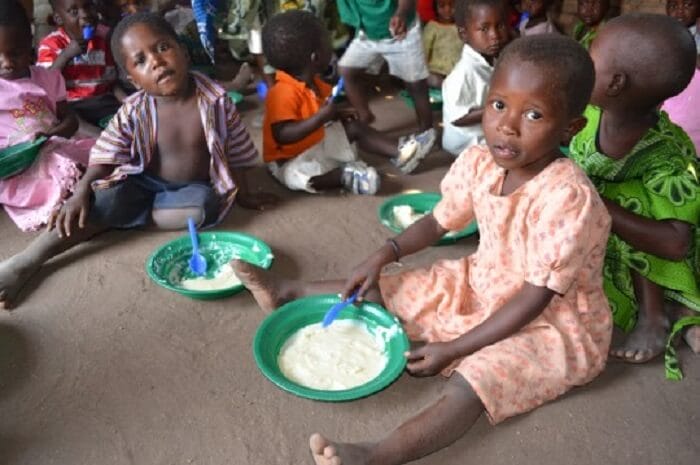
The Civil Society Organisation Nutrition Alliance (CSONA) in Malawi, is dejected with insufficient of funding for the department of Nutrition and HIV and AIDS, despite the alarming rate of stunting.
LILONGWE-(MaraviPost)-The Civil Society Organisation Nutrition Alliance (CSONA) in Malawi, is dejected with insufficient of funding for the department of Nutrition and HIV and AIDS, despite the alarming rate of stunting.
LILONGWE-(MaraviPost)- The country’s public hospitals have used already 87 percent of their annual drug finance allocation with four months remaining before the 2016/2017 national budget session startingJuly 1, 2017, The Maravi Post has established.
This development is raising fears to already stricken patients who have been subjected to insufficient access to medication in the public health facilities.
According to the Government’s Central Medical Stores Trust (CMST), revelations to our sister newspaper, The Nation, at February 2017, the total cost of drugs supplied to all District Hospital Offices (DHOs) was MK8.7 billion, out of which MK1.9 billion was expected to be paid from the fourth quarter-April-June-disbursement.
This means that the district hospitals have about MK475 million to spend on drugs each month, a decrease from MK833 million.
In the 2016/2017 national budget, government set aside MK15.8 billion for essential medicines and medical supplies, which was to be managed by CMST.
Out of the K15.8 billion budget, MK9.8 billion was for DHOs, MK6 billion was for central hospitals, and an amount of MK1.6 billion was for blood, blood products,and medical gas for public hospitals.
But at the beginning of the financial year, CMST quantified “Must Have List (MHL)” items valued at MK24 billion, which surpassed the total health budget.
“It is important to note that this isn’t CMST budget, but an estimate of requirements for MHL items based on past consumption by hospitals. Ministry of Health conducts a quantification exercise to determine annual requirements for drugs for public hospitals and data among other factors, informs the annual budgeting process.
“Currently, the drugs supplied to all heath facilities,are within the approved budget. All hospitals are being supplied based on authorization from the Ministry of Health and National Local Government Finance Committee, who are the budget holders”, CMST Spokesperson Herbert Chandilanga said.
Surprisingly, Finance Minister Goodall Gondwe, disclosed the coffers are dry for government increase the budget now to meet the MHL requirements, and said there is nowhere else the funds could come.
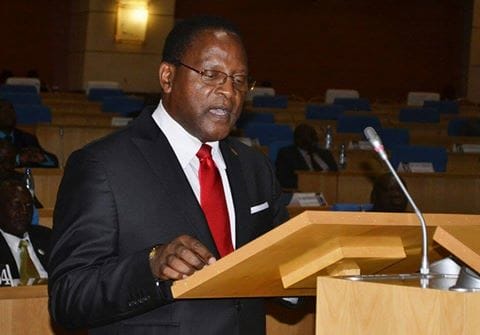
The drug shortfall reports, has not surprised the Parliamentary Committee on Health Chairperson Juliana Lunguzi, who said that her committee raised the same issue during debates on the national budget that funds for Malawi drug requirements were on the lower side.
Lunguzi expressed worry over the situation despite calls for the Finance Minister to do something before things got out of hand.
Out of 23 district hospitals, about 21 have exhausted their drug budgets, and they are now taking drugs from CMST hoping to pay in future.
BLANTYRE-(MaraviPost)—The mid-year budget review report which was presented on Friday in parliament by Minister of Finance, Economic Planning and Development, Goodall Gondwe, has attracted mixed reactions from different quarters, with International Monetary Fund (IMF) lauding the government for performing well in the first half of the financial year
Presenting the 2016/2017 Mid-Year Budget Review in Parliament on Friday, which has been revised downwards to K1.129 trillion from K1.149 trillion, Gondwe hailed Peter Mutharika administration for putting the country’s economy on a firm path to recovery with the effective fiscal and monetary policies.
He cited the decline in inflation to 10.2 percent as of January, a three percentage points reduction in policy rate to 24 percent and a 5.7 percent over performance in the domestic revenue as some of the indicators portraying the economy on the rebound.
Mixed reactions on Malawi mid-year budget review report: IMF gives it a nod as private sector laments high taxes
Commenting on the report, the IMF has said while the half-year fiscal performance is reassuring and has a clear focus, consolidation will need continued focus on bringing down inflation with fiscal discipline as an anchor.
In an interview with The Nation over the weekend, IMF country representative Jack Ree said the six months has seen a continuation of fiscal consolidation which is key to turning Malawi’s economic fortunes around unlike in the past five years.
“[the year] 2016 has been very difficult. The authorities needed to tackle an immense economic shock coming from the second consecutive year of drought.
“Confidence on Kwacha was low. Inflation expectations were locking at mid-20 percent range, which appeared unbreakable. However, government demonstrated an indestructible will to deal with the problem,” he said as quoted by The Nation newspaper in its 20th February edition.
Ree said policy focus remained persistently on discipline budget and keeping a lid on monetary excess, praising the authorities on structural reforms, particularly in public finance management.
“We are seeing results already,” he said.
However, Ree was coy to comment of the resumption of donor support.
“I would rather not speculate on the prospects of specific donor support programmes that is being discussed,” he said.
Malawi Economic Justice Network (Mejn) executive director Dalitso Kubalasa told the local paper that the government has a lot more to do.
“Government continues to struggle on bringing into fruition both the assumptions on the revenue side and the expenditure side of the budget. The 71 percent underperformance of the grants weighs heavily against the registered positive performance particularly in the tax revenues.
“The slowdown in expenditures also points to a worrisome development around government’s performance and obligation of providing quality public services to the masses, particularly the poor,” Kubalasa said as quoted by the local paper.
Commenting on the same, Malawi Confederation of Chambers of Commerce and Industry (MCCCI) chief executive officer Chancellor Kaferapanjira the performance of government hides a lot of expenditure burden that is passed on to the private sector and suffocating its performance.
Meanwhile, Malawi Congress Party (MCP) President Lazarus Chakwera, has bashed the Democratic Progressive Party (DPP) led government that the donors cannot trusted the leadership due to its usual casual way of handling corruption.
BLANTYRE-(MaraviPost)–Malawi Congress Party (MCP) president Lazarus Chakwera, who is also Leader of Opposition in Parliament, has argued against Minister of Finance, Economic Planning and Development Goodall Gondwe on the economic rebound, saying Democratic Progressive Party (DPP) cannot be trusted by donors.
Chakwera was reacting to revised budget announced by Minister of Finance, Economic Planning and Development Goodall Gondwe when he trimmed the 2016/17 financial plan by K20 billion following poor performance of grants and development support from donors in the first-half of the year.
Chakwera: DPP cannot be trusted by donors
“As will be seen from Annex I, total revenue and grants at midyear of 2016/17 amounted to K430.2 billion against a target of K482.0 billion, reflecting an underperformance of 10.7 percent of the midyear target. This underperformance was dominated by a large underperformance of the expected grants from donors,” said Gondwe.
But Chakwera, in his response said the news of the underperformance of the grants should not come as a surprise, arguing with the rampant corruption taking place in the government no donor can gather confidence to pump in funds.
“It is not a surprise that the money did not come through because this government is still not trustworthy because when you look at corruption and fraud that is taking place in the country, no donor can have the audacity to invest in the country. And my assessment is that we are not out of the woods yet,” Chakwera said.
Gondwe lamented the “disappointingly low” grants and funds for foreign financed projects, where only K30 billion was received by December 31 2016 against a target of K103.3 billion reflecting an underperformance of 71 percent.
Despite the numerous challenges facing the country including the donor pullout, the Finance Minister said the economy rebound is possible with DPP led administration as they are putting in place measures which have already started yielding results.
“There is evidence that, six months into the implementation of the Budget, the performance of the economy commenced a rebound towards recovery that is reflective of the effectiveness of the fiscal and monetary policies being pursued by the Government.
“In particular, during this period, there has been a marked decline in inflation which resulted in a 3 percentage point reduction in the Reserve Bank Policy Rate, while the exchange rate has remained relatively stable. The rate of inflation plummeted to 18.2 percent in January – the lowest since May, 2012. Food inflation went down by 3 percentage points to 21 percent and non food inflation eased to 15 percent from 15.4 percent. This is a significant macroeconomic improvement,” said Gondwe.
However, Chakwera told Gondwe to stop talking about economic recovery considering that in every parliament session the minister sings the same song which never comes true.
“This is not the first time the Minister of Finance has talked about economic rebound, how could you talk about a rebound when you have a private sector that in six months has been the worst affected because government is failing to give them back the money it owes them?” queried Chakwera.
Chakwera stressed that there is no sign that the country’s economy is on the rebound, saying Gondwe did not outline specific issues that would lead to economic recovery.
Gondwe expects Malawi Revenue Authority (MRA) to collect an additional K57.2 billion in domestic revenue, an upward revision based on the tax revenue collections between July and December, 2016.
BLANTYRE-(MaraviPost)–Minister of Finance, Economic Planning and Development Goodall Gondwe has revised the 2016/2017 budget downwards from K1.1492 trillion to K1.129 trillion.
Gondwe disclosed this on Friday in parliament when he was presenting the mid-year budgetary performance.
He said government is proposing the revision of the 2016/17 budget on the basis of the budgetary performance of the first half for the financial year, and the needed fiscal adjustments in response to the loss in budget support.
Gondwe
“It should be noted, Mr Speaker, Sir, that the downward revision in total expenditure from K1,149.2 billion to K1,129.4 billion is due to an expected decrease in disbursements of foreign financed projects.
“This reduction in overall expenditure would have been larger were it not for the increase in interest payments…,” Gondwe said.
According to the Finance Minister, domestic revenue amounted to K400.2 billion against a target of K378 billion.
He said the improvements in domestic revenues are largely due to the improved efficiency of the Malawi Revenue Authority.
“But they also point to a surge in the economy that increased the tax base. Moreover, some significant tax reforms that accompanied the 2016/17 budget are believed to have contributed to this result,” Gondwe said.
He, however, said non-tax revenue underperformed by K5.2 billion against a target of K34.0 billion.
Gondwe also told the House that both designated and project grants were “disappointingly low.”
He disclosed that only K30 billion was received against a target of K103.3 billion, reflecting an underperformance of K73 billion or 71 percent.
“This is attributed to large shortfalls in disbursement of dedicated and project grant emanating from low rates of disbursement as well as a slow pace in project implementation by ministries. It is anticipated, however, that the shortfall can be made up for during the second half of the financial year. This has already started to occur,” he said.
He said due to the revenue and grants underperformance, budgetary expenditures also slowed down, particularly on the development account.
He said total expenditures amounted to K506.1 billion against a target of K586.2 billion while recurrent expenditure was K415 billion against a target of K442 billion.
Gondwe also highlighted that the largest under-spending within the recurrent account was the Farm Input Subsidy Programme (Fisp), where 70 percent of the resources were not spent in the second quarter of the financial year. He said this was due to delays in the commencement of the programme.
“However, some 45 percent has been used to pay fertilizer suppliers in January alone. I would like to emphasize that, because of a remodeling of Fisp, we are unlikely to overspend on this programme as we have always done,” Gondwe said.
The Finance Minister also said wages and salaries and interest payments were overspent by 7.4 percent and 4.6 percent, respectively. He said the excess expenditure on wages and salary was due to payment of arrears to primary school teachers who were recruited in of 2015/16 financial year.
“The high payments of interest on domestic debt is likely to continue for the next three years as maturing zero coupon promissory notes are being converted into interest bearing securities and as the necessary conversions from low interest securities to high interest securities due to market dynamics are also being conducted,” he said.
He, however, said there was an improvement in the fiscal deficit that required a domestic borrowing of only K25.1 billion, against the International Monetary Fund (IMF) target of K40.1 billion.
This means Malawi is within the IMF target amount by some K15 billion. He said the IMF supported programme has continued to be track, a thing which has apparently resulted to an increasing perceptible improvement in public finance management in a majority of ministries.
Gondwe also said in the midterm budget, government proposes to increase the Auditor General’s budgetary resource to enable outsourcing the forensic audit of the remaining K236 billion for the period of 2009-2014 accounts.
He said total revenue and grants is now projected at K999.2 billion against the budgeted figure of K978.0 billion, representing an increase of 2.2 percent.
According to Gondwe, Domestic revenue has been revised upwards from K783.3 billion to K840.5 billion, an increase of K57.2 billion or 7.3 percent.
“Tax revenue is revised upwards by K46.1 billion (6.5 percent), from K708.8 billion to K754.9 billion, based on actual tax performance during the first half for the financial year. Non-tax revenue has also been revised upwards from K74.5 billion to K85.6 billion, an increase of 14.9 percent due a higher than originally anticipated dividend from the Reserve Bank of Malawi.
“Grants from donors, on the other hand, have been revised downwards from K197.4 billion to K158.7 billion. This is mainly due to lower than anticipated disbursements in project and dedicated grants,” he said.
The Finance Minister also said expenditure on domestically funded projects has been revised upwards by 10.7 percent, from K38.6 billion to K42.7 billion, to finance the commencement of the construction of the Mombera University, some roads in the three cities, and stadiums in Ntcheu and Zomba.
He said due to the revisions in revenues and expenditures, the estimated fiscal deficit including grants has been adjusted downwards from K171.2 billion (4.0 percent of GDP) to K130.3 billion (3.0 percent of GDP).
In reaction, the main opposition parties in Parliament, Malawi Congress Party (MCP) and People’s Party (PP) have described the mid-term budget as a desperate plan emanating from poor economic planners.
according to the Daily Times, the two parties have said government makes unrealistic projections regarding the budget and the plan will be still be difficult to implement.
MCP spokesperson on finance, Alexander Kusamba Dzonzi, has said the K20 billion reduction of the 2016/2017 budget is nothing but a sign of the availability of lazy and poor budget planners at the Capital Hill.
“We have planners who are failing to properly draft a budget that truly reflects the situation on the ground. The minister should have been coming here with the budget that will not need changes anyhow. A country which keeps on changing its budget cannot even attract outside support,” Dzonzi said.
He said when the minister presented a K1.149 trillion in June 2016, the opposition parties already said the budget was not realistic but government insisted it was not too much for the country.
“We even expected more than a K20 billion reduction because when the economy is contracting, the tax base also contracts. At the end of the day the reduction may be K50 or K100 billion and we know the minister will be here again in June to tell us that the reduction was more than what he is telling us today,” he said.
PP spokesperson on finance, Ralph Jooma, said it is surprising that instead of narrating the performance of the past six months, Gondwe, spent time on projections.
“This is mid-year budget review and we are supposed to know how the budget has been implemented but instead of focusing on that the minister concentrated on projections and not telling us the sectors that have suffered due to lack of funding. We are talking about review, he is talking about projections,” Jooma said.
Most people particularly president Peter Mutharika and his team are blinded by time; they think time is not moving. They always say it’s business as usual forgetting more about the speed of time. It’s almost three years in power. Gathering data over their performance it is below and at the bottom of average. No official can be heard talking the original language they spoke prior to entering into the government, the language has emigrated to state theft, rampant and excessive corruption, arrogance and vulgar.
Am personally perplexed to hear minister of finance Goodall Gondwe telling civil servants that their job is a calling and if they look for good and better perks they must look for work in private sector or non state actors organizations. What a blasphemy? Yet he Goodall Gondwe is filled with corrupt money together with his dirty team of the George Chaponda clique. His boss president Peter Mutharika recently just bought luxury limousines and is even craving for a presidential Jet which rumours has it that they have already bought using bogus donator. Are they not in the same boat with civil servants? Why must junior servants’ work be a calling yet theirs is a choice?
Salaries of civil servants have always been unpaid but never have we heard that ministers salaries and allowances are in arrears since the birth of Malawi.
Peter Mutharika must stop thinking politics of Malawi is business as usual. Politics of Malawi changed from business as usual to business unusual this is why no one political party dominates party politics in our country.
APM: still doing business as usual
No one ever thought in 53 years of Independence four different political parties can rule Malawi taking in mind the dominance of MCP for 31 years.
In the absence of servant leadership Peter Mutharika and his DPP risk to be a one term government.
Political rhetoric of his administration and those of his party will cost them a fortune in the next elections. By extension the young aspiring boy Atupele Muluzi who was supposed to be radical by now will have to pay heavy consequences for his voluntary blindness to join the party of visionless thieves and corrupt crooks. He has committed political suicide for believing in politics of inheritance.
Failure to tackle corruption head on, failure to root out state theft, failure to bring to justice offenders and shielding cash gate culprits majority of whom are ministers will have nasty consequences in the fast coming future for Peter Mutharika and his team in blue.
Corruption scandals, theft scandals and extravagant lifestyle at state house while the nation suffer are negative pictures painted by the attitude of “business as usual” that is going to bring punishment to the thieves.
In the last two years Peter Mutharika must fire all ministers involved in the scandals of milking the state and non performers. He must start governing the country towards citizens’ expectations and aspirations. He must cut expenditures to pave way for uninterrupted payment of salaries of civil servants. Provide services that include drugs in hospitals, utilities in water and energy and make the country liveable to all.
Delicious food in hospitals and prisons must be restored. Quality services must be rendered to all citizens. Capital projects must be drafted with all eyes and hands.
There must be a national Think Tank that must help thinking for the future of Malawi.
Unity must be a prerequisite for the country to develop tangibly.
Until the president declares “Business unusual” and walk his talk, all of us will take him and his government serious.
In the absence of this time is running fast for thieves to see the door out.
Saunders Jumah the Utopian.
SAVE MALAWI FOUNDATION [SAMAFO] A soccer player who just target the goal post without checking the position of the ball never scores.
Malawi breaking news and World News. News about Malawi, Malawi Business, Malawi Tourism, Malawi Politics, Malawi News, World and Africa Top News.