Ceasefire between US, Iran: A complex putcome of power, pride, persistence

TEHRAN-(MaraviPost)-The recent two-week ceasefire between the United States and Iran, brokered by Pakistan, marks a significant yet complicated pause in a conflict that has gripped the Middle East since late February.

Both nations have proclaimed victory, while the broader international community watches cautiously, aware that true peace remains fragile.

The conflict, which lasted 39 days, began amid heightened tensions and escalated through a series of fierce exchanges.

The United States, led by President Donald Trump, entered the conflict with a clear posture: a show of overwhelming military strength and a threat to dismantle what Trump described as the “whole civilization” of Iran.

On the other side, Iran, bolstered by a deeply entrenched sense of nationalism and religious identity, refused to yield despite immense pressure.

The ceasefire agreement, brokered by Pakistan’s Prime Minister Shehbaz Sharif, includes commitments from both sides to halt offensive actions: the US and Israel agree to cease strikes on Iranian territory, while Iran pledges to refrain from attacking Israel and Gulf neighbors.

Crucially, Iran has agreed to reopen the Strait of Hormuz for international business and to surrender nuclear material, a significant concession given the global concerns about Tehran’s nuclear ambitions.

Despite these apparent compromises, both countries have claimed victory.

In Tehran, large crowds celebrated, bearing posters of the new Supreme Leader Mojtaba Khamenei, signaling a rallying of domestic support and the resilience of the ruling clerics.

In the US, officials and citizens alike hailed the cessation of hostilities as proof of American strength and strategic success.

So, who really won this war? The answer is nuanced and must be understood beyond the surface-level declarations and nationalistic pride.

From a purely military standpoint, the United States did not achieve its initial goals.

Trump’s early calls for regime change and the complete destruction of Iran’s nuclear program and military infrastructure did not come to pass.

Iran’s leadership remains intact, and the country’s military capabilities, while damaged, have not been decisively broken.

The fact that Iran agreed to surrender some nuclear material and reopen the Strait of Hormuz does indicate some level of diplomatic pressure and military deterrence exerted by the US, but it falls short of a comprehensive victory.

Iran, for its part, demonstrated remarkable stamina and strategic cunning.

Facing the world’s most powerful military force, Tehran managed to avoid collapse, maintain internal cohesion, and continue to project influence across the region through proxies like Hezbollah.

The celebrations in Tehran are not merely about surviving the war but about the ability to withstand what many expected to be an overwhelming assault.

This has undoubtedly strengthened the regime’s domestic position and hardened its resolve.

However, the war’s human and regional costs have been staggering. Lebanon, caught in the crossfire due to Hezbollah’s involvement, has suffered heavily.

With 1,500 deaths and 1.2 million displaced, the humanitarian toll underlines the war’s broader destabilizing effects.

Israeli Prime Minister Benjamin Netanyahu’s insistence on continuing strikes against Hezbollah despite the ceasefire further complicates the regional peace prospects and suggests that the conflict’s ripple effects will persist.

Strategically, the ceasefire brokered by Pakistan highlights a crucial reality: neither the US nor Iran could completely impose their will through military means alone.

The war has revealed the limitations of American power in the region, despite its technological superiority and vast military budget. Iran’s ability to absorb blows, leverage regional alliances, and sustain its nuclear ambitions underscores the complexity of Middle Eastern geopolitics where power is multifaceted and not solely defined by military might.

Psychologically, both nations’ claims of victory serve important domestic purposes.

For Iran, declaring victory helps solidify national unity and supports the regime’s narrative of resistance against Western aggression.

For the US, maintaining the image of strength is essential for domestic politics and international credibility.

Trump’s initial rhetoric may have been loud and aggressive, but the eventual outcome — a negotiated ceasefire rather than total capitulation — reflects the practical limits of military intervention.

Internationally, world leaders from the UK, France, and the UN have welcomed the ceasefire, emphasizing the need for adherence to the agreement and a peaceful resolution.

The United Nations’ call for respect and compliance underscores the fragile nature of peace in the region and the risk that hostilities could reignite without careful diplomacy.

The war between the US and Iran ended not with a clear-cut winner but with a complex balance of power.

The US demonstrated it could exert significant pressure and negotiate concessions, yet it failed to topple the Iranian regime or halt its nuclear program entirely. Iran showed resilience and strategic depth, managing to survive and even claim victory in the eyes of its people.

The human cost and ongoing regional instability, especially in Lebanon, serve as sobering reminders of the conflict’s toll.

This ceasefire should be seen as an opportunity — a chance to move from confrontation to dialogue, to address the underlying issues that fuel such conflicts, and to work toward sustainable peace in a troubled region.

Victory in war is often fleeting and costly, but peace, when achieved, offers the lasting benefit both nations and their neighbors desperately need.

o

Police arrest guard Shadrick Clever over Anglican varsity student Lizzie Nyson’s murder

LILONGWE-(MaraviPost)-The Malawi Police in Lilongwe have arrested a 26-year-old man, Shadrick Clever, on suspicion that he murdered a 22-year-old Lizzie Nyson who was a student at Lake Malawi Anglican University (LAMAU ).

According to Lilongwe Police spokesperson Hastings Chigalu, Clever had been on the run until last night when police arrested him at Chilipa in Mangochi District, where he is believed to have been hiding.

Chigalu says the arrest of Clever follows a successful special investigation they launched into the case.

He says through the investigation, officers also managed to recover the victim’s mobile phone from a person to whom Clever had allegedly sold it.

Clever works as a security guard for Longways Construction Company in Lilongwe.

He comes from Kaongo Village, Senior Chief Kachindamoto in Dedza District.

The body of Lizzie Nyson was discovered on April 3 in a bushy area in Area 47 in Lilongwe, wrapped in a mosquito net.

FIFA drops AFCON final referee Ndala for 2026 World Cup sssignment

KINSHASA-(MaraviPost)-Renowned football referee Jean Jacques Ndala from Democratic Republic of Congo (DRC) has been left out of the list of match officials selected for the upcoming 2026 FIFA World Cup, set to kick off on June 11.

Ndala, widely regarded as one of Africa’s top referees, will miss out on the global showpiece despite his strong reputation on the continent.

His omission follows scrutiny over his recent performances during the Africa Cup of Nations (AFCON) held a few months ago.

The experienced official had been entrusted with one of the tournament’s biggest matches, officiating the AFCON final between Morocco and Senegal.

That appointment had initially cemented his status as a trusted figure in African football officiating circles.

However, it appears that his performance in the tournament may have influenced FIFA’s decision to exclude him from the World Cup roster.

Ndala’s absence has raised eyebrows among football observers, especially considering his experience and previous high profile assignments.

He is not the only casualty, as referees from several other African nations have also been left out of the prestigious tournament.Countries such as Ghana, Tanzania, Kenya,Malawi and Nigeria will not have any referees represented at the 2026 World Cup.

This development has sparked debate about the selection criteria used in choosing match officials for the global event.

Delta Hotels by Marriott® Brings Its Seamless Travel Experience to Antananarivo

Download high resolution images here

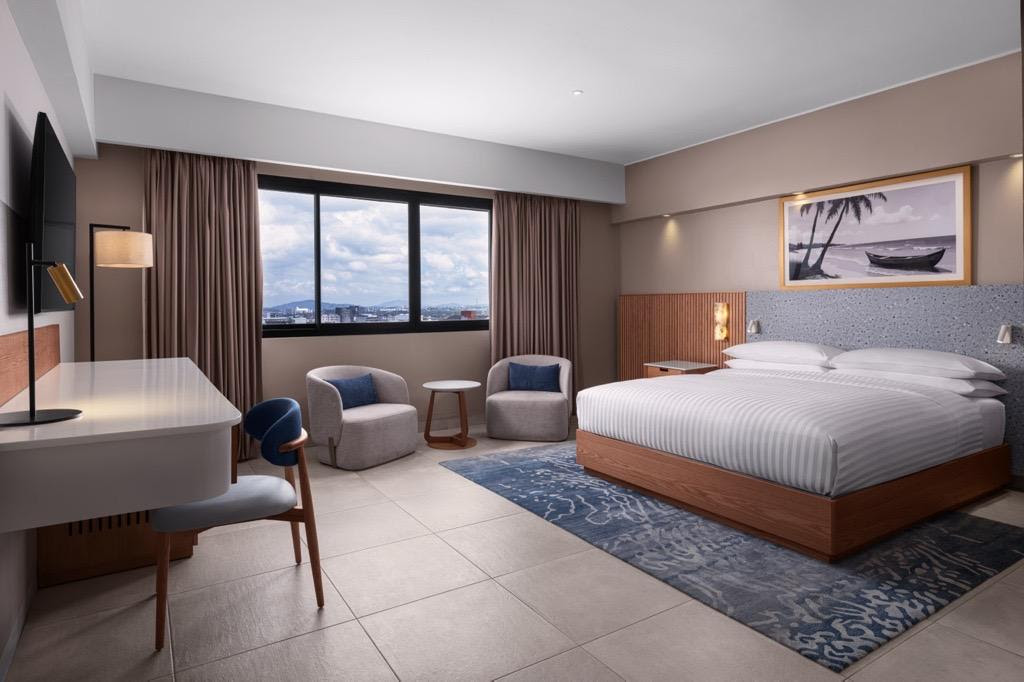
ANTANANARIVO, Madagascar, 10 April 2026 -/African Media Agency(AMA)/ – Delta Hotels by Marriott®, part of Marriott Bonvoy’s portfolio of over 30 extraordinary brands, announces the opening of Delta Hotels by Marriott Antananarivo, bringing the brand’s ‘Simple Made Perfect’ philosophy to Madagascar’s bustling capital city. Designed for both business and leisure travellers, the hotel offers a refined balance of comfort and sophistication through intuitive design and thoughtfully curated spaces that support productivity as well as downtime.

“We look forward to welcoming travellers to Antananarivo with a stay experience that feels effortless and well considered,” said Riad Zeggari, CEO, Hospitality Division of LUCEO Group. “Guided by the brand’s focus on the details that matter most, the hotel offers a calm environment where guests can move easily between work, rest, and discovery, while remaining well connected to the city.”

Nestled within Antananarivo’s business district, the newly opened property offers a calm retreat amid the energy of Antananarivo. Contemporary design, subtly inspired by Madagascar’s natural beauty, creates a clear and purposeful environment that supports a seamless stay.

The hotel features 107 spacious guest rooms and suites, including family‑friendly options, each designed with comfort and functionality in mind. Rooms include dedicated workspaces, comfortable lounge areas, and curated in‑room essentials, allowing guests to settle in with ease.

Dining experiences are rooted in simplicity and convenience. SAKOA, the all-day restaurant, serves international flavours in a warm and welcoming setting, while Delta Hotels Bar offers a relaxed space to enjoy signature drinks — ideal for unwinding, meeting friends, or informal business conversations. For guests on the move, the brand’s signature grab & go provides light bites and refreshments throughout the day. Marriott Bonvoy Platinum, Titanium and Ambassador Elite Members can also enjoy access to The Delta Hotels Pantry, offering a convenient continental breakfast selection alongside premium snacks and beverages.

Amenities reflect the brand’s signature approach of delivering what guests truly need and removing what they don’t. These include a modern fitness centre, a spa and the city’s largest indoor heated pool. For business travellers, the hotel also offers six state-of-the-art meeting and event rooms, providing 615 square metres of flexible meeting space, supported by complimentary Wi-Fi and dedicated onsite teams.
Centrally located, the hotel provides easy access to major corporate offices, government buildings, and key cultural landmarks such as the Queen’s Palace, offering an ideal base from which to explore the city’s rich cultural heritage and Madagascar’s unique natural beauty. Airport shuttle services are also available, ensuring smooth and hassle‑free arrivals and departures.

The opening marks Marriott International’s first property in Madagascar, expanding the company’s footprint in the region and reinforcing its continued growth across Africa.

Delta Hotels by Marriott Antananarivo participates in Marriott Bonvoy®, the award-winning travel programme from Marriott International, allowing members to earn and redeem points for their stay at the hotel and across the Marriott Bonvoy portfolio.

For more information and reservation inquiries, please visit the hotel website:
https://www.marriott.com/en-us/hotels/tnrde-delta-hotels-antananarivo/overview/

Distributed by African Media Agency (AMA) on behalf of Marriott International

About Delta Hotels by Marriott®
Delta Hotels by Marriott creates a seamless travel experience in over 135 locations across North America, Asia, Europe and the Middle East, and Central America and Caribbean. Delta Hotels focuses on the details that truly matter, delivering a streamlined and flawless stay for its guests every time. The brand’s simple and intuitively designed rooms, free Wi-Fi, exclusive Delta Pantry for Marriott Bonvoy Elite members, and convenient dining options offer travelers an effortlessly comfortable and stylish place to stay. For more information, please visit www.deltahotels.com, and stay connected on Facebook and @deltahotels on Instagram. Delta Hotels is proud to participate in Marriott Bonvoy®, the global travel program from Marriott International. The program offers members an extraordinary portfolio of global brands, exclusive experiences on Marriott Bonvoy Moments and unparalleled benefits including free nights and Elite status recognition. To enroll for free or for more information about the program, visit marriottbonvoy.com.

The post Delta Hotels by Marriott® Brings Its Seamless Travel Experience to Antananarivo appeared first on African Media Agency.

Malawi lands Minister Chipungu addresses Africa Ministers during breakfast meeting in Kenya

NAIROBI-(MaraviPost)-Malawi’s Lands and Urban Development Minister Chimwemwe Chipungu on Wednesday delivered remarks in his capacity as co-facilitator of the preparations for the High-Level Meeting on the New Urban Agenda (NUA), with Malawi serving in this role alongside Poland in New York.

The remarks were made during a breakfast meeting held on the margins of the Second Africa Urban Forum at the Kenyatta International Convention Centre in Nairobi, organized by the Executive Director of UN-Habitat.

In his statement, the Minister briefed delegates on the current status of preparations, outlining both progress made and the ongoing consultative process.

He underscored the importance of sustained engagement by Member States and called for proactive participation to ensure that the objectives of the NUA are effectively realized.

He further reminded delegates of the forthcoming review of the Agenda, scheduled for July in New York, emphasizing the need for coordinated inputs and strengthened commitment to deliver meaningful and action-oriented outcomes.

The Minister also invited fellow Ministers to actively patronize the NUA-related meetings organized during the UN-Habitat Executive Board sessions in Nairobi, as well as engagements at the World Urban Forum in Baku, Azerbaijan.

He stressed the importance of strong African participation in these platforms to ensure that Africa’s priorities are effectively articulated and reflected in the New Urban Agenda.

Chipungu added that Malawi is urbanizing rapidly, with about 20% of the population living in urban areas, mainly in Blantyre, Lilongwe, Zomba, and Mzuzu.

However, around 70% of urban residents live in informal settlements, highlighting the urgent need for improved serviced land, housing finance, and affordable housing.

“To respond, Malawi is advancing urban development under Vision 2063, including the development of eight secondary cities to support balanced and sustainable growth.

“Government is also implementing key reforms, including the review of the National Urban Policy and National Housing Policy (2025–2030), and the Disaster Risk Management Act of 2023 to strengthen resilience and safer settlements,” he said.

Chipungu explained further, “We are also prioritising slum upgrading, expansion of serviced land, and improved access to housing finance, alongside major programmes such as the Malawi Housing Corporation projects and innovative subsidy and mortgage schemes”.

The Minister assures, “Malawi remains committed to strong partnerships with development partners, the private sector, and local authorities to deliver sustainable urban solutions.

“We reaffirm our commitment to Agenda 2063 and inclusive, resilient urban development”.

“Kalondola beats excise revenue target by 13.67%”-MRA tauts

…..MRA attributes the 13.67 percent surplus in excise revenue collections to improved compliance under the Kalondola system.

BLANTYRE-(MaraviPost)-The Malawi Revenue Authority (MRA) says the Digital Tax Stamps system, also known as Kalondola, has significantly improved excise tax compliance and boosted revenue collections since its rollout in 2024.

MRA Head of Corporate Affairs Wilma Chalulu told The Maravi Post in an interview that the introduction of mandatory tax stamps has forced previously informal manufacturers to register, contributing to strong growth in excise revenues.

“This shift has led to exponential revenue growth. For example, excise tax payments in the alcoholic beverages sector have increased by 500 to 600 percent, with similar upward trends in non-alcoholic beverages,” she said.

MRA has also exceeded its domestic excise revenue target, collecting about K168.86 billion against a target of K155.16 billion.

Chalulu said the system differs from the previous self-assessment model, which she described as prone to underreporting and offering limited oversight of production volumes.

She said the current regime uses a track-and-trace system that enables real-time monitoring of production, improves transparency and strengthens accountability among manufacturers.

According to Chalulu, the system has also made it harder for illicit products to enter the market, as smuggled or unlicensed goods cannot easily obtain secure excise stamps.

She said the number of registered excisable goods manufacturers has more than doubled, from 51 before implementation to 114 currently, which she attributed to increased formalisation in the sector.

Chalulu said 22 production lines are now being monitored through digital systems, including Secure Coding Lines for beverages and the Secure Activation System for tobacco products, across the country’s regions.

On enforcement, she said MRA has imposed penalties totalling about K1.46 billion as of February 28 2026, following measures such as product embargoes, detentions and seizures.

“To sustain this momentum, the Authority is deploying 24-hour surveillance, with technicians stationed at production facilities and enforcement officers at strategic checkpoints,” she said.

“We are also utilising Flexible Anti-Smuggling Teams to conduct rapid, unannounced inspections.”

Chalulu said MRA is also carrying out inspections at retail and wholesale outlets to remove unstamped or improperly stamped goods, while requiring stamp procurement and activation at entry points for imports.

She said public sensitisation campaigns are ongoing to improve compliance among manufacturers, importers and distributors.

She said overall compliance has improved, citing better record keeping and stronger adherence to licensing and reporting requirements.

However, she noted that some challenges persist in parts of the non-alcoholic beverages sector, particularly among some importers, and said MRA is addressing these through targeted engagement and enforcement.

The Kalondola system was introduced in 2024 following a 10-year agreement between MRA and SICPA Malawi, a subsidiary of Switzerland-based SICPA SA, aimed at modernising excise tax collection and strengthening accountability.

The system uses secure tax stamps that combine material and digital security features, allowing both authorities and consumers to verify product authenticity while helping detect illicit trade such as counterfeiting and smuggling.

It was rolled out in phases, with the first phase in May 2024 covering cigarettes, alcoholic beverages and non-alcoholic drinks, and the second phase extending to products such as bottled water, soft drinks, energy drinks, lotion and glycerine.

The system also improves oversight across the supply chain, particularly for excisable goods that have historically been vulnerable to under-declaration and illicit trade.

MRA has also integrated the system with the Automated System for Customs Data to streamline import processes.

Institute of Chartered Accountants in Malawi chief executive Noel Zigowa said the system also helps protect consumers.

“The requirement for a secure excise tax stamp discourages operators from openly selling illicit goods, as smuggled and unlicensed products cannot easily obtain or replicate official stamps,” he said.

Digital excise tax stamps are not unique to Malawi. Several countries, including Tanzania, Democratic Republic of Congo, Kenya, Morocco, Sierra Leone, The Gambia, Togo and Uganda, have adopted similar systems.

The International Monetary Fund has previously highlighted track and trace systems as tools for improving tax administration and strengthening revenue collection.

Zimbabwe’s constitutional crisis: ZANU-PF’s power grab threatens democracy

HARARE-(MaraviPost)-Zimbabwe stands at a perilous crossroads as the ruling party, ZANU-PF, seeks to enact the Constitution Amendment Bill No. 3 (2026), which aims to strip citizens of their fundamental right to directly elect their president.

This proposed bill would hand over the power of choosing the head of state to a joint sitting of Parliament, effectively removing the voice of the people from the highest political decision in the nation.

This move is not just a legislative adjustment; it is a dangerous step toward entrenched dictatorship, undermining the very core of democratic governance and threatening to plunge Zimbabwe into political darkness.

At the heart of this constitutional upheaval lies a blatant attempt by ZANU-PF to cling to power through undemocratic means.

By shifting the presidential election process from a direct public vote to a parliamentary selection, the ruling party is attempting to create a system where the leader is chosen by a small, controlled political elite rather than by the citizens.

This is an affront to the principle of popular sovereignty, which holds that the people are the ultimate source of political authority.

The proposed amendment is a calculated effort to consolidate power within ZANU-PF’s parliamentary majority, leaving opposition voices marginalized and democracy hollowed out.

President Emmerson Mnangagwa, who stands to benefit from this amendment with a potential extension of his term until 2030, should be reminded of the history he is now attempting to rewrite.

During Robert Mugabe’s era, Mnangagwa was not the beneficiary of direct, popular support in his ascent to the presidency.

Instead, he came into power through a soft military coup following Mugabe’s forced resignation in 2017.

The idea that Mnangagwa should now entrench a system that removes direct elections, thereby diminishing the people’s role in choosing their leader, is deeply ironic and hypocritical.

It is a stark warning against the dangers of unchecked ambition and the perils of political arrogance that often lead to authoritarianism.

The term “imperial presidency” is frequently used to describe a system where the president holds excessive powers that overshadow other branches of government, reducing checks and balances and centralizing authority in the executive.

This bill is a clear step towards creating such an imperial presidency in Zimbabwe.

By removing direct elections and extending presidential terms, the amendment paves the way for an office that is less accountable to the people and more reliant on political machinations within Parliament.

This system risks undermining democratic institutions and eroding the rule of law, as the president’s power becomes increasingly unchecked.

Supporters of the bill argue that it will bring stability and reduce election-related violence or toxicity. However, this argument is a thin veil for what is essentially a power grab.

Stability that comes at the cost of democratic freedoms is no true stability at all; it is the stability of oppression.

Zimbabweans deserve a political system that respects their voice, their choices, and their rights—not one that silences them under the guise of order.

Democracy is not chaos; it is the orderly expression of the people’s will through free and fair elections. To remove this right is to kill democracy outright.

The chaos and intimidation reported during public hearings on the bill only reinforce suspicions that ZANU-PF is not interested in genuine dialogue or democratic process.

Instead, it appears intent on bulldozing through a constitutional change that serves its own interests.

Opposition parties and civil society groups have rightly called for a referendum, arguing that any changes of this magnitude require the explicit consent of the people.

The ruling party’s refusal to hold such a referendum speaks volumes about its disregard for popular consent and democratic principles.

The international community has taken notice, expressing concerns about the potential consequences for Zimbabwe’s democracy and stability.

Yet, Zimbabweans must not rely solely on external pressure; the fight for democratic rights must be led from within by a vigilant and courageous citizenry.

The passage of this bill would send a chilling message to all who believe in democracy: that their votes no longer matter, that their voices can be silenced by parliamentary decree, and that the country is sliding toward autocratic rule.

This constitutional amendment is more than a legislative proposal—it is a declaration of intent by ZANU-PF to entrench a system where power is concentrated in the hands of a few, where the president reigns supreme without meaningful accountability, and where the fundamental democratic right to choose one’s leader is extinguished.

Zimbabweans must resist this erosion of their democracy, remembering that the true strength of a nation lies in the will of its people, not the ambitions of its rulers.

In closing, the ruling party’s plan to abolish direct presidential elections is a betrayal of Zimbabwe’s democratic aspirations.

President Mnangagwa and ZANU-PF must be reminded that power gained without the people’s mandate is fragile and illegitimate.

Zimbabwe’s future should be built on democratic foundations, not imperial ambitions.

The proposed amendment is a recipe for dictatorship and repression, and it must be defeated to preserve the nation’s democratic soul.

“Win Big is fair for everyone,” Kamlon lauds after driving away with Honda Freed

LILONGWE-(MaraviPost)-Denikes Kamlon, from Lilongwe and currently based in Nanjiri, has urged the public to trust that the Win Big competition is fair, dismissing claims that it is biased.

Kamlon hinted that everyone has an equal chance of winning.

He made these remarks on Thursday while receiving his prize a Honda Freed vehicle in Dedza District, saying the car will greatly assist him in his day to day activities.

Kamlon revealed that he participated in the competition 36 times before finally winning. He said his determination was inspired by testimonies from previous winners.

Win Big ambassador Onesmus expressed his excitement that the competition is making a positive impact on Malawians and encouraged more people to keep participating.

Onesmus added that the main goal of Win Big is to uplift citizens by giving them opportunities to win prizes such as mobile phones, cash and even cars.

Shops remain shut in Limbe as traders protest against EIS

BLANTYRE-(MaraviPost)-Shops in Limbe, a business hub in Blantyre, Malawi, remained closed on Thursday as traders continued their protest against the Malawi Revenue Authority’s (MRA) planned Electronic Invoicing System (EIS).

The shutdown follows a January 29, 2026, protest where traders presented a petition to MRA, warning of a shutdown if their concerns were ignored.

Chairperson for the shop owners, Robert Nachamba, confirmed the closure, stating that it will continue until MRA addresses their concerns.

“We will not open our shops until MRA addresses our concerns,” he said, adding that traders are working with police to ensure security.

The traders are protesting against the EIS, which they claim will increase their tax burden and expose them to heavy taxation, penalties, and possible harassment.

They argue that the system is not suitable for small businesses and will require them to reveal sensitive business information.

MRA had initially planned to roll out the EIS on February 1, 2026, but the traders’ protest has led to a delay. The authority has assured traders that it will respond to their concerns soon.

The protest highlights the growing frustration among small-scale traders in Malawi, who feel overburdened and under-supported by the government.

The situation remains tense, with traders vowing to continue their protest until their demands are met.

HRCC dares whistleblowers Kamangila, Kenani, Ntanyiwa on “digital trial culture” danger

LILONGWE-(MaraviPost)-The Human Rights Consultative Committee (HRCC) has raised alarm over what it describes as a growing culture of unverified accusations on social media, warning that the trend poses a serious threat to Malawi’s justice system and democratic stability.

Particularly targeting Alexious Kamangila, Onjezani Kenani, Ntanyiwa, JB and others that they must provide enough evidence on any allegations leveling individuals on corruption.

Speaking during a press briefing in Lilongwe on Thursday, Board Chairperson Robert Mkwezalamba and Board Member Desmond Mhango,called for responsibility and adherence to the rule of law in the digital space.

HRCC says it is deeply concerned with the rise in allegations targeting the Judiciary, public officials, business leaders and private citizens without evidence or engagement with lawful investigative institutions.

The Committee specifically cited individuals such as Alexious Kamangira and Onjezani Kenani, accusing them of making sweeping corruption claims on social media without presenting proof or reporting to authorities like the Anti Corruption Bureau (ACB) and the Financial Intelligence Authority (FIA).

According to HRCC, such actions risk creating a “trial by public opinion,” where accusations are treated as facts, undermining due process and weakening confidence in formal justice systems.

Mkwezalamba and Mhango emphasized that while freedom of expression is protected under the Constitution, it is not absolute and must be exercised responsibly, with respect for truth, evidence and the rights of others.

They warned that persistent attacks on the Judiciary, especially those lacking factual backing, could erode judicial independence, a key pillar of Malawi’s democracy protected under Section 103.

HRCC also highlighted concerns over the unauthorized recording and live streaming of court proceedings, describing the practice as a violation of legal procedures that may amount to contempt of court.

The Committee further noted that some individuals are making allegations from outside Malawi in an apparent attempt to avoid accountability, but stressed that jurisdiction is determined by where the harm occurs.

From a legal standpoint, HRCC warned that unverified allegations could attract serious consequences, including defamation lawsuits, contempt of court charges and possible cybercrime offences.

The organization has since engaged key institutions such as the Judiciary, the Malawi Human Rights Commission and law enforcement agencies, urging them to act decisively to protect institutional integrity.

HRCC also called on Malawians to exercise critical thinking and avoid spreading unverified information, stressing the importance of using formal channels when raising serious allegations.

Mkwezalamba and Mhango reaffirmed the principle of presumption of innocence, warning that if left unchecked, the spread of unverified claims could erode trust in institutions and undermine the rule of law in Malawi.

Exit mobile version