Tag Archives: Farmers

Gates Foundation Announces New Commitment for Smallholder Farmers on the Frontlines of Extreme Weather

$1.4B investment expands access to evidence-backed tools to help farmers in some of the world’s poorest regions adapt and build more resilience to droughts, floods, heat waves

BELÉM, Brazil, 7 November 2025 -/African Media Agency(AMA)/-The Gates Foundation today announced a new commitment to advancing climate adaptation, helping smallholder farmers build resilience to a warming world and protect hard-won gains against poverty.

Announced at COP30 in Belém, Brazil, where leaders are emphasizing locally driven adaptation, the four-year, $1.4 billion investment will expand access to innovations that help farmers across sub-Saharan Africa and South Asia adapt to extreme weather. In these regions, where food security and livelihoods depend on agriculture, smallholder farmers and the communities they feed are among the most exposed to droughts, floods, and rising temperatures. Yet less than 1% of global climate finance targets the growing threats to these vital food systems.

“Smallholder farmers are feeding their communities under the toughest conditions imaginable,” said Bill Gates, chair of the Gates Foundation. “We’re supporting their ingenuity with the tools and resources to help them thrive—because investing in their resilience is one of the smartest, most impactful things we can do for people and the planet.”

The commitment supports Bill Gates’ vision, outlined in his recent COP30 memo, of prioritizing climate investments for maximum human impact and advances the foundation’s goal of lifting millions of people out of poverty by 2045.

Addressing a global funding gap

Farmers in low-income countries produce one-third of the world’s food but face mounting climate threats. Without greater adaptation investment, these shocks will continue to drive food insecurity and reverse hard-won gains against poverty. 

World Bank research shows that targeted adaptation investments could boost GDP, particularly in small island and developing states, by up to 15 percentage points by 2050. The World Resources Institute estimates that every dollar invested in climate adaptation will yield more than $10 in social and economic benefits within a decade. 

“Climate adaptation is not just a development issue—it’s an economic and moral imperative,” said Mark Suzman, CEO of the Gates Foundation. “This new commitment builds on our support for farmers in Africa and South Asia who are already innovating to withstand extreme weather. But they can’t do it alone—governments and the private sector must work together to prioritize adaptation alongside mitigation.”

Scaling farmer-led innovation

While climate shocks continue to intensify, the financing needed to help farmers adapt to them is not keeping up. According to the 2025 UN State of Food Security and Nutrition report, Africa was the only region where hunger and malnutrition increased this year. Without urgent adaptation, the Intergovernmental Panel on Climate Change warns that agricultural productivity in parts of Africa could drop by up to 20% by 2050.

The foundation’s new investment will scale farmer-led, evidence-backed innovations that strengthen rural livelihoods and food systems amid growing climate threats. It will expand technologies and approaches already showing results, including:

  • Digital advisory services: Mobile apps, SMS, and other platforms that deliver timely, tailored information to help farmers make informed planting decisions and manage risk, including support for the AIM for Scale initiative, which aims to reach 100 million farmers across Africa, Asia, and Latin America by 2030 
  • Climate-resilient crops and livestock: Varieties that withstand drought, heat, and emerging pests while improving yields and nutrition 
  • Soil health innovations: Approaches that restore degraded land, enhance productivity, and reduce emissions—supported by a $30 million partnership with the Novo Nordisk Foundation to advance soil science research

Partnerships driving global impact

The new commitment builds on partnerships that were expanded or launched through the foundation’s COP27 pledges and are already reaching millions of farmers. Examples include: 

  • AIM for Scale: Launched in 2023, this global partnership delivered AI-powered SMS weather forecasts to nearly 40 million farmers across 13 Indian states during the 2025 monsoon season, helping protect millions of acres of crops. 
  • TomorrowNow and KALRO: Together with the Kenya Agricultural and Livestock Research Organization (KALRO), TomorrowNow is providing hyper-local weather alerts to more than 5 million Kenyan farmers, improving yields and reducing crop losses, with expansion underway in Tanzania, Malawi, and Zambia. 

The Gates Foundation is working alongside local researchers, governments, and private sector partners to scale such efforts—strengthening rural economies and food systems for the long term.

Collaboration at COP30

This investment reflects a shared global commitment—led by African leaders and Brazil’s COP30 presidency—to put food, livelihoods, and health at the center of resilience planning. Brazil’s own experience linking social programs with sustainable agricultural innovation shows how inclusive adaptation can drive equitable growth.

Together with Brazil’s Ministry of Agriculture and Livestock, Embrapa, AGRA, AIM for Scale, CGIAR, the Forum for Agricultural Research in Africa (FARA), and the United Arab Emirates, the foundation will co-host the Agricultural Innovation Showcase at COP30. Both a high level event on November 10 and a physical exhibition, the showcase will highlight affordable, climate-smart solutions designed for and, in many cases, by farmers. More information is available here: https://www.embrapa.br/en/cop30/agrizone

Distributed by African Media Agency (AMA) on behalf of Gates Foundation.

About Gates Foundation

Guided by the belief that every life has equal value, the Gates Foundation works to help all people lead healthy, productive lives. In developing countries, we work with partners to create impactful solutions so that people can take charge of their futures and achieve their full potential. In the United States, we aim to ensure that everyone—especially those with the fewest resources—has access to the opportunities needed to succeed in school and life. Based in Seattle, Washington, the foundation is led by CEO Mark Suzman, under the direction of Bill Gates and our governing board.

Media Contact:

Gates media team

media@gatesfoundation.org

The post Gates Foundation Announces New Commitment for Smallholder Farmers on the Frontlines of Extreme Weather appeared first on African Media Agency.
Landslide survivors’ fight for justice reboots with fresh court hearing

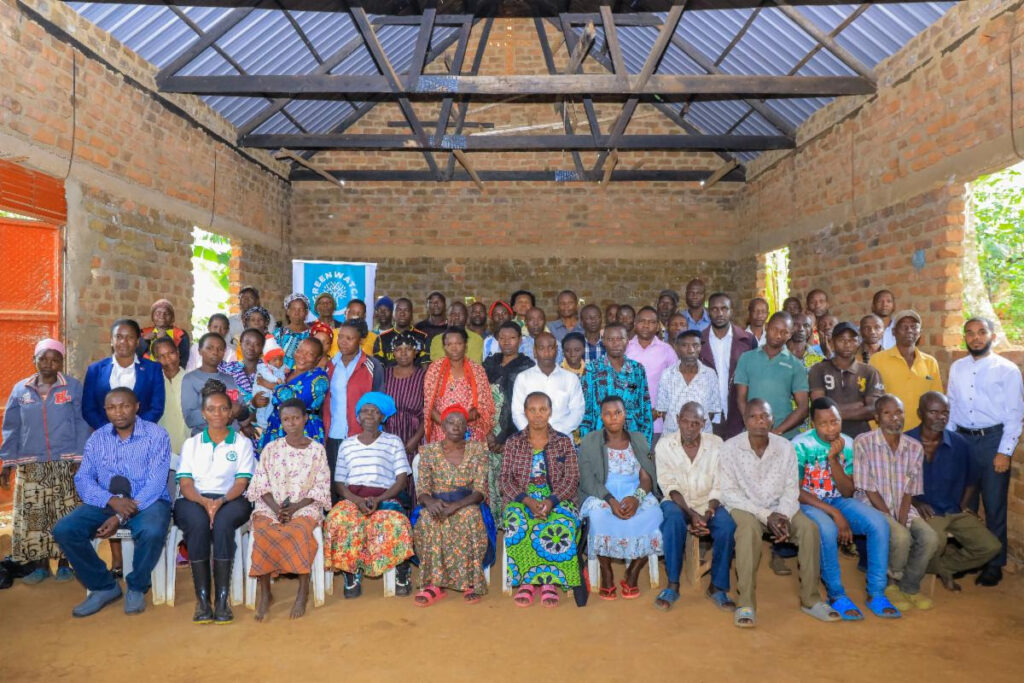
KAMPALA , Uganda, 23 October 2025 -/African Media Agency(AMA)/- A group of 48 landslide survivors are appearing once again before the Mbale High Court today in Uganda, just weeks before the heaviest rain season could threaten to bring similar disasters to the area.

Following a landslide in December 2019 that killed dozens in the Bududa district of eastern Uganda, survivors took legal action in 2020 with the support of Ugandan NGO Greenwatch and Kakuru & Co Advocates.

They argued that by failing to establish effective disaster management in Bududa, the government was in breach of the Constitution and other existing laws. [1]

The survivors have demanded emergency systems be put into place in high-risk areas, and that families who lost loved ones receive financial compensation.

The case – stalled for five years due to a procedural technicality – is now back in court, just a year after a similar landslide killed dozens in the neighboring Bulambuli District. [2]

If the judge allows the case to proceed, then the Mbale High Court will begin to examine the case in detail and deal with its core arguments.

Greenwatch Director Samantha Atukunda Kakuru Mwesigwa said:

“Almost five years after the launch of this case, these claimants have not wavered in their fight for justice – and we are proud to stand by them today in court.

“And during this painstaking wait, similar disasters have hit nearby areas – such as the devastating landslide last year in Bulambuli.

“Without the right finance and adaptation measures in place, every town and village in the eastern part of Uganda lives with the fear that tragedy could strike at any moment.

“That’s why these claimants’ case has never been more important. Heavier rainfall wreaks and will continue to wreak havoc in the region – and we are hoping the court gives this case its long-awaited green light to proceed to the next stage.”

Background to the case

Recurrent landslides are an ever-present threat in eastern Uganda, particularly during the rainier months between November and January.

They’ve been happening for decades and have been worsening over time – which is partially due to increased rainfall caused by climate change. [3]

In order to address the growing danger communities in landslide-prone areas face, the Ugandan Government adopted a resettlement plan in 2010. They intended to relocate all those who might be impacted by landslides within 10 years.

However, little progress has been made to date, and only a limited number of people who want to relocate have had the process seen through.

Residents in Bududa, who are primarily subsistence farmers, are also strongly concerned about the suitability of the relocation scheme – particularly when it comes to finding a place to grow and produce food.

All the while, landslides have continued to hit the region. Most recently in Bulambuli, 15 people were killed by a heavy-rainfall-induced landslide – with a further 113 people reported missing by local authorities.

40 houses were swept away by the disaster and the military was deployed to help assist with search and recovery efforts in the aftermath. [4]

Beyond Uganda, climate change-fueled landslides are becoming an increasing risk across the African continent. Heavy rainfall and flash flooding in Sudan reportedly killed hundreds last month, compounding an ongoing humanitarian crisis in the country. [5]

And according to UNICEF, almost one million people across Kenya, Burundi, Tanzania and Somalia were affected in May 2024 by ongoing flooding and landslides. [6] 

Distributed by African Media Agency (AMA) on behalf of GreenWatch

Notes to editors

More information on the relationship between climate change and increased landslide risk can be found in the Scientific American piece titled “the Landslide Lurking in Your Backyard”.

  1. The claimants’ case argues that in addition to violating the Constitution of Uganda, the Ugandan government is in breach of the African Charter on Human and Peoples’ Rights, the International Covenant on Civil and Political Rights, the Human Rights Enforcement Act 2019, the Judicature Act and existing case law.
  2. After its 2020 filing, the High Court of Uganda at Mbale initially dismissed the case on technical grounds in August 2024 and did not engage with the substance of the claimants’ arguments.
  3. More information on how climate change impacts precipitation is available on NASA’s global precipitation measurement website.
  4. More information on the November 2024 Bulambuli district landslide is available here.
  5. More information on the September 2025 landslides is available here.
  6. Further reading on the impact of flooding and landslides in Eastern Africa is available on UNICEF’s website

Media Contact:

+256 39 32 36 151

environment@greenwatch.or.ug

The post Landslide survivors’ fight for justice reboots with fresh court hearing appeared first on African Media Agency.
American Voices on Trump

The Trump administration has moved fast to chart a new course for American policy both here at home as well as internationally. But how are those changes impacting  Americans across the country? 

This week on The Sunday Story, we take a road trip to find out how people are feeling about the policy changes coming out of the White House. From wheat farmers in Washington state to Forest Service workers in Montana to business leaders in Mississippi, average Americans offer their thoughts on where the country is headed.

Learn more about sponsor message choices: podcastchoices.com/adchoices

NPR Privacy Policy

New Must-Visit Restaurants In Cape Town For 2025

Cape Town’s restaurant scene is constantly evolving, with new eateries and foodie attractions making bold statements through their innovative cuisines, striking interiors, and unique experiences.

Explore Cape Town’s hottest new restaurants:

Marble Cape Town

Co-founders Chef David Higgs and entrepreneur Gary Kyriacou launched the much-anticipated Marble at the V&A Waterfront, blending their signature fire-focused philosophy with the city’s renowned seafood culture. Housed in the historic Union Castle building, the space reflects Cape Town’s natural elements-wind, sea, and earth, while floor-to-ceiling glass facades offer breathtaking 360° views of the city. Tuck into signature starters like snoek pâté with magwenya and lamb and beef tartare with pickled waterblommetjies. Or devour Marble’s celebrated wood-fired Chalmar ribeye, alongside new creations such as mussel paella and line fish with burnt leeks and roasted fish bone sauce. Dessert is inspired by the Mother City, including the famous granadilla lolly– guaranteed to make you jolly.

Location:  1 Dock Rd, Victoria & Alfred Waterfront.
Website: bit.ly/4bM89S2

Amare

Amare, meaning “to love” in Latin, lives up to its name by celebrating its Mediterranean roots while adding a splash of coastal charm to everything. The minimalist aesthetic is inspired by the rugged coastlines of Andalucía and the sun-drenched vineyards of Tuscany. Located in Bantry Bay, Amare serves breakfast, lunch, and dinner with a curated menu that’s all about fresh, vibrant flavours. Popular picks include the Amare salad with cos lettuce, focaccia croutons, parmesan, and a poached egg drizzled with either anchovy or fynbos dressing and the flatbreads. For the main event, the chefs swear by the prawn linguine and the Chalmar beef. End with a warm chocolate torte with olive oil and salted lemon sorbet and their unique cocktails.

Location: 29 Victoria Rd, Bantry Bay.
Website: www.amarecapetown.com/

Bus Cuisine

If you’re craving something different but still want to take in stunning city views, Bus is a must. This exciting new foodie experience lets you enjoy a 4 or 6-course meal crafted by award-winning chefs, all while aboard a luxury double-decker restaurant bus. The lunch and dinner set menu varies.  Kick things off with a fresh bread selection, then indulge in a West Coast seafood bisque or zesty shrimp ceviche. For mains, tuck into juicy grilled venison kebabs or braised karoo lamb shoulder. Chocolate lovers will appreciate the crispy chocolate spring rolls with crème anglaise, citrus, and a drizzle of honey. Vegetarian options are available. As you roll through the city along the Atlantic Seaboard, you’ll savour each dish, perfectly paired with Michelangelo award-winning Cape wines or refreshing mocktails. And don’t worry about plates and cutlery flying around, everything is thoughtfully curated to make sure your experience is stress-free. Alcoholic and non-alcoholic drinks, as stipulated in the menu, are included in the price, which starts from R1250 per person.

Location: The bus leaves from The Commodore Hotel on Portswood Road.
Website: www.buscuisine.co.za/

Libertino

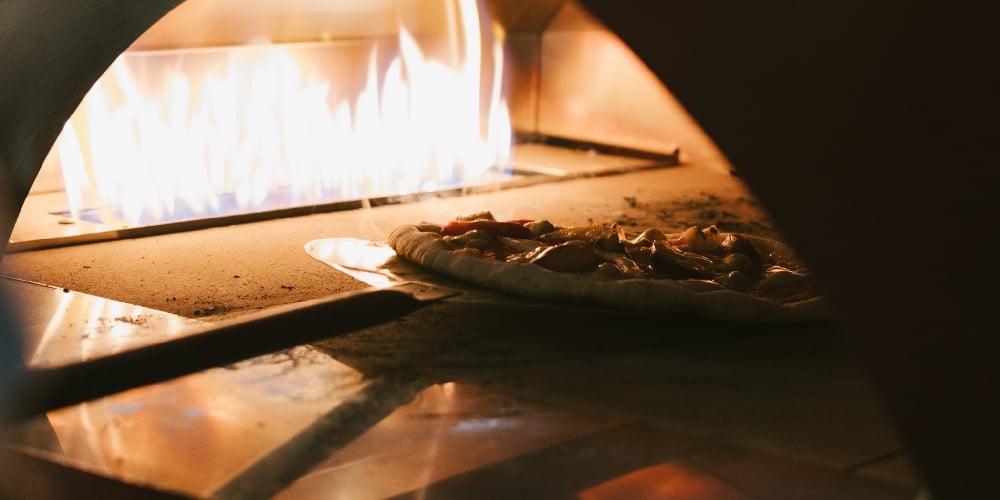
Libertino isn’t your typical Italian restaurant. Here, handmade pasta (don’t miss the pasta window!) and Neapolitan pizzas meet disco vibes and a sun-soaked terrace, adding a touch of seduction to late-night dinners. Beyond the alluring aesthetic, the seasonal menu, which includes Sicilian-style prawns, rigatoni aubergine, ravioli, a selection of pizzas, and tiramisu, showcases the freshest local ingredients. Every strand of pasta is rolled by hand, pizza dough stretched from scratch, and cheeses made in-house. Perfect for a night out with friends, and with both half and full portions, everyone can try a bit of everything on the menu.

Location: 47 Napier St, De Waterkant.
Website: libertino.co.za/

Credit: @arestudios.za

Konnichiwa

At Konnichiwa at The Pullman Cape Town, you don’t have to worry about making a reservation. The new sushi spot operates a no-reservations policy, perfect for when you’re out exploring the local attractions.

This quaint eatery serves fresh, made-to-order sushi, prepared by Shokunin (chef) Ernest Tsosane and his team. The menu blends classic favourites such as sashimi and nigiri with Rainbow Rolls and Wagyu Aburi. For something unique, the new-style sashimi introduces citrus-infused seafood options, adding extra depth. Pair your sushi with a selection of wines and cocktails while you take in the bustling city views.

Location: 22 Riebeek St, Cape Town City Centre, Cape Town.
Website: bit.ly/41M4tv1

konnichiwa restaurant

Seebamboes

Anouchka Horn and Neil Swart, the duo behind Belly of the Beast and Galjoen, are back at it with their latest culinary adventure, Seebamboes. Perched on the mezzanine above Galjoen, this intimate spot flips the idea of ‘surf and turf’ on its head, turning it into something playful, surprising, and seriously delicious. The set tasting menu is all about pushing boundaries, blending sea and land ingredients in creative, unexpected ways. With just a handful of seats available each night, the experience feels exclusive. Think high tables, tall chairs, and a striking rectangular window framing an unexpected view of Table Mountain behind the chefs. As always, sustainability and local sourcing are at the heart of it all, with bold flavours and inventive combinations stealing the show.

Location: 99 Harrington St, District Six, Cape Town.
Website: www.seebamboescpt.co.za/

Seebamboes

Kumu Aloha

Get a taste of Hawaii at Kumu Aloha in De Waterkant, Cape Town’s first-ever Hawaiian restaurant. Indulge in mouthwatering dishes like macadamia nut crab cake Benedict, Elvis French toast, Huli Huli chicken, and Hawaiian-crusted fish.

For those with a sweet tooth, the Maui Wowee crème brûlée is sure to impress. The menu constantly evolves, ensuring the vibrant flavours of Hawaii remain front and centre.

With both indoor and outdoor seating, the restaurant is brimming with Hawaiian charm, making every visit feel like an escape to Hawaii. Pair your meal with cocktails inspired by the island at the Tiki bar.

Location: 2 Jarvis Road, Green Point.
Website: instagram.com/kumu_aloha/

Tambourine 


@love_capetown Cape Town has a new restaurant! 🍽 Tambourine on Harrington Street is a sustainable dining experience, serving small plates and delicious cocktails.🍸 Ingredients are sourced from small-scale farmers, the dairy comes from family-run producers, and everything on your plate, including the pasta and bread, is made from scratch. They cook over an open fire and use local and organic produce wherever possible. Even their food waste doesn’t go to waste…it’s composted! Will you be trying @Tambourine? #capetown #capetowntiktok #capetownfoodie #restaurant #tambourine ♬ Tambourine – Edited Version – Eve
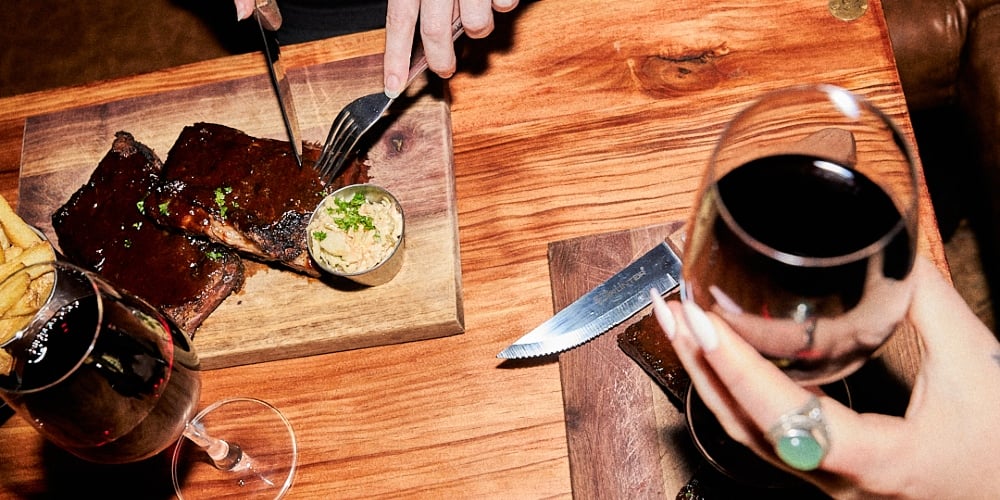
Tambourine on Harrington Street is a sustainable dining experience, serving small plates and delicious cocktails. Ingredients are sourced from small-scale farmers, the dairy comes from family-run producers, and everything on your plate, including the pasta and bread, is made from scratch. Everything is cooked over an open fire, with local and organic produce wherever possible. Even their food doesn’t go to waste…it’s composted!  

Location:   104 Harrington St, District Six.
Website: tambourine.co.za/ 

Seoul Pocha  

Seoul Pocha takes inspiration from pojang-macha, a type of street-side restaurant in Korea. Here, you can enjoy a full Korean BBQ experience, where you prepare your meat at the table, accompanied by a variety of side dishes. Other menu items include ramen, jjampong, bibimbap, and sharing options.  

Location: 28 Main Rd, Rondebosch.
Website: www.instagram.com/seoulpocha_ct  

Veldt 

Located in Hout Bay, Veldt is a braai eatery, deli and smokehouse that celebrates the bold flavours of the city. The menu features wood-fired and smoked dishes made from organic, grass-fed meats, including premium cuts such as Karoo lamb. The deli offers a selection of smoked meats, cured cuts, dairy, fresh organic produce, raw honey, and small-batch ferments. Be sure to try their signature smoked mayonnaise and other in-house condiments. 

Location:  35 Main Rd, Scott Estate.
Website: veldtdbe.co.za/ 

Mezza Luna  

Mezza Luna is a family-run restaurant in Durbanville serving authentic Italian cuisine. Everything is made from scratch, showcasing Italian favourites, from fresh pasta and classic lasagna to wood-fired pizza.  

The restaurant is open for breakfast, lunch, and dinner. Mezza Luna also has its own caffè next to the restaurant, serving coffee and a tempting selection of pastries.  

Location: Cobble Walk Shopping Centre, Verdi Blvd, Sonstraal Heights.
Website: mezzaluna.co.za/ 


Pure Good Café 

The V&A Waterfront’s newest hot spot, Pure Good Café, is flipping the script on eco-eating – and it’s anything but boring. Located right next to Africa Padel, the café is decked out in an aesthetic like you’ve never seen before. We’re talking furniture and décor made entirely from upcycled, second-hand, or landfill-bound items. Over 98% of the café was built using salvaged materials. The food? Affordable and Pure Good. 

Location: Marina Road, Victoria & Alfred Waterfront.
Website: puregood.co.za/ 


Related Articles

The post New Must-Visit Restaurants In Cape Town For 2025 appeared first on Cape Town Tourism.

Trump Visits Kerr County, Trump And Putin, DOGE And Farmers’ Data

President Trump is visiting Kerr County, Texas to meet with first responders and families affected by the flash floods. The cozy relationship between President Trump and Russian President Vladimir Putin may be turning sour, and an NPR investigation reveals that DOGE recently got high-level access to a database that controls loans and payments to American farmers.

Want more comprehensive analysis of the most important news of the day, plus a little fun? Subscribe to the Up First newsletter.

Today’s episode of Up First was edited by Russell Lewis, Andrew Sussman, Janaya Williams and Adriana Gallardo. It was produced by Ziad Buchh, Nia Dumas and Christopher Thomas. We get engineering support from Stacey Abbott. Our technical director is Zac Coleman. And our Executive Producer is Jay Shaylor.

Learn more about sponsor message choices: podcastchoices.com/adchoices

NPR Privacy Policy

Genocide? Even Afrikaner farmers laugh at Trump’s claims

Days before South Africa’s president meets his U.S. counterpart at the White House this week, Afrikaner farmers at the center of an extraordinary new U.S. refugee policy roamed a memorial to farm attacks in their country’s agricultural heartland, some touching the names of the dead – both Black and white.

Here in Bothaville, where thousands of farmers gathered for a lively agricultural fair with everything from grains to guns on display, even some conservative white Afrikaner groups debunked the Trump administration’s “genocide” and land seizure claims that led it to cut all financial aid to South Africa.

The bustling scene was business as usual, with milkshakes and burgers and tow-headed children pulled in wagons.

The late President Nelson Mandela – South Africa’s first Black leader — stood in Bothaville over a quarter-century ago and acknowledged the increasing violent attacks on farmers in the first years following the decades-long system of apartheid. “But the complex problem of crime on our farms, as elsewhere, demand long-term solutions,” he said.

Some at the agricultural fair said fleeing the country isn’t one of them.

“I really hope that during the upcoming visit to Washington, (President Cyril Ramaphosa) is going to be able to put the facts before his counterpart and to demonstrate that there is no mass expropriation of land taking place in South Africa, and there is no genocide taking place,” John Steenhuisen, minister of agriculture, told The Associated Press. He will be part of the delegation for Wednesday’s meeting.

The minority white Afrikaner community is in the spotlight after the U.S. granted refugee status to at least 49 of them claiming to flee racial and violent persecution and widespread seizures of white-owned land — despite evidence that such claims are untrue.

While many at the agricultural fair raised serious concerns about the safety of farmers and farm workers, others were quick to point out that crime targeted both Black and white farmers and farm workers, as shown by South Africa’s crime statistics.

Thobani Ntonga, a Black farmer from Eastern Cape province, told the AP he had been attacked on his farm by criminals and almost kidnapped but a Black neighbor intervened.

“Crime affects both Black and white. … It’s an issue of vulnerability,” he said. “Farmers are separated from your general public. We’re not near towns, we are in the rural areas. And I think it’s exactly that. So, perpetrators, they thrive on that, on the fact that farms are isolated.”

Other farmers echoed his thoughts and called for more resources and policing.

“Crime especially hits small-scale farmers worse because they don’t have resources for private security,” said Afrikaner farmer Willem de Chavonnes Vrugt. He and other farmers wondered why they would leave the land where they have been rooted for decades.

Ramaphosa, himself a cattle farmer, also visited the agricultural fair for the first time in about 20 years — to buy equipment but also do outreach as many in South Africa puzzle over the Trump administration’s focus on their country.

“We must not run away from our problems,” the president said during his visit. “When you run away, you’re a coward.”

Applying to be a refugee

The fast-tracking of the Afrikaners’ refugee applications has raised questions about a system where many seeking asylum in the U.S. can languish for years, waiting.

The State Department has not made details of the process public, but one person who has applied to be resettled told the AP the online application process was “rigorous.”

Katia Beeden, a member of an advocacy group established to assist white South Africans seeking resettlement, said applicants have to go through at least three online interviews and answer questions about their health and criminal background.

They are also required to submit information or proof of being persecuted in South Africa, she said. She said she has been robbed in her house, with robbers locking her in her bedroom.

“They’ve already warned that you can’t lie or hide anything from them. So it’s quite a thorough process and not everyone is guaranteed,” she said.

By the numbers

Violent crime is rife in South Africa, but experts say the vast majority of victims are Black and poor. Police statistics show that up to 75 people are killed daily across the country.

Afrikaner agriculture union TLU SA says it believes farmers are more susceptible to such attacks because of their isolation.

Twelve murders occurred on farms in 2024, police statistics show. One of those killed was a farmer. The rest were farm workers, people staying on farms and a security guard. The data don’t reflect the victims’ race.

Overall across South Africa last year, 6,953 people were killed.

Government data also show that white farmers own the vast majority of South Africa’s farmland — 80% of it, according to the 2017 census of commercial agriculture, which recorded over 40,000 white farmers.

That data, however, only reflects farmers who have revenue of $55,396 a year, which excludes many small-scale farmers, the majority of them Black.

Overall, the white minority — just 7% of the population is white — still owns the vast majority of the land in South Africa, which the World Bank has called “the most unequal country in the world.”

According to the 2017 government land audit, white South Africans hold about 72% of individually owned land — while Black South Africans own 15%.

Source: Africanews

Ramaphosa travels to Washington amid strained relations

President Cyril Ramaphosa was due to arrive to arrive in the U.S. on Monday morning for a working visit that will culminate in a meeting with his counterpart Donald Trump on Wednesday.

Ramaphosa departed South Africa on Sunday night.

The trip comes after months of strained relations. In February, Trump accused South Africa of seizing land belonging to White farmers under its land expropriation act. White South Africans own more than 70 percent of the land despite making up just 7 percent of the population.

Trump also claimed without evidence that a genocide of White Afrikaner speakers was taking place in South Africa. He then sanctioned the country, cutting millions of dollars in aid.

South Africa has denied the accusations.

Issues including trade and tariffs, Ukraine, Gaza and G20 are expected to top the agenda of Wednesday’s meeting.

South Africa holds the rotating presidency of the G20 but the U.S. has decided to effectively boycott the event.

South Africa’s genocide case against Israel at the International Court of Justice has also riled Trump. Pretoria has long been a supporter of the Palestinian people and a critic of Israel.

Source: Africanews

Indonesia hosts prestigious specialty coffee event for first time

This is World of Coffee Jakarta, where coffee becomes an experience.

Crowds of specialty coffee professionals, producers, machine and tool makers, and passionate coffee lovers are here to sample some of the best coffees in the world.

The Specialty Coffee Association, the largest coffee trade association in the globe, launched the World of Coffee (WOC) event in 1999 in the United States and has since then become a global traveling trade show and venue for prestigious international coffee competitions.

“I think what we’re trying to do is to excite consumers in consuming coffee. Coffee is moving away from being a functional beverage to becoming more of an indulgement. And what we want to do is to get consumers through a journey that they find coffee exciting as food or wine, so that people can actually enjoy coffee and maybe understand the value that they bring to the value chain and to the people that are producing coffee all around the world,” says Yannis Apostolopoulos, Chief Executive Officer of the Specialty Coffee Association.

Mikael Jasin has been in the industry for over 10 years.

He was crowned World Barista Champion in 2024.

He sees making and serving coffee as a responsibility to honor the whole coffee chain— from the coffee farmers, roasters, baristas to the consumers.

“At least for me, it’s making sure that the approach that I do when I make this coffee is the same standard at least to the approach that the farmers have done to their coffee, the roasters have done to that coffee, and then me as the barista at least maintain the same standard, if not better. So that the customer when they drink it, they can enjoy that coffee to the best potential of that coffee,” says Jasin.

“When I make coffee for myself, I’m a bit more relaxed – but for people, I want make sure that I’m serving the best of that coffee,” he adds.

The Jakarta edition of the event marks the first time World of Coffee has taken place in a coffee-producing country— a milestone that the fourth-largest coffee producing nation in the world takes pride in.

Among the hundreds of Indonesian coffee producers at the event is Rani Mayasari, owner of Java Halu Coffee.

Her coffee farm aims to empower women in the villages of West Java to work in thriving careers in coffee, an industry that is considered male-dominated.

“It’s like a medicine for us. It’s like a painkiller for us, you know? Because a lot of effort that we already doing in 15 years. So it’s like a good food, healthy food, or soulful food maybe for us,” she says.

“We are happy. Indonesia happy, Indonesia proud, and we don’t have any reason to give up Indonesian coffee with this World of Coffee.”

Fresh out of high school, 18-year old Jamie Elijah Yauw, is spending his summer break learning from the best coffee professionals in the world gathered in Jakarta.

“I think every step of the way at the industry is amazing. It’s beautiful, it’s inspiring, and to be here, meeting people who’ve worked with farmers, meeting people who make the tools we use every day, meeting people explain how they roast their coffee and seeing the effort that people put, or see how much they love, how much they put their whole life into coffee is so inspiring. Where for me to see people like that, it’s just making me awestruck, really,” shares Yauw.

The global coffee industry makes over $200 billion in annual revenues according to the FAO.

In 2024, Arabica, a higher quality coffee species typically used by specialty coffee businesses, saw a 58% increase in price than the previous year, according to reports by the Food and Agriculture Organization of the United Nations.

The Specialty Coffee Association estimates that around 20% of total global coffee exports are of specialty coffee and is predicted to increase in the coming years as more specialty coffee markets are rapidly expanding in coffee producing countries such as Indonesia, Brazil, and Vietnam.

Source: Africanews

Nigeria crisis: 20,000 flee Marte after militant attacks

At least 20,000 people have fled the town of Marte in northeastern Nigeria following a surge in attacks by Islamist militants, according to Borno State Governor Babagana Zulum.

Marte, near the border with Cameroon, had been resettled four years ago after years under insurgent control, but was recently overrun again by suspected Boko Haram and ISWAP fighters.

Zulum visited Marte after militants briefly seized a local army base last week, killing at least five soldiers. He also toured nearby Rann, where another base was attacked, and plans to visit Kalawa Balge, where 23 farmers were reportedly killed.

The region has seen a rise in militant activity in 2025, raising fears that extremist groups are regaining ground. Over the past 16 years, the insurgency has displaced more than two million people and killed thousands.

Zulum warned that relocating displaced residents to camps, like the one in Dikwa, could expose young people to recruitment by militants. Residents of Marte fear more violence could force them from their homes once again.

Source: Africanews

Malema slams ‘drama’ around Afrikaner migration to U.S: ‘It’s fiction’

In a recent interview with local dailies, the leader of the Economic Freedom Fighters (EFF) Julius Malema vehemently denied claims of widespread violence towards the white farmers who are majorly the Afrikaners.

Malema termed the reports as “fiction” and “drama” as he also took a direct jab at the recent move by the United States to resettle 49 Afrikaners, refuting the stories as fake, calling them part of a larger media fabrication.

“There’s no one who has been killed here in South Africa. It’s not true,” Malema declared. “There are no 49 Afrikaners who have left South Africa. You all know that it’s fiction, it’s drama. America, when it comes to drama, is number one.”

President Donald Trump had initially told reporters that he’s admitting them as refugees because of the “genocide that’s taking place.” He said that in post-apartheid South Africa, white farmers are “being killed,” and he plans to address the issue with South African leadership next week.

That characterization has been strongly disputed by South Africa’s government, experts and even the Afrikaner group AfriForum, which says farm attacks are not being taken seriously by the government.

South Africa’s government says the U.S. allegations that the white minority Afrikaners are being persecuted are “completely false,” the result of misinformation and an inaccurate view of the country. It cited the fact that Afrikaners are among the richest and most successful people in the country.

Malema, on the other hand, denied media reports that the farmers were being attacked and if indeed they had moved to the United States, their land should be expropriated.

“If those people were farmers, it would mean there are 49 farms available,” Malema argued. “Why are we not expropriating them because they have abandoned them? But why is the media not telling us this? Why doesn’t the media, through its own investigation, tell us who the real farmers are?”

The EFF leader further called upon the International bodies including the United States warning them against using land issues to silence South Africans who are advocating for justice and equality.

“If those people were farmers, it would mean there are 49 farms available,” Malema argued. “Why are we not expropriating them because they have abandoned them? But why is the media not telling us this? Why doesn’t the media, through its own investigation, tell us who the real farmers are?”

The firebrand politician, who was expelled from South Africa’s then-ruling African National Congress party in 2012, has been calling for land reforms, a move that has attracted strong criticism from various bodies and foreign countries.

Source: Africanews