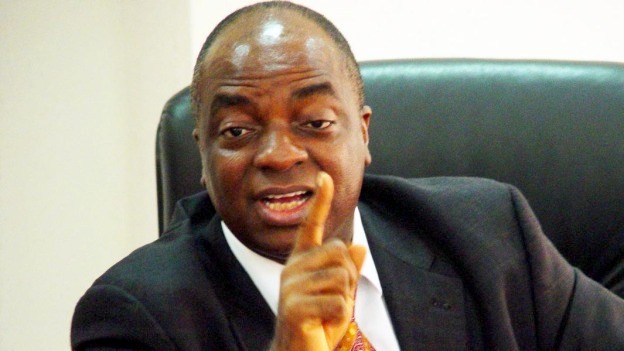
Popular Nigerian pentecostal preacher and founder of Living Faith Chapel, David Oyedopo
The Advocacy for Alleged Witches (AFAW) is deeply concerned about the recent statement by the founder of the Living Faith Chapel, David Oyedepo, that he could lay hands and pray for COVID19 patients.
His claim has the potential of undermining efforts to tackle and defeat this vicious virus. Oyedepo has reportedly said during his sermon on Saturday, August 29: “Can you imagine anyone bringing a coronavirus patient to me and I won’t lay hands on him? Will I wear gloves to lay hands on them?” Then he went further to state: “I will lay hands on them; breathe into them; embrace them. What you carry is eternal life. It’s not human life. You should know that”.
Unfortunately, Oyedepo has made similar reckless remarks in the past. For instance, in June, this pentecostal preacher and witchcraft exorcist said that his church had recorded over 114 COVID19 healing testimonies.
These faith healing claims fly in the face of facts and figures regarding the management and containment of COVID19 in Nigeria and beyond. The Nigerian health authorities should call Oyedepo to order. They should sanction him because Oyedepo is a pastor with an academic background in architecture, not a public health expert. Living Faith Chapel is a church, not a health institution.
The coronavirus pandemic has dealt a heavy blow to the faith healing industry. And pentecostal pastors such as Bishop Oyedepo are desperate to get back into the business of mining the gullibility of Nigerians. The virus has succeeded in exposing the fakery and inefficacy of faith-healing practices. COVID19 is a global pandemic and a public health emergency that has no cure yet.
There is no evidence that coronavirus patients could be healed through prayer or laying of hands. Instead, evidence abounds that such practices contribute to the spread of the infection. Some pastors reportedly contracted the virus and subsequently died after praying and laying hands on patients.
So, Oyedepo’s statement is a proposition that could lead to a spike in the infection, or death. AFAW urges members of the public to disregard this misleading and irresponsible proposition of Bishop Oyedepo and continue to follow the WHO evidence-based guidelines for the management of the pandemic.
Leo Igwe (born July 26, 1970) is a Nigerian human rights advocate and humanist. Igwe is a former Western and Southern African representative of the International Humanist and Ethical Union, and has specialized in campaigning against and documenting the impacts of child witchcraft accusations. He holds a Ph.D from the Bayreuth International School of African Studies at the University of Bayreuth in Germany, having earned a graduate degree in Philosophy from the University of Calabar in Nigeria. Igwe’s human rights advocacy has brought him into conflict with high-profile witchcraft believers, such as Liberty Foundation Gospel Ministries, because of his criticism of what he describes as their role in the violence and child abandonment that sometimes result from accusations of witchcraft. His human rights fieldwork has led to his arrest on several occasions in Nigeria. Igwe has held leadership roles in the Nigerian Humanist Movement, Atheist Alliance International, and the Center For Inquiry—Nigeria. In 2012, Igwe was appointed as a Research Fellow of the James Randi Educational Foundation, where he continues working toward the goal of responding to what he sees as the deleterious effects of superstition, advancing skepticism throughout Africa and around the world. In 2014, Igwe was chosen as a laureate of the International Academy of Humanism and in 2017 received the Distinguished Services to Humanism Award from the International Humanist and Ethical Union.
Igwe was raised in southeastern Nigeria, and describes his household as being strictly Catholic in the midst of a “highly superstitious community,” according to an interview in the Gold Coast Bulletin.[1] At age twelve, Igwe entered the seminary, beginning to study for the Catholic priesthood, but later was confused by conflicting beliefs between Christian theology and the beliefs in witches and wizards that are “entrenched in Nigerian society.”[1] After a period of research and internal conflict due to doubts about the “odd blend of tribalism and fundamentalist Christianity he believes is stunting African development,” a 24-year-old Igwe resigned from the seminary and relocated to Ibadan, Nigeria
Discover more from The Maravi Post
Subscribe now to keep reading and get access to the full archive.