



We live in an era where the chains of slavery have been broken, at least in law, and where Malawi’s Constitution guarantees dignity and equality for every person.
Article 19 makes clear that all people are equal before the law and no one shall be subjected to torture or inhuman treatment.
In that light, any tradition that visually echoes forced servitude deserves honest public reflection, not because culture should be destroyed, but because culture must grow with the values we now claim as a nation.
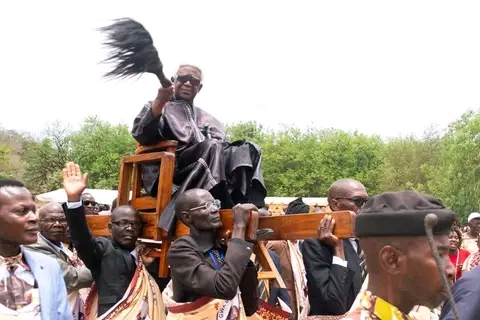
The practice of carrying a chief on a stretcher, as reportedly done in some parts of Karonga including by Paramount Chief Kyungu’s office, is defended by custodians of tradition as a sign of respect.
To them, it marks status, authority, and the sacred nature of leadership. Men who are respected in society take on the role, and the act is framed as honor, not humiliation.
Culture is living, and communities have the right to express reverence in ways that feel meaningful to them.
Yet symbols matter, and context matters more. Malawi’s history is marked by the slave trade that moved people from the northern shores of Lake Malawi through Karonga to coastal markets.
The image of human beings carrying another human being on their shoulders or on a stretcher is exactly the image burned into that history.
For many Malawians, especially the young who learn about slavery in school, the visual parallel is immediate and painful. It does not matter what the intention is today if the symbol still recalls a time when Africans were treated as cargo.
When a tradition mirrors the posture of master and servant, it risks reopening wounds that the nation is still healing.
This is not an argument against respect for traditional authority. Chiefs remain central to governance, land administration, and cultural preservation.
Paramount Chief Kyungu and other leaders command legitimate authority because communities recognize them.
The question is not whether a chief deserves honor, but how that honor is expressed in 2026. Respect does not require replication of imagery tied to bondage.
We have already moved away from other harmful practices once defended as “culture,” such as sexual cleansing rituals that put lives at risk.
Society decided that dignity outranks custom when the custom causes harm. The same standard can apply here.
The new era Malawi claims demands symbols that lift people up rather than remind them of when they were pulled down.
Respect can be shown through language, through the way meetings are conducted, through protection of community interests, through visible service.
A chief can be received with song, with a guard of honor, with designated seating and protocol, without any person being required to bear his physical weight. In many parts of Africa and the world, traditional leaders are revered without being carried.
Their words carry weight because of wisdom and service, not because someone’s shoulders carry their body. That model shows respect without reviving the silhouette of slavery.
To those who argue “it’s our culture,” the response must be gentle but firm: culture is not a museum locked in one time. Culture adapts or it becomes a cage.
The Karonga people are proud, innovative, and forward-looking. They can design new protocols that signal authority and still align with constitutional values and human dignity.
Community elders, youth, and the chief’s office can sit together to codify a revised form of reception.
That process itself becomes a cultural act — one of consensus, renewal, and self-determination.
For Paramount Chief Kyungu’s office, this is an opportunity to lead. A public statement clarifying the meaning of the practice and committing to review it would show leadership that listens.
It would tell young people that tradition and human rights can coexist. It would tell the world that Malawi honors its chiefs without echoing the pain of its ancestors. The goal is not to shame, but to evolve.
No one should be reduced to the role of a bearer when we have chairs, vehicles, and ceremonial platforms that communicate status without physical subjugation.
Malawi cannot credibly teach children that slavery is outdated while maintaining public rituals that replicate its imagery. We teach them that dignity is non-negotiable. If we want that lesson to stick, our public symbols must match our lessons.
Let Karonga keep its respect for the throne, but let it express that respect in forms that make every citizen stand taller, not feel smaller.
Let the chief walk, sit, and lead with authority that comes from service, not from being borne.
The past will always be part of us, but it should not be our stage direction. We honor ancestors best by refusing to repeat what broke them. In this new era, respect must look like equality, not like a stretcher.
That is how Karonga, and Malawi as a whole, can show the world that culture and progress are not enemies, but partners.
