




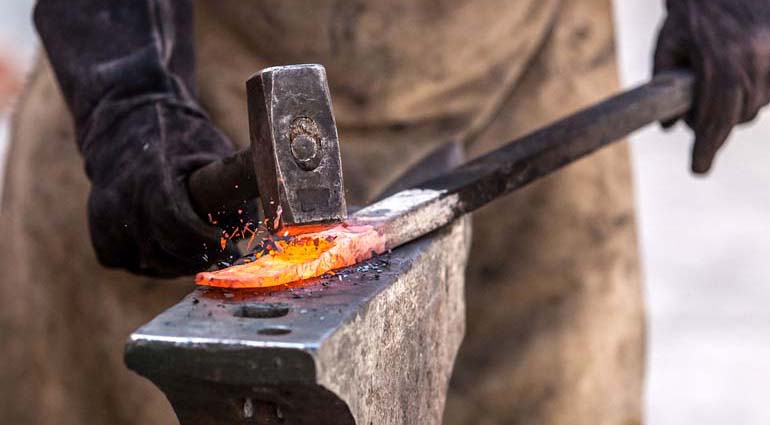

Aerospace forgings are critical components in the aerospace industry, and if you are in the aerospace industry, you know that you would never go wrong with forged components. While forging methods differ, forging and machining methods often affect the strength, as well as the stress and the corrosion resistance of the material, but the result of the high-pressured and heating procedures result in exceptional heat tolerance and strength. The aerospace industry makes use of steel forgings often, and the forging processes allow for the creation of custom shapes out of the melted steel. What this means is that when a steel forging is needed for a specific use, it will be easily molded expertly to meet the intended purpose.
That said, forgings, specifically steel forgings, are pretty much the standard when it comes to the forgings used in the aerospace industry. The forgings by renowned forging companies find uses in different areas and are, as a result, crucial in the industry. Some of the common uses of the steel forgings include their uses in
- Bearing cages
- Interior components
- Cargo systems
- Hydraulic fluid systems/ components
- Landing and also braking components
- Interior and exterior sensors, actuation systems, and motion control systems
- Flight safety and critical components
- Forgings are also used in the exhaust, inner and outer rings, compression parts, engine, spinner, structural parts, and the engine parts.
As expected, all these steel forgings are made using the highest possible levels of engineering, 100% visual inspection, and production control, all the way from the wax stage to the final packaging stage. The best of the steel forging companies will also provide an on-site inspection for all the non-destructive testing procedures (NDT), hence the provision of customers with the highest level of product assurance, cost-effective and reliable aircraft parts.
So, why opt for steel forging in the aerospace industry?
Benefits of Steel Forging
- Steel forging is much more superior to machining or steel casting because it allows steel’s natural grain flow, which makes it easier for conformity to the desired shape of the product. So, in as much as the steel casting feature a more isotropic structure of the grains, for any given part making it ideal and strong for compression loads, the steel forgings have a higher shear load and tensile strength because of its grain flow, hence a higher level of superiority.
- Note that steel forgings are also more structurally reliable, and designers trust this material to stick to all the safety factors expected for said design.
- Steel forgings are made out of high-quality and special bars of steel. So, when rolling the steel bars, the grain will be forced to flow along the bar’s centerline, and when forging is made out of the bar, the unique (inherent) flow of steel’s grain will bend and follow the contouring of the forging, hence the production of superior parts.
- Finally, steel forging is ideal for the aerospace industry because it offers a more uniform response to the machine and heat-treatment operations.
