

By Burnett Munthali
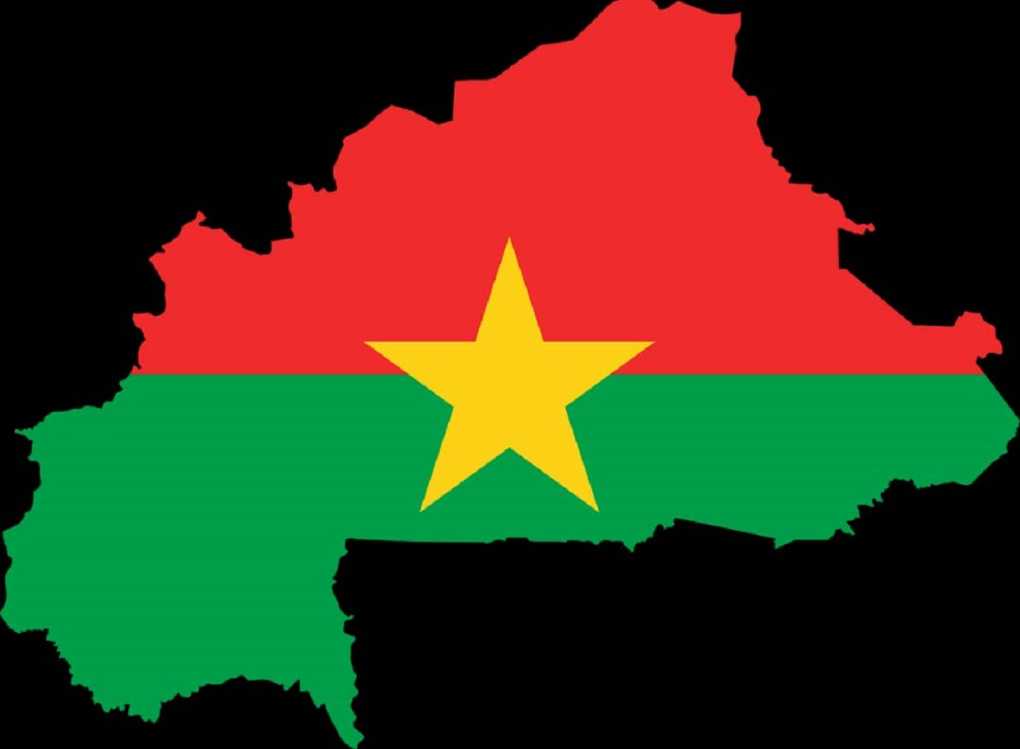
Burkina Faso, a landlocked country in West Africa, has a rich and complex political history shaped by kingdoms, colonization, revolutions, and coups.
Before colonization, the region was home to several well-organized kingdoms, most notably the powerful Mossi Kingdoms, which resisted external domination for centuries.
In 1896, the French established a protectorate over the area, beginning a long period of colonial rule.
The territory was officially designated as the French colony of Upper Volta in 1919.
However, in 1932, the French dissolved Upper Volta and divided its territory among neighboring colonies like Côte d’Ivoire, Mali, and Niger.
Due to pressure from local elites and traditional leaders, Upper Volta was re-established as a separate colony in 1947.
As nationalist movements gained momentum across Africa, Upper Volta pushed for independence from French colonial rule.
The country achieved independence on August 5, 1960, becoming a sovereign nation under the leadership of President Maurice Yaméogo.
Yaméogo led the Voltaic Democratic Union (UDV), which established a one-party state shortly after independence.
His rule was characterized by corruption, nepotism, and economic mismanagement, which led to widespread public dissatisfaction.
In January 1966, a wave of mass protests and a general strike forced Yaméogo to resign.
The military, under Lt. Col. Sangoulé Lamizana, took over and promised to restore order and governance.
Lamizana initially ruled through military means but later introduced a new constitution in 1970 that allowed for limited civilian participation.
However, his regime struggled with economic instability and growing discontent, leading to continued unrest.
In 1980, Lamizana was ousted in a coup led by Col. Saye Zerbo, who established a new military government.
Zerbo’s rule was also short-lived as he faced internal dissent and public dissatisfaction over his authoritarian approach.
In 1982, he was overthrown by Maj. Dr. Jean-Baptiste Ouédraogo, who led the Council of Popular Salvation (CSP).
During Ouédraogo’s tenure, young radical officers within the army began to grow more influential, particularly Captain Thomas Sankara.
On August 4, 1983, Thomas Sankara seized power in a popularly supported coup, marking a dramatic shift in the country’s political direction.
Sankara, a charismatic Marxist and pan-Africanist, launched an ambitious program of radical reforms aimed at transforming society.
He renamed the country Burkina Faso in 1984, which means “Land of Upright People” in the Mooré and Dioula languages.
Under Sankara, the government pursued policies focused on self-sufficiency, anti-corruption, gender equality, and land redistribution.
He also reduced the salaries of public officials, sold off luxury government vehicles, and promoted local production and consumption.
However, his revolutionary approach and growing authoritarianism alienated some segments of the military and political elite.
On October 15, 1987, Thomas Sankara was assassinated in a coup led by his close ally and friend, Blaise Compaoré.
Compaoré justified the coup by accusing Sankara of endangering international relations and isolating the country diplomatically.
Compaoré reversed many of Sankara’s policies and shifted towards liberal economic reforms, aligning with Western institutions like the IMF and World Bank.
Though he introduced a multi-party system in the early 1990s, Compaoré maintained tight control over the political system through constitutional manipulations and repression.
He won successive elections, often marred by allegations of fraud and a lack of genuine competition.
In 2014, Compaoré attempted to amend the constitution to extend his 27-year rule, sparking widespread protests across the country.
The Burkinabè people, fed up with decades of authoritarianism, staged a popular uprising known as the 2014 Burkina Faso Uprising.
Facing immense pressure, Compaoré resigned on October 31, 2014, and fled the country into exile in Côte d’Ivoire.
A transitional government was quickly established, led by interim President Michel Kafando and Prime Minister Lt. Col. Yacouba Isaac Zida.
Despite a failed coup attempt in September 2015 by elements loyal to Compaoré, the transition process continued.
Burkina Faso held democratic elections in November 2015, resulting in the victory of Roch Marc Christian Kaboré of the People’s Movement for Progress (MPP).
Kaboré became the first civilian to gain power through the ballot box since independence, ushering in hope for democratic renewal.
His administration faced significant challenges, particularly the rapid expansion of jihadist violence in the country’s northern and eastern regions.
Despite some progress, many citizens grew frustrated with the government’s inability to curb insecurity and improve economic conditions.
In January 2022, growing discontent within the military led to a coup that removed President Kaboré from power.
The military, under Lt. Col. Paul-Henri Sandaogo Damiba, cited the government’s failure to deal with the Islamist insurgency as justification for the takeover.
Damiba promised to restore security and hold elections, but his regime struggled to make significant progress.
In September 2022, another coup took place, this time led by Captain Ibrahim Traoré, who accused Damiba of failing the nation.
Traoré, the youngest head of state in the world at the time, assumed power as interim president and vowed to continue the fight against terrorism and restore constitutional order.
His government suspended political parties and civil society activities, focusing on military operations and national unity.
As of 2024, Captain Traoré remains in power, promising eventual elections, though a clear timetable has yet to be firmly established.
Burkina Faso’s political history is a vivid tapestry of struggle, revolution, resistance, and resilience.
From its pre-colonial heritage to post-independence turbulence and revolutionary fervor, the country continues to navigate a complex path toward peace and democratic governance.
Despite the numerous challenges, the Burkinabè people have consistently demonstrated a deep commitment to justice, dignity, and the pursuit of a better future.
Their political story remains one of the most dynamic and instructive in contemporary African history.
