


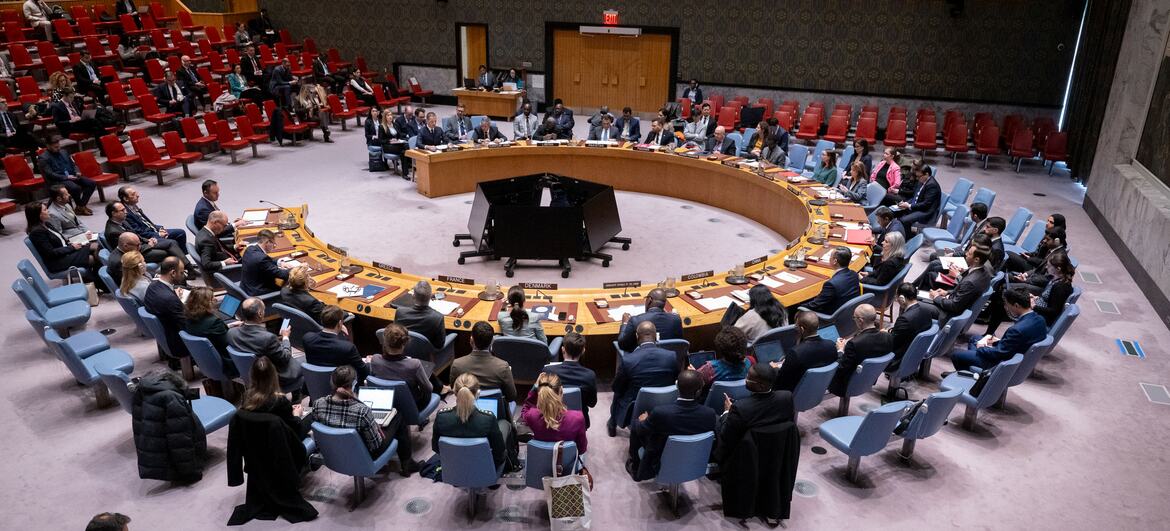
The Security Council meets this morning to discuss the situation in Central Africa, including efforts to combat the so-called Lord’s Resistance Army (LRA), one of the region’s longest-running security threats, responsible for over 100,000 deaths, the UN estimates. Ambassadors have been briefed by the regional office (UNOCA) and its strategy for improving civilian protection, humanitarian access and cross-border cooperation.
In brief – Central Africa
What happened: Central Africa is making political progress, but worsening insecurity, displacement and shrinking civic space threaten to undermine those gains. Assistant Secretary-General for the Departments of Political and Peacebuilding Affairs and Peace Operations Martha Ama Akyaa Pobee pointed to recent elections and stronger regional cooperation through the Economic Community of Central African States, while highlighting two major flashpoints: eastern Chad, strained by more than 1.2 million refugees and returnees fleeing Sudan’s war, and the Lake Chad Basin, where Boko Haram-linked groups continue attacks.
Why it matters: Council members warned that conflict spillover from Sudan and eastern Democratic Republic of the Congo, terrorism, humanitarian crises, climate pressures and disease outbreaks, including Ebola, are converging into a broader regional stability challenge. Many also voiced concern over growing restrictions on political freedoms and civic participation.
The bottom line: Diplomacy, regional security cooperation and humanitarian support remain critical, but speakers stressed that military action alone will not deliver lasting stability without development, democratic governance and sustained international backing.
(Summary generated with assistance from AI based on our meetings coverage.)
A full summary of today’s meeting will soon be available on our website.