Tag Archives: Diaspora

African Business Stories Celebrates One Year of Impact with Launch of Inaugural Impact Report and Presentation of Africa Champion Award to Prof. Benedict Oramah, President Afreximbank at UNGA

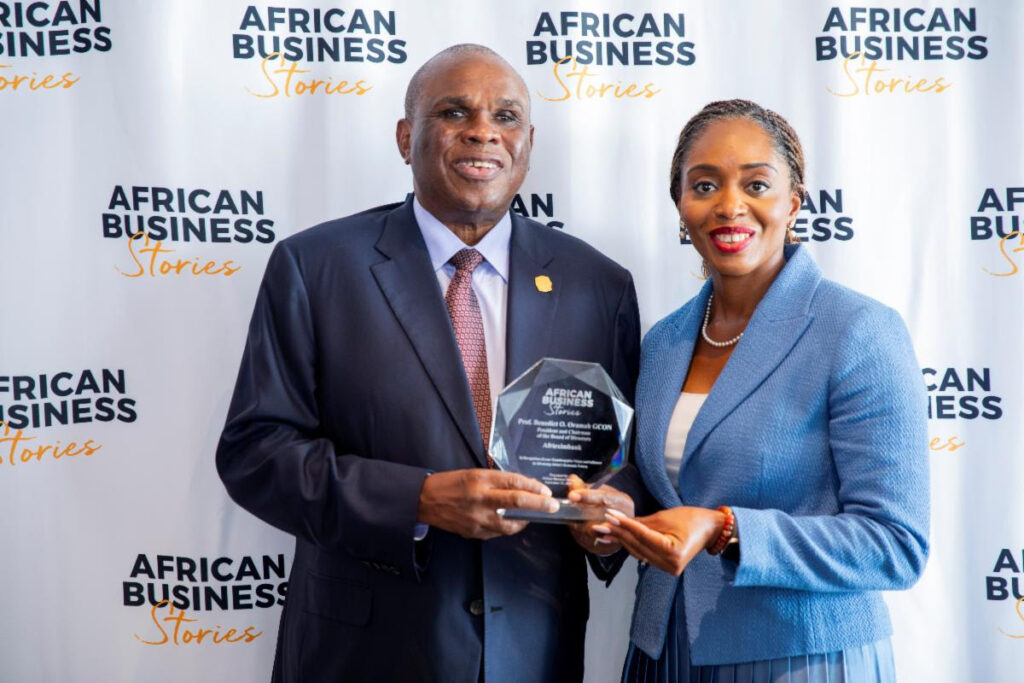
Prof. Benedict Oramah, President Afreximbank and Akaego Okoye, Founder African Business Stories

NEW YORK, United States of America, 02nd October 2025-/African Media Agency (AMA)/- On the sidelines of the 80th United Nations General Assembly, African Business Stories (ABS) marked the one-year anniversary of its flagship Roundtable Series with two milestones: the presentation of its inaugural Africa Champion Award to Prof. Benedict Oramah, President and Chairman of the African Export–Import Bank (Afreximbank), and the launch of its first Impact Report, capturing a year of progress in closing Africa’s $42 billion gender financing gap.
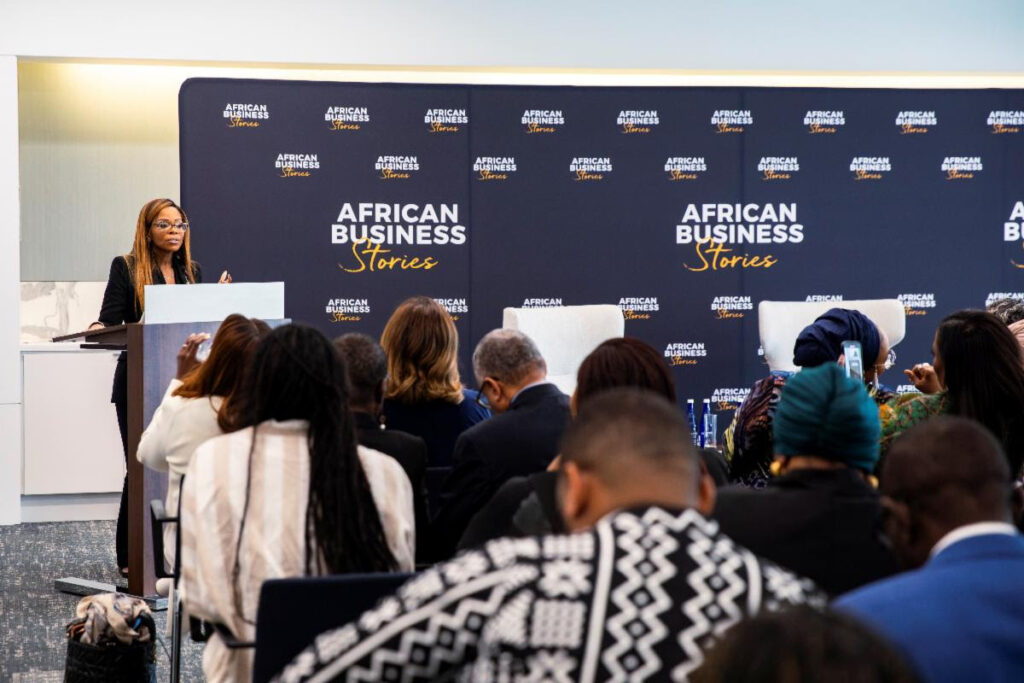
Congresswoman Sheila Cherfilus-McCormick (Florida’s 20th District)

The event opened with special remarks from Congresswoman Sheila Cherfilus-McCormick (Florida’s 20th District), who underscored the urgency of shifting from aid to trade in U.S.–Africa relations. She highlighted new U.S. legislation enabling diaspora remittances to be reinvested as capital and reaffirmed her commitment to the renewal of the African Growth and Opportunity Act (AGOA).

“When women start businesses, they create jobs, change communities, and shift entire economies,” said Cherfilus-McCormick.
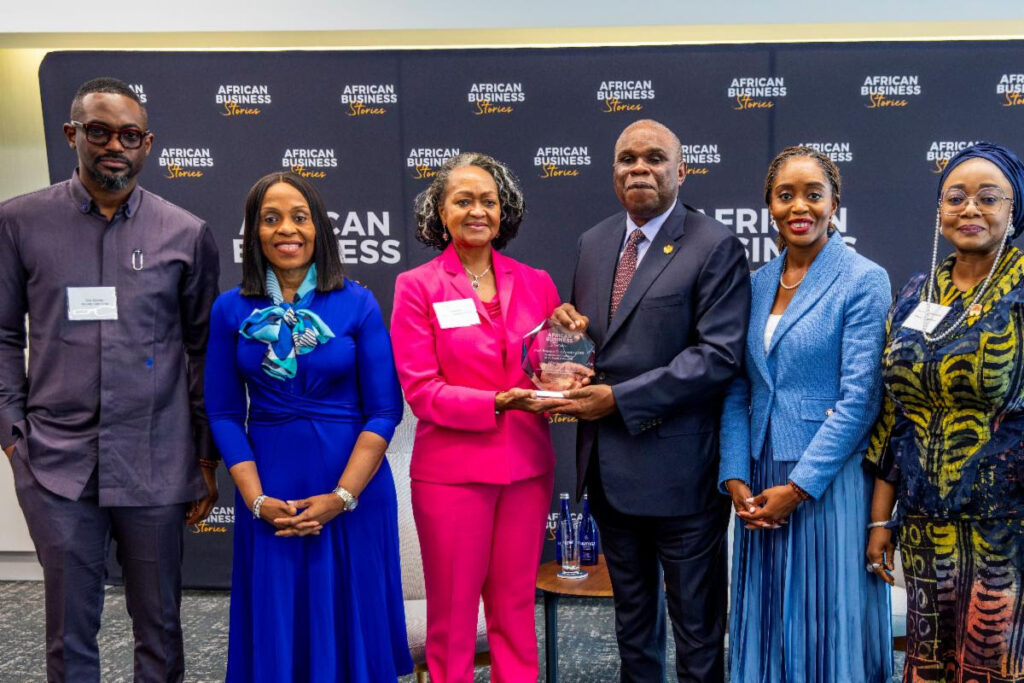
Left to Right: Ejike Egbuagu, CEO Moneda Invest, Kanayo Awani, EVP Afreximbank, Florie Liser, President & CEO Corporate Council on Africa, Prof. Benedict Oramah, President Afreximbank, Akaego Okoye, Founder African Business Stories, Hon. Imaan Sulaiman-Ibrahim, Minister of Women Affairs, Nigeria

The award was presented by Ms. Florie Liser, President & CEO of the Corporate Council on Africa, who praised Prof. Oramah’s transformative leadership in expanding Afreximbank’s assets and guarantees eight-fold, growing revenues seven-fold, and ensuring women, youth, and SMEs have access to trade and capital opportunities.

“Prof. Oramah embodies the foresight to envision a stronger Africa through trade, the resolve to mobilize billions in capital for transformative initiatives, and the commitment to ensure that women, youth, and SMEs are not left behind,” said Liser.
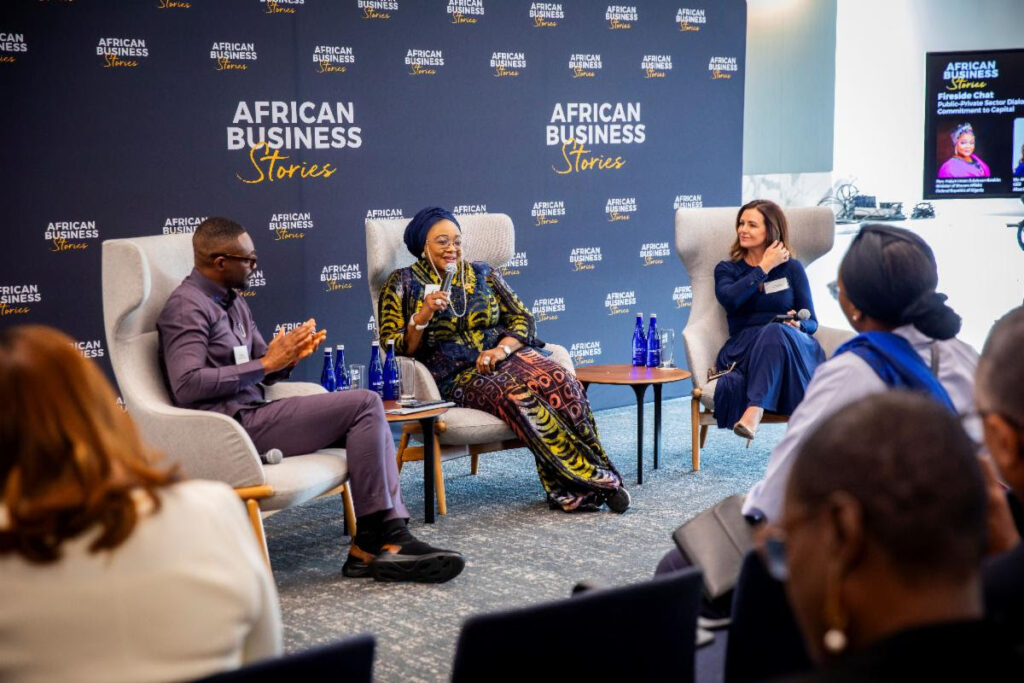
Left to Right: Ejike Egbuagu, CEO Moneda Invest, Hon. Hajiya Imaan Sulaiman-Ibrahim, Nigeria’s Minister of Women Affairs, and Cheryl Buss, CEO, Absa International

In his acceptance remarks, Prof. Oramah underscored the importance of narrative ownership and boldness in Africa’s development journey:

“The problem of Africa is that others have been telling our stories — and telling them in ways that put us down. We must tell our own stories and define African best practices.”

He also called for ambition in mobilizing resources at scale:

“Small projects rarely succeed. If we want to compete globally, Africa must think big and act boldly.”
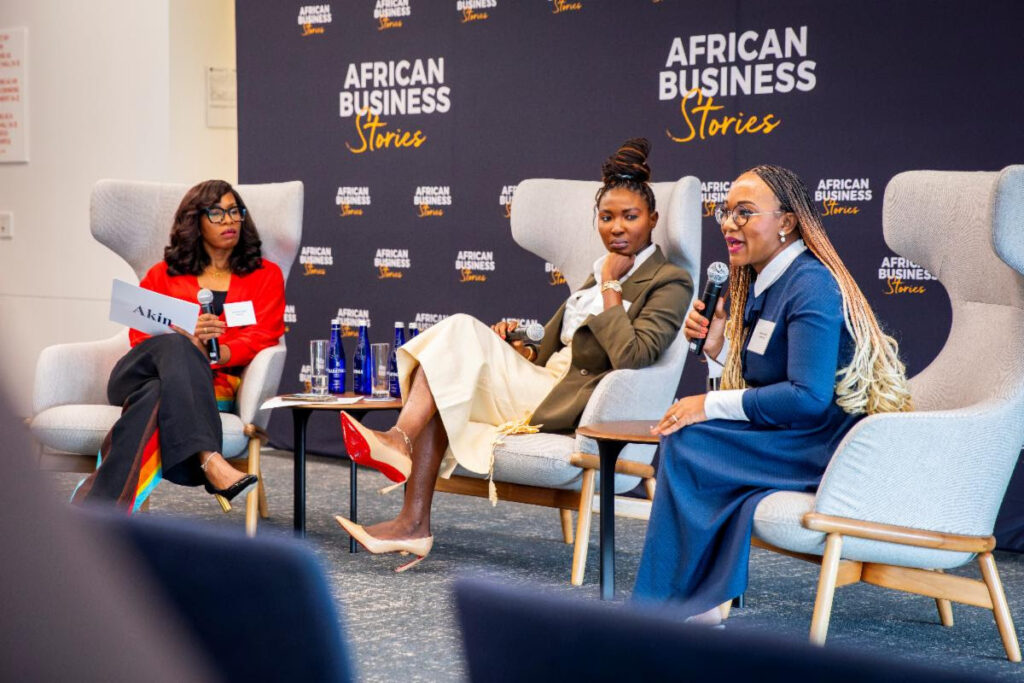
Left to Right: Nnedi Ifudu Nweke, Partner Akin Gump Strauss Hauer & Feld LLP, Ifedayo Agoro Founder, Dang! Lifestyle and Lesego Serolong-Holzapfel, Founder, Moedi Wines

The ABS Impact Report, unveiled by Founder Akaego Okoye, documents five high-level convenings held across New York, Washington, D.C., and Luanda, Angola over the past year. These gatherings brought women founders face-to-face with policymakers, financiers, and global leaders, and laid the groundwork for new access to markets and capital. The report serves both as a record of impact and a roadmap for future action.

Alongside these milestones, the Roundtable featured:

  • Founders Panel with Ifedayo Agoro (Dang! Lifestyle) and Lesego Serolong-Holzapfel (Moedi Wines), sharing the realities of accessing capital, navigating trade barriers, and scaling globally
  • Public–Private Dialogue with Hon. Hajiya Imaan Sulaiman-Ibrahim (Nigeria’s Minister of Women Affairs) and Cheryl Buss (CEO, Absa International), highlighting how policy frameworks and innovative financial products must align to unlock scale for women entrepreneurs
  • The signing of an MOU between Nigeria’s Federal Ministry of Women Affairs and Domena Commodities Limited to expand women’s participation in agribusiness and trade

“The $42 billion funding gap is not just a challenge, it is an opportunity,” said Akaego Okoye. “This first year has proven that when women are seen, connected, and resourced, they don’t just grow businesses — they transform economies. ABS will continue to create the access and partnerships needed to catalyze their success.”

Distributed by African Media Agency (AMA) on behalf of African Business Stories.

About African Business Stories

African Business Stories (ABS) is a platform committed to amplifying the voices of African women entrepreneurs and accelerating the growth of women-led businesses across the continent. Through storytelling, high-level convenings, and access-building initiatives, ABS tackles the $42 billion financing gap facing women entrepreneurs in Africa.

Media Contact:

African Business Stories

info@africanbusinessstories.com

www.africanbusinessstories.com

The post African Business Stories Celebrates One Year of Impact with Launch of Inaugural Impact Report and Presentation of Africa Champion Award to Prof. Benedict Oramah, President Afreximbank at UNGA appeared first on African Media Agency.
Africa Re-Union Debuts at FNB Art Joburg: Africa Turns the Map, the Table and the Story

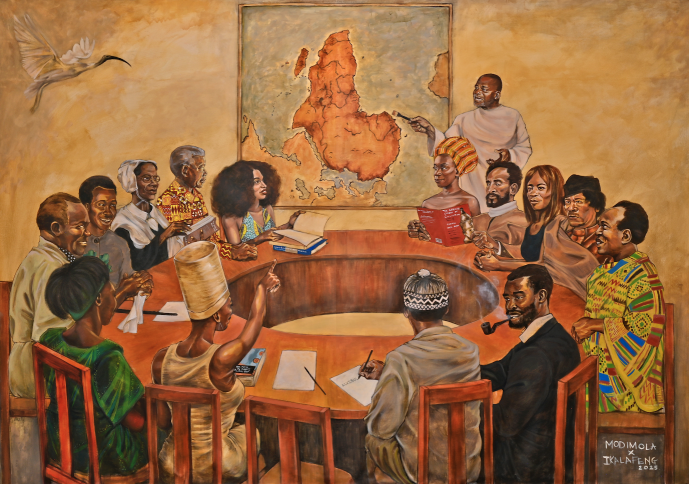
JOHANNESBURG, South Africa, 9 September 2025/African Media Agency (AMA)/- The Africa Re-Union, a landmark artistic initiative, is to be unveiled at the FNB Art Joburg, transforming the fair into a stage of reclamation and imagination, where art became manifesto and memory became movement. It reverses the context of the infamous 1884 Berlin Conference — where Africa was carved and divided without consent — by restoring the continent as author of its own story and architect of its own destiny.

Conceived and co-created by pan-African thinker and founder of Brand Africa, Thebe Ikalafeng, realised on canvas by South African artist Mark Modimola, and anchored in history by Professor Kwesi DLS Prah, the Africa Re-Union is not simply an artwork but a provocative declaration to reimagine the African story and history.

The monumental 3m x 2m canvas inverts Africa—literally and philosophically—using the

Equal Earth projection to restore the continent’s true scale and dignity. Rendered without

borders, it corrects centuries of cartographic distortion that made Africa appear small, coinciding with Africa No Filter, Speak Up Africa and the African Union’s recent call to rectify the misrepresentation of Africa in global maps. The work amplifies the broader Correct the Map campaign, a movement that challenges outdated cartography and calls for equal-area maps that restore Africa’s true size, scale, and significance in the world, and Brand Africa’s broader mission to contribute to the AU 2063 agenda for an integrated, peaceful, and prosperous Africa.

At the heart of the work stands a round table — because here there is no hierarchy, every voice matters equally. Seated are some of the diverse and impactful voices that have shaped Africa’s past and are re-imagining its future: Ghana’s founding president Kwame Nkrumah, Kenyan environmental advocate Wangari Maathai, South Africa’s Nelson Mandela, the frontline independence leaders Julius Nyerere and Kenneth Kaunda, host of hte founding of the OAU, Haile Selassie, Cabo Verde and Guinea Bissau’s Amílcar Cabral, Senegalese thought leaders Léopold Senghor and Cheikh Anta Diop, proponent of the United States of Africa, Muammar Gaddafi, Nigerian writer, Chimamanda Ngozi Adichie, youth activist Zulaikha Patel, the diaspora W.E.B. Du Bois, Dambisa Moyo and freed slave Sojourner Truth, South African sanusis, South African singer, Mirriam Makeba, the first artist to address the United Nations in 1963, cultural activist and sanusi, Credo Mutwa, pan-African advocate for a brand-led renaissance and convenor, Thebe Ikalafeng, and advocate of the African renaissance, former South African president, Thabo Mbeki. Their presence affirms that Africa’s story has always had authors—even when unrecognised. It’s a gathering of the diaspora, the enslaved whose voices were stolen, the revolutionaries and artists, the freedom fighters and feminists, writers, sanusis, and youth across the private and public sectors and the civil service. Together, they embody the unfinished conversation of Africa’s identity, memory and destiny.

One chair is left empty at the table. It is the most important seat of all — a call to action. It belongs to the unborn child who will inherit this Africa, the ancestor whose spirit still hovers, the diaspora longing to remain rooted, and every African alive today who must rise, sit, and take their rightful place at the table of history. The empty chair is not absence; it is invitation.

In a symbolic act of permanence, the original canvas will not be sold. Ikalafeng has instead gifted it to the UNISA Art Gallery, ensuring the work lives where Africa’s future is being studied and shaped. At the largest university on the continent, Africa Re-Union will be preserved not as a commodity, but as a covenant — a manifesto for generations to come. Only 2063 signed limited reproductions will be made available to ensure the conversation goes far. The number is a reminder of the AU agenda 2063 for an integrated, peaceful and prosperous Africa.

“The Africa Re-Union is not a return to the 1884 Berlin Conference table, but the setting of our own table: equal, sovereign, and unapologetically African. It is both remembrance and declaration: Africa is whole again. This time, no one will define us but us,” says Thebe Ikalafeng, Conceptual Author and Chief Curator of the Africa Re-Union.

“For me, Africa Re-Union is about shifting the canvas of our imagination. It’s to challenge how we see ourselves and how the world sees us; not as fragmented, diminished, or peripheral, but as whole, central and sovereign. This work is both a mirror and a map, and reflects our past, but points us toward a future we must author ourselves,” says Mark Modimola, Visual Artist of the Africa Re-Union.

“Johannesburg has always been a city of convergence, where Africa meets the world. To host the Africa Re-Union at FNB Art Joburg affirms our city’s role as a crucible of ideas, creativity and cultural leadership. This is more than an artwork — it is a call to re-centre Africa in history and in the future,” said Vuyisile Mshudulu, Director of Arts, Culture and Heritage for the City of Johannesburg.

“Correcting the map is about more than geography. It’s about dignity. The way Africa is represented shapes how the world sees us, and how we see ourselves. The Africa Re-Union is a bold and creative way of reclaiming that story, insisting that Africa is seen in its true scale, power and possibility,” said Moky Makura, Executive Director of Africa No Filter.

The Africa Re-Union was unveiled at the 18th FNB Joburg Art Fair opening night, in a live performance led by celebrated actor Aubrey Poo and acclaimed poet Napo Mashiane, with costumes designed by award-winning wardrobe stylist, Sheli Masondo. The performance re-imagines the infamous 1884 Berlin Conference, but this time with African agency, voice, and vision at the table.

The Africa Re-Union, part of the broader Correct the Map campaign, a movement that challenges outdated cartography and calls for equal-area maps that restore Africa’s true size, scale and significance in the world launched in partnership with the Johannesburg Art Gallery (JAG) and Africa No Filter, and supported by Brand South Africa, comes at a historic moment. At a time when Africa No Filter, Speak Up Africa and the African Union have called for the world to redress centuries of distorted representations of Africa’s size in global maps, and as the continent prepares to host its first-ever G20 Summit in 2025, the initiative is a milestone in Africa’s growing agency on the international stage.

The Africa Re-Union is a timely reminder that Africa’s voice, creativity and unity are central to creating a Better Africa for a Better World.

Distributed by African Media Agency on behalf of Africa Re-Union

MEDIA CONTACT: 

South Africa

Maria McCloy

(+27) 082 340 0262

mccloypr@gmail.com

International

Eloine Barry

(+255) 07 49 012 888 

eloine.barry@amediaagency.com

UK

Moky Makura

(+44 7939 485160)

moky@africanofilter.org

Thebe Ikalafeng

(+27 82 447 9130)

thebe@brand.africa

The post Africa Re-Union Debuts at FNB Art Joburg: Africa Turns the Map, the Table and the Story appeared first on African Media Agency.

Congo’s opposition leader kidnapped in Brazzaville

Lassy Mbouity, leader of the opposition party Les Socialistes Congolais and a candidate in Congo’s March 2026 presidential election, was abducted last Sunday in Brazzaville by armed and masked men — just days after surviving an assassination attempt.

His party blame the government. “We are convinced it’s Brazzaville’s dictatorial regime behind this. It’s not the first time. He’s been arrested before, and the people who came to his home were masked, armed, and using a vehicle without a number plate. That’s why we believe it’s a kidnapping. We plan to continue mobilizing — not just among socialists but across the Congolese population and diaspora.” Martial Mbourangon Pa’nucci, party spokesperson for Les Socialistes Congolais, said.

A number of opposition parties joined the Les Socialistes Congolais to issue a joint statement on Thursday condemning the Kidnapping and demanding Mbouity’s unconditional release.

“This cowardly act is part of a worrying escalation of terror, intimidation, and systematic human rights violations in the Republic of Congo. It’s a serious breach of personal freedom and a direct violation of Article 9 of the October 25, 2015 Constitution. We demand Lassy Mbouity’s immediate release.” Clément Mierassa, head of the Congolese Social Democratic Party, said.

Congo’s Human Rights Organization has also joined the chorus of alarm, it has issued an urgent appeal for help from diplomats and international bodies.

The government has yet to respond the accusations of kidnapping.

Source: Africanews

Tidjane Thiam plans return as Ivory Coast’s opposition PDCI party leader

Ivory Coast’s opposition PDCI party has set up 45 polling stations across the country and in the diaspora to name a new leader

The move comes after Tidjane Thiam, elected its president in December 2023, was forced to resign due to his dual nationality.

Party statutes require its leader to be solely Ivorian. But Thiam was still a French citizen at the time of his election.

The manoeuvre is aimed at bypassing the challenge to his eligibility.

“We needed to be smart, and the PDCI has once again proven it’s a great party. A party of hope,” said party member, Pierre Kouamé.

Another PDCI member at the vote, Yoma Fouka Hervé, described it as a “strategic vote”.

“When the party calls on its loyal soldiers to show up at the political bureau, for the election of its various bodies, it’s important to answer the call,” he said.

Thiam officially renounced his French nationality in March and is now the only candidate to succeed himself as the PDCI’s leader.

But ahead of this strong comeback lies another looming battle, the presidential race.

Political analyst, Koua Geoffrey, said the PDCI was banking on “some political optimism”.

“It’s likely hoping for a dialogue to open between the opposition and the government, especially regarding a potential revision of the electoral roll,” he said.

This could allow Thiam to register without the risk of being struck off again.

“However, the legal and political hurdles are significant. In my view, this forces the PDCI to seriously consider a Plan B,” said Geoffrey.

That is because the 2025 presidential election is on the horizon and, once again, Thiam’s potential ineligibility stands in the way.

The 62-year-old banker’s candidacy for president of Ivory Coast is compromised, unless things shift before then.

For Tidjane Thiam, the fight is just beginning.

Source: Africanews

Africa’s youngest leader divides opinion over Russia ties

As news emerged this week about hundreds of Burkina Faso citizens killed separately by both jihadi groups and government forces, images of Burkina Faso’s junta leader Capt. Ibrahim Traore were plastered over Russian state media speaking about pan-Africanism and liberating the minds of the continent’s youths.

Traore, who was in Moscow for the 80th anniversary of the defeat of Nazi Germany in World War II, is Africa’s youngest leader at 37, a strong appeal for the continent’s young population that is used to much older leaders.

Since coming to power in September 2022 after the country’s second coup that year, he has dwelt on a rhetoric of self-reliance and independence from the West, particularly former colonial ruler France — a message that often resonates with young Africans and the diaspora.

Why is Traore trending

The latest Traore frenzy reached a new peak late April with a solidarity march in the country’s capital, Ouagadougou, following an alleged coup attempt and comments by Gen. Michael Langley, the head of U.S. military in Africa, accusing the Burkina Faso leader of misusing the country’s gold reserves.

Following the 2022 coup that brought him to power, Traore promised to end the country’s decadeslong deadly security crisis and leverage its rich mineral resources for the benefit of its 24 million citizens.

Alongside the coup-hit nations of Niger and Mali, Burkina Faso has since severed ties with the regional bloc of ECOWAS — criticized by many young Africans as representing the interest of leaders and not the citizens — as well as longstanding Western allies such as France, whose military provided security support to the government for many years to help its security crisis.

Analysts and locals suggest that these factors, combined with his youth, have contributed to Traore’s appeal among young Africans.

“There is a growing consciousness among African youth at home and abroad that they need to do something about the continent’s lack of progress,” said Richard Alandu, a Ghanaian living near the border with Burkina Faso. “It appears Traore has become the face of that consciousness.”

How has Traore fared as Burkina Faso’s junta leader

The security crisis that Traore vowed to resolve has worsened instead, slowing the country’s overall economic development and preventing most citizens from benefiting from its mineral wealth, according to analysts and researchers’ data.

“There has been no real progress on the ground” in Burkina Faso, said Gbara Awanen, a professor of international relations and security studies at Nigeria’s Baze University, who specializes in West Africa. “A lot of it is just sleek propaganda.”

Data from the U.S.-based Armed Conflict Location & Event Data Project, or ACLED, shows that while 2,894 people were killed by both government and armed groups during the year before the 2022 coup, the number has more than doubled to at least 7,200 in the last year.

Analysts say the attacks have worsened to the point that Ouagadougou is now increasingly threatened, with more than 60% of the country outside of government control. At least 2.1 million people have lost their homes as a result of the violence, and almost 6.5 million need humanitarian aid to survive, conservative estimates show.

Propaganda rhythms

Babacar Ndiaye, a senior fellow at the Senegal-based Timbuktu Institute for Peace Studies, attributes the current frenzy surrounding Traore primarily to his popularity — and Russia-driven propaganda

Despite Burkina Faso’s worsening security crisis, Traore still has “so much resonance and interest simply because of propaganda,” Ndiaye said. “In Africa, there is deep frustration with the traditional leadership, so there is polarized anger towards a scapegoat that is the west.”

West Africa, meanwhile, has a history of young men seizing power as exemplified by John Jerry Rawlings in Ghana, Samuel Doe in Liberia and Thomas Sankara in Burkina Faso, all in the 1980s. That history, placed against the perceived failure of Western-style democracy in Africa, has helped to create conditions for idolizing the likes of Traore.

Still, allegations of propaganda do not adequately explain the excitement that has built up around Africa’s youngest ruler, according to Chidi Odinkalu, an Africa analyst and professor at Tufts University.

“Traore articulates a revolutionary message that is appealing to a young population frustrated by the thievery of what passes for ‘democracy’ in their own countries,” said Odinkalu.

Source: Africanews

Dr. Ngozi Okonjo-Iweala Headlines African Business Stories Roundtable on Mobilizing Diaspora Investment for Africa’s Growth at World Bank Spring Meetings

Dr. Ngozi Okonjo-Iweala, GCON, Director General, World Trade Organization and Ms. Yvonne Ike, Managing Director & Head of Sub-Saharan Africa (Ex RSA), Bank of AmericaKanayo Adibe | Photographer

Washington, D.C. 5 May 2025-/African Media Agency (AMA)/- African Business Stories (ABS) convened the third edition of its Roundtable Series during the 2025 World Bank Spring Meetings, hosting a high-level dialogue titled “Leveraging Diaspora Investment for Africa’s Economic Growth.” The event featured WTO Director-General Dr. Ngozi Okonjo-Iweala and other leading African and global voices in development and finance.

Launched in September 2024 on the sidelines of the United Nations General Assembly (UNGA) in New York, the ABS Roundtable Series convenes influential stakeholders to address critical barriers to scaling African businesses — with a focus on closing Africa’s $42 billion financing gap for women-owned enterprises and fostering sustainable growth.

Held at the Washington, D.C. offices of Akin Gump Strauss Hauer & Feld LLP, the ABS Roundtable was made possible through the generous support of Akin LLP, Bank of America, and Moneda Invest Africa. Their partnership underscores a shared commitment to advancing Africa’s economic growth through innovative investment, strategic collaboration, and inclusive development. Bank of America’s partnership in this event reflects its ongoing commitment to sustainable growth and inclusive finance across Africa. The firm continues to support initiatives that unlock capital, scale entrepreneurship, and build resilient financial ecosystems.

Opening keynote speakers President Admassu Tadesse, Group President and Managing Director of Trade & Development Bank, and Mrs. Zainab Ahmed, Executive Director at the World Bank and former Nigerian Minister of Finance, set a powerful tone — challenging participants to move beyond traditional aid models and strengthen Africa’s investment readiness.

A dynamic panel discussion followed, featuring Joan Manda (UNDP Timbuktoo Initiative), Barbara Iyayi (Unicorn Growth Capital), and Chidi Blyden (Culturally Bound), moderated by Kenechi Eze (Moneda Invest). The conversation centered on building trust, creating credible financial vehicles, and transforming Africa’s 44 million SMEs into engines of scalable investment.

President Admassu Tadesse, Group President and Managing Director, Trade and Development Bank Group , Ms. Florie Liser, President & CEO Corporate Council on Africa, Ms. Zainab Ahmed, Executive Director for Nigeria, Angola & South Africa, World Bank Group, Dr. Ngozi Okonjo-Iweala, GCON, Director General, World Trade Organization, Ms. Akaego Okoye, Founder African Business Stories/Convener ABS Roundtable Series and Ms. Yvonne Ike, Managing Director & Head of Sub-Saharan Africa (Ex RSA), Bank of America.Kanayo Adibe | Photographer

The event culminated in an inspiring fireside chat with Dr. Okonjo-Iweala, moderated by Ms. Yvonne Ike, Managing Director at Bank of America and Head of Sub-Saharan Africa (ex-RSA). Addressing a room of investors, policymakers, and entrepreneurs, Dr. Okonjo-Iweala called for a decisive shift away from reliance on foreign aid, urging African countries to mobilize domestic resources, attract private sector investment, and build institutional trust. She emphasized the pivotal moment Africa faces in the global economy:

“Africa’s opportunity lies not in aid — but in adding value, building trust, and using our resources wisely,” said Dr. Okonjo-Iweala.

She stressed that Africa’s critical minerals must be leveraged strategically to drive industrialization rather than perpetuate dependence on raw exports:

“Our critical minerals are in demand — but instead of giving them away raw, we must negotiate smartly, add value locally, create jobs, and become a true hub of global manufacturing and innovation.”

Dr. Okonjo-Iweala also addressed the impacts of global economic shifts — from trade disruptions to shrinking aid budgets — and stressed the urgency of regional collaboration, transparent governance, and strategic investment facilitation to attract both diaspora and global capital.

Closing the session, Dr. Okonjo-Iweala encouraged African entrepreneurs, leaders, and the diaspora to recognize their individual agency:

“Even solving one problem or building one enterprise can have ripple effects across the continent. Everyone has a role to play in building Africa’s future.”

“Events like this roundtable are vital platforms to foster collaboration, deepen trust, and unlock the entrepreneurial potential that exists both within Africa and among its global diaspora,” said Yvonne Ike, Managing Director and Head of Sub-Saharan Africa (ex-RSA) at Bank of America. “It was an honor to join this important dialogue and help shape conversations that will drive long-term impact.”

Participants committed to deepening collaboration with the African diaspora, creating credible financial structures, and expanding access to capital for the continent’s 44 million SMEs—key pillars for long-term growth.

Akaego Okoye, Founder of African Business Stories and Convener of the ABS Roundtable Series, added:

“Diaspora investment is not just about capital; it’s about building ecosystems and reshaping Africa’s economic narrative. We are proud to create a platform where action-oriented conversations drive real change.”

Distributed by African Media Agency (AMA) on behalf of African Business Stories

About African Business Stories

African Business Stories (ABS) is a platform dedicated to unlocking investment for women-led businesses in Africa by telling their stories and connecting them to investors, resources, and key decision-makers. Through storytelling, strategic convenings, and ecosystem-building initiatives, ABS creates high-impact pathways that accelerate the growth and visibility of female entrepreneurs across the continent.

Press Contact

To explore collaboration opportunities or learn more about the ABS Roundtable Series, contact info@africanbusinessstories.com or visit www.africanbusinessstories.com.

Source : African Media Agency (AMA)

The Damage being done to African families with kids in the Diaspora

Many African families will never be together again. Not because they don’t want to be – but because they simply can never be together again.

  • First born is in Canada.
    • The second born is in Dubai.
    • Third born is in Australia.
    • Fourth born is in New York.
    • The last born is in the UK.
    • Parents are in Africa, making trips once in a while to see them in different countries.

They are all getting married and having children who will never really meet or know each other – virtual cousins!!. Their best shot is group video calls which will almost never happen because there’s no convenient regular time that works for everybody due to different global time zones.

When their parents die, their homes become desolate, and in no time, the family name become a distant memory.

They’ve all had to travel because Africa failed them, and they needed to leave to another country where they can have a shot at life and their children won’t suffer what they went through.

This is the high price of japa that you can never put a financial value on that very few people talk about. The destruction of families and the tearing of siblings apart.


This is the silent evil that our leadership has bequeathed to us all. Even their own families are not left out.

One day, we will realise the extent of the damage and the destruction that we have done to ourselves 😞
It’s the sad truth that we will live and die with!

Diaspora Corner: Who is to Blame for the Slow Pace of Dual Citizenship in Malawi?

Sitinga Kachipande
Sitinga Kachipande Malawi is failing to adapt its citizenship

Malawi is failing to adapt its citizenship policies to meet the needs of this new globalized environment. For the past several years, African nations have been bestowing dual citizenship rights to their Diaspora.

Malawi’s neighbor Zambia recently joined the ranks of countries offering Dual Citizenship, leaving Malawi in the minority of African countries that do not extend citizenship rights to their populace. Whilst its neighbors move towards this trend to improve their viability, the move toward Dual Citizenship in Malawi seems to be sluggish at best and stalled at worst.

Continue reading Diaspora Corner: Who is to Blame for the Slow Pace of Dual Citizenship in Malawi?