
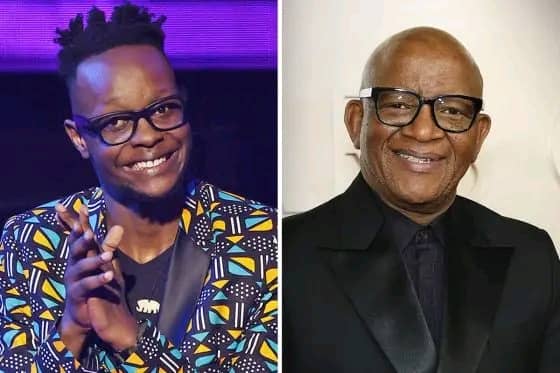

HARARE-(MaraviPost)-A US federal court has ordered South African singer Lebohang Morake to pay $39,560 in attorney’s fees to Zimbabwean comedian Learnmore Mwanyenyeka, after dismissing her lawsuit over his viral claim about the meaning of the opening chant from Disney’s The Lion King.
In an order issued Thursday by the US District Court for the Central District of California, Judge Josephine L. Staton granted Mwanyenyeka’s motion for attorneys’ fees following his successful anti-SLAPP defense.
The dispute
Morake, the creator and original performer of “Nants’ingonyama bagithi Baba,” sued Mwanyenyeka over comments he made on a podcast and at comedy clubs.
The comedian had asserted that the Zulu phrase means “Look, there’s a lion. Oh my god.” The podcast clip went viral.
Morake argued the translation is incorrect. In court filings she maintained the true meaning is “All hail the king, we all bow in the presence of the king.”
Court ruling on free speech
Mwanyenyeka filed an anti-SLAPP motion — a California law designed to protect speech on matters of public interest from lawsuits intended to silence it. The court granted that motion, paving the way for him to recover legal costs.
Judge Staton found the 28.1 hours spent by lead counsel and 33 hours by an associate were reasonable, and approved rates of $850 and $475 per hour respectively. That produced a “lodestar” total of $39,560.
The judge declined the defense’s request for a three-times fee enhancement.
In a footnote, the court noted that Mwanyenyeka’s lawyers had actually billed him only $5,350 “because of the importance of [Defendant’s] First Amendment Rights.” But under US law, the court said fees recoverable under anti-SLAPP statutes are not reduced just because attorneys agreed to charge less.
Neither Morake nor Mwanyenyeka appeared in court for Thursday’s ruling, which was issued “in chambers.”
What it means
The decision is the latest test of how US anti-SLAPP laws apply to online speech and comedy. It also highlights the global reach of The Lion King’s iconic opening, which has been performed and debated for more than 30 years since the Disney film’s 1994 release.
The court’s order does not rule on the accuracy of the translation itself, but finds that Mwanyenyeka’s commentary was protected speech and that Morake must now cover his legal costs for defending the case.

Leave a Reply