




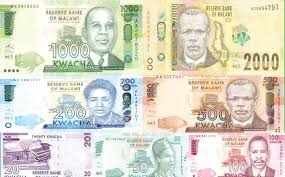

LILONGWE-(MaraviPost)-Malawi’s currency, the kwacha continues to gain ground against major convertibles appreciating against almost all major trading currencies since January, Reserve Bank of Malawi (RBM) statistics show.
The Nation Newspaper understands that the kwacha has largely remained stable relative to major trading currencies supported by adequate foreign exchange reserves on the market.
The development has on the hand helped to ease inflationary pressures while anchoring inflation expectations in the short to medium-term.
According to the Financial Market Developments reports, the kwacha has appreciated to trade at MK916 currently from MK974 in January for the pound sterling.
The local unit has also braved the Euro and Rand to trade at MK811 and MK39 from MK827 and MK51 in January, respectively.
To the dollar, the kwacha has however remained largely stable but slightly appreciated to the current MK742 from K744.
RBM spokesperson Mbane Ngwira attributed the development to the general slowdown in global business in view of the Covid-19 pandemic and partly the tobacco dollars.
Ngwira said the developments in other countries, for instance, South Africa have led to the depreciation of those countries’ currencies against other currencies including kwacha.
“Considering our seasonality, this is tobacco marketing season and expectations are for the market to have enough foreign currency.
“The market has opened on a high note and forex will be flowing in. On the demand side, flow of imports has reduced. Furthermore, oil prices have come down representing lesser demand for forex. All in all demand is expected to be less than supply hence a stable kwacha,” he said.
During the tobacco season, Malawi usually experiences availability in exchange as supply for foreign currency, particularly, the dollar becomes excessive as the tobacco dollars trickle in.
Weighing in on the development Financial Market Dealers Association (Fimda) president Patricia Hamisi observed that though the effects of Covid-19 have seen an increase in imports in certain sectors such as Pharmaceuticals there has been a decrease in other sectors such as hospitality and manufacturing which in a way has netted off the effect on the gross imports.
“The limitations on movement due to Covid-19 on the other hand has also eased pressure on fuel importation which is one of the major items the country imports thereby also easing off pressure on the exchange rate.
“On the other hand, the tobacco proceeds are likely to result in a continued stable exchange in the short term as opposed to slight appreciations that occur during tobacco season,” she said.
Economic statistician Alick Nyasulu while indicating that the development filters less in the economy given the current scenario said weak currencies are good for the country’s imports.
He said: “Indeed the pound has steadily been on the decline for many months and Covid-19 just made it worse. Nonetheless, weak currencies especially those from countries we trade most with, are good for our imports though price gains may be impacted with reduced transport services.”
Meanwhile, available figures from the RBM indicate that gross official reserves stood at US$662.9 million equivalent to 3.17 months of imports in May from US$656 million which is equivalent to 3.14 months of imports in April.
