


LILONGWE-(MaraviPost)-Malawi continues to face environmental pressures ranging from deforestation and land degradation to waste management, urban sanitation and the growing effects of climate variability.
Addressing these challenges requires sustained action not only from government and communities, but also from businesses and other development partners.
Against this backdrop, SICPA Malawi, the technical partner to the Malawi Revenue Authority (MRA) for the digital tax stamp programme dubbed ‘Kalondola’, has supported environmental initiatives in 2026 aimed at contributing to cleaner, healthier and more sustainable communities.
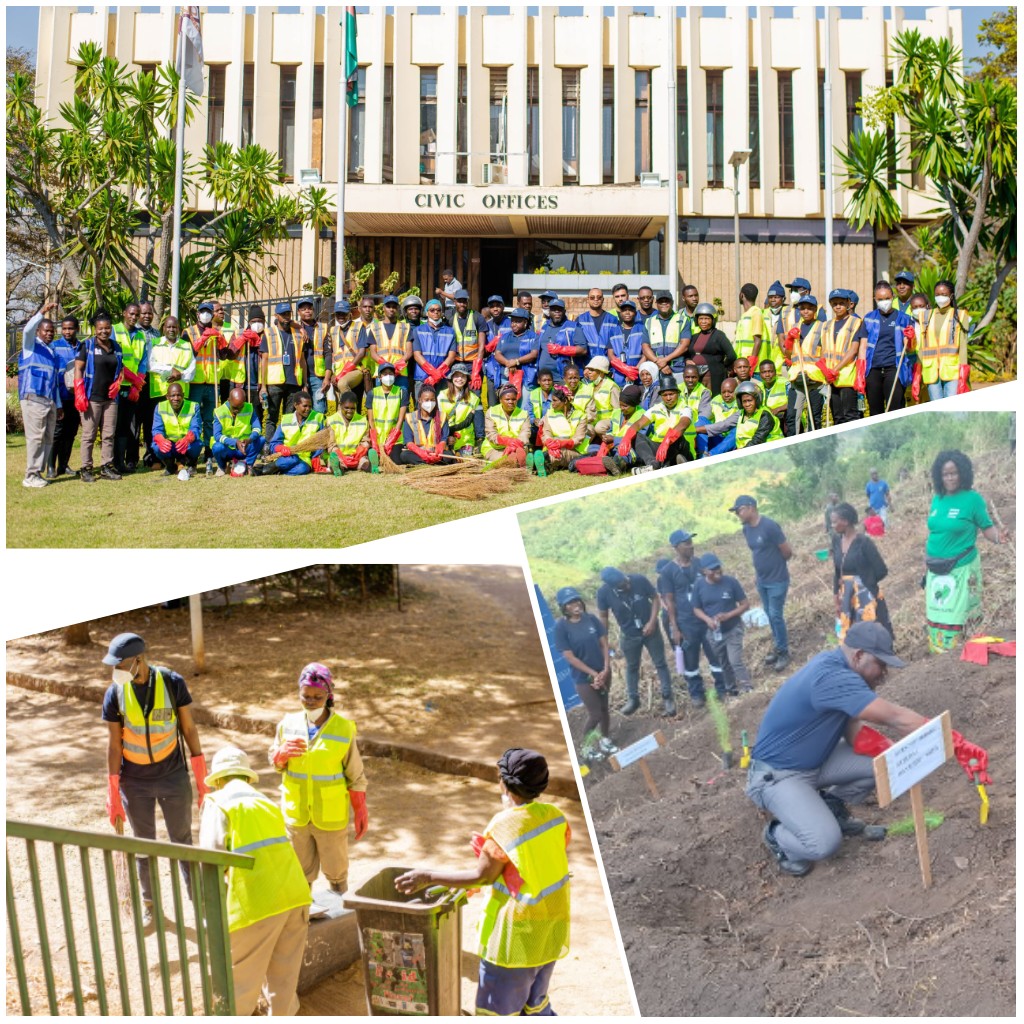
In April, SICPA Malawi participated in the successful planting of 5,000 trees at Michiru Mountain in Blantyre.
The initiative contributed to wider efforts to restore vegetation and promote the conservation of one of Blantyre’s important natural areas.
Tree planting is particularly relevant in Malawi, where the loss of forest cover and degradation of natural ecosystems have implications beyond conservation.
Healthy forests and catchment areas help protect soils, support water systems, preserve biodiversity and strengthen communities’ resilience to increasingly variable weather conditions.
SICPA Malawi subsequently supported a city-wide clean-up exercise with Lilongwe City Council (LCC) in several areas of the capital.
The initiative contributed to ongoing efforts to improve sanitation and hygiene in public spaces and formed part of the implementation of Presidential Executive Order No. 2 of 2026 on Sanitation and Hygiene in Public Places.
Urban sanitation represents another dimension of Malawi’s environmental challenge.
As cities grow, effective waste management and the maintenance of clean public spaces become increasingly important for public health, environmental protection and the overall attractiveness of urban centres as places to live, work and conduct business.
LCC Chief Environmental Officer, Mr. Mchipha, welcomed SICPA Malawi’s support and emphasised that maintaining a clean city requires collective responsibility from residents, businesses, institutions and other stakeholders.
He reaffirmed the Council’s commitment to improving sanitation standards and encouraging greater responsibility for public spaces.
SICPA Malawi General Manager, Mr. Bram Fudzulam, said the initiatives reflect the company’s commitment to contributing to Malawi beyond its core responsibilities as a technical partner to MRA.
“Environmental responsibility requires practical action and sustained partnerships. Whether we are supporting the restoration of natural areas such as Michiru Mountain or working alongside Lilongwe City Council to improve sanitation, the objective is to contribute to healthier and more sustainable communities,” said Fudzulam.
While the two initiatives address different environmental challenges, they share a common objective.
The Michiru Mountain initiative focuses on the protection and restoration of the natural environment, while the Lilongwe exercise addresses the cleanliness, sanitation and environmental quality of urban spaces.
They also illustrate the broader role that public-private collaboration can play in Malawi’s environmental agenda.
Government policies and local authorities provide an important framework, but achieving lasting environmental improvements also depends on participation by communities, civil society and the private sector.
For SICPA Malawi, the 2026 activities form part of a broader approach to responsible corporate citizenship alongside its partnership with MRA.
The company says it intends to continue working with relevant authorities, institutions and communities on initiatives that can deliver lasting environmental and social benefits.
As Malawi responds to the interconnected challenges of environmental degradation, urbanisation, public health and climate resilience, sustained partnerships and practical interventions will remain important to translating environmental commitments into tangible results.
Leave a Reply