




By Lyson Sibande
In October 1962, the world experienced what came to be known as the “Cuban Missile Crisis.” After the USA had surprised the world with the shocking nuclear bombing of Japan towards the end of World War Two earlier in 1945, an incidence of nuclear proliferation begun, with Russia (Soviets) leading in coming up with nuclear bombs for themselves, which was one of the reasons that plunged the USA and Soviets into over 40 years of cold diplomatic relation, termed the Cold War. But within this period of nuclear proliferation and the Cold War, another historic incident occurred in Latin America.
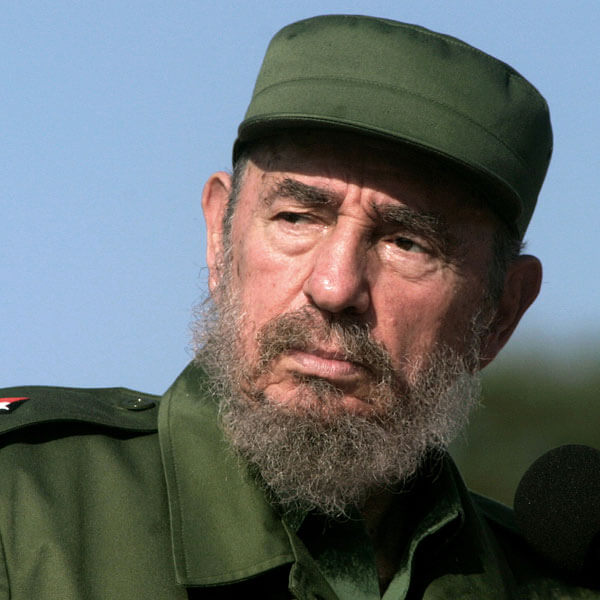
Fidel Castro of Cuba, a former lawyer, guerrilla fighter and a revolutionary leader, successfully defeated the dictator of Cuba, Batista, and became leader of Cuba in 1952.
When Castro took over power, the administration of US President Dwight Eisenhower, was excited and immediately invited him to the USA where he met with Vice President Richard Nixon, hoping to make him an ally of American capitalist interests and democracy. But when Castro quickly proved to be the opposite, the USA planned to overthrow and assassinate him.
In order to save himself from the USA, Castro who had embraced communist ideology, turned to Society Union (modern day Russia), for help. Despite the fact that the Soviet Union was a communist country and had political and economic leverage geopolitically, Castro needed its protection because of its nuclear power.
In a secret arrangement between Castro and then Soviet President Nikita Khrushchev, the Soviets begun to build a nuclear missile site in Cuba, which was a mere 90 mikes away from the USA border.
This placed the USA within a very short distance of a missile strike from Cuba. Upon finishing construction of the site, a Soviet Union would ship nuclear missiles to Cuba using submarines.
In October 1962, the Americans discovered the missile site through their U-2 spying plane and they panicked. They couldn’t tolerate Castro having nuclear missiles pointed at them close proximity.
Upon consulting with his military advisers, President Kennedy struck a deal with his Soviet counterpart, Khrushchev, whereby Americans promised that they would never invade Cuba to overthrow Castro, and in exchange, the Soviets agreed to remove the nuclear weapons from Cuba.
In fact, America also agreed to remove its nuclear weapons from Turkey, which was closer to Russia.
But why did Castro call for nuclear weapons from the Soviets? The answer is simple: Americans or NATO cannot touch a nation that has nuclear weapons. As a matter of fact, the USA had already earlier attempted to invade Cuba in 1961 and failed. And there was a need to prevent the USA from trying the invasion again. Castro knew for certain that if he secured nuclear weapons, then he was going to be safe from a USA invasion.
In a similar consideration of how safe a nuclear-weapon state stands against invasion and destabilization from military superpowers like USA and Russia, the Russian dissident Garry Kasparov, argued during the Munk’s Debate on “The West vs. Russia” on April 10, 2015, that if Ukraine still had nuclear weapons, Russia could not have destabilized the nation and annexed Crimea.
The point is that in 1994, Ukraine had joined the Nuclear Non-Proliferation Treaty, and agreed to surrender its nuclear weapons to Russia through the Budapest Memorandum, signed on December 5, mainly by Ukraine, Russia, the USA, and United Kingdom.
Not having nuclear weapons made Ukraine vulnerable to Russia, which is the world’s nuclear super power.
But why is a nuclear-weapon armed state so hard to invade or go to war with? Why is it that despite clear evidence of nuclear weapons armament and testing of nuclear weapons by the Kim Jong-Un administration of North Korea, which is a direct and open violation of the 1968 Nuclear Non Proliferation Treaty, the USA, even at the helm of the tough President Donald Trump, America and even NATO, fail to confront North Korea with a military resolution, yet Americans were too quick to invade Iraq and Libya, for unknown threat to world peace or anything? In fact, the USA has a big history of invading and bombing nations they don’t like without thinking twice or barking out loud as they are doing in the case of North Korea. They bombed or invaded Panama, Vietnam, Somalia, Afghanistan, Sudan, Pakistan, and dozens of other countries.
And after being in office for just a few months, Trump’s administration did not hesitate to unilaterally bomb Syria for no good reasons at all, but why does he not throw a bomb in North Korea?
The answer is simple: having nuclear weapons makes it almost impossible for North Korea to be invaded by any nation, not even the USA or NATO because nuclear weapons are very dangerous and no country on earth would dare to provoke a nuclear war with anybody.
A nuclear war just by two nuclear superpowers, has the potential to destroy much of the planet (not just countries) and everything on it, such a war would render the planet inhabitable for human life and other forms of life.
Finally, the “Rocket man” of North Korea, has all justifiable reasons to arm his country with nuclear weapons in self-defence, because the USA has always made it clear that it can invade any nation which resists its global interests. And also remember that the USA has military bases in South Korea, close to North Korea, which threaten the defence and security of the regime and people of North Korea.
The USA can never allow any of its neighbours to have military bases of America’s enemies, yet they put military bases close to nations that the US feels threatened by them and do not want those nations to defend themselves.
With nuclear weapons, North Korea stands defended not as threat to anybody, but because they too can’t bomb any country. Just like the USA, North Korea can only threaten a nuclear war, just as a show off of power.
The expressed in this article are not necessarily those of the Publisher or the Editor.