


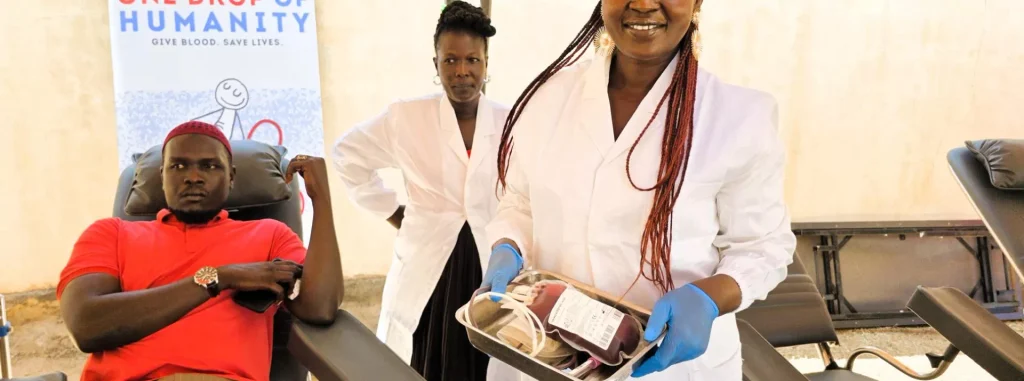
Geneva, Switzerland, 28 July 2026- /African Media Agency (AMA)/ – The World Health Organization (WHO) has delivered and installed 13 blood bank refrigerators, complete with solar power systems, in health facilities across all 10 States and the 3 Administrative Areas (AAs) South Sudan. This investment has enhanced blood storage capacity, ensured reliable power supply for blood banking services, and improved the availability of safe blood for patients requiring lifesaving transfusions.
The equipment was procured through funding from the Health Sector Transformation Project (HSTP), managed by the World Bank. The project is funded through Multi Donor Trust Fund, supported by key development partners including the World Bank group, UK international Development, GAVI, The global Fund, Canada, and European Union (EU). The investments form part of a broader effort to equip health facilities across the country with infrastructure, equipment, and systems needed to deliver quality healthcare services.
During the celebrations of the World blood donor day on 16th June 2026, Dr. Oromo Francis, Undersecretary of Health, noted that health facilities across the country continue to face shortages and lack of access to safe blood supplies. “The need for blood continues to rise and far outpaces supply,” said Dr. Oromo. “the refrigerators will enhance availability, safety, and quality of blood and blood products, particularly in facilities providing comprehensive emergency obstetric and newborn care. Reliable cold systems are essential to maintaining the integrity of blood, preventing wastage, and ensure timely access to safe transfusion services, and save lives.”
Dr. Humphrey Karamagi, WHO Representative for South Sudan, noted that safe blood is essential to survival. “Access to safe blood and blood products is a critical component of functioning health systems and progress towards universal health coverage. By delivering this equipment, we are sending a message of collective responsibility to ensure access to safe blood for all who need it.”
As part of a broader effort to strengthen the national blood system, WHO also supported the Ministry of Health and the National Blood Transfusion Service (NBTS) in the development of the National Blood Transfusion Services Strategy 2026–2030, which provides a strategic framework for strengthening governance, improving blood collection and safety systems, enhancing quality management and ensuring equitable access to safe blood nationwide. To maximize the impact of these investments.
WHO developed standardized blood and blood donor management training materials, donor education materials, and Standard Operating Procedures (SOPs) to support harmonized implementation of blood transfusion services across the country. This was complemented by a Training of Trainers (ToT) for 14 NBTS staff, equipping them with the technical and facilitation skills required to lead capacity-building efforts at sub-national level. Following the ToT, an integrated training programme on blood and blood donor management was launched and is currently being cascaded to all 13 health facilities where the blood bank refrigerators were installed. The training covers key aspects of blood donor mobilization, recruitment and retention, donor eligibility assessment, blood collection, processing, storage, inventory management, and safe transfusion practices.
Together, these interventions represent a significant milestone in strengthening South Sudan’s blood transfusion services, building the capacity of health workers, and ensuring timely access to safe, quality-assured blood and blood products for patients across the country.
South Sudan has one of the highest maternal mortality rates globally, with post-partum hemorrhage (PPH) among the leading causes of maternal deaths. In such emergencies, access to safe blood is often the difference between life and death. Strengthening blood transfusion services therefore represents a vital investment in improving maternal and newborn health outcomes as well as emergency care services nationwide.
The 13 beneficiary health facilities include Al-Sabah Children’s Hospital in Juba, Aweil Hospital, Torit Hospital, Bentiu Hospital, Renk Hospital, Bor Hospital, Pariang Hospital, Kuajok Hospital, Yambio Hospital, Wau Hospital, Rumbek Hospital, Abyei Hospital, and Pibor Hospital.
Distributed by African Media Agency (AMA) on behalf of World Health Organisation.
The post WHO equips health facilities with refrigerators to strengthen access to safe blood appeared first on African Media Agency.
Leave a Reply