


By Deus Chikalaza
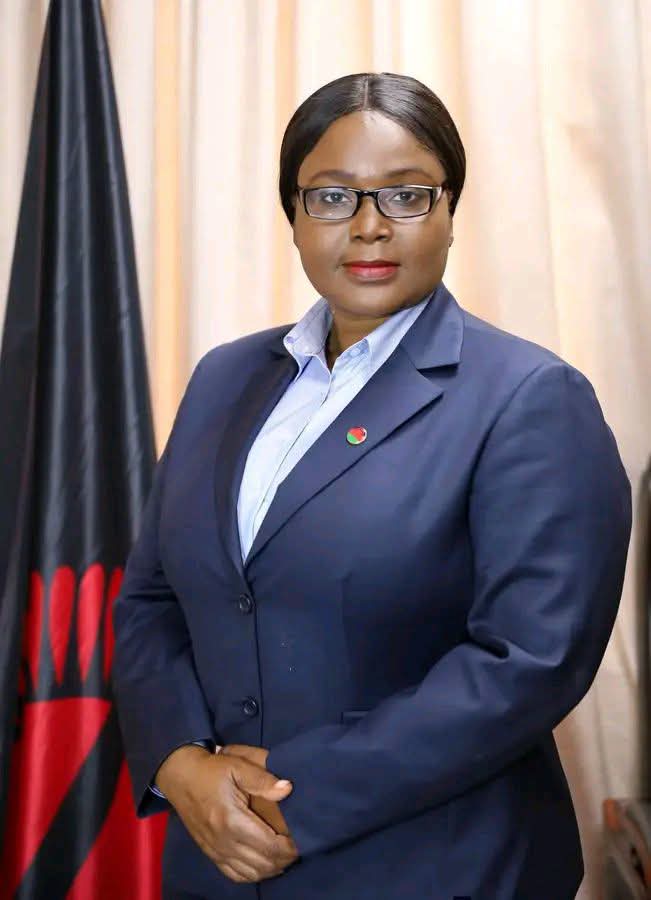
BLANTYRE-(MaraviPost)-The cement case is behind her. The ministerial office is hers. But now another storm is gathering around Roza Mbilizi — and this time it is fertiliser.
A proposed arrangement involving a Zambian supplier has triggered questions about procurement, while reports have placed Mbilizi’s cousin, a board member of the state fertiliser fund, in discussions surrounding the same supplier.
Her office denies wrongdoing and says the reforms are designed to eliminate middlemen and lower costs.
But the questions are multiplying. And as the Democratic Progressive Party (DPP) quietly looks beyond Peter Mutharika, Mbilizi’s name is increasingly entering the succession conversation. Is this simply the rise of a technocrat — or the emergence of a new centre of power?
If Part One was about the controversies that followed Roza Mbilizi out of the Malawi Revenue Authority, Part Two is about what happened after she returned to power.
It begins with fertiliser.
And it ends with 2030.
THE FERTILISER STORM
In 2026, Mbilizi’s Agriculture Ministry came under scrutiny over plans to streamline fertiliser procurement by dealing directly with manufacturers.
The ministry has defended the approach, saying direct engagement with producers could reduce costs, remove unnecessary intermediaries and improve delivery to farmers before the planting season.
But the proposed arrangement involving United Capital Fertilizer of Zambia quickly became controversial.
The issue was not simply the supplier.
It was the people around the deal.
ENTER THE COUSIN
Reports have alleged that Mbilizi’s cousin, Hyde Khembo, a board member of the Smallholder Farmers Fertiliser Revolving Fund of Malawi, travelled to Zambia and discussed the proposed arrangement with UCF before company representatives later met Mbilizi in Lilongwe.
That allegation has created one of the most uncomfortable questions surrounding the minister.
Not whether having a relative employed by or serving on the board of a public institution is automatically unlawful.
It is not.
The question is whether adequate safeguards existed to prevent a family connection from influencing—or appearing to influence—a public procurement process.
That is a governance question.
And it deserves an answer.
MBILIZI’S DEFENCE
Mbilizi’s team has rejected accusations of corrupt dealings.
Her office has argued that the Smallholder Farmers Fertiliser Revolving Fund is an independent parastatal with its own board and that the ministry’s role is primarily policy oversight rather than control of the fund’s daily procurement.
Her team has also accused companies including Export Trading Limited and Farmers World Limited of driving what it describes as a smear campaign because of their commercial interests in the fertiliser market. (Nyasa Times)
The ministry maintains that dealing directly with manufacturers is intended to cut costs and eliminate unnecessary intermediaries.
Those are serious explanations.
But they do not automatically close the matter.
Because public procurement is not judged only by whether a government believes a deal is economically sensible.
It is also judged by process, transparency, competition and conflict-of-interest safeguards.
THE BIGGER QUESTION
This is where Mbilizi’s history becomes politically relevant.
The cement case involved allegations concerning customs revenue and the exercise of official authority.
Now, years later, her ministry is facing scrutiny over a procurement strategy involving another major public resource.
There is no finding that Mbilizi personally benefited from the fertiliser proposal.
There is no reported conviction against her for corruption.
But the controversy is significant precisely because it raises questions about whether the systems surrounding public procurement are sufficiently insulated from political and personal influence.
And those questions become even more important when the official at the centre of the controversy is no ordinary minister.
She is increasingly becoming a political name.
THE 2030 CALCULATION
Peter Mutharika is serving his current presidential term, meaning the DPP will eventually have to confront the question of succession.
That process has already begun to generate political speculation.
A recent report by The Maravi Post described growing internal rivalry between Finance Minister Joseph Mwanamvekha and Agriculture Minister Roza Mbilizi, identifying both as figures being discussed around the DPP’s future leadership and possible 2030 presidential flagbearership.
That does not mean the DPP has formally chosen Mbilizi.
There is no established public decision naming her as the party’s 2030 candidate.
But her emergence in the succession conversation is significant.
Because suddenly, her record is no longer merely the biography of an Agriculture Minister.
It is potentially part of the background of a future presidential contender.
FROM MRA TO MUTHARIKA’S INNER CIRCLE
The trajectory is remarkable.
Mbilizi moved from economics into the civil service.
She rose through the MRA.
She became Deputy Commissioner-General.
She was subsequently drawn into the cement investigation and prosecution.
She entered Parliament.
She became Agriculture Minister.
And now political reporting places her among the names being discussed for the next phase of the DPP.
That is an extraordinary political journey.
It also creates an extraordinary accountability test.
If Mbilizi wants to become a central figure in the DPP’s future, then the controversies surrounding her past cannot simply be treated as political noise.
They are part of the record voters will examine.
THE QUESTION OF POWER
Who exactly is building Mbilizi’s political profile?
Who within the DPP benefits from her rise?
Which networks are behind her?
How much influence does she exercise within government?
And what happens to the unresolved questions surrounding the controversies that have followed her career?
Those are not questions that can be answered merely by pointing to her academic qualifications.
Her qualifications are not in dispute.
The issue is accountability.
A politician seeking greater power must expect greater scrutiny.
And Mbilizi’s trajectory suggests that scrutiny is only beginning.
WHAT CAN BE PROVEN?
The temptation in political reporting is to compress a complicated record into a simple label.
That would be easy.
It would also be inaccurate.
The documented record establishes that Mbilizi was prosecuted in the cement case and faced allegations involving public revenue and abuse of office. The High Court charge sheet contains those allegations.
It establishes that the ACB later dropped the separate TPIN case because some accused persons were potentially needed as witnesses in the cement case.
It establishes that her ministry has faced scrutiny over the proposed fertiliser procurement arrangement and that her team has publicly rejected allegations of wrongdoing.
It also establishes that political reporting has placed her name in the DPP’s emerging succession conversation.
What the record does not establish is that Mbilizi has been convicted of corruption or that she has been formally designated as the DPP’s 2030 presidential candidate.
Those distinctions matter.
BUT THE QUESTIONS REMAIN
The bigger story is therefore not whether Roza Mbilizi has already been declared the DPP’s next presidential candidate.
She has not.
The bigger story is that a politician with a complicated public record is now operating from one of the most powerful positions in government while her name is entering discussions about the country’s political future.
That means every procurement decision matters.
Every conflict-of-interest question matters.
Every unexplained connection matters.
And every allegation must be tested against evidence.
Because if Mbilizi’s political star continues to rise, the questions surrounding her career will rise with it.
THE 2030 TEST
The DPP will eventually have to decide who succeeds Mutharika.
If Mbilizi emerges as one of the contenders, her supporters will point to her economics background, years of public administration and experience running a critical ministry.
Her critics will point to the controversies.
The cement case.
The ACB arrest.
The TPIN affair.
The questions around public revenue.
And now the fertiliser procurement controversy.
Neither side can simply erase the other side’s record.
And that is precisely why the Mbilizi story matters.
Because before Malawi debates whether Roza Mbilizi should inherit the DPP’s political machinery, Malawians have every right to ask what happened during the journey that brought her there.
The answer is not contained in a résumé.
It is contained in the court records, procurement decisions, investigations, political alliances—and the unanswered questions.
And perhaps the biggest question of all is still waiting for 2030.
Disclaimer: The views expressed in the article are those of the author not necessarily represent The Maravi Post or Editor

Leave a Reply