
Religion

Commonwealth Day 2025: Together We Can End Witch hunts and Ritual Attacks

2 Min Read
Leo Igwe


By Leo Igwe

As we mark Commonwealth Day 2025, the Advocacy for Alleged Witches protests witch hunts and ritual attacks in Commonwealth countries, and the refusal of the Commonwealth to speak out against these abuses. In many parts of Africa, Asia and Oceania witch hunting is not a thing of the past but an ongoing wave of abuses and violations. In Commonwealth countries such as Ghana, Nigeria, Kenya, Papua New Guinea, persecution of alleged witches rages with force and ferocity. In Ghana, witch persecution results in the displacement of accused persons who then flee to some make shift shelters known as “witch camps”. Those who could not flee to these places like Akua Denteh are murdered in cold blood. 

Witchcraft
According to Malawian law, raising accusations of witchcraft is a crime punishable by law

Witchcraft accusation is a form of death sentence for the accused and accused people are sometimes extrajudicially killed despite existing legislations in these countries. Witch trials take place in many countries of the Commonwealth. Trial by ordeal and jungle justice are meted out on the accused. Some weeks ago, an elderly woman who had dementia was accused of witchcraft and beaten to death in Nigeria. In Malawi, alleged witches are stoned to death. In Zambia some political opponents suspected of trying to kill the president using ‘witchcraft’ are standing trial at the state court. Alleged witches, mainly women, children and people with disabilities are attacked, banished, lynched, buried alive or tortured to confess to the ‘crime of witchcraft’.

Witch hunting persists because many countries and groups of countries like the Commonwealth have refused to speak out against these atrocities. The Commonwealth should break its silence on witch hunts and ritual attacks in member countries. It should join the UN is condemning these horrific abuses. The Commonwealth should add its voice to this campaign. It should highlight witch persecution and witch hunting during its meetings and summits. It should call for an end to abuses linked to witchcraft beliefs and ritual attacks. The Commonwealth Day should be an opportunity to recommit to ending this menace. It provides a platform to rally all countries against these violations. No nation should be left behind in the quest to make witch hunting history around the globe. 

Together we can end witch hunts and ritual attacks in Commonwealth countries.

Leo Igwe directs the Advocacy for Alleged Witches

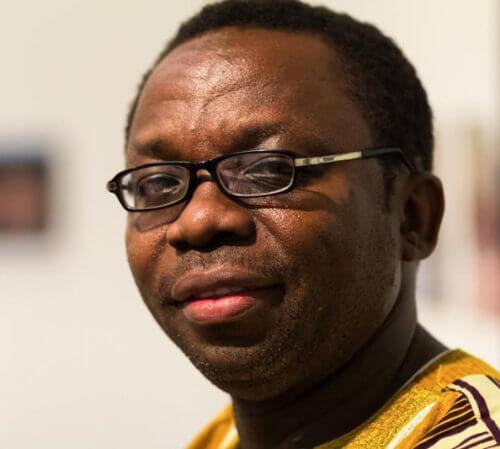
Leo Igwe

Leo Igwe (born July 26, 1970) is a Nigerian human rights advocate and humanist. Igwe is a former Western and Southern African representative of the International Humanist and Ethical Union, and has specialized in campaigning against and documenting the impacts of child witchcraft accusations. He holds a Ph.D from the Bayreuth International School of African Studies at the University of Bayreuth in Germany, having earned a graduate degree in Philosophy from the University of Calabar in Nigeria. Igwe’s human rights advocacy has brought him into conflict with high-profile witchcraft believers, such as Liberty Foundation Gospel Ministries, because of his criticism of what he describes as their role in the violence and child abandonment that sometimes result from accusations of witchcraft. His human rights fieldwork has led to his arrest on several occasions in Nigeria. Igwe has held leadership roles in the Nigerian Humanist Movement, Atheist Alliance International, and the Center For Inquiry—Nigeria. In 2012, Igwe was appointed as a Research Fellow of the James Randi Educational Foundation, where he continues working toward the goal of responding to what he sees as the deleterious effects of superstition, advancing skepticism throughout Africa and around the world. In 2014, Igwe was chosen as a laureate of the International Academy of Humanism and in 2017 received the Distinguished Services to Humanism Award from the International Humanist and Ethical Union. Igwe was raised in southeastern Nigeria, and describes his household as being strictly Catholic in the midst of a “highly superstitious community,” according to an interview in the Gold Coast Bulletin.[1] At age twelve, Igwe entered the seminary, beginning to study for the Catholic priesthood, but later was confused by conflicting beliefs between Christian theology and the beliefs in witches and wizards that are “entrenched in Nigerian society.”[1] After a period of research and internal conflict due to doubts about the “odd blend of tribalism and fundamentalist Christianity he believes is stunting African development,” a 24-year-old Igwe resigned from the seminary and relocated to Ibadan, Nigeria