
By Arnold Mnelemba
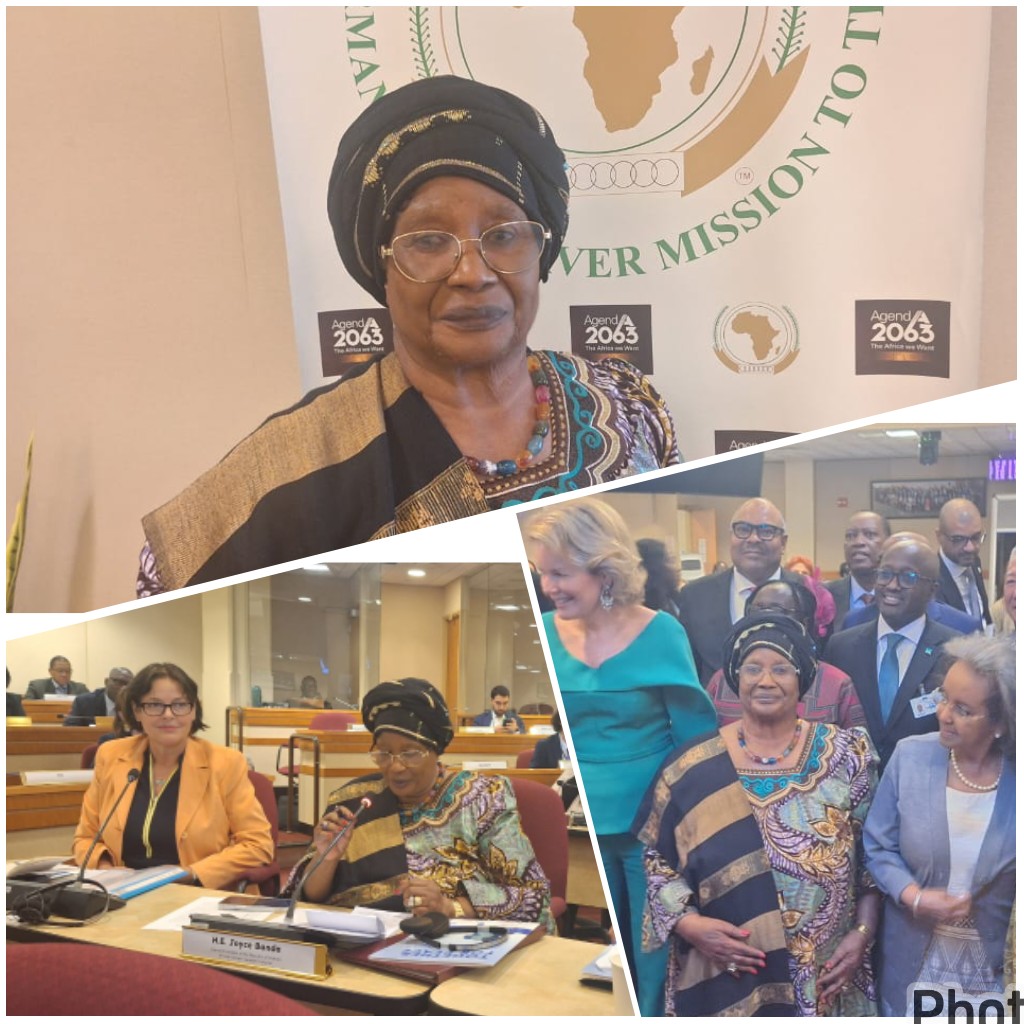
NEW YORK-(MaraviPost)-4th President of the Republic of Malawi, Dr. Joyce Banda, has called on African leaders and the international community to move from political commitments to concrete action to ensure women meaningfully participate in peace processes in eastern Democratic Republic of Congo and the Great Lakes Region.
Dr. Banda made the call today, September 21, at a High-Level sideline event of the 81st United Nations General Assembly in New York, convened by the African Union Commission (AUC) and the United Nations (UN) to discuss Women in Peace and Security in Africa.
The meeting was held under the theme: “Advancing the Women, Peace and Security agenda in peace efforts for DRC and Great Lakes” with a focus on translating existing frameworks into inclusive and sustainable peace on the ground.

Speaking in her capacity as a member of the Panel of Elders of the African Women Leaders Network (AWLN) and as SADC Lead Mediator for Madagascar, Dr. Banda said the Great Lakes region has no shortage of commitments, but implementation remains the major gap.
“Eastern DRC and the Great Lakes has no shortage of political commitments to peace. The gap is implementation,” Dr. Banda said.
She noted that while the Women, Peace and Security agenda, anchored in UN Security Council Resolution 1325, is 25 years old, women remain largely excluded from the rooms where peace is negotiated.

Strong Frameworks on Paper
Dr. Banda reminded the High-Level meeting that Africa has built a strong normative architecture for women, peace and security:
- The 2004 Dar-es-Salaam Declaration, where Heads of State committed to adopt deliberate policies for gender equality in line with UNSCR 1325, CEDAW, the Maputo Protocol and to involve women in peace processes at all levels;
- The 2006 Pact on Security, Stability and Development for the Great Lakes Region, the core founding instrument of the International Conference on the Great Lakes Region (ICGLR), whose Article 11 commits member states to combat sexual violence against women and children;
- Protocols under the Pact, including the Protocol on Prevention and Suppression of Sexual Violence against Women and Children, Protocol on Democracy and Good Governance, Protocol on Protection of Internally Displaced Persons, and the Protocol on Non-Aggression and Mutual Defence; and
- The 2011 Kampala Declaration on Combating Sexual Violence, which demonstrates increasing commitment to protect the rights of women in peace and conflict.
Despite these instruments, as well as Regional Action Plans and National Action Plans adopted by ICGLR member states, women’s representation in formal tracks such as the Luanda and Nairobi processes remains below 15 percent.
Inclusive Peace is a Necessity, Not a Favour
Dr. Banda argued that inclusive peace is not a favour to women but a condition for lasting stability.
“Evidence shows peace agreements are 35% more likely to last 15+ years when women meaningfully participate. Sustainable peace in the East cannot be built without the half of the population that holds communities together during conflict,” she said.
She challenged participants to move from symbolic inclusion to meaningful participation, calling for three urgent actions:
1. Enforce quotas and capacity: Setting and enforcing a minimum of 30% women in all mediation teams, ceasefire monitoring and implementation mechanisms, not as observers but as negotiators, and funding a standing roster of women mediators and technical experts from the Great Lakes region who can be deployed quickly.
2. Broaden the table: Ensuring consultation reaches rural women, survivors of sexual violence, displaced women and young women, not just capital-based elites.
3. Link peace to economic security: Including women in decisions on natural resource governance, land access and post-conflict recovery funds, and supporting women cross-border traders and cooperatives as agents of regional integration and stability.
AU and UN Reaffirm Commitment
The AUC and UN conveners said the meeting was part of efforts to revitalize the WPS agenda in Africa at a time when eastern DRC continues to face humanitarian and security challenges affecting millions of women and girls.
Dr. Banda is among several African women leaders who have been championing the role of women in mediation, including through AWLN, which brings together former Heads of State, senior women leaders and young women peacebuilders across the continent.
In her closing, Dr. Banda called for accountability on financing for women-led peace initiatives and for governments to demonstrate progress before the next review cycle.
“We have moved past the debate on why women should be included. The question now is how – with resources, protection and accountability. Eastern DRC does not need more resolutions. It needs results for women on the ground,” she said.
The High-Level event drew participation from AU Commissioners, UN senior officials, member states, women mediators from the Great Lakes, and representatives of regional bodies including ICGLR and SADC.
About the author: Arnold Mnelemba- Executive Assistant to 4th President of the Republic of Malawi H.E. Dr. Joyce Banda – Media and Public Relations.

Leave a Reply