Tag Archives: governance

2030 Water, Sanitation and Climate resilience goals: 5 critical things African Ministers can do now

NAIROBI, Kenya, 10 December 2025-/African Media Agency(AMA)/-There is a $130 billion annual investment gap hindering the world’s mission to achieve universal access to climate-resilient water and sanitation services by the year 2030, Sanitation and Water for All (SWA) reports. In Africa, the gap is estimated at no less than an additional $30 billion annually.

In October 2025, nearly 50 ministerial level delegates worldwide gathered in Madrid at the 2025 Sector Ministers’ Meeting to discuss ways to better integrate water, sanitation, and climate action goals at a governmental level.

For participating African delegates, this was an opportunity to include African perspectives on the global stage ahead of COP30 and the UN 2026 Water Conference. It was also essential to help establish the globe’s five-pillar guidelines.

5 critical Water, Sanitation, Hygiene and Climate statistics in Africa calling for critical measures

As outlined in the ensuing “High-Level Leaders Compact – the Madrid Commitment to Action” by SWA, these five priorities from an African perspective are as follows:

Political and Institutional Integration

Priority #1: Embed water, sanitation, hygiene, and climate priorities into national adaptation plans, climate commitments, and development strategies.

In 2018, 71% of African countries were in the medium-low to very low categories of Integrated Water Resource Management (IWRM) implementation, according to a report by UNEP. Fast forward to 2024 and UNEP’s “Progress on implementation of Integrated Water Resources Management” report revealed that none of the African sub-regions are on track to achieve the aspirational global SDG 6.5 target of ‘Very High’ (91-100%) IWRM implementation by 2030.

There lies a critical gap in governance due to these stagnations that isolated sector projects cannot fix. It’s time for nations to move beyond fragmented management and operationalize political and institutional integration.

Ministers must work to embed water, sanitation, and hygiene mandates directly into central national adaptation plans and broader development strategies. Governments have the power to secure the political leverage and institutional coherence required to turn these IWRM metrics around, to accelerate progress and reach the SDG targets.

Inclusive, Rights-Based Services

Priority #2: Use data to identify and reach the most vulnerable populations, children, women, Indigenous peoples, persons with disabilities, and displaced communities, while promoting transparency and community participation. 

Despite progress recorded in Sub-Saharan Africa since the 1990s, the latest Joint Monitoring Report from UNICEF and the World Health Organization estimates that 1 in 4 people still lack safely managed drinking water and 2 out of 5 people lack safely managed sanitation.

As women, girls, and children remain the most vulnerable, these stats are concerning for Africa.

The failure to achieve universal access is a clear indication that broad, generalized interventions are not sufficient. To close this gap and prioritize those suffering most, governments must immediately implement inclusive and rights-based services.
 

The only way to move beyond these alarming statistics is to use high-quality, disaggregated data to accurately identify, locate, and track the concerned underserved communities and groups of people. This should ensure that future WASH investments are precisely targeted, transparent, and driven by the needs of the most vulnerable.

Resilient Systems and Risk Management

Priority #3: Incorporate climate and environmental risk assessments into planning, and promote nature-based solutions and ecosystem restoration.

A September 2025 publication by the Sudanese American Physicians Association (SAPA) underlined the direct link between climate change, water scarcity, and displacement on the continent.

The study asserts that 2 million people in East Africa have been displaced due to drought and conflicts, with migration into urban areas straining cities like Nairobi.

In 2024, Earth.org warned that climate change could displace up to 700 million people in Africa by 2030 due to increasing water scarcity and related shocks. With the figure currently standing at 400 million, the High-Level Leaders Compact priority for resilient systems and risk management is legitimately high on the agenda.

To build true resilience against these shocks, leaders must move beyond reactive measures and proactively incorporate climate and environmental risk assessments into all levels of urban planning. Investing in nature-based solutions and ecosystem restoration is essential to stabilizing these vulnerable regions.

The approach is straightforward: Address the root environmental degradation driving these migration crises.

Sustainable and Innovative Financing

Priority #4: Mobilize domestic and international resources through green and blue bonds, results-based financing, and public-private partnerships.

According to the World Bank, public-private partnerships account for only 3 percent of total water sector investment in Africa, with state-owned enterprises and public entities providing the remaining 97 percent of investment. This is far below private participation in other infrastructure sectors, underscoring the need for stronger mechanisms to attract and sustain investment in water.

Unlocking greater resources will require improving incentives for investors, strengthening project pipelines, and deploying targeted de-risking instruments that reduce uncertainty while safeguarding public value. Ensuring coherence with the High-Level Leaders Compact on Water Security and Resilience will further help align public and private action.

With these conditions in place, tools such as green and blue bonds, results-based financing, and well-structured public-private partnerships can more effectively expand financing for water security and sanitation systems.

Political Leadership and Accountability

Priority #5: Ensure that water and sanitation remain at the top of global and national policy agendas, including through mutual accountability frameworks such as those facilitated by Sanitation and Water for All (SWA).

Sub-Saharan Africa loses an estimated 5% of its annual GDP due to poor sanitation, lack of water or its contamination. Highlighting the seriousness of the matter and the responsibility of ministers, a preamble statement from the High-Level Leaders Compact on Water Security & Resilience declares:

“We acknowledge that fragmented policies, weak coordination, and insufficient and inefficient financing continue to challenge progress. Addressing these barriers requires strengthened political leadership, inclusive whole-of-government collaboration, inclusive governance, and more predictable and efficient investments that meet the needs of all people, particularly the most vulnerable.”

In the aftermath of the Madrid Commitment on Water Security, Sanitation & Climate Resilience

As the rest of the world, African ministers have pledged to “collaborate with Sanitation and Water for All partnership to track progress through systematic monitoring, aligned with national systems and global frameworks like SDG 6 indicators, broad multi-stakeholder collaboration, and continual adaptive learning.”

The compact produced at the 2025 Sector Ministers’ Meeting has been endorsed by 29 states, more than half of which are African.

Indeed, Burundi, Eswatini, Ethiopia, Kenya, Liberia, Malawi, Mali, Niger, Nigeria, Sierra Leone, Somalia, South Sudan, Tanzania, Ghana, Uganda and The Gambia joined the African Civil Society Network on Water and Sanitation (ANEW), the Ghana Coalition of NGOs in the Water and Sanitation Sector (CONIWAS), UNICEF and 14 other organizations in endorsing and pushing for the implementation of the five global priorities identified in the High-Level Leaders Compact on Water Security & Resilience.

The door remains open for more governments to join this compact and express their serious intention to achieve sanitation and water security as well as resilience which is needed for healthy populations, economic development, and environmental sustainability

Distributed by African Media Agency (AMA) on behalf of Sanitation and Water for All (SWA)

About Sanitation and Water for All (SWA)

For 15 years, the Sanitation and Water for All (SWA) partnership, hosted by UNICEF, has united governments, civil society, private sector actors, and development partners to advance the human rights to water and sanitation for all. With over 500 partners worldwide, SWA drives political commitment, strengthens institutions, and promotes accountability to achieve lasting results.

For more information on the 2025 Sector Ministers’ Meeting (SMM), visit www.sanitationandwaterforall.org/SMM2025.

The post 2030 Water, Sanitation and Climate resilience goals: 5 critical things African Ministers can do now appeared first on African Media Agency.
Africa No Filter announces inaugural Council as it expands its reach on the continent and beyond.

DAKAR, Senegal, 09 December 2025-/African Media Agency(AMA)/-It takes a village to shift a narrative — and Africa No Filter’s village just got stronger.


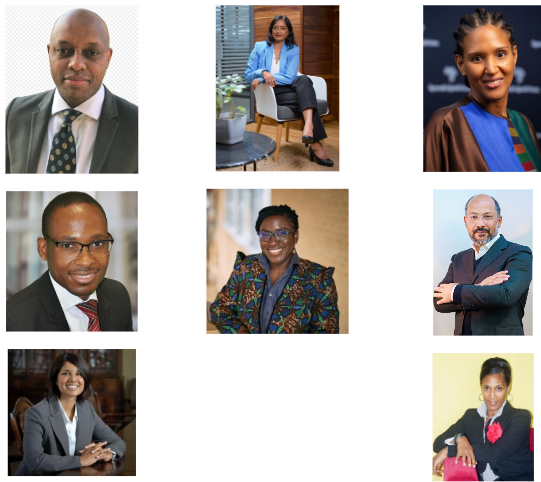
Africa No Filter (ANF) today announced the formation of its inaugural Council: a collective of eight highly respected leaders whose expertise spans media, finance, philanthropy, law, advocacy and research. Their appointment signals a new chapter for the organisation, which is now an independent, African-led and registered entity in Mauritius after five years as a U.S-based project.

The ANF Council brings together people who have not only excelled in their fields, but who Moky Makura, Executive Director of Africa No Filter, deeply admires for the way they show up for the continent.

“Narratives shape everything, from policy and reputation to investment and opportunity,” Makura says. “As Africa No Filter steps into this new era of independence, this Council strengthens our governance and sharpens our strategic direction. These are people who understand the stakes, believe in Africa’s potential and are committed to ensuring that Africa tells its own, more truthful story.”


Over the last five years, Africa No Filter has committed more than US$7.5 million to the African creative and media ecosystem, supporting storytellers, researchers and platforms that challenge reductive, outdated portrayals of the continent.

Its work has attracted some of the world’s most influential funders, including the Gates Foundation and the Mastercard Foundation, alongside its founding funders – the Ford Foundation, Luminate and the Hilton Foundation, Hewlett Foundation, and Mellon Foundation – who continue to support ANF’s mission to shift global narratives about Africa.

At this pivotal moment, the Council will serve as a strategic sounding board and leadership body, strengthening governance, accelerating impact and expanding the organisation’s reach on the continent and beyond.


The members of the 2025 Africa No Filter Council are:

Richard Addy — a multi-award-winning strategist and co-founder of international audience strategy consultancy AKAS, recognised as one of the world’s Top 100 media experts.

Nousrath Bhugeloo — a seasoned senior executive in financial services and Executive Director and Chairperson at Nexus Global Financial Services.

Yacine Djibo — Founder and Executive Director of Speak Up Africa, whose advocacy has reshaped policy conversations on health, sanitation and sustainable development across the continent.

Ferdinand Mokete — Director at KPMG South Africa and MBA lecturer at Wits Business School, representing the next frontier of African economic leadership and governance excellence.

Françoise Moudouthe — CEO of the African Women’s Development Fund and founder of Eyala, an online platform amplifying African feminist voices.

Nicolas Pompigne-Mognard — Franco-Gabonese entrepreneur and founder of APO Group, an award-winning pan-African communications consultancy and press release distribution service, listed among the Top 100 Most Influential Africans in 2023 and 2024.

Anshi Saminaden — Senior Legal Counsel at the African Leadership University, renowned for her leadership in institutional governance, negotiation and investment management.

Natasha Kofoworola Quist — Founder of Quest Advisory Africa, with over 25 years’ experience spanning humanitarian work, conservation, philanthropy and the private sector.

Each member brings a distinct lens, yet all share a common conviction: that Africa’s story must be told more fully, more fairly and by Africans themselves.

Yacine Djibo believes the future narrative must finally reflect reality — “a continent of creativity, innovation and possibility, where African voices define the story and inspire confidence, investment and ownership from within and beyond the continent.”

For Nicolas Pompigne-Mognard, countering stereotypes is not only ethical, but strategic. By promoting authentic stories of progress, he says, “the media can unlock investment and help transform Africa’s economic prospects.”

Anshi Saminaden echoes this, pointing to the power of authentic storytelling to “direct investment and support to where they are most needed, unlocking Africa’s human power and transformation.”

Nousrath Bhugeloo noted that strong governance is part of how Africa tells its story, and that ANF’s commitment to building resilient, African-led institutions is as important as the narratives it amplifies.

With strengthened governance, expanded continental expertise and a growing global footprint, Africa No Filter’s transition to an independent entity marks far more than an organisational change. It is a statement of intent: a new era in which Africa commands its own narrative, on its own terms.

Distributed by African Media Agency (AMA) on behalf of Africa No Filter

About Africa No Filter

Africa No Filter is an advocacy organisation dedicated to shifting stereotypical narratives about Africa by supporting storytelling that reflects a dynamic continent of progress, innovation and opportunity. It exists to counter narratives that reduce Africa to poor leadership, poverty, corruption, disease and conflict, and to amplify more accurate, balanced and empowering stories. For more information, visit www.africanofilter.org.

Enquiries:
Lerato@africanofilter.org

The post Africa No Filter announces inaugural Council as it expands its reach on the continent and beyond. appeared first on African Media Agency.
Countries, experts agree on 10-year Africa health workforce agenda

Geneva, Switzerland , 28 November 2025-/African Media Agency(AMA)/- African countries have reached consensus on the priority actions, commitments and milestones that will shape the Africa Health Workforce Agenda 2026–2035 in a major step towards transforming how the continent plans, trains and retains its health workforce. 

Member States, professional councils, universities, development partners and technical experts gathering in Pretoria from 24 to 26 November 2025 for consultation convened by the World Health Organization (WHO) Regional Office for Africa agreed on a unified direction for the forthcoming Agenda, which will be formally endorsed and launched by Member States in 2026. 

The shared priorities focus on strengthening governance and stewardship; modernizing and expanding health workforce education; improving employment and retention; scaling up investments through the Africa Health Workforce Investment Charter; and institutionalizing robust labour-market intelligence to guide planning and accountability.

“These outcomes reflect a shared continental vision for a workforce that is fit for purpose and positioned to deliver quality, people-centred care. The next decade must be transformational. If we do not act boldly and collectively, the gap between what our health systems need and the workers available will only widen,” said Dr Adelheid Onyango, Director of Health Systems and Services at WHO Regional Office for Africa.

Africa faces a projected shortage of 6.1 million health workers by 2030. While the region has tripled its workforce from 1.6 million in 2013 to 5.1 million in 2022, it continues to struggle with severe mismatches between training outputs and labour market needs; outdated and theory-heavy education models; chronic underinvestment in training institutions; unemployment among newly trained health workers; and significant migration and attrition.

Throughout the consultation, participants emphasized the urgency of comprehensive reforms to align education, employment, financing and service-delivery needs, building on key achievements reached this week. 

“Let this mark a turning point in how we plan, train, deploy and retain the health workers our continent needs. With unity and determination, Africa can build a health workforce capable of meeting both present and future demands,” said Dr Percy Mahlathi, Deputy Director-General, Hospital Services, Tertiary Health Services, and Health Workforce Development, National Department of Health, South Africa.

As part of the process to develop the new strategy, WHO convened Member States in July 2025 to update their national health workforce stock and related datasets and to reflect on the challenges and progress they have made since the adoption of the current strategy.

In July 2025, WHO convened a 17-member Expert Group to review the available evidence and identify priorities for the Africa Health Workforce Agenda 2026–2035.

The Africa Health Workforce Agenda 2035 is scheduled for a formal adoption and launch by Member States in 2026.

WHO called on all partners to sustain investment and political momentum to ensure the successful rollout of the agenda once it is endorsed and launched next year. It also urged governments, regional bodies, academia and development partners to sustain investment and political commitment to transform health workforce planning and education systems at scale.

“This consultation has been more than a technical exchange; it has solidified an Africa-wide commitment to reshape the future of health workforce development. The consensus achieved here provides clear direction for the agenda that countries will endorse and launch next year,” said Dr James Asamani, Team Lead for Health Workforce at WHO Regional Office for Africa.

Distributed by African Media Agency (AMA) on behalf World Health Organisation

The post Countries, experts agree on 10-year Africa health workforce agenda appeared first on African Media Agency.

IBM Accelerates Digital Transformation for Toyota South Africa Motors with SAP S/4HANA Upgrades

Fujifilm XT3

JOHANNESBURG, South Africa, 27 November 2025-/African Media Agency(AMA)/- IBM (NYSE: IBM) today announced the successful delivery of two major SAP S/4HANA system upgrades for Toyota South Africa Motors (Toyota), marking a significant milestone in the automotive leader’s enterprise-wide modernization journey. The projects, executed by IBM in collaboration with SAP, underscore IBM’s commitment to helping organizations achieve operational agility, business resilience, and data-driven decision-making.

With mainstream support for legacy SAP ECC systems ending in 2027, IBM guided Toyota through a Brownfield upgrade strategy, enabling a seamless transition to SAP S/4HANA while preserving existing business process investments. This approach minimized disruption, accelerated deployment timelines, and ensured continuity for critical operations.

Driving Transformation Across Core Business Functions

Vehicle Management Modernization

IBM led the upgrade of Toyota’s national Vehicle Management System—a mission-critical platform for managing orders, inventory, sales, and financial reporting across manufacturing and dealerships. By migrating to SAP S/4HANA, Toyota now benefits from real-time data visibility, improved inventory optimization, and faster responsiveness to customer demand.

Human Capital Management Enhancement

The second phase focused on modernizing Toyota’s HR systems, including payroll and personnel administration. IBM delivered a streamlined SAP S/4HANA-based HCM platform that simplifies workforce processes and lays the foundation for enhanced talent management and employee engagement.

Speed, Continuity, and Risk Reduction

Both upgrades were delivered on schedule and without operational disruption, ensuring Toyota maintained business continuity while modernizing its core systems. IBM’s proven methodologies and deep SAP expertise enabled a risk-mitigated transformation aligned with Toyota’s strategic objectives.

“We are proud to support Toyota South Africa Motors in their digital transformation journey by delivering technology solutions that accelerate innovation and strengthen business resilience,” said Sikhumbuzo Ngcobo, Managing Partner, IBM Consulting South Africa. “At IBM, we call this the Science of Consulting – combining human expertise, AI, and technology to deliver scalable, data-driven transformations. By improving data visibility and governance, we help organizations like Toyota achieve their goals with speed and confidence.”

Nazia Pillay, Managing Director, Southern Africa at SAP, says: “The best companies run on trusted data, optimised business processes and real-time intelligence into every part of the business. By upgrading to SAP S/4HANA, companies like Toyota unlock a suite of intelligent technologies that help transform business processes with intelligent automation. We commend Toyota and IBM on this powerful business transformation initiative and wish them well as they continue their rollout.”

A Partnership Built for the Future

Building on these successes, IBM is collaborating with Toyota on the next phase of its SAP modernization program, focusing on parts management systems. IBM and SAP’s long-standing partnership brings together hybrid cloud infrastructure, automation, and generative AI innovations powered by IBM watsonx™, enabling clients to unlock new value and drive industry-specific transformation.

With over 18,000 certified SAP consultants and 300+ SAP S/4HANA implementations in the past five years, IBM helps organizations define transformation roadmaps, co-innovate solutions, and deploy modernization strategies with speed, scale, and AI-driven outcomes.

Distributed by African Media Agency (AMA) on behalf of SAP Africa.

Visit the SAP News Center. Follow SAP on Twitter at @SAPNews.

About SAP

As a global leader in enterprise applications and business AI, SAP (NYSE:SAP) stands at the nexus of business and technology. For over 50 years, organizations have trusted SAP to bring out their best by uniting business-critical operations spanning finance, procurement, HR, supply chain, and customer experience. For more information, visit www.sap.com.

# # # 

This document contains forward-looking statements, which are predictions, projections, or other statements about future events. These statements are based on current expectations, forecasts, and assumptions that are subject to risks and uncertainties that could cause actual results and outcomes to materially differ. Additional information regarding these risks and uncertainties may be found in our filings with the Securities and Exchange Commission, including but not limited to the risk factors section of SAP’s 2021 Annual Report on Form 20-F. 

© 2022 SAP SE. All rights reserved. 

SAP and other SAP products and services mentioned herein as well as their respective logos are trademarks or registered trademarks of SAP SE in Germany and other countries. Please see https://www.sap.com/copyright for additional trademark information and notices.  

Note to editors:

To preview and download broadcast-standard stock footage and press photos digitally, please visit www.sap.com/photos. On this platform, you can find high resolution material for your media channels.

For customers interested in learning more about SAP products:

Global Customer Center: +49 180 534-34-24

United States Only: 1 (800) 872-1SAP (1-800-872-1727)

For more information, press only: 

SAP Head of Communications Africa, James Wilson at

james.wilson03@sap.com 

ByDesign Communications, Syreeta van Rooyen, at

s.vanrooyen@bdcomms.co.za

SAP Press Roompress@sap.com

About IBM

IBM is a leading provider of global hybrid cloud and AI, and consulting expertise. We help clients in more than 175 countries capitalize on insights from their data, streamline business processes, reduce costs and gain the competitive edge in their industries. More than 4,000 government and corporate entities in critical infrastructure areas such as financial services, telecommunications and healthcare rely on IBM’s hybrid cloud platform and Red Hat OpenShift to affect their digital transformations quickly, efficiently and securely. IBM’s breakthrough innovations in AI, quantum computing, industry-specific cloud solutions and consulting deliver open and flexible options to our clients. All of this is backed by IBM’s long-standing commitment to trust, transparency, responsibility, inclusivity and service.

Visit www.ibm.com for more information.

The post IBM Accelerates Digital Transformation for Toyota South Africa Motors with SAP S/4HANA Upgrades appeared first on African Media Agency.

The Gambia: Laying the Foundations for Stable Growth and Jobs

Washington, USA, 26 November2025-/African Media Agency (AMA)/-The World Bank Group today approved $45 million in grant financing from the International Development Association (IDA) to support the Government of The Gambia’s efforts to enhance domestic revenue mobilization, lay key infrastructure, regulatory and skill foundations for private sector development, and strengthen climate resilience.

“The Gambia is on a good growth trajectory despite the external shocks of recent years, but growth remains fragile due to a combination of structural weaknesses including climate vulnerability. To sustain its growth and improve the living standards of the population, it is essential for The Gambia to pursue and accelerate transformational reforms,” stresses Ephrem Niyongabo, World Bank Economist and Task Team Leader of the project. 

This is the first development policy support operation designed to underpin reforms conducive to inclusive and sustainable growth. The program is based on three pillars. The first pillar seeks to increase government revenue by broadening the tax base and rationalizing tax expenditures. The second pillar seeks to foster private sector-led growth by tackling bottlenecks in key enabling sectors such as energy, telecom and business environment while advancing human capital development, with a focus on expanding opportunities for women and youth. The third pillar aims at strengthening the foundations for The Gambia’s resilience to climate challenges by establishing a robust institutional and legal framework to guide climate action and coastal zone management. 

“This financing will enable The Gambia to carry out reforms to build fiscal space, facilitate the development of key sectors, improve human capital and business environment to enhance participation of the private sector in the economy. The proposed operation provides a critical line to improve access to essential services, enhance women and youth employment opportunities while enhancing environmental sustainability” said Franklin Mutahakana, World Bank Group Resident Representative in The Gambia.

This operation has been designed to meet the authorities’ priorities outlined in the Gambia Recovery-Focused National Development Plan, 2023-2027. The reform program supports the green, resilient, and inclusive development agenda by strengthening the country’s adaptation and resilience to climate change through robust legal and institutional framework for climate governance and climate resilience, ensuring that territorial and sectoral planning integrate climate adaptation and disaster risk management. 

Distributed by African Media Agency (AMA) on behalf of World Bank

The post The Gambia: Laying the Foundations for Stable Growth and Jobs appeared first on African Media Agency.

IQ-EQ wins ‘Global Fund Administrator of the Year’ and ‘African Fund Administrator of the Year’ at 2025 Asset Servicing Times Industry Excellence Awards

PORT LOUIS, Mauritius, 24 November 2025-/African Media Agency(AMA)/-We’re delighted to announce that IQ-EQ has been awarded ‘Global Fund Administrator of the Year’ and ‘African Fund Administrator of the Year’ at the 2025 Asset Servicing Times Industry Excellence Awards, recognising our commitment to delivering exceptional fund administration services across the globe and our leading position in the African market.

The Asset Servicing Times Industry Excellence Awards are dedicated to supporting and recognising talented and dedicated firms across the financial services industry. Winners are selected based purely on merit, with the Securities Services Advisory Group (TSSAG) providing independent industry expertise in judging the awards.

This award celebrates our commitment to delivering exceptional fund administration services across all alternative asset classes, enabling investment managers to focus on capital raising and investment decision-making. For the African category, this recognition comes hot on the heels of our eighth consecutive year winning “Best Fund Administrator – Private Equity Funds Over US$20bn” at the AGF Service Providers Awards.

Commenting on the wins, Rehma Imrith, Managing Director, Africa at IQ-EQ said:

“We’d like to extend our thanks both to our incredibly hard-working teams and to our clients and partners for their ongoing trust and support, all enabling us to achieve this welcome recognition from the industry.”

Learn more about our fund administration solutions here.

Distributed by African Media Agency (AMA) on behalf of IQ-EQ

Note to editors

About IQ-EQ

IQ-EQ is a global, top-tier investor services group with an unrivalled offering to meet the administration, compliance, and reporting needs of the investment sector in full and worldwide. 

What makes us different is our people. Operating as trusted partners to our clients, we deliver intelligent solutions through a combination of well-honed technical expertise and strong relationships based on deep understanding. We’re driven by our Group purpose, to power people and possibilities. 

We make life easier, more efficient and cost effective for our clients – be they fund 

managers, pension or sovereign wealth funds, multinational companies, or family offices – by providing everything in one place. Our services are underpinned by a Group-wide commitment to ESG and best-in-class technology including a global data platform and innovative proprietary tools supported by in-house experts.

We employ a global workforce of 5,900+ people across 25 jurisdictions and have assets under administration (AUA) exceeding US$857 billion. We work with 13 of the world’s top 15 private equity firms. Also part of the IQ-EQ group of companies are First National Trustee Company, The Private Office and Agama.

To find out more about IQ-EQ visit iqeq.com

About Astorg

Astorg is a leading pan-European private equity firm with over €23 billion of assets under management. Astorg works with entrepreneurs and management teams to acquire market leading global companies headquartered in Europe or the US, providing them with the strategic guidance, governance and capital they need to achieve their growth goals. 

Enjoying a distinct entrepreneurial culture, a long-term shareholder perspective and a lean decision-making body, Astorg has valuable industry expertise in healthcare, software, technology, business services and technology-based industrial companies. Headquartered in Luxembourg, Astorg has offices in London, Paris, New York, Frankfurt and Milan. 

For more information about Astorg: www.astorg.com

Media Contact:

Samantha Seewoosurrun, Perpetual Motion Ltd

samantha@perpetualmotionltd.com

Tel: +230 5772 4400

The post IQ-EQ wins ‘Global Fund Administrator of the Year’ and ‘African Fund Administrator of the Year’ at 2025 Asset Servicing Times Industry Excellence Awards appeared first on African Media Agency.

Kaberuka, speakers call for a new era of strong African institutions at 9th Babacar Ndiaye Lecture

London, United Kingdom, 6 November 2025 -/African Media Agency(AMA)/ Former President of the African Development Bank (AfDB), Dr. Donald Kaberuka has called for Africa to strengthen and integrate its financial and governance institutions to safeguard the continent’s future in a rapidly fragmenting global order.

Delivering the 2025 Babacar Ndiaye Lecture on the sidelines of the World Bank Group/IMF Annual Meetings in Washington DC, Kaberuka warned that “the world is not waiting for Africa; therefore, Africa must not wait for the world,” and urged African nations to take ownership of their development agenda through resilient, homegrown institutions.

Reflecting on global power shifts, Kaberuka pointed to the return of mercantilism; rising narrow national interests; the end of the aid era; weakened global institutions; and the erosion of multilateralism as the five trends that are reshaping the global economy. For Africa, that means turning inward, while leading the charge for a renewed global architecture. “We can no longer rely on post-war institutions that were never designed to address Africa’s challenges,” he said. “Strong nations are built on strong, homegrown institutions; not on borrowed ideas or conditional generosity.”

Kaberuka emphasized that Africa’s development requires an ecosystem approach, where institutions across sectors – finance, trade, peace and security, health, and governance – operate in coordinated harmony rather than isolation. “Like an orchestra, African financial institutions on their own will not get to the end point. It has to be part of an ecosystem of African financial institutions and not simply financial institutions. They have to operate together in a symphony,” he urged.

Africa Export-Import Bank (Afreximbank), Kaberuka said, must be commended for exemplifying this model through its support for the African Continental Free Trade Area (AfCFTA), the Africa Centres for Disease Control and Prevention (Africa CDC), the regional economic communities and other initiatives and institutions of the continent. 

Kaberuka, who is also the Chairman and Managing Partner of SouthBridge, a financial advisory and investment firm, further argued that Africa must lead in reshaping global governance to reflect 21st-century realities and replace the post-World War II institutions such as the Bretton Woods system which were primarily designed for the reconstruction of Europe and Japan and not for the needs of emerging African economies. “We can no longer outsource our future to institutions that were never meant to serve us,” he said, calling for the continent to take a more assertive role in creating new multilateral frameworks that champion African priorities.

Kaberuka stressed that as the world moves from globalization to fragmentation, Africa’s ability to define and defend its interests will depend on the strength, coordination, and legitimacy of its own institutions. Pointing to over $1.1 trillion held by African pension and sovereign wealth funds, he called for new models to mobilize and connect this capital with global investment flows. “It is not only about mobilizing African capital,” he said. “It is about defining how that capital is deployed for Africa, by Africa.”

Earlier, in his welcome remarks, Dr George Elombi, Executive Vice President, Corporate Governance and Legal Services and incoming President of Afreximbank called for urgent action to strengthen Africa’s financial sovereignty through the completion of the continent’s financial architecture. Elombi said the time has come to move decisively toward the establishment of the African Monetary Fund and the African Central Bank as “full operational pillars of our sovereignty.”

He outlined some imperatives for African financial institutions going forward. These include mobilising domestic capital by deepening investment in African assets, ensuring regulatory clarity to uphold investor confidence and fully operationising the AfCFTA. He also called for expanding counter-cyclical capacity and encouraging collaboration with the African diaspora to boost investment and co-create solutions. “This, distinguished ladies and gentlemen, is the roadmap to an Africa that controls its own narrative and owns its own destiny. An Africa that does not wait to be defined by others, but defines itself through vision, resolve, and unity of action,” he emphasised.

Elombi, who has taken over as the 4th President of the pan-African Multilateral Development Bank following his selection by the board at the general shareholders meeting in June, reaffirmed Afreximbank’s preferred creditor status as an essential safeguard for Africa’s ability to finance its own development. Cautioning against narratives that question the credibility of African institutions, he noted that such criticism often arises “not because we fail, but because we succeed.” Afreximbank, he noted, has disbursed over $155bn in the past decade, including $18.7bn in 2024 alone. “These are not just numbers,” he said. “They represent jobs, freedom, and hope. They are living proof of what Africa can accomplish when trust is matched by capacity.” Elombi argued that the real challenge facing the continent is not risk, but perception. “Africa is not merely bankable; Africa is dependable,” he said.

Elombi also paid tribute to Dr. Babacar Ndiaye, the fifth president of the AfDB and one of the founders of Afreximbank, describing him as a man “whose vision turned words into action.” Ndiaye, he said, believed that Africa’s progress depended on institutions built, financed, and led by Africans, a conviction that gave rise to Afreximbank, Shelter Afrique Development Bank, and the African Business Roundtable. “Dr. Ndiaye understood that true independence means having the capacity to stand on our own and to shape our own future, no matter how the world around us changes,” he said. Elombi reaffirmed Afreximbank’s commitment to Ndiaye’s legacy, stressing that the agenda must continue “until the task of development is significantly achieved”.

During a fireside chat jointly moderated by Anver Versi, editor of New African magazine and Omar Ben Yedder Group Publisher and Managing Director, IC Publications, Dr. Misheck Mutize, Lead Expert, Country Support on Rating Agencies, Africa Union stressed the importance of preserving the preferred creditor status of Africa’s development finance institutions. He explained that the preferred creditor status is a long-standing principle enjoyed by traditional multilaterals like the IMF and World Bank which allows such institutions to lend counter-cyclically, continuing to support economies even in times of crisis. For Africa’s regional and continental financial institutions, he said, this principle is not a privilege but a right embedded in their founding treaties, as they too were established by member states to bridge financing gaps and fund essential infrastructure and development projects.

Dr. Mutize cautioned, however, that the validity of PCS for African multilaterals has come under increasing scrutiny from international credit rating agencies, especially following a few sovereign defaults on the continent. He rejected the notion that African development banks must offer concessional loans to qualify for PCS, arguing instead that these institutions perform a unique public mission – blending developmental purpose with financial sustainability. “The preferred creditor status lies at the core of Africa’s financing ecosystem,” he said. “It ensures our institutions can continue to lend when others retreat, sustain development momentum, and access global capital on fair terms.”

For her part, Professor Lisa Sachs, Director of the Columbia Center on Sustainable Investment, advocated for reforms to the global financial system, which she said was “completely perverse and fundamentally broken.” She stressed that Africa’s development requires long-term, affordable finance, which is currently constrained by a global risk assessment framework that misrepresents Africa’s creditworthiness and growth potential. “The IMF acknowledges that Africa is the fastest-growing region in the world,” she said, “yet at the same time advises African governments not to borrow and invest. That contradiction shows how broken the system is.” Sachs said new international partners such as those in Asia and the Global South, who recognise Africa’s promise and are willing to build equitable financial partnerships that align with the continent’s development ambitions, offer a hopeful alternative for the continent.

Adding his voice, Professor Kako Nubukpo, formerly Dean of the Faculty of Economics and Management at the University of Lome stressed that shifting global perceptions of Africa’s risk “must begin with us,” and called for stronger governance and transparency to rebuild confidence. “We need to improve the perception that the rest of the world has of risk in Africa,” he said, warning against “a dangerous discourse that seems to prioritise mediocrity.” 

He further emphasised the need for genuine financial sovereignty, noting that “you can’t ask permission from the financial market to build a hospital.” True independence, he argued, will come only when African leaders “show vision, the ability to lead, and the courage to evaluate what we are doing.”

This year’s Babacar Ndiaye Lecture was the 9th in the series held in honour of the late Ndiaye, who was the driving spirit behind the establishment of Afreximbank and other key pan-African institutions. It was held under the theme “Leveraging Global Africa’s Capital for Development: The Imperative for Stronger African Financial Institutions amid Geo-economic Shifts” and was attended by policy makers and business leaders from the continent and the United States where it was held.

Distributed by African Media Agency (AMA) on behalf of Afreximbank.

About Afreximbank

African Export-Import Bank (Afreximbank) is a Pan-African multilateral financial institution mandated to finance and promote intra- and extra-African trade. For over 30 years, the Bank has been deploying innovative structures to deliver financing solutions that support the transformation of the structure of Africa’s trade, accelerating industrialisation and intra-regional trade, thereby boosting economic expansion in Africa. A stalwart supporter of the African Continental Free Trade Agreement (AfCFTA), Afreximbank has launched a Pan-African Payment and Settlement System (PAPSS) that was adopted by the African Union (AU) as the payment and settlement platform to underpin the implementation of the AfCFTA. Working with the AfCFTA Secretariat and the AU, the Bank has set up a US$10 billion Adjustment Fund to support countries effectively participating in the AfCFTA. At the end of December 2024, Afreximbank’s total assets and contingencies stood at over US$40.1 billion, and its shareholder funds amounted to US$7.2 billion. Afreximbank has investment grade ratings assigned by GCR (international scale) (A), Moody’s (Baa2), China Chengxin International Credit Rating Co., Ltd (CCXI) (AAA), Japan Credit Rating Agency (JCR) (A-) and Fitch (BBB-). Afreximbank has evolved into a group entity comprising the Bank, its equity impact fund subsidiary called the Fund for Export Development Africa (FEDA), and its insurance management subsidiary, AfrexInsure (together, “the Group”). The Bank is headquartered in Cairo, Egypt.

Media Contact:

Vincent Musumba

Communications and Events Manager (Media Relations)

Email: press@afreximbank.com

The post Kaberuka, speakers call for a new era of strong African institutions at 9th Babacar Ndiaye Lecture appeared first on African Media Agency.

SAP Empowers Developers to Drive the Business AI Revolution

At SAP TechEd in 2025, SAP SE (NYSE: SAP) brings AI deep into the development process to level up how developers build.

Advancements in AI agents, data, and platform capabilities equip developers with the tools to drive business transformation

Read the innovation guide

Muhammed Alam, SAP Product & Engineering

BERLIN, 5 November 2025-/African Media Agency(AMA)/- New AI-driven capabilities in the SAP Build solution, an expanding data ecosystem and powerful Joule Agents empower developers to move from idea to impact with unprecedented speed and confidence. As AI transforms the nature of professional work, SAP also pledges to equip 12 million people worldwide with AI-ready skills by 2030.

“SAP’s announcements today give developers the tools they need to deliver at the speed of AI,” said Muhammad Alam, member of the Executive Board of SAP SE. “Innovations across SAP’s unique flywheel of applications, data and AI put developers in the driver’s seat — where they belong.”

Opening the Developer Ecosystem

SAP Build, the company’s flagship solution for enterprise application development and automation, now gives developers more freedom to build, extend and automate using the tools they love most.

For instance, developers who prefer agentic development solutions like Cursor, Claude Code, Cline and Windsurf can now use SAP development frameworks with new SAP Build local Model Context Protocol Servers. Visual Studio Code users will be able to access SAP Build capabilities directly in their development environment with a new SAP Build extension. This extension will also be made available later on Open VSX Registry for other development environments. SAP and n8n also announced plans for an integration so Joule Studio agents and n8n agents can work together.

And with new agent building capabilities in Joule Studio, developers have the tools they need to extend SAP’s ready-to-use agents and build new agents grounded in SAP business data and context that can act autonomously based on changing business conditions.

Putting Data to Work

Every intelligent application starts with trusted data. SAP is giving developers more ways to put that data to work through SAP Business Data Cloud.

The solution now connects with more of the data and AI platforms developers use every day. A new SAP Snowflake solution extension for SAP Business Data Cloud brings Snowflake’s fully managed data and AI capabilities directly to SAP customers, giving them the flexibility to choose the right compute and storage for each data and AI workload, while maintaining governance, interoperability and business context. SAP also announced a new SAP Business Data Cloud Connect partnership with Snowflake. This complements existing integrations with Databricks and Google Cloud, giving developers more freedom to choose how they work with SAP data.

With a new data product studio capability in SAP Business Data Cloud, developers can turn raw data into ready-to-use assets known as data products that support analytics, AI and application development.

An expanded capability in the SAP HANA Cloud knowledge graph engine can automatically generate knowledge graphs. This capability maps relationships across SAP database tables, columns and data models, revealing how data fits together and why it matters. Developers will be able to see how their data connects across systems and uncover underlying business insights.

Bringing AI Autonomy to Life

SAP is evolving its AI portfolio to give developers the intelligence and orchestration power they need to take AI from insight to action.

SAP introduced its first enterprise relational foundation model, a new class of AI that predicts business outcomes rather than the next word in a sentence. SAP-RPT-1, or the first-generation Relational Pre-trained Transformer, can make fast and accurate predictions for common business scenarios like delivery delays, payment risk or sales order completion. SAP launched a free playground environment for developers today.

New AI assistants in Joule coordinate multiple agents across workflows, departments and applications, bringing automation and autonomy to life. These assistants plan, initiate and complete complex tasks spanning finance, supply chain, HR and beyond. Today, SAP introduces new agents built for technical users. For example, an agent for business process analysis will help teams understand how processes run, identify inefficiencies and uncover opportunities to optimize workflows and drive measurable improvements.

Lastly, as AI changes the nature of work for everyone, SAP is pledging to equip 12 million people worldwide with AI-ready skills by 2030. SAP will expand hands-on training and certification programs that integrate practical AI-ready tools, including through its partnership with online learning platform Coursera.

Distributed by African Media Agency (AMA) on behalf of SAP Africa.

About SAP

As a global leader in enterprise applications and business AI, SAP (NYSE:SAP) stands at the nexus of business and technology. For over 50 years, organizations have trusted SAP to bring out their best by uniting business-critical operations spanning finance, procurement, HR, supply chain, and customer experience. For more information, visit www.sap.com.

# # # 

This document contains forward-looking statements, which are predictions, projections, or other statements about future events. These statements are based on current expectations, forecasts, and assumptions that are subject to risks and uncertainties that could cause actual results and outcomes to materially differ. Additional information regarding these risks and uncertainties may be found in our filings with the Securities and Exchange Commission, including but not limited to the risk factors section of SAP’s 2021 Annual Report on Form 20-F. 

© 2022 SAP SE. All rights reserved. 

SAP and other SAP products and services mentioned herein as well as their respective logos are trademarks or registered trademarks of SAP SE in Germany and other countries. Please see https://www.sap.com/copyright for additional trademark information and notices.  

Note to editors:

To preview and download broadcast-standard stock footage and press photos digitally, please visit www.sap.com/photos. On this platform, you can find high resolution material for your media channels.

For customers interested in learning more about SAP products:

Global Customer Center: +49 180 534-34-24

United States Only: 1 (800) 872-1SAP (1-800-872-1727)

For more information, press only: 

SAP Head of Communications Africa, James Wilson at

james.wilson03@sap.com 

ByDesign Communications, Syreeta van Rooyen, at

s.vanrooyen@bdcomms.co.za

SAP Press Roompress@sap.com

The post SAP Empowers Developers to Drive the Business AI Revolution appeared first on African Media Agency.

Shutdown Deadline, Gaza Deal Reaction, Top Military Leaders Meeting

Federal agencies will run out of money tonight unless Congress reaches a last-minute deal, with both parties still deadlocked over health care funding. President Trump unveiled a 20-point plan to end the Gaza war — including a ceasefire, hostage release, and new governance for the enclave — but Hamas has yet to respond. And hundreds of U.S. generals and admirals are gathering for a rare closed-door meeting where Trump is expected to address them directly, the Pentagon isn’t saying why it summoned military leaders from around the world.

Want more comprehensive analysis of the most important news of the day, plus a little fun? Subscribe to the Up First newsletter.

<

p class=”readrate”>Today’s episode of Up First was edited by Kelsey Snell, Miguel Macias, Krishnadev Calamur, Mohamad ElBardicy and Alice Woelfle.

<

p class=”readrate”>

<

p class=”readrate”>It was produced by Ziad Buchh, Nia Dumas and Lindsay Totty

<

p class=”readrate”>

<

p class=”readrate” data-rr=”17″ data-pm-slice=”1 1 []”>We get engineering support from Stacey Abbott . And our technical director is Carleigh strange .

Learn more about sponsor message choices: podcastchoices.com/adchoices

NPR Privacy Policy

Post-war Somalia proves multilateralism can make the world a better place, says President

In his address to the General Assembly, the President of Somalia Hassan Sheikh Mohamud outlined global challenges and shared the progress his country has made in the fight against terrorism, promoting inclusive governance and economic development.