


HARARE-(MaraviPost)-Zimbabwe’s opposition is facing a deep structural crisis not because it lacks conviction, but because it has abandoned the hard work of building political organisation, former cabinet minister and political scientist Professor Jonathan Moyo has said.
In a detailed analysis of opposition politics since independence, Moyo argues that the central problem is a failure to treat politics as a vocation that requires structure, discipline and daily work at grassroots level.
“The difficulty facing many Zimbabwean politicians who present themselves as the opposition is not a shortage of conviction. It is a reluctance or inability to treat an elementary principle as binding: politics is organisation; organisation is structure; and structure is work,” Moyo said.
He said politics, if it is to be more than “commentary or trolling, is a vocation” that demands “steady, often unglamorous, and rarely theatrical or performative” labour.
Moyo, who served in both ZANU-PF governments and now lives in exile, traces the last example of disciplined opposition organisation to PF-ZAPU between 1980 and 1987.
According to him, PF-ZAPU, led by the late Vice President Joshua Nkomo, survived not on charisma alone but because it was ideologically grounded and maintained a functioning national executive with an organising secretary, political education, youth and women’s wings, and structures present “in villages, streets, districts, wards and provinces rather than only in speeches or psychodrama.”
“PF-Zapu contested the 1980 and 1985 elections as a structured national organisation, held its ground nationally, especially in Matabeleland and parts of the Midlands under severe pressure, and still possessed enough institutional coherence, after years of attrition, to negotiate the Unity Accord of 22 December 1987 as a party rather than as a scattering of personalities,” Moyo noted.
He said later attempts at opposition were uneven. Edgar Tekere’s Zimbabwe Unity Movement (ZUM), formed in 1989, broke the one-party atmosphere but “remained too closely tied to one man, won only a handful of seats in 1990, and faded when Tekere’s personality could no longer carry the organisation.”
The most serious organisational effort, Moyo argues, came in 1999 when the Zimbabwe Congress of Trade Unions and civic groups convened the National Working People’s Convention, which led to the formation of the Movement for Democratic Change (MDC) at Rufaro Stadium on 11 September 1999.
“The MDC inherited trade union branches, student networks, and a nationwide ‘No’ campaign that derailed the Constitutional Commission’s draft constitution in the February 2000 referendum,” he said.
That structure delivered results. In June 2000 the MDC won 57 of 120 contested seats, and in 2008 the two MDC formations together won 110 of 210 seats in the House of Assembly, forcing the Global Political Agreement and the Government of National Unity from 2009 to 2013.
“Those were not the achievements of trolling. They were the fruits of work,” Moyo said.
He said that work was later discarded through repeated splits. In October 2005, the original MDC split over Senate participation between Morgan Tsvangirai and Welshman Ncube. In 2014, secretary-general Tendai Biti led another breakaway, the MDC Renewal. After Tsvangirai’s death in 2018, succession battles centred on buildings and party names.
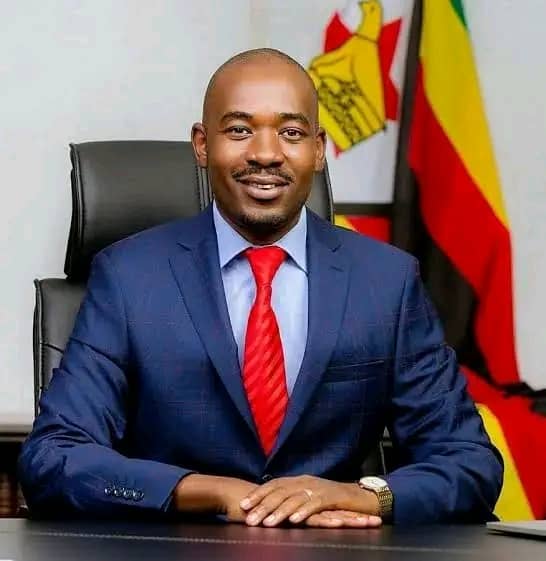
Moyo was particularly critical of the Citizens Coalition for Change (CCC), formed by Nelson Chamisa in January 2022, which he said adopted a “deliberately confused and confusing ‘constitution’ and an ambiguous language of citizens rather than of party members.”
“The intention may have been flexibility. The effect, visible in the recalls associated with Senator Sengezo Tshabangu and in the later unravelling of parliamentary presence, was that a party without settled organisation, structures and work could not defend itself when challenged,” he said.
Moyo cautioned that his critique should not be read as dismissing the difficult environment for opposition politics in Zimbabwe, noting that PF-ZAPU operated under violence and coercion and the MDC under an uneven electoral field.
“The point is not that they lacked patriotism. It is that moral position, repeatedly asserted, was too often asked to do the work that only branches, voters’ rolls, discipline, and succession can do,” he said.
He also accused sections of the opposition of developing a culture that depends on negative news about Zimbabwe.
Citing the World Bank’s decision in July 2026 to remove Zimbabwe from its list of fragile and conflict-affected economies, Moyo said the opposition had rejected a factual reclassification because it did not fit its narrative.
“The Bank was not pronouncing that Zimbabwe had solved or overcome all its challenges. It was recording, under a revised and public framework, that Zimbabwe no longer met the Bank’s own tests for that label. The opposition rejected the finding because it did not confirm with its preferred serially negative narrative,” he said.
“A serious opposition would have treated the World Bank’s reclassification as one fact among others, kept the remaining indictment of arrears, unemployment and poverty and, and responded with an actionable programme of work.”
Moyo concluded that Zimbabwean citizens do not need “saints or the purported new leaders” but political actors able to convert moral positions into organised presence “street by street, village by village, ward by ward, province by province and year by year, through defeat as well as through the rare referendum victory witnessed in 2000.”
“Until that shift is made, noise and performative politics in the opposition will continue to be mistaken for influence, and self-declaration for delivery. But Zimbabwe deserves better than that!” he said.

Leave a Reply